
Blue-capped Puffleg
Scientific name: Eriocnemis glaucopoides
The Blue-capped Puffleg is the southernmost puffleg, a high-Andean hummingbird found from central Bolivia south into northwestern Argentina, where it favors humid slopes with dense shrubs and cloud forest edges. The number of mature individuals is unknown, its population trend is Decreasing, and it is currently assessed as Least Concern and considered non-migratory (with only local elevational movements).
At a Glance
Family: Trochilidae (hummingbirds)
Clade: Lesbiini – Coquettes
Genus: Eriocnemis — Andean pufflegs with dense feather “puffs” around the legs
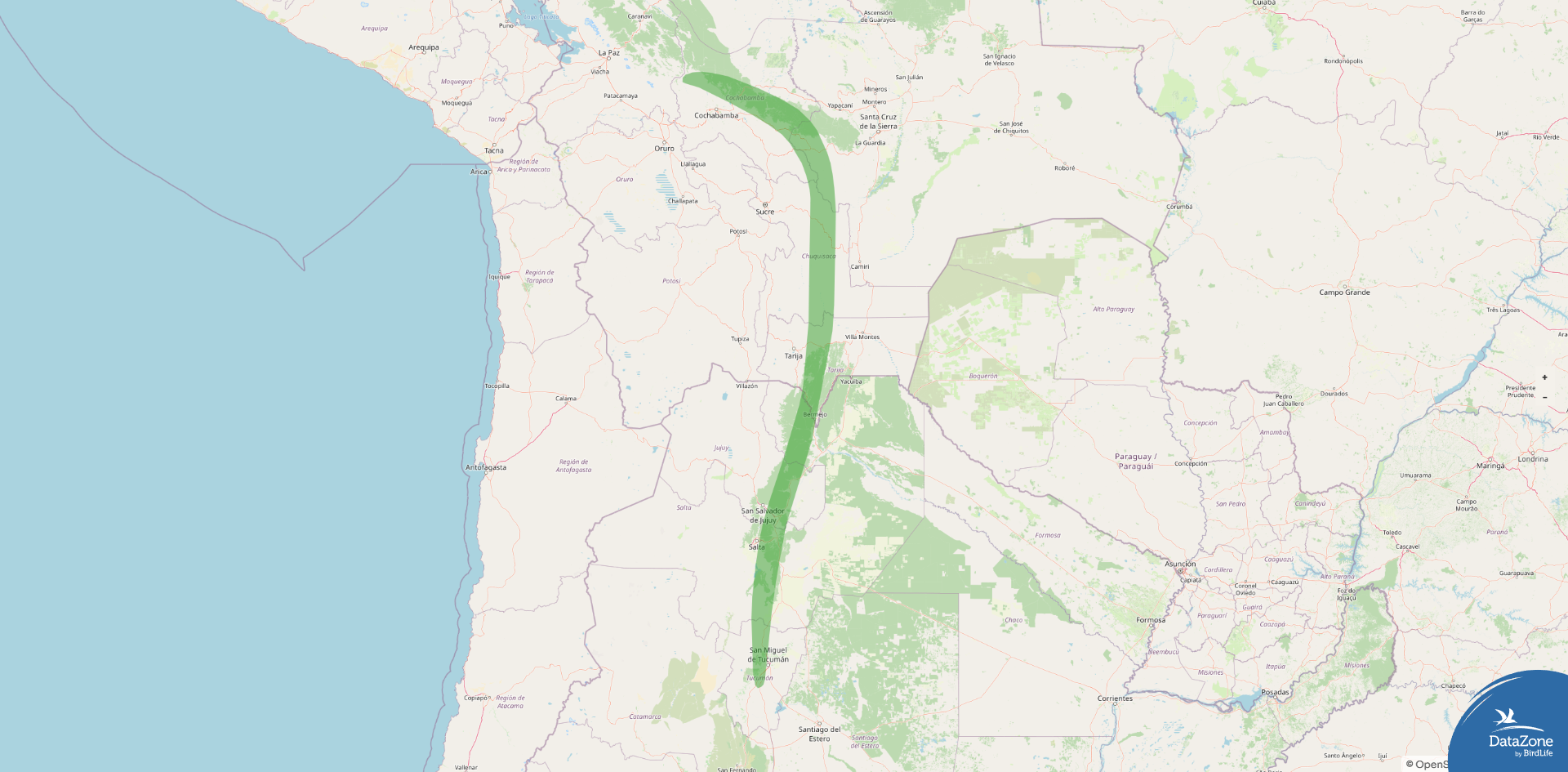
Range: Central and southern Bolivia (La Paz, Cochabamba, Santa Cruz) south into northwestern Argentina (Salta, Tucumán, Jujuy)
Habitat: Humid and semi-humid montane slopes with dense shrubs, shrubby clearings, and edges of cloud forest; also in somewhat drier montane landscapes locally
Elevation: About 1,500–3,400 m, most common between roughly 2,000 and 2,500 m
Length: About 9–11 cm (3.5–4.3 in)
Weight: Around 4–4.5 g
Number of mature individuals: Unknown
Population trend: Decreasing
Status: Least Concern (IUCN)
Name Origin
The genus name Eriocnemis comes from Greek roots meaning “wool” and “leg,” referring to the fluffy feather “puffs” around the legs that define pufflegs. The species name glaucopoides combines elements meaning “blue-gray” and “resembling,” referencing the bluish cap and overall coloration. The English name “Blue-capped Puffleg” highlights the male’s dark glittering blue forehead combined with the characteristic white leg puffs.
Subspecies & Distribution
Blue-capped Puffleg is monotypic, with no recognized subspecies.
It occurs on the eastern Andean slopes from central Bolivia (La Paz and Cochabamba departments, extending into parts of Santa Cruz) south into northwestern Argentina (Salta and Tucumán, also Jujuy). Across this range it inhabits humid slopes with grass and dense shrubs, shrubby clearings, edges of cloud forest, and in Argentina also somewhat drier montane habitats, always within a band of mid- to high-elevation forested mountains.
Ledged
Green Resident
Species Overview
The Blue-capped Puffleg is a distinctive southern Andean puffleg, notable for being the southernmost member of its genus and for the male’s dark blue cap and bright white leg puffs. It is typically found along humid and semi-humid mountain slopes, in shrubby clearings and cloud forest borders, and can be locally fairly common where flowering shrubs are abundant. Despite being considered rare overall but locally regular, its relatively broad latitudinal range and occurrence in protected areas support a Least Concern status, even as habitat pressures cause a decreasing trend.
Male Description
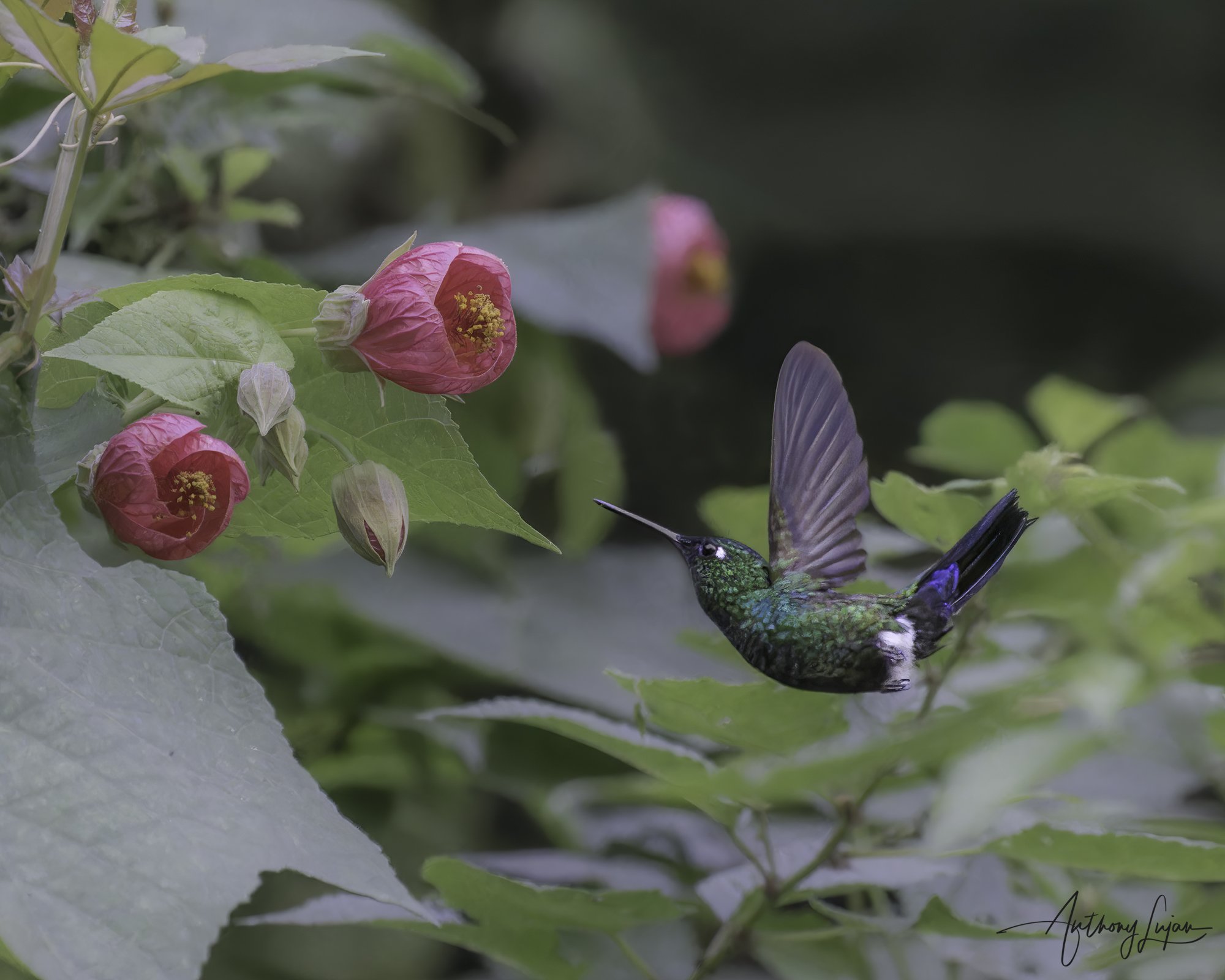
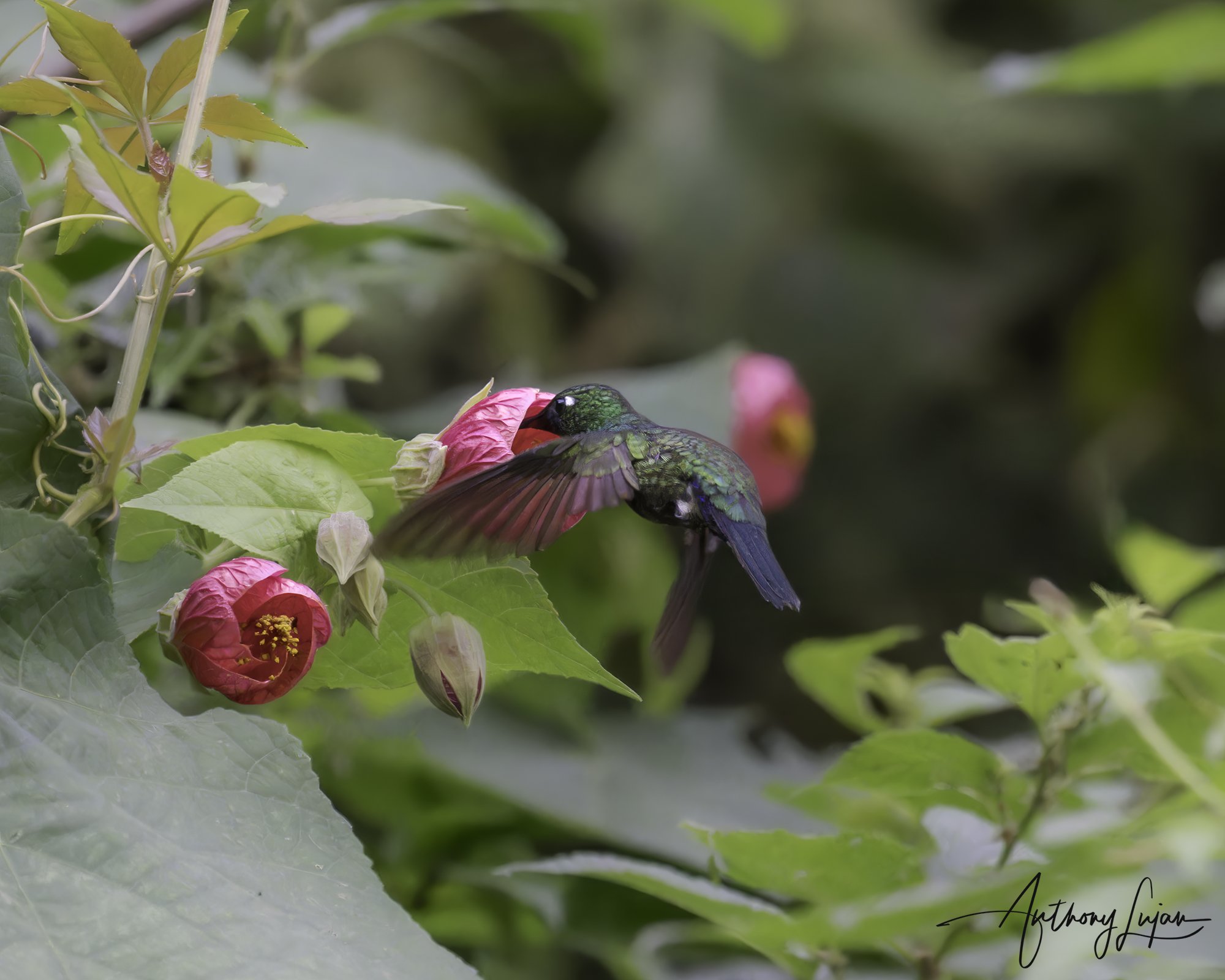
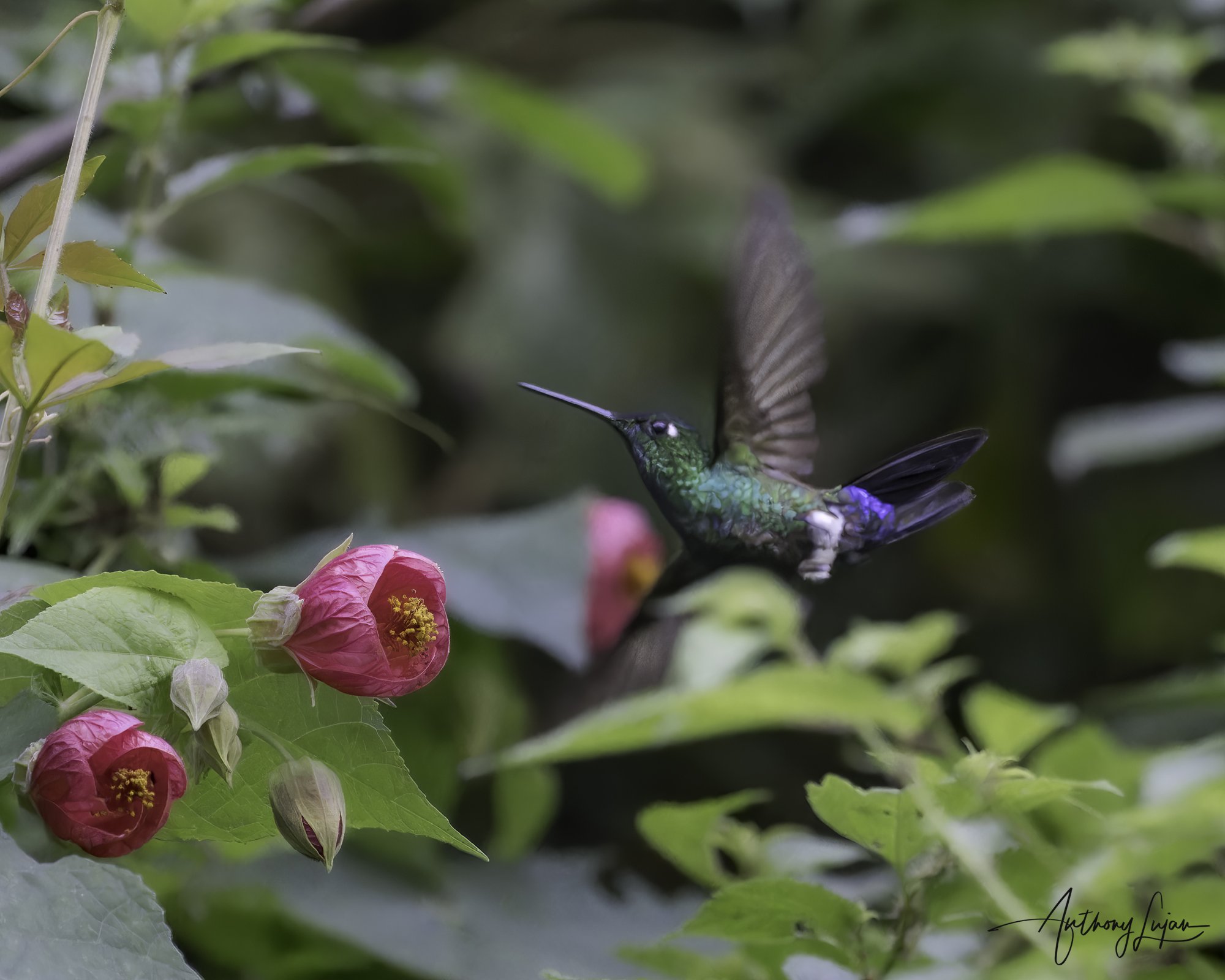
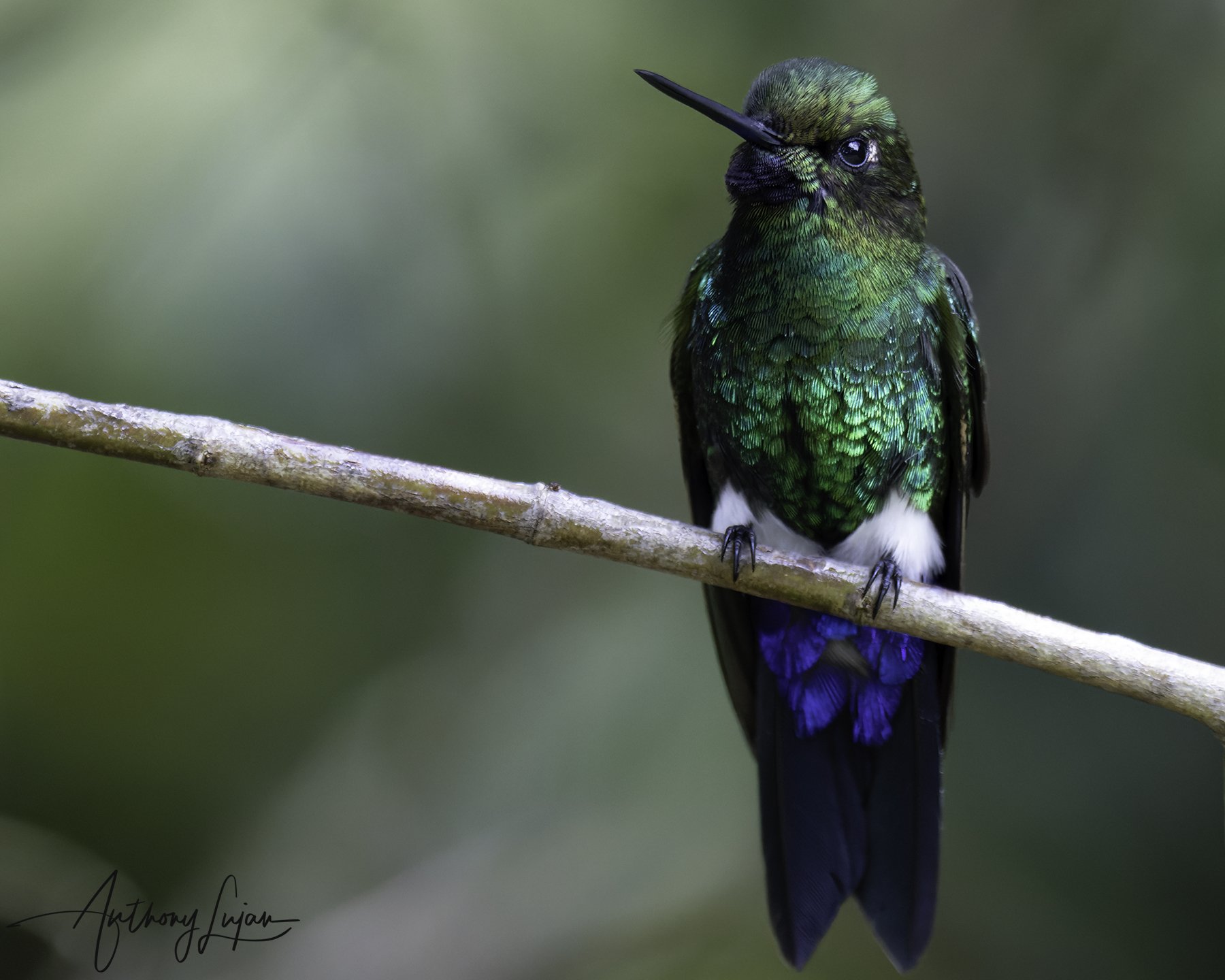
Adult males are compact hummingbirds with dark green to blackish upperparts and a dark glittering blue forehead that forms the “blue cap.” They have white “cotton ball” leg puffs above a forked blue-black tail, creating a classic puffleg silhouette. The underparts are dark, with a purplish-blue vent, and the bill is straight and black. Small white eye spots and the stark white leg puffs contrast with the darker body, making the male unmistakable within his limited range.
Female Description
Females are greener and more patterned below than males. They have a glossy green back and a forked tail, with underparts that are mostly cinnamon-buff heavily spotted with green along the sides and vent. The leg puffs are also white but can appear less dense or prominent depending on posture. Overall, females look like small, green-backed hummingbirds with buffy, green-spotted underparts and white leg puffs, best identified in combination with range and habitat.
Habitat & Behavior
Blue-capped Pufflegs use humid and semi-humid montane slopes with dense shrubs, shrubby clearings, and the edges of cloud forest, and they also occur in somewhat drier montane landscapes in parts of Argentina. They typically forage at low heights in flowering shrubs along slopes, ravines, and forest borders, occasionally moving into the mid-levels inside forest. Their diet consists mainly of nectar from shrubs and low trees, supplemented with small insects and other arthropods. The species is generally sedentary (non-migratory), though in Argentina it makes local elevational movements following seasonal changes in flowering.
Population
The total number of mature individuals of the Blue-capped Puffleg is unknown, but it is described as rare to locally fairly common at suitable sites within Bolivia and northwestern Argentina. It occupies a relatively narrow ecological band along the Andes, and while it persists in several protected areas, local populations can be sensitive to habitat changes. The overall population trend is assessed as Decreasing, reflecting the effects of forest clearance, changes in shrub cover, and land-use change across parts of its range.

Conservation
Blue-capped Puffleg is listed as Least Concern, thanks to its occurrence across two countries and presence in national parks and reserves, but it remains a species of interest due to its localized distribution and declining trend. The main threats include loss and degradation of montane forest and shrubland from agriculture, grazing, and development, which reduce the dense shrubby slopes and cloud forest edges it requires. Conservation efforts that protect humid and semi-humid montane forests, maintain shrubby clearings and natural ecotones, and limit overgrazing and excessive clearing on steep slopes will help sustain this species. Continued monitoring in Bolivia and Argentina is important to detect any future declines and to ensure that this southern puffleg remains a characteristic bird of Andean cloud forest edges.
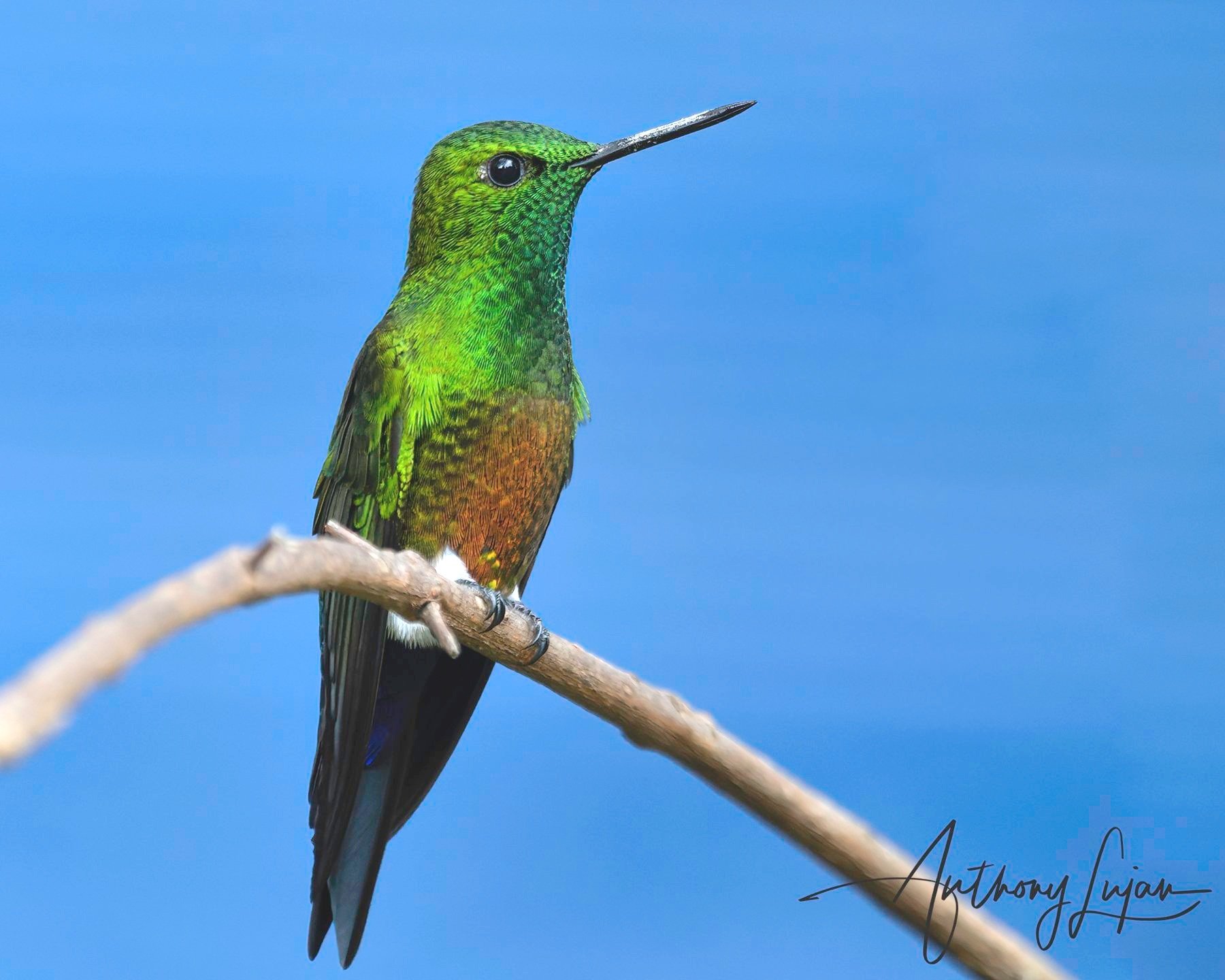
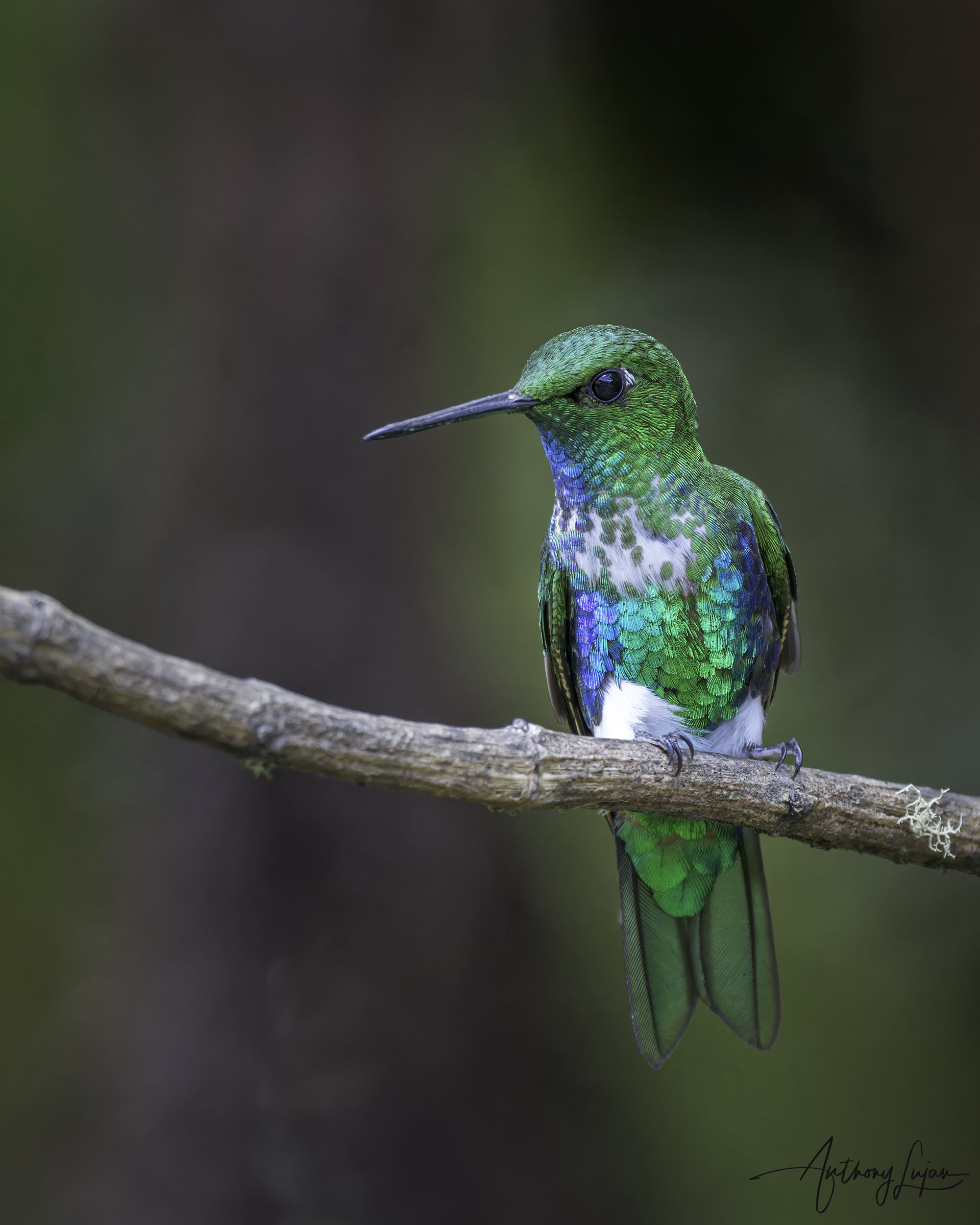
Related species in the Eriocnemis genus (11 species total):



Please note: The content provided in this article reflects Anthony’s personal experience and photographic approach. Results can vary depending on light, weather, location, equipment, subject behavior, and field conditions.