
Blue-chinned Sapphire
Scientific name: Chlorestes notata
The Blue-chinned Sapphire (also known as the Blue-chinned Emerald) is a widespread lowland hummingbird of northern South America and Trinidad & Tobago. The number of mature individuals is unknown, the population trend is unknown, it is considered non-migratory, and it is currently listed as Least Concern with three recognized subspecies.
At a Glance
Family: Trochilidae (hummingbirds)
Clade: Trochilini – Emeralds
Genus group: Chlorestes — small, mostly green “emerald” hummingbirds of the Neotropics (5 species total)
Range: From northeastern Colombia and northern/eastern Venezuela through Trinidad and Tobago and the Guianas to eastern Brazil, and separately across much of the upper western Amazon (southeastern Colombia, eastern Ecuador, northeastern Peru, northwestern Brazil).
Habitat: Lowland and foothill forest edges, várzea and terra firme forest borders, riverine woodland, savannas with trees, plantations, gardens, and other semi-open habitats with tall trees and shrubs.
Elevation: Mostly from sea level to about 1,000 m.
Length: About 8.5–9 cm (3.3–3.5 in).
Weight: Around 3.5–4 g.
Number of mature individuals: Unknown
Population trend: Unknown
Status: Least Concern (IUCN)
Name Origin
The genus name Chlorestes is derived from Greek roots meaning “green” and “companion,” reflecting the predominantly green plumage typical of the group. The species name notata means “marked” or “noted,” likely referring to distinctive plumage features. The English names “Blue-chinned Sapphire” and “Blue-chinned Emerald” both emphasize the male’s blue chin and sparkling green body.
Subspecies & Distribution
Three recognized subspecies:
Chlorestes notata notata
Distribution: Northeastern Colombia through northern and eastern Venezuela, Trinidad and Tobago, and the Guianas to eastern Brazil (from Pará to Bahia, and uncommonly south to Rio de Janeiro). This is the broadly distributed coastal and Guianan/Amazon-mouth form, common in a variety of lowland wooded and semi-open habitats.Chlorestes notata puruensis
Distribution: Northwestern Brazil (north of the Amazon, east to the mouths of the Trombetas and Negro rivers) to southeastern Colombia, eastern Ecuador, and northeastern Peru (upper Ucayali River). This subspecies occupies upper Amazonian lowlands and foothills in a wide swath west of the main Amazon channel.Chlorestes notata obsoleta
Distribution: Northeastern Peru along the lower Ucayali River near the mouth of the Napo River, and west probably to the mouth of the Huallaga River. This is a more localized Amazonian riverine form centered on the lower Ucayali region.
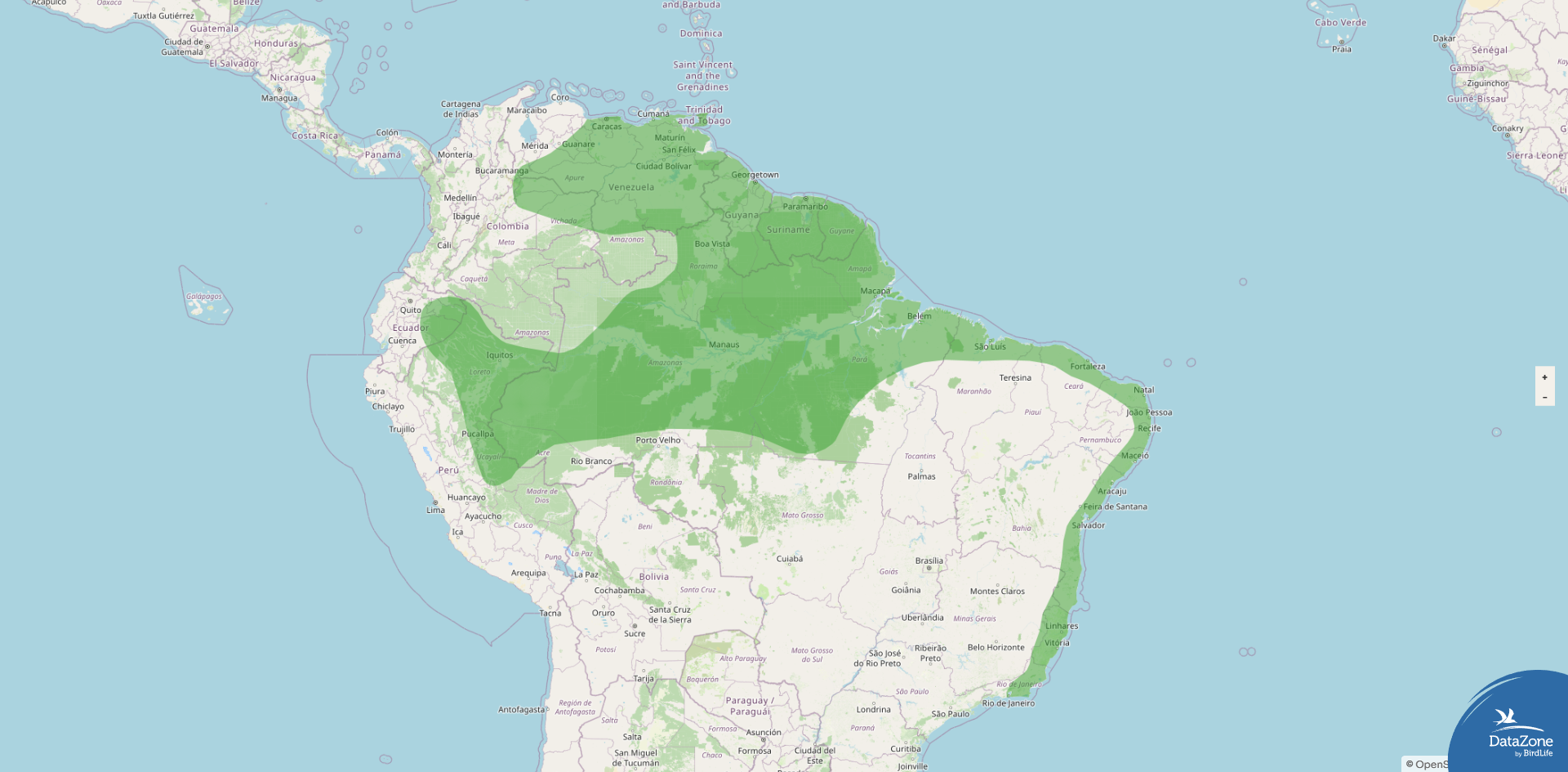
Legend
Green Resident
Species Overview
The Blue-chinned Sapphire is a small, active hummingbird of lowland forests and semi-open landscapes, often seen around flowering trees and shrubs in riverine woods, forest edges, and gardens. It adapts well to human-modified habitats as long as tall trees and nectar sources remain. Its broad range and tolerance of disturbed areas are consistent with its current Least Concern status, though detailed population trends remain unclear.
Male Description
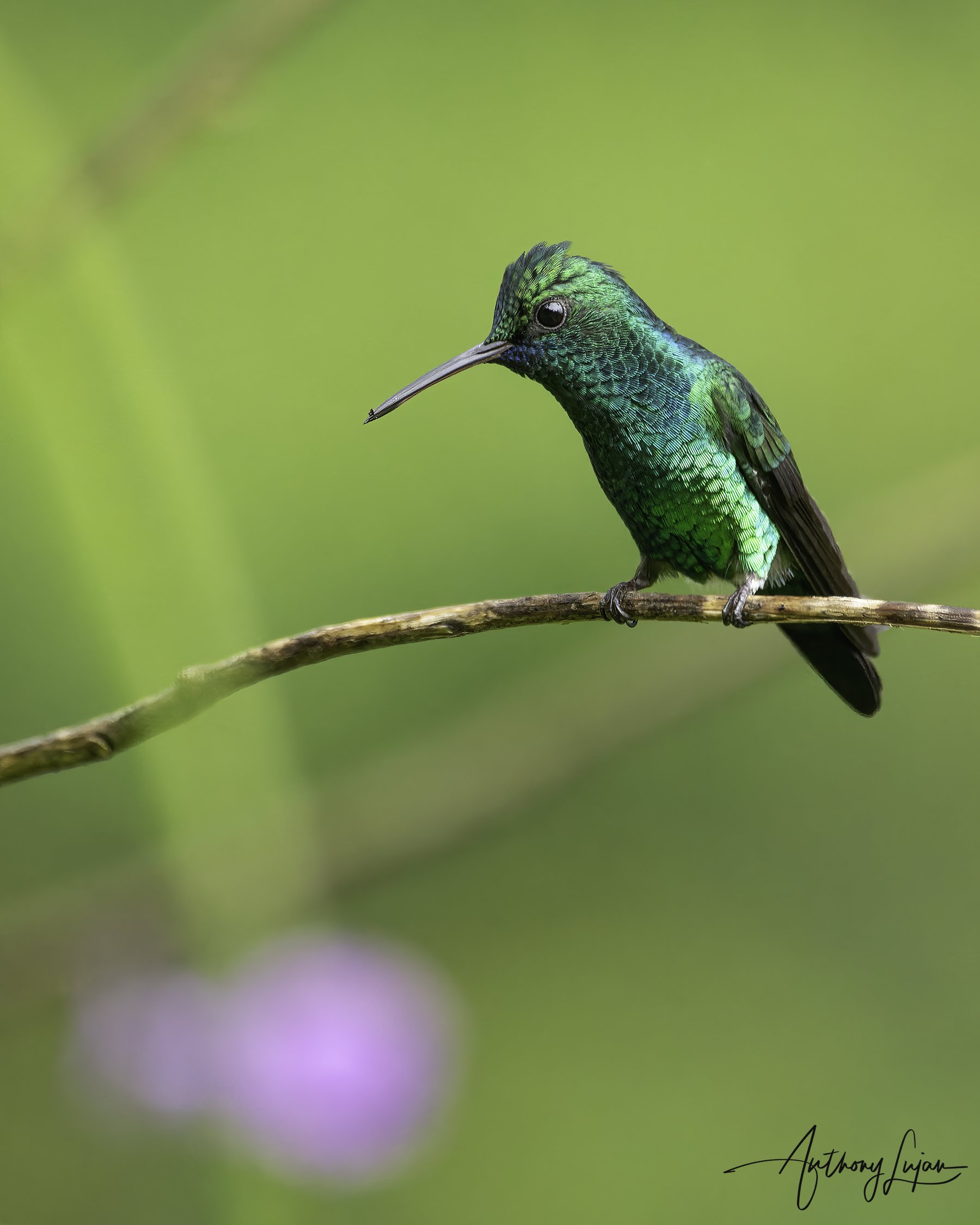
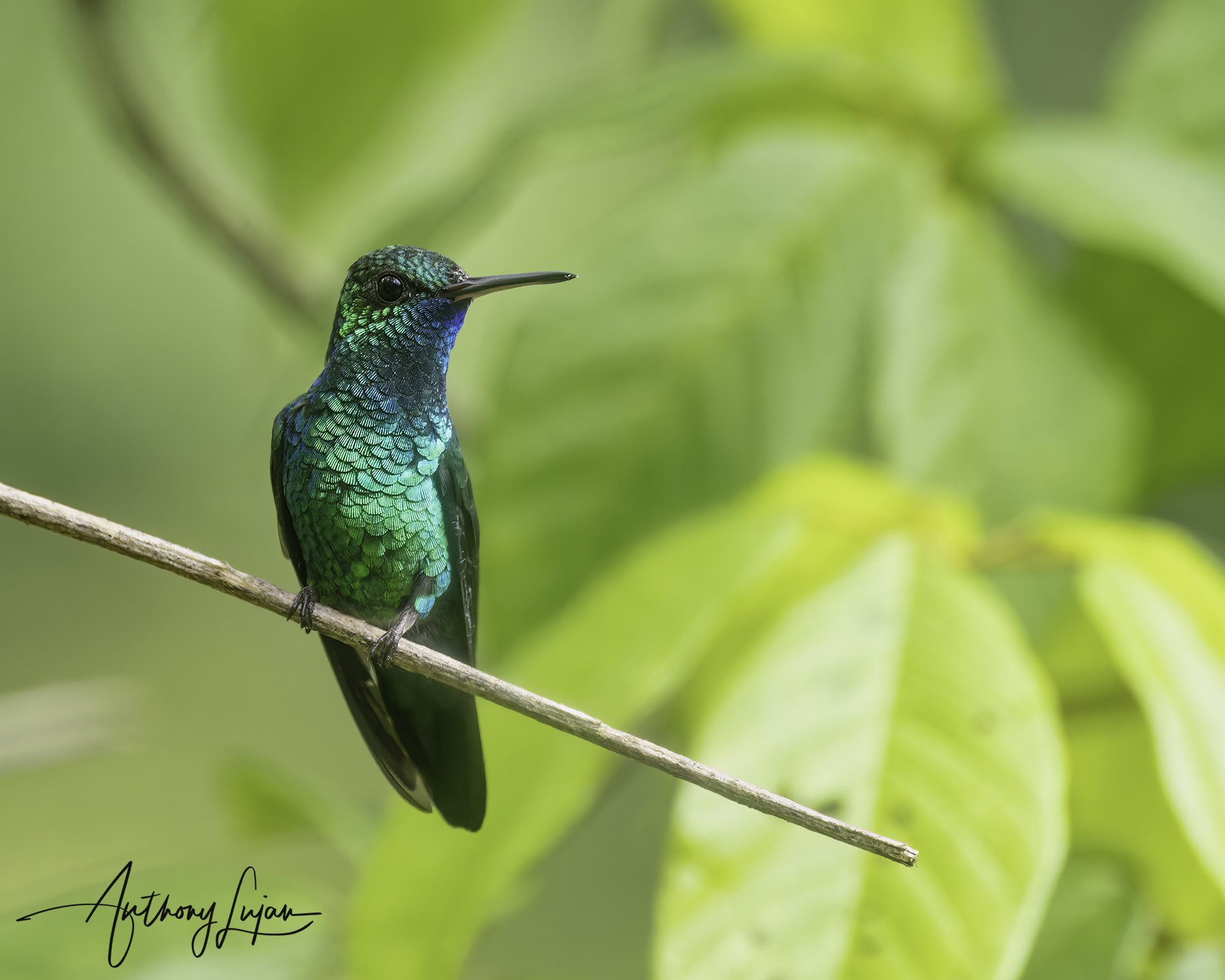
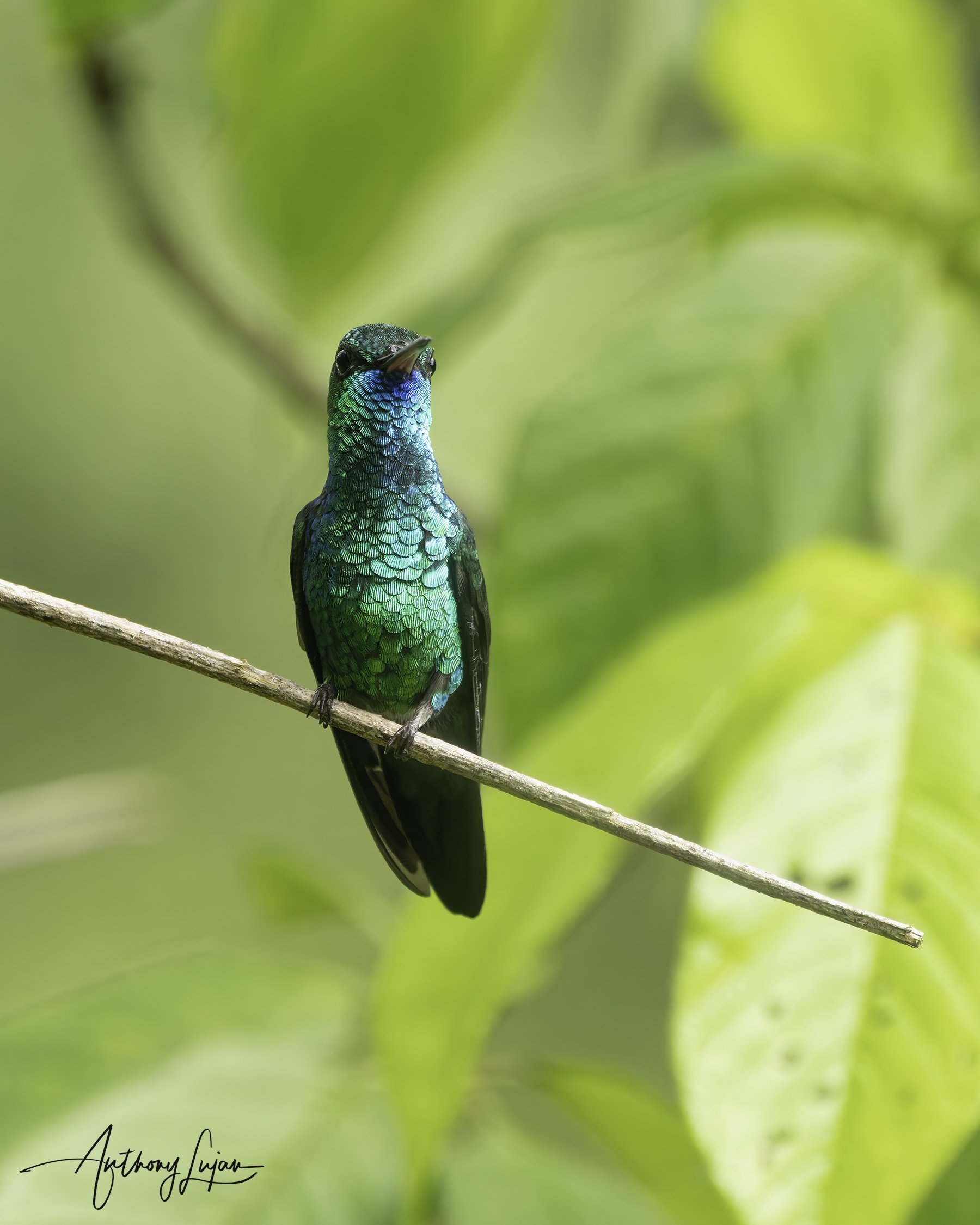
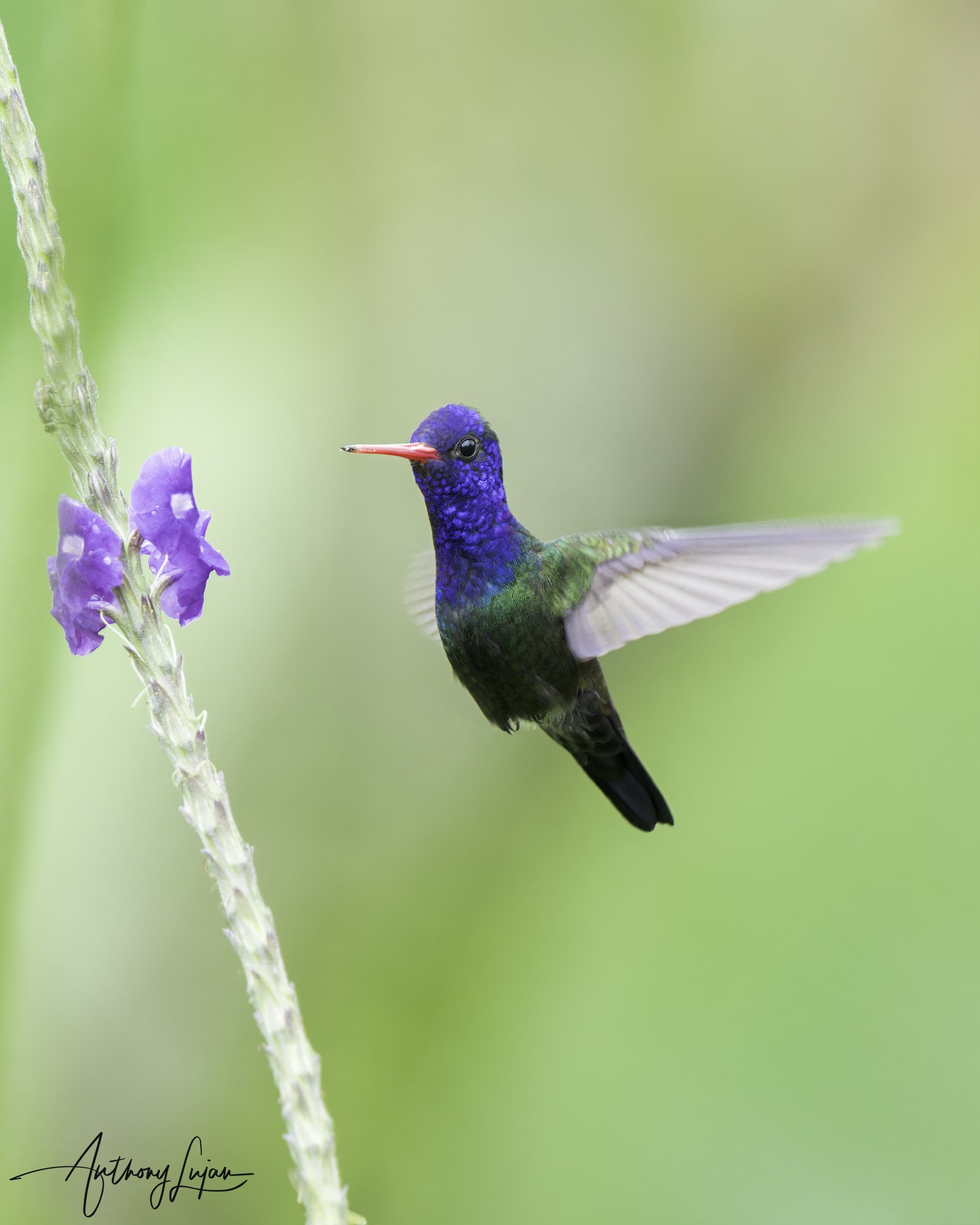
Adult males are small with a fairly straight bill; the upper mandible is black and the lower mandible reddish with a darker tip. The upperparts (crown, nape, back, and rump) are bright, shining green. The underparts are also green but somewhat paler than the back, with conspicuous white thighs. The chin and upper throat show a blue patch that can be subtle and is most visible when the bird faces the observer in good light, creating the “blue-chinned” effect. The tail is forked and metallic blue to bluish, often flashing strongly in flight. In the field, males appear as compact, bright green hummingbirds with a blue-tinged chin, white thighs, and a forked blue tail.
Female Description
Adult females have green upperparts like the male, but the underparts are mostly white with green spotting on the throat, breast, and sides. The bill is similar in shape, with a dark upper mandible and paler lower mandible. The tail is bluish but typically less vivid than in the male; outer tail feathers often show whitish or pale tips. Females therefore appear as small green-backed hummingbirds with white, green-spotted underparts and a modest bluish tail.
Habitat & Behavior
Blue-chinned Sapphires occupy a broad range of lowland habitats, including forest edges, riverine woodland, várzea and terra firme borders, savannas with scattered trees, plantations, fields, and town gardens with large trees. They feed on nectar from a variety of flowers on trees, shrubs, and herbs, often favoring tubular blossoms with high sugar content, and they also take small insects for protein. Birds forage by hovering at flowers or briefly perching, and may aggressively defend rich nectar sources. The species is considered non-migratory, remaining within its broad tropical range year-round, though local movements likely follow flowering phenology and resource availability.
Population
The overall number of mature individuals is unknown, but the Blue-chinned Sapphire has an extensive distribution across northern South America and Trinidad & Tobago. It is often described as fairly common in suitable habitats, particularly in lowland woodland and semi-open areas. Because it tolerates a range of habitat conditions, including some disturbance, there is no clear evidence yet of strong global decline, and its population trend remains formally unknown.

Conservation
The Blue-chinned Sapphire is classified as Least Concern due to its large range and apparent abundance across multiple countries. It benefits from its ability to use secondary habitats, plantations, and gardens with tall trees, although ongoing deforestation, habitat conversion, and urbanization inevitably reduce some local populations. Maintaining forest patches, riparian corridors, and tree-rich agricultural and urban landscapes will help conserve this species as well as many other lowland hummingbirds.
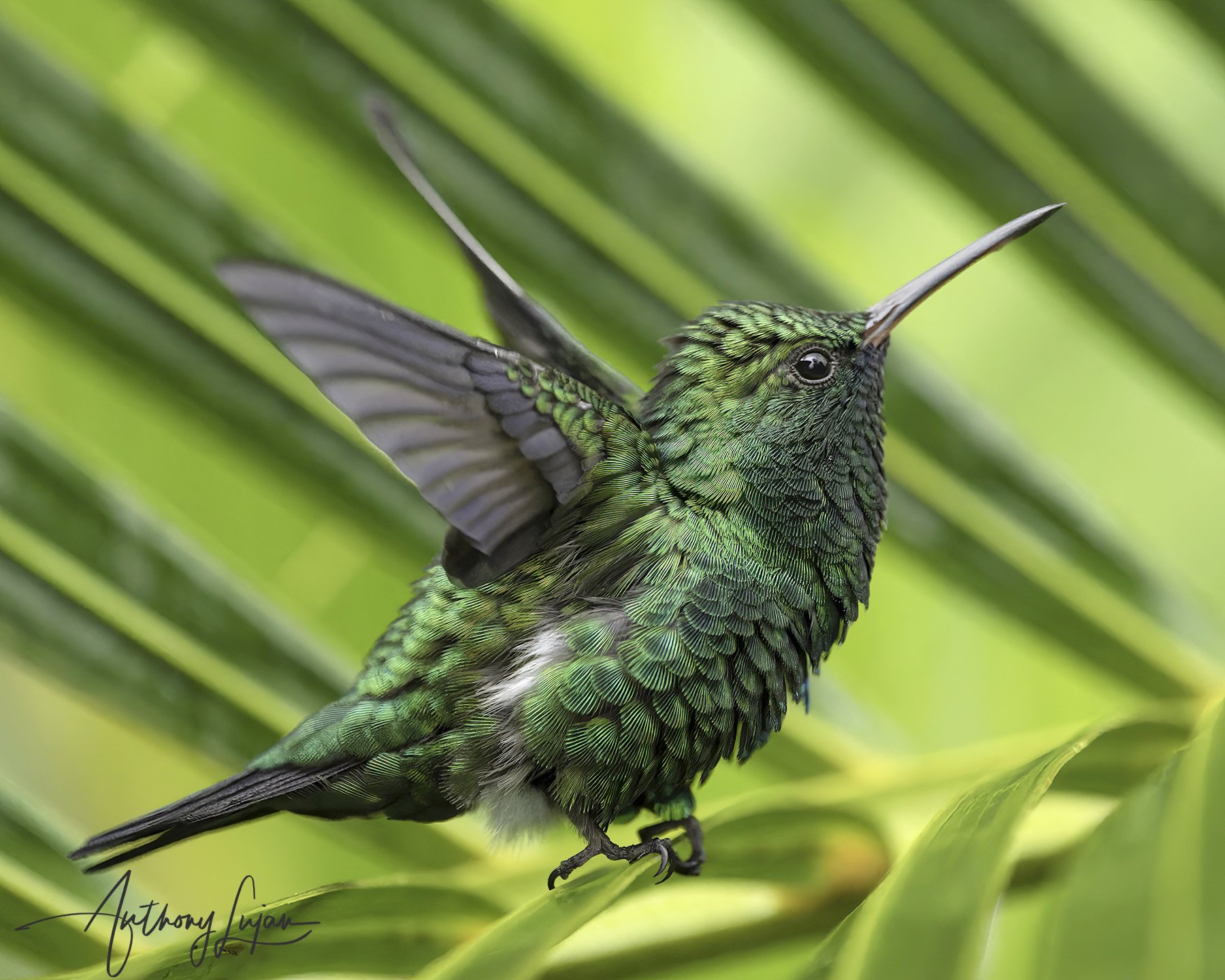
Below is the Blue-chinned Sapphire (Chlorestes notata notata)
Photographed at Yerette – Home of the Hummingbird, Tunapuna-Piarco, Trinidad and Tobago
This individual belongs to the nominate subspecies notata, which occurs in northern South America, including Trinidad and Tobago, coastal Venezuela, the Guianas, and northeastern Brazil. It inhabits lowland forest, gardens, and secondary growth where flowering trees and shrubs are abundant.
Checkout Anthony’s playlist of this species! Click the top right dropdown to see all the videos.
Related species in the Chlorestes genus (5 species total):


Please note: The content provided in this article reflects Anthony’s personal experience and photographic approach. Results can vary depending on light, weather, location, equipment, subject behavior, and field conditions.