
Blue-tailed Emerald
Scientific name: Chlorostilbon mellisugus
The Blue-tailed Emerald is a small “emerald” hummingbird widely distributed across lowland and foothill South America east of the Andes. The number of mature individuals is unknown, the population is decreasing, it is considered non-migratory, and it is currently listed as Least Concern with six recognized subspecies.
At a Glance
Family: Trochilidae (hummingbirds)
Clades: Trochilini – Emeralds
Genus group: Chlorostilbon — small, iridescent green “emerald” hummingbirds of the Neotropics (10 species total)
Range: Tropical and subtropical South America east of the Andes from Colombia and Venezuela through the Guianas and much of Amazonia south to northern Bolivia and central Brazil, plus several islands off northern South America (e.g., Aruba, Curaçao, Bonaire, Trinidad, Margarita).
Habitat: Semi-open to open landscapes including savannas, riparian woodland, forest clearings, white-sand forest, cultivated areas, and gardens; also edges of terra firme forest and várzea/floodplain forest.
Elevation: Typically from sea level to about 1,600–2,000 m (5,200–6,600 ft), most common in lowlands and foothills.
Length: About 7–9.5 cm (2.8–3.7 in).
Weight: About 2.3–2.8 g (0.08–0.10 oz).
Number of mature individuals: Unknown
Population trend: Decreasing
Status: Least Concern (IUCN)
Name Origin
The genus name Chlorostilbon comes from Greek roots meaning “green” and “shining,” referring to the bright, metallic green plumage typical of these emeralds. The species name mellisugus means “honey-sucking,” an apt description of a nectar-feeding hummingbird. The English name “Blue-tailed Emerald” highlights the combination of a glittering green body and a dark tail with a bluish sheen.
Subspecies & Distribution
Six subspecies:
Chlorostilbon mellisugus caribaeus
Distribution: Islands of Aruba, Curaçao, Bonaire, Trinidad, and Margarita, and the adjacent northern coast of Venezuela. This island–coastal form inhabits semi-open habitats, gardens, and wooded savannas near sea level.Chlorostilbon mellisugus duidae
Distribution: Endemic to the Mt. Duida region in southern Venezuela (Amazonas). It occupies humid, forested slopes and nearby clearings associated with this isolated tepui massif.Chlorostilbon mellisugus subfurcatus
Distribution: Eastern and southern Venezuela, Guyana, and the Rio Branco region of northwestern Brazil. It occurs in lowland savannas, riparian woodland, and semi-open forest mosaics.Chlorostilbon mellisugus mellisugus
Distribution: Suriname, French Guiana, and the lower Amazon watershed of northeastern Brazil. This is the Guianan–lower Amazon form, found in semi-open lowland habitats, forest edges, and clearings.Chlorostilbon mellisugus phoeopygus
Distribution: Upper Amazon Basin and its eastern tributaries in Colombia, Ecuador, Peru, and western Brazil. It inhabits riverine woodland, clearings, and semi-open areas within upper Amazonian landscapes.Chlorostilbon mellisugus peruanus
Distribution: Southeastern Peru, northern Bolivia, and possibly extreme southwestern Brazil. This subspecies is associated with the southern fringe of Amazonia and adjacent foothill regions.
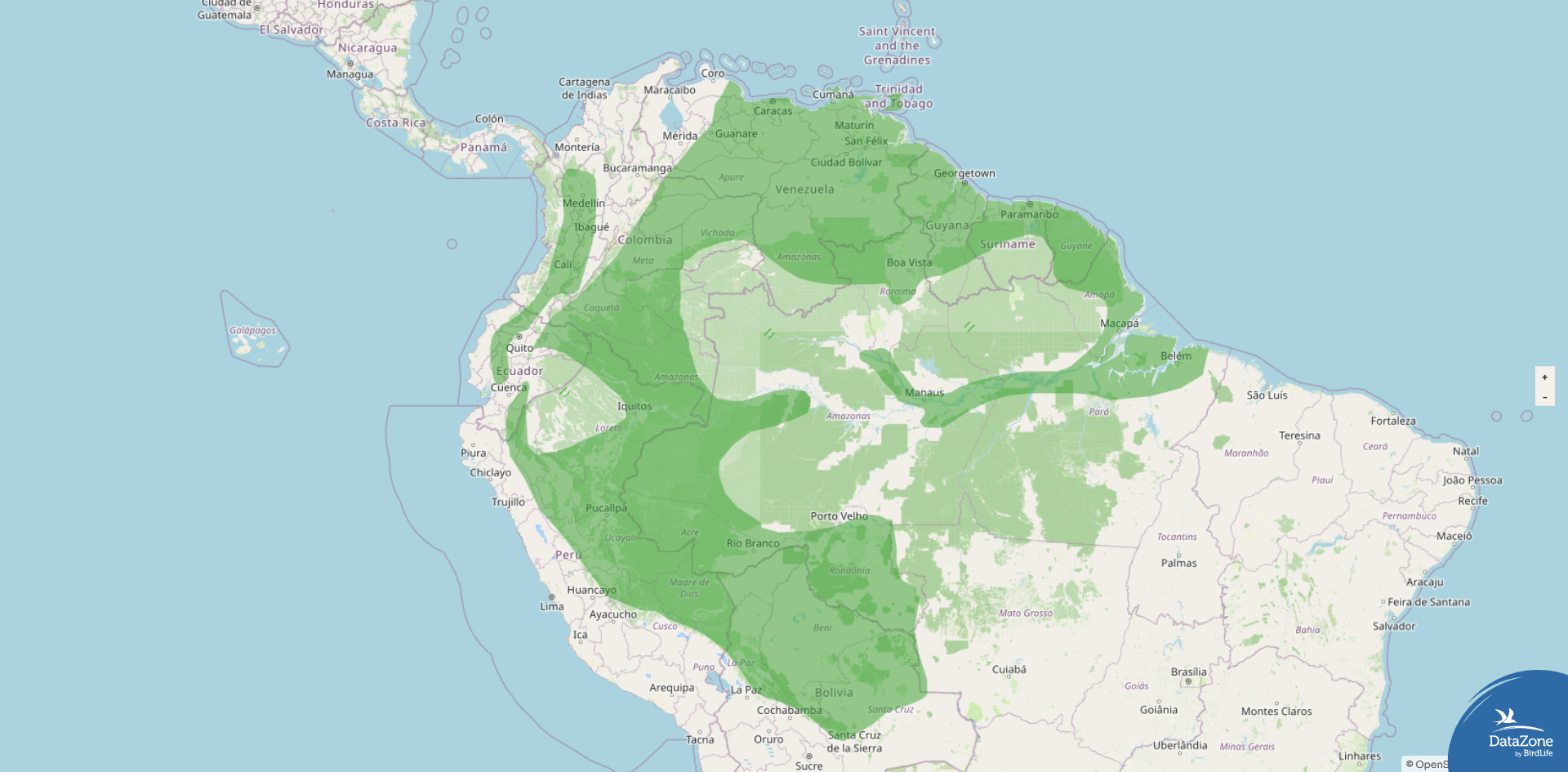
Legend
Green Resident
Species Overview
The Blue-tailed Emerald is a versatile lowland hummingbird that thrives in a wide range of semi-open and edge habitats across northern and central South America. It is frequently seen in savannas with scattered trees, riparian corridors, clearings, and gardens, where it visits flowering shrubs and trees. Its adaptability and large range underpin its Least Concern status, although local declines are expected where natural habitats are heavily transformed.
Male Description
Adult males are tiny, slender hummingbirds with a straight, mostly black bill (lower mandible sometimes showing a paler base). The head, back, and underparts are glittering metallic green, occasionally with a bluish sheen on the face and breast. The thighs are conspicuously white, forming “puffy leggings” that may be visible at close range. The tail is moderately forked and dark, often appearing black with a deep blue or bluish-green sheen in good light. In the field, males appear as very small, bright green birds with a dark, blue-tinged tail and white “leggings.”
Female Description
Adult females are green above, with whitish to grayish underparts. The face shows a dark cheek or ear patch and a narrow white or pale post-ocular streak behind the eye. The throat and breast are pale grayish or whitish, usually with little or no green spotting. The tail is slightly notched, dark (black to blue-black) with narrow white corners or tips on the outer feathers. Females thus appear as small green-backed hummingbirds with a whitish underside, pale face markings, and a dark tail with white corners.
Habitat & Behavior
Blue-tailed Emeralds prefer semi-open to open habitats rather than dense interior forest. They frequent savannas, grasslands with scattered trees, riparian woodland, forest edges, large clearings within terra firme and várzea forest, cultivated areas, and gardens with bright flowers and feeders. They feed by hovering or briefly perching at tubular and brushy flowers on shrubs and trees, and they also take small insects for protein. Birds can be quite territorial around favored nectar sources, chasing away other hummingbirds. The species is considered non-migratory across its broad range, though individuals may make local movements tracking flowering and seasonal changes.
Population
The total number of mature individuals is unknown, but the Blue-tailed Emerald is widespread and often common in suitable semi-open habitats. It benefits from some human-modified environments such as gardens and lightly cultivated areas, provided that flowering plants and trees remain. Nonetheless, large-scale deforestation, intensive agriculture, and urbanization can reduce and fragment suitable habitats, contributing to an overall decreasing trend.

Conservation
The Blue-tailed Emerald is listed as Least Concern thanks to its extensive range, ecological flexibility, and presence in many regions and countries. However, ongoing habitat loss and degradation across Amazonia, the Guianas, and coastal zones pose continuing pressures. Conservation that maintains savanna–forest mosaics, riparian corridors, and tree-rich agricultural and urban landscapes will help sustain this species and other lowland emeralds.
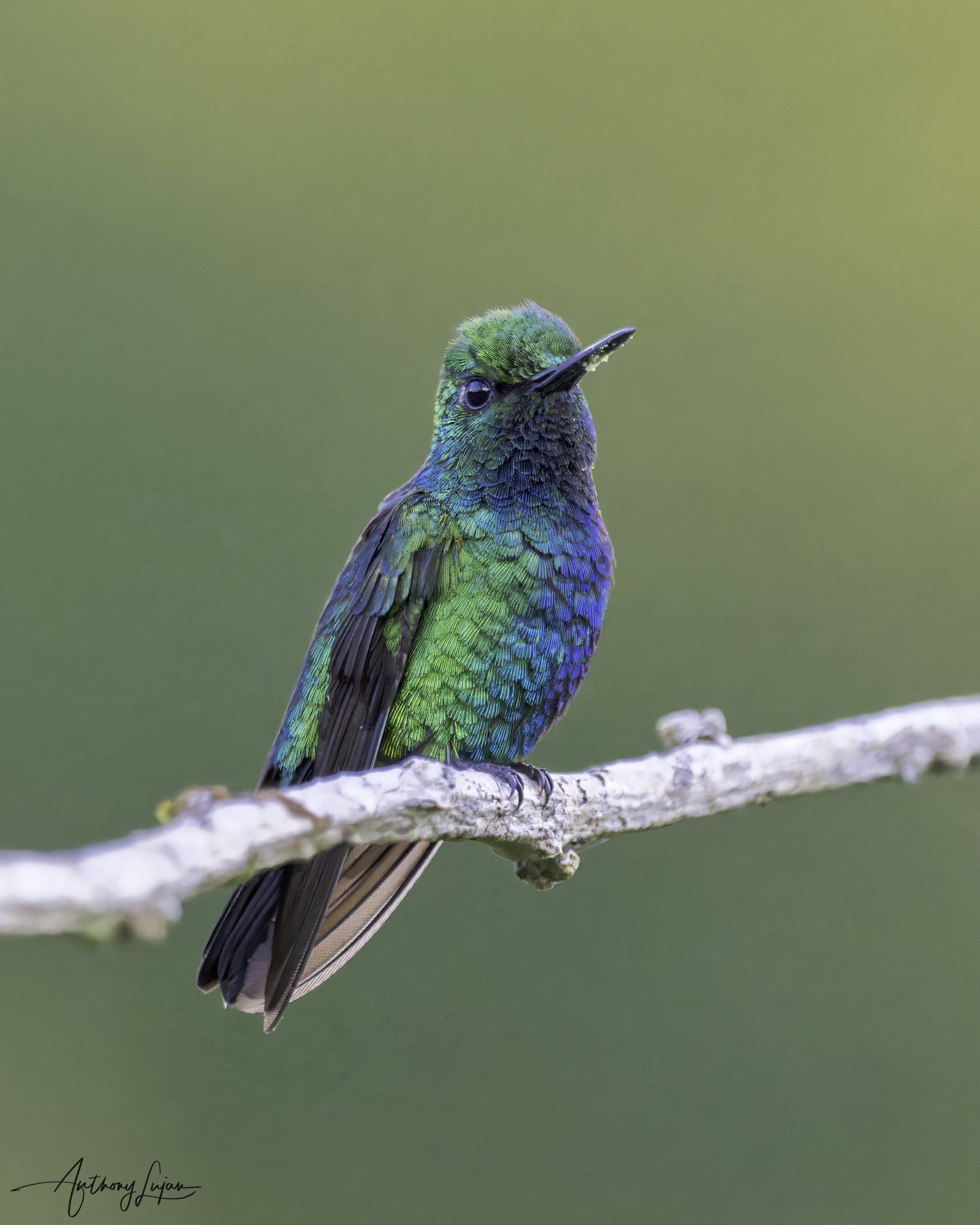
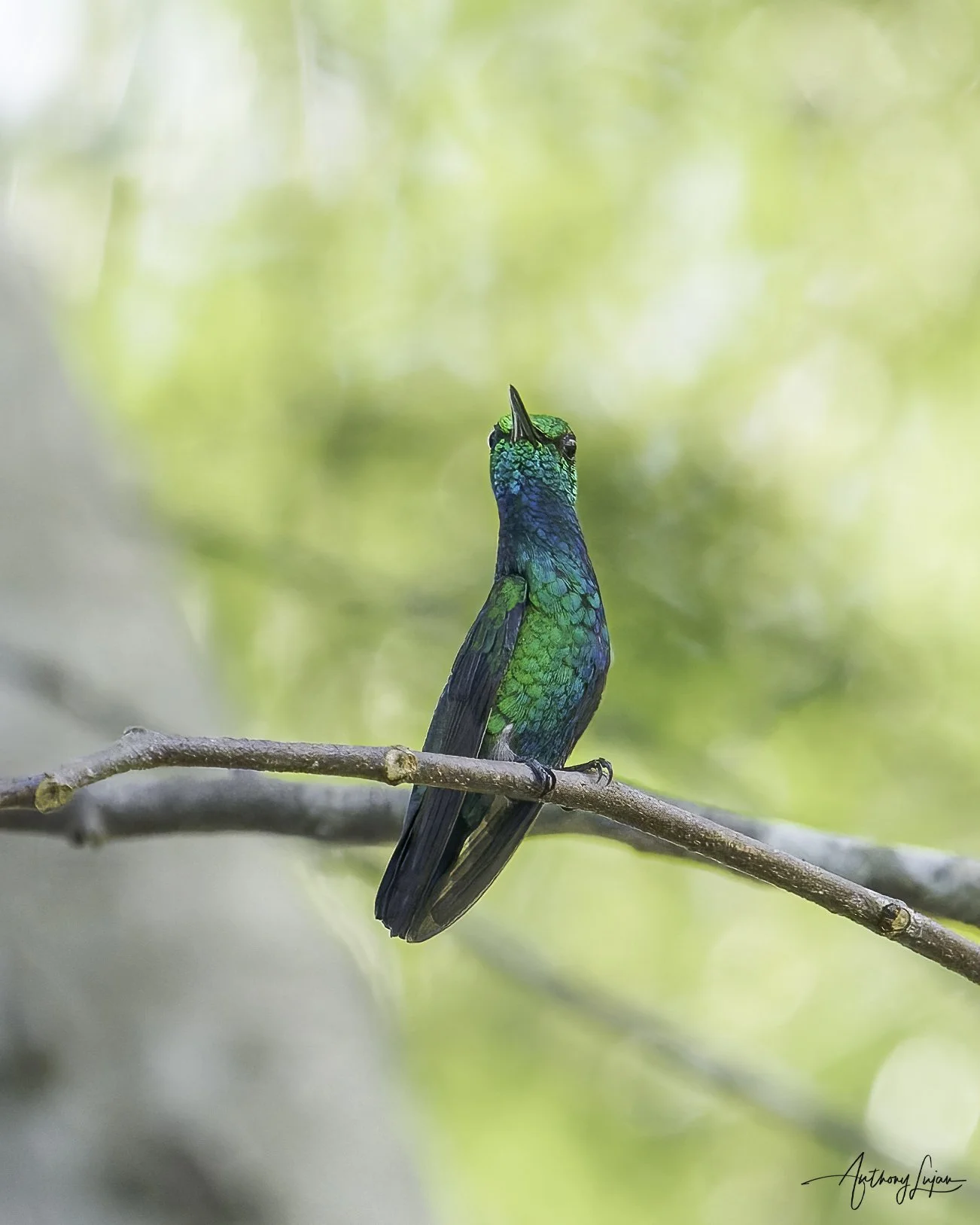
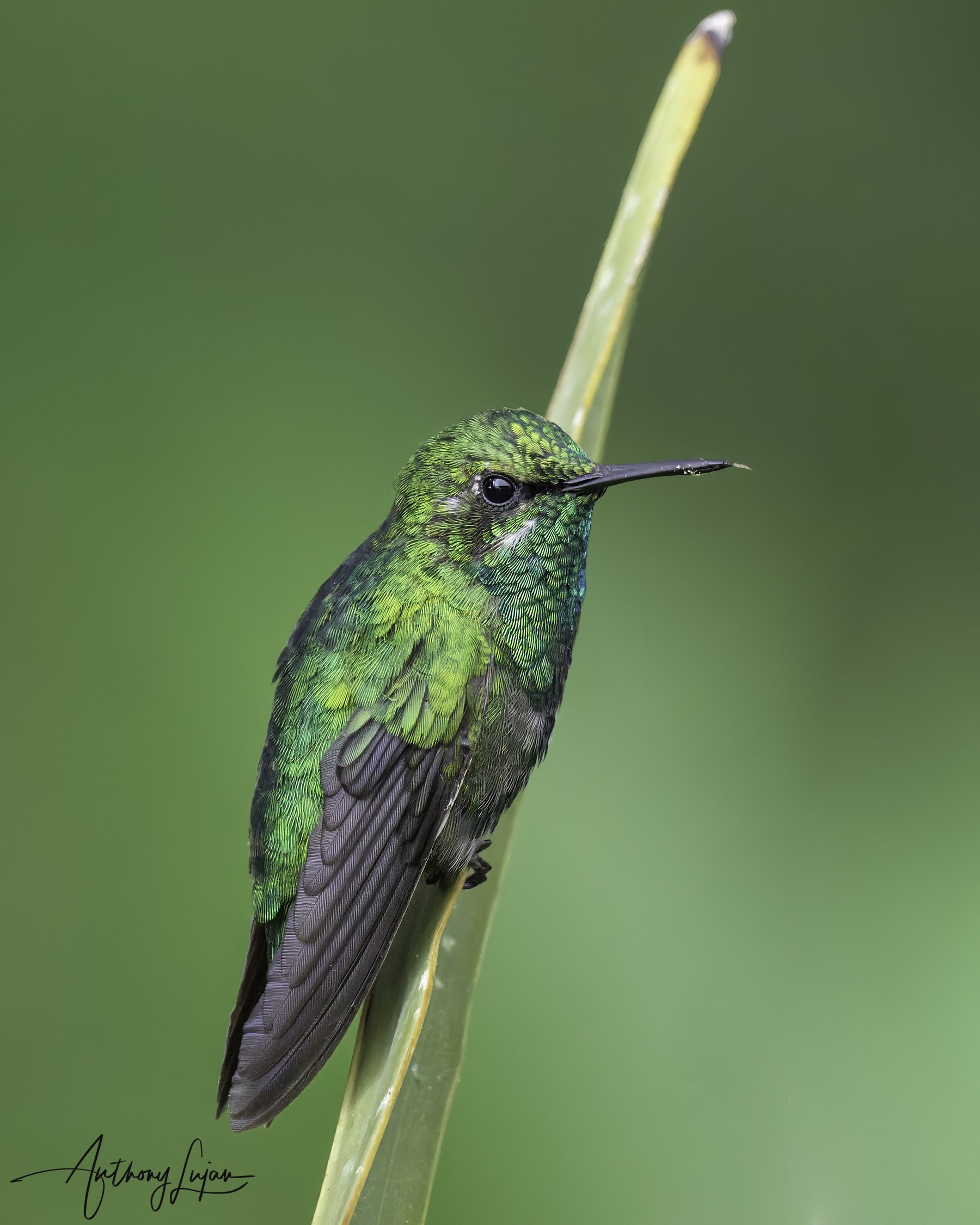
Below is the Blue-tailed Emerald (Chlorostilbon mellisugus phoeopygus)
Photographed at Waqanki / Quebrada Mishquiyaquillo, San Martín, Peru, and Rio Solimões – Ilha Nova, Iranduba, Amazonas, Brazil
These individuals belong to the subspecies phoeopygus, which occurs throughout the upper Amazon Basin from southern Colombia and eastern Ecuador through northern Peru and into western Brazil around Manaus and the Solimões River. It inhabits humid lowland and foothill forest edges, secondary growth, and riverine woodland where flowering shrubs and trees are abundant.
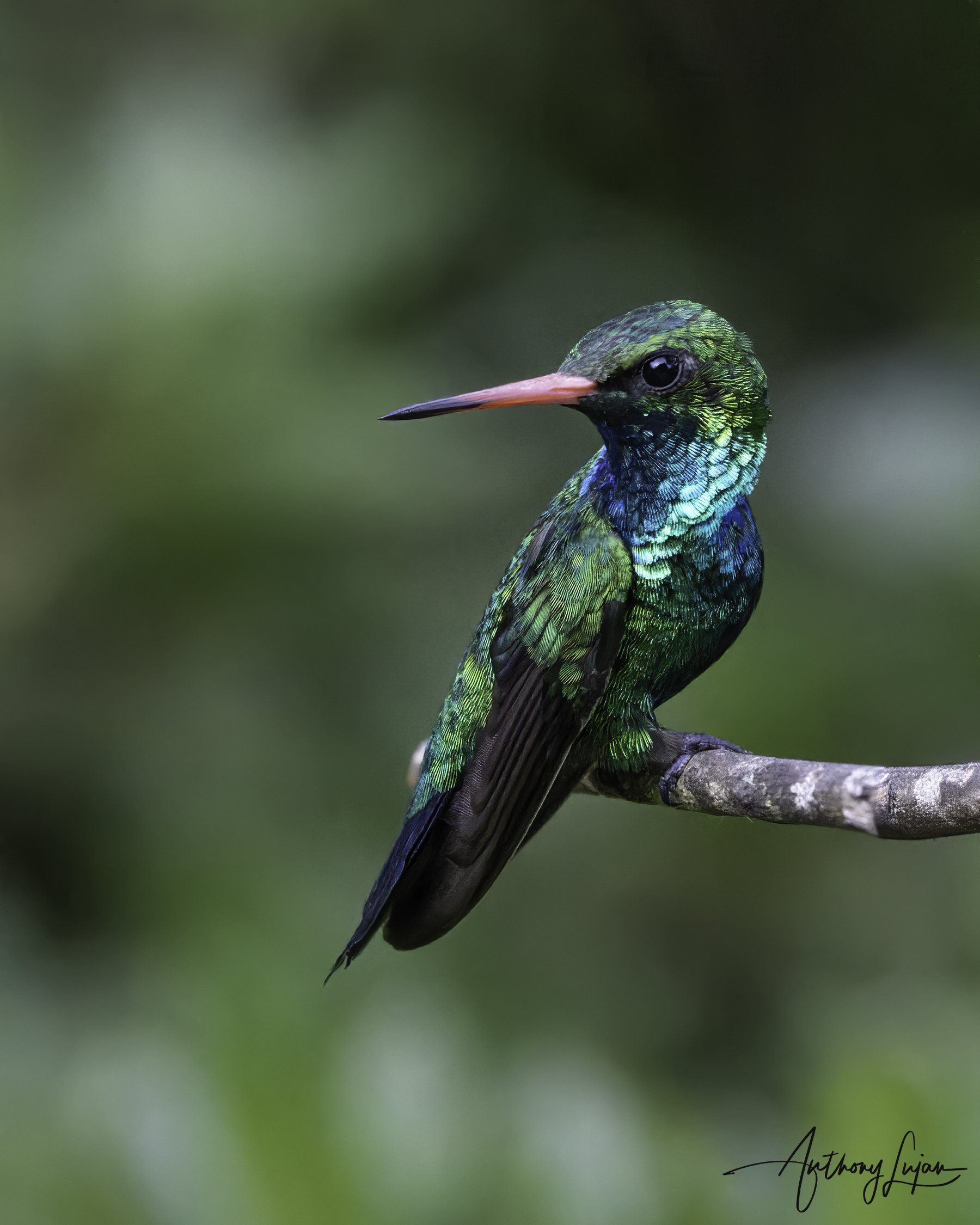
Related species in the Chlorostilbon genus (10 species total):




Please note: The content provided in this article reflects Anthony’s personal experience and photographic approach. Results can vary depending on light, weather, location, equipment, subject behavior, and field conditions.