
Blue-tailed Hummingbird

Scientific name: Saucerottia cyanura
The Blue-tailed Hummingbird is a mid‑elevation “emerald” hummingbird of southern Mexico through Central America, where it inhabits semi‑open forests, edges, scrub, and shade coffee from Mexico to Costa Rica. Its deep green body and dark metallic blue tail give it a distinctive look among Mesoamerican hummingbirds.
At a Glance
Family: Trochilidae (hummingbirds)
Clade: Trochilini – Emeralds
Genus group: Saucerottia — mid‑elevation emeralds of Mexico and Central America.
Range: Southern Mexico (southeastern Chiapas) south through Guatemala, El Salvador, Honduras, and northwestern Nicaragua to northwestern and central Costa Rica.
Habitat: Edges and clearings of humid and dry oak and pine forest, secondary forest, scrublands, plantations, and shade coffee.
Elevation: About 100–1,800 m (330–5,900 ft) in Mexico and Guatemala, and from near sea level to about 1,200 m (3,900 ft) in El Salvador, Honduras, and Nicaragua; in Costa Rica mainly in the Pacific lowlands and foothills.
Length: about 9–10 cm (3.5–3.9 in).
Weight: roughly 3.9–4.5 g (0.14–0.16 oz).
Number of mature individuals: at least 50,000.
Population trend: Decreasing.
Status: Least Concern (IUCN).
Name Origin
The genus name Saucerottia honors Antoine Claudius Saucerotte, an 18th‑century French physician and naturalist who studied hummingbirds. The species name cyanura comes from Greek kyanos (“blue”) and oura (“tail”), meaning “blue‑tailed,” directly describing the bird’s dark metallic blue tail. The English name “Blue-tailed Hummingbird” mirrors this descriptive origin.
Subspecies and Distribution
The Blue-tailed Hummingbird has three recognized subspecies.
Saucerottia cyanura guatemalae
Ranges on the Pacific slope from southeastern Chiapas in southern Mexico to southern Guatemala. It typically occupies semi‑open habitats and forest edges in this region.Saucerottia cyanura cyanura (nominate)
Occurs in southern Honduras, eastern El Salvador, and northwestern Nicaragua. It uses a similar mix of forest edges, secondary growth, scrub, and plantations.Saucerottia cyanura impatiens
Found in northwestern and central Costa Rica. The main range lies in the Pacific lowlands and foothills, though BirdLife maps often under‑represent this southern subspecies.
Across these subspecies, Blue-tailed Hummingbirds occupy a discontinuous band from southern Mexico to Costa Rica, mainly in Pacific‑slope and interior foothill landscapes.
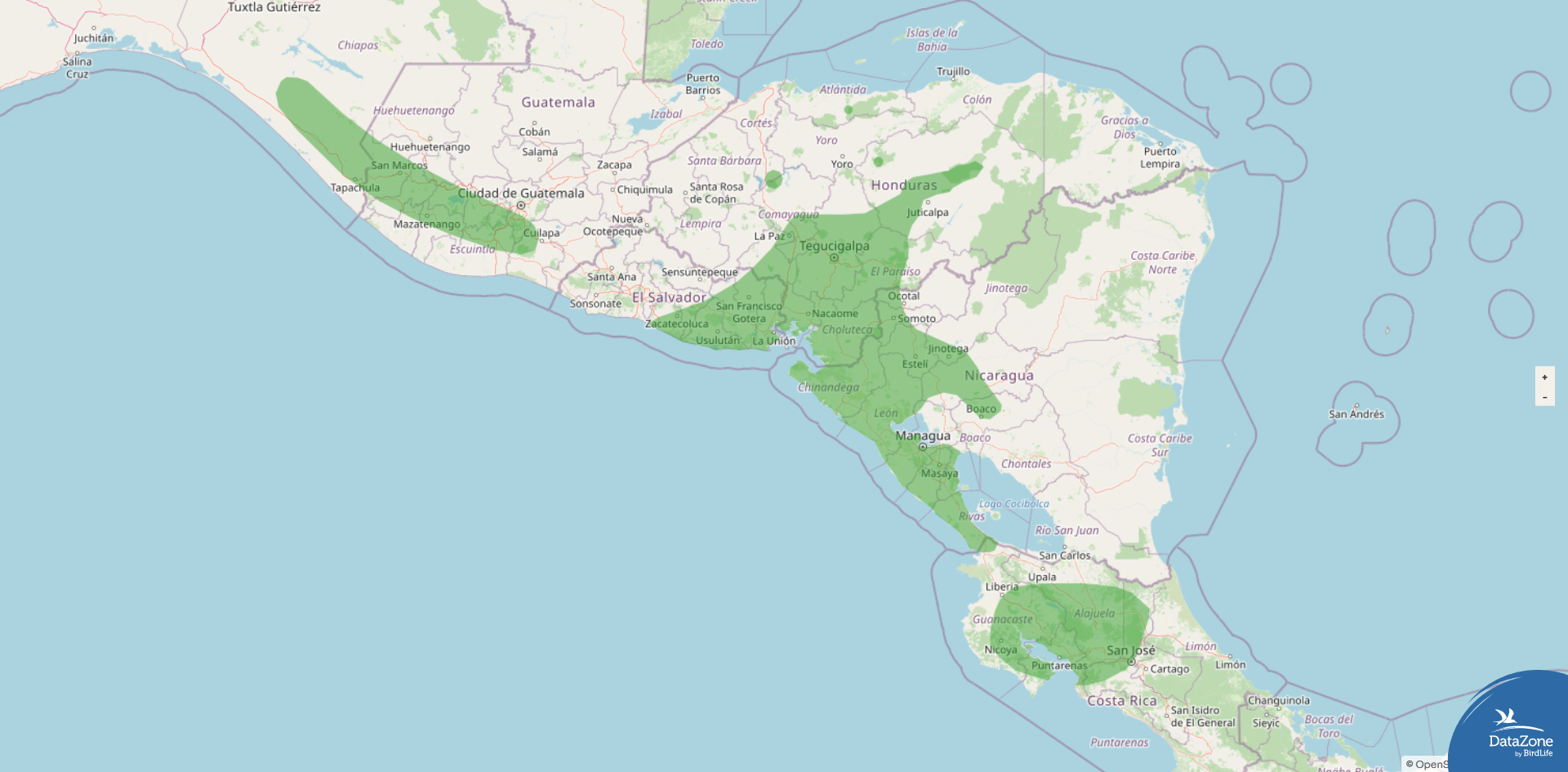
Legend
Green Resident
Species Overview
Blue-tailed Hummingbird is a characteristic “emerald” of semi‑open landscapes in southern Mexico and northern Central America. It is often found at forest edges, along roadsides, and in shade coffee, where it moves quickly between flowering trees and shrubs. Although still locally common, its population is thought to be slowly decreasing, and it is one of several Mexican hummingbirds projected to lose suitable habitat under combined climate and land‑use change scenarios.
Identification
Male
Males are about 9–10 cm long, with a deep metallic green crown and back, a dull purplish‑bronze rump, and dark metallic bluish uppertail coverts. Their primaries and secondaries are chestnut and form a noticeable patch on the folded wing, and the tail is dark metallic violet‑blue. The underparts are mostly bright metallic green, with dull steel‑blue undertail coverts. The bill is black with a reddish base to the lower mandible.
Subspecies S. c. guatemalae is much darker than the nominate, with darker chestnut in the wing, a more violaceous to metallic purple tail, and dark steel‑blue to blue‑black undertail coverts. S. c. impatiens is somewhat larger, with darker green head and back, a larger rufous patch on the wing, and dull steel‑blue undertail coverts edged rich ferruginous.
Female
Females are similar to males but duller overall. Their rump is less purplish, and the underparts’ feathers usually have narrow whitish margins, giving a more scaled appearance; the belly may show some dull buffy whitish mixed in, and the undertail coverts are grayish. Both sexes share the dark blue tail and chestnut wing patch, which are key field marks when seen well.
Habitat and Behavior
Blue-tailed Hummingbirds inhabit a variety of semi‑open landscapes, including the edges and clearings of humid and dry oak and pine forest, secondary forest, scrublands, plantations, and shade coffee farms. They forage for nectar at all levels of the habitat, from understory shrubs to canopy blooms, and are known to frequent flowering Inga trees. While detailed diet information is limited, they likely also consume small insects as other hummingbirds do. Movements are poorly known, but the species is generally considered resident with possible local or elevational shifts rather than long‑distance migration.
Population and Threats
The IUCN assesses the Blue-tailed Hummingbird as Least Concern, with an estimated population of at least 50,000 mature individuals, but the overall trend is Decreasing. No single, immediate global threat has been identified, and human activity is thought to have little short‑term effect in much of its range. However, habitat models and regional studies indicate that a high proportion of its suitable climatic range overlaps human‑modified areas, and ongoing deforestation, agricultural expansion, and land‑use change likely contribute to a slow decline.

Conservation
Because Blue-tailed Hummingbirds use forest edges, secondary growth, and shade coffee, conservation of mosaics that include natural forest and agroforestry systems is important. Maintaining shade coffee rather than converting to full‑sun plantations, preserving forest corridors, and limiting further fragmentation of oak and pine forests will help sustain its populations. Monitoring trends under climate and land‑use change scenarios is also important, given projections that a large share of its suitable range lies within human‑modified landscapes.
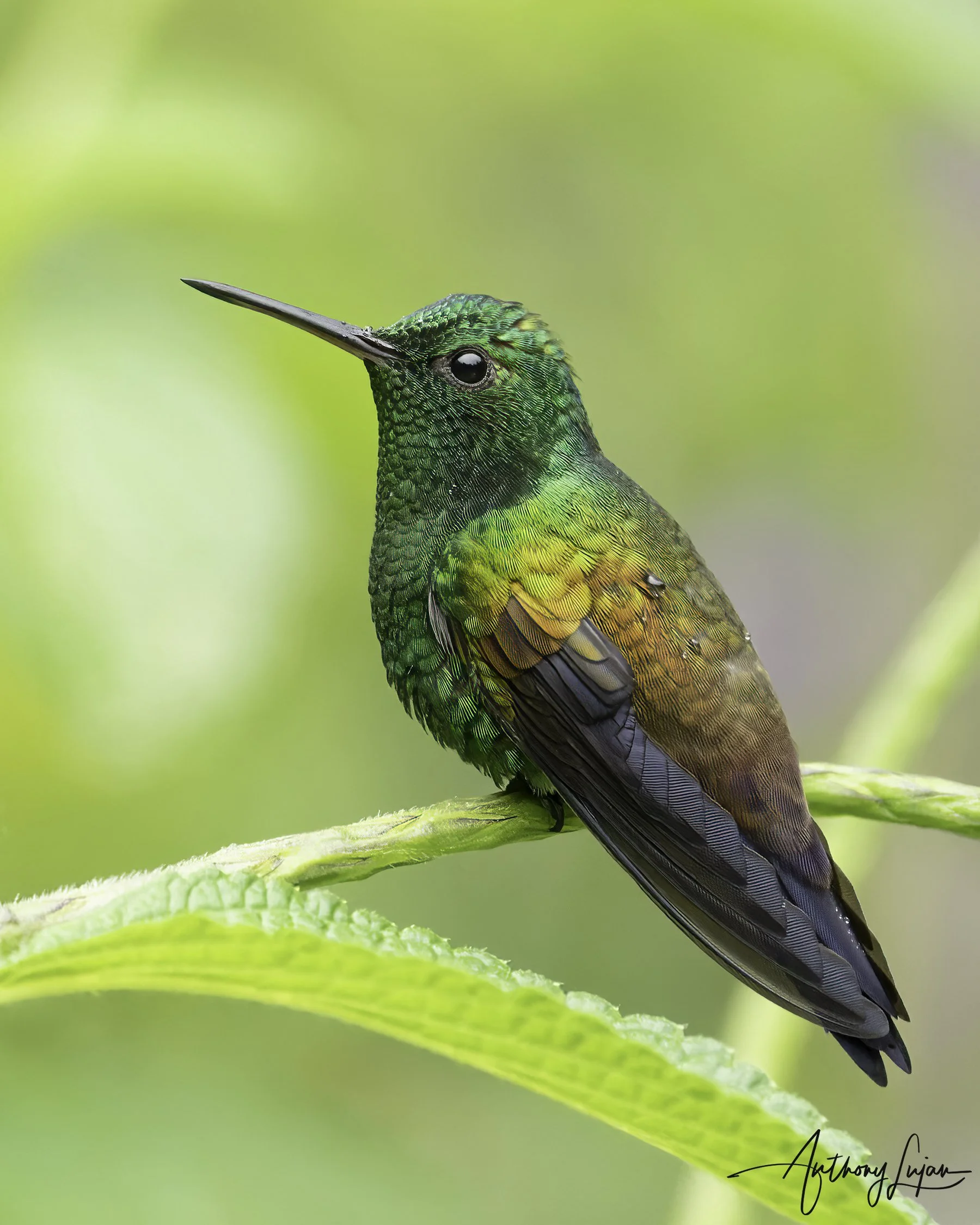
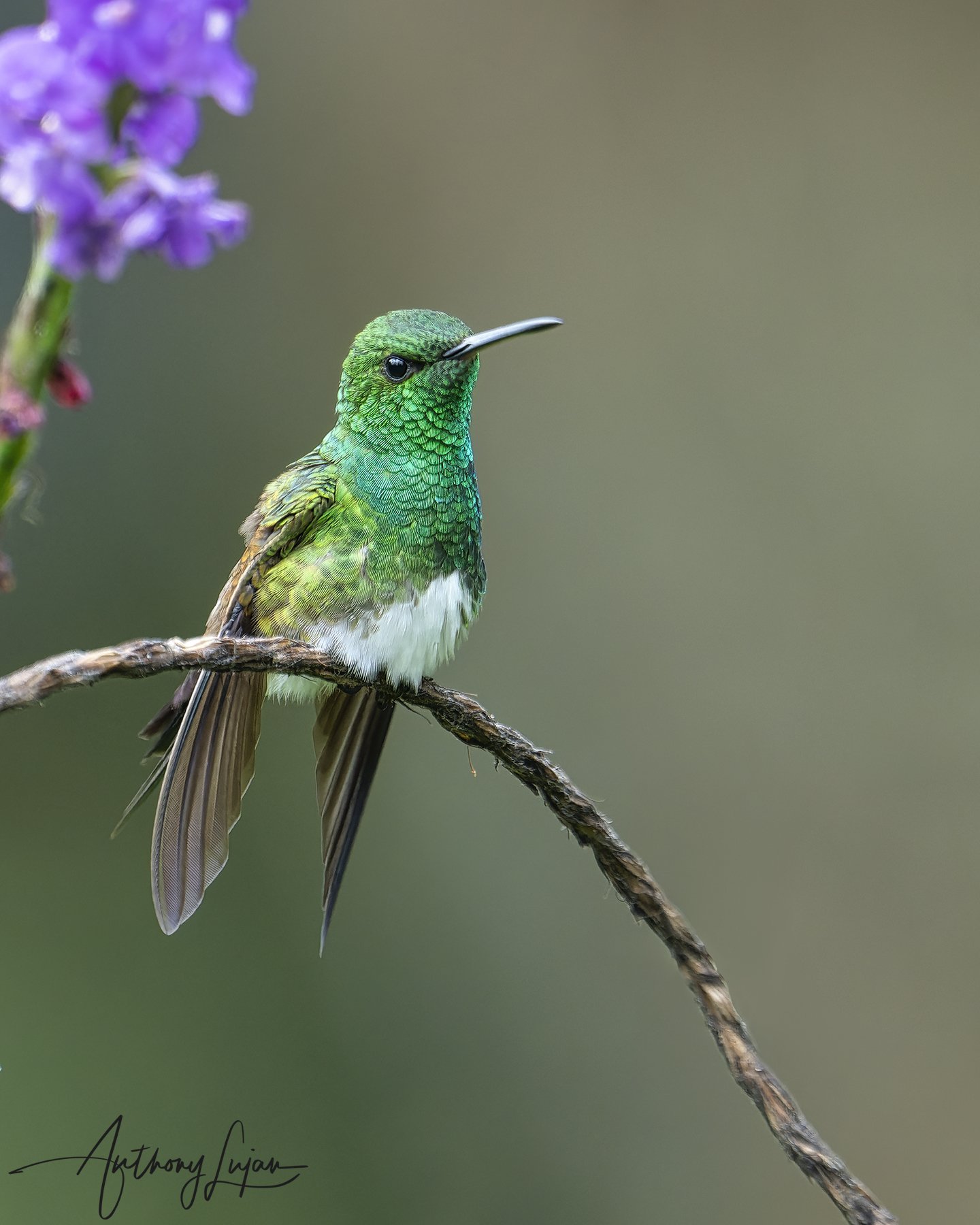
Below is the Blue-tailed Hummingbird (Saucerottia cyanura guatemalae)
Photographed in San Marcos, Guatemala
This individual belongs to the subspecies guatemalae, which occurs in the highlands of Chiapas, Mexico, and Guatemala. It inhabits pine-oak woodland, forest edge, and semi-open scrub between 900 and 2,000 meters, often frequenting flowering coffee shade and secondary growth.


Checkout Anthony’s playlist of this species! Click the top-right dropdown to see all the videos.
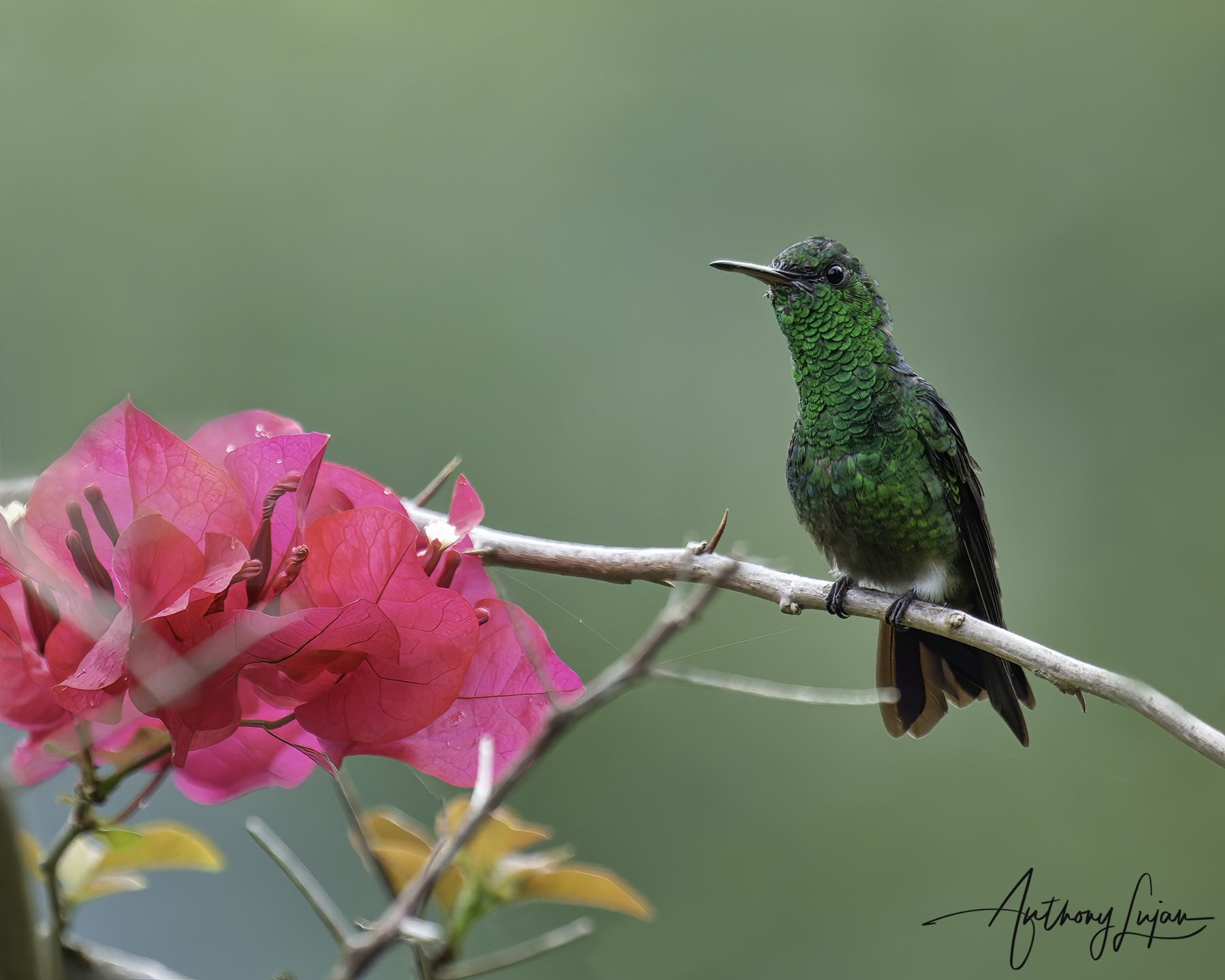
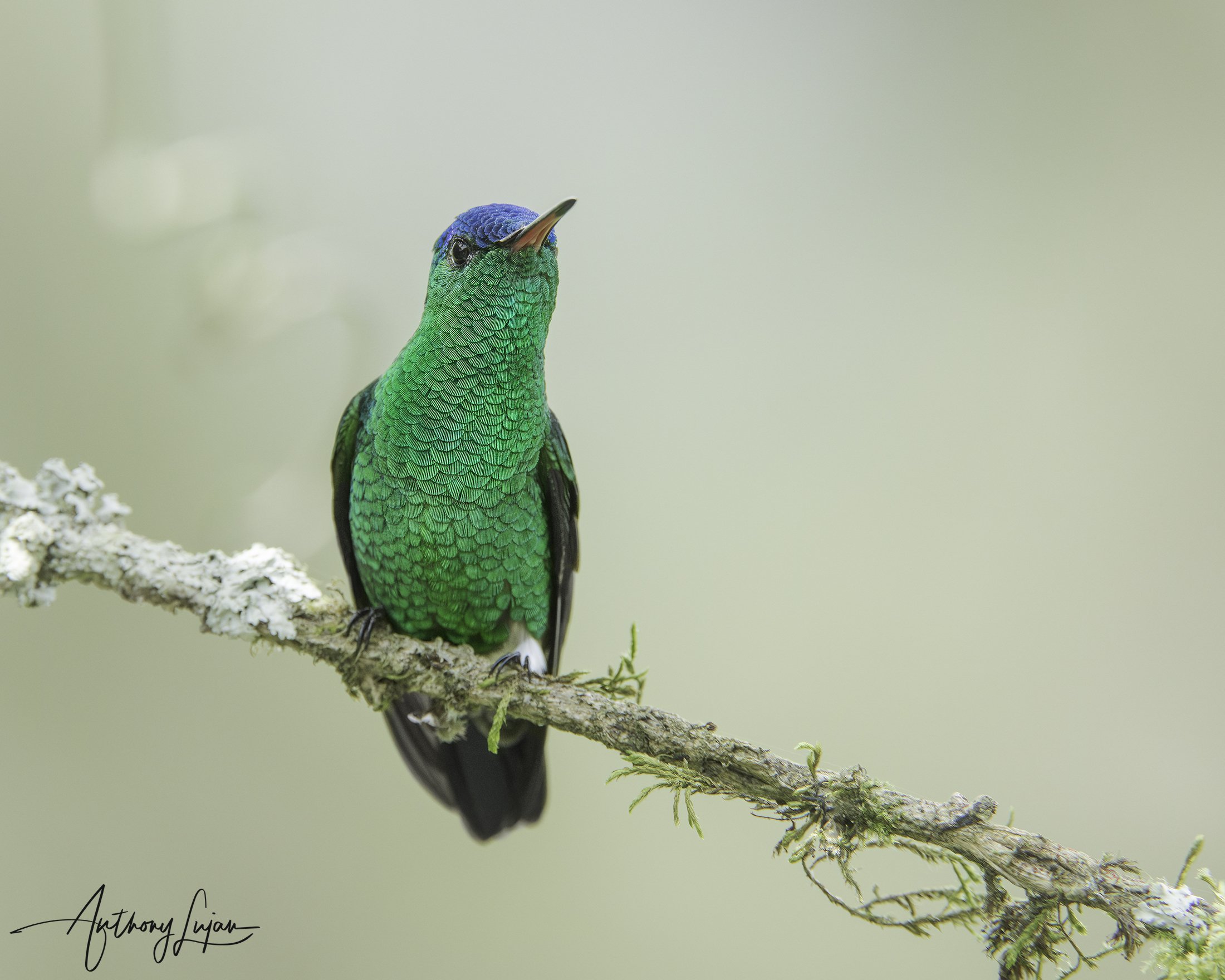
Related species in the Saucerottia genus (11 species total):



Please note: The content provided in this article reflects Anthony’s personal experience and photographic approach. Results can vary depending on light, weather, location, equipment, subject behavior, and field conditions.