
Bronzy Hermit
Scientific name: Glaucis aeneus
The Bronzy Hermit is a medium-sized hermit hummingbird of humid lowland and foothill forests and thickets from eastern Honduras south through western Panama and again in western Colombia and northwestern Ecuador. Its global population is estimated at 500,000–4,999,999 mature individuals, the overall trend is decreasing, it is not a migrant, and it is currently assessed as Least Concern.
At a Glance
Family: Trochilidae (hummingbirds)
Clade: Phaethornithinae – Hermits
Genus: Glaucis — 3 species in total
Range: Eastern Honduras to western Panama; disjunct population in western Colombia and northwestern Ecuador
Habitat: Humid lowland to foothill rainforest, disturbed primary forest, tall secondary forest, forest edges, thickets, swamp forest
Elevation: From sea level up to about 750–800 m, locally higher in parts of Colombia and Ecuador
Length: About 9–10 cm (3.5–3.9 in)
Weight: Males about 3–6.5 g; females about 3–6 g
Number of mature individuals: 500,000–4,999,999
Population trend: Decreasing
Movement: Not a migrant
IUCN Red List category: Least Concern
Name Origin
The genus name Glaucis comes from a Greek word for “blue‑grey” or “glaucous.” The species name aeneus means “bronze‑colored,” describing the warm bronzy or coppery sheen of its upperparts. The common name “Bronzy Hermit” reflects both its coloration and its placement among the hermit hummingbirds.
Taxonomy
Glaucis aeneus is a member of the hermit subfamily Phaethornithinae. Within Glaucis, it is one of three species, alongside the Hook-billed Hermit (G. dohrnii) and Rufous-breasted (Hairy) Hermit (G. hirsutus).
Subspecies and Distribution
Monotypic species with no recognized subspecies.
Distribution:
The Bronzy Hermit has two main population centers. One extends from eastern Honduras through eastern Nicaragua and both Caribbean and Pacific slopes of Costa Rica into western Panama. The second lies west of the Andes from western Colombia south into northwestern Ecuador as far as Pichincha. It inhabits semi‑open humid landscapes, including disturbed primary forest, mature secondary forest, swamp forest, thickets, and shrubby borders.
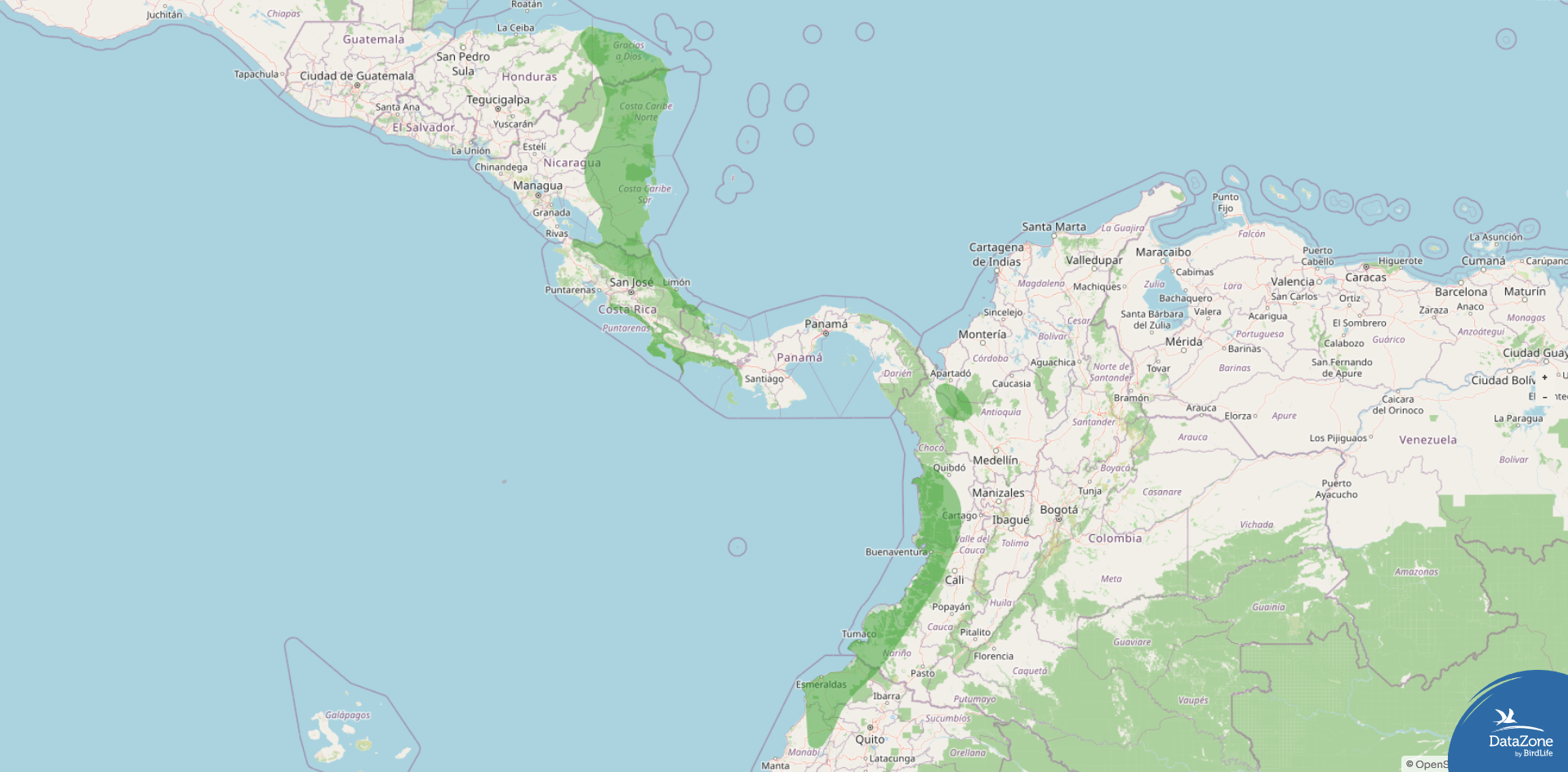
Legend
Green Resident
Species Overview
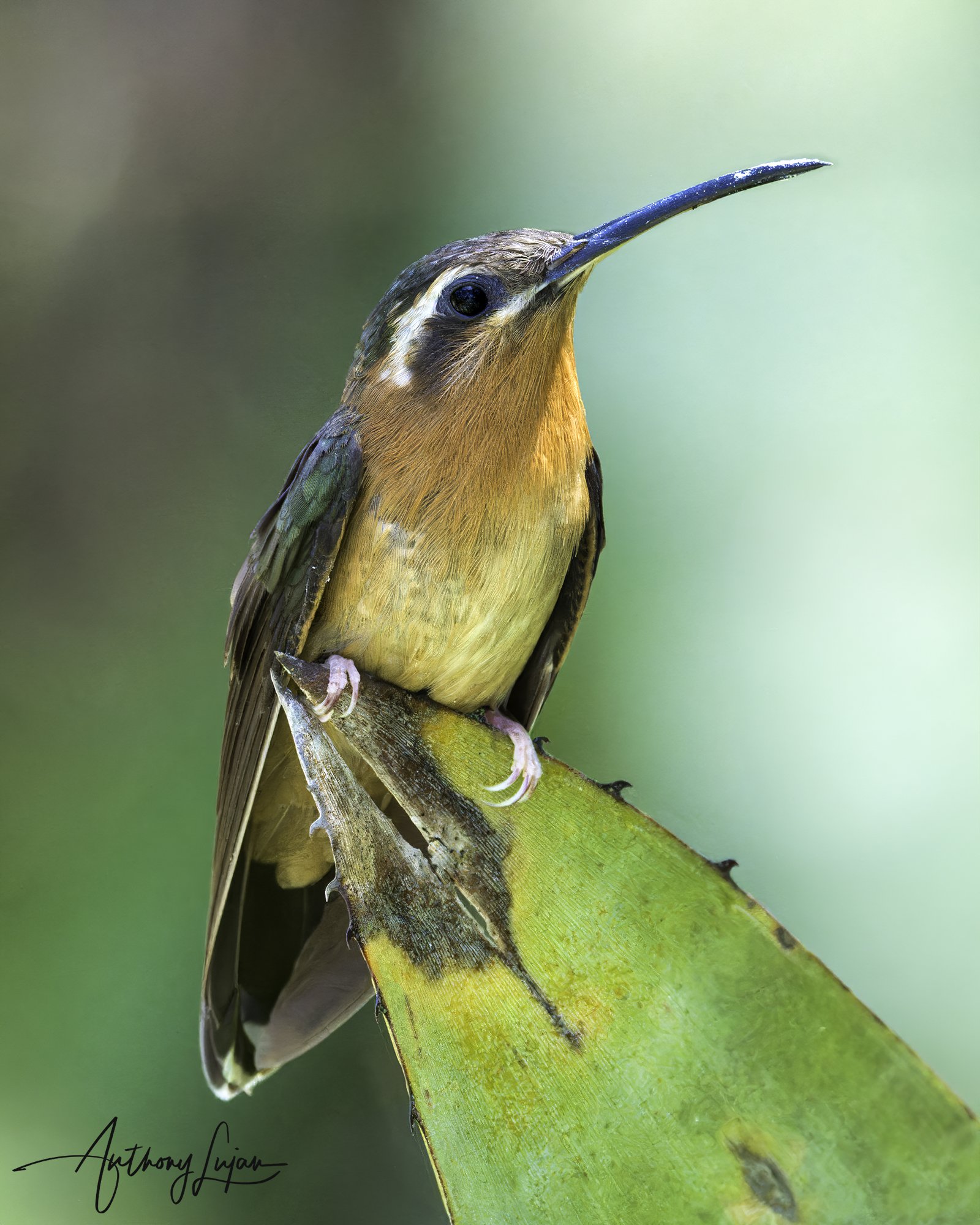
The Bronzy Hermit is a subtly colored but distinctive hermit with bronzy‑green upperparts, buff underparts, and a bold pale “moustache” stripe on the otherwise dusky face. It favors low, dense vegetation in humid forests and thickets where flowering heliconias and other understory plants are abundant. As with many hermits, it follows traplines between scattered nectar sources rather than defending a single territory.
Male Description
Males are about 9–10 cm long. The bill is decurved, with the upper mandible bearing fine serrations; it is adapted to accessing curved tubular flowers. The plumage of both sexes is similar: bronzy or coppery‑green upperparts, a deep buff throat and upper breast, and a paler buff to whitish belly. The face is mostly dusky with a conspicuous white or buff moustachial stripe running back from the bill, giving a strong facial pattern. The tail is relatively short with rufous bases and darker tips, sometimes with subtle pale edging.
Female Description
Females are very similar to males in plumage but their bill tends to be slightly more strongly curved and lacks the serrations seen in the male’s maxilla. Size overlaps that of males, with females weighing around 3–6 g. Juveniles resemble adults but may show slightly duller bronzy tones and fresher feather edges.
Habitat & Behavior
Bronzy Hermits inhabit humid lowland and foothill rainforest, including disturbed primary forest, tall secondary forest, swamp forest, and dense thickets along forest borders. They are often found in dark, tangled understory and along forest edges and clearings where flowering shrubs and heliconias are concentrated.
They feed primarily on nectar from a variety of tubular flowers, especially Heliconia, often hovering briefly or perching to feed. Small arthropods make up an important supplement, usually hover‑gleaned from spider webs, leaves, and twigs, and occasionally taken in short aerial sallies. Like other hermits, they typically follow traplines—a repeated circuit of feeding sites—rather than vigorously defending a single flower patch.
Breeding
The female builds a small cup nest, usually of plant fibers, moss, and spiderweb, attached to a protected support in the understory such as a branch, vine, or overhanging root. The nest interior is soft and well padded, while the exterior is often camouflaged with moss or dead leaves.
The clutch usually consists of two white eggs. As typical for hermits, the female alone incubates the eggs and feeds the chicks. Incubation and nestling periods are not fully documented across the range but likely follow the general hermit pattern of several weeks from laying to fledging.
Movement
The Bronzy Hermit is considered a resident species and is treated as not a migrant. It remains within its general lowland and foothill range throughout the year. Some small‑scale local movements may occur in response to flowering patterns or local rainfall, but these are not considered true migratory shifts.
Population
The global number of mature individuals is estimated at 500,000–4,999,999. Within suitable lowland and foothill forests it can be fairly common, especially in areas with abundant heliconias and flowering understory plants. However, ongoing deforestation and habitat degradation across Central America and the Chocó–Ecuador region contribute to a decreasing population trend, even though the species remains widespread overall.

Conservation
The Bronzy Hermit is currently assessed as Least Concern due to its broad geographic range and substantial total population. Nonetheless, its dependence on humid forests and dense understory makes it vulnerable to forest clearing, fragmentation, and long‑term changes in land use. Maintaining tracts of lowland and foothill rainforest, protecting riparian corridors, and allowing secondary forests to mature are important for sustaining healthy populations.
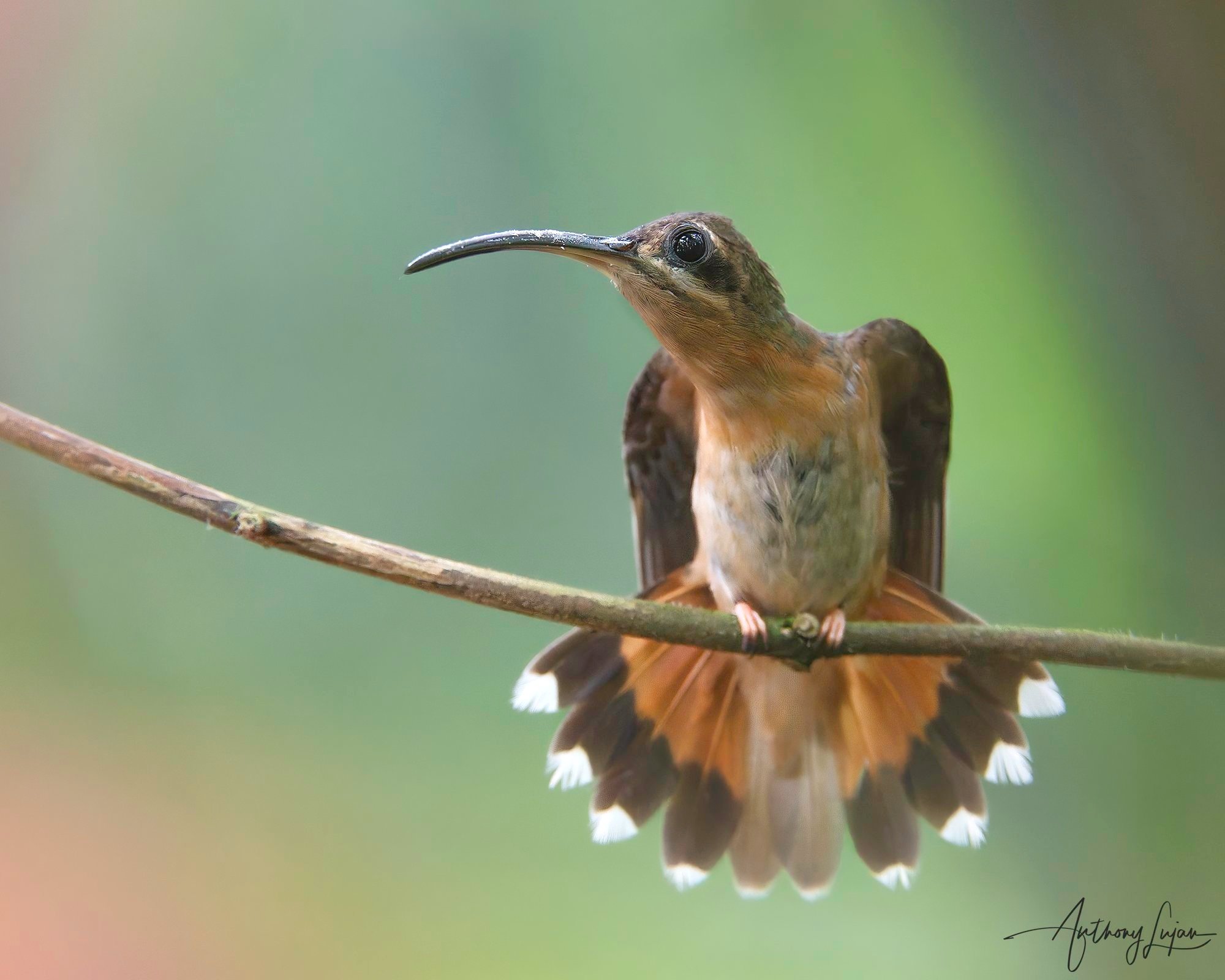
For more details on the trips behind this species, visit the Costa Rica Hummingbird Expedition | July 2025 page and explore My Travel 2025-05 Costa Rica for guides and trip reports.
Checkout Anthony’s playlist of this species! Click the top right dropdown to see all the videos.
Related species in the Glaucis genus (3 species total)


Please note: The content provided in this article reflects Anthony’s personal experience and photographic approach. Results can vary depending on light, weather, location, equipment, subject behavior, and field conditions.