
Brown Violetear
Scientific name: Colibri delphinae
The Brown Violetear is a large, mainly brownish-green violetear hummingbird of montane forests from Central America through much of the northern Andes, with scattered populations farther east. An estimated 500,000–4,999,999 mature individuals exist, the population is decreasing, it is considered an altitudinal migrant (moving up and down slopes with the seasons), and it is currently listed as Least Concern and monotypic, with no recognized subspecies.
At a Glance
Family: Trochilidae (hummingbirds)
Clades: Trochilini – Violetears within genus Colibri
Genus group: Colibri — medium to large “violetears” with violet ear patches in males (5 species total: Brown, Mexican, Lesser, Sparkling, White-vented)
Range: Patchily distributed from southern Mexico and Guatemala south through Honduras, Nicaragua, Costa Rica, and Panama, and in the Andes and adjacent highlands of Colombia, Venezuela (including tepuis), Ecuador, Peru, Bolivia, Trinidad, and eastern Brazil (Bahia).
Habitat: Montane and foothill rainforests, cloud forests, tall secondary growth, forest edges, and coffee plantations; usually at mid-level to canopy, descending to edges and clearings to feed.
Elevation: Typically 400–1,600 m (1,300–5,250 ft) in the breeding season, wandering down to lowlands outside the breeding period.
Length: About 11.5–14 cm (4.5–5.5 in).
Weight: About 5.5–7 g (0.19–0.25 oz).
Number of mature individuals: 500,000–4,999,999
Population trend: Decreasing
Status: Least Concern (IUCN)
Name Origin
The genus name Colibri is the French form of a Caribbean word for hummingbird, now widely used for this genus of violetears. The species name delphinae commemorates Madame Adèle Delphine, honored in the original description. The English name “Brown Violetear” refers to the species’ overall brownish coloration and the violet ear patch that typifies violetears.
Taxonomy & Distribution
Monotypic — no recognized subspecies.
Distribution: The Brown Violetear is patchily distributed across Middle America and northern South America, breeding at middle elevations from southern Mexico and Guatemala south through Honduras, Nicaragua, Costa Rica, and Panama, and in the Andes and adjacent highlands of Colombia, Venezuela (including tepuis), Ecuador, Peru, and Bolivia, with isolated populations in Trinidad and eastern Brazil (Bahia).
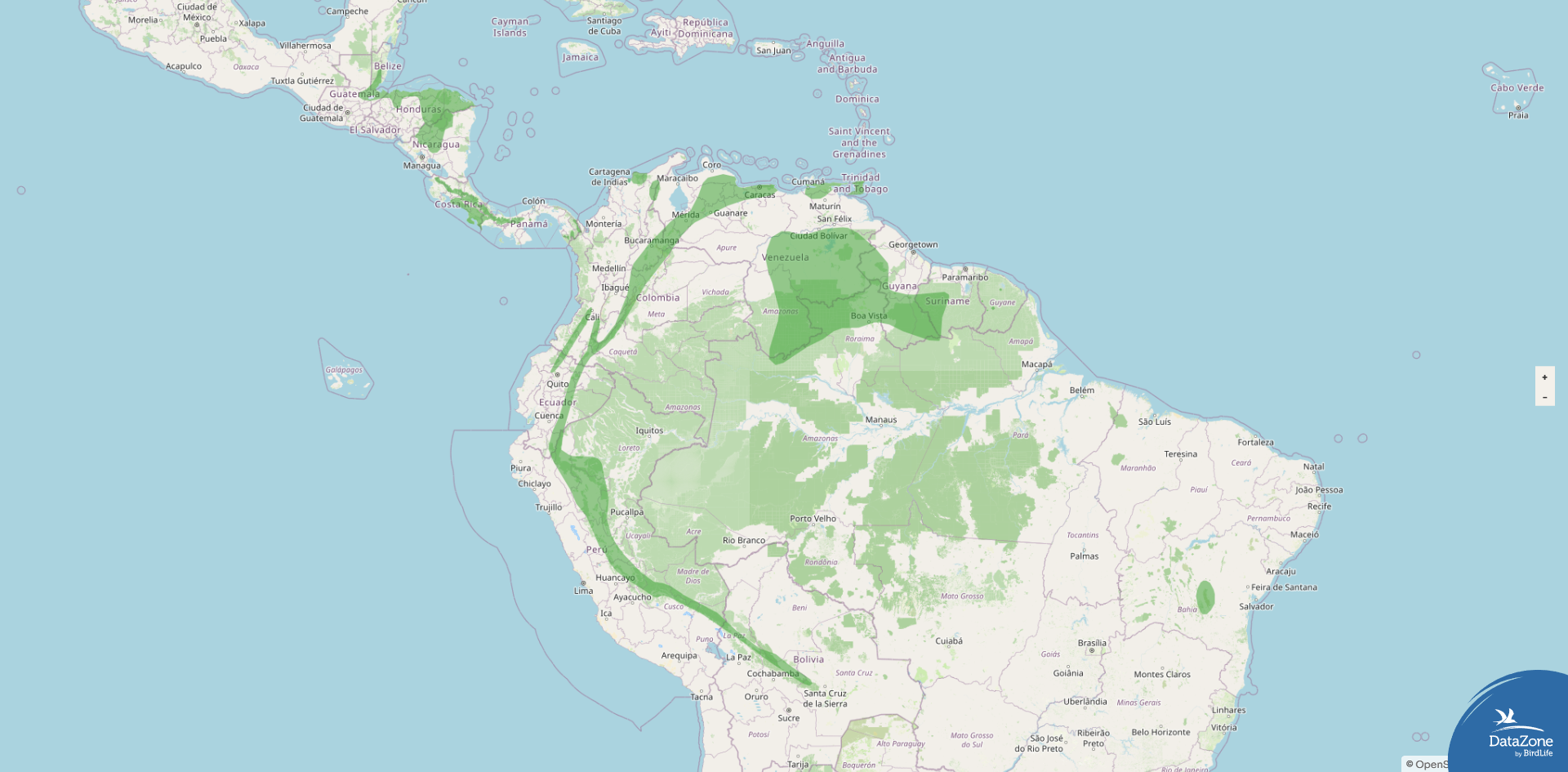
Legend
Green Resident
Species Overview
The Brown Violetear is a relatively large hummingbird with subdued, brownish-green plumage that contrasts with the brighter, metallic green of other violetears. It typically frequents the canopy and upper mid-story of montane forests and tall second growth, descending to edges, clearings, and coffee plantations to feed. Its broad geographic and elevational range and use of semi-open habitats support its Least Concern status, but mid-elevation forests are under significant human pressure, and the species is believed to be undergoing a slow decline.
Male Description
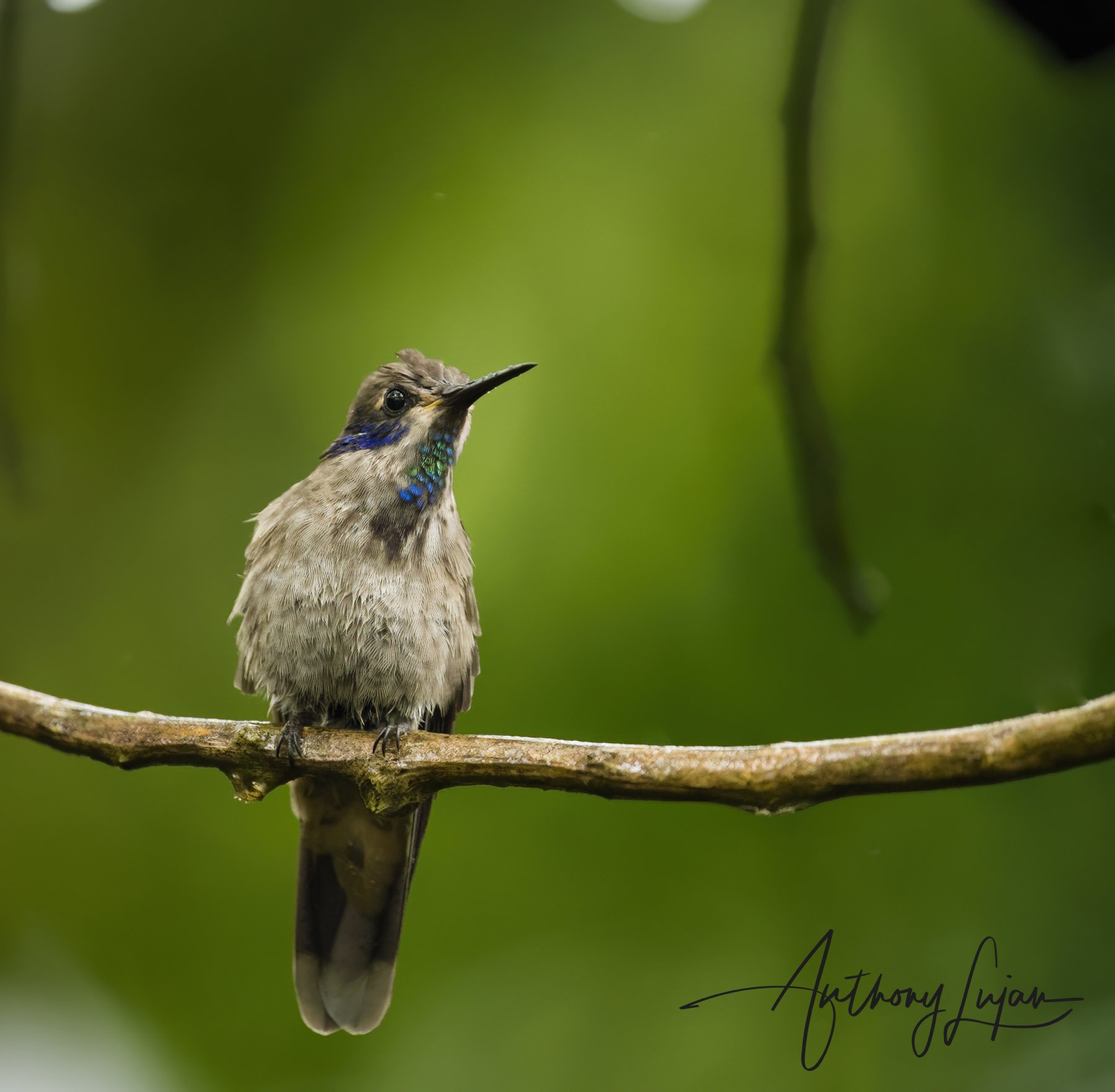
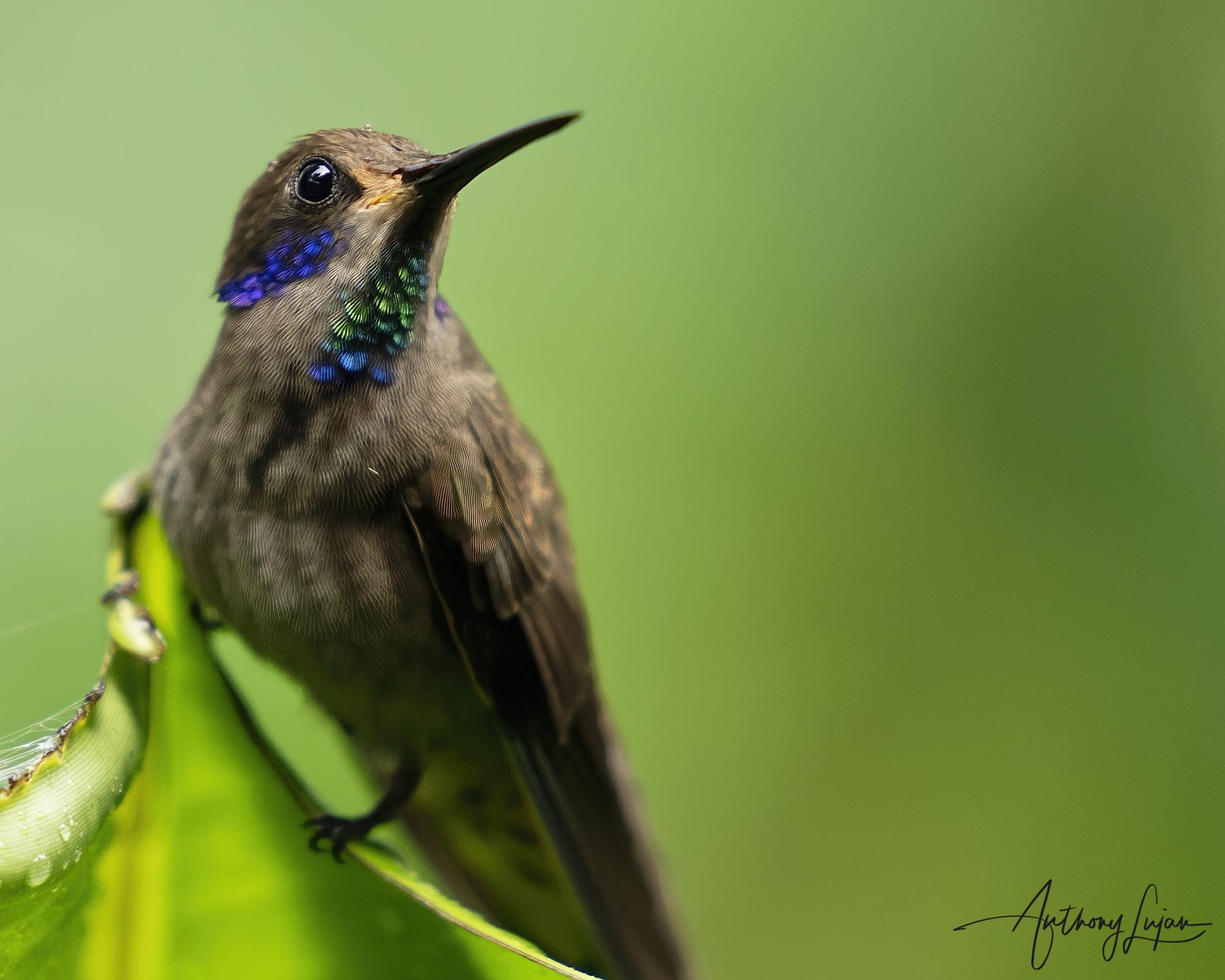
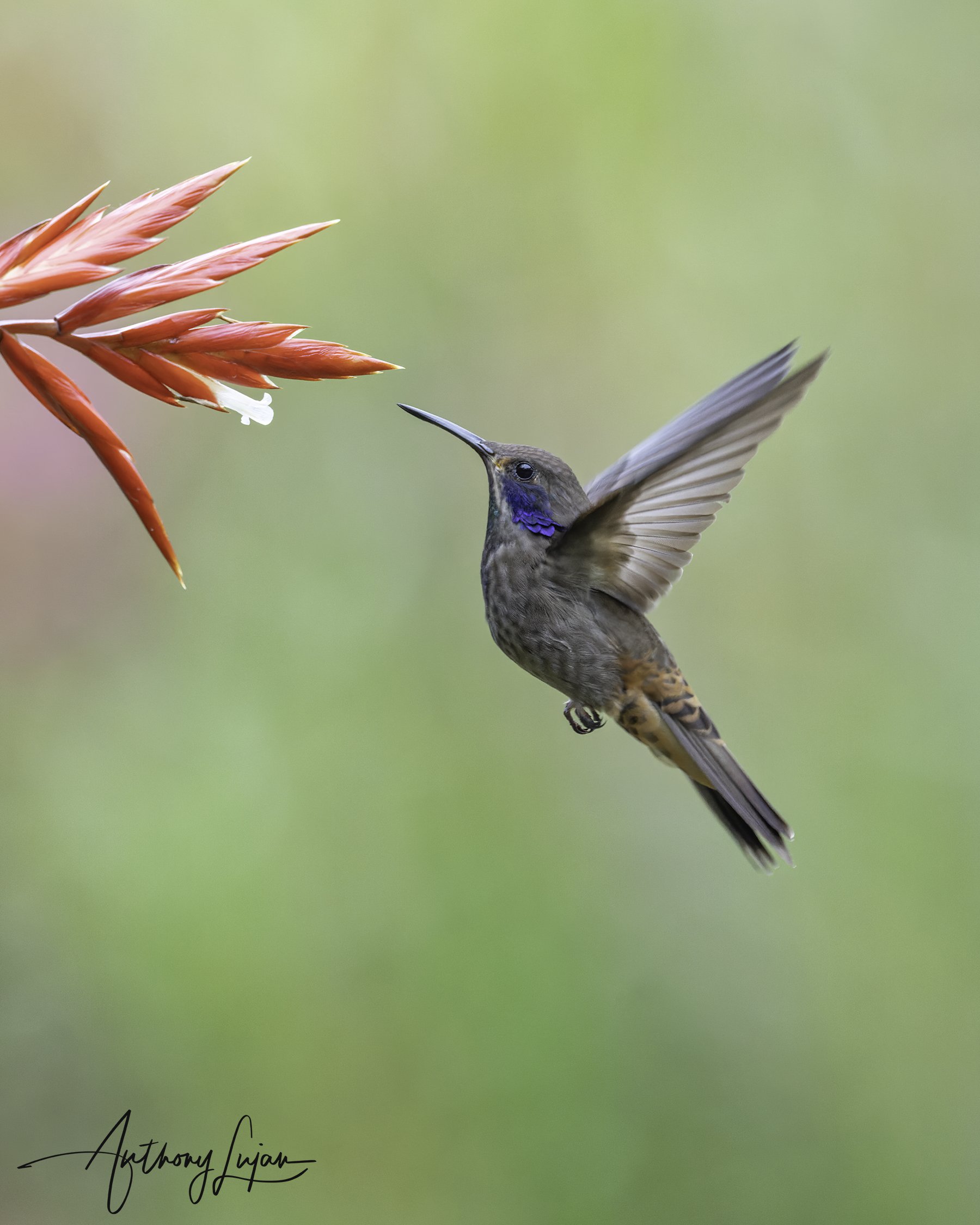
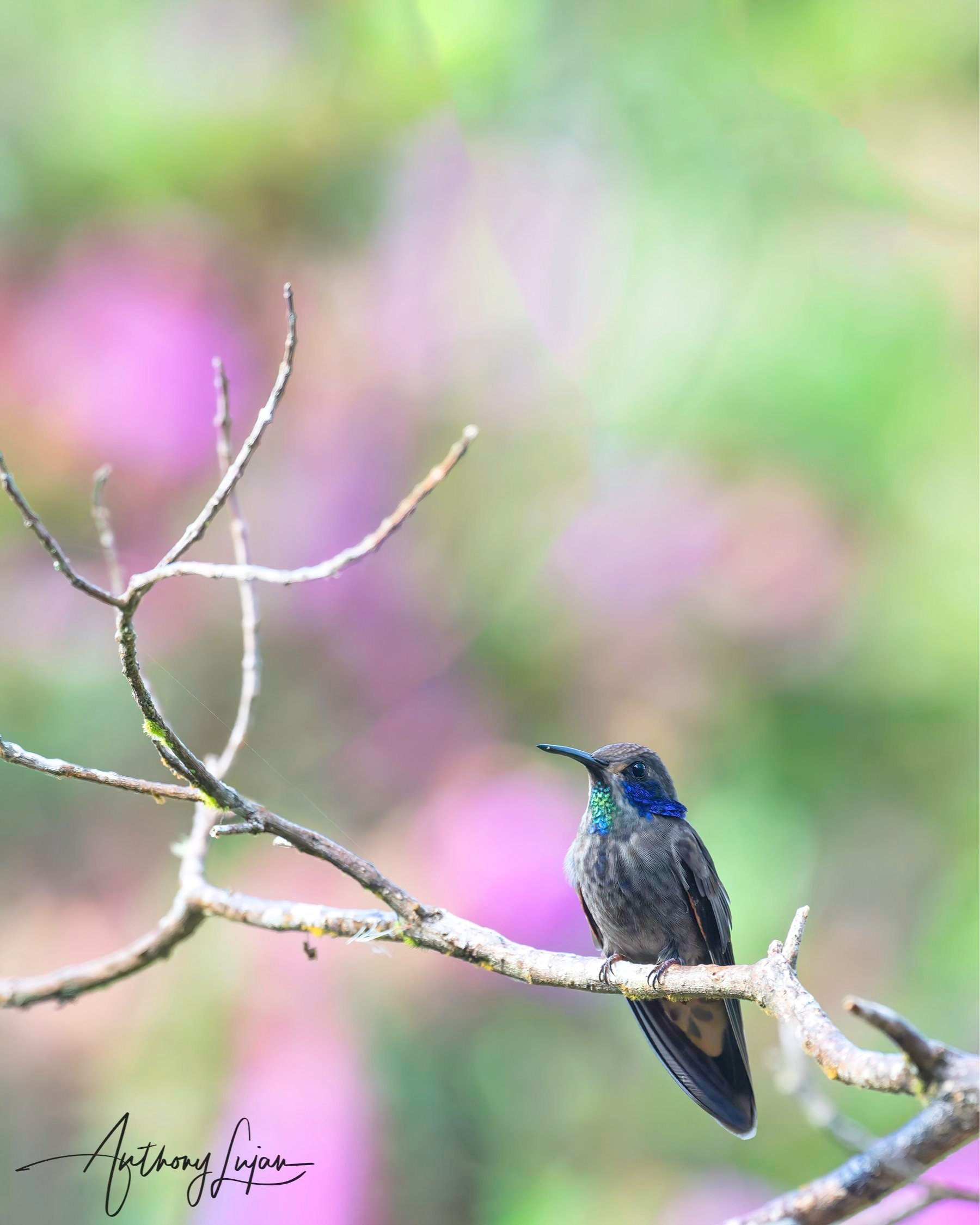
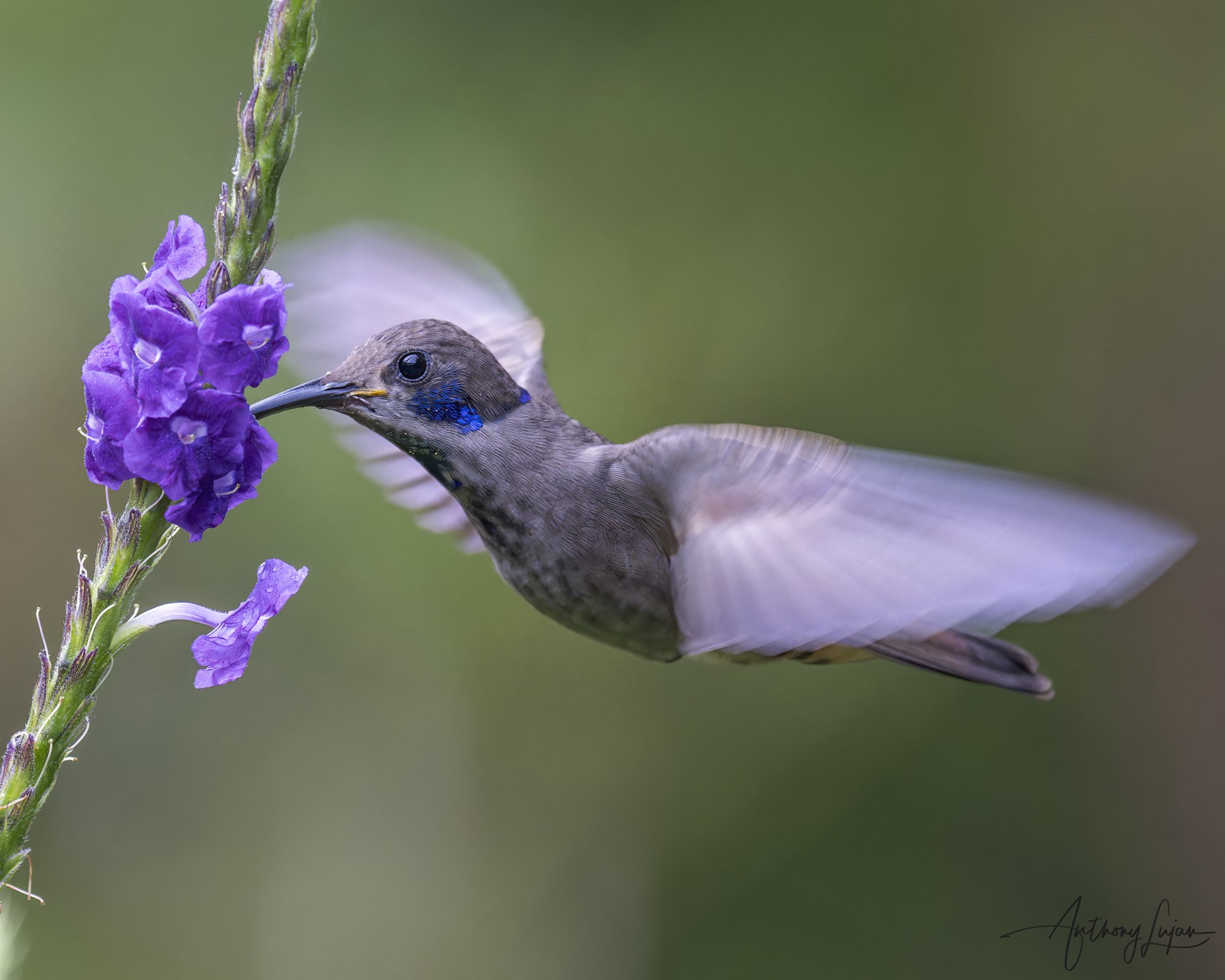
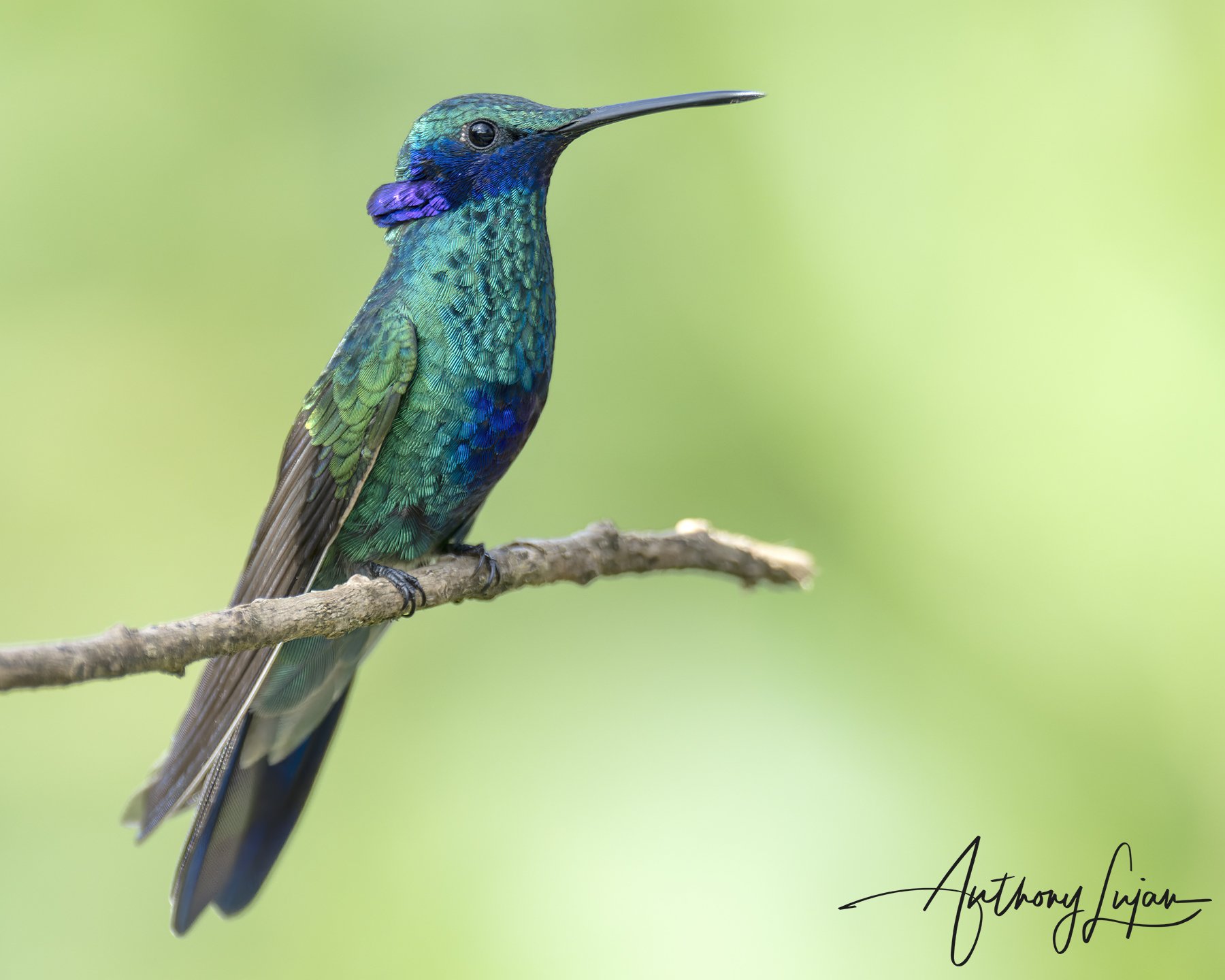
Adult males have a relatively short, straight to slightly decurved black bill and a mostly dull brown body with greyish underparts and an olive-brown tail. The key field mark is a patch of violet to violet-blue feathers behind and below the eye (the “violetear”), which can be erected when the bird is excited. Males also have a modest glittering throat patch of greenish to bluish iridescent feathers that helps separate them from Lesser Violetear. The tail is rounded with darker feathers and a slight greenish gloss. In the field, males appear as medium-sized, brownish hummingbirds with a violet ear patch, subtle throat glint, and a rounded dark tail.
Female Description
Adult females resemble males in overall brownish-green coloration but have a smaller and less brilliant violet ear patch and a reduced throat glint. Their underparts may be slightly paler or more grayish, and the violet area around the eye can be less extensive and less frequently flared. Juveniles show more orange or buff barring on the upperparts and little or no violet near the eyes. Overall, females appear as brownish-green hummingbirds with a reduced violet ear patch and a rounded dark tail.
Habitat & Behavior
Brown Violetears inhabit mid-elevation rainforests, cloud forests, secondary growth, and shaded plantations such as coffee, often favoring areas near forest edges and clearings. They feed on nectar from small flowers on trees, shrubs, and epiphytes, usually favoring high-sugar blossoms. They supplement nectar with small insects and spiders, sometimes caught in flight, which provide essential protein. Males are strongly territorial, establishing feeding territories and vigorously chasing away other hummingbirds, sometimes appearing more focused on defending patches than feeding. Birds often visit hummingbird feeders, birdbaths, and even water features in some parts of their range.
Movement (Altitudinal Migrant)
The Brown Violetear is an altitudinal migrant rather than a long-distance latitudinal migrant. It breeds mainly between about 400 and 1,600 m in forested foothills and lower montane zones but outside the breeding season it spreads widely into lowlands and lower elevations. These upslope and downslope movements track flowering and resource availability along elevational gradients rather than fixed, long-distance routes.
Breeding
Breeding occurs mainly at mid-elevations, with timing varying locally but generally during periods of high flower availability. The female builds a small cup-shaped nest of green moss and soft plant fibers, bound with spiderweb, usually saddled on a twig 1–3 m above the ground in a bush or small tree. She alone incubates two white eggs and cares for the chicks. Incubation lasts about two weeks, and fledging occurs roughly three weeks after hatching.
Population
With an estimated 500,000–4,999,999 mature individuals, the Brown Violetear remains relatively numerous over its broad but patchy range. It is commonly encountered in suitable mid-elevation forests, secondary growth, and shade coffee systems. However, ongoing deforestation, forest degradation, and conversion of shade coffee to sun coffee or other intensive crops in foothill and montane regions are reducing habitat quality and availability, leading to a gradual population decline.

Conservation
The Brown Violetear is classified as Least Concern, reflecting its large total population and wide distribution, including populations in protected areas. Nonetheless, habitat loss and degradation in mid-elevation forests across Central and South America remain significant threats. Conservation measures that protect montane and foothill forests, promote shade-grown coffee and agroforestry, and maintain elevational corridors are important to support this altitudinal migrant and many associated hummingbirds.
taken in Costa Rica
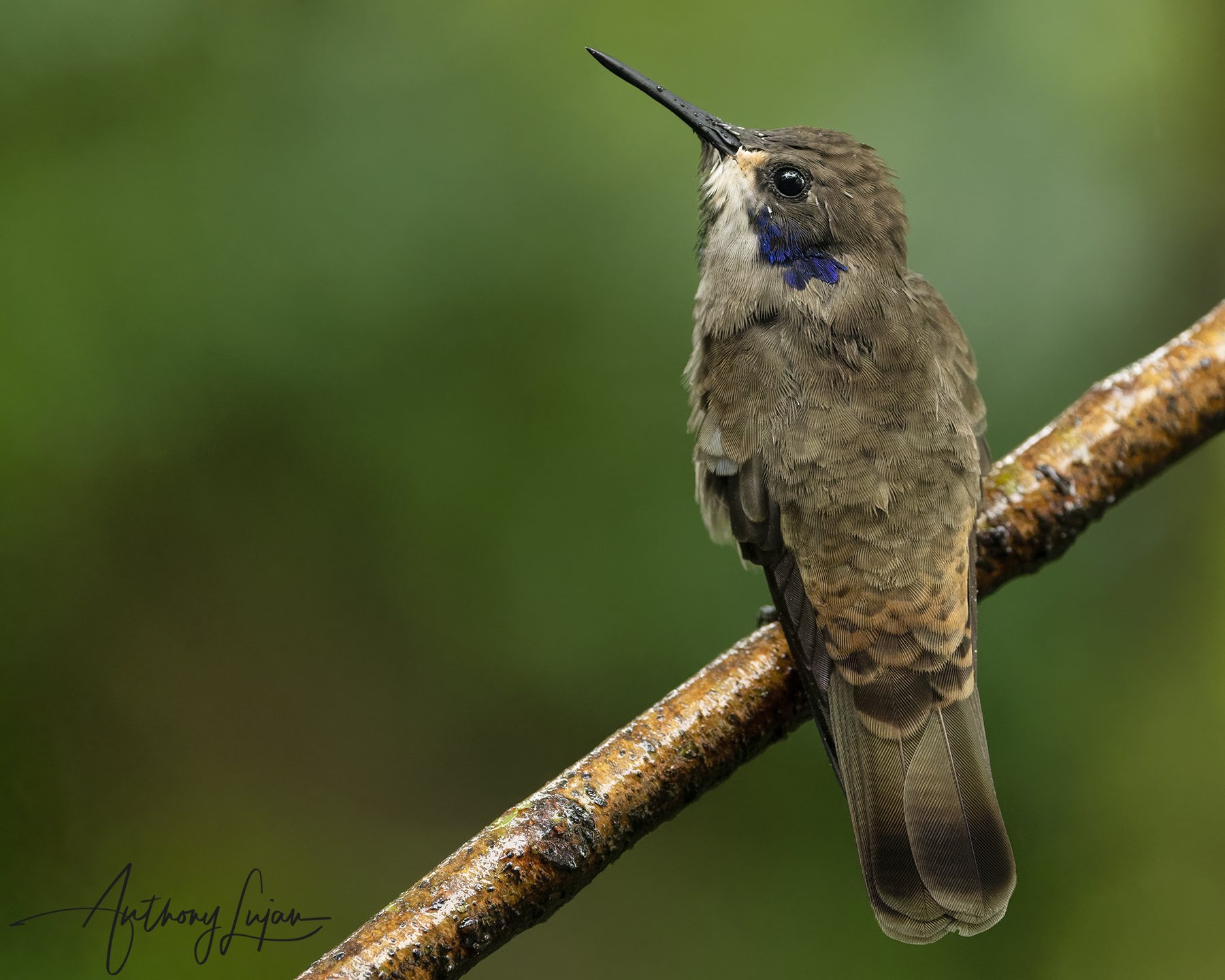
taken in Colombia
taken in Peru
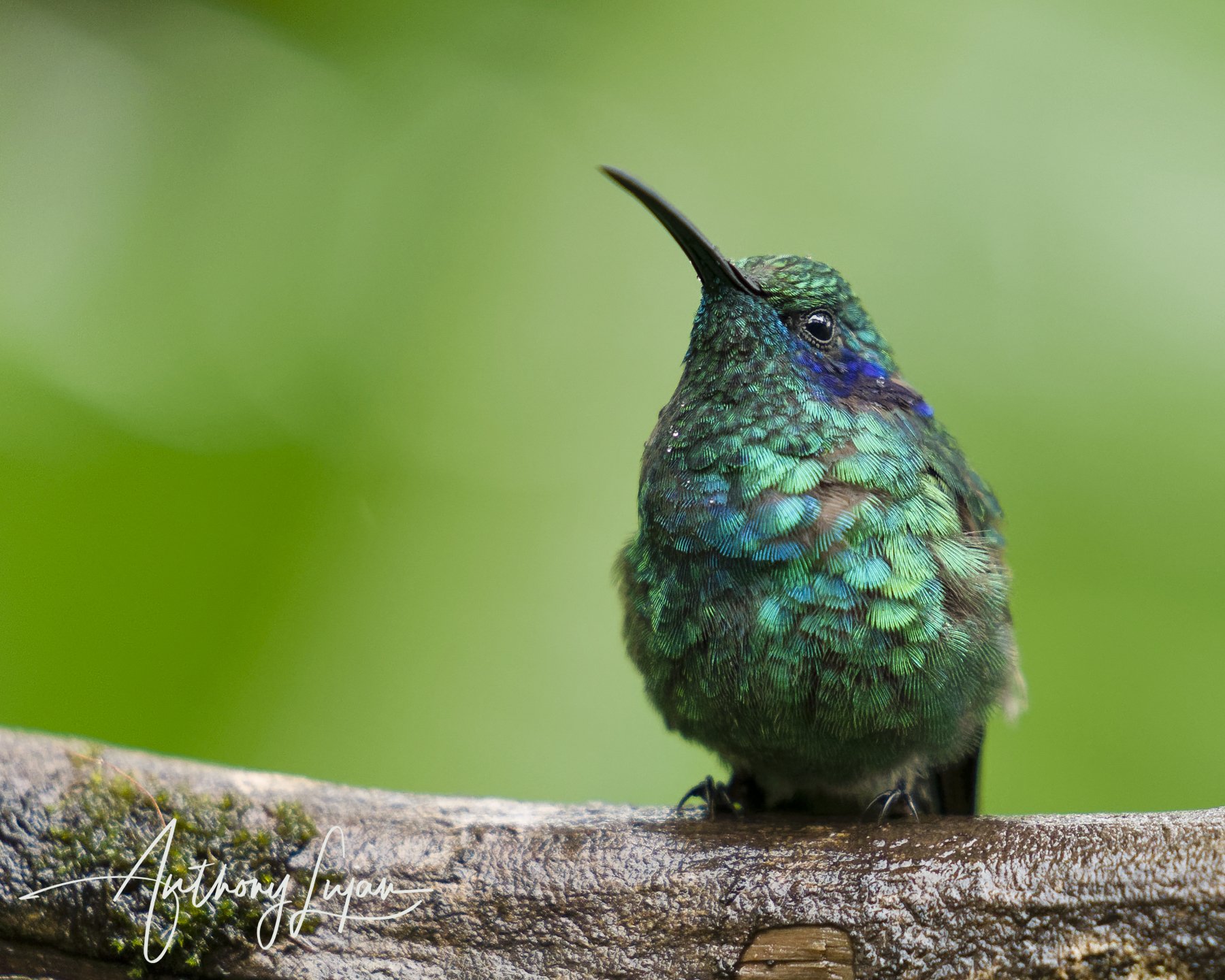
Related species in the Colibri genus (5 species total):


Please note: The content provided in this article reflects Anthony’s personal experience and photographic approach. Results can vary depending on light, weather, location, equipment, subject behavior, and field conditions.