
Scientific name: Amazilia rutila
The Cinnamon Hummingbird is a medium-sized hummingbird of dry forests, woodland edges, and gardens from northwestern Mexico south through much of Central America to Costa Rica. It is listed as Least Concern, with an estimated 500,000–4,999,999 mature individuals, a stable population trend, and it is considered not a migrant.
At a Glance
Family: Trochilidae (hummingbirds)
Clades: Trochilini – Emeralds
Genus group: Amazilia — medium-sized “emerald” hummingbirds (5 species in total)
Range: Northwestern, western, and southwestern Mexico (including the Tres Marías Islands and southern and southeastern Mexico such as Chiapas and the Yucatán Peninsula) south through Guatemala, Honduras, Nicaragua, and into Costa Rica.
Habitat: Primary and secondary deciduous and semi-deciduous forests, thorn forest, dry and semi-dry woodland, forest edges, second growth, plantations, and gardens with flowering shrubs and trees.
Elevation: From sea level to about 1,600 m (5,200 ft).
Length: About 9.5–11.5 cm (3.7–4.5 in).
Weight: About 5–5.5 g (0.18–0.19 oz).
Number of mature individuals: 500,000–4,999,999.
Population trend: Stable.
Status: Least Concern (IUCN Red List category).
Migration: Not a migrant.
Name Origin
The genus name Amazilia was taken from a heroine in an 18th‑century French novel and later applied to a group of emerald hummingbirds. The species name rutila means “reddish” or “golden‑red,” referring to the warm cinnamon‑rufous tones of the underparts and tail. The English name “Cinnamon Hummingbird” highlights the distinctive cinnamon-colored underparts that set it apart from many other emerald hummingbirds.
Taxonomy & Distribution
Amazilia rutila
Cinnamon Hummingbird belongs to the “emeralds” (tribe Trochilini) within the hummingbird family. It is widely distributed along the Pacific slope and in parts of the Yucatán region, occurring from northwestern Mexico south through Central America into Costa Rica. The species is recognized with several subspecies that differ mainly in geography and subtle plumage and structural characters.
Subspecies and Distribution
Cinnamon Hummingbird has four recognized subspecies.
Amazilia rutila graysoni (Tres Marías Islands)
This subspecies is endemic to the Tres Marías Islands off western Mexico. It inhabits dry and semi‑dry woodland, scrub, and human‑altered habitats on the islands, visiting flowering shrubs, trees, and garden plants throughout the year.Amazilia rutila rutila (Mainland Mexico)
The nominate subspecies occurs in western and southwestern Mexico, from Jalisco south to Oaxaca. It uses dry forest, semi‑deciduous woodland, forest edges, thorn scrub, second growth, and gardens in this mainland region, where it is often one of the more frequently seen hummingbirds in semi‑open habitats.Amazilia rutila corallirostris
This subspecies occurs in southern and southeastern Mexico (including Chiapas and the Yucatán Peninsula) south through Guatemala, Honduras, Nicaragua, and into Costa Rica. It occupies a variety of dry to semi‑humid lowland and foothill habitats, including woodland edges, second growth, plantations, and gardens with abundant flowering plants.Amazilia rutila diluta
This subspecies is found in northwestern Mexico, from Sinaloa to Nayarit. It inhabits dry and semi‑dry lowland and foothill habitats, including open woodland, scrub, and semi‑open areas with scattered flowering trees and shrubs.
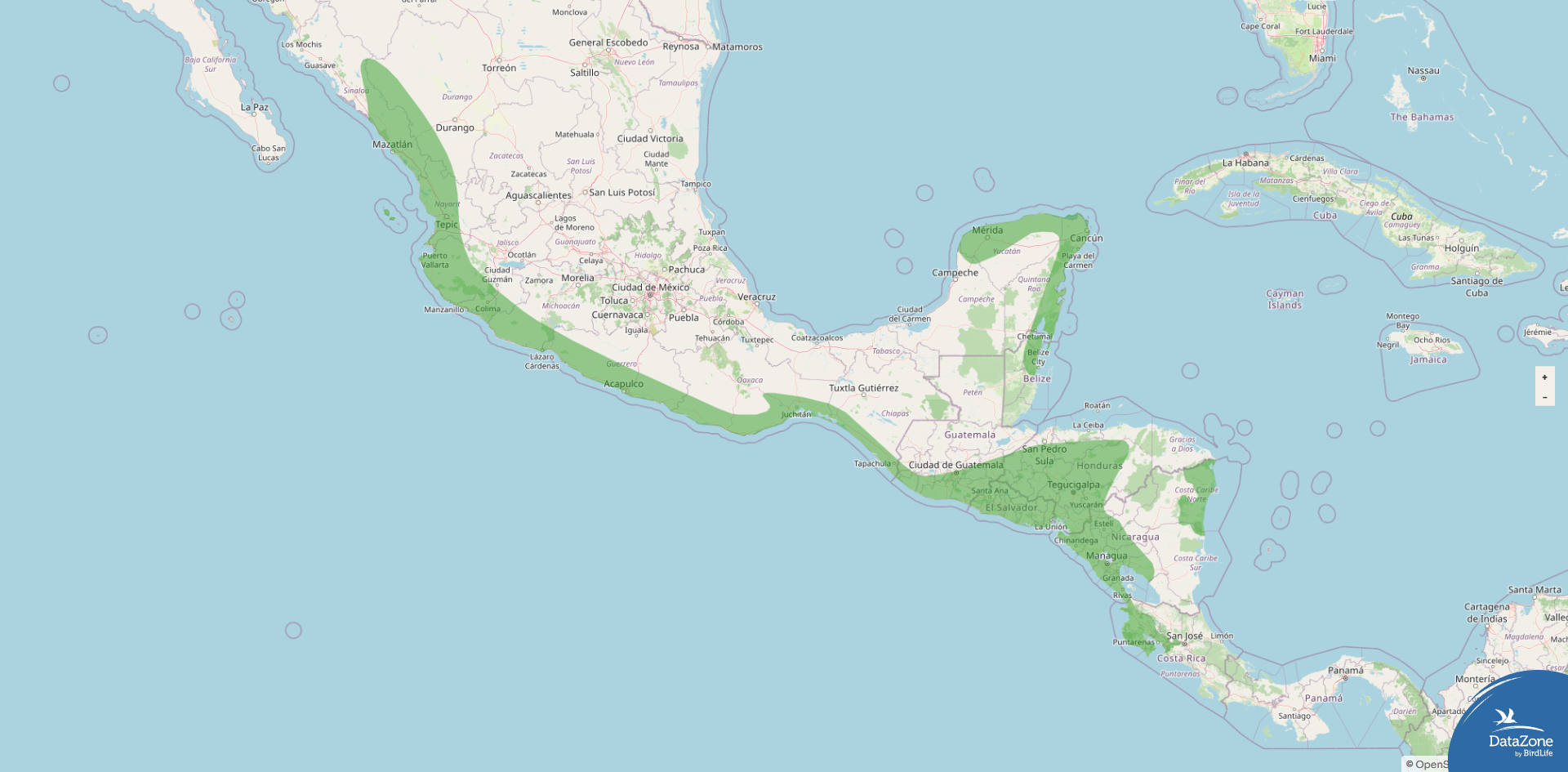
Legend
Green Resident
Species Overview
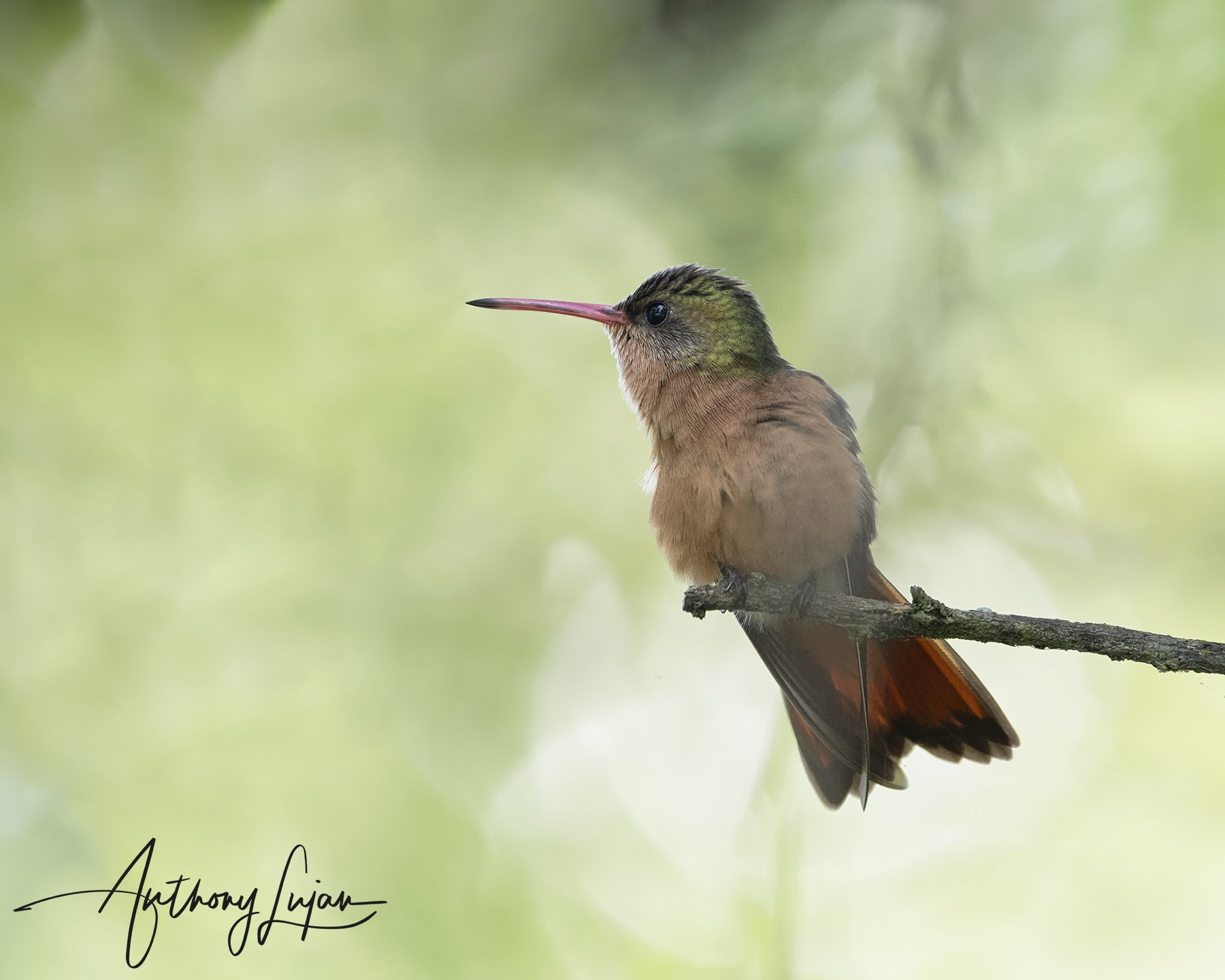
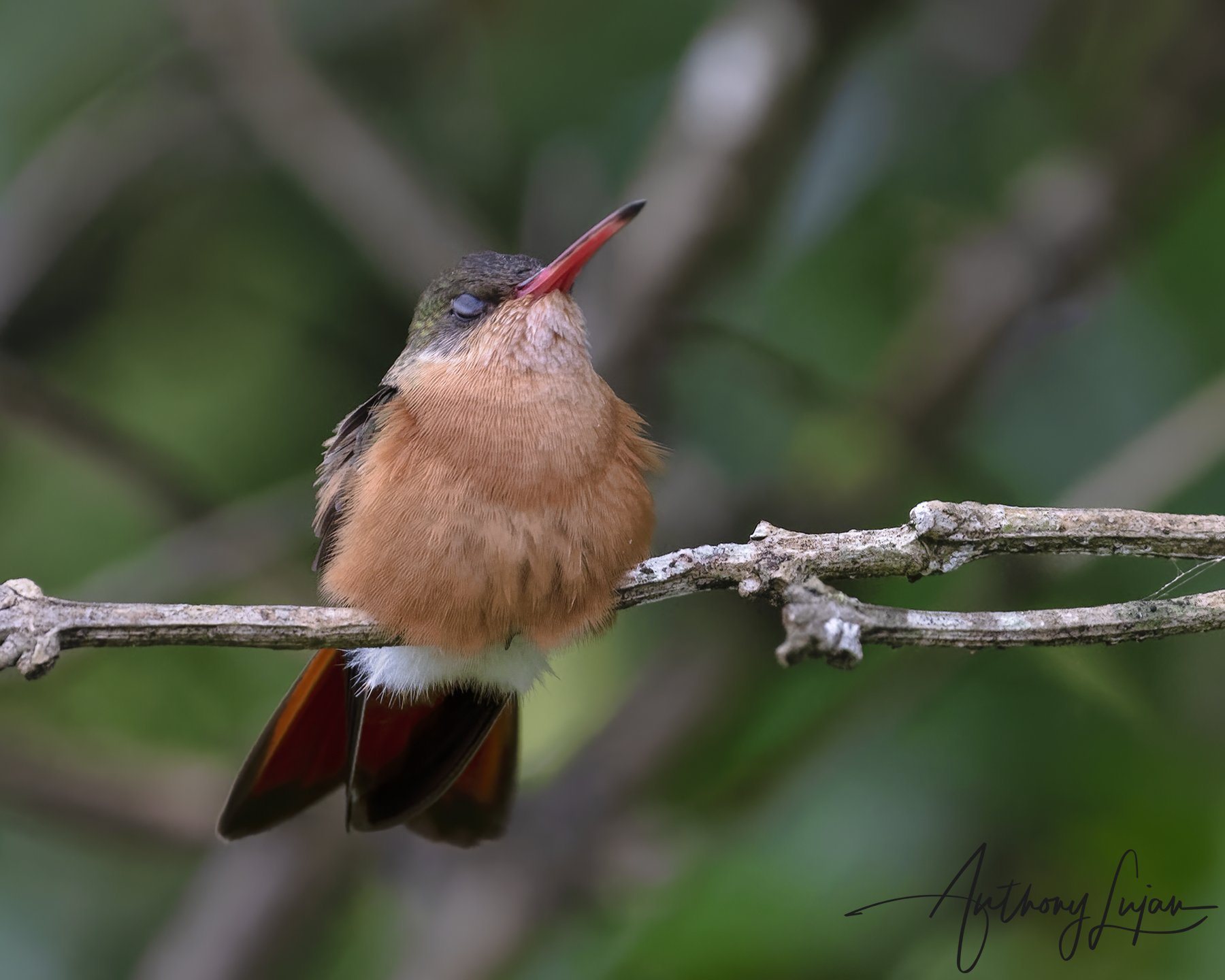
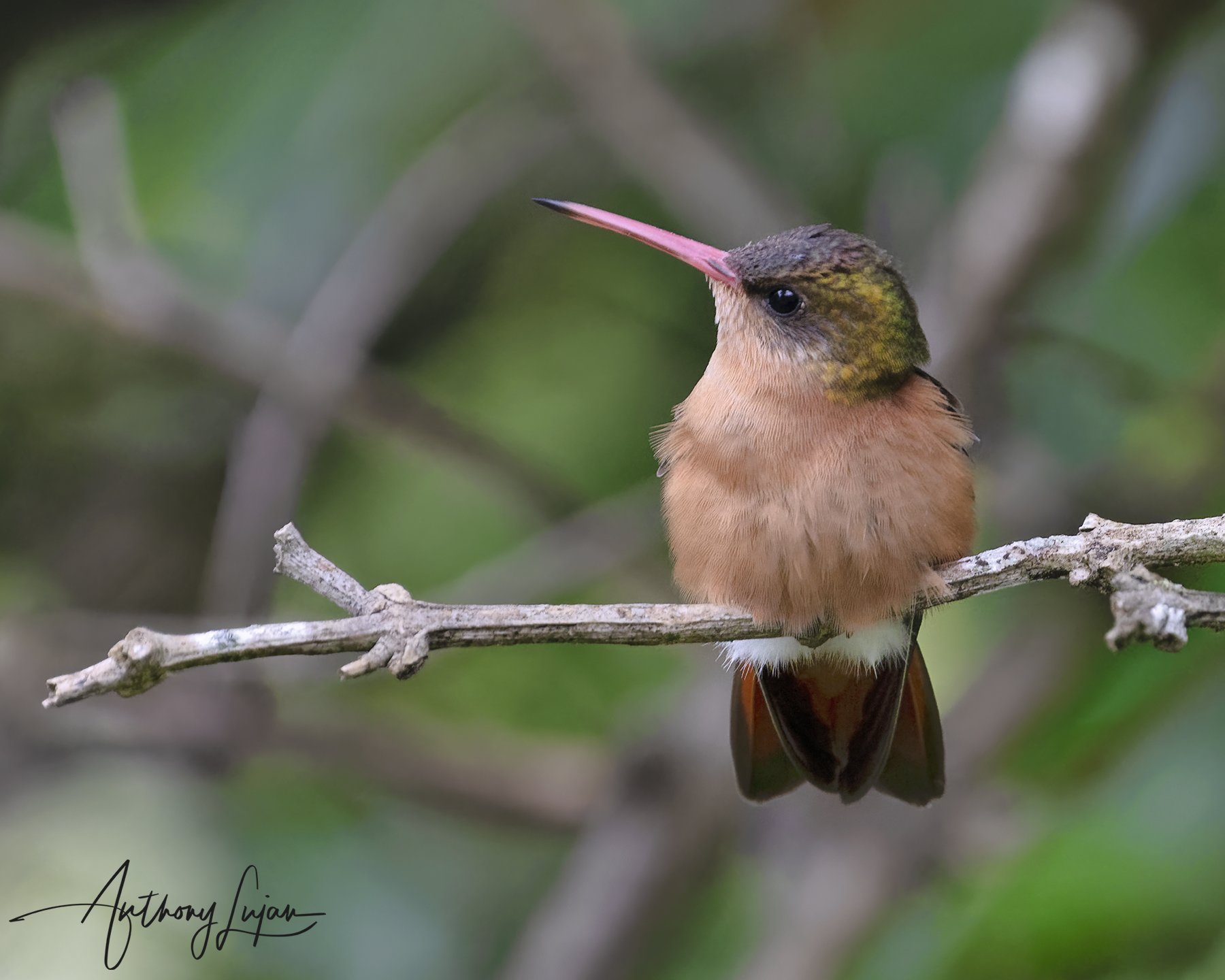
The Cinnamon Hummingbird is a warm‑toned emerald hummingbird with metallic bronze‑green upperparts and uniformly cinnamon to cinnamon‑rufous underparts. Its deep cinnamon‑rufous tail with darker tips and a relatively long bill make it distinctive in much of its range. It is common in many dry and semi‑dry landscapes, including towns and rural areas, where flowering trees and shrubs are present.
Male Description
Adult males have metallic bronze‑green upperparts and a greenish head and upper breast, grading into rich cinnamon to cinnamon‑rufous underparts that are paler on the chin and upper throat. The tail is deep cinnamon‑rufous to rufous chestnut, with darker metallic tips on the feathers. The wings are dark brownish slate. The bill is relatively long and straight, typically red or reddish with a darker tip. In good light, males show a bright green back and head contrasting with the uniform cinnamon underparts and tail.
Female Description
Females are similar to males in overall coloration and pattern but may appear slightly duller, with somewhat less intense green upperparts and a slightly paler cinnamon tone below. The tail pattern is broadly similar, with a cinnamon‑rufous tail and darker tips, though sometimes with a bit less contrast. Juveniles resemble adults but have rufous edges to the face, crown, and rump feathers and a darker or more uniformly colored bill, often appearing duller overall than adults.
Habitat & Behavior
Cinnamon Hummingbirds inhabit primary and secondary deciduous and semi‑deciduous forests, thorn forest, dry woodland, forest edges, second growth, plantations, and gardens across their range. They feed on nectar from a wide variety of flowering trees, shrubs, and herbaceous plants, frequently visiting ornamental plantings in yards, towns, and rural areas. Like many Amazilia hummingbirds, they are active and can be somewhat territorial around rich nectar sources, and they also capture small insects for protein by hawking from perches or gleaning near flowers.
Breeding
Breeding seasons vary throughout the species’ wide range, with some component of the population breeding in most months somewhere within its distribution. The female builds a small cup nest of plant fibers and spiderweb, often decorated with lichens or moss, and typically places it on a horizontal branch in semi‑deciduous forest or similar habitats. The nest structure is a neat cup, sometimes on a small platform of plant material. She lays two white eggs and alone carries out incubation and chick‑rearing, as is typical for hummingbirds.
Population
With an estimated 500,000–4,999,999 mature individuals and a broad distribution from northwestern Mexico through much of Central America, Cinnamon Hummingbird has a large overall population. Its frequent use of second growth, plantations, and gardens suggests a degree of resilience to moderate habitat changes, and current information supports a stable population trend.

Conservation
Cinnamon Hummingbird is assessed as Least Concern. It has a large range and a stable population, and it thrives in many semi‑open and human‑modified habitats. Localized habitat destruction and conversion of dry forests and woodlands can affect some populations, but the species’ tolerance for secondary growth and cultivated landscapes provides some buffer. Protecting remaining dry forests and woodland mosaics, maintaining flowering trees and shrubs in agricultural and urban landscapes, and conserving riparian and forest‑edge corridors all help support this species and many associated hummingbirds.
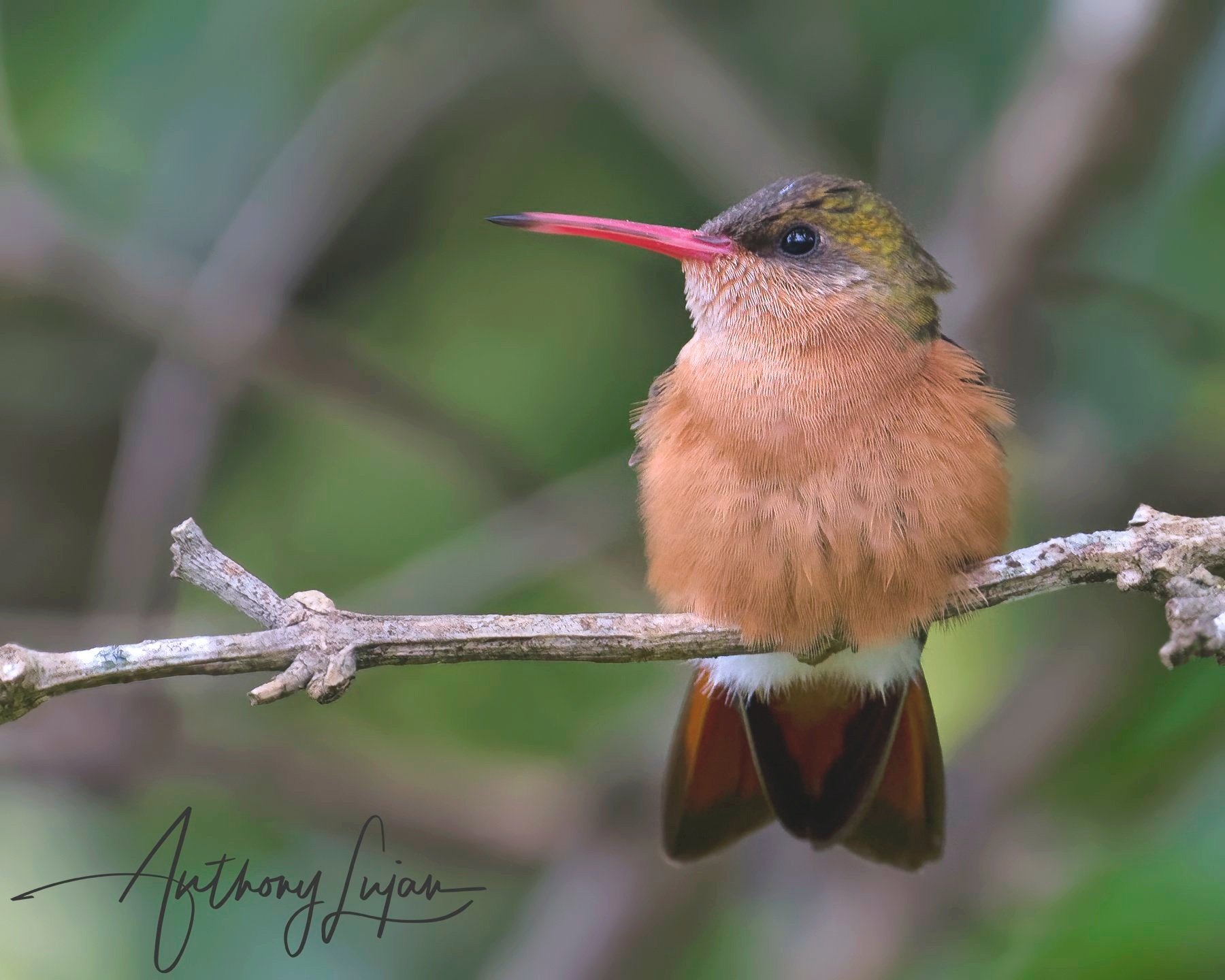
Below is the Cinnamon Hummingbird (Amazilia rutila corallirostris)
Photographed in Guanacaste, Costa Rica
This individual belongs to the subspecies corallirostris, which occurs from southern Chiapas and Guatemala south through Central America to northwestern Panama. It inhabits dry forest, coastal scrub, and open country with flowering trees, especially in the Pacific lowlands up to about 1,200 meters.
Compared to the Mexican rutila, corallirostris tends to be slightly smaller with a redder bill base and more coppery upperparts. It is abundant in flowering dry zones and gardens and often the most conspicuous hummingbird of the Pacific slope.
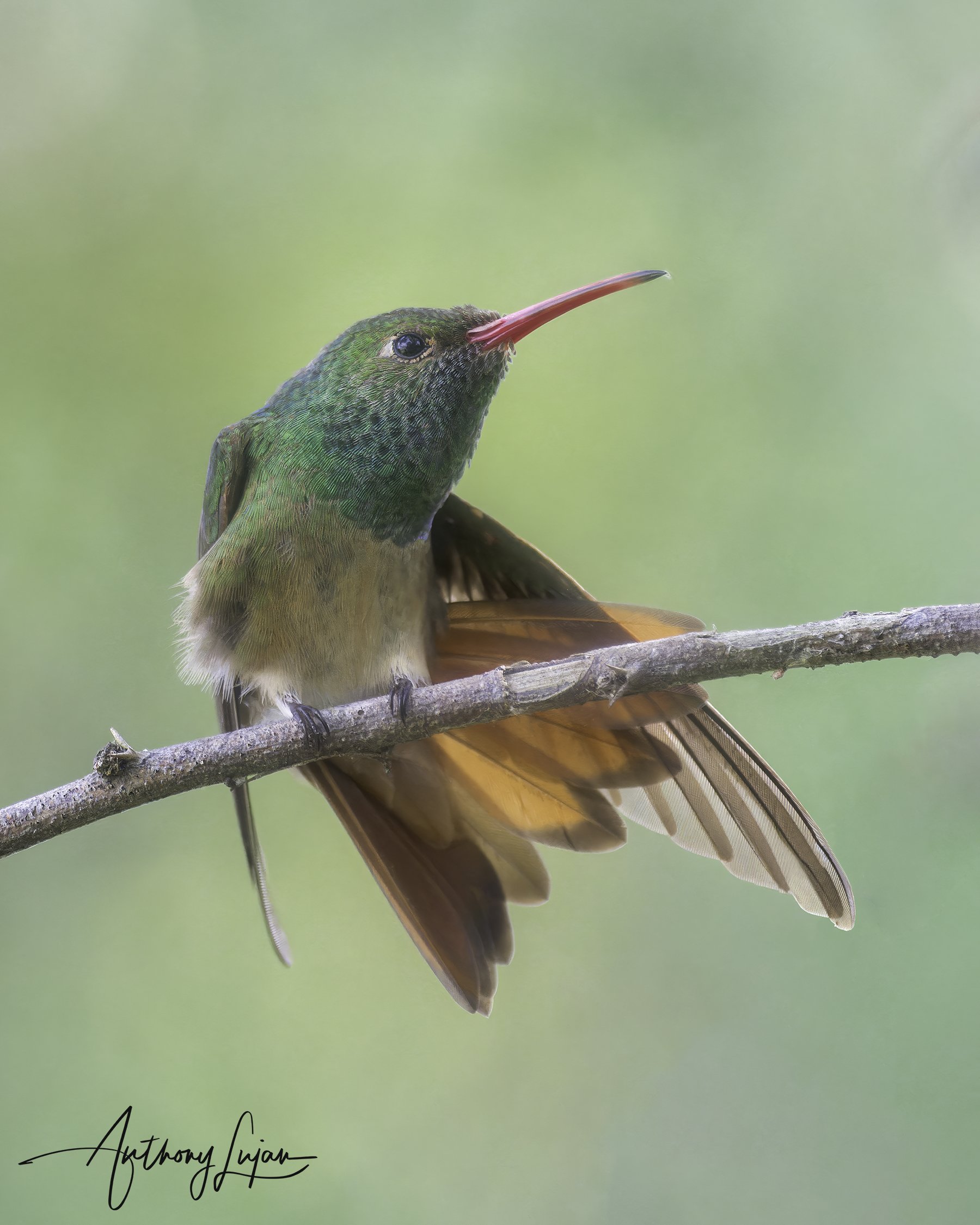
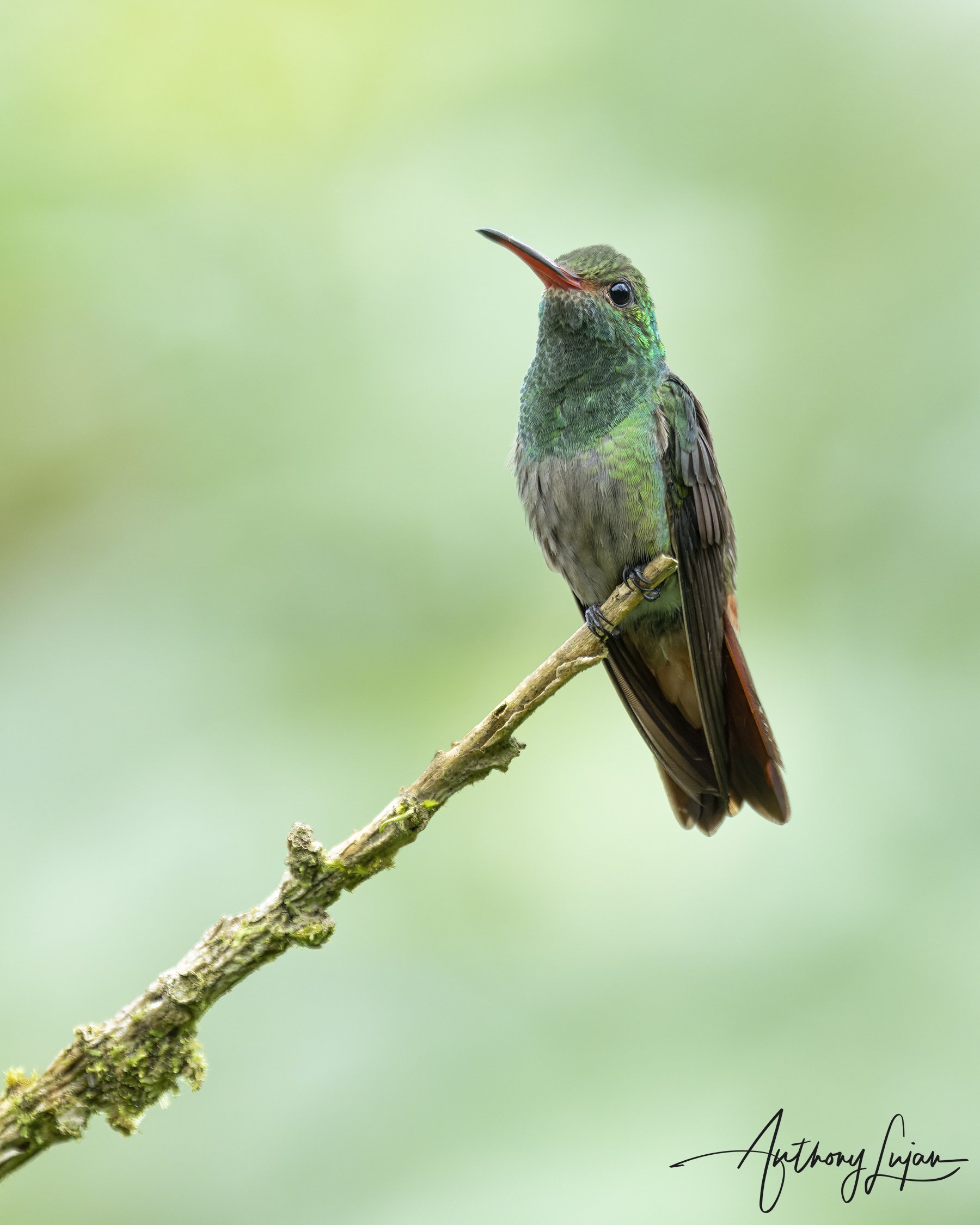
Below is the Cinnamon Hummingbird (Amazilia rutila rutila)
Photographed at Finca Don Gabriel (Pochutla, Oaxaca), Jardín Botánico de Acapulco, Jesús of Nazareth, La Pintada, and Atoyac de Álvarez, Guerrero, Mexico
These individuals belong to the subspecies rutila, which occurs along the Pacific slope of Mexico from Sonora south through Guerrero and Oaxaca. It favors dry tropical forest, thorn scrub, and open woodland with scattered flowering trees, typically from sea level to 1,500 meters.
For more details on the trips behind this species, visit the Costa Rica Hummingbird Expedition | July 2025 page and explore My Travel 2025-05 Costa Rica for guides and trip reports.
Related species in the Amazilia genus (5 species in total):

Please note: The content provided in this article reflects Anthony’s personal experience and photographic approach. Results can vary depending on light, weather, location, equipment, subject behavior, and field conditions.