
Chilean Woodstar
Scientific name: Eulidia yarrellii
The Chilean Woodstar is an extremely range-restricted hummingbird now confined to a few desert river valleys of northern Chile. Fewer than 500 mature individuals are thought to remain, the population is decreasing, and it is assessed as Critically Endangered, endemic, and non-migratory in the global sense.
At a Glance
Family: Trochilidae (hummingbirds)
Clade: Mellisugini - Bees
Genus group: Eulidia — 1 species of tiny, desert‑valley woodstar, with no recognized subspecies in the genus.
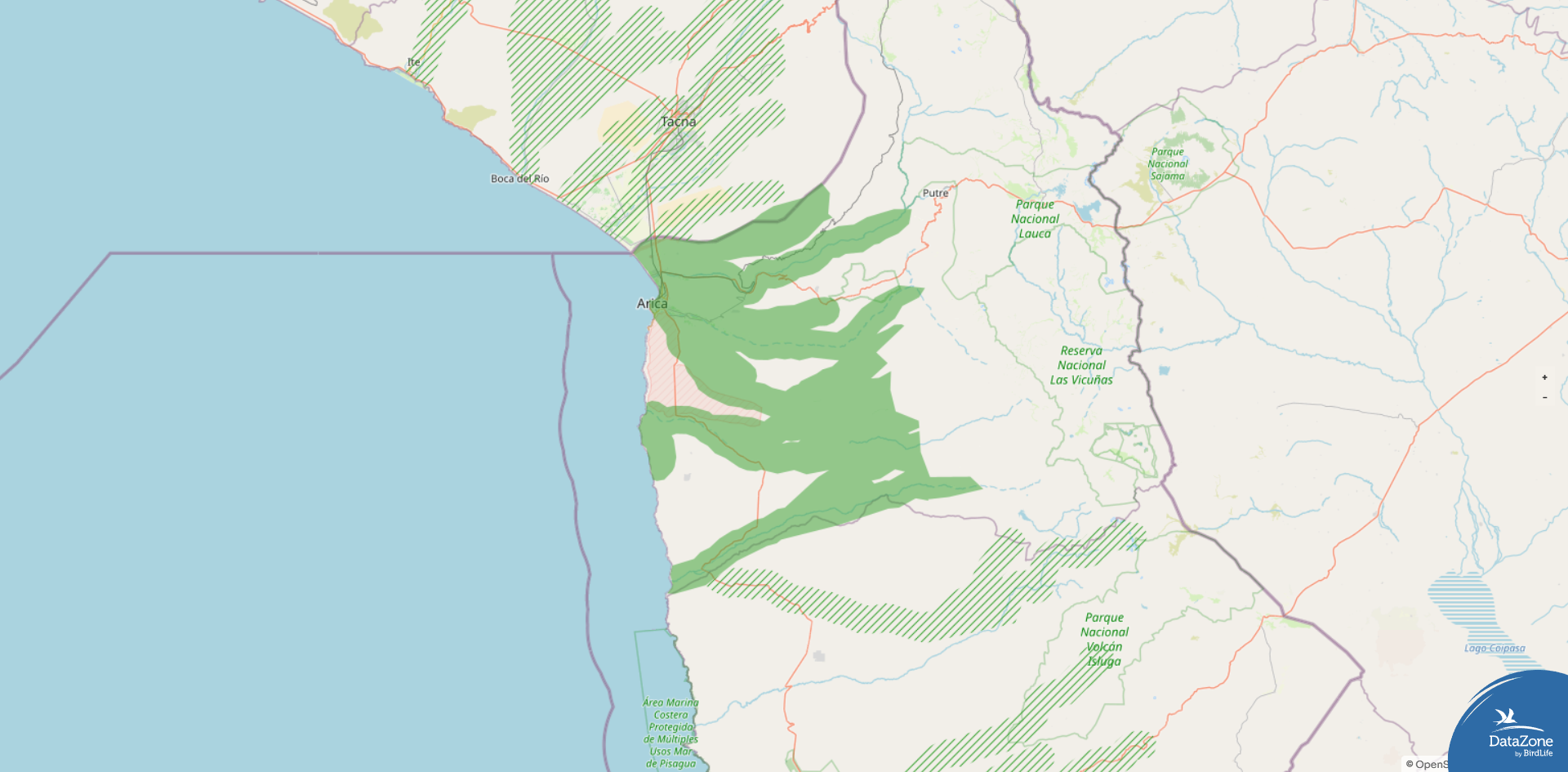
Range: Historically desert river valleys near the Pacific coast from southern Peru to northern Antofagasta, Chile; now effectively confined to the Azapa and Vítor valleys of extreme northern Chile
Habitat: Narrow desert valleys with riparian thickets, arid scrub, agricultural lands (especially orchards and groves), and rural gardens
Elevation: Mostly low to mid elevations in desert valleys, with records from near sea level up to over 2,000 m in some valleys
Length: About 7.5–8.0 cm (roughly 3.0–3.1 in)
Weight: About 2.3–2.6 g (the smallest bird in Chile)
Number of mature individuals: Fewer than 500
Population trend: Decreasing
Status: Critically Endangered (IUCN)
Name Origin
The genus name Eulidia is of unclear origin but was established to hold this unique woodstar hummingbird as its only member, reflecting its distinctiveness. The species name yarrellii honors William Yarrell, a 19th-century English naturalist known for his influential works on British birds and fish. The English name “Chilean Woodstar” highlights both its tiny, star-like size and its strong association with Chile’s northern desert valleys.
Subspecies & Distribution
The Chilean Woodstar is monotypic, with no recognized subspecies.
It is endemic to a very small area of South America:
Historically, it occurred in river valleys along the Pacific slope from Tacna in southern Peru south to northern Antofagasta Region in Chile.
Today, confirmed populations are effectively restricted to just two heavily cultivated desert valleys in northern Chile: the Azapa and Vítor valleys near Arica.
Within these valleys, it occupies narrow strips of habitat along watercourses and irrigated lands, interspersed with orchards, groves, and remnant natural vegetation.
Ledged
Green Resident
Species Overview
The Chilean Woodstar is a tiny hummingbird, no larger than a large moth, and is the smallest bird in Chile. Once described as common and even abundant in parts of its limited range, it has undergone a dramatic decline over the last century and now survives in only a fraction of its historical habitat. Its extremely small, rapidly decreasing population, highly restricted range, and ongoing threats have led to its current Critically Endangered status.
Male Description
Adult males are very small hummingbirds with iridescent olive-green upperparts and a short, straight bill. The underparts are predominantly whitish, strongly contrasted by a bright violet-red gorget on the throat that can flash intensely in good light. The flanks may be lightly washed with buff or green, and the tail is relatively short and somewhat square-tipped, often showing duller greenish or brownish tones. In life, the male gives the impression of a tiny, pale hummingbird with a brilliant violet-red throat and olive-green back, often feeding at low shrubs and garden flowers in narrow desert valleys.
Female Description
Females are similarly tiny but lack the male’s vivid throat patch. They have olive-green upperparts and whitish underparts, often with beige or buffy washes on the sides and flanks and faint spotting or mottling on the throat. The tail is slightly rounded with greenish to brownish feathers, sometimes with paler tips, and is proportionally short. Females can be easily overlooked as they forage quietly in orchards, hedges, and gardens, and are best identified by their small size, pale underparts, green upperparts, and occurrence within the very restricted range of the species.
Habitat & Behavior
Chilean Woodstars inhabit narrow, irrigated desert valleys where watercourses and agriculture create ribbons of greenery within otherwise extremely arid landscapes. They use riparian thickets, arid scrub remnants, fruit groves, olive and citrus plantations, and rural gardens, relying both on native vegetation and introduced plants. They feed on nectar from shrubs, trees, and garden flowers, and also take small insects for protein, typically by hawking from low perches or gleaning from foliage. The species appears largely sedentary within these valleys, though some individuals may move up and down slope or along valleys seasonally, tracking flowering and water availability, without undertaking long-distance migration.
Population
Historically considered common in the early to mid-20th century, the Chilean Woodstar has suffered a severe decline, with past surveys already documenting a drop from over a thousand individuals to only a few hundred in the early 21st century. Current estimates indicate that fewer than 500 mature individuals remain, all in a very small area of northern Chile. The population trend is clearly decreasing, with high risk of further declines due to continued habitat loss, pesticide use, and competition from other hummingbirds such as the Peruvian Sheartail.

Conservation
Chilean Woodstar is listed as Critically Endangered because of its extremely small and rapidly declining population, very limited distribution, and ongoing threats. The main threats include habitat loss and modification from agricultural expansion (olive and citrus groves replacing native vegetation), heavy pesticide use in fruit production, degradation and fragmentation of riparian vegetation, and potential competition and displacement by Peruvian Sheartail. Conservation actions focus on protecting and restoring native vegetation in desert valleys, reducing pesticide use, managing agricultural practices to be more wildlife-friendly, and maintaining flowering plants and dense thickets crucial for feeding and breeding. Recovery plans and focused conservation projects are in place, but the species remains at high risk of extinction without sustained, effective action.
Since 2003, AvesChile has documented a steep decline in the population from around 1,500 to fewer than 500 individuals. In April 2025, the International Hummingbird Society, in partnership with ROC (Red de Observadores de Aves y Vida Silvestre de Chile), launched a habitat restoration initiative in the Chaca Valley. The project focuses on creating microreserves to protect key breeding and feeding sites near the Arica Hummingbird Natural Monument.
The first 40-acre reserve includes irrigation infrastructure and reforestation plans with 1,000 native trees provided by CONAF. This marks the first phase of long-term restoration, aiming to revive essential riparian vegetation for nesting and feeding. Future efforts will expand restoration, maintain habitats, and safeguard the last strongholds of this tiny hummingbird.
Continued support and land protection are vital to prevent extinction and ensure the Chilean Woodstar’s survival in the Atacama’s fragile oasis ecosystems.


Checkout Anthony’s playlist of this species! Click the top right dropdown to see all the videos.
Anthony created a few products designed around this species. Check them out!
Your purchase SUPPORTS conservation efforts, so the more you buy, the more you help hummingbirds.
Please note: The content provided in this article reflects Anthony’s personal experience and photographic approach. Results can vary depending on light, weather, location, equipment, subject behavior, and field conditions.