
Coppery-headed Emerald

Scientific name: Microchera cupreiceps
The Coppery-headed Emerald is a tiny, brilliantly iridescent hummingbird of humid montane forests, edges, and gardens in the highlands of northern and central Costa Rica. It is endemic to Costa Rica, listed as Least Concern, with an estimated 20,000–49,999 mature individuals, a stable population trend, and it is considered an altitudinal migrant.
At a Glance
Family: Trochilidae (hummingbirds)
Clades: Trochilini – Emeralds
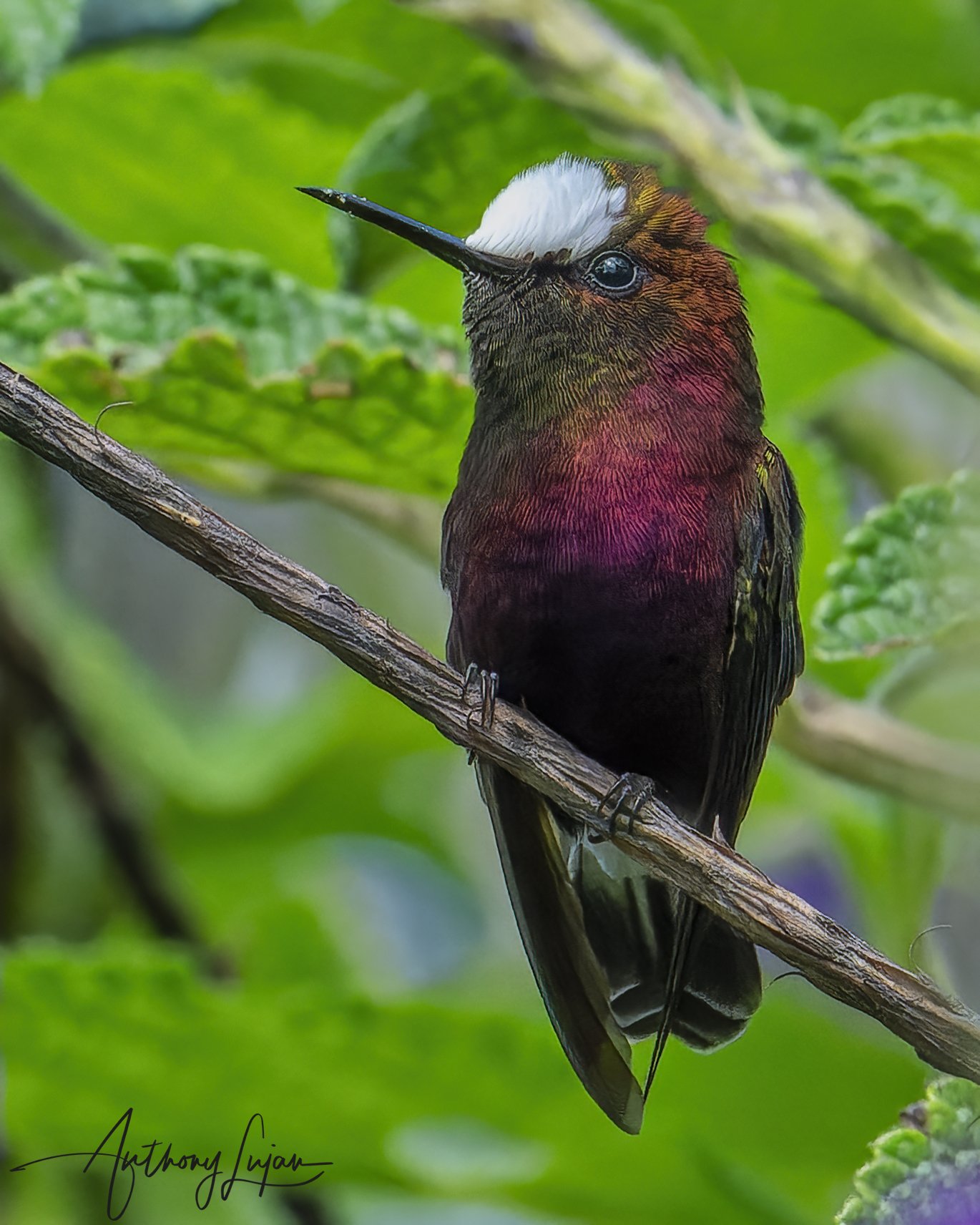
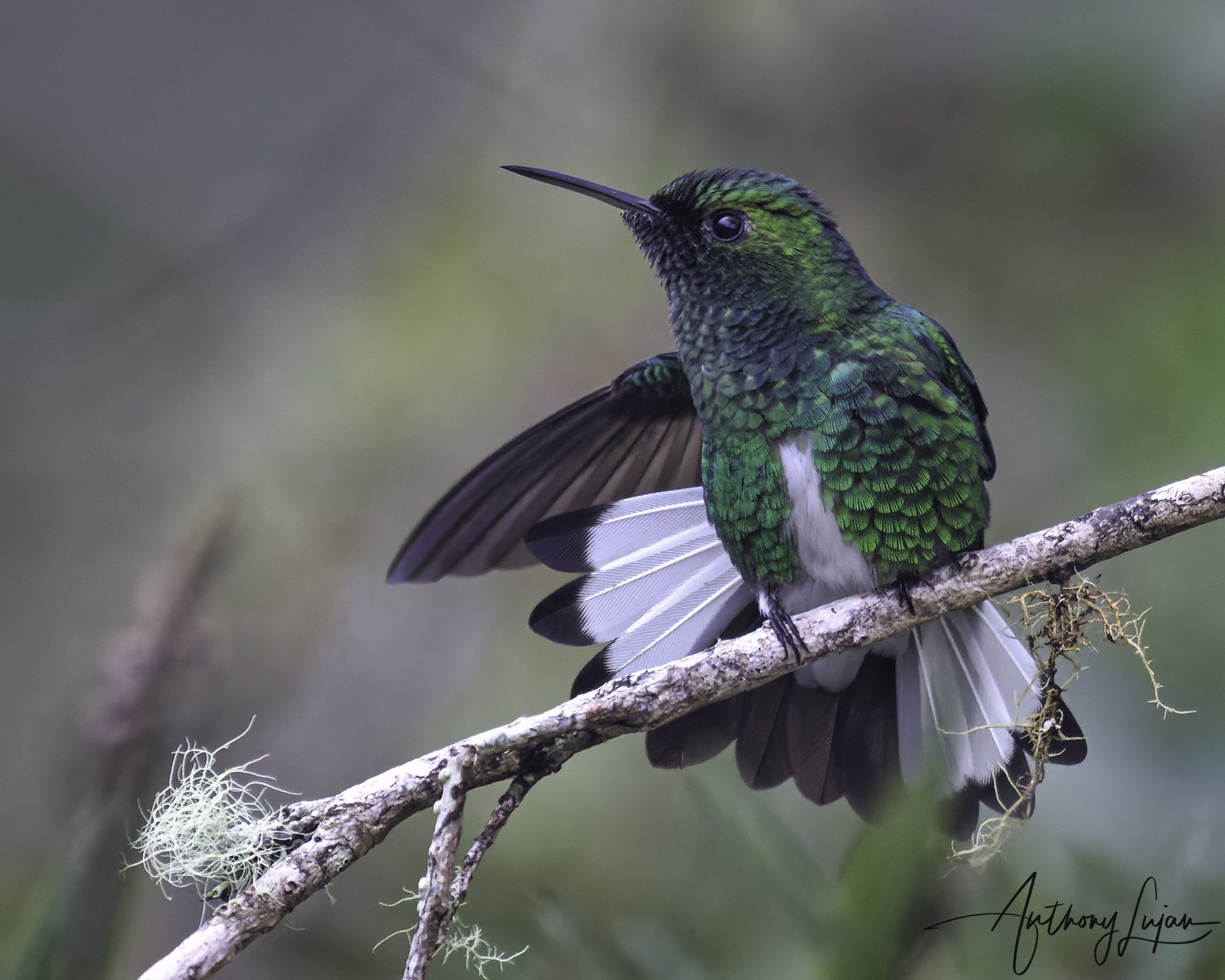
Genus group: Microchera — tiny highland emeralds (3 species in total: Snowcap, Coppery-headed Emerald, White-tailed Emerald)
Range: Highlands of northern and central Costa Rica, mainly on the Caribbean slope but also locally on the Pacific slope in the far north.
Habitat: Edges and interior of moist to humid montane forest, forest edge, clearings, and adjacent semi‑open areas with flowering shrubs and trees, including gardens at suitable elevations.
Elevation: About 300–1,500 m on the Caribbean slope, and mostly above about 1,200 m on the Pacific slope.
Length: About 7.5–7.6 cm (3.0 in).
Weight: About 3 g (0.11 oz).
Number of mature individuals: 20,000–49,999.
Population trend: Stable.
Status: Least Concern (IUCN Red List category).
Migration: Altitudinal migrant.
Name Origin
The genus name Microchera combines Greek roots meaning “small” and “hand,” emphasizing the tiny size of these hummingbirds. The species name cupreiceps means “coppery‑headed,” referring to the male’s distinctive coppery crown. The English name “Coppery-headed Emerald” describes both the copper-colored crown and the emerald‑green body characteristic of this small montane species.
Taxonomy & Distribution
Monotypic — no recognized subspecies.
Coppery-headed Emerald is part of the emerald clade (tribe Trochilini) and one of three species in the genus Microchera, along with Snowcap and White-tailed Emerald. It is endemic to Costa Rica, where it occurs in the highlands of the northern and central parts of the country. The species is confined to suitable moist and humid montane forests and their edges, primarily on the Caribbean slope but also in some northern Pacific‑slope highlands.
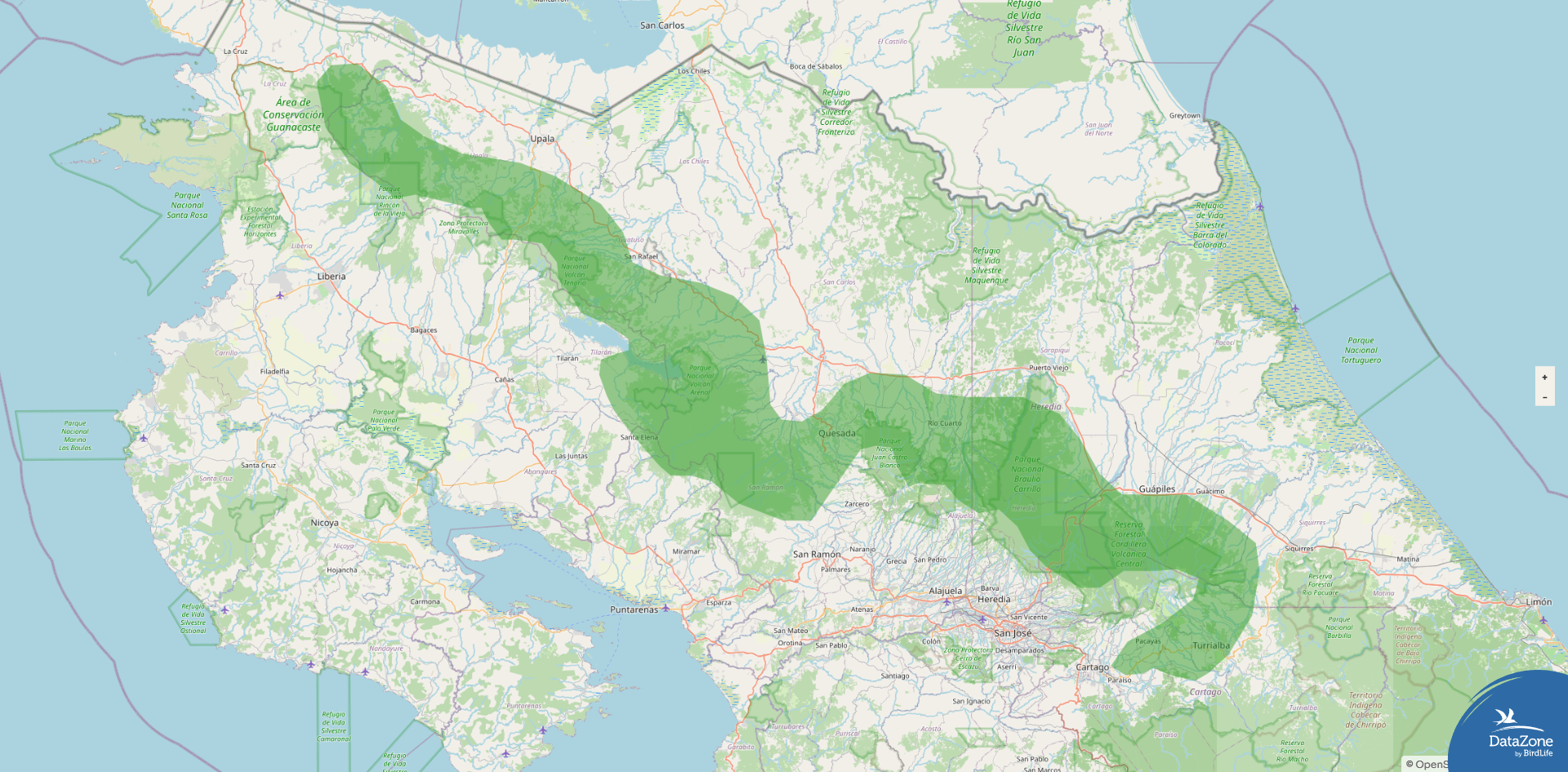
Legend
Green Resident
Species Overview
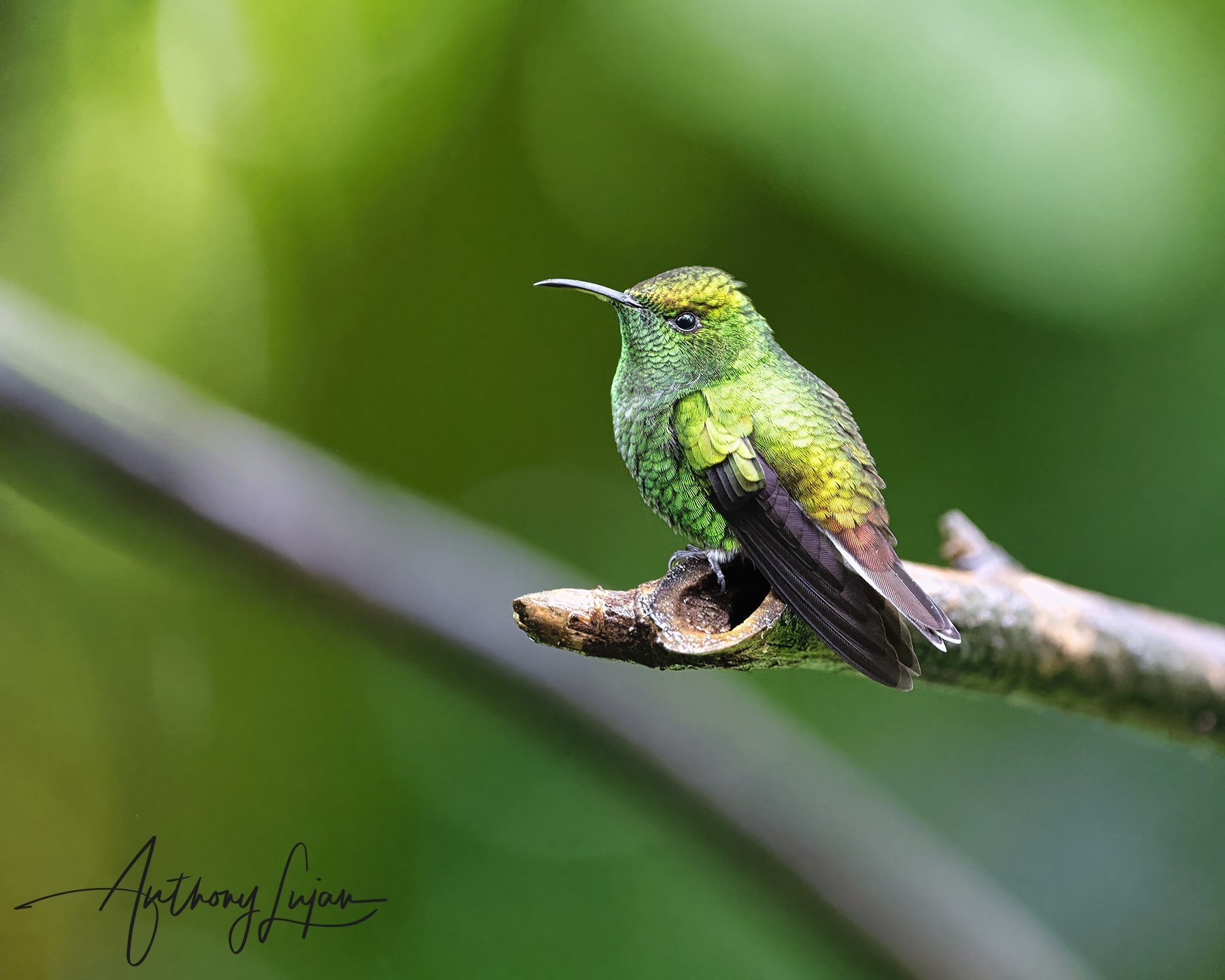
The Coppery-headed Emerald is a very small hummingbird with a striking coppery crown and rump in adult males, set against a bright green body. It is a characteristic species of Costa Rican middle‑elevation forests and is frequently encountered at feeders and flowering shrubs in cloud‑forest lodges and gardens within its elevational range. Its restricted range but stable numbers and use of semi‑open habitats around forest make it an emblematic but currently secure Costa Rican endemic.
Male Description
Adult males are tiny and compact, with a bright coppery crown and rump contrasting with metallic green upperparts and underparts. The belly is green, and the vent is white. The tail is fairly short and dark with some green gloss. The bill is short, noticeably decurved, and dark. In good light, males show a glowing copper crown and rump and a vivid green body, making them stand out among other small highland hummingbirds.
Female Description
Females lack the intense copper crown and rump of the males. They have green upperparts, a white to grayish‑white belly, and greenish flanks, with a narrow dark subterminal band on the white outer tail feathers. The bill is similar in shape but may show a slightly paler base. Juveniles resemble females but are duller overall, with less sharp contrast between the upperparts and underparts and more muted tail patterning.
Habitat & Behavior
Coppery-headed Emeralds inhabit moist to humid montane forests, especially along edges, clearings, and semi‑open areas with abundant flowers, as well as nearby gardens and hedgerows at suitable elevations. They feed on nectar from a variety of flowering shrubs, small trees, and epiphytes, and readily visit feeders in forested areas. Like many small hummingbirds, they can be surprisingly assertive, defending rich nectar sources from other hummingbirds, and they also take small insects for protein, often hawking from perches or gleaning near flowers.
Breeding
Breeding occurs within the highland forests of Costa Rica, with timing aligned to local flowering patterns and favorable climate conditions. The female builds a small cup nest of plant fibers and moss bound with spiderweb, often decorated externally with lichens, and typically places it on a branch or other suitable support in forest or along forest edges a few meters above the ground. She lays two white eggs and alone incubates and raises the chicks, following the typical hummingbird breeding pattern.
Movement
Coppery-headed Emerald is an altitudinal migrant, shifting up and down the slopes within its restricted Costa Rican range in response to flowering and seasonal conditions. It may move downslope during some seasons and upslope in others, so local abundance can vary with elevation and time of year, even though the species remains within the highland zone rather than undertaking long‑distance migrations.
Population
With an estimated 20,000–49,999 mature individuals and a relatively small geographical range, Coppery-headed Emerald has a moderate total population size. Within suitable habitats it can be fairly common, especially in protected or well‑preserved montane forests and at feeders in cloud‑forest lodges. The population is considered stable at present, aided by the species’ use of forest edges and semi‑open habitats as well as interior forest.

Conservation
Coppery-headed Emerald is assessed as Least Concern, with a stable trend, but its status as a Costa Rican endemic confined to humid montane forests means it depends on continued forest protection. Deforestation, fragmentation, and climate-driven shifts in cloud‑forest zones could pose future threats. Protecting montane forests, maintaining forest edges and flowering shrubs in adjacent landscapes, and conserving elevational corridors within Costa Rica all help secure this species and many associated highland hummingbirds.


Interested in coming along? Visit Travel with Me!
Also visit Costa Rica Hummingbird Expedition | July 2021 | 10 Species | Where It All Started
Also visit Costa Rica Hummingbird Expedition | November 2021 | 22 New Species | Second Chances
Also visit Costa Rica Hummingbird Expedition | July 2025 | 32 Species | 10 New | Closing the Gap
Checkout Anthony’s playlist of this species! Click the top right dropdown to see all the videos.
Related species in the Microchera genus (3 species in total):
Please note: The content provided in this article reflects Anthony’s personal experience and photographic approach. Results can vary depending on light, weather, location, equipment, subject behavior, and field conditions.