
Empress Brilliant
Scientific name: Heliodoxa imperatrix
The Empress Brilliant is a large, brilliantly green hummingbird of very wet foothill and cloud forests on the Pacific slope of the Andes in Colombia and northwestern Ecuador. The number of mature individuals is unknown, its population trend is Decreasing, it is assessed as Least Concern, and it is considered Not a Migrant aside from local movements.
At a Glance
Family: Trochilidae (hummingbirds)
Clade: Heliantheini – Brilliants
Genus: Heliodoxa — robust brilliants with long tails, glittering throats, and straight to slightly curved bills
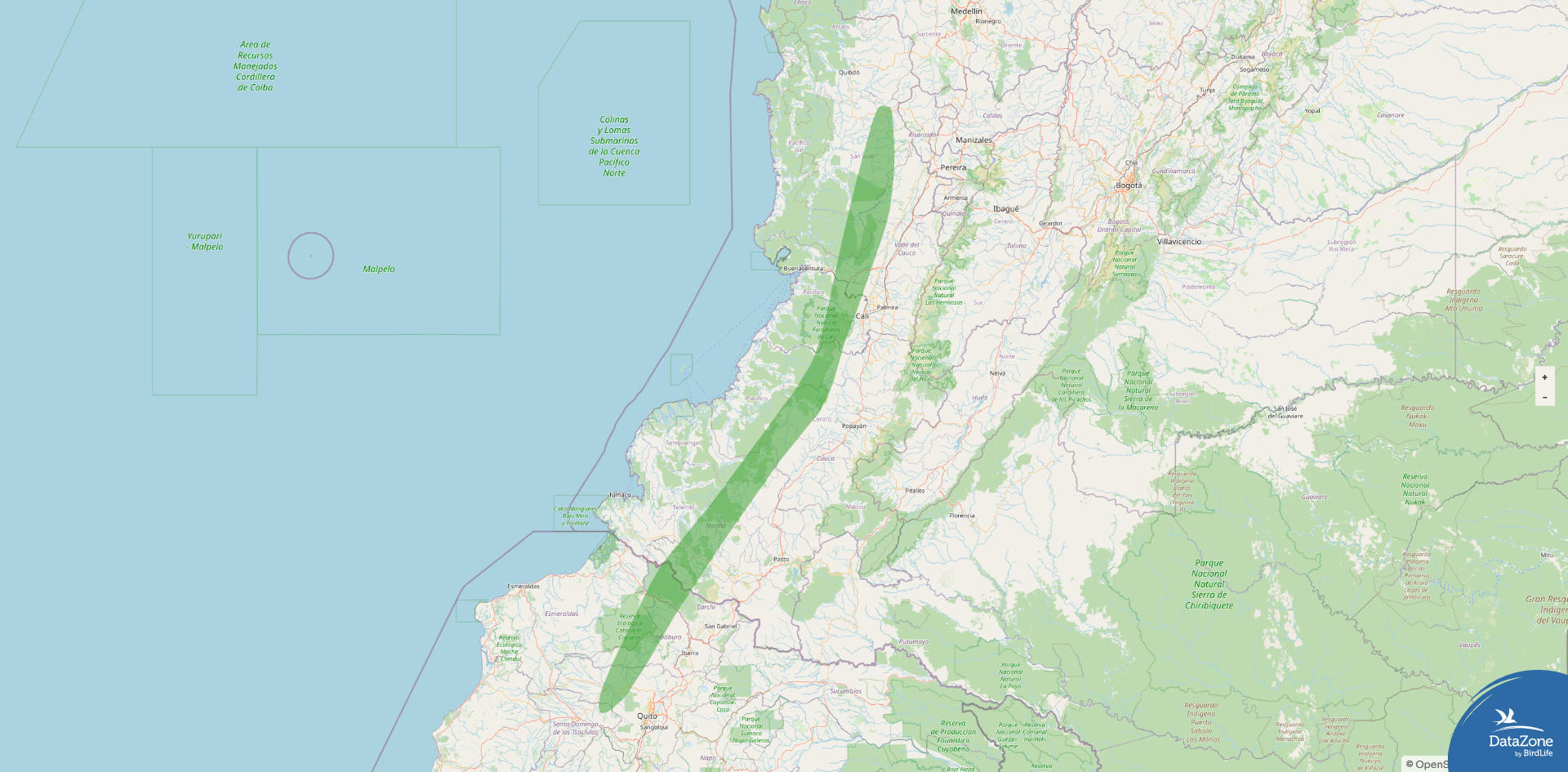
Range: Pacific slope of the Andes from Colombia’s Chocó Department south into Ecuador as far as Pichincha Province
Habitat: Very wet foothill forest, interior and edges of cloudforest, and mature secondary forest
Elevation: Roughly 400–2,000 m
Length: Males 15–17 cm (5.9–6.7 in); females 12–13.5 cm (4.7–5.3 in)
Weight: Males about 9.3 g (0.33 oz); females about 8.3 g (0.29 oz)
Number of mature individuals: Unknown
Population trend: Decreasing
Status: Least Concern (IUCN)
Name Origin
The genus name Heliodoxa combines elements meaning “sun” and “glory,” reflecting the bright, shining gorgets typical of brilliants. The species name imperatrix is Latin for “empress,” referring to its regal appearance among hummingbirds. The English name “Empress Brilliant” matches this sense of grandeur and emphasizes its place within the brilliant clade.
Subspecies & Distribution
Empress Brilliant is monotypic, with no recognized subspecies.
It is found on the Pacific slope of the Andes from Colombia’s Chocó Department south into Ecuador as far as Pichincha Province. Within this limited range it inhabits very wet foothill and cloud forests, using both the interior and edges of cloudforest and mature secondary forest between about 400 and 2,000 meters in elevation.
Ledged
Green Resident
Species Overview
The Empress Brilliant is a striking, forest-associated hummingbird of the wet Pacific Andean slopes, often encountered at feeders and flowering trees in foothill and cloudforest zones. It favors lush, mossy habitats where epiphytes and vines are abundant and where flowering trees and vines provide rich nectar resources. Although it has a relatively restricted range confined to parts of Colombia and Ecuador, it is reasonably common in suitable habitat and occurs in some protected areas, supporting its current Least Concern status despite a Decreasing trend.
Male Description
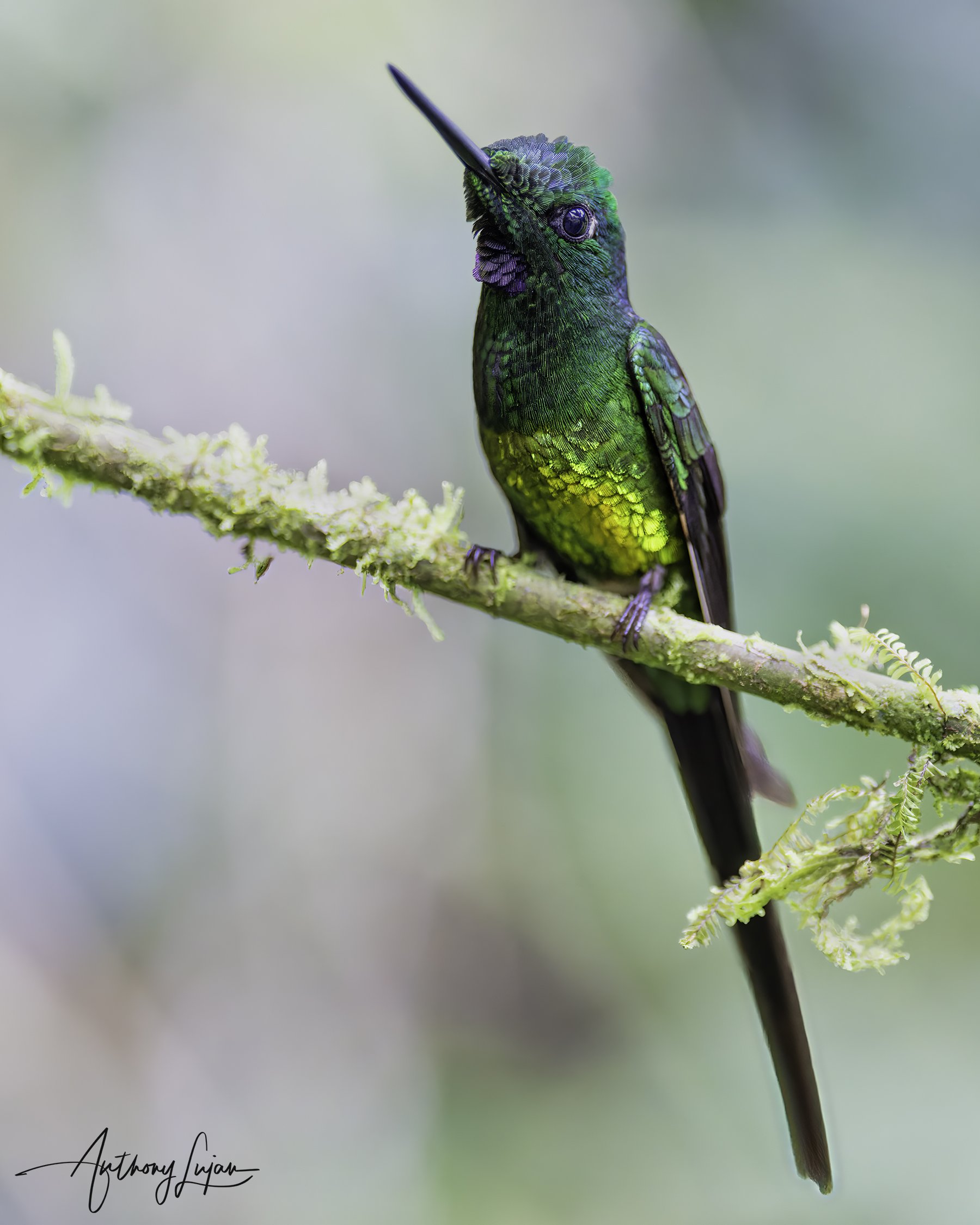
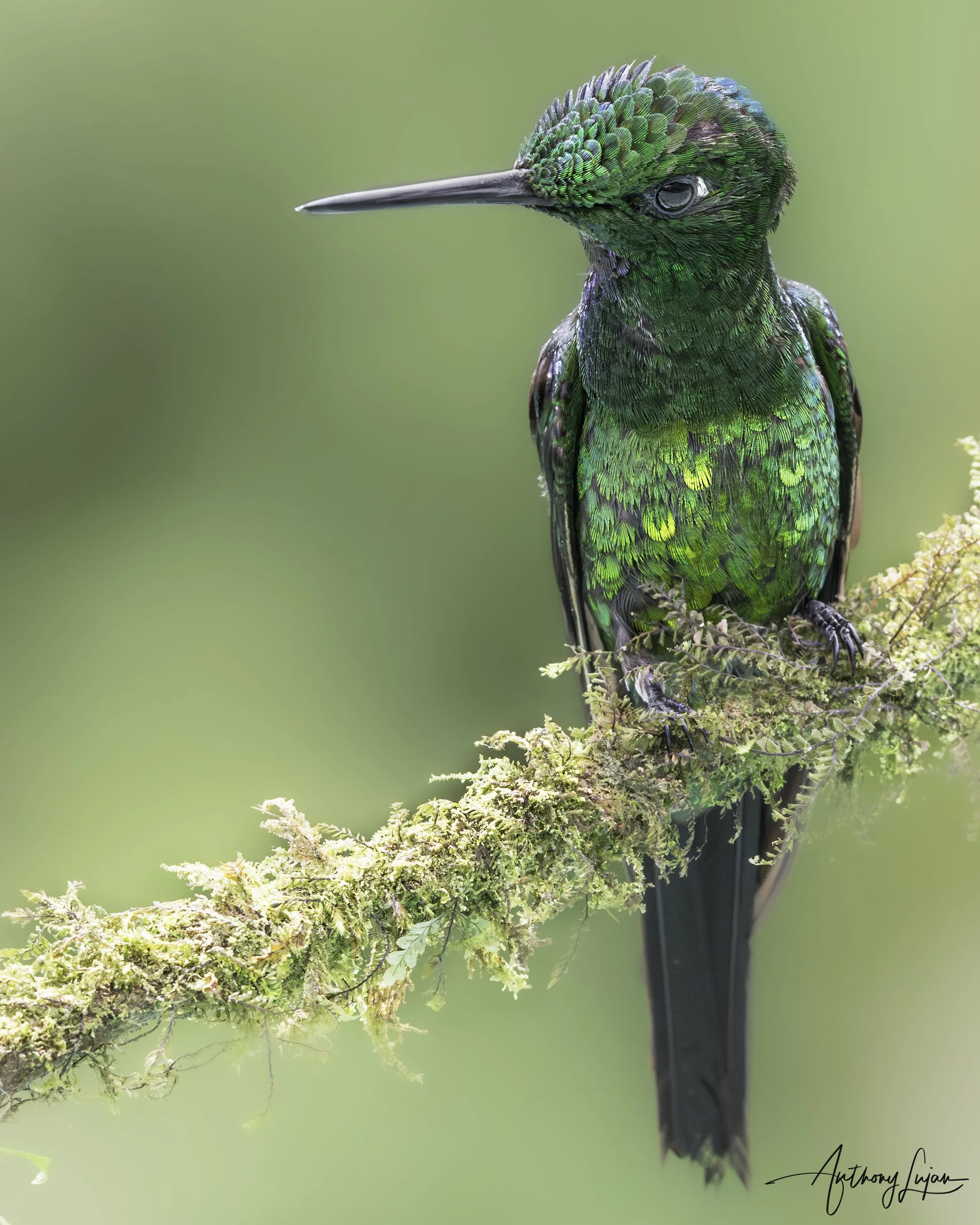
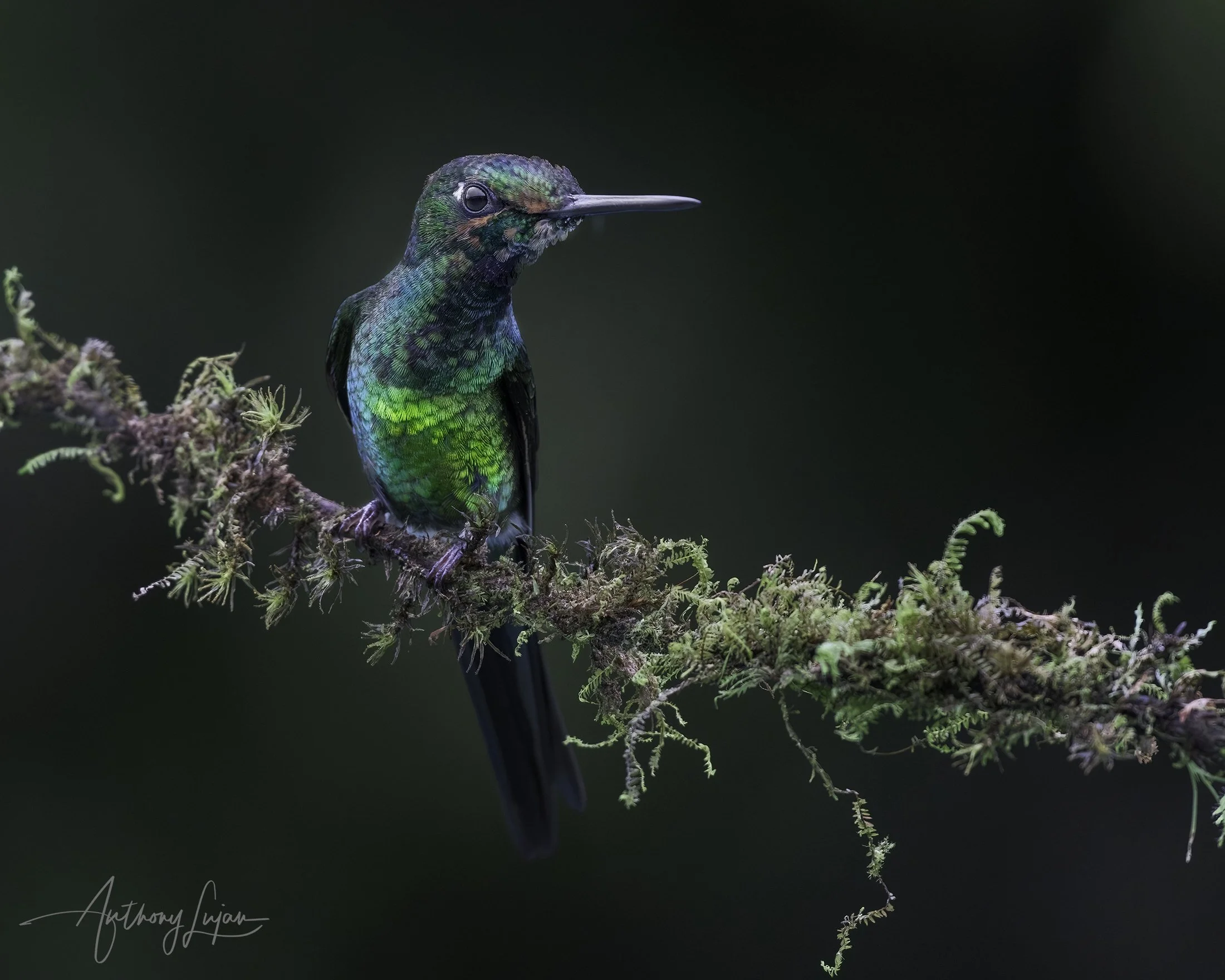
Adult males are large, robust hummingbirds with bright green plumage overall and a glittering green forehead. The throat and breast are black, merging into a green lower breast and belly, creating the “black-throated” front framed by glowing green. The tail is long and slightly forked, with bronzy-green central feathers and darker outer ones, and the bill is medium-length, almost straight, and dark. In good light the male appears as a deep, shining green bird with a bold dark throat and long tail, giving a powerful, elegant impression.
Female Description
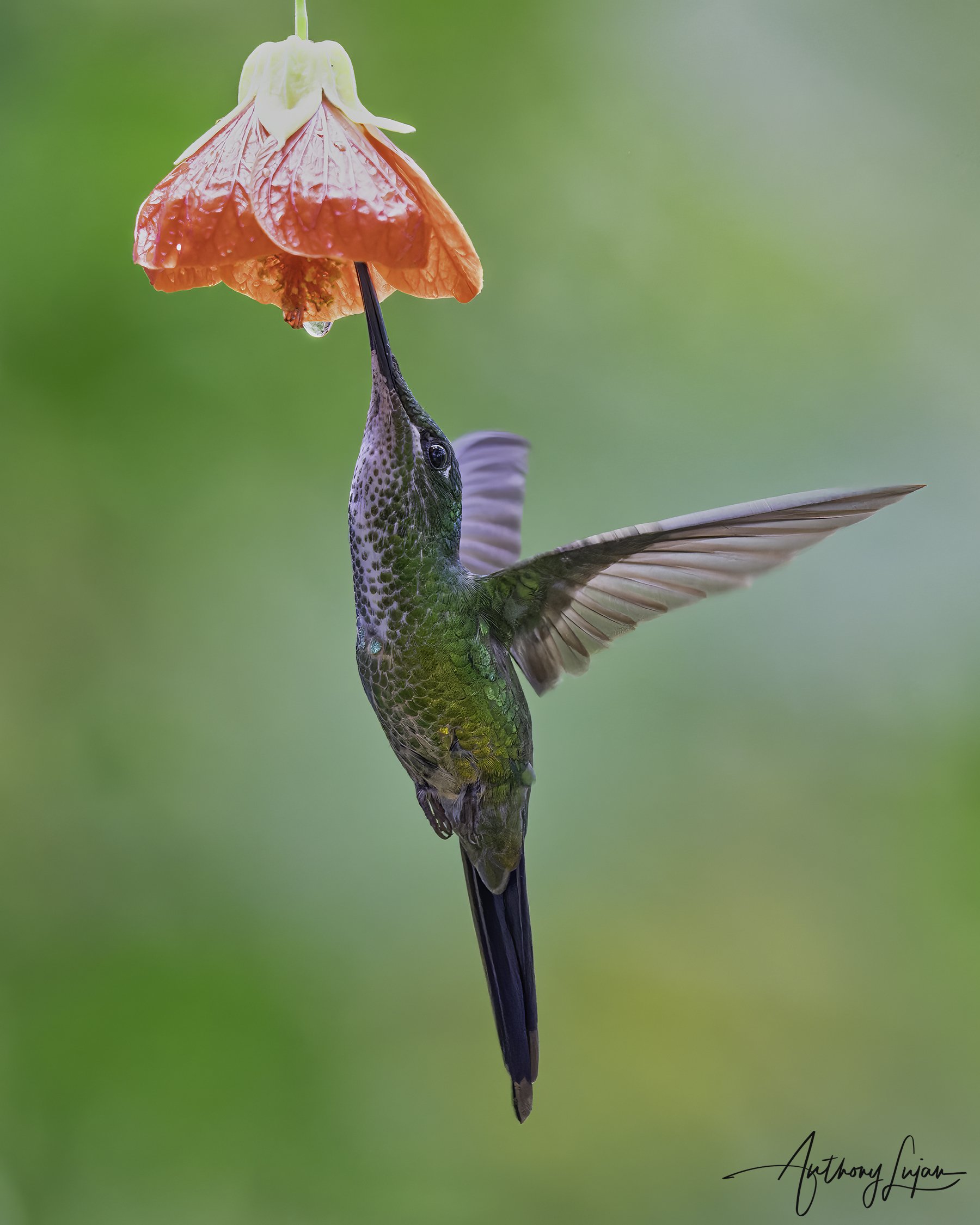
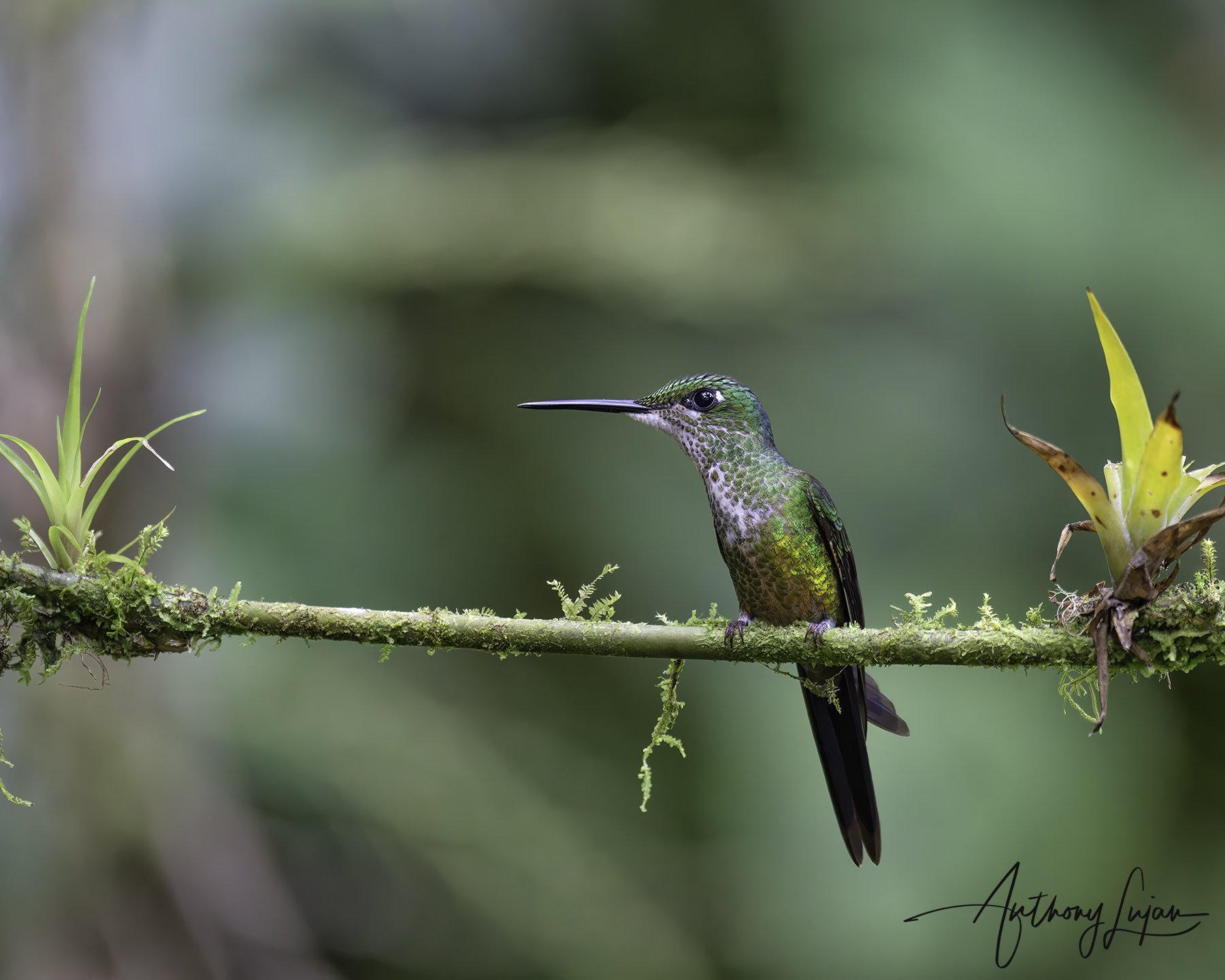
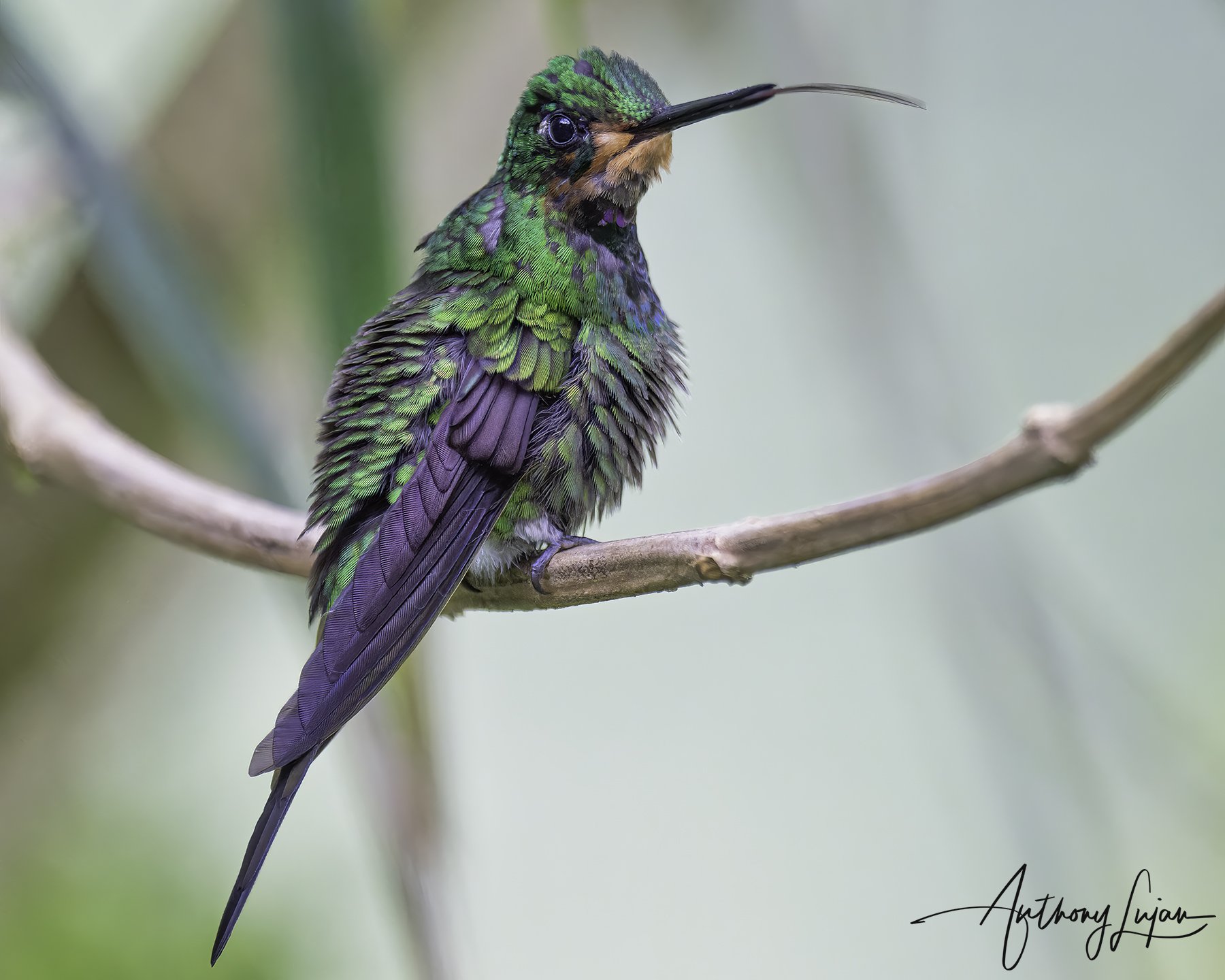
Females have bronzy-green upperparts and more patterned underparts than males. The center of the throat and breast is grayish with extensive bronzy green flecking, the flanks are solid bronzy green, and the belly is golden green. The central tail feathers are bronzy green and the outer ones dull black with a bronze gloss, forming a less dramatically forked tail than in males. Overall, females look like somewhat smaller, more subtly patterned brilliants, distinguished by their bronzy-green upperparts and flecked throat and breast.
Habitat & Behavior
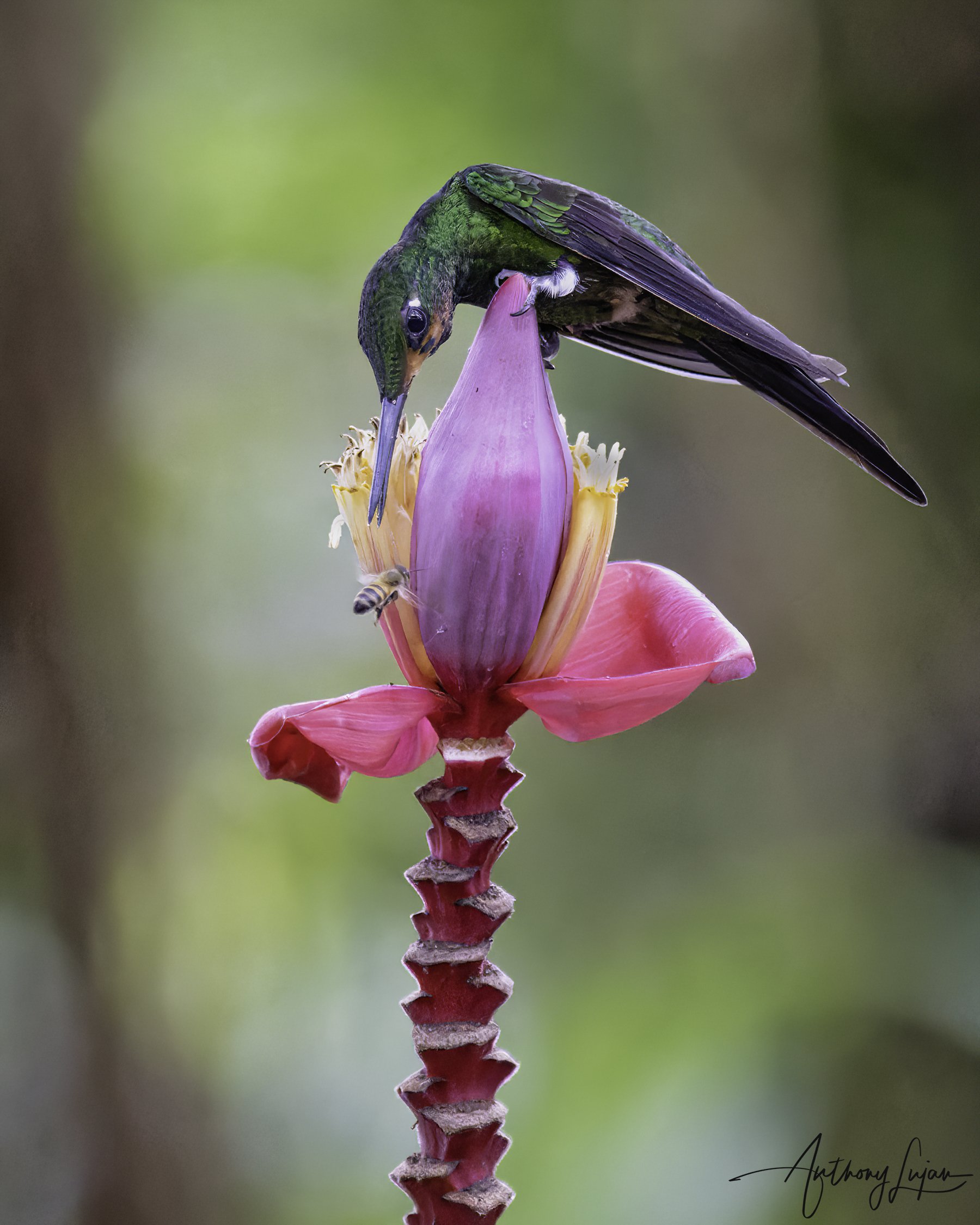
Empress Brilliants inhabit very wet landscapes, including foothill forest, the interior and edges of cloudforest, and mature secondary forest on the Pacific slope of the Andes. They typically forage from the mid-level to the canopy, with females also using the understory, visiting flowers of vines such as Marcgravia and Marcgraviastrum where they often perch to feed. They also feed by hovering under drooping flowers of Ericaceae and other high-forest plants and supplement their nectar diet by capturing small insects, both by gleaning from foliage and hawking from perches. The species is considered Not a Migrant, but likely makes local movements along slopes in response to flowering seasons and microclimate.
Population
The total number of mature individuals is unknown, though the Empress Brilliant appears to be reasonably common within suitable habitat across much of its limited range. It occupies a relatively narrow band of very wet foothill and cloud forest on the Pacific Andean slope, and while no immediate large-scale threats have been identified, its habitat is vulnerable to deforestation and land-use change. The population trend is assessed as Decreasing, reflecting gradual habitat loss and fragmentation, though much of its core forest habitat remains largely intact in some areas.

Conservation
Empress Brilliant is listed as Least Concern, largely because it remains fairly common in parts of its range and occurs within several protected areas on the Pacific slopes of Colombia and Ecuador. Nevertheless, ongoing deforestation, conversion of forest to agriculture, and infrastructure development can impact the humid foothill and cloudforests it depends on. Conservation efforts that protect and effectively manage very wet montane forests, maintain mature secondary forest, and preserve flowering trees and vines will help sustain this species. Continued monitoring of population trends and habitat integrity is important to ensure that this impressive brilliant continues to thrive in its limited Pacific Andean range.
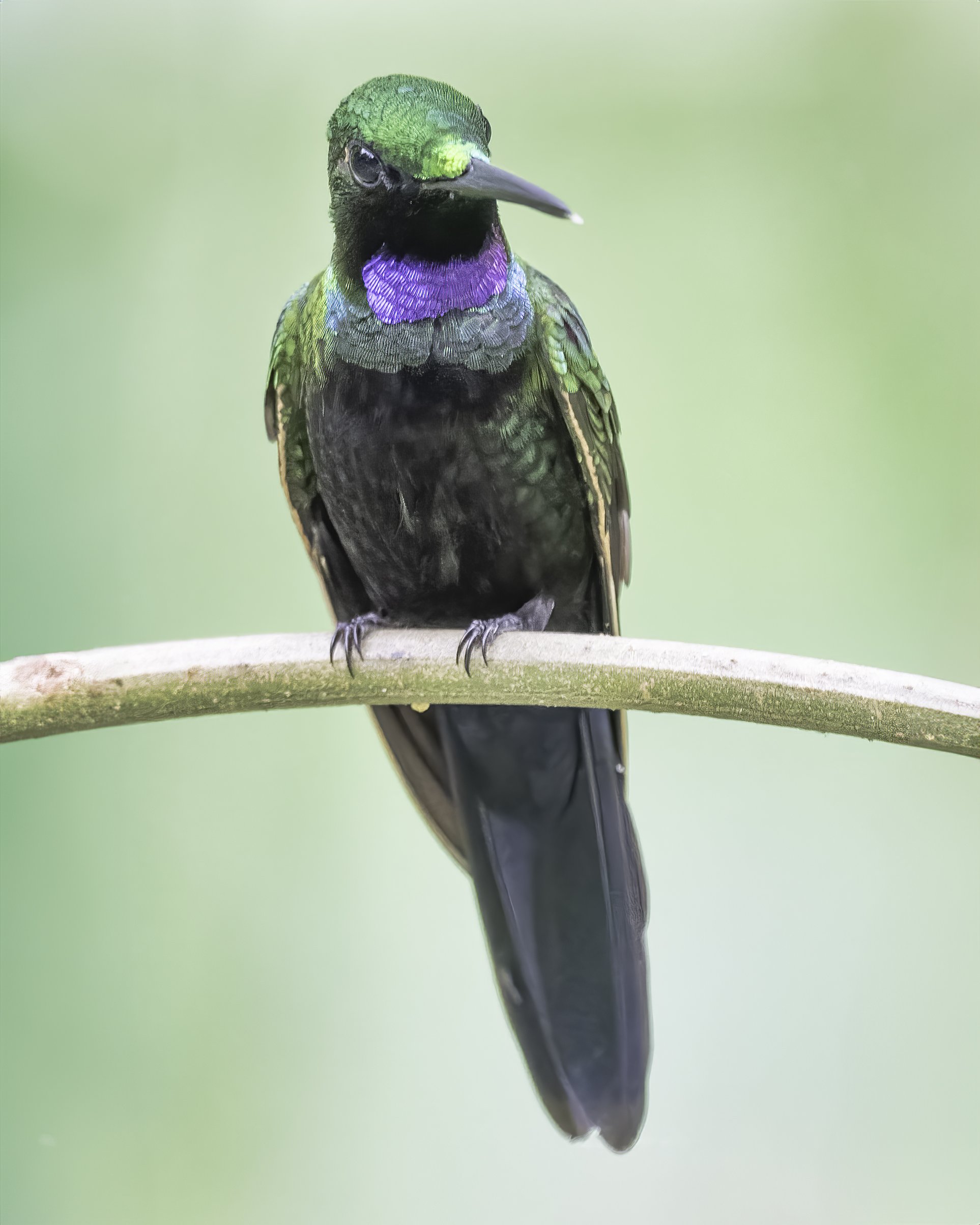
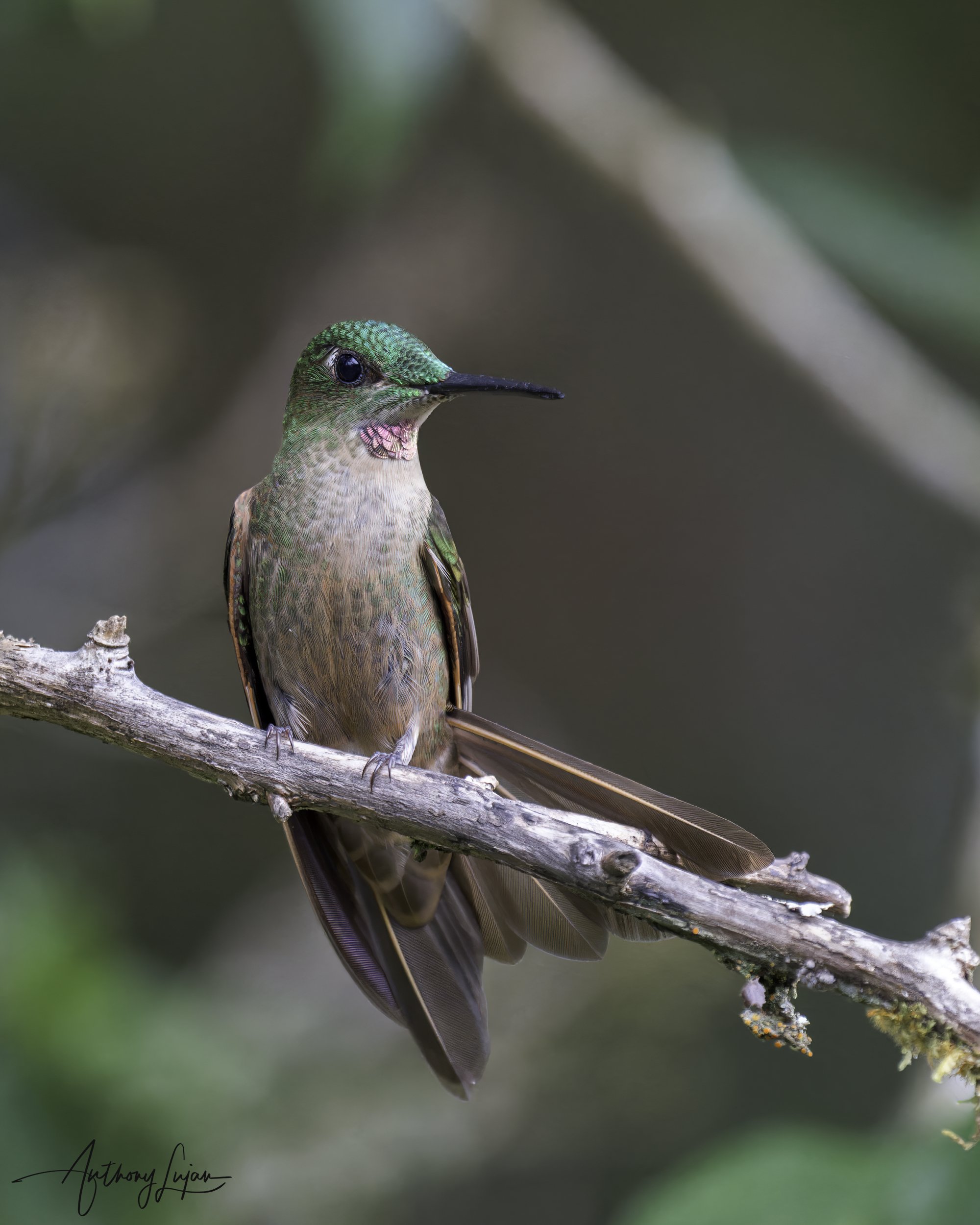
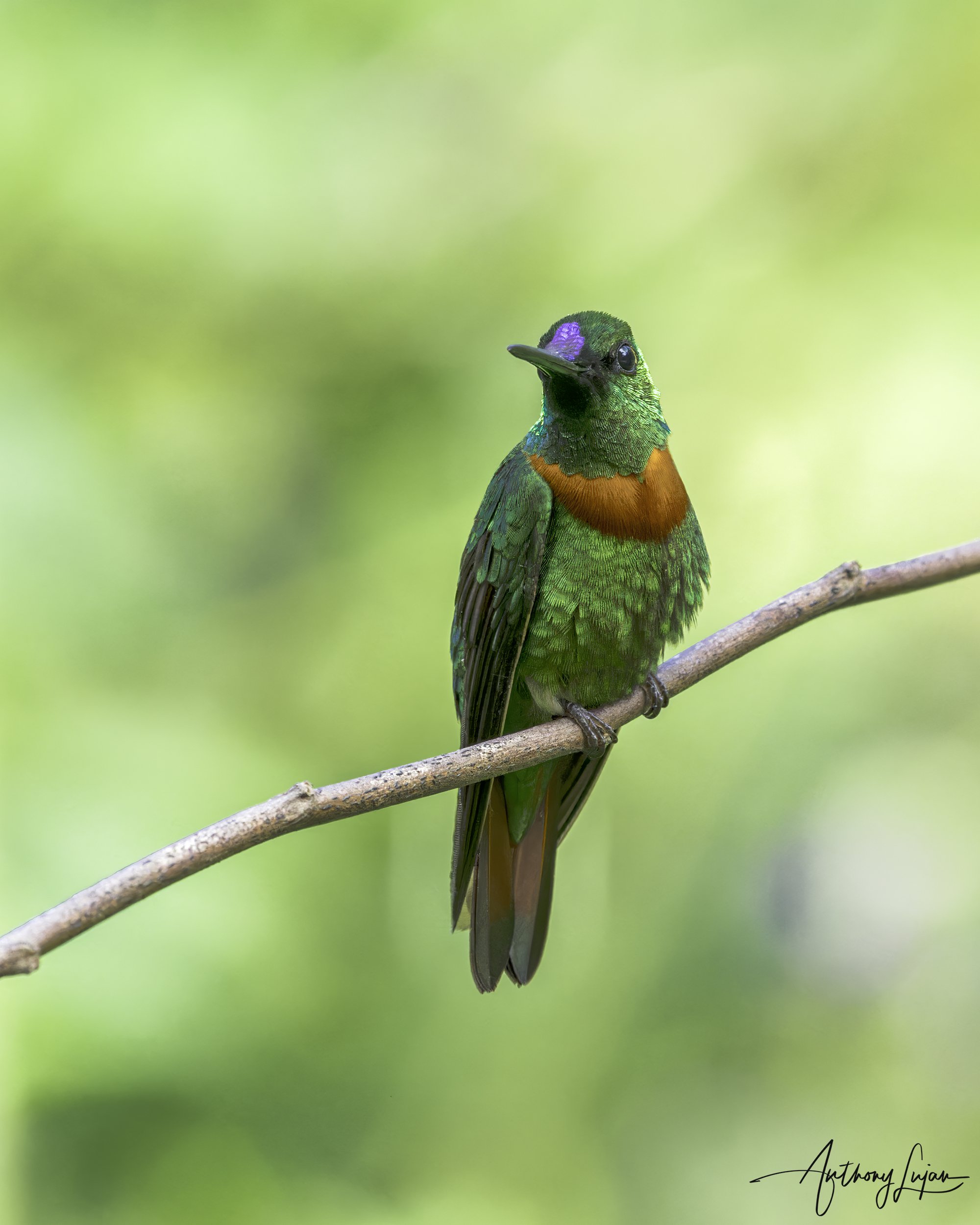
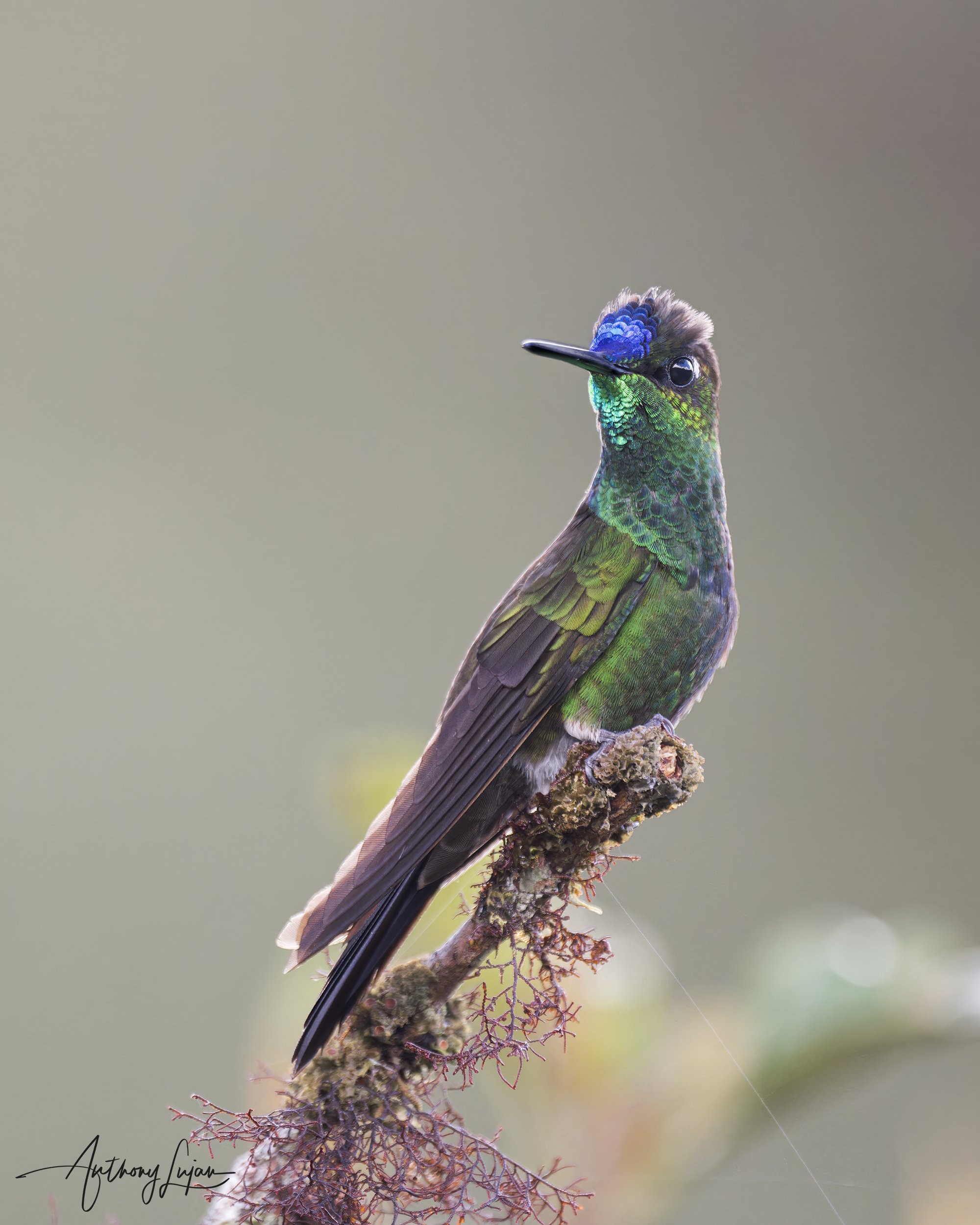
Related species in the Heliodoxa genus (10 species total):



Please note: The content provided in this article reflects Anthony’s personal experience and photographic approach. Results can vary depending on light, weather, location, equipment, subject behavior, and field conditions.