
Glittering-throated Emerald
Scientific name: Chionomesa fimbriata
The Glittering-throated Emerald is a small, widespread emerald hummingbird of open and semi‑open habitats across northern and central South America. Its total number of mature individuals is unknown, its population trend is decreasing, it is generally treated as non‑migratory, and it is listed as Least Concern.
At a Glance
Family: Trochilidae (hummingbirds)
Clade: Trochilini – Emeralds
Genus: Chionomesa — 2 species in total
Range: Northern and central South America, including Colombia, Venezuela, the Guianas, Brazil, Ecuador, Peru, Bolivia, and Trinidad
Habitat: Open and semi‑open landscapes such as second‑growth, forest edges, gallery forest, savannah, scrub, plantations, mangroves, and gardens; generally avoids dense forest interior
Elevation: Primarily from sea level to about 1,000–1,200 m (3,900 ft), most common below 500 m
Length: About 9–10 cm (3.5–3.9 in)
Weight: About 3.5–4.5 g (0.12–0.16 oz)
Number of mature individuals: Unknown
Population trend: Decreasing
Movement: Not a migrant (resident, with only local movements)
IUCN Red List category: Least Concern
Name Origin
The English name “Glittering-throated Emerald” refers to the bird’s shimmering green throat and overall emerald‑like iridescence. The species name fimbriata means “fringed” or “bordered,” likely alluding to subtle edging in its throat or body plumage when originally described.
Taxonomy & Distribution
Chionomesa fimbriata belongs to the tribe Trochilini (“emeralds”) within the hummingbird family Trochilidae. It is one of two species in the genus Chionomesa, together with Blue‑chinned Sapphire (Chionomesa lactea). The Glittering-throated Emerald ranges widely across northern and central South America, including Colombia, Venezuela, the Guianas, much of Brazil, eastern Ecuador, northeastern Peru, eastern Bolivia, and the island of Trinidad. Within this range it is especially common in the north and east, becoming less well known and often less numerous in the west.
Subspecies and Distribution
Seven subspecies:
Chionomesa fimbriata elegantissima
Distribution: Northern and western Venezuela and adjacent extreme northeastern Colombia.Chionomesa fimbriata fimbriata
Distribution: Northeastern Venezuela (Orinoco Basin) eastward through the Guianas to northern Brazil (north of the Amazon River).Chionomesa fimbriata apicalis
Distribution: Eastern Colombia, east of the Andes.Chionomesa fimbriata fluviatilis
Distribution: Southeastern Colombia and eastern Ecuador, along major river systems.Chionomesa fimbriata laeta
Distribution: Northeastern Peru, including northern Amazonas and Loreto south to northeastern Ucayali.Chionomesa fimbriata nigricauda
Distribution: Eastern Bolivia and central to eastern Brazil (south of the Amazon).Chionomesa fimbriata tephrocephala
Distribution: Coastal southeastern Brazil, from Espírito Santo south to Rio Grande do Sul.
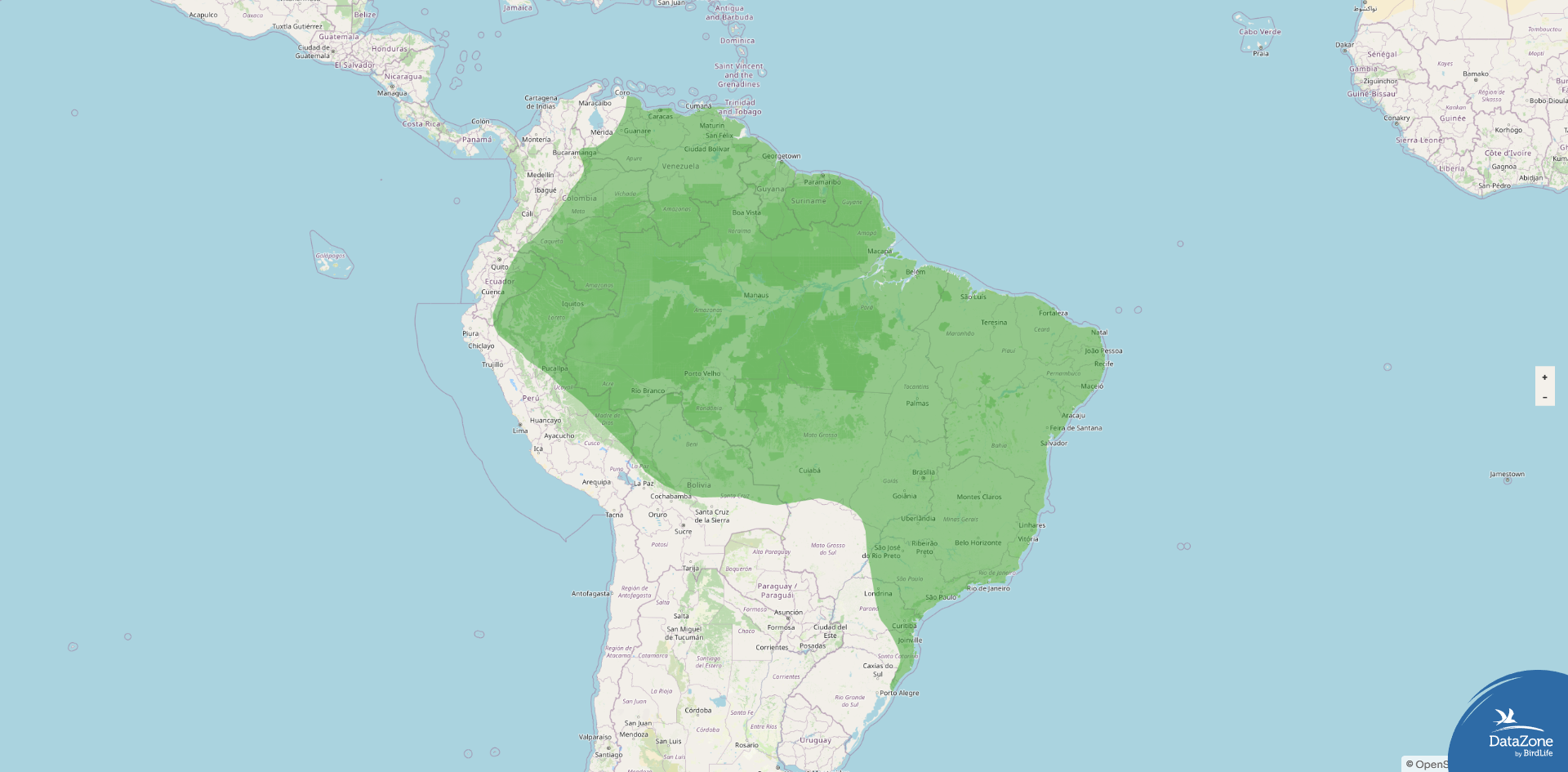
Legend
Green Resident
Species Overview
The Glittering-throated Emerald is one of South America’s most adaptable and widespread emerald hummingbirds. It inhabits a broad variety of semi‑open to open habitats, from lowland riverine forests and Amazonian edges to coastal scrub, mangroves, and urban gardens in southeastern Brazil. Its glittering green throat, contrasted with pale underparts and a fairly straight bill, makes it a familiar and easily recognized hummingbird across much of tropical South America.
Male Description
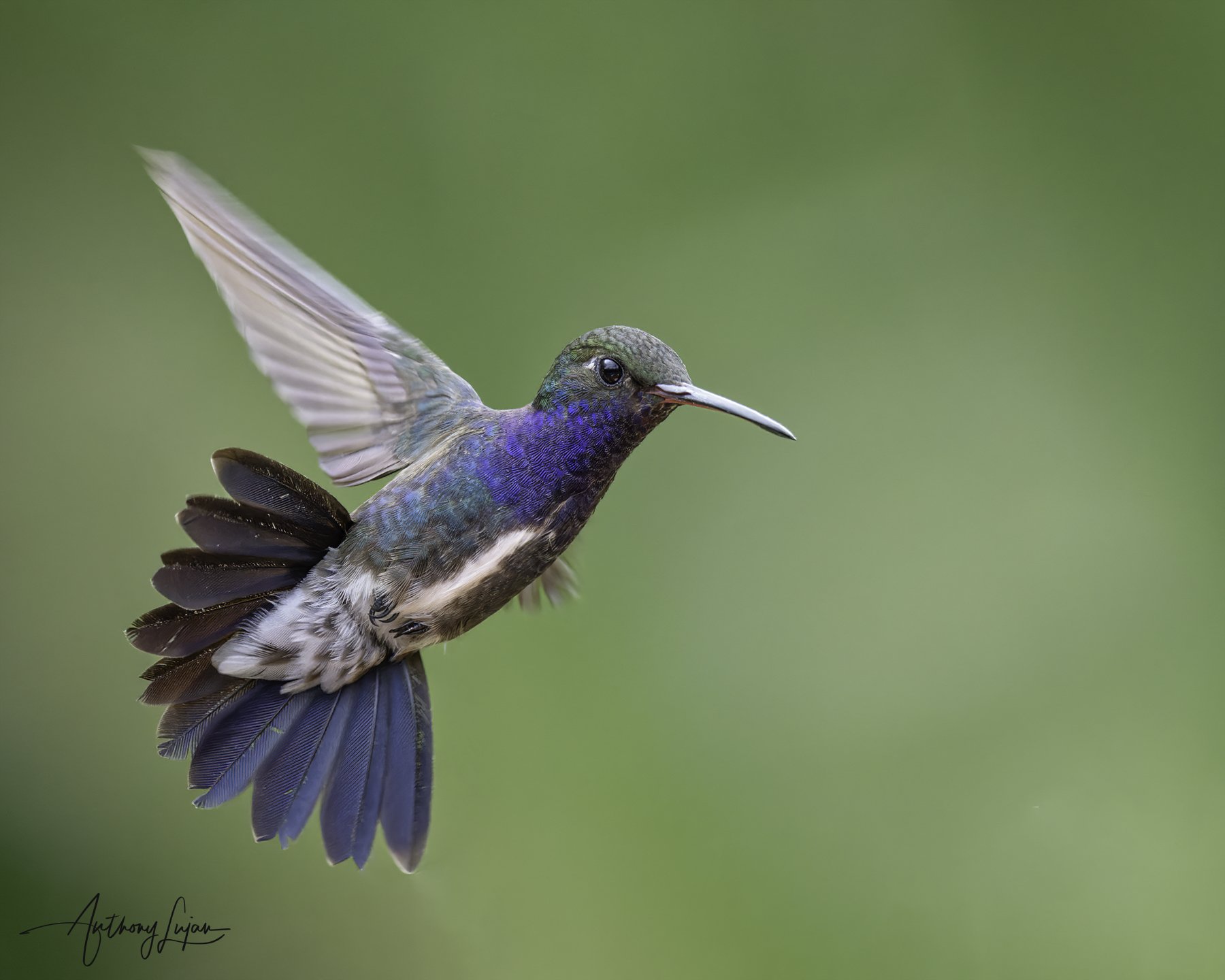
Adult males have bright metallic green upperparts, including crown, back, and rump. The throat is a brilliant emerald to golden‑green that can flash intensely in good light, often appearing as a solid glittering patch. The breast and belly are grayish‑white to pale gray, creating a clean contrast with the sparkling throat. The tail is bluish‑green to dark bronze, slightly forked, and often fanned while hovering at flowers. The bill is straight, medium‑length, with a dark upper mandible and a pinkish to reddish lower mandible tipped dark.
Female Description
Females are green above like males but have duller underparts. The throat is mostly grayish with a central whitish stripe and variable green spotting along the sides, lacking the male’s solid, intensely iridescent gorget. The belly is grayish to off‑white, and the tail is greenish with white tips to the outer feathers, producing a more patterned effect when spread. Juveniles resemble females but often show more extensive pale feather edging and can be slightly duller overall; young males gradually develop the full glittering throat as they mature.
Habitat & Behavior
Glittering-throated Emeralds inhabit a wide range of open and semi‑open habitats. They frequent shrubby second growth, gallery forest edges, dry and moist woodlands, savannahs, riverine thickets, plantations, cultivated areas with scattered trees and bushes, and urban and rural gardens; the subspecies tephrocephala is also found in mangroves along Brazil’s Atlantic coast. They generally avoid dense forest interior, favoring edges and gaps where flowers are abundant.
These hummingbirds typically forage at low to mid‑levels, visiting flowers on shrubs, small trees, and vines, and they readily use ornamental and introduced plants in gardens and plantations. They feed by rapid hovering and often perch in the open between feeding bouts, sometimes defending rich flower patches with short chases and display flights. In addition to nectar, they take small insects and spiders, which they catch in flight or glean near flowers for added protein.
Breeding
Breeding seasons vary geographically across this broad range. In parts of Guyana and northeastern Brazil, breeding has been recorded in August and September, while in central Brazil it occurs mainly from November to February, and in eastern Brazil from November to April; elsewhere the timing follows local rainy seasons and flower peaks. The nest is a small cup made of soft plant fibers bound with spiderweb and camouflaged on the outside with lichen and small bits of bark or leaf.
Nests are typically placed between about 1 and 4 m (3–10 ft) above ground on a horizontal branch, fork, or drooping twig, though occasionally as high as 8 m (around 30 ft). The clutch is two white eggs, incubated by the female alone. As with other small hummingbirds, incubation lasts around two weeks, and the young fledge about three to four weeks after hatching, though exact timing can vary with weather and locality.
Movement
The Glittering-throated Emerald is generally considered resident throughout its extensive range. It does not perform large‑scale, long‑distance migrations, though local seasonal movements likely occur as birds track flowering cycles along rivers, in second growth, and across coastal and inland habitats. These local shifts may involve movements between more humid and drier areas or between lowland sites and slightly higher elevations, but the species remains within the same broad regions year‑round.
Population
The total number of mature individuals is unknown, but the Glittering-throated Emerald has a very large range and is considered common to very common across much of it, especially in northern and eastern parts of its distribution. In western areas the species is less well studied and may be more patchily distributed. Despite its adaptability, some coastal and localized populations, particularly those associated with specialized habitats such as certain coastal forests or mangroves, may be experiencing declines as a result of habitat loss and degradation. Overall, the global population trend is assessed as decreasing.

Conservation
The Glittering-throated Emerald is currently listed as Least Concern, reflecting its broad distribution and generally high abundance in many regions. No single, major immediate threat has been identified at the species level, but ongoing deforestation, conversion of coastal and lowland habitats, and degradation of riverine and mangrove systems can negatively affect local populations, especially in parts of southeastern Brazil and along some coasts. The species occurs in numerous protected areas across South America, including major Amazonian reserves, coastal parks, and inland conservation units, which help safeguard key portions of its habitat. Maintaining nectar‑rich secondary forests, riparian corridors, coastal scrub, and urban green spaces is important for supporting this adaptable but gradually declining species.
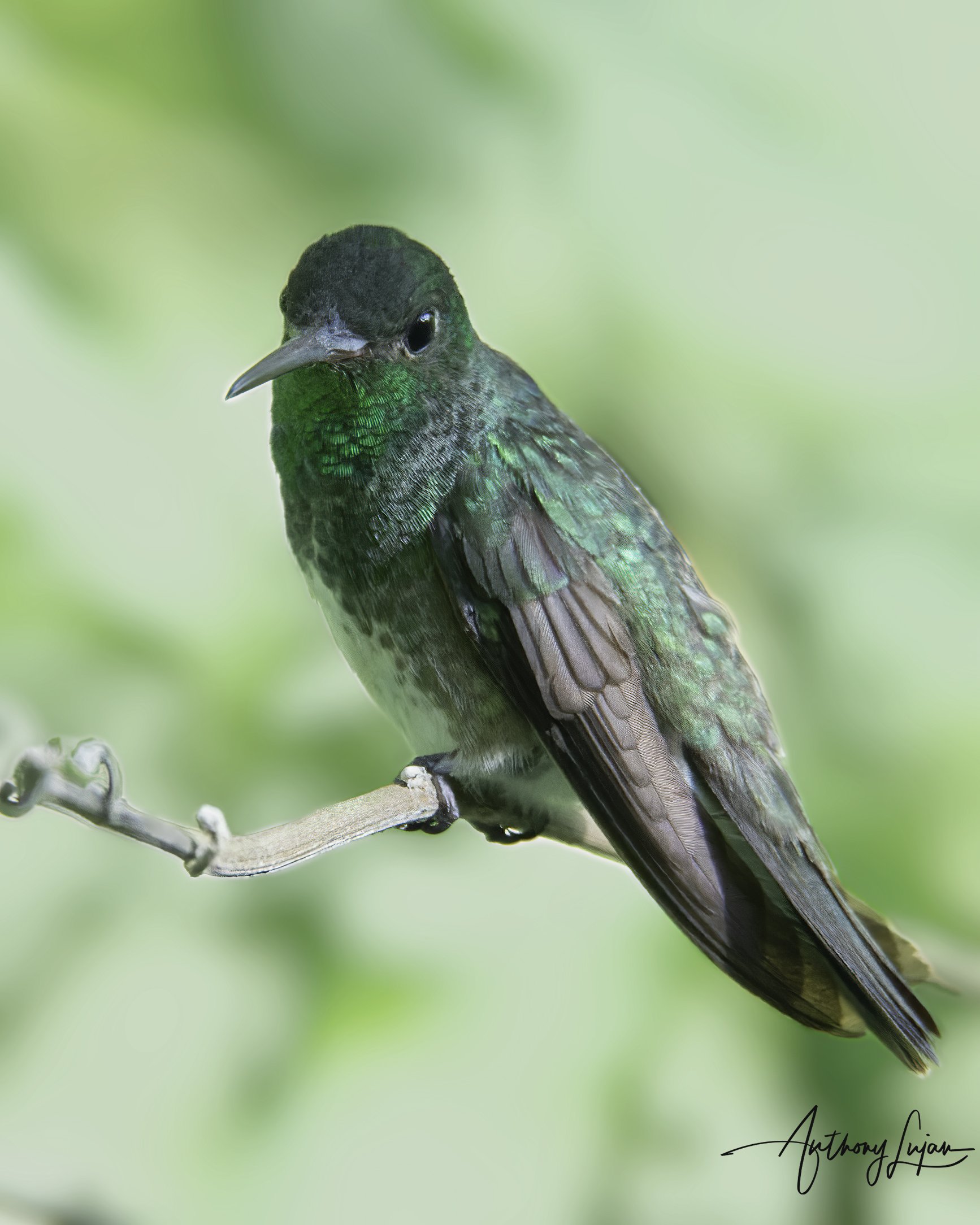
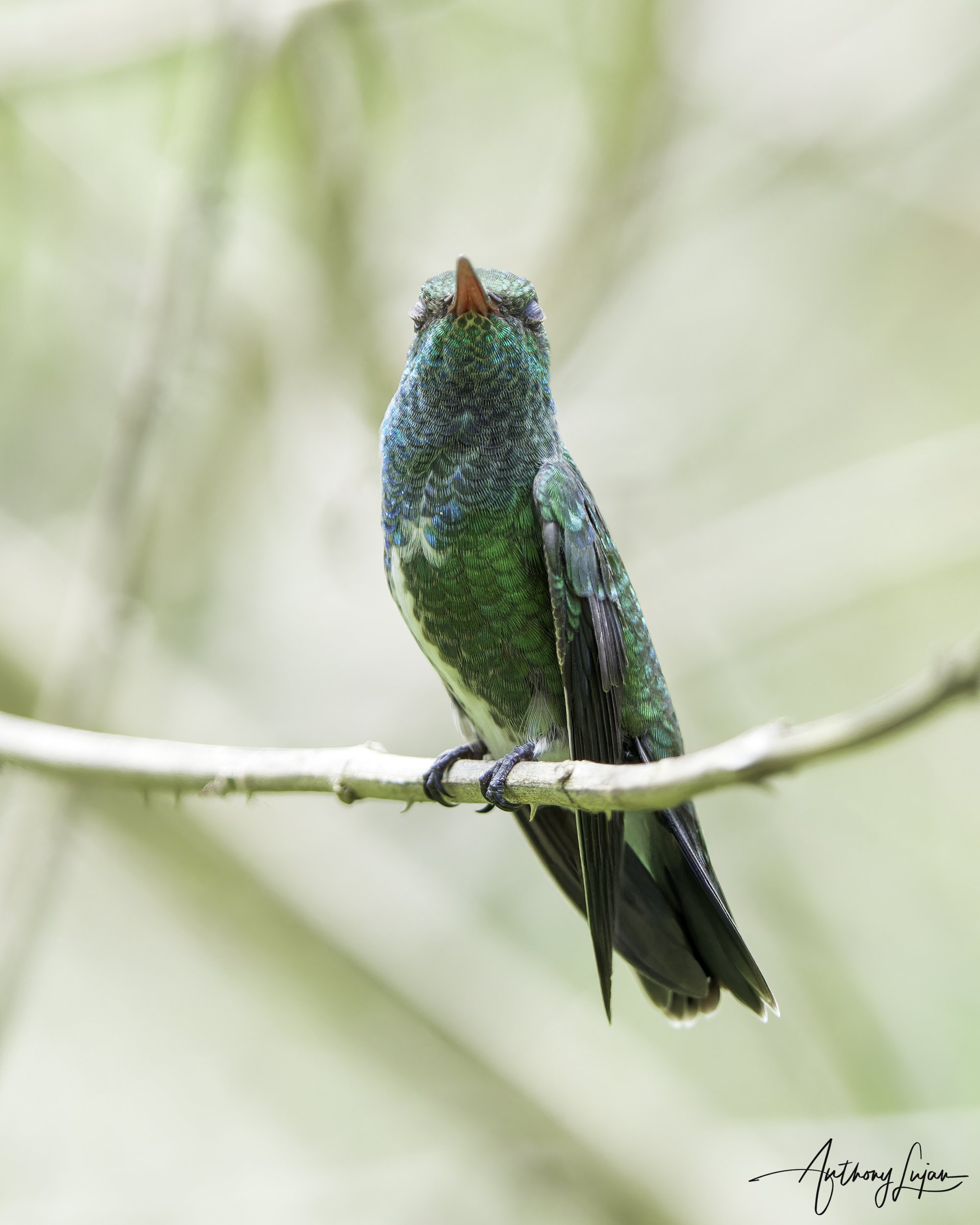
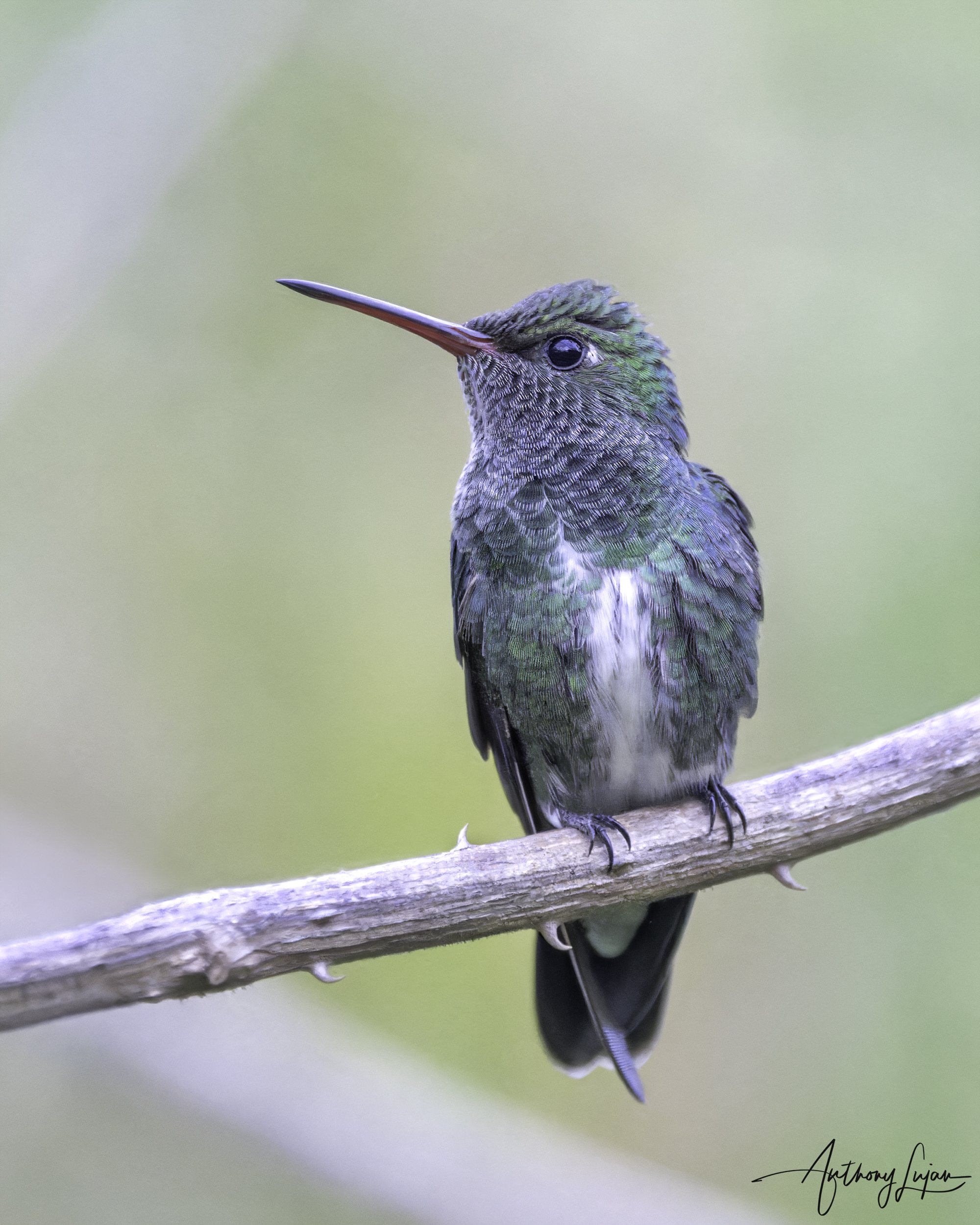
Below is the Glittering-throated Emerald (Chionomesa fimbriata fimbriata)
Photographed at Jardim dos Beija-Flores, Brasília, Distrito Federal, and Duco Place, Eldorado, São Paulo, Brazil
These individuals belong to the subspecies fimbriata, which occurs across much of central and eastern Brazil south to São Paulo. It inhabits semi-open woodland, gallery forest, savanna (Cerrado), and urban gardens from lowlands up to 1,200 meters.
Related species in the Chionomesa genus (2 species in total):
Please note: The content provided in this article reflects Anthony’s personal experience and photographic approach. Results can vary depending on light, weather, location, equipment, subject behavior, and field conditions.