
Glowing Puffleg
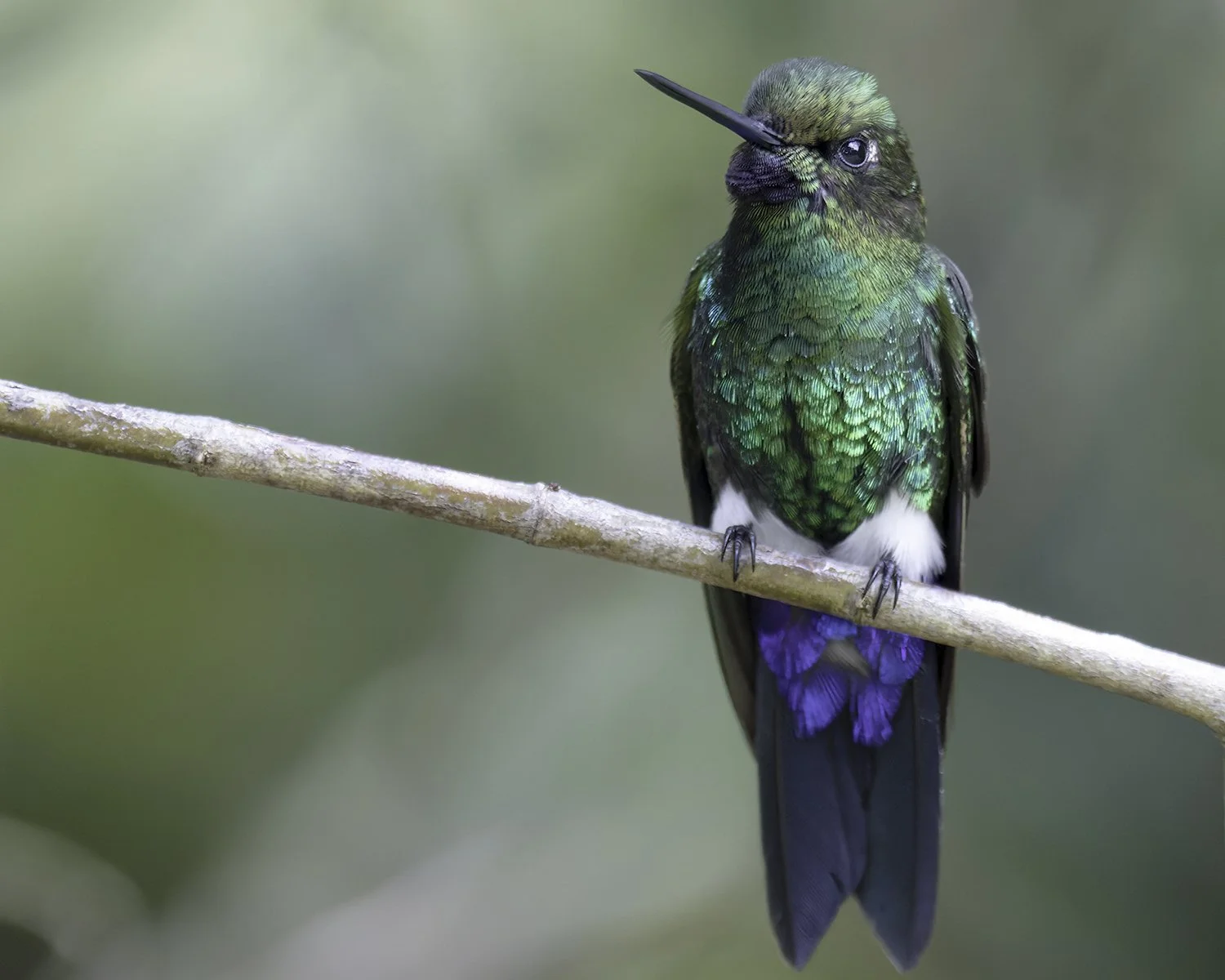
Scientific name: Eriocnemis vestita
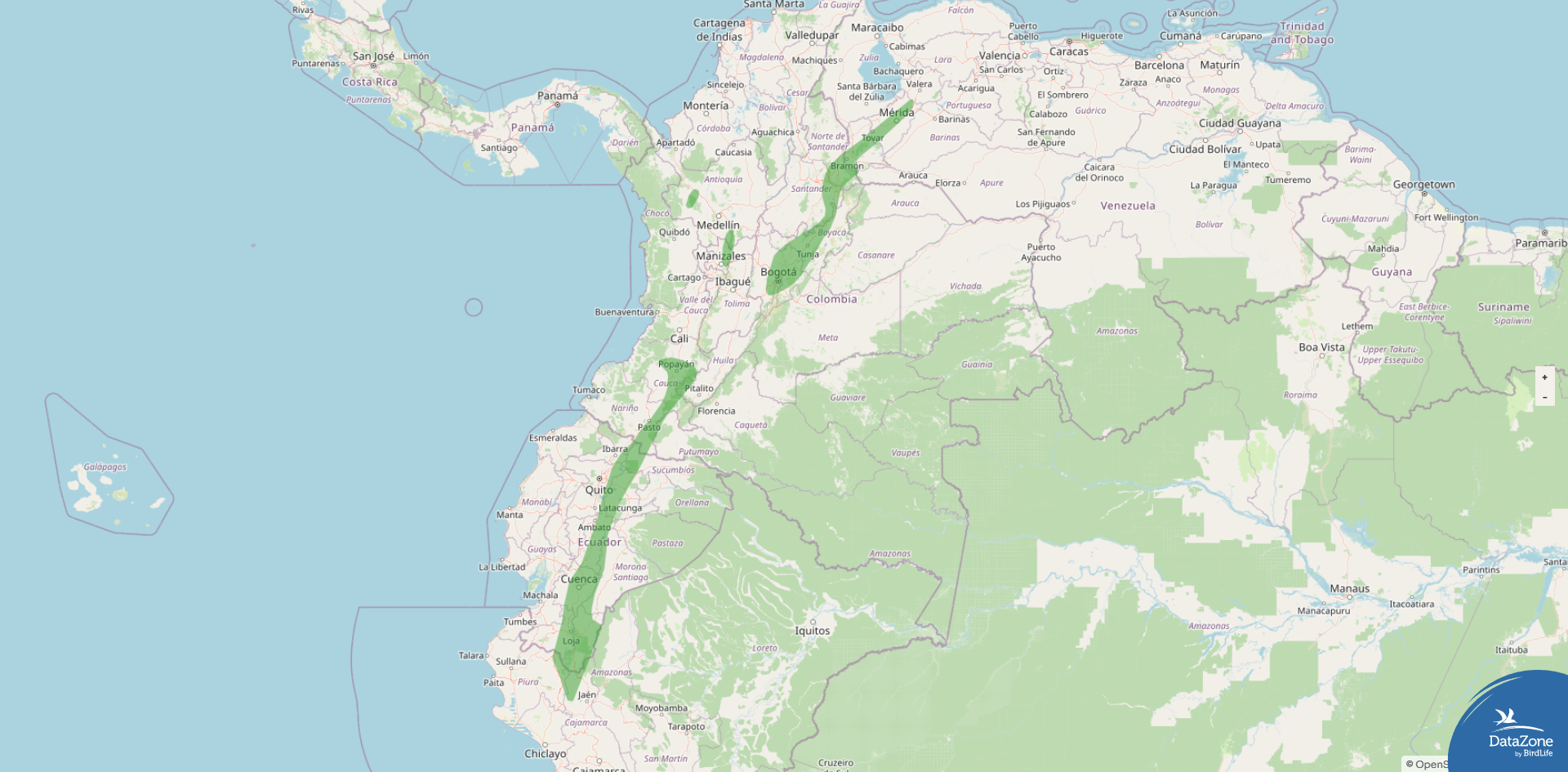
The Glowing Puffleg is a small, high-Andean hummingbird found from Venezuela through Colombia and Ecuador into northern Peru, where it inhabits humid montane forest, cloud forest edges, and shrubby páramo-like slopes. The number of mature individuals is unknown, its population trend is Decreasing, it is assessed as Least Concern, and it is considered Not a Migrant.
At a Glance
Family: Trochilidae (hummingbirds)
Clade: Lesbiini – Coquettes
Genus: Eriocnemis — Andean pufflegs with dense feather “puffs” around the legs
Range: Andes of Venezuela, Colombia, Ecuador, and northern Peru
Habitat: Humid montane forest and cloud forest edges, brushy slopes, shrubby páramo-like vegetation, overgrown pastures, and heavily degraded former forest with good shrub and flower cover
Elevation: About 2,300–4,200 m, most common between roughly 2,800 and 3,500 m
Length: About 9–10.5 cm (3.5–4.1 in)
Weight: Around 3.3–7.2 g in males, 3.6–5.3 g in females
Number of mature individuals: Unknown
Population trend: Decreasing
Status: Least Concern (IUCN)
Name Origin
The genus name Eriocnemis comes from Greek roots meaning “wool” and “leg,” referring to the fluffy feather “puffs” around the legs that give pufflegs their name. The species name vestita means “clothed” or “adorned,” alluding to the bird’s richly iridescent plumage. The English name “Glowing Puffleg” captures the shimmering green body, colorful throat, and bright white leg puffs that make this species stand out in the high-Andean mist.
Subspecies & Distribution
Four subspecies are recognized:
Eriocnemis vestita vestita
Eastern Andes of Colombia and northwestern Venezuela.Eriocnemis vestita paramillo
Northern parts of Colombia’s Western and Central Andes, mostly in Antioquia and nearby ranges.Eriocnemis vestita smaragdinipectus
Southwestern Colombia and eastern Ecuador.Eriocnemis vestita arcosae
Southern Ecuador and northern Peru.
Together these subspecies form a band along the northern and central Andes from Venezuela through Colombia and Ecuador to northern Peru, inhabiting humid montane forest, cloud forest edges, and shrubby high-altitude slopes.
Ledged
Green Resident
Species Overview
The Glowing Puffleg is one of the classic hummingbirds of high-Andean cloud forest edges and páramo borders, often seen in misty, flower-rich landscapes. It favors semi-open high-elevation habitats where shrubs, low trees, and tall herbs provide abundant nectar, including forest margins, overgrown pastures, and shrubby slopes. Its broad Andean range and ability to use secondary growth support a Least Concern status, but ongoing habitat loss and degradation across montane regions are contributing to a Decreasing population trend.
Male Description
Adult males are mostly green with a bright, iridescent purple gorget on the throat and rich green or glowing undertail coverts. They have snowy white leg puffs above a dark blue to steel-blue forked tail, giving the typical puffleg appearance. The upperparts are shining green, and the underparts are green with varying intensity depending on subspecies, often with a particularly bright chest. The bill is straight and black, and in good light the combination of green body, purple throat, and white “boots” gives the male a distinctly glowing look.
Female Description
Females have shining golden-green upperparts and paler, more patterned underparts than males. The throat is buffy with bluish-purple or greenish discs on a buff background, and the rest of the throat, breast, and belly are buff to grayish white with golden-green discs or spots. The tail is dark blue and forked, though slightly less deeply than in males, and they also have snowy white leg puffs. Overall, females look like small green-backed hummingbirds with softly speckled buffy underparts and conspicuous white leg puffs.
Habitat & Behavior
Glowing Pufflegs inhabit the edges of cloud forest and elfin forest, brushy slopes, shrubby páramo-like vegetation, overgrown pastures, and sometimes denser subtropical forest at high elevations. They typically occur between about 2,300 and 4,200 meters, most often in the 2,800–3,500 meter band where cloud forest transitions to shrubby highlands. They feed on nectar from a wide variety of high-Andean flowers, including shrubs and herbs along forest edges and in pastures, and they also take small insects and other arthropods for protein. The species is considered Not a Migrant, although individuals may move locally up and down slopes following flowering seasons and weather.
Population
The total number of mature individuals is unknown, but the Glowing Puffleg is generally considered uncommon to locally fairly common within suitable high-Andean habitats across different parts of its range. It occupies a wide elevational and geographic band from Venezuela to northern Peru, and it can use secondary and overgrown pastures as well as natural habitats. Despite this flexibility, ongoing habitat changes in montane regions are leading to a Decreasing population trend, particularly where cloud forest and shrubby páramo-like vegetation are heavily altered.

Conservation
Glowing Puffleg is listed as Least Concern, thanks to its broad Andean distribution and presence in several protected areas. However, its reliance on high-Andean cloud forest edges, brushy slopes, and shrubby páramo-like habitats makes it vulnerable to deforestation, agricultural expansion, overgrazing, and burning at high elevations. Conservation efforts that protect cloud forest and elfin forest, maintain native shrub cover in páramo borders and overgrown pastures, and limit destructive land-use practices at high elevations will benefit this species. Continued monitoring of its populations and habitats is important to ensure that this glowing puffleg remains a regular part of Andean montane bird communities.
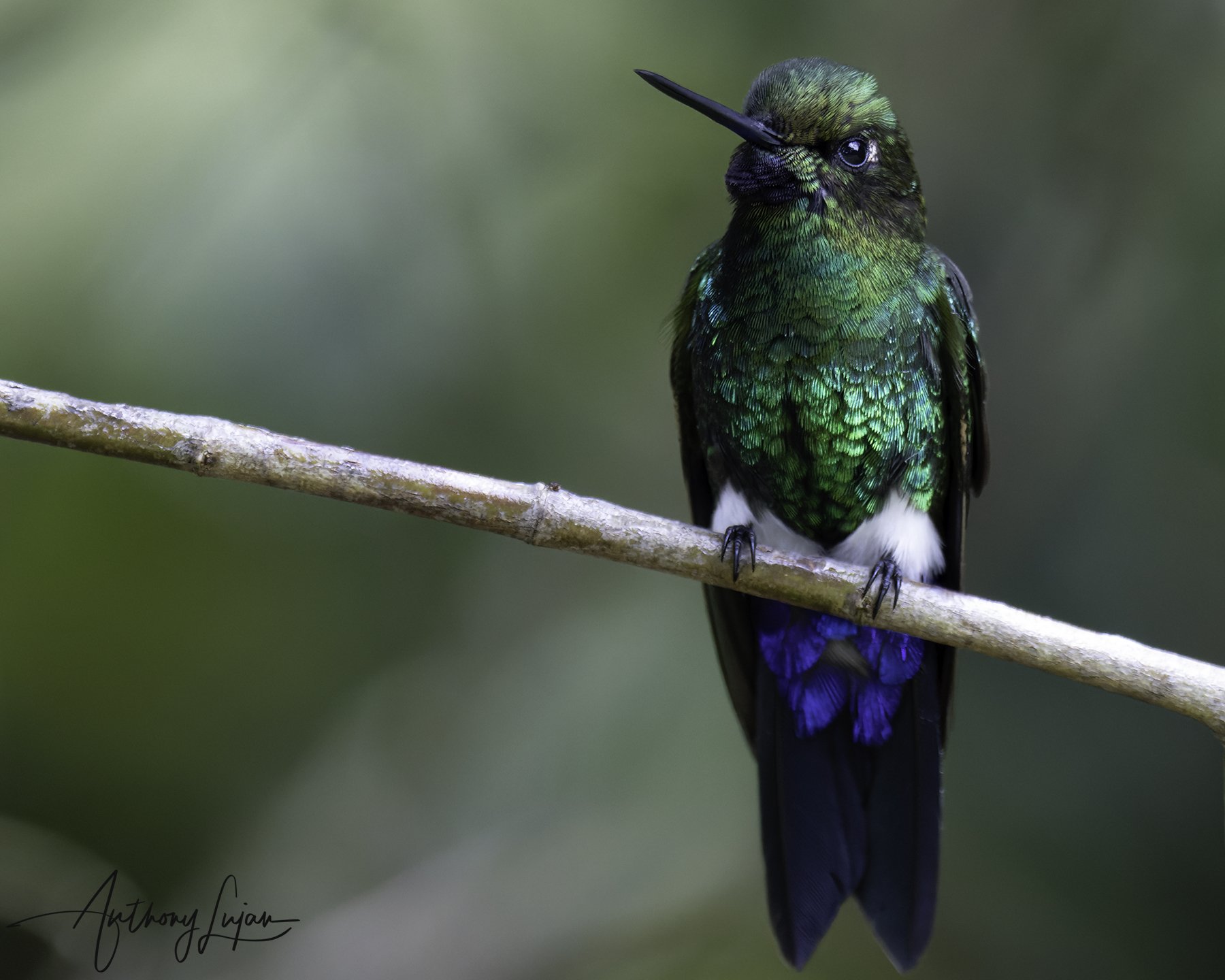
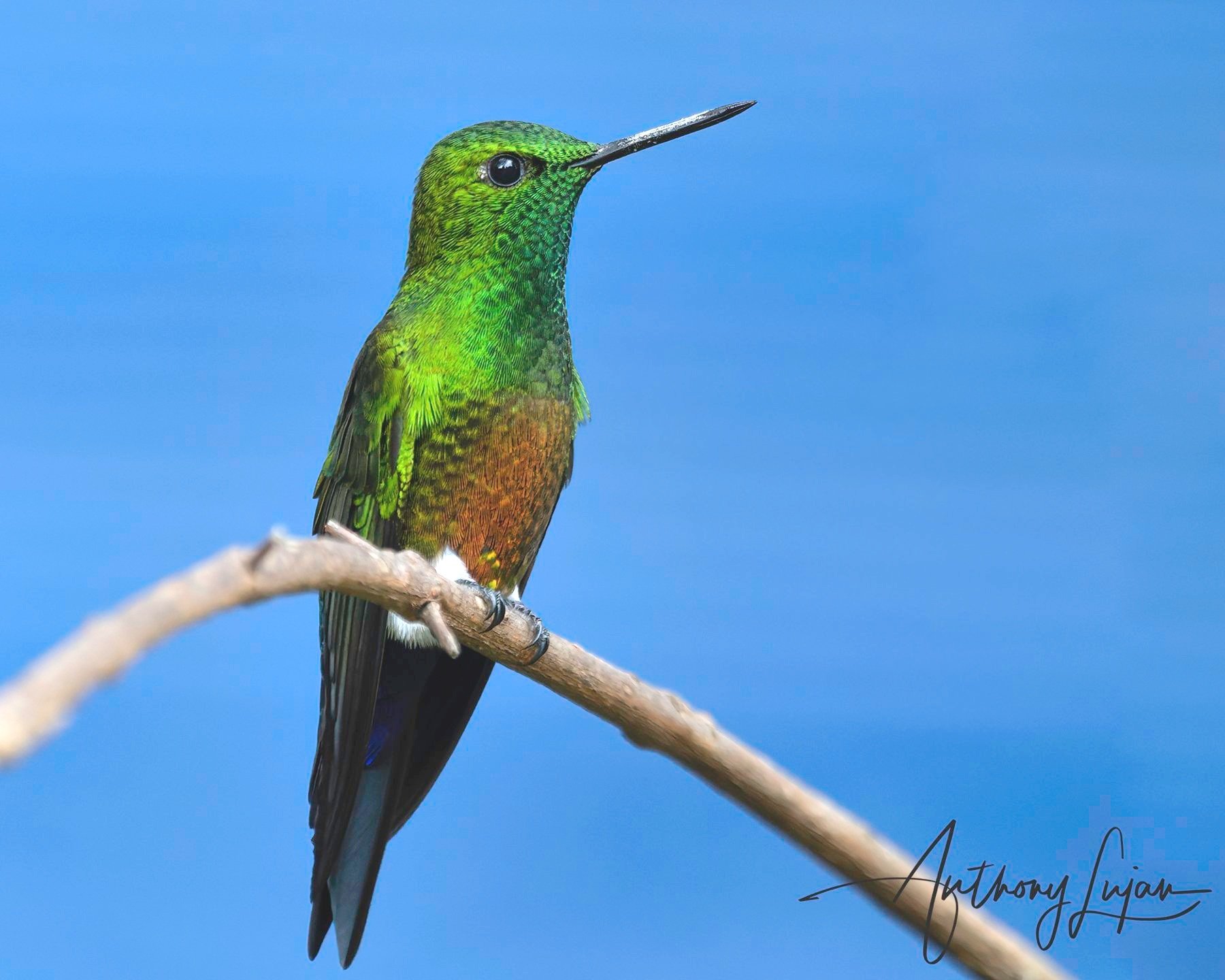
Below is the Glowing Puffleg (Eriocnemis vestita paramillo)
Photographed in Urrao, Western Andes (Antioquia), Colombia
This individual belongs to the subspecies paramillo, which is restricted to the Western Andes of northern Colombia, particularly in the Antioquia region and around the Paramillo Massif. In high-elevation areas like Urrao, this puffleg inhabits humid montane forests and páramo edges, frequently perching low near flowering shrubs where it often flashes its iridescent green plumage in shifting light.


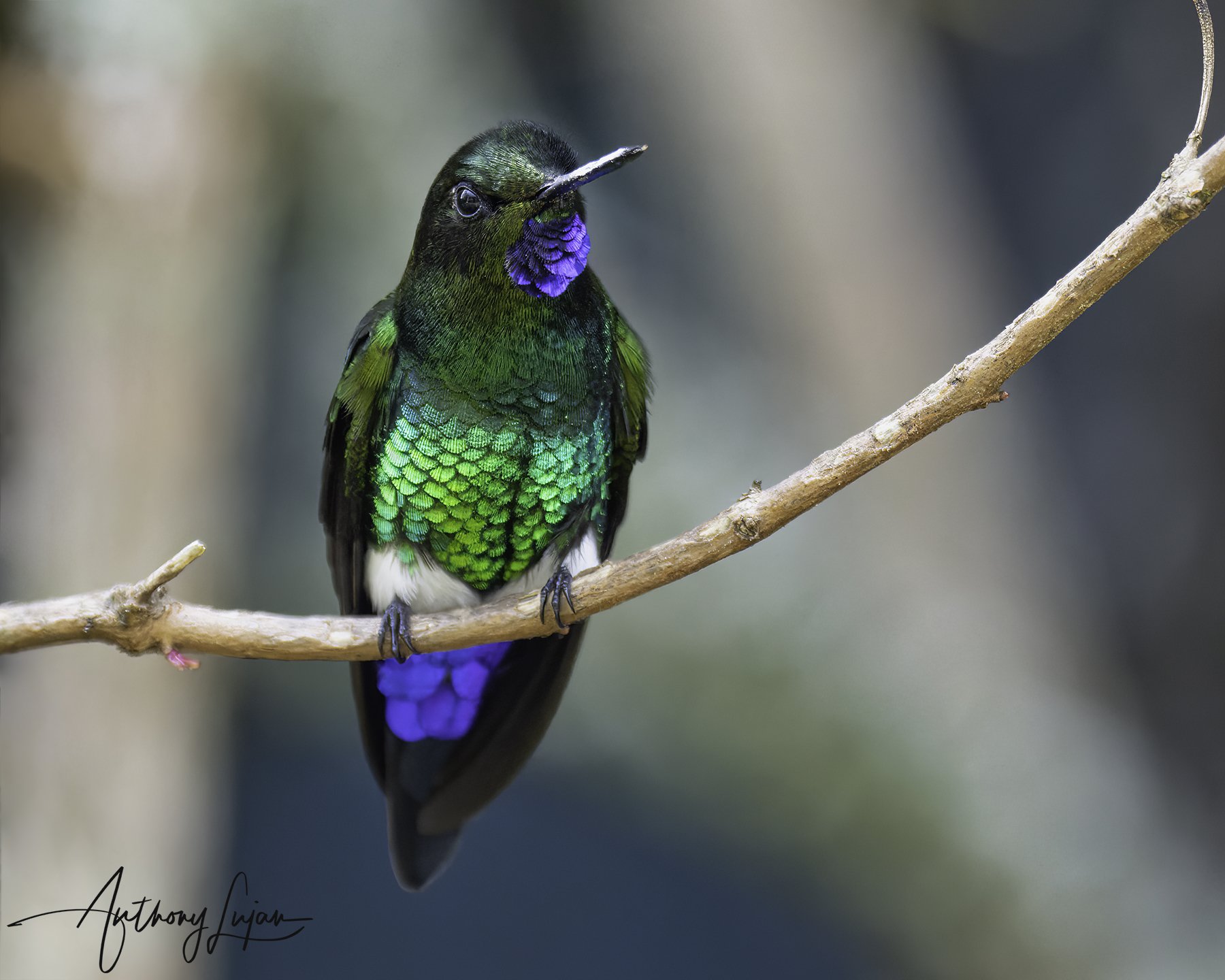
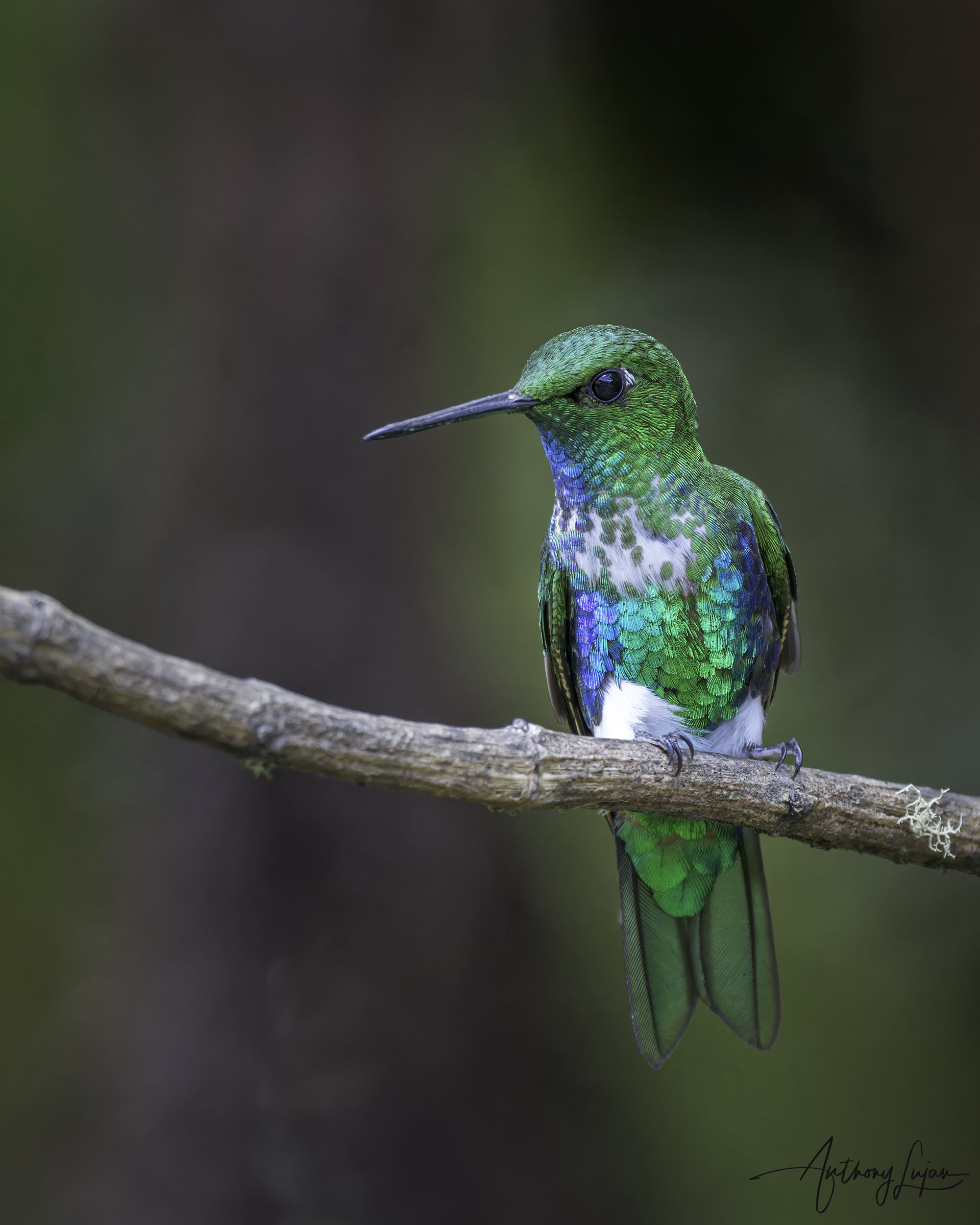
Below is the Glowing Puffleg (Eriocnemis vestita vestita)
Photographed at the Hummingbird Observatory (Observatorio de Colibríes), Bogotá, Eastern Andes (Cundinamarca), Colombia
This individual represents the nominate subspecies vestita, which occurs throughout the Eastern and Central Andes of Colombia. In the high-elevation forests surrounding Bogotá, sites such as the Hummingbird Observatory provide ideal habitat with abundant flowering shrubs and feeders that attract this species regularly.
The vestita population is characterized by its brilliant emerald iridescence and distinctive white leg puffs, which contrast sharply with the darker body plumage. Commonly seen at páramo transition zones and cloud forest edges, this subspecies is one of the most frequently encountered highland pufflegs in the Eastern Cordillera.
Related species in the Eriocnemis genus (11 species total):



Please note: The content provided in this article reflects Anthony’s personal experience and photographic approach. Results can vary depending on light, weather, location, equipment, subject behavior, and field conditions.