
Gould's Jewelfront

Scientific name: Heliodoxa aurescens
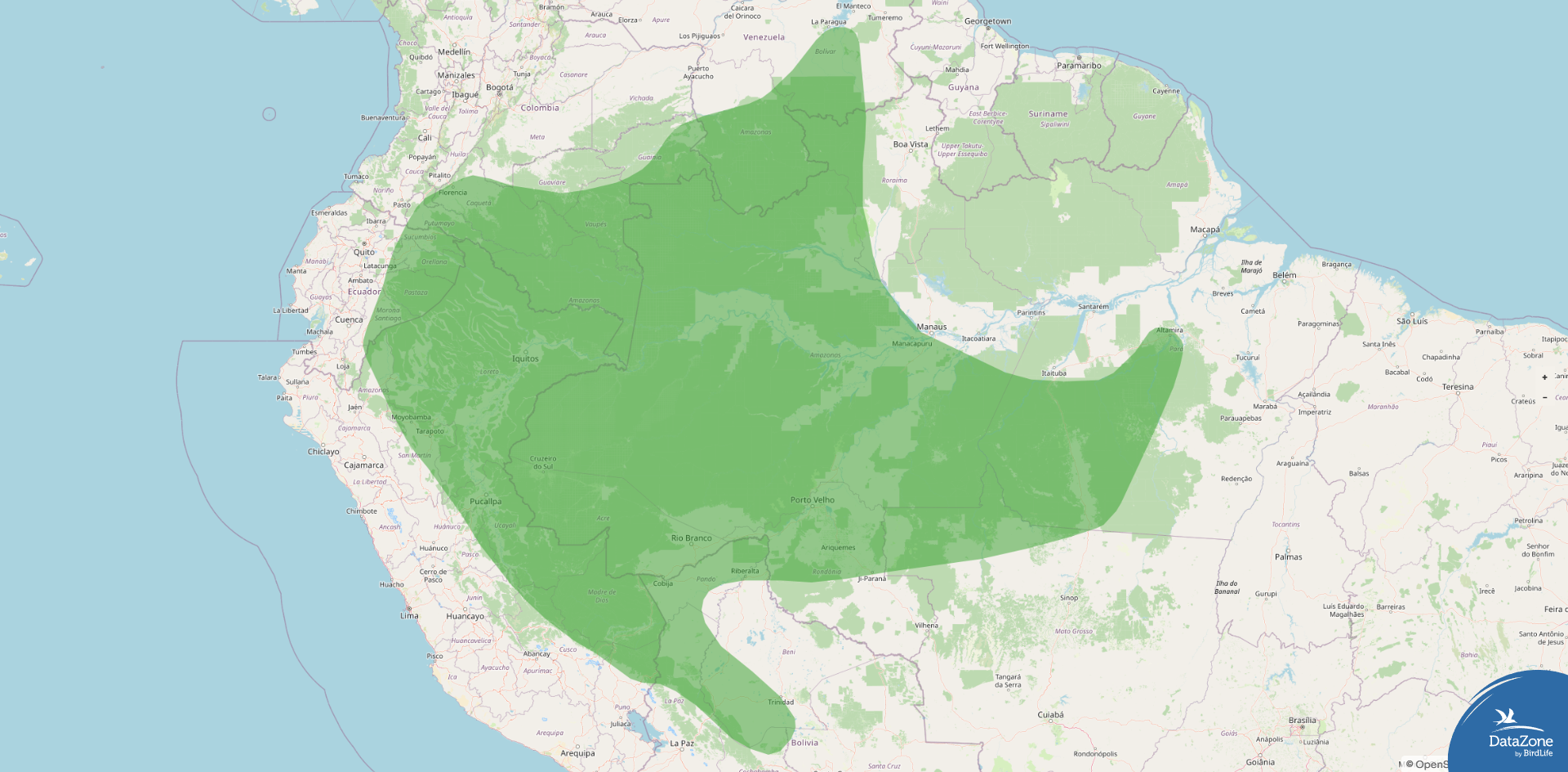
Gould’s Jewelfront is a medium-sized hummingbird of humid lowland and foothill forests in western Amazonia, occurring from southern Venezuela through Colombia, Ecuador, Peru, Bolivia, and northwestern Brazil. The number of mature individuals is unknown, its population trend is Decreasing, it is assessed as Least Concern, monotypic, and considered Not a Migrant aside from local movements.
At a Glance
Family: Trochilidae (hummingbirds)
Clade: Heliantheini – Brilliants
Genus: Heliodoxa
Range: Southern Venezuela south through central Colombia, eastern Ecuador and Peru to Bolivia, and across a large area of northwestern Brazil east to Pará
Habitat: Understory of humid tropical lowland and foothill forest, especially near streams; also in tall logged forest, terra firme, and várzea (seasonally flooded) forest
Elevation: Typically 250–1,150 m, occasionally up to about 1,450 m
Length: About 11–12 cm (4–5 in)
Weight: Around 6 g (about 0.2 oz)
Number of mature individuals: Unknown
Population trend: Decreasing
Status: Least Concern (IUCN)
Name Origin
The genus name Heliodoxa combines elements meaning “sun” and “glory,” reflecting the bright, shining plumage of brilliants. The species name aurescens means “becoming golden” or “gilded,” referring to the warm tones in its plumage. The English name “Gould’s Jewelfront” honors English ornithologist and bird artist John Gould, who first described the species, and emphasizes the jewel-like front of the bird.
Subspecies & Distribution
Gould’s Jewelfront is monotypic, with no recognized subspecies.
It is widely distributed in western and central Amazonia: from southern Venezuela south through central Colombia and eastern Ecuador and Peru to Bolivia, and across a large portion of northwestern Brazil with the eastern limit in the state of Pará. Within this broad range it inhabits humid tropical lowland and foothill forests, especially in the understory near streams, but also uses tall logged forest, mature floodplain (várzea) forest, and terra firme forest.
Ledged
Green Resident
Species Overview
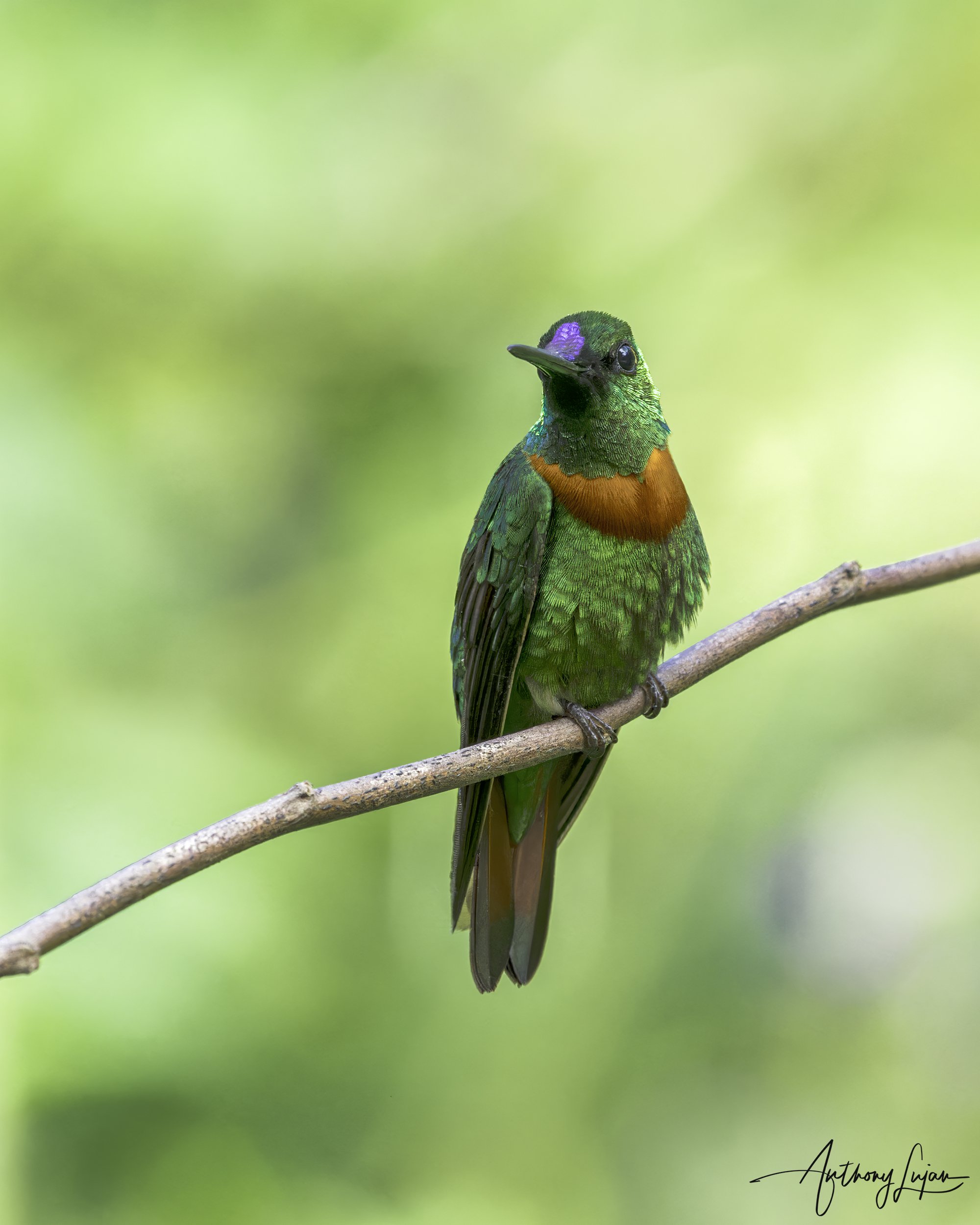
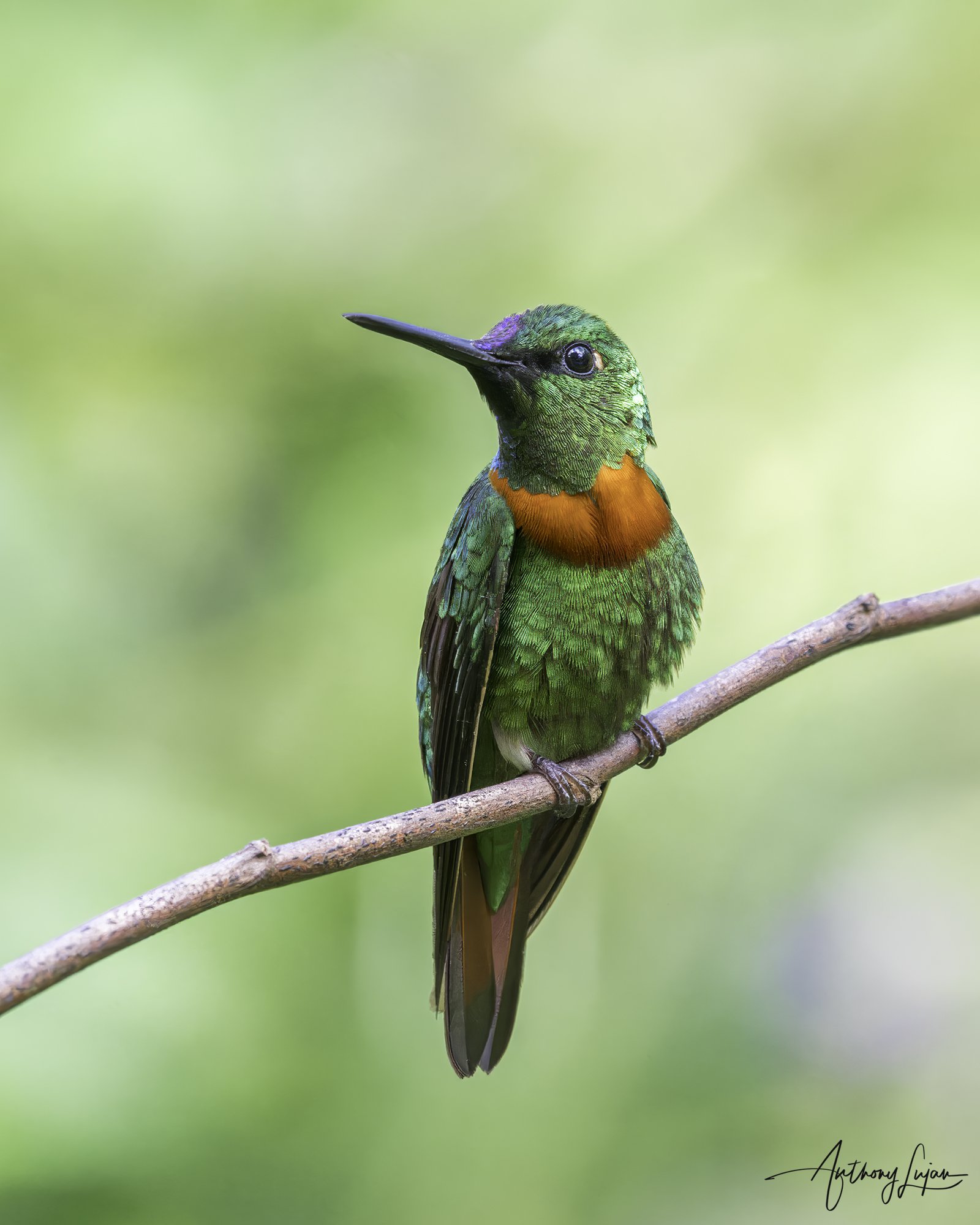
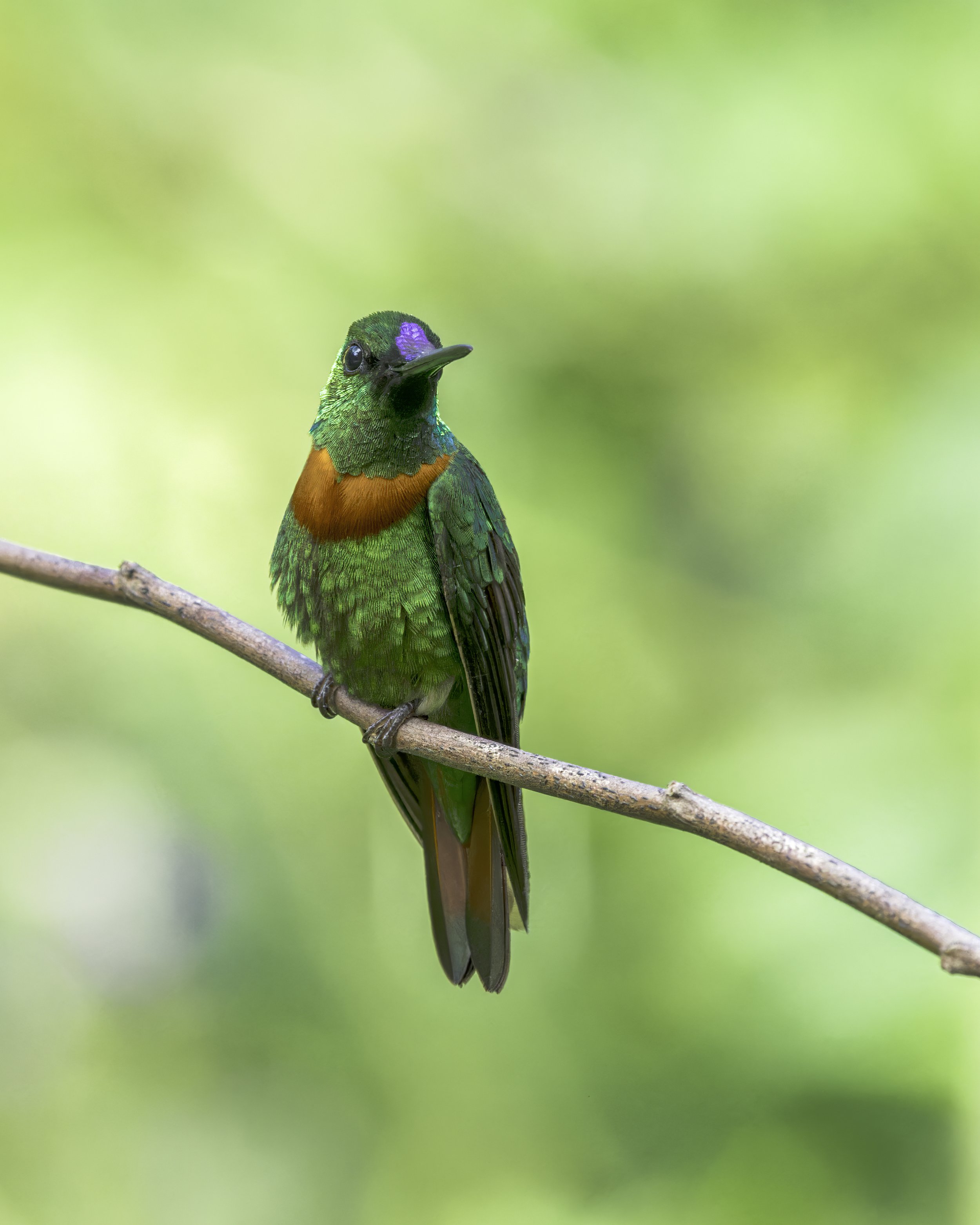
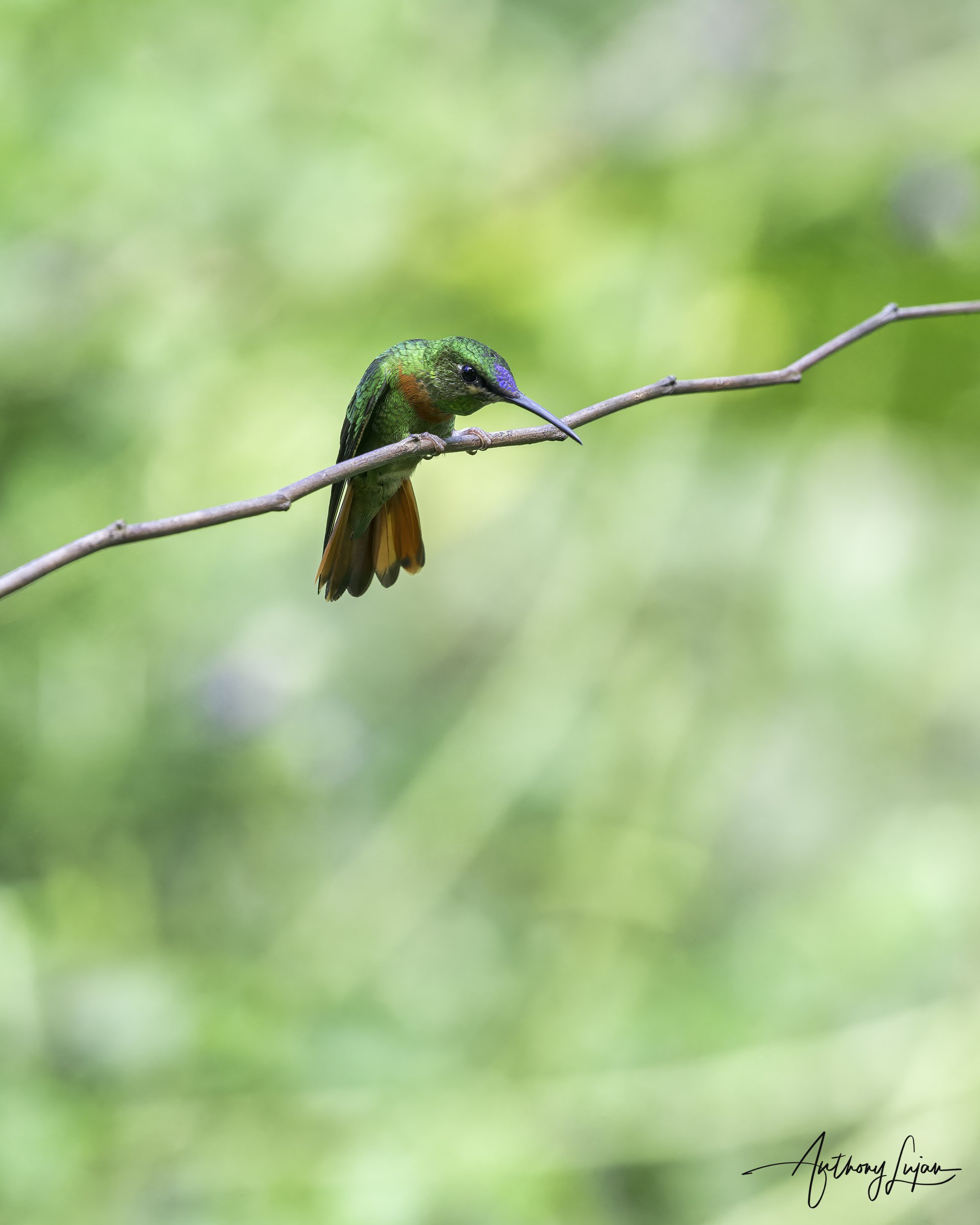
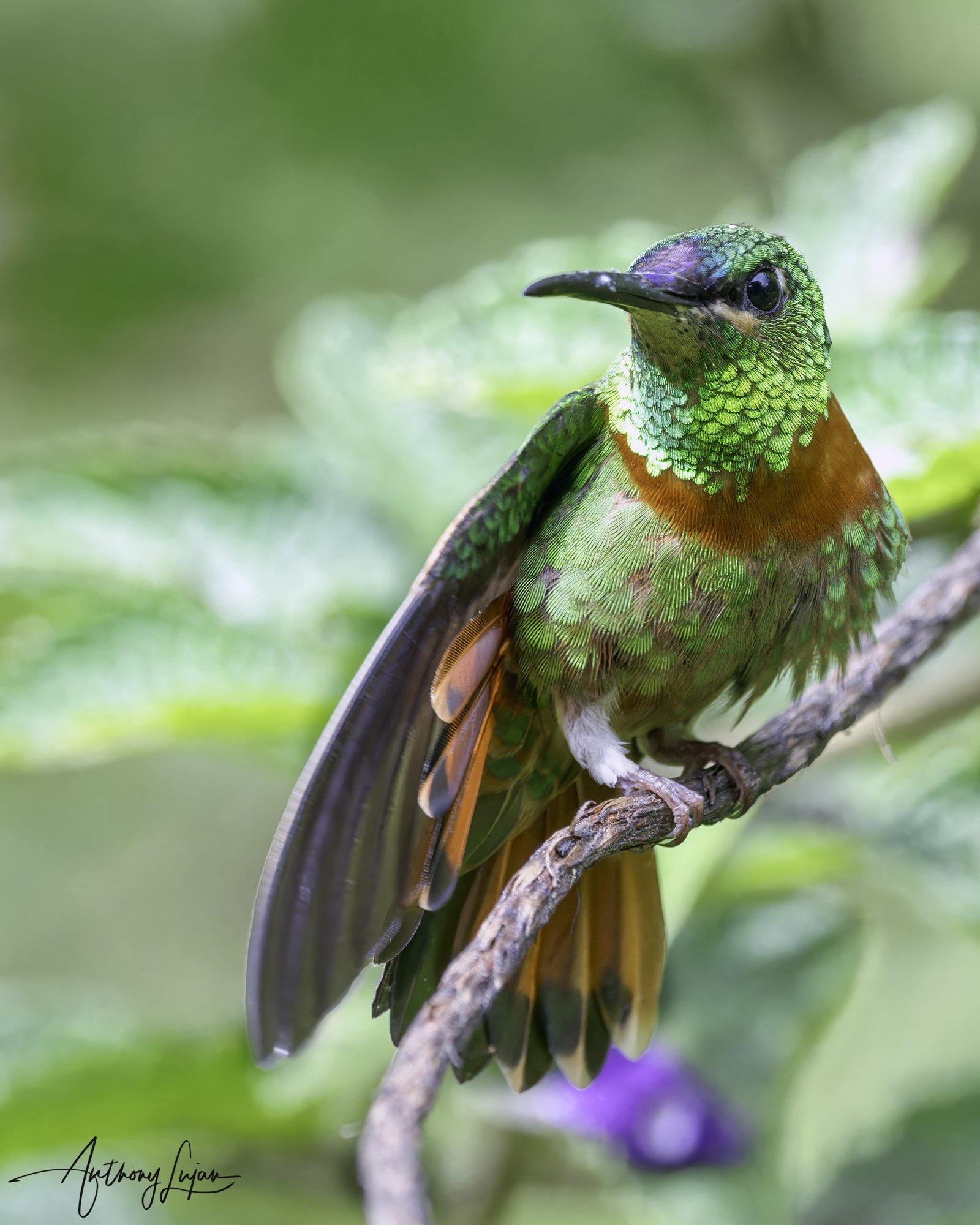
Gould’s Jewelfront is an uncommon but widespread Amazonian hummingbird, notable for its largely green plumage, rufous chest patch, and contrasting whitish band across the lower breast. It favors shaded, humid forest interiors and streamside understory rather than open edges, giving it a more secretive lifestyle than some other brilliants. Its very large range and tolerance of both terra firme and várzea forests support a Least Concern status, but deforestation and forest degradation across the Amazon Basin are contributing to a Decreasing population trend.
Male Description
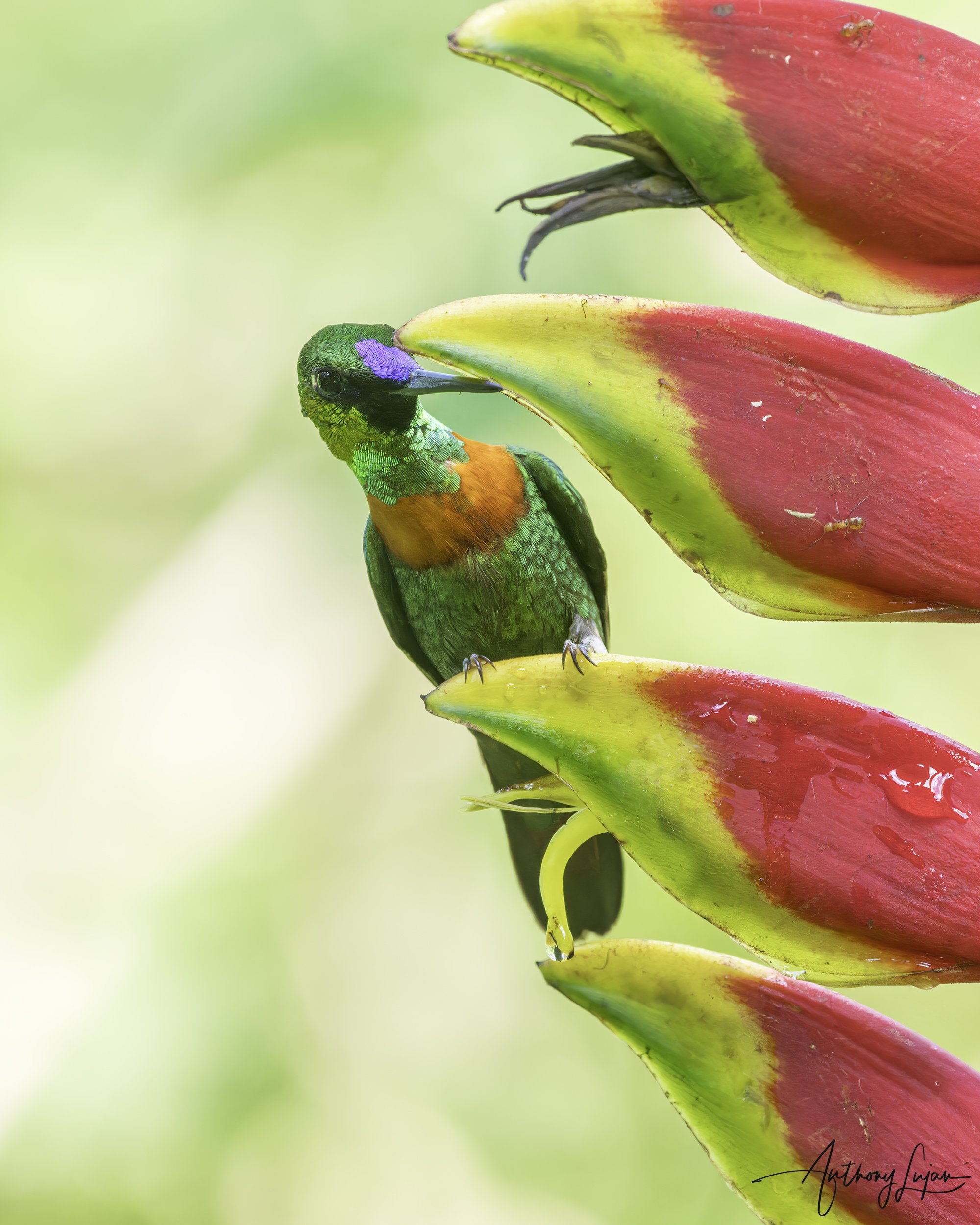
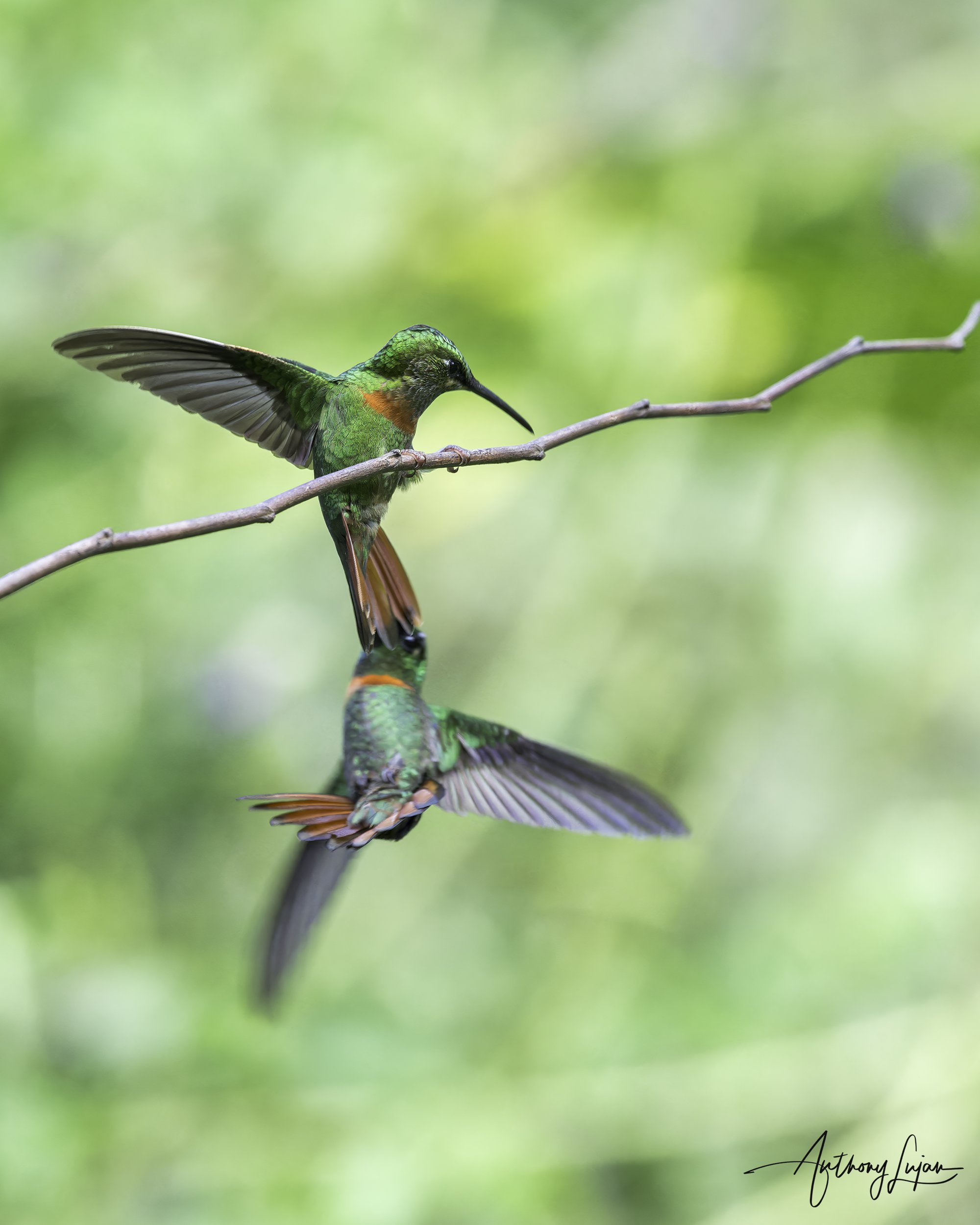
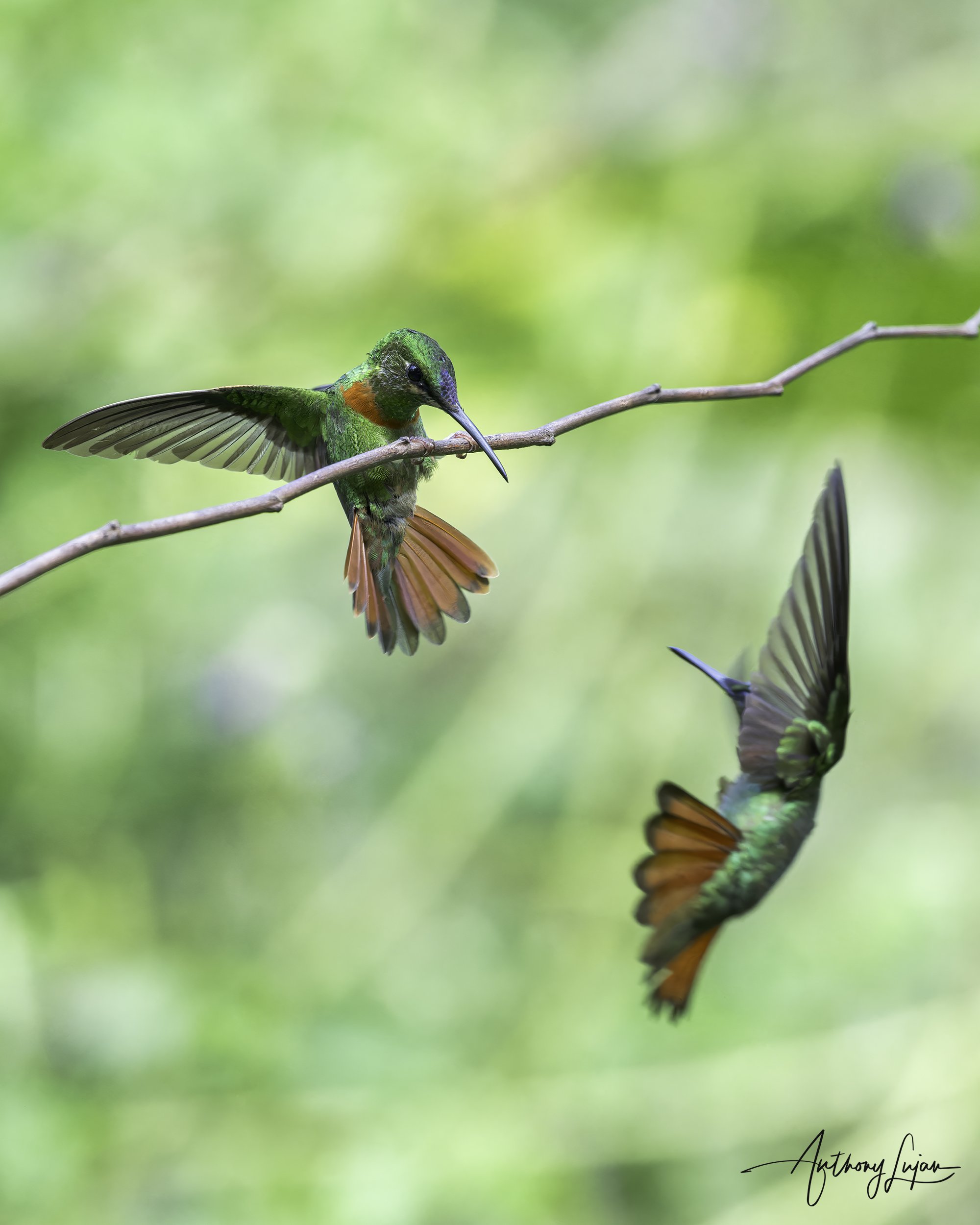
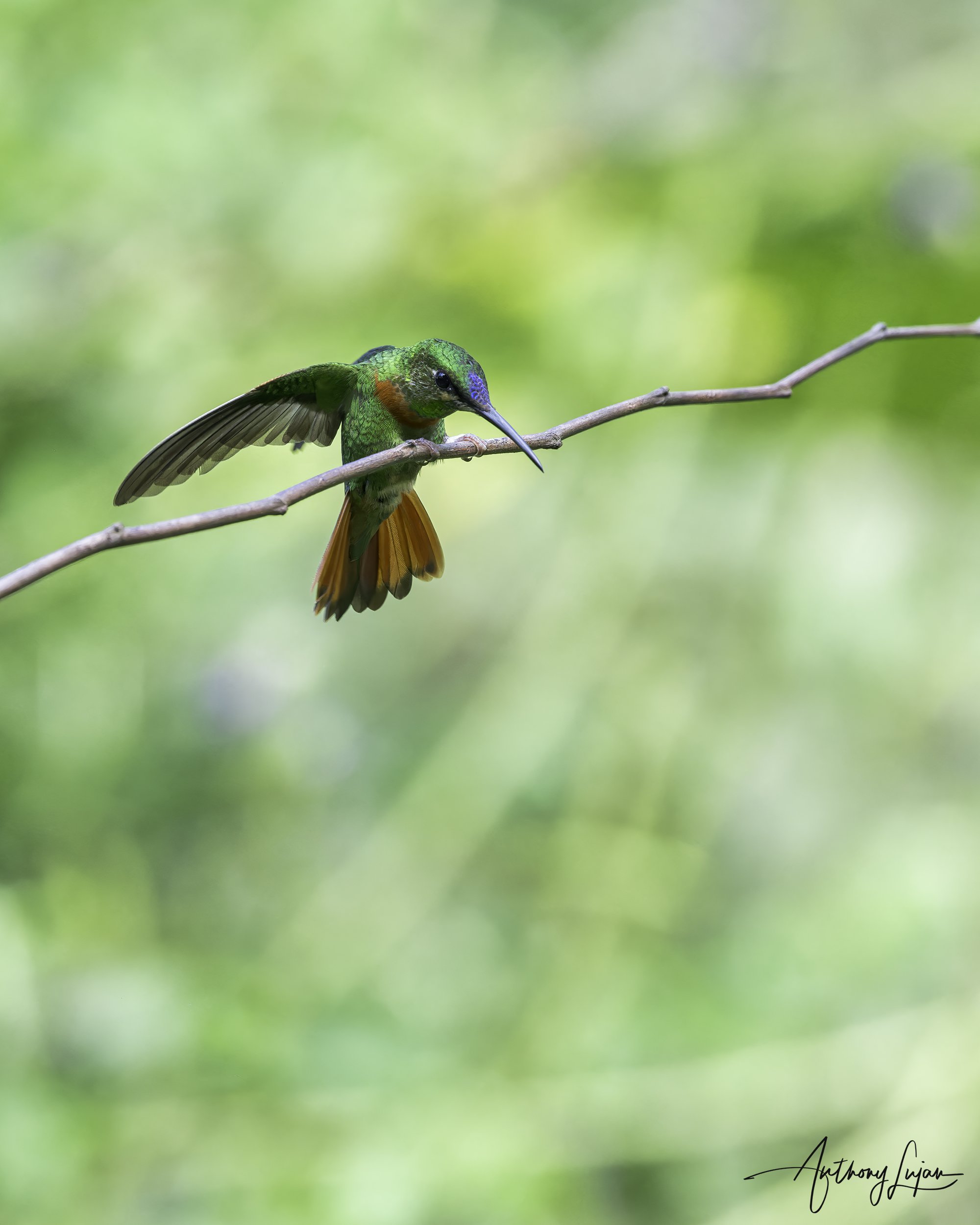
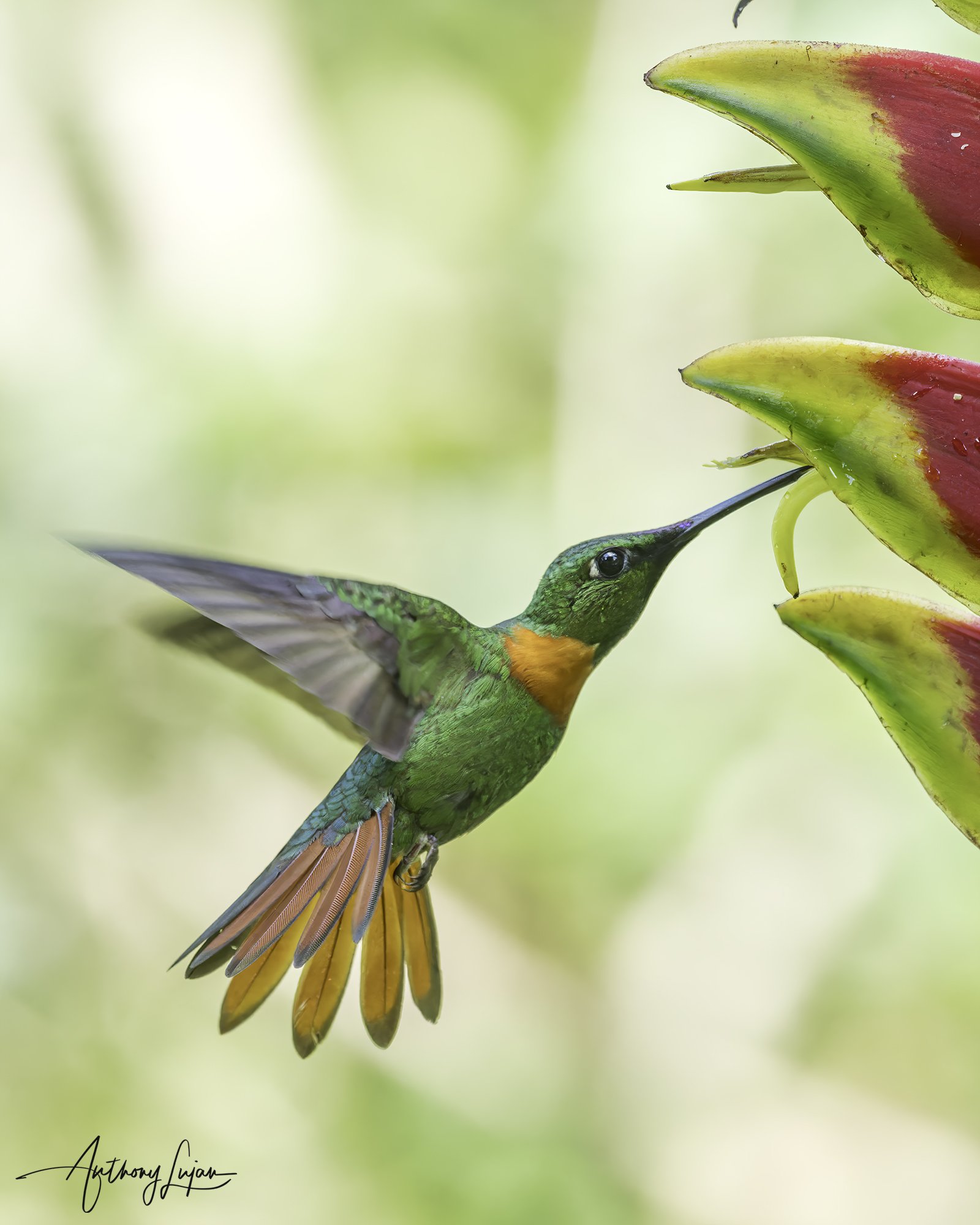
Adult males are mostly metallic green, with a narrow frontlet of glittering purplish-blue across the forehead and a rufous to chestnut patch on the lower throat and upper chest. Below the rufous area is a contrasting whitish band across the mid-breast, with greenish belly and flanks. The tail is medium-length and slightly forked, dark with some green gloss, and the bill is straight, medium-length, and black. In good light, the combination of purple frontlet, rufous chest, and white band on a green body gives the bird a striking “jewel-fronted” look.
Female Description
Females resemble males but tend to show duller or reduced rufous on the chest and less vivid purple on the forehead. Their underparts may be more extensively greenish or buffy, with less sharply defined color patches, and the white breast band can appear less bold. The tail and bill are similar in structure to the male’s. Overall, females appear as slightly duller, more softly patterned versions of the male, best identified by the general color pattern and typical lowland forest habitat.
Habitat & Behavior
Gould’s Jewelfronts inhabit the understory and lower midstory of humid tropical lowland and foothill forests, especially near streams and in well-shaded interior forest. They have been recorded in both terra firme and várzea forest, in tall logged forest, and in small patches of semi-deciduous forest within a terra firme matrix. They feed mainly on nectar from understory flowers and also visit blossoms higher in the canopy, particularly along streams and in light gaps, and supplement their diet with small insects and other arthropods. The species is considered Not a Migrant, but individuals likely make short local movements within the forest in response to flowering cycles and seasonal changes in water levels.
Population
The total number of mature individuals is unknown, but within its wide Amazonian range Gould’s Jewelfront is described as uncommon, with local densities influenced by habitat quality and availability of flowering plants. It occupies a larger range than most other Heliodoxa species, covering extensive areas of western and central Amazonia. Despite this broad distribution, ongoing deforestation, fragmentation, and degradation of lowland forests are causing a Decreasing population trend.

Conservation
Gould’s Jewelfront is listed as Least Concern because it is widespread across several South American countries and occurs in multiple protected areas, including reserves in Amazonian Brazil, Peru, and neighboring regions. However, its reliance on humid lowland and foothill forests makes it vulnerable to forest loss from agriculture, logging, infrastructure, and other land-use changes. Conservation efforts that protect large tracts of terra firme and várzea forest, maintain streamside forest corridors, and limit intensive logging will benefit this species. Continued monitoring of forest cover and population status is important to ensure that this Amazonian jewelfront remains a part of tropical forest bird communities.

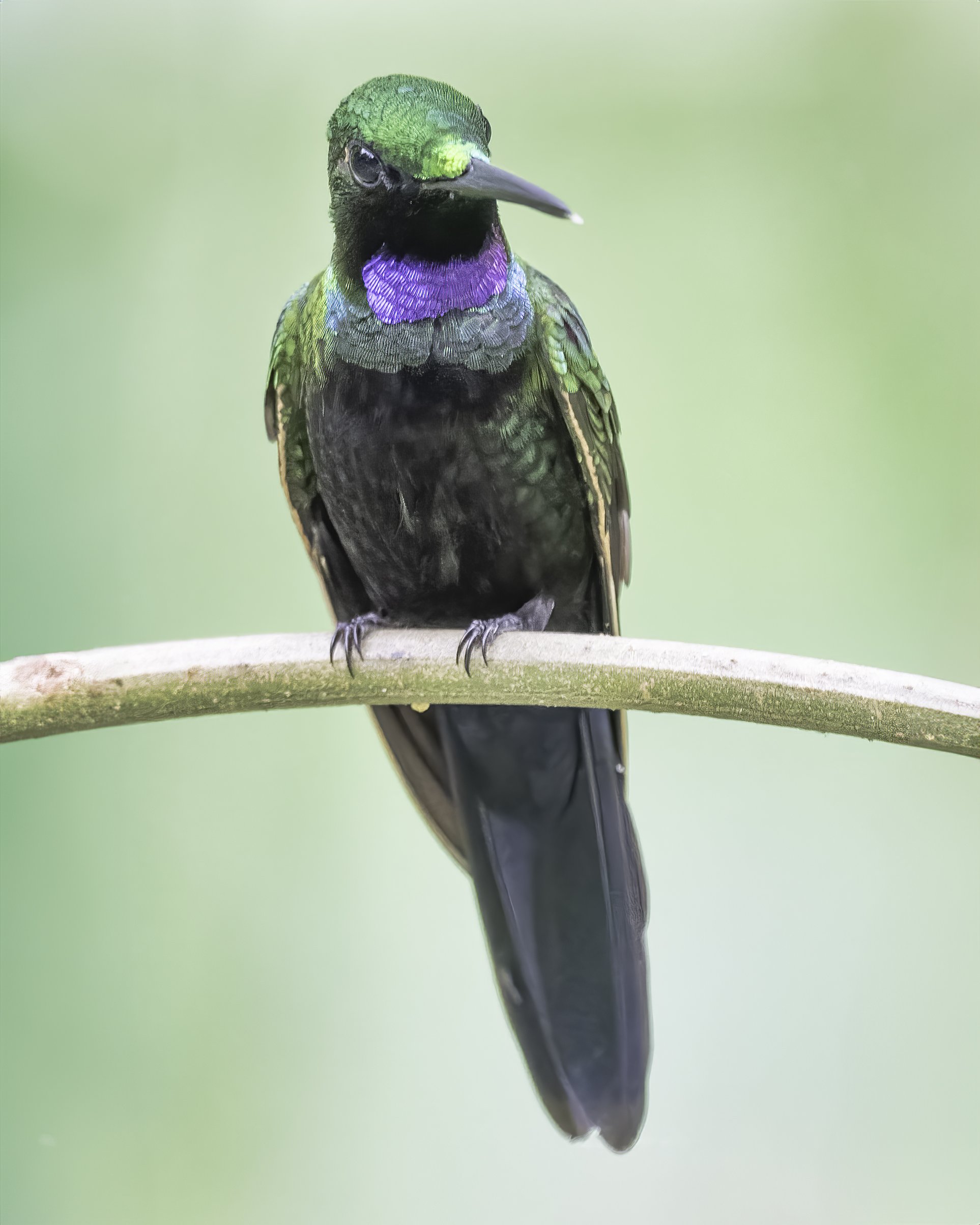
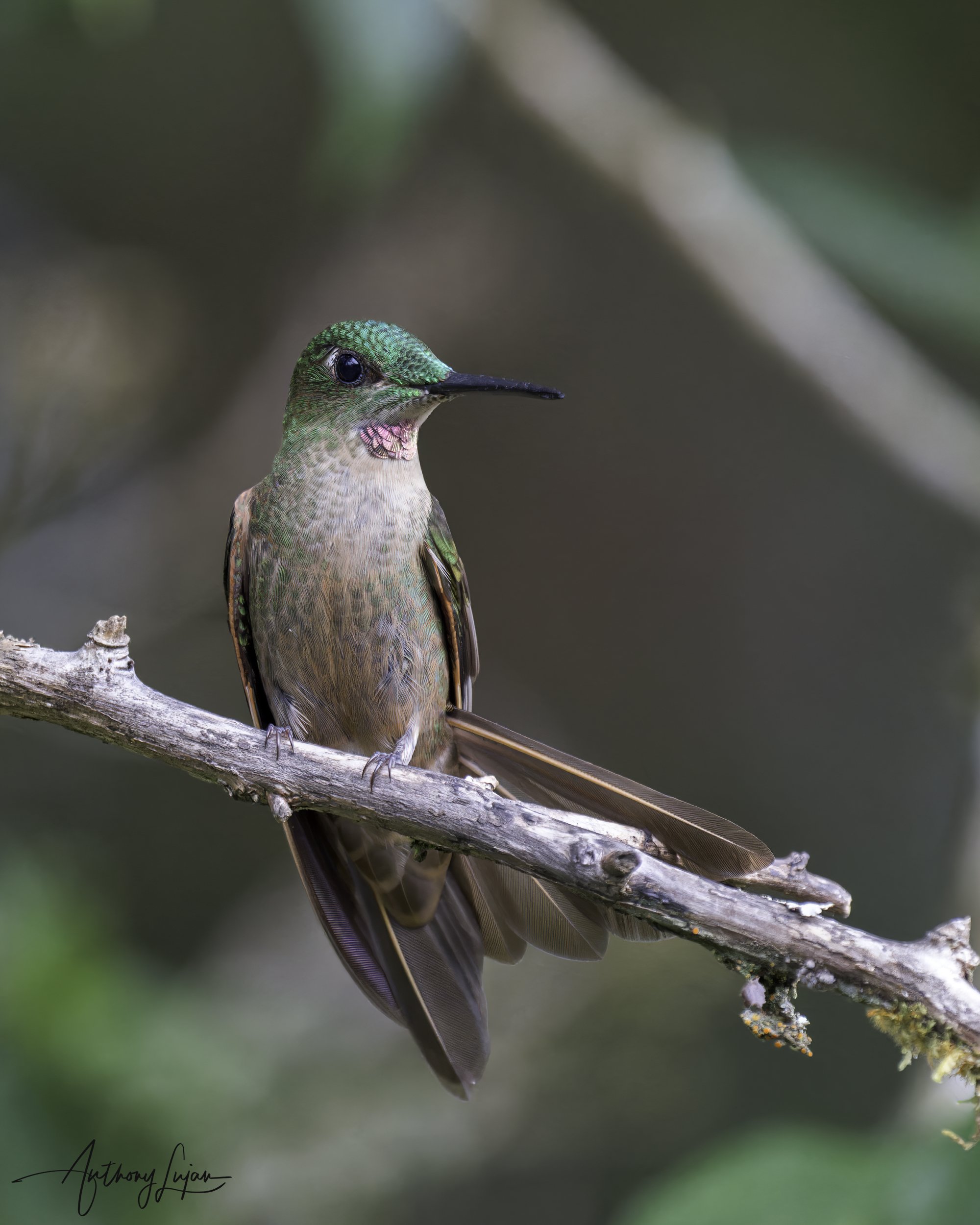
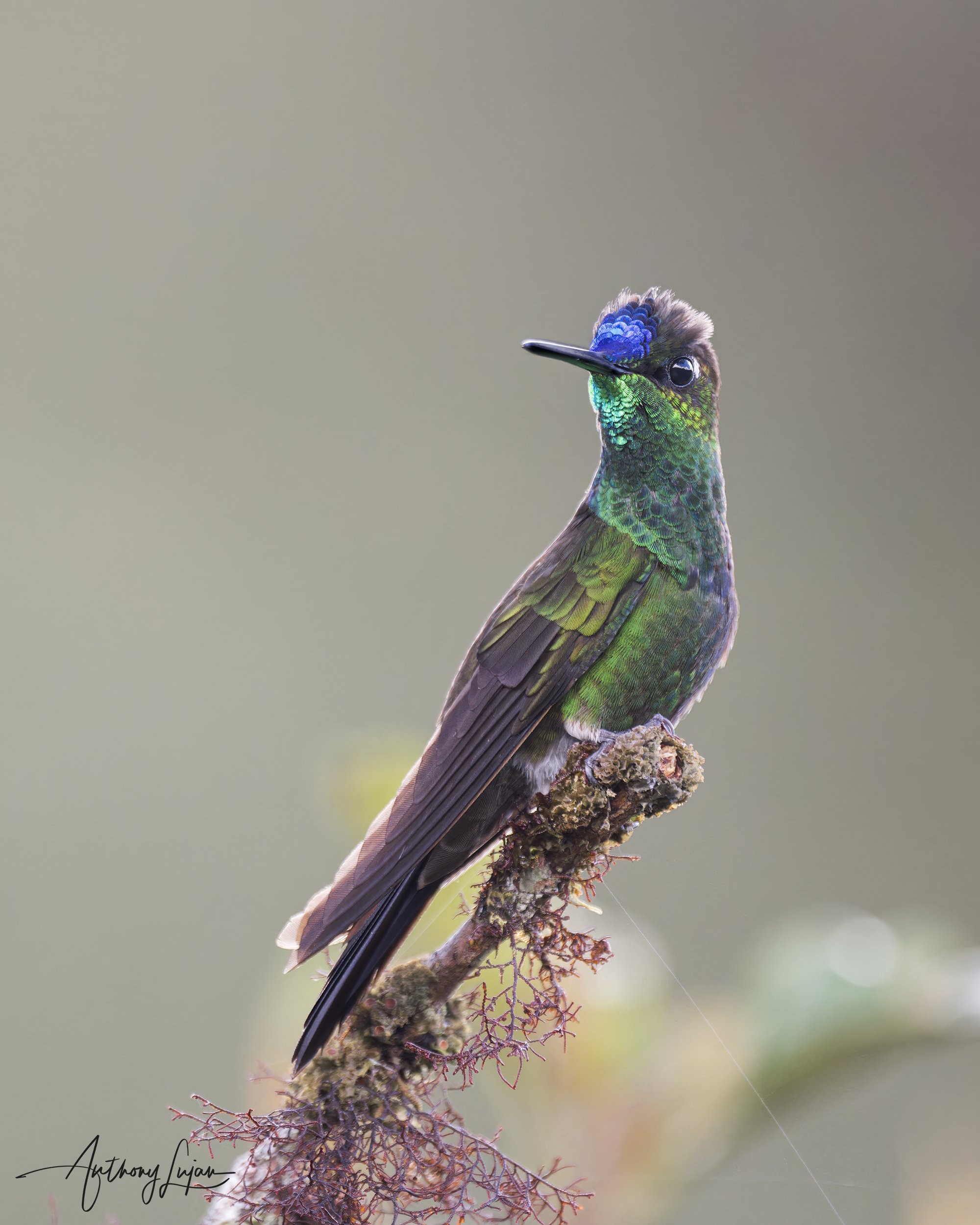
Related species in the Heliodoxa genus (10 species total):



Please note: The content provided in this article reflects Anthony’s personal experience and photographic approach. Results can vary depending on light, weather, location, equipment, subject behavior, and field conditions.