
Gray-breasted Sabrewing
Scientific name: Campylopterus largipennis
The Gray-breasted Sabrewing is a large, widespread hummingbird of lowland and foothill forests across much of northern South America. Its global population is estimated at around 3,000,000–13,000,000 mature individuals, the trend is decreasing, and it is listed as Least Concern, with two recognized subspecies under your treatment and considered non-migratory (though it may make local elevational and seasonal movements).
At a Glance
Family: Trochilidae (hummingbirds)
Clade: Trochilini – Emeralds
Genus group: Campylopterus — 10 species, 6 subspecies
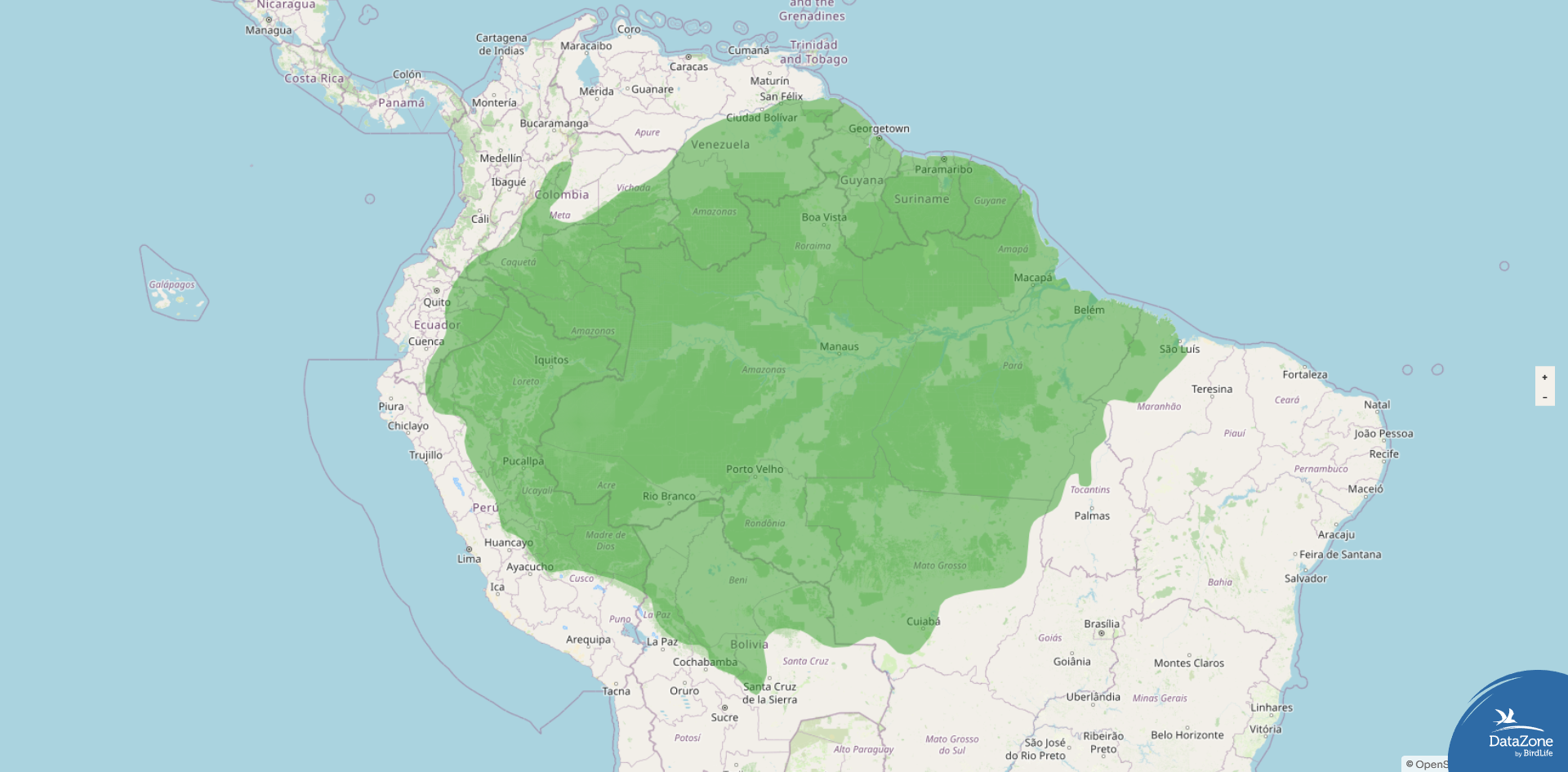
Range: Lowlands and foothills of northern South America, including eastern Venezuela, the Guianas, northern and western Brazil, eastern Colombia, eastern Ecuador and Peru, and northern Bolivia.
Habitat: Humid and semi-humid forest borders, river and lake edges, forest–savanna and cerrado ecotones, second-growth, and edges of terra firme and foothill forests.
Elevation: Mostly from near sea level up to about 1,300 m, occasionally higher along Andean foothills.
Length: About 13–14 cm (roughly 5.1–5.5 in).
Weight: Around 7–8.5 g, robust for a hummingbird.
Number of mature individuals: 3,000,000–13,000,000
Population trend: Decreasing
Status: Least Concern (IUCN)
Name Origin
The genus name Campylopterus combines Greek words meaning “curved wing,” referring to the thickened, sabre-shaped outer primaries typical of sabrewings. The species name largipennis means “broad-winged,” again emphasizing the large, powerful wings that distinguish this group from many smaller hummingbirds. The English name “Gray-breasted Sabrewing” (often spelled Grey-breasted) describes its grayish underparts and its membership in the sabrewing genus.
Subspecies & Distribution
Two subspecies are recognized in your simplified treatment:
Campylopterus largipennis largipennis
Occurs from eastern Venezuela and the Guianas south into northern Brazil as far west as the Rio Negro and south into parts of the Amazon Basin. It inhabits humid lowland forest edges, river and lake borders, and forest–savanna ecotones across this broad region.Campylopterus largipennis obscurus
Found in northeastern and eastern Brazil, including Amazonian and Atlantic forest regions, with some populations in drier and more seasonal forests and ecotones. It is generally darker overall than the nominate and occupies forest edges, second-growth, and wooded habitats.
Overall, the Gray-breasted Sabrewing ranges widely across lowland and foothill forests and ecotones of northern South America, from eastern Colombia, Venezuela, and the Guianas through much of northern and western Brazil to eastern Ecuador, Peru, and northern Bolivia.
Ledged
Green Resident
Species Overview
The Gray-breasted Sabrewing is one of the more widespread sabrewings, associated with forest borders, river edges, and forest–savanna ecotones across a large swath of northern South America. Unlike many hummingbirds that specialize on dense interior forest or open country, it thrives in edge habitats and disturbed areas, often near water. Its broad range and adaptability support a Least Concern status, but continuing deforestation, habitat modification, and changes in riverine and forest–savanna mosaics are thought to be causing a slow overall population decline.
Male Description
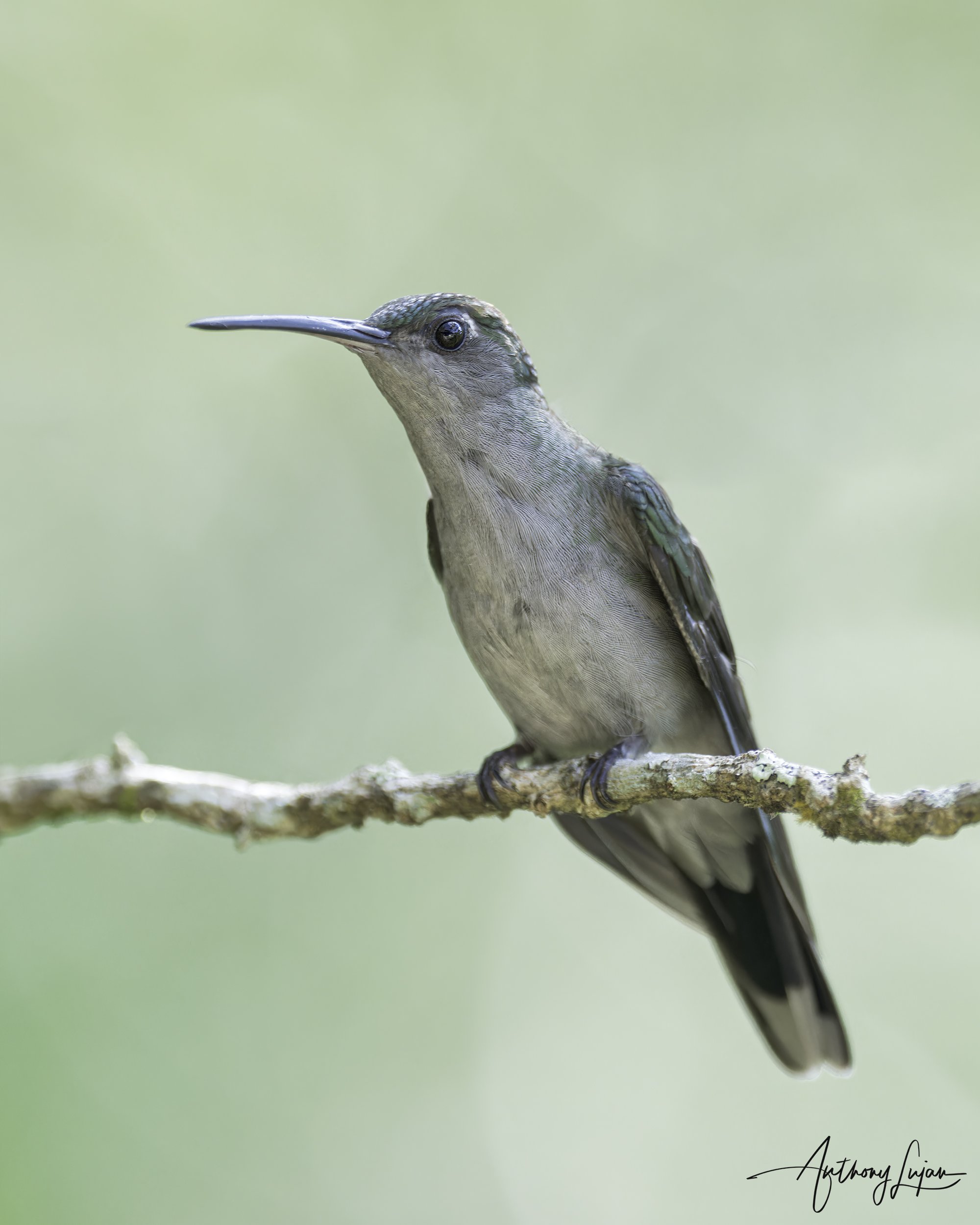
Adult males are large, sturdy hummingbirds with long, slightly decurved bills and thickened outer primaries that create a distinctive wing shape in flight. The head and upperparts are metallic green, often with bluish or bronzy reflections, and the underparts are gray to grayish-white on the breast and belly, sometimes washed with pale green on the flanks. The tail is relatively long and slightly rounded, dark with greenish to bluish gloss, and may have paler tips on the outer feathers. In life, males appear as powerful, broad-winged hummingbirds with green upperparts, gray underparts, and strong, sabre-like wings.
Female Description
Females are very similar to males, and the two sexes can be difficult to distinguish in the field. They share the metallic green upperparts and grayish underparts, though females may be slightly duller and show a bit more buff or brownish wash on the underparts. The tail pattern is similar, with dark feathers showing greenish gloss and sometimes pale tips. Because both sexes look alike, behavior and subtle size differences, rather than plumage, are often needed to separate males from females.
Habitat & Behavior
Gray-breasted Sabrewings typically inhabit forest edges and borders, especially along rivers, lakes, and forest–savanna or cerrado ecotones, as well as second-growth and edges of terra firme and foothill forests. They feed on nectar from a wide variety of flowers, especially along forest edges and in clearings, and frequently visit flowering shrubs and trees where they may defend rich nectar patches. Their powerful wings and robust build allow rapid, direct flight as they move between feeding sites. In addition to nectar, they also take small arthropods, catching them on the wing or gleaning from foliage. The species is considered non-migratory overall, but local seasonal movements within and between lowland and foothill zones are likely as flowering patterns and water levels change.
Population
With an estimated 3,000,000–13,000,000 mature individuals, the Gray-breasted Sabrewing has a large global population. Within its wide range, it is locally common in suitable edge and riverine habitats, and it has expanded into some anthropogenic mosaics where forest edges and second-growth provide abundant flowering plants. Despite its adaptability, continued loss and degradation of forest, riparian zones, and forest–savanna ecotones across Amazonia and adjacent regions are thought to be driving a gradual decrease in its population, though not yet at a rate that would raise its global threat category.

Conservation
Gray-breasted Sabrewing is listed as Least Concern due to its extensive range and large population, as well as its ability to use disturbed and edge habitats. However, deforestation, conversion of forest and cerrado, alteration of river systems, and changes in fire regimes can reduce the quality and extent of its preferred forest–edge and riparian habitats. Conservation measures that protect forest borders, riparian zones, and mixed forest–savanna landscapes, along with maintaining mosaics of native vegetation in agricultural regions, will help sustain this species. Long-term monitoring will be important to track how ongoing habitat change across Amazonia and neighboring regions affects its abundance.
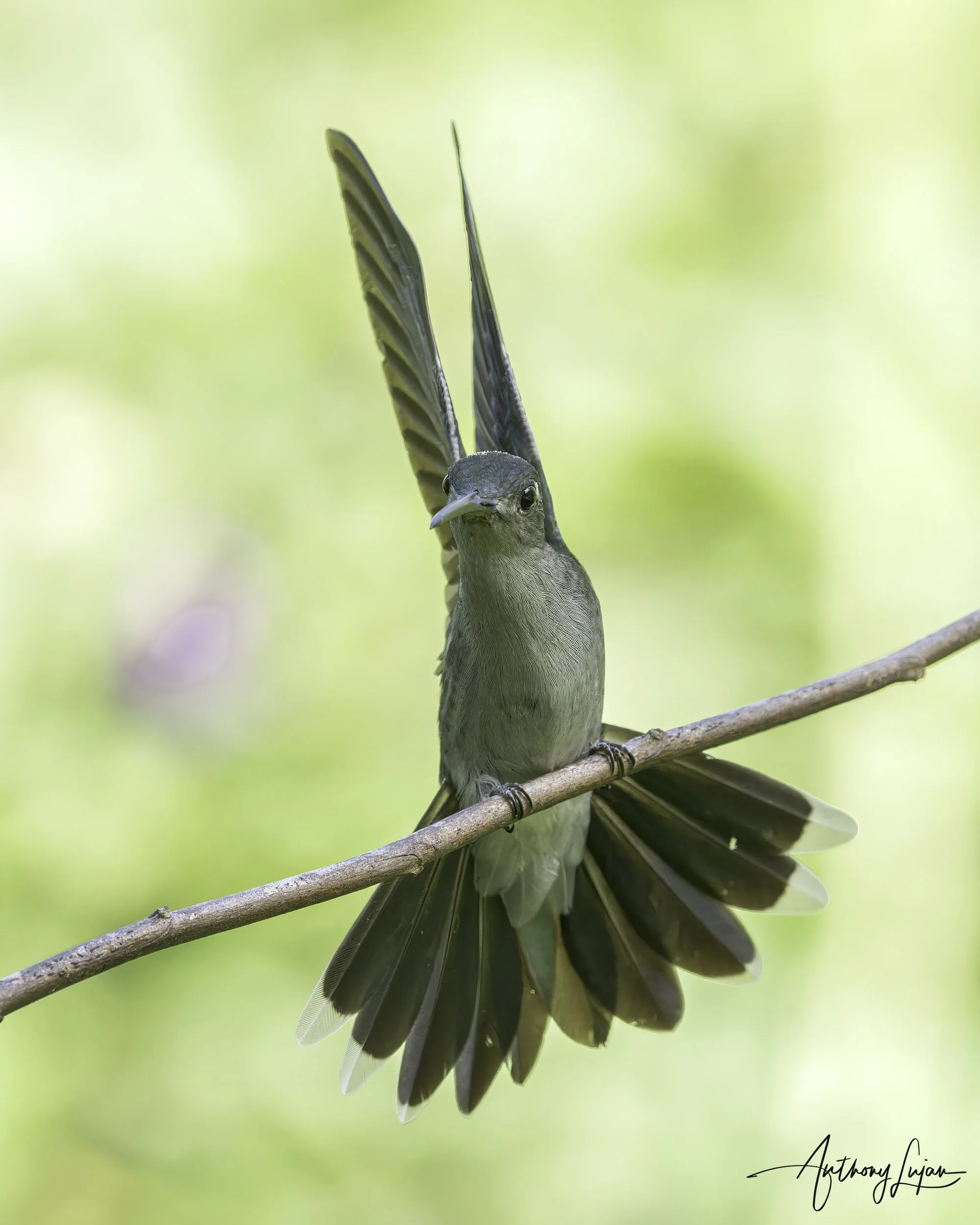
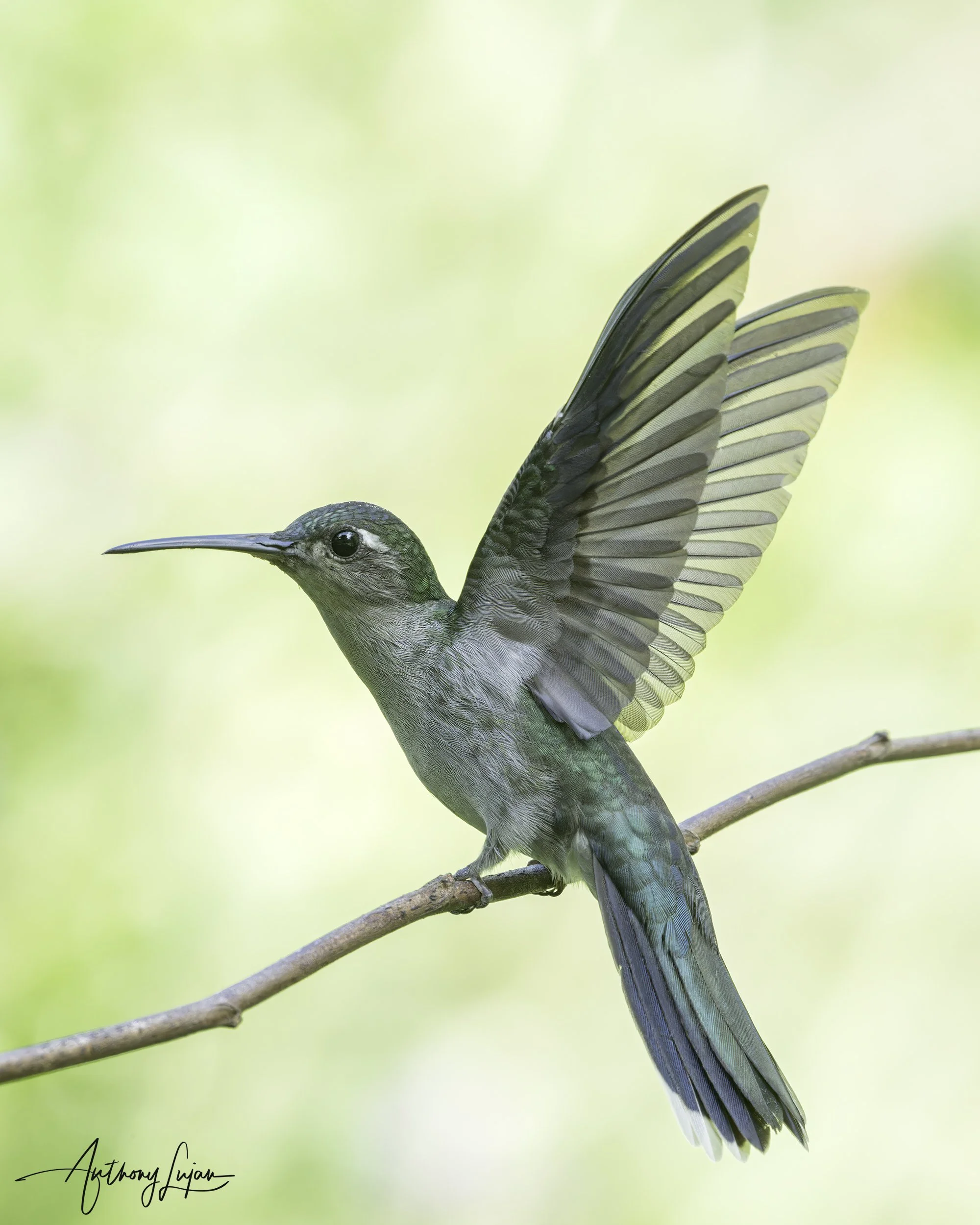
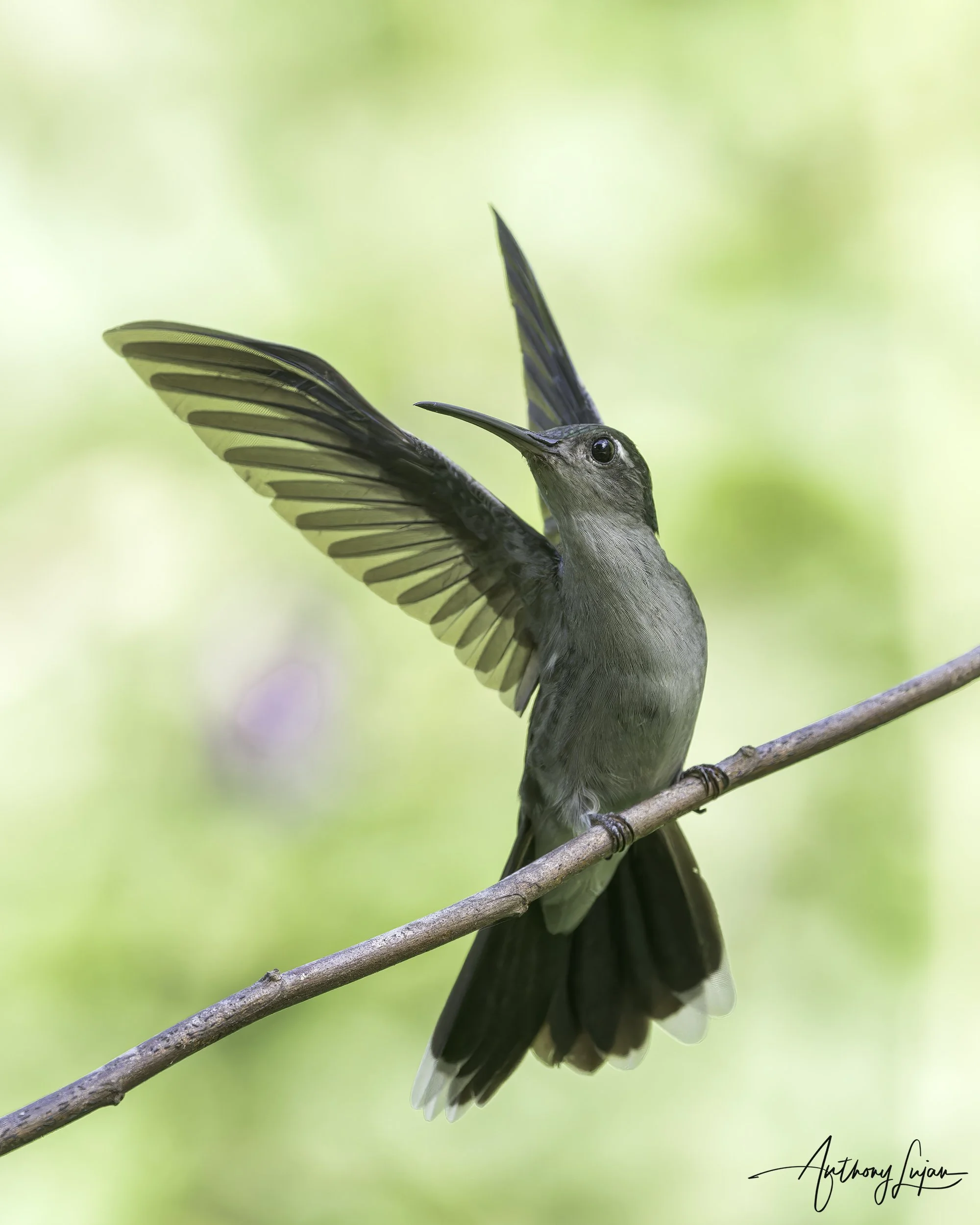
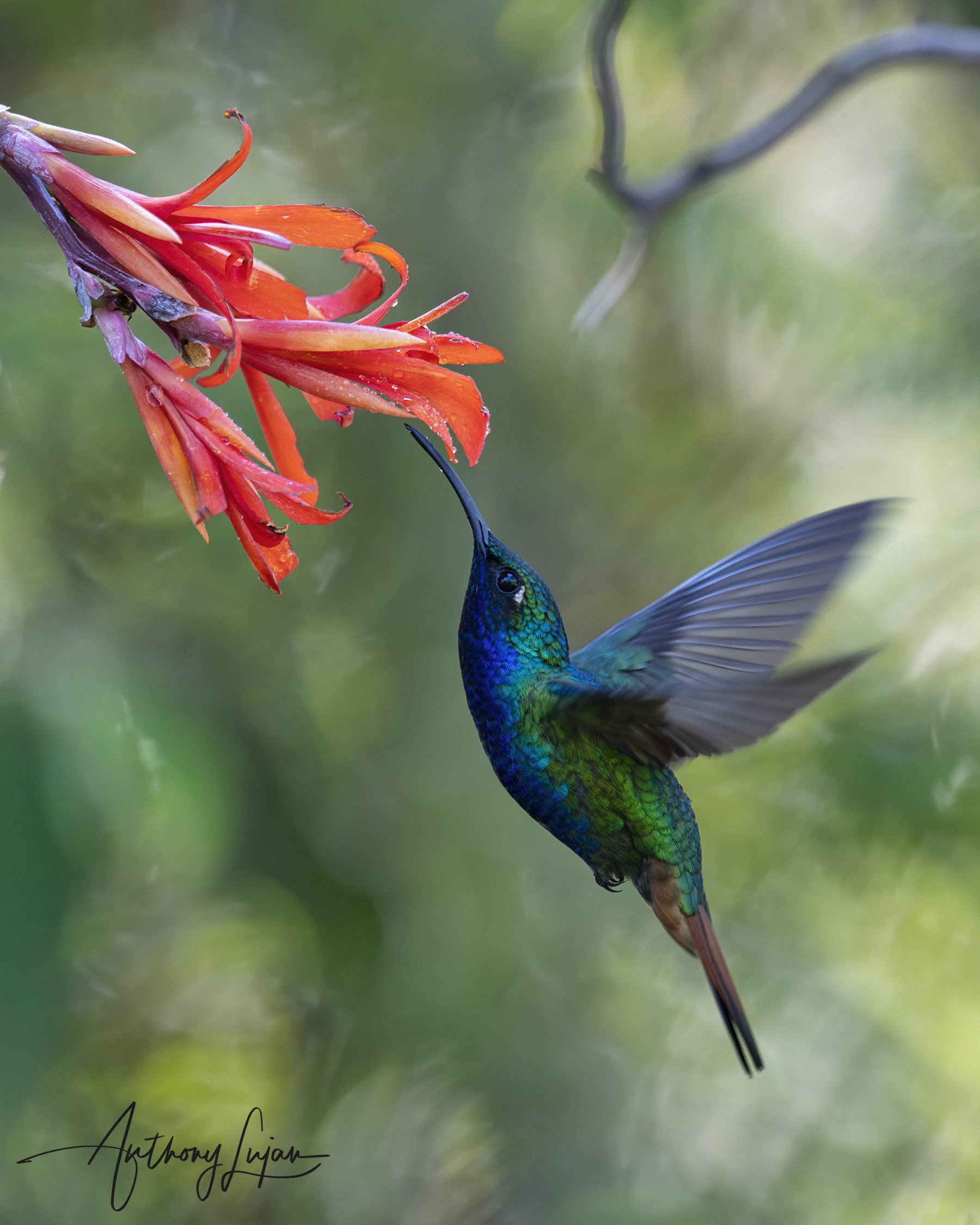
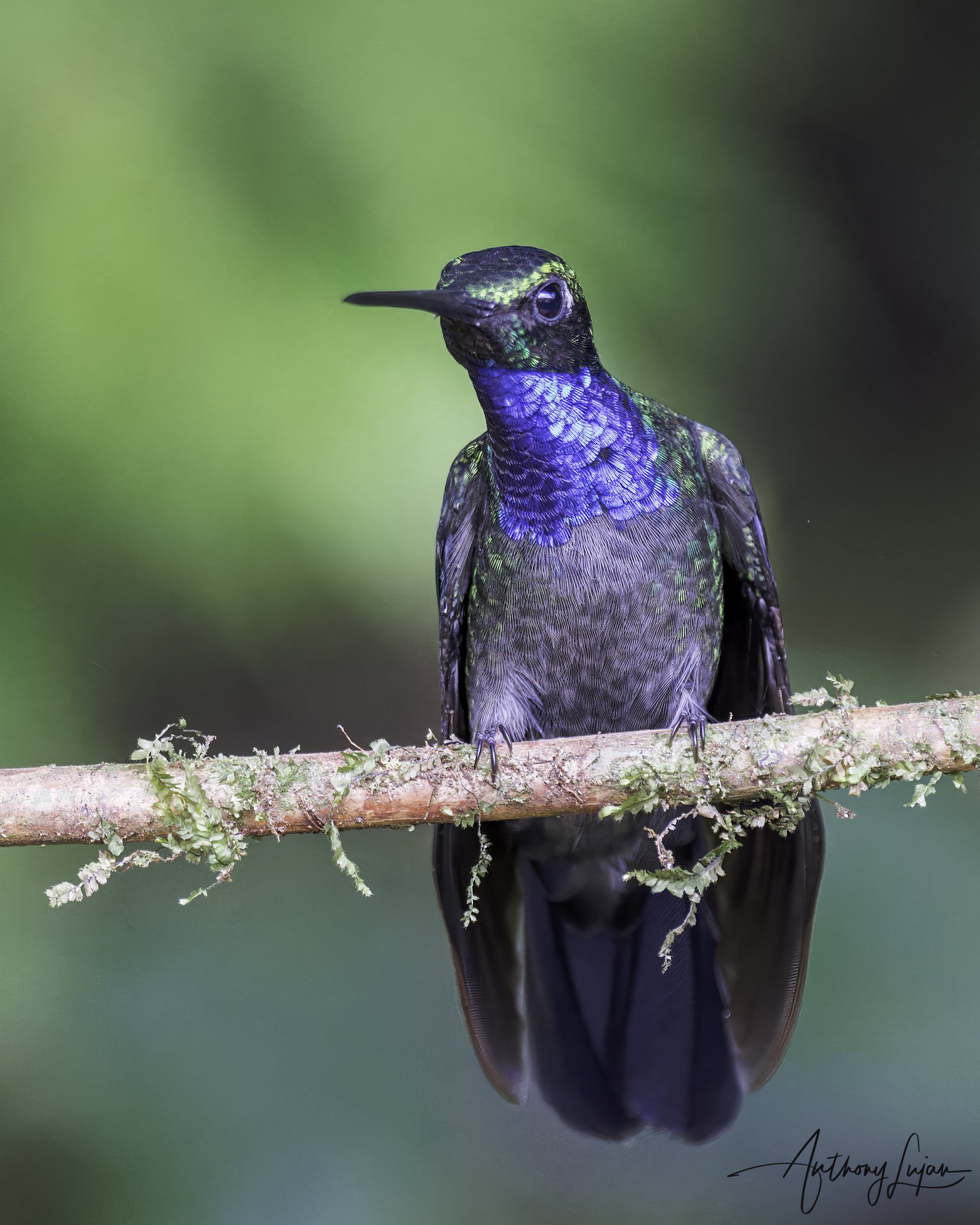
Below is the Gray-breasted Sabrewing (Campylopterus largipennis obscurus)
Photographed at Waqanki / Quebrada Mishquiyaquillo and Asociación Koepcke’s Hermit, San Martín, Peru, and at Manaus and Borba, Amazonas, Brazil
These individuals belong to the subspecies obscurus, which ranges from eastern Colombia south through Peru and Bolivia, and eastward—mainly south of the Amazon River—to eastern Pará and Maranhão. It inhabits humid forest edge, clearings, and tall secondary growth from lowlands up to 1,200 meters.
This subspecies is slightly darker overall than largipennis, with a more uniformly gray breast and less bronzy sheen on the upperparts. It feeds actively at forest-edge flowers and large canopy blossoms, often returning to favored perches.
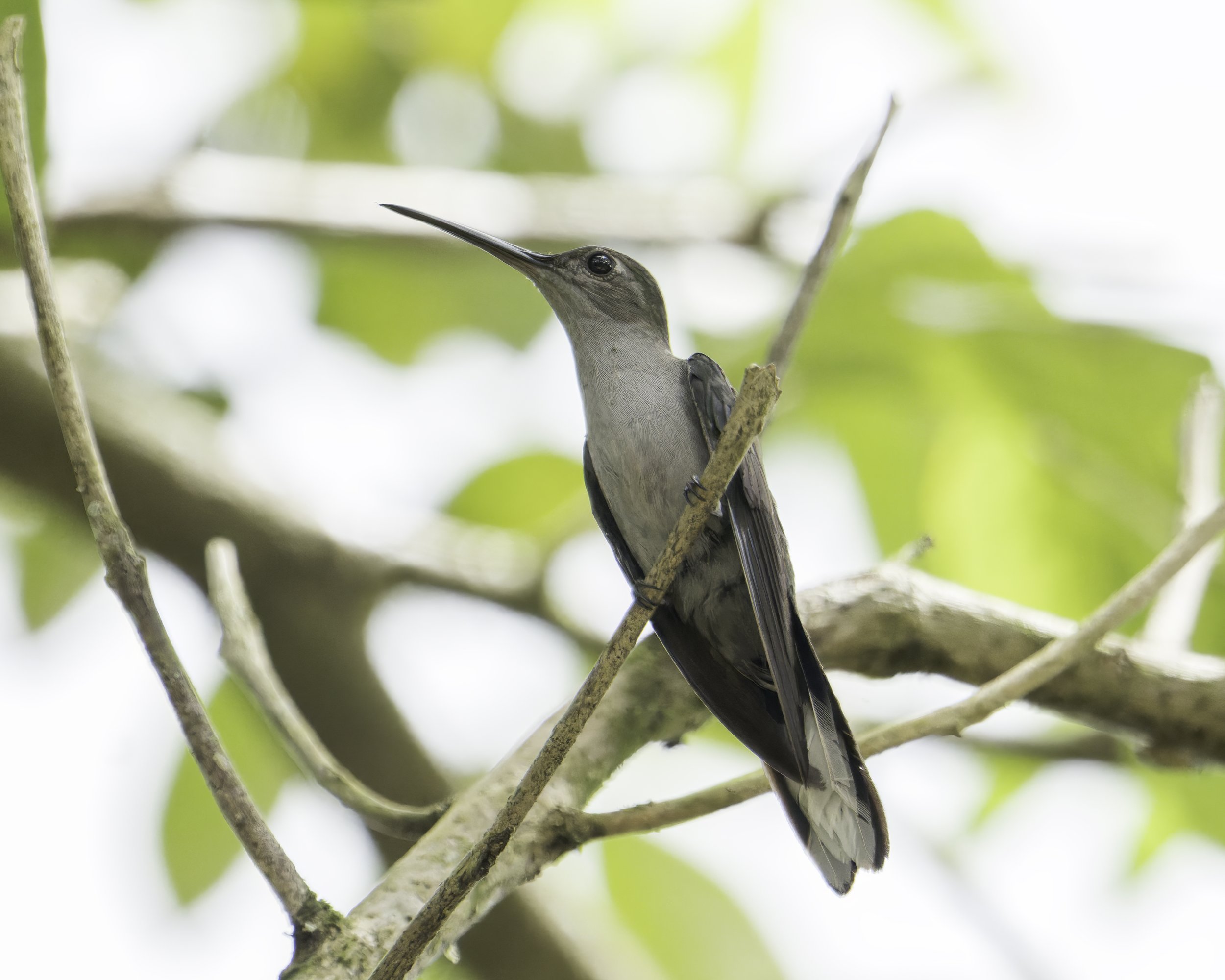
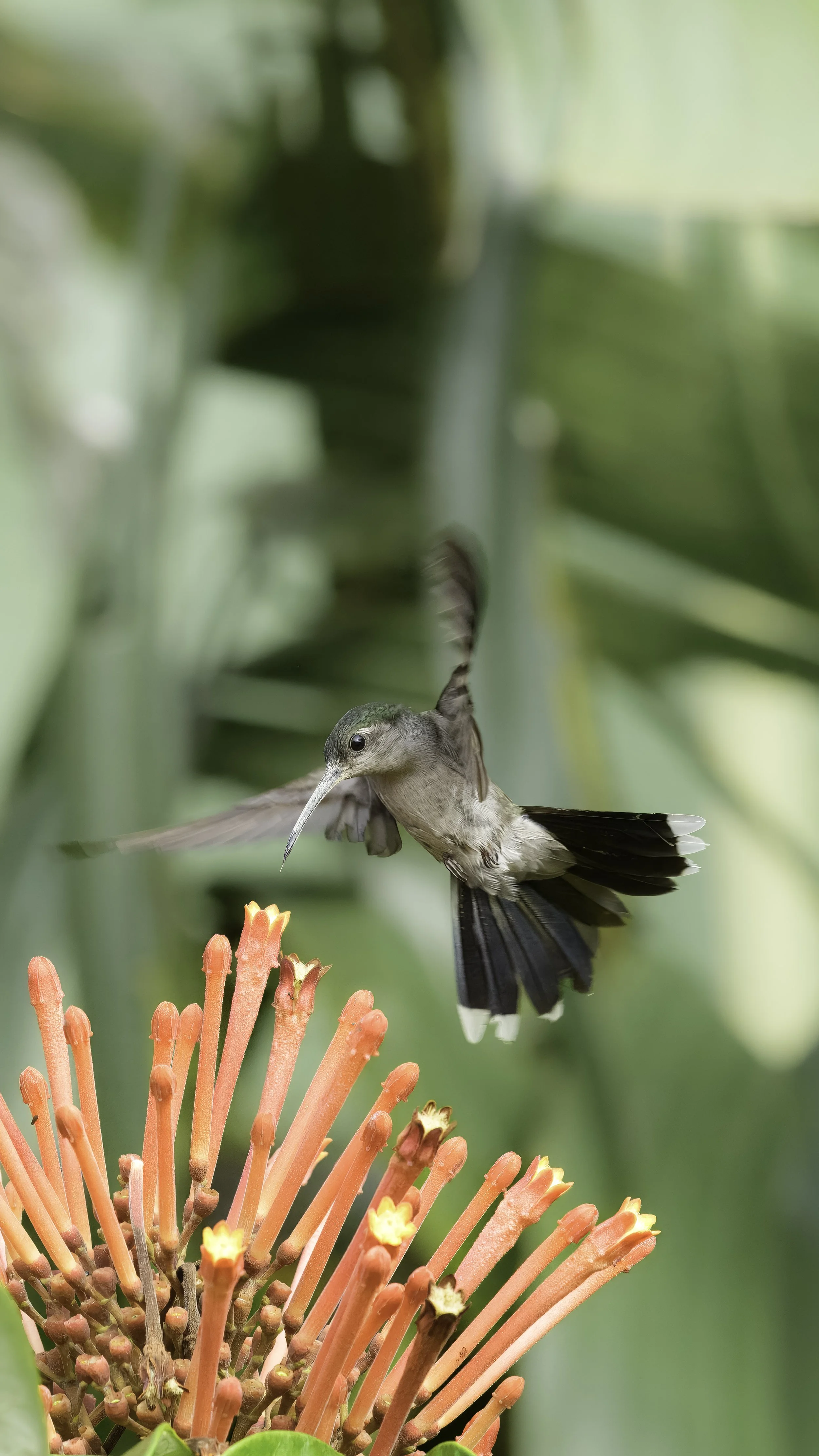
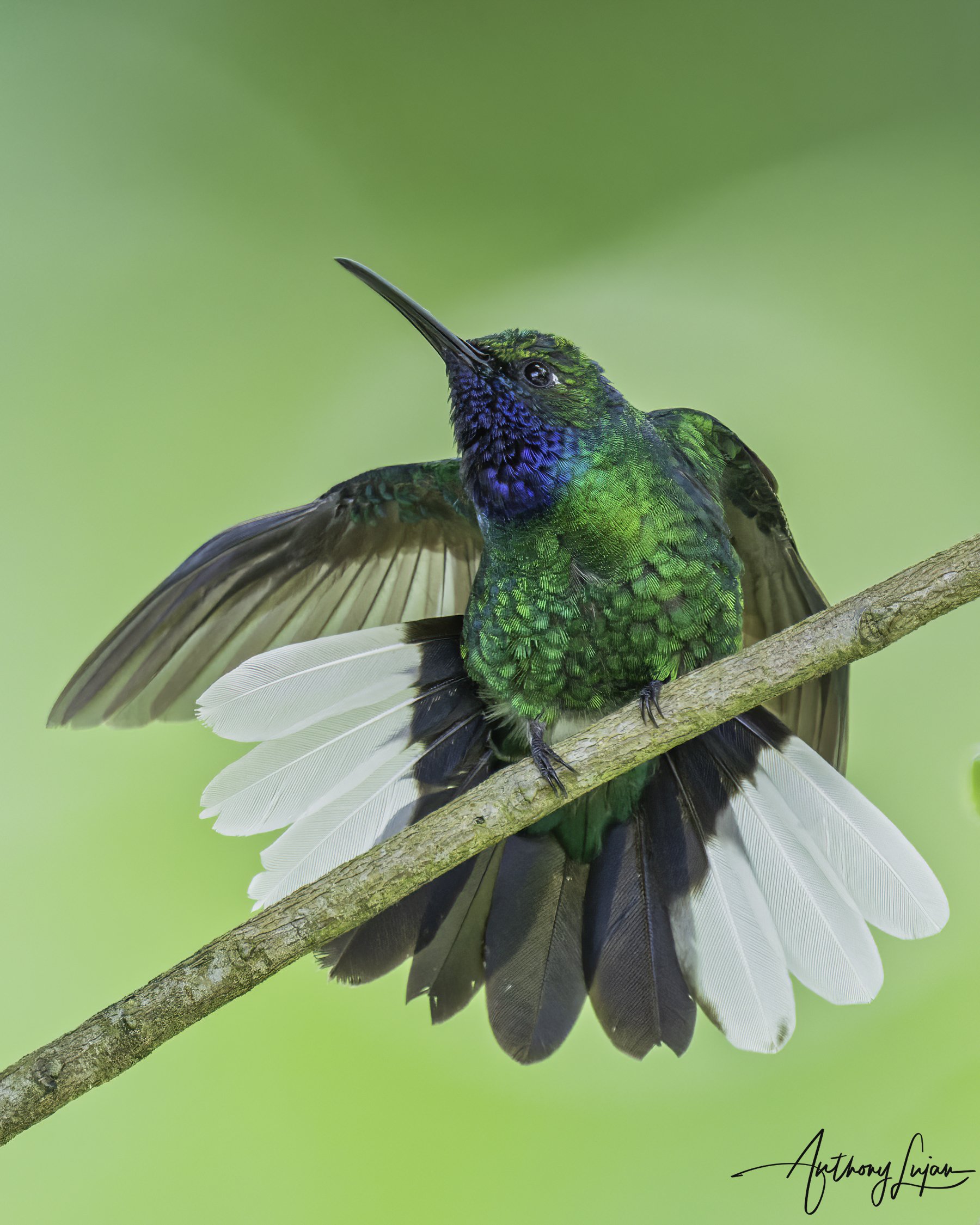
Below is the Gray-breasted Sabrewing (Campylopterus largipennis largipennis)
Photographed in Manaus and Borba, Amazonas, and Bonfim, Roraima, Brazil
These individuals belong to the nominate subspecies largipennis, widespread across the central and northern Amazon Basin from Brazil and the Guianas to eastern Peru. It inhabits lowland rainforest and tall secondary growth, often along forest edges and clearings below 800 meters.
The largipennis form shows a paler gray breast, more golden-green upperparts, and a slightly larger overall size than aequatorialis. It is highly active, visiting large flowering trees and defending feeding territories in semi-open forest.
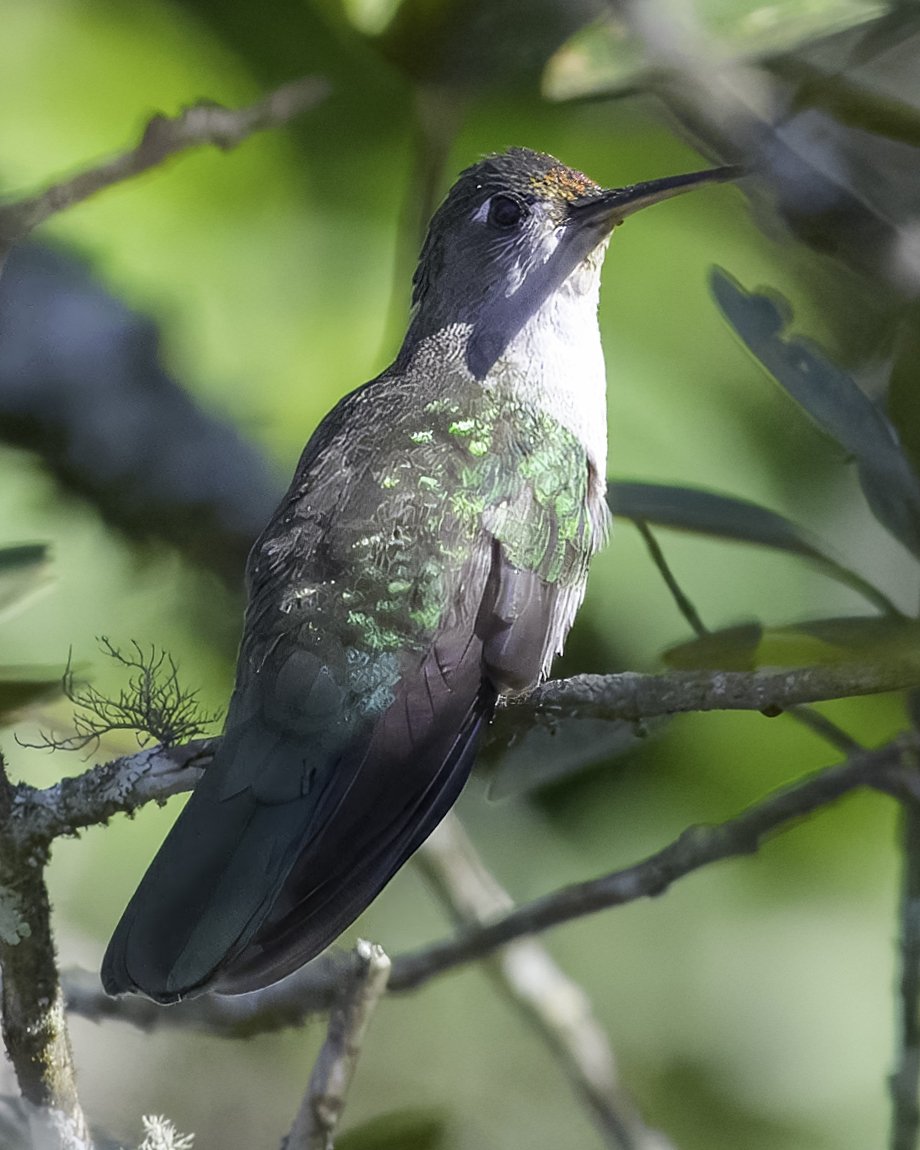
Related species in the Campylopterus genus (10 species total):


Please note: The content provided in this article reflects Anthony’s personal experience and photographic approach. Results can vary depending on light, weather, location, equipment, subject behavior, and field conditions.