
Gray-chinned Hermit
Scientific name: Phaethornis griseogularis
The Gray-chinned Hermit is a small hermit hummingbird of humid forest understory and edges along the northern and central Andes and adjacent foothills. The number of mature individuals is unknown, the population trend is decreasing, it is not a migrant, and it is currently assessed as Least Concern.
At a Glance
Family: Trochilidae (hummingbirds)
Clade: Phaethornithinae – Hermits
Genus: Phaethornis — 27 species in total
Range: Andes of Venezuela, Colombia, Ecuador, northern and eastern foothills of Peru, and adjacent western Brazil (Acre)
Habitat: Humid lowland and foothill rainforest, forest edges, secondary forest, ravines, and thickets, usually in dense understory
Elevation: Mostly from lowlands up to around 1,700 m, often 400–1,500 m depending on region
Length: About 10–11 cm (4.0–4.3 in)
Weight: Around 3.5–5 g
Number of mature individuals: Unknown
Population trend: Decreasing
Movement: Not a migrant
IUCN Red List category: Least Concern
Name Origin
The genus name Phaethornis derives from Phaethon, meaning “shining” or “radiant,” referring to the iridescent qualities of hummingbird plumage. The species name griseogularis combines Latin for “gray” (griseus) and “throated” (gularis), describing the species’ grayish chin and throat. The English name “Gray-chinned Hermit” highlights this subtle but diagnostic feature.
Taxonomy
Phaethornis griseogularis is a hermit hummingbird in the subfamily Phaethornithinae. It is one of 27 species in the genus Phaethornis, which includes other small hermits such as the Little Hermit (P. longuemareus), Reddish Hermit (P. ruber), and Black-throated Hermit (P. atrimentalis).
Subspecies and Distribution
Three subspecies:
Phaethornis griseogularis griseogularis
Distribution: Andes of Venezuela (Mérida) and northern Colombia south through Ecuador to northern Peru (San Martín and Amazonas).Phaethornis griseogularis zonura
Distribution: Foothills of northern and western Colombia, extending into western Ecuador; tends to occur at slightly lower elevations.Phaethornis griseogularis aethopyga
Distribution: Eastern foothills of Peru, extending marginally into western Brazil (Acre).
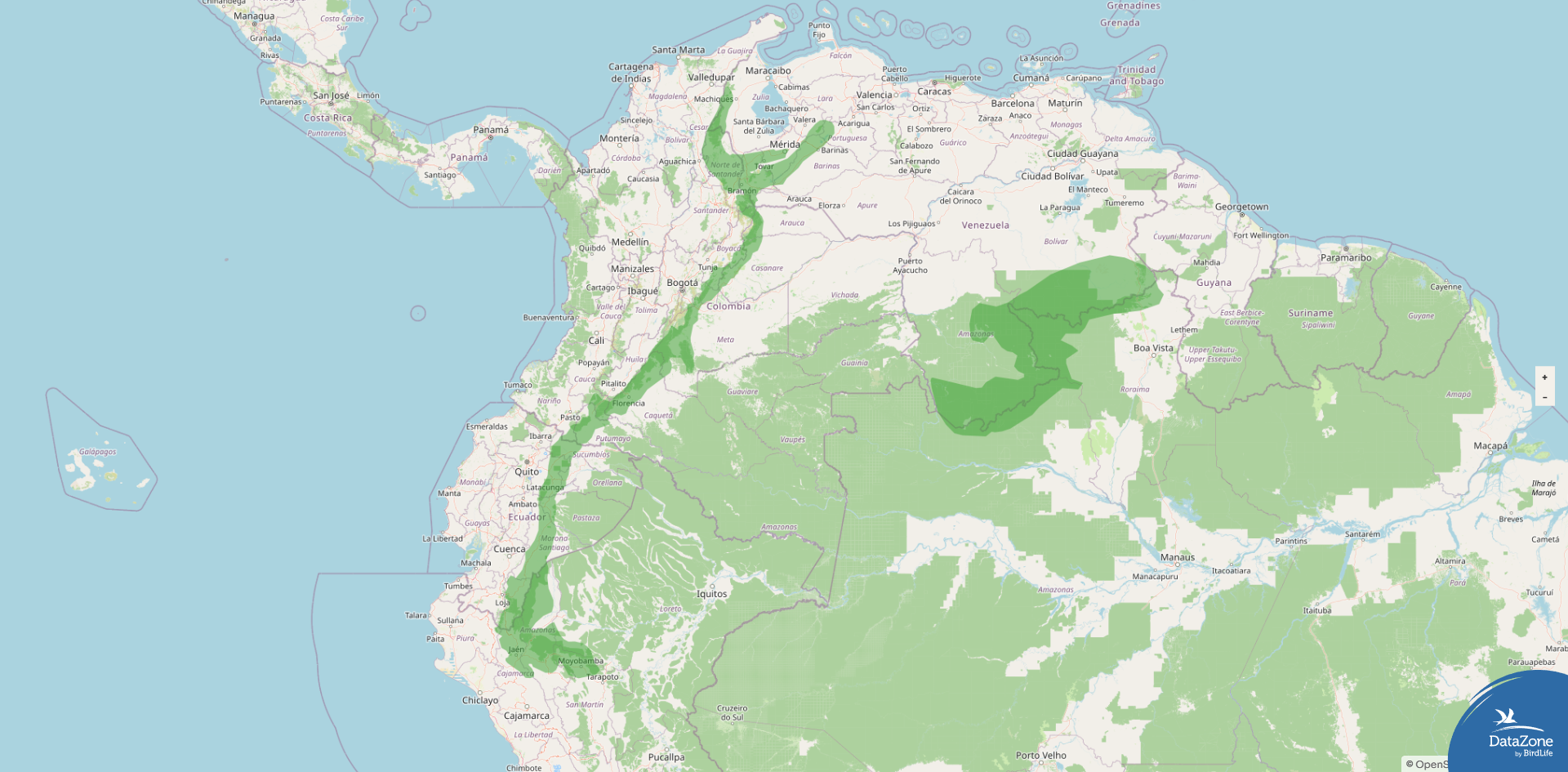
Legend
Green Resident
Species Overview
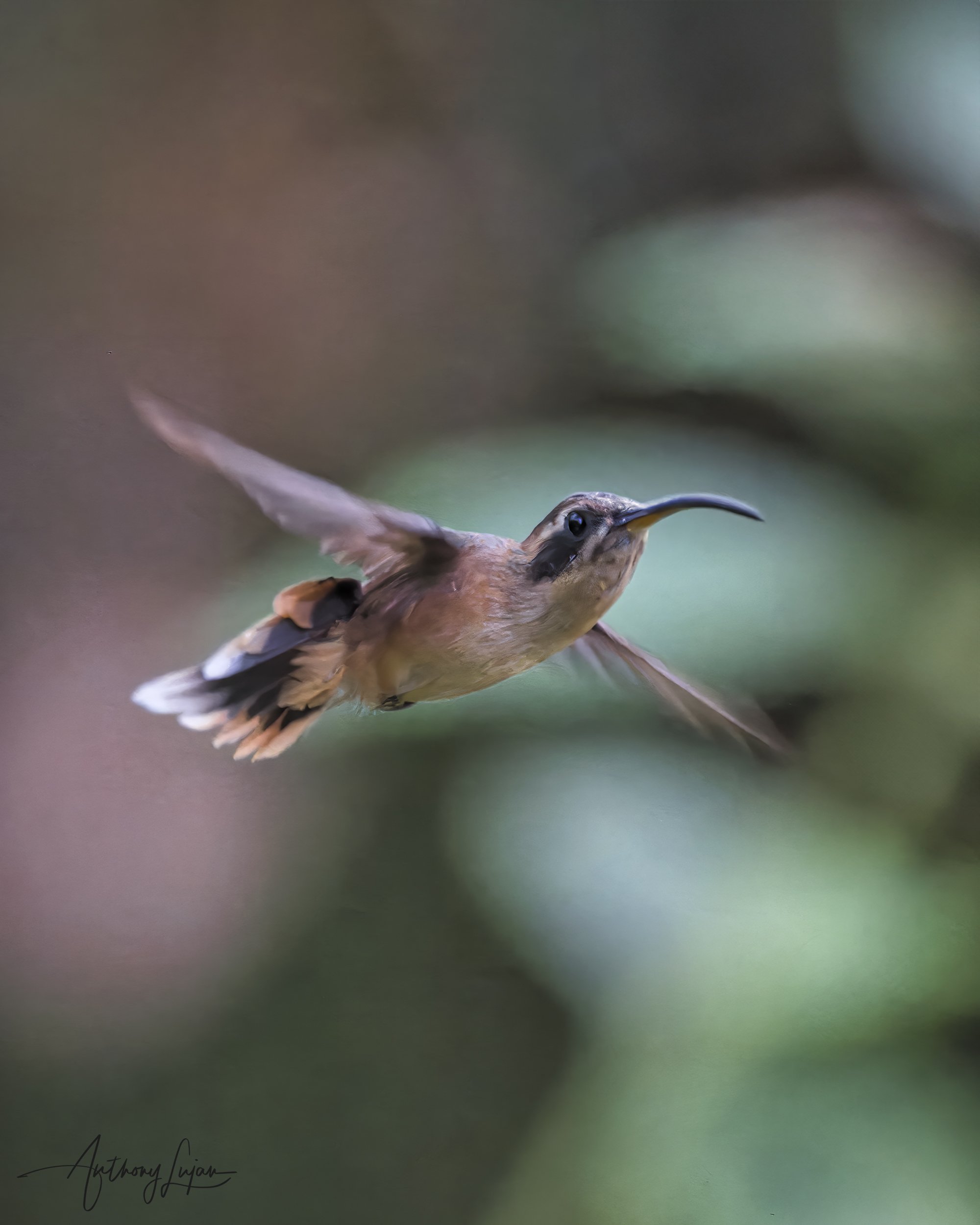
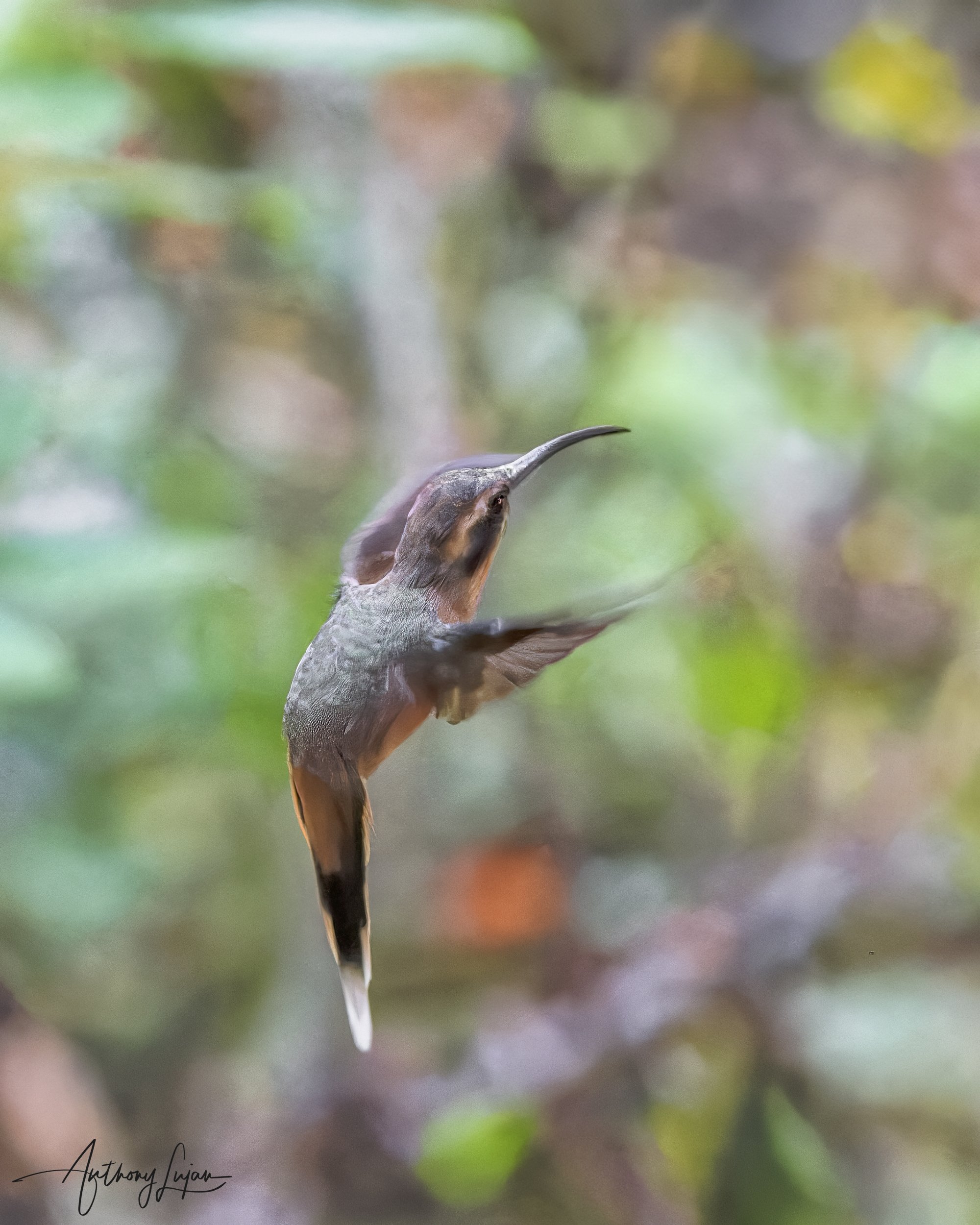
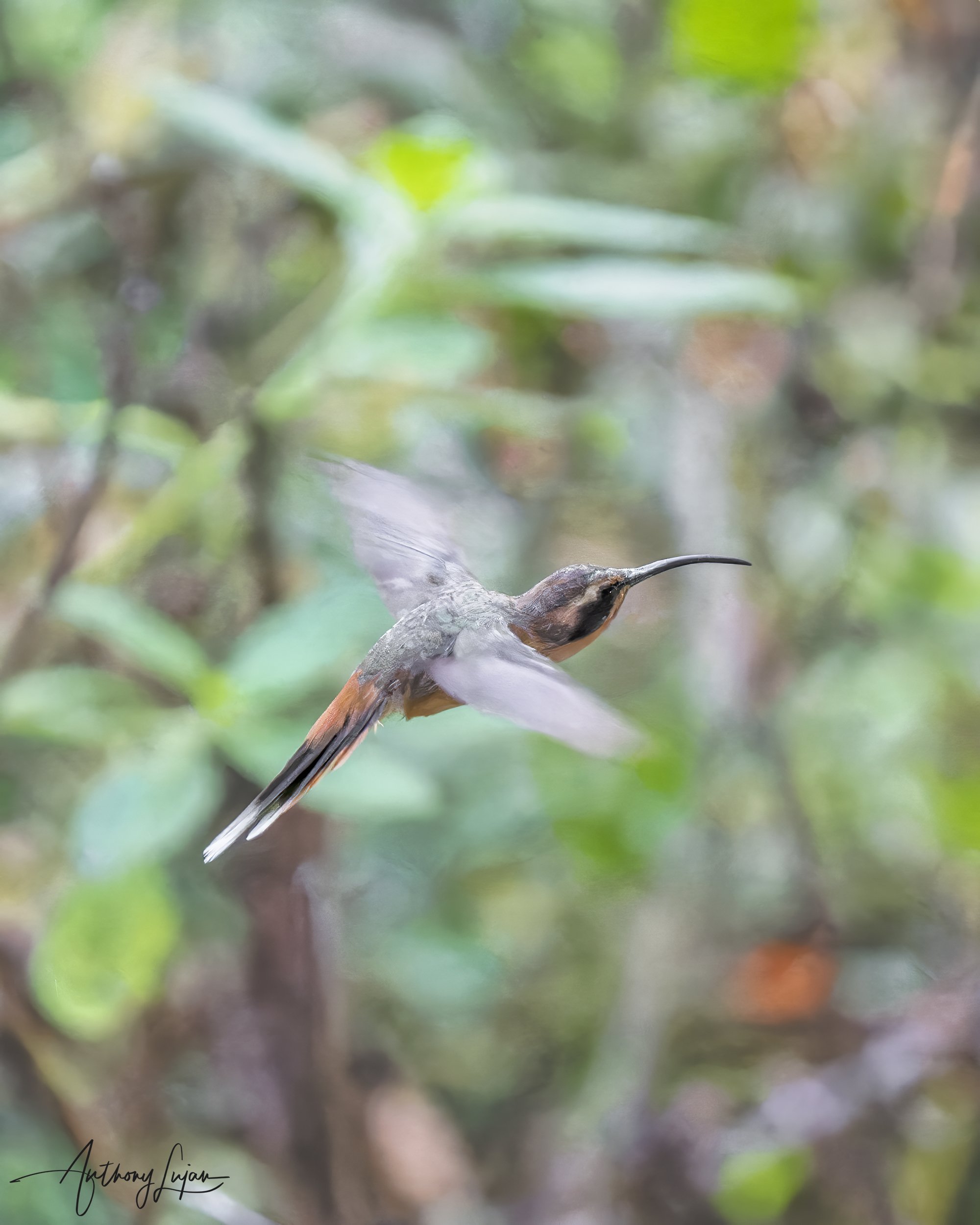
The Gray-chinned Hermit is a discreet, understory hermit characterized by olive‑green upperparts, buffy underparts, and a grayish chin and throat rather than the rich rufous tones of some relatives. It shows the typical hermit facial pattern of dark mask with pale superciliary and moustachial stripes, a long decurved bill, and a long tail with white-tipped outer feathers. It favors shady ravines, forest edges, and dense thickets where flowering plants are scattered, and it usually moves alone along regular nectar routes.
Male Description
Males are about 10–11 cm long and relatively slender. The upperparts are olive‑green to bronzy‑green. The chin and throat are grayish, often with fine dusky mottling, grading into buffy or brownish underparts on the breast and belly. The face shows a dusky mask crossed by a pale supercilium and pale moustachial line typical of Phaethornis hermits. The bill is long, slender, and decurved, suited to tubular flowers. The tail is long with central feathers longer, the outer feathers bearing small white tips; bases of tail feathers may be warmer or duller depending on subspecies.
Female Description
Females resemble males closely in plumage, with the same grayish chin and throat and olive‑green upperparts. They may show slightly paler or warmer underparts and differences in bill length or curvature, but distinctions are subtle. Juveniles look similar to adults but can have softer overall contrast and fresher plumage.
Habitat & Behavior
Gray-chinned Hermits inhabit humid lowland and foothill rainforest, especially in dense understory of primary and tall secondary forest, along forest edges, ravines, and stream gullies, and in thickets or plantations with forest remnants. They are typically found at low to mid‑elevations along Andean foothills and adjacent lowlands.
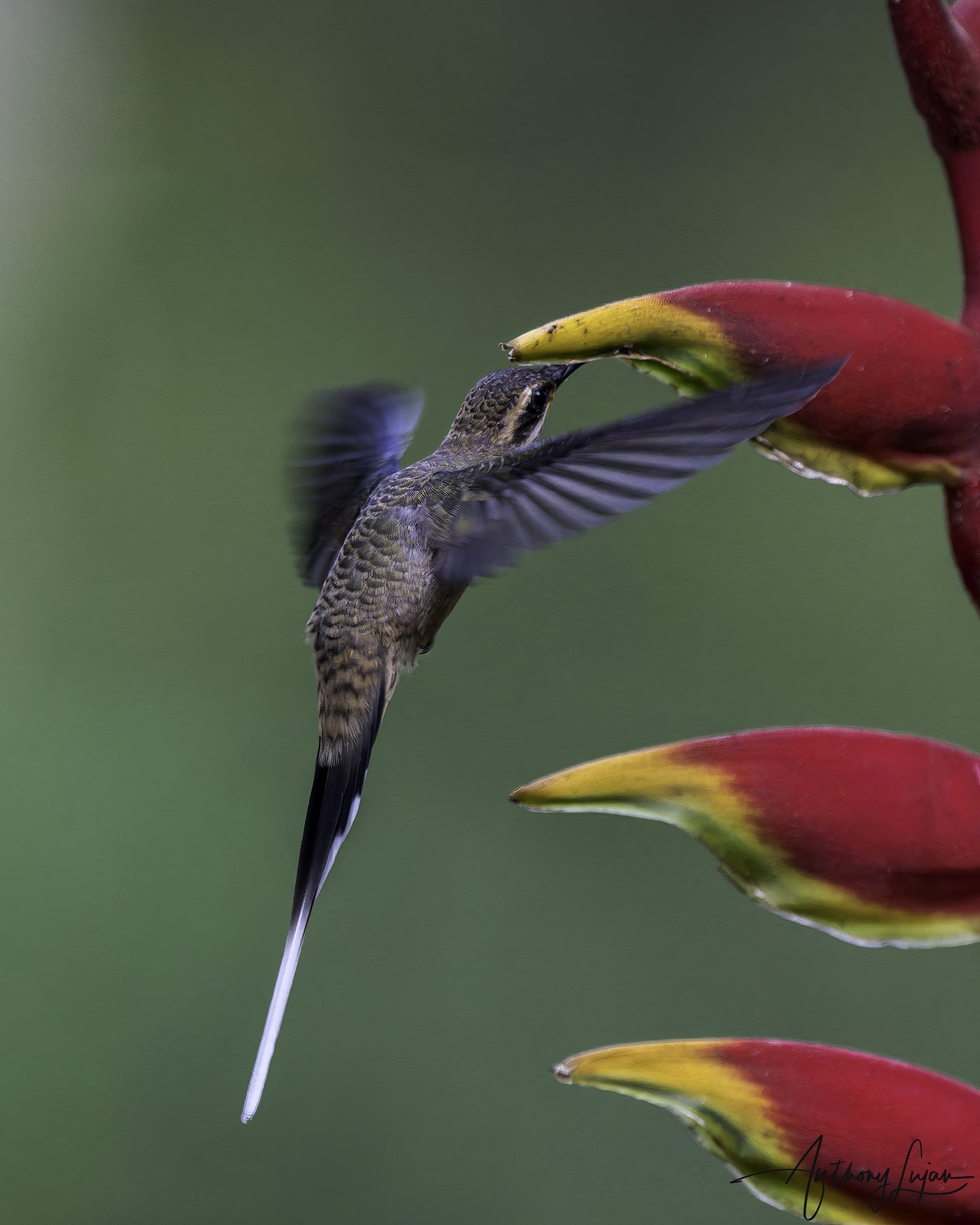
They are classic hermit trapliners, following regular circuits between scattered flowering plants. They feed primarily on nectar from tubular flowers, such as those of Heliconia, Costus, and various understory shrubs, often hovering briefly or perching while feeding. Small arthropods are also taken by gleaning from foliage, branches, and spiderwebs or in short aerial sallies. Birds are usually solitary, moving quietly and staying close to cover.
Breeding
Breeding information is incomplete but follows the general pattern of Phaethornis hermits. The female constructs a small, hanging cup or cone-shaped nest of plant fibers, moss, and spiderweb, often suspended from the underside of long leaves, thin branches, or roots along banks or ravines. The nest is placed in sheltered, shady sites, typically a few meters above the ground.
A clutch of two white eggs is typical. The female alone incubates the eggs and feeds the nestlings. Incubation and nestling periods are not well documented for this species specifically but likely span several weeks from laying to fledging, in line with related hermits.
Movement
The Gray-chinned Hermit is considered non‑migratory. It is resident within its Andean and foothill range, with only local movements along slopes or into adjacent lowlands as it tracks flowering patterns and seasonal changes in rainfall. There is no evidence of regular, long-distance migration.
Population
The total number of mature individuals is unknown. Within suitable humid foothill and lowland forest, the Gray-chinned Hermit is usually considered uncommon to locally fairly common. Habitat loss, degradation, and fragmentation in Andean foothill forests and adjacent lowlands are likely contributing to a gradual decrease in its population, although it remains widespread enough to retain a Least Concern status.

Conservation
The Gray-chinned Hermit is currently assessed as Least Concern due to its broad geographic range and presence in multiple countries. However, ongoing deforestation, forest fragmentation, and conversion of foothill forests to agriculture or pasture continue to erode its habitat. Conservation of humid lowland and foothill forests, maintenance of understory structure, and protection of riparian corridors are important for sustaining healthy populations.
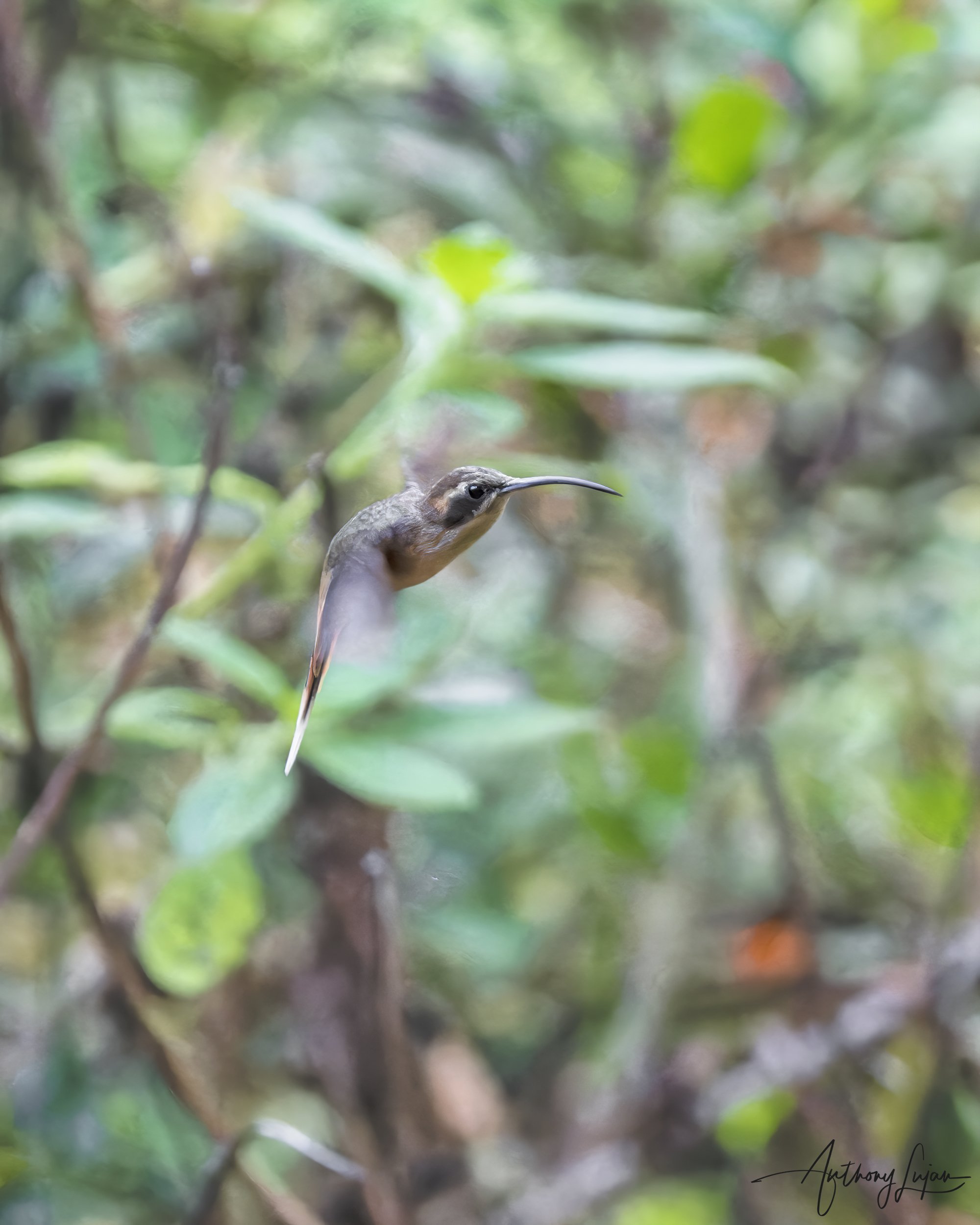
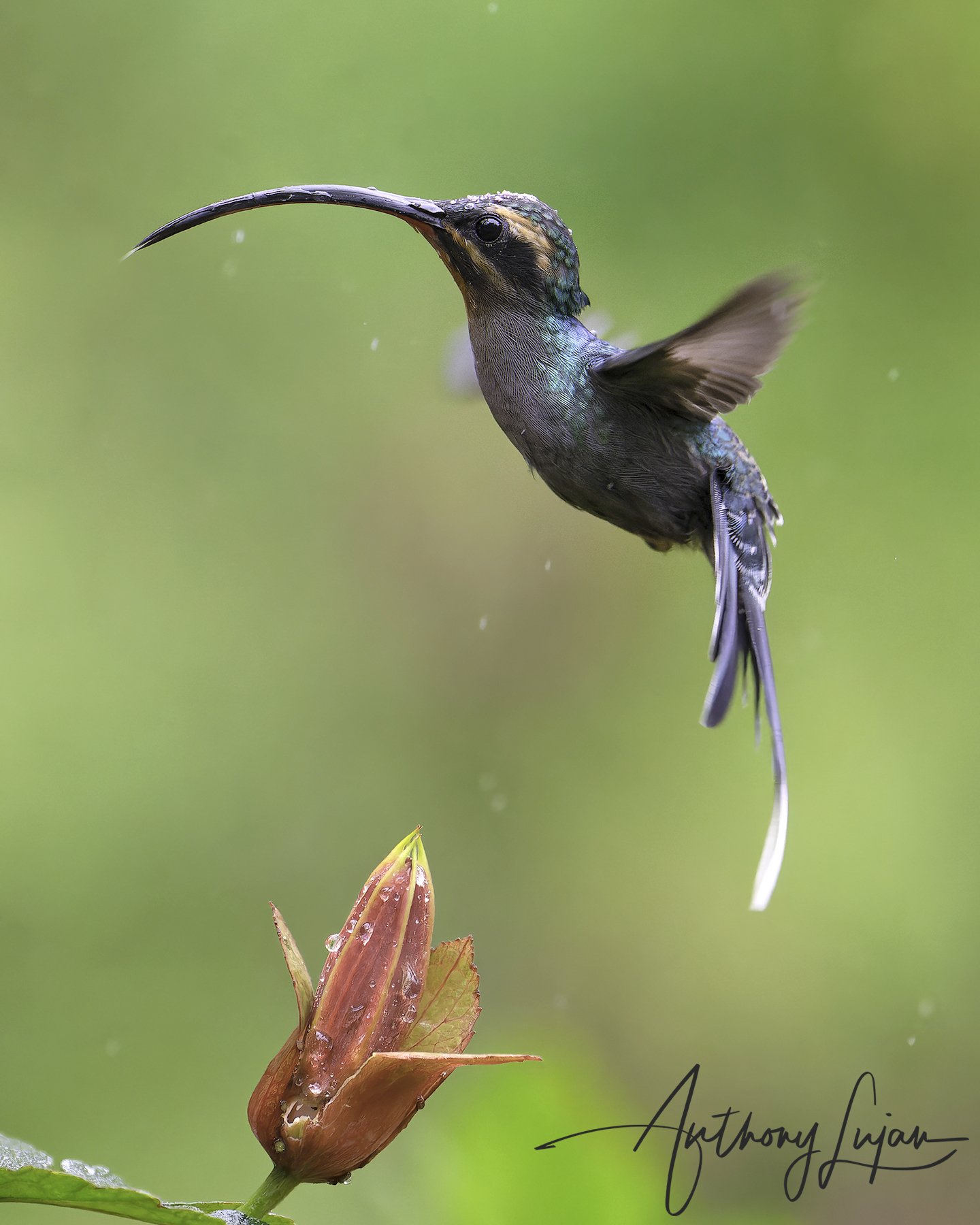
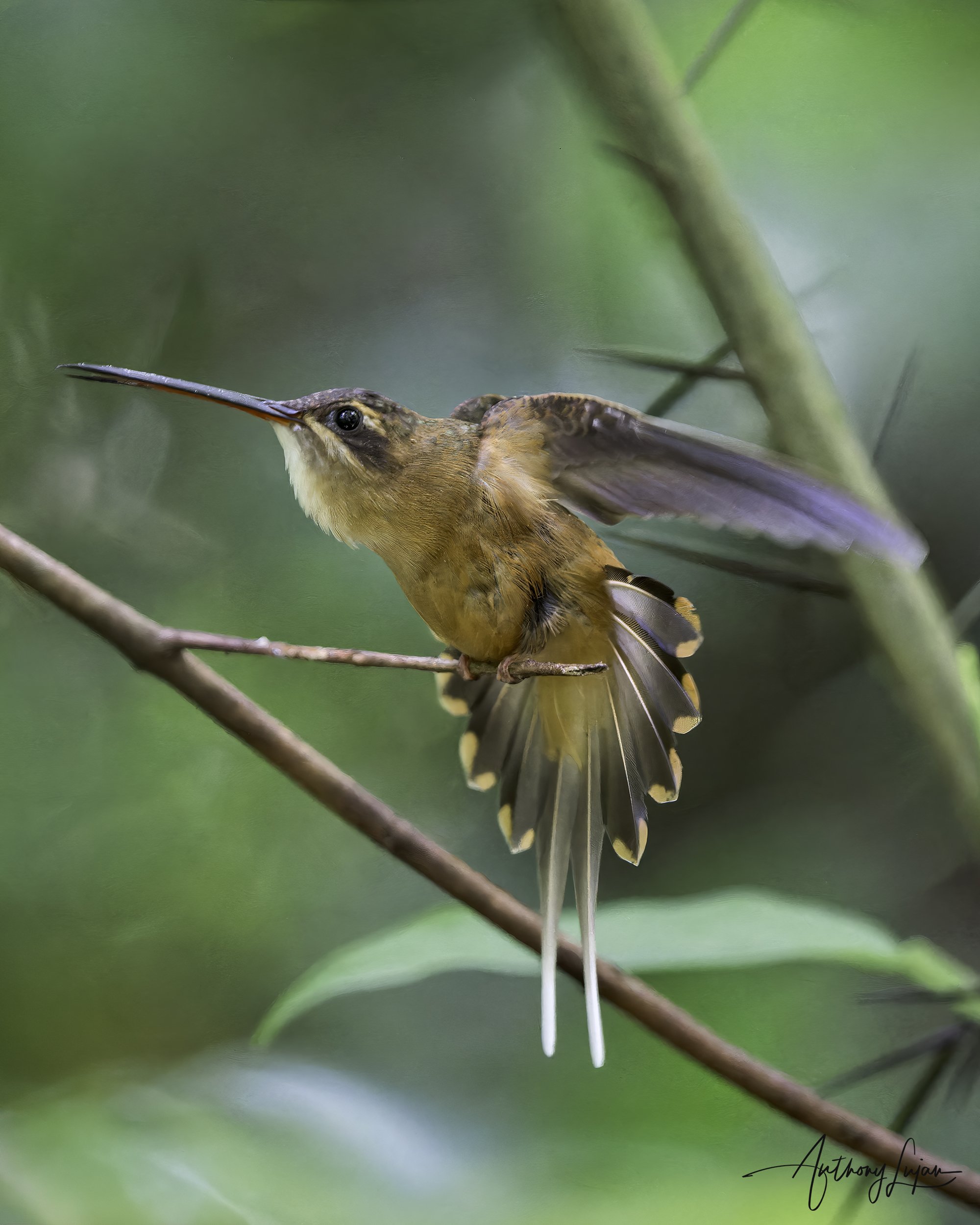
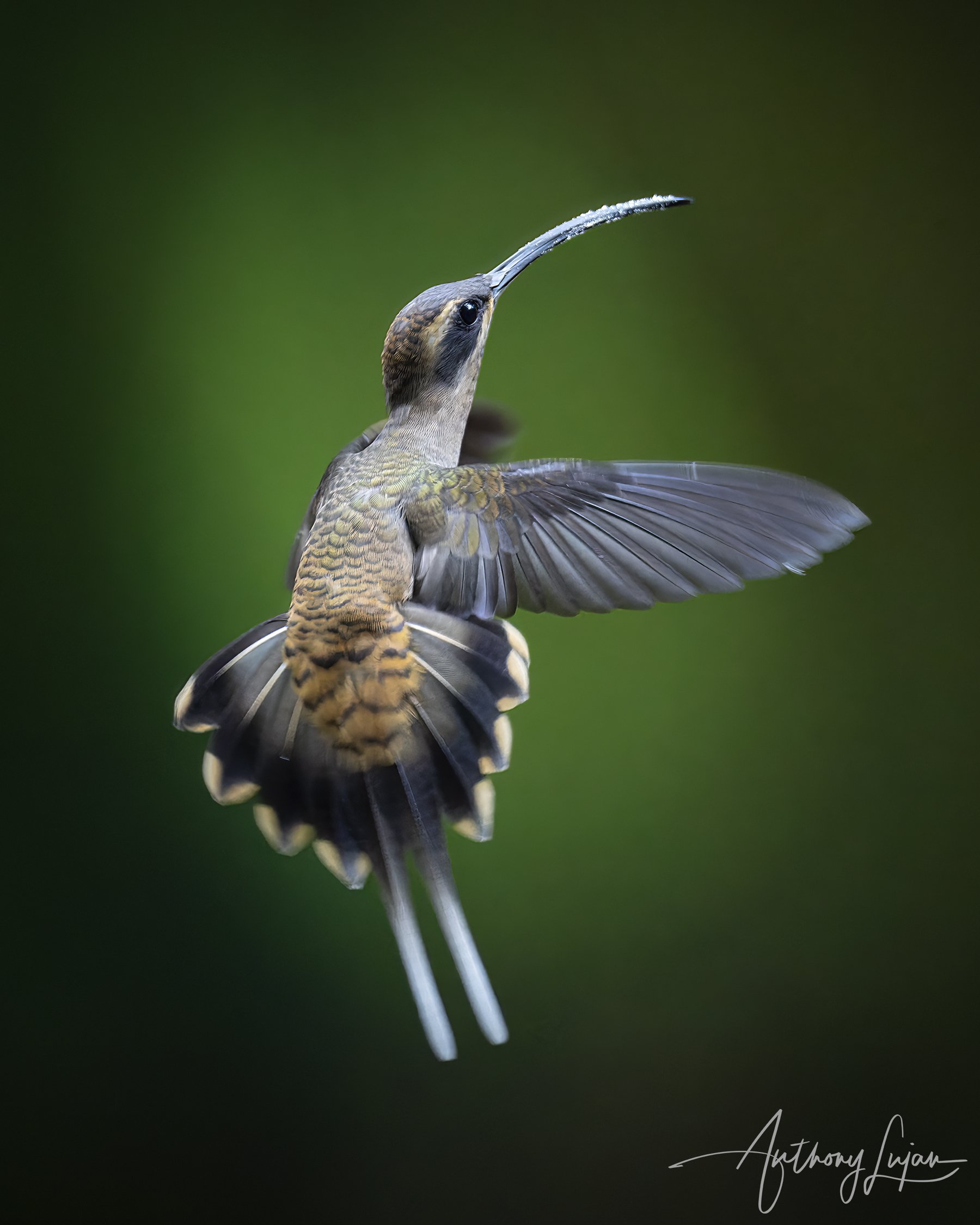
Below is the Gray-chinned Hermit (Phaethornis griseogularis zonura)
Photographed at Refugio del Colibrí Espátula, Amazonas, Peru
This individual belongs to the subspecies zonura, which occurs along the eastern slopes of the Andes in eastern Colombia, Ecuador, northern and eastern Peru, and adjacent western Brazil. It inhabits humid foothill and lowland forest, especially along streams and shady understory between 300 and 1,500 meters elevation.
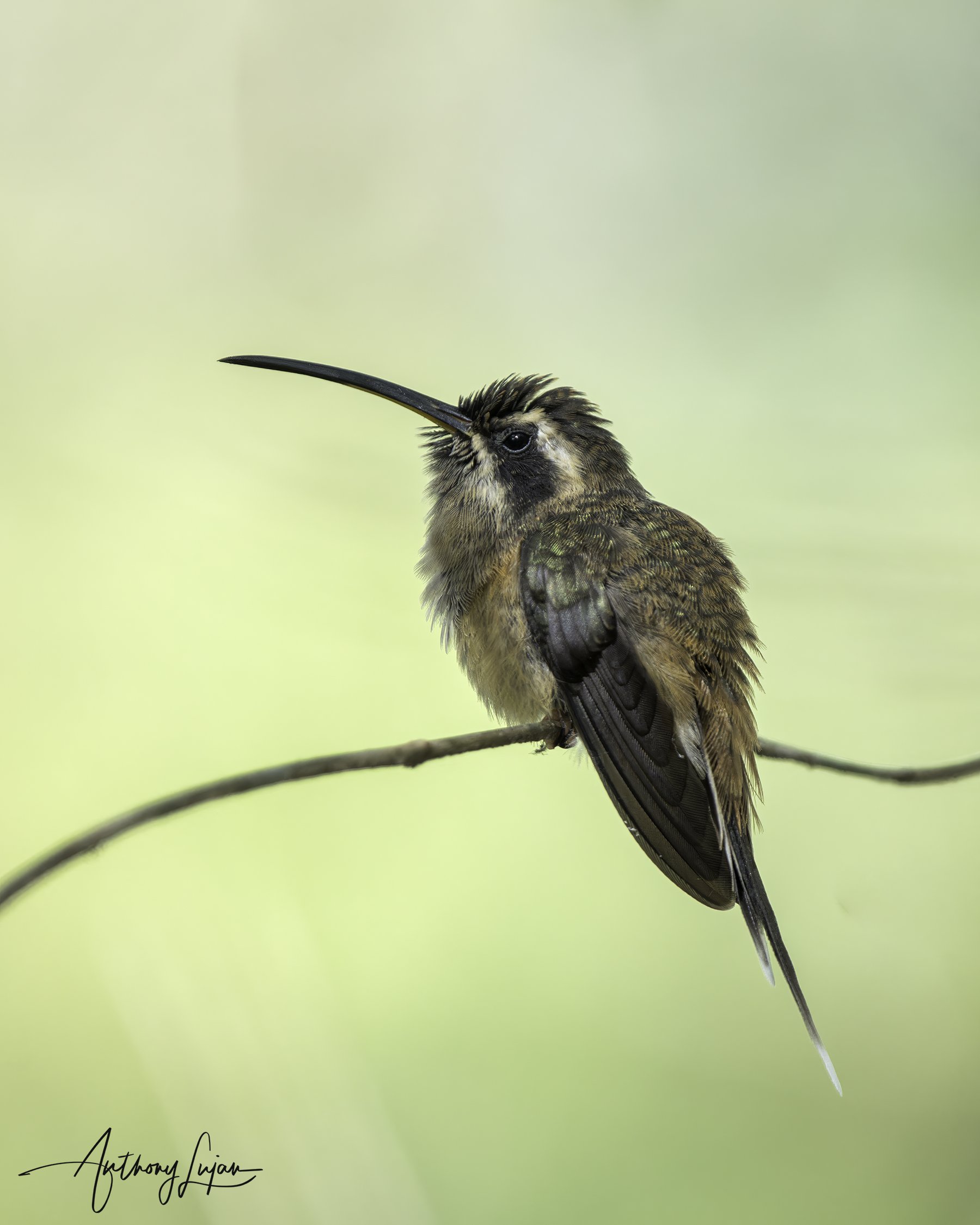
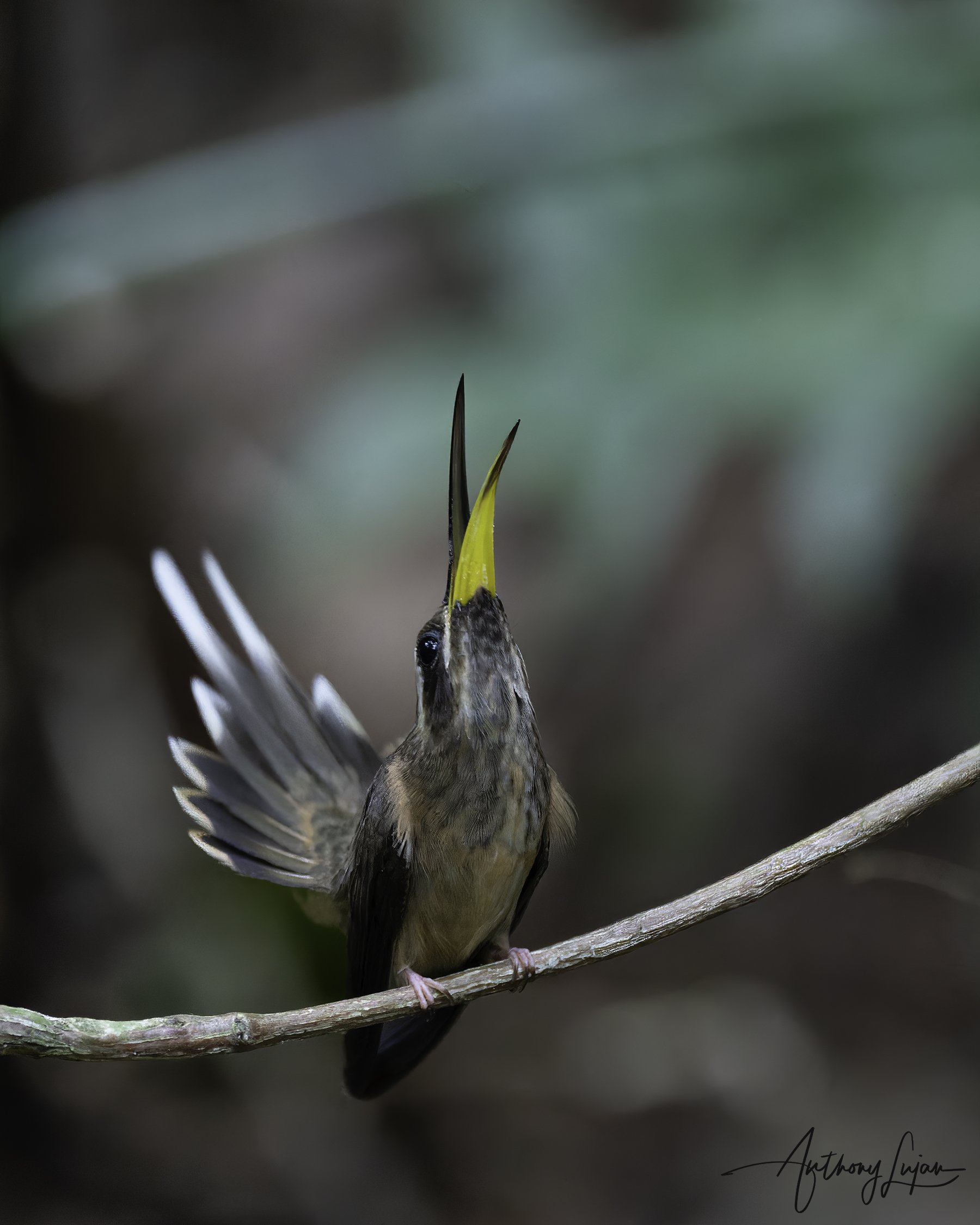
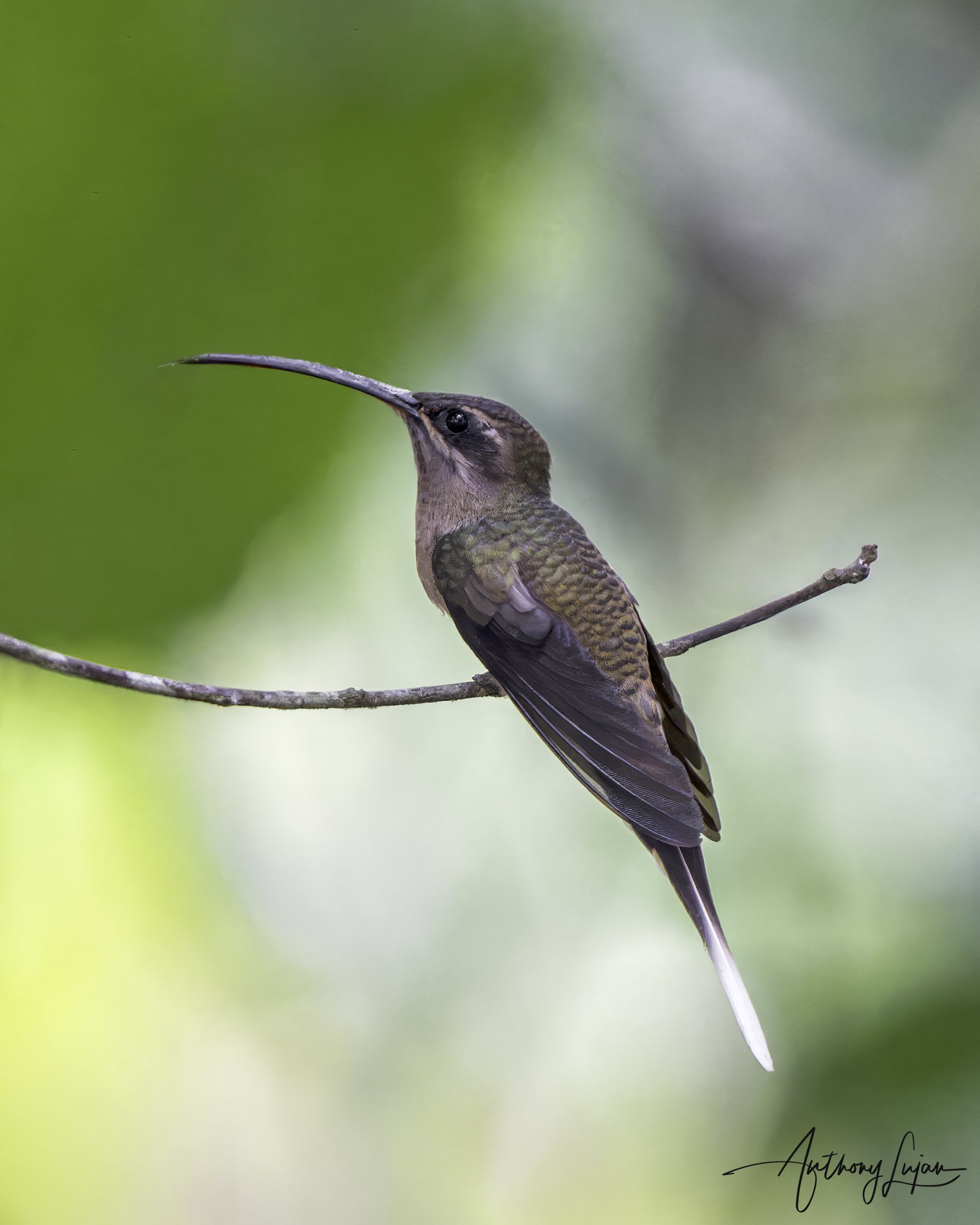
Related species in the Phaethornis genus (27 species total)


Please note: The content provided in this article reflects Anthony’s personal experience and photographic approach. Results can vary depending on light, weather, location, equipment, subject behavior, and field conditions.