
Great-billed Hermit
Scientific name: Phaethornis malaris
The Great-billed Hermit is a large hermit hummingbird of humid lowland and foothill forests across western Amazonia, the Guianas, and coastal eastern Brazil. The number of mature individuals is unknown, the population trend is decreasing, it is not a migrant, and it is currently assessed as Least Concern.
At a Glance
Family: Trochilidae (hummingbirds)
Clade: Phaethornithinae – Hermits
Genus: Phaethornis — 27 species in total
Range: Western Amazonia (Colombia, Ecuador, Peru, Bolivia, Brazil), Guianas, and coastal eastern Brazil (Pernambuco to Espírito Santo)
Habitat: Understory of lowland and foothill rainforest (terra firme, transitional, secondary forest, bamboo thickets, some flooded forests), often along streams and ravines
Elevation: Mostly below 600 m, locally up to about 1,500 m in Colombia and 2,400 m in Bolivia
Length: About 13–17.5 cm (5.1–6.9 in)
Weight: Males about 4.5–10 g; females about 4–8 g
Number of mature individuals: Unknown
Population trend: Decreasing
Movement: Not a migrant
IUCN Red List category: Least Concern
Name Origin
The genus name Phaethornis comes from Phaethon, meaning “shining” or “radiant,” reflecting the iridescence typical of hummingbirds. The species name malaris likely refers to the cheek region (“malar”), highlighting facial patterning. The English name “Great-billed Hermit” describes its relatively large, long bill and its placement among hermit hummingbirds.
Taxonomy
Phaethornis malaris is a hermit hummingbird in the subfamily Phaethornithinae. It is one of 27 recognized species in the genus Phaethornis, which also includes the Gray-chinned Hermit (P. griseogularis), Black-throated Hermit (P. atrimentalis), and many other understory hermits.
Subspecies and Distribution
Six subspecies:
Phaethornis malaris insolitus
Distribution: Eastern Colombia, southern Venezuela, and adjacent northern Brazil (northwestern Amazonas).Phaethornis malaris malaris
Distribution: Suriname and French Guiana south to central-northern Brazil (Amapá).Phaethornis malaris moorei
Distribution: Eastern and southern Colombia, eastern Ecuador, and northeastern Peru (north of the Marañón River).Phaethornis malaris ochraceiventris
Distribution: Northeastern Peru (south of the Marañón River) and western Brazil (south of the Amazon, east to the lower Madeira River).Phaethornis malaris bolivianus
Distribution: Southeastern Peru to central Bolivia (west to Santa Cruz) and western Brazil, south of the Amazon (Madeira River east to the Tapajós River).Phaethornis malaris margarettae
Distribution: Coastal eastern Brazil, from Pernambuco south to Espírito Santo.
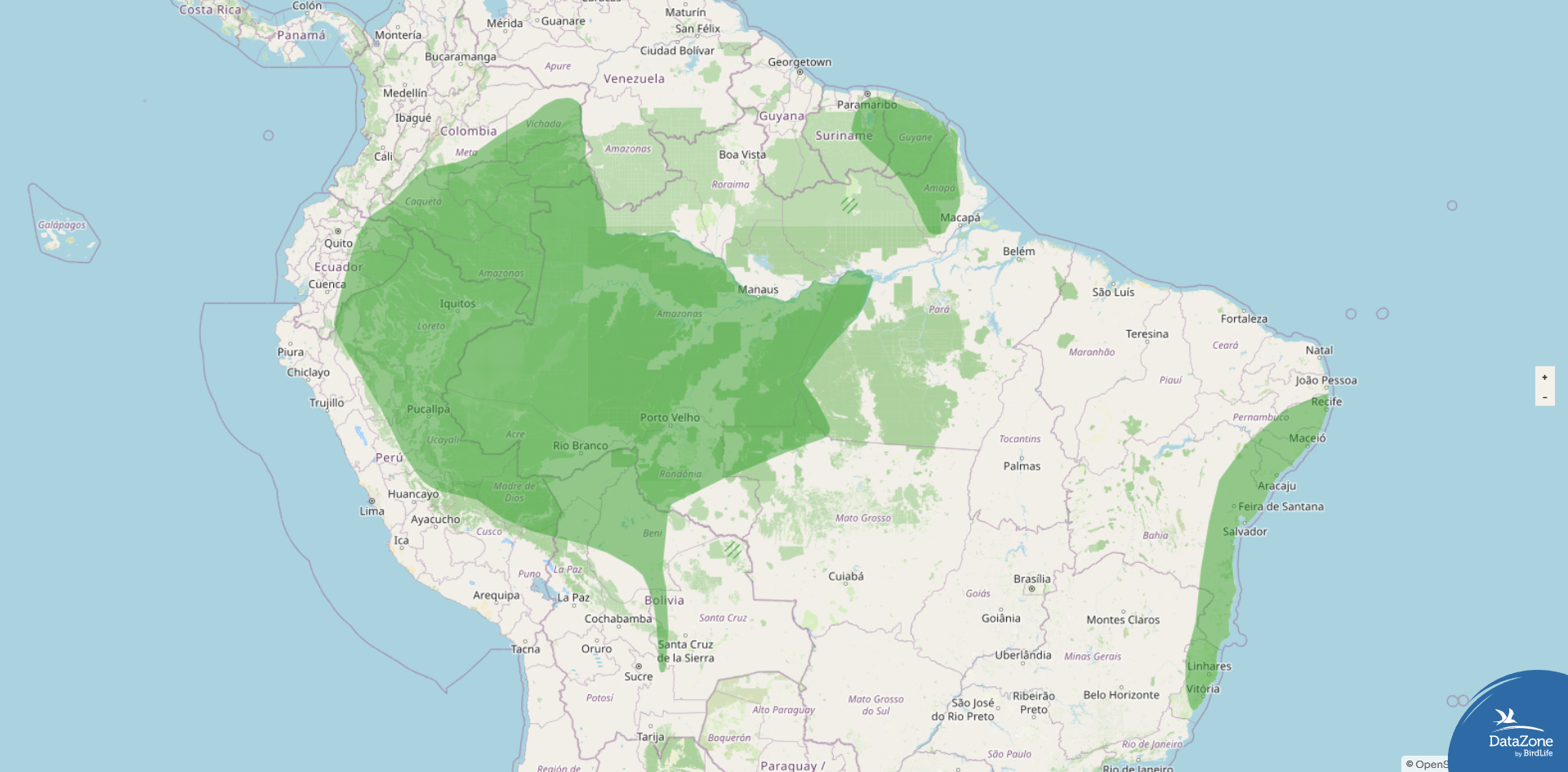
Legend
Green Resident
Species Overview
The Great-billed Hermit is one of the larger hermits, with dull green upperparts, buffy to ochre underparts, and a conspicuous white post‑ocular stripe and moustachial line on a dusky face. Its long, decurved bill, elongated central tail feathers with white tips, and hermit facial pattern make it distinctive. It favors dense understory of lowland and foothill forests, where it moves along traplines between widely spaced nectar sources.
Male Description
Males are large hermits (13–17.5 cm) with dull olive‑green upperparts and buffy, cinnamon, or orange‑ochre underparts depending on subspecies. The face shows a dark mask crossed by a bold white supercilium and moustachial stripe. The bill is long and decurved; females have a slightly shorter but more strongly curved bill. The uppertail coverts often show dark and pale ochre banding, and the long central tail feathers end in elongated white tips, especially prominent in the nominate and larger subspecies. Subspecies differ in underpart coloration; for example, ochraceiventris has bright orange underparts, while bolivianus and margarettae are smaller with darker or paler bellies respectively.
Female Description
Females are similar in plumage to males but slightly smaller, with a shorter and more strongly curved bill. The facial pattern, upperparts, and tail structure mirror those of males, though overall tones may be slightly duller. Juveniles resemble females with fresher plumage and somewhat softer contrasts.
Habitat & Behavior
Great-billed Hermits inhabit the understory of a range of lowland and foothill rainforest types, including terra firme forest, foothill and higher-elevation tropical forest, transitional forest, secondary forest, bamboo thickets, and in some areas seasonally flooded (igapó) forest. They prefer areas with dense understory and abundant tubular flowers, often near streams and ravines.
They are classic hermit trapliners, visiting a circuit of flowers for nectar rather than defending a single patch. Flowers include various Heliconia, Pitcairnia, and other tubular blossoms. They also glean or sally for small arthropods to supplement their diet. Birds are usually solitary and can be surprisingly inconspicuous for their size, often perching quietly between feeding bouts.
Breeding
Breeding seasons vary geographically (for example, mid‑year in parts of western Amazonia and later in the year in the Guianas and eastern Brazil). Like other hermits, the female builds a cone-shaped or small cup nest of plant fibers and spider silk, suspended from the underside of long drooping leaves, palm fronds, or similar supports in shaded forest interior.
The typical clutch is two white eggs. The female alone incubates the eggs and raises the chicks. Incubation lasts roughly two weeks, and nestlings fledge about three weeks later, broadly in line with other large Phaethornis hermits.
Movement
The Great-billed Hermit is considered non‑migratory. It remains within its broad Amazonian and Atlantic Forest ranges year‑round, though individuals may move locally between lowland and foothill zones or between different forest types as flowering patterns and water levels change. These shifts are local, not long-distance migrations.
Population
The total number of mature individuals is unknown. The species is generally widespread and can be fairly common in suitable lowland and foothill forest across much of its range, though some subspecies—particularly margarettae in coastal eastern Brazil—are more localized and potentially more vulnerable. Overall, the population is thought to be decreasing due to ongoing deforestation and habitat degradation.

Conservation
The Great-billed Hermit is currently assessed as Least Concern at the species level, owing to its large geographic range across multiple South American countries. However, deforestation, logging, and conversion of lowland and foothill forest to agriculture or pasture continue to reduce and fragment its habitat. Some subspecies with restricted ranges in heavily altered regions, such as margarettae in eastern Brazil, may face greater localized risk. Protecting extensive tracts of Amazonian and Atlantic Forest, as well as riparian and foothill habitats, is important for long-term conservation.
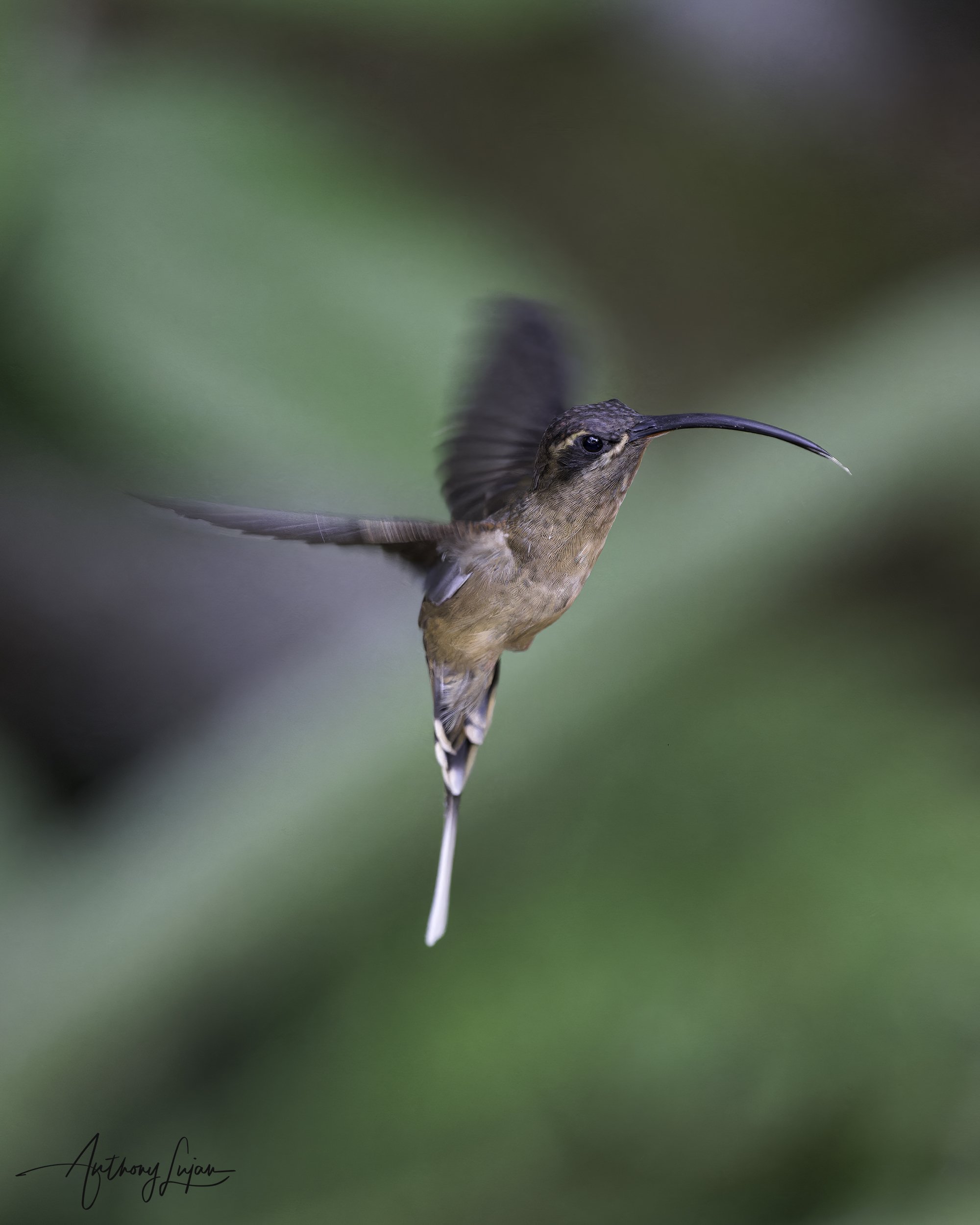
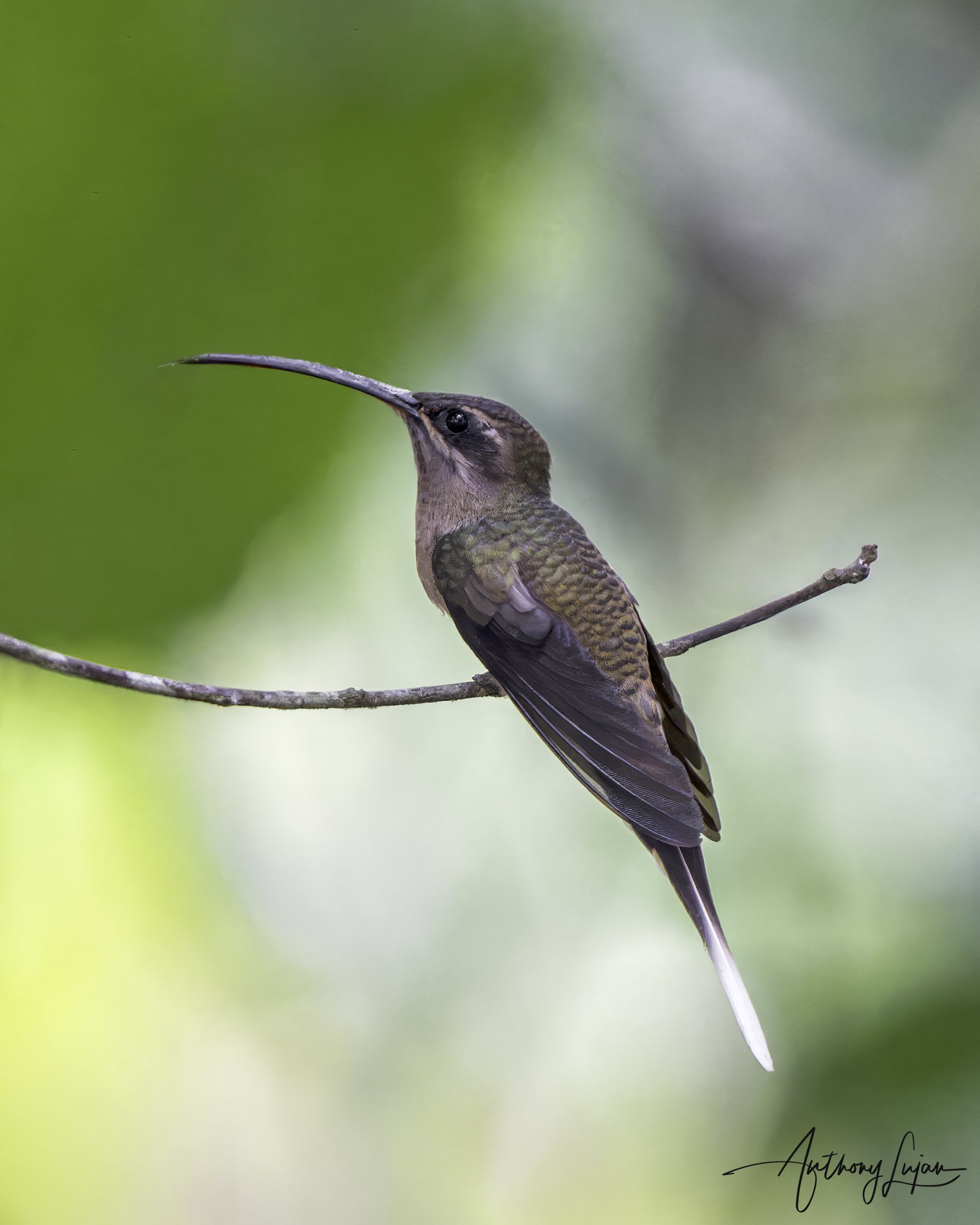
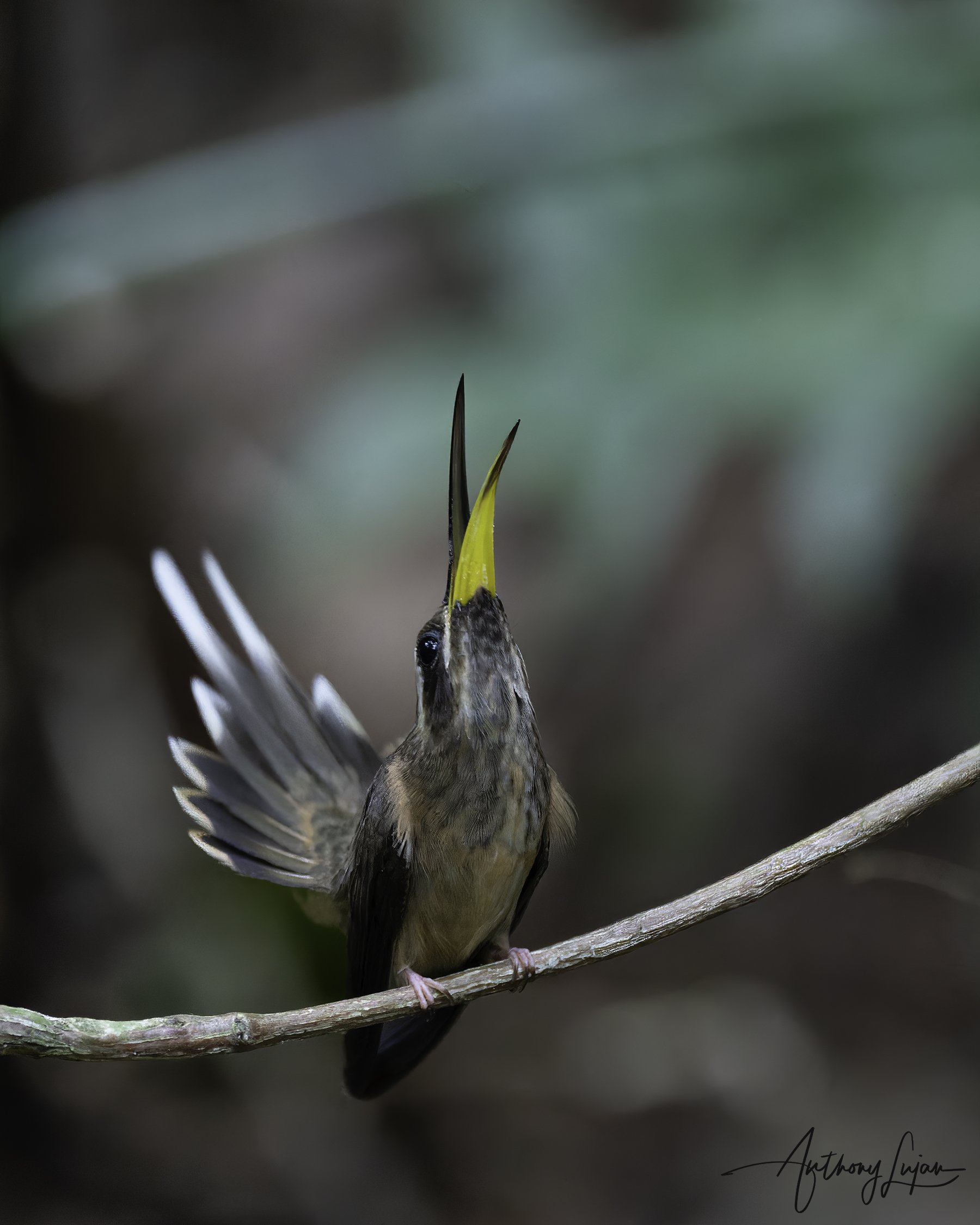
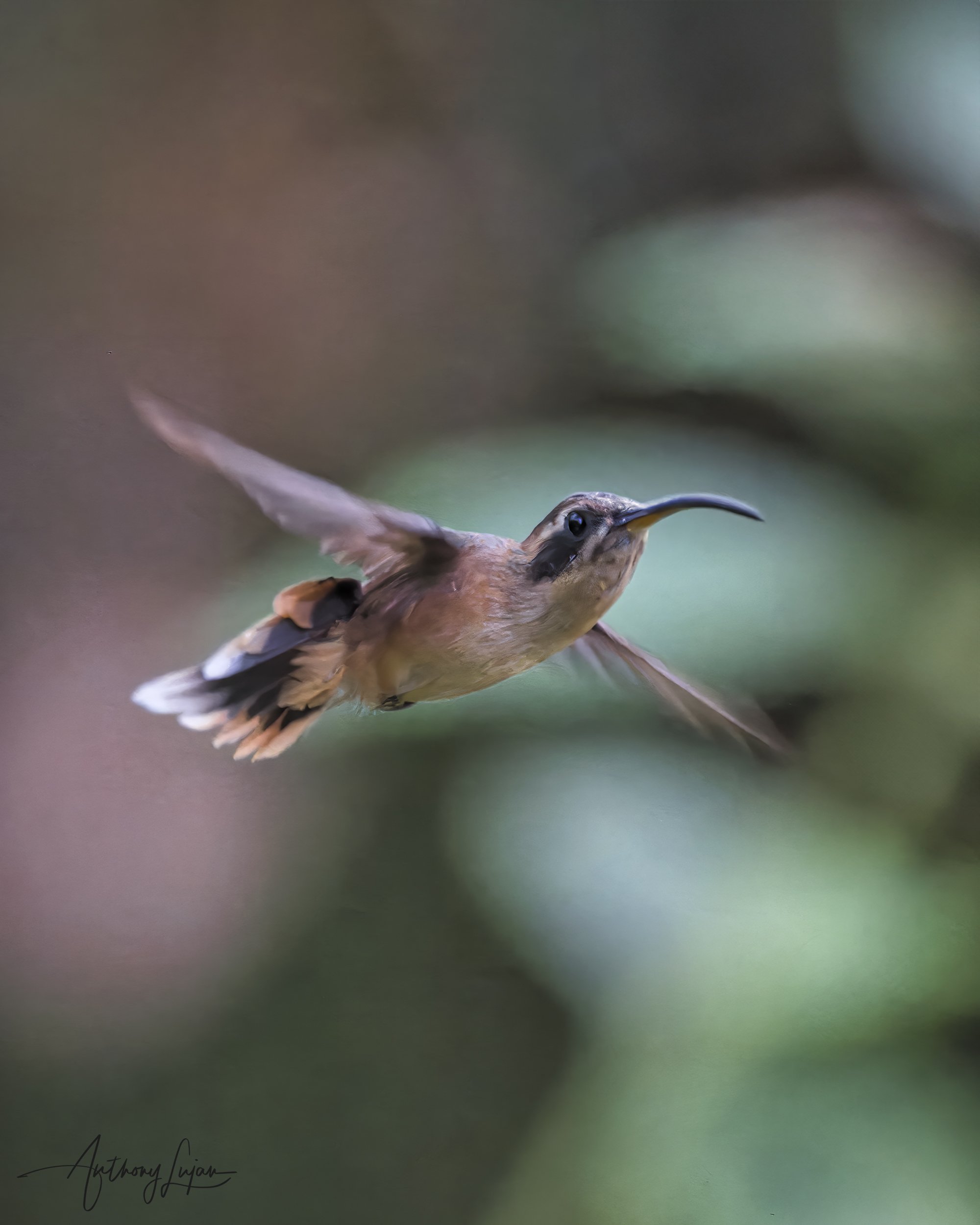
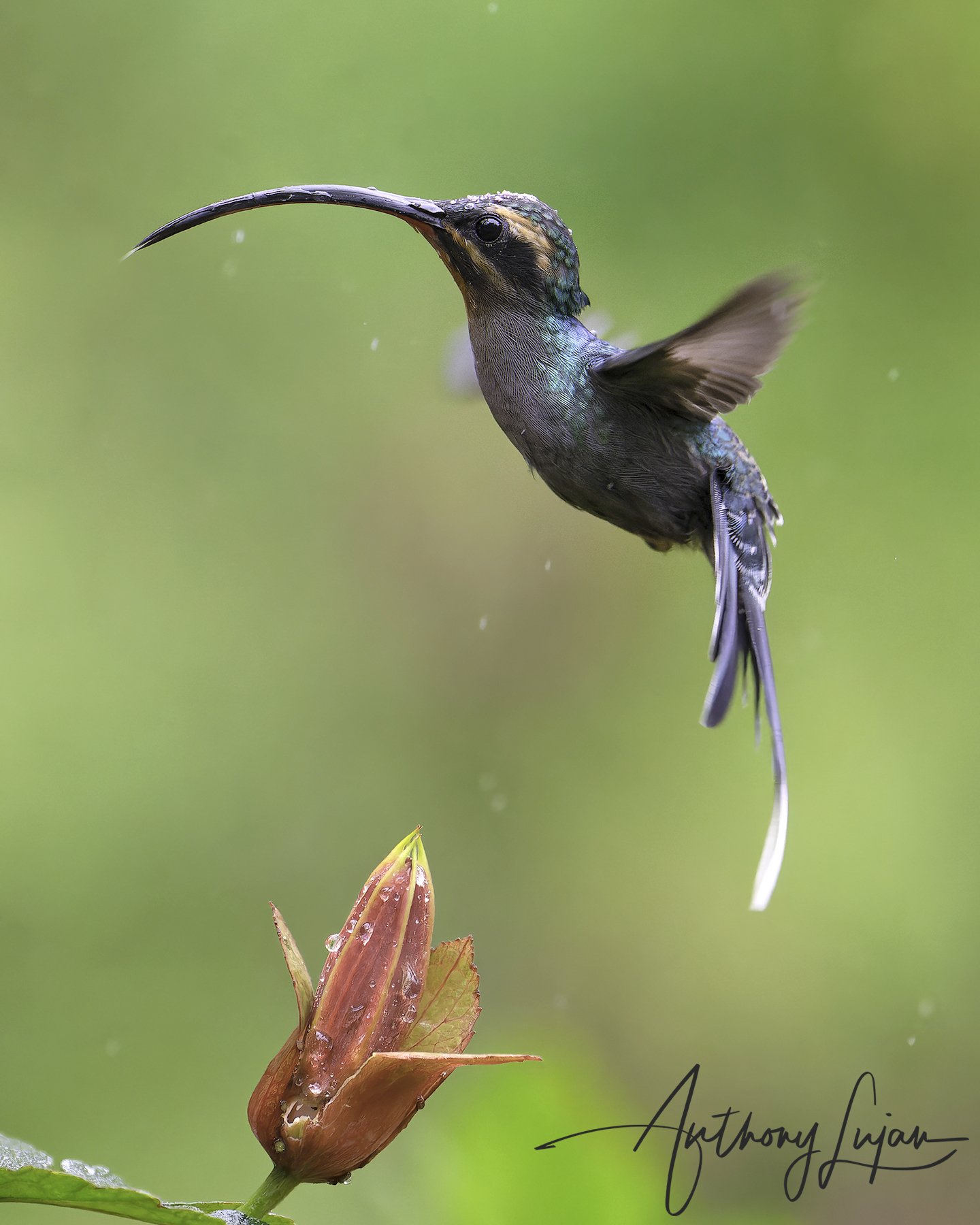
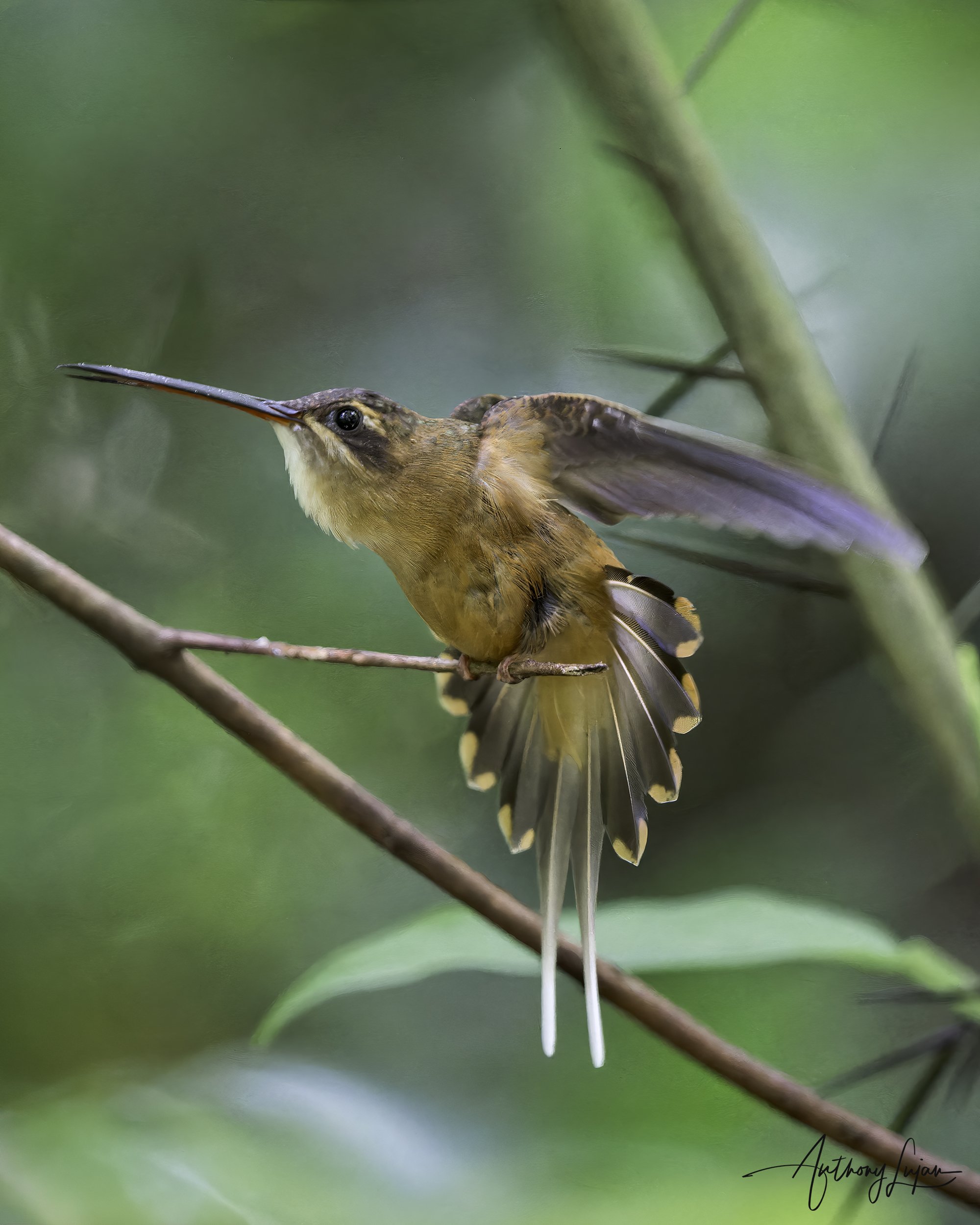
Below is the Great-billed Hermit (Phaethornis malaris ochraceiventris)
Photographed at Waqanki / Quebrada Mishquiyaquillo, San Martín, Peru
This individual belongs to the subspecies ochraceiventris, which occurs along the eastern slope of the Andes in eastern Ecuador and northeastern Peru (Loreto and San Martín). It inhabits humid lowland and foothill forest, forest edge, and riverine woodland between 200 and 1,200 meters elevation.
The ochraceiventris form is recognized by its slightly paler underparts and warmer, more ochraceous belly compared to bolivianus, with similar structure and vocalizations. The species is unmistakable in the field for its large size, heavily decurved bill, and loud, buzzing calls from deep forest leks.
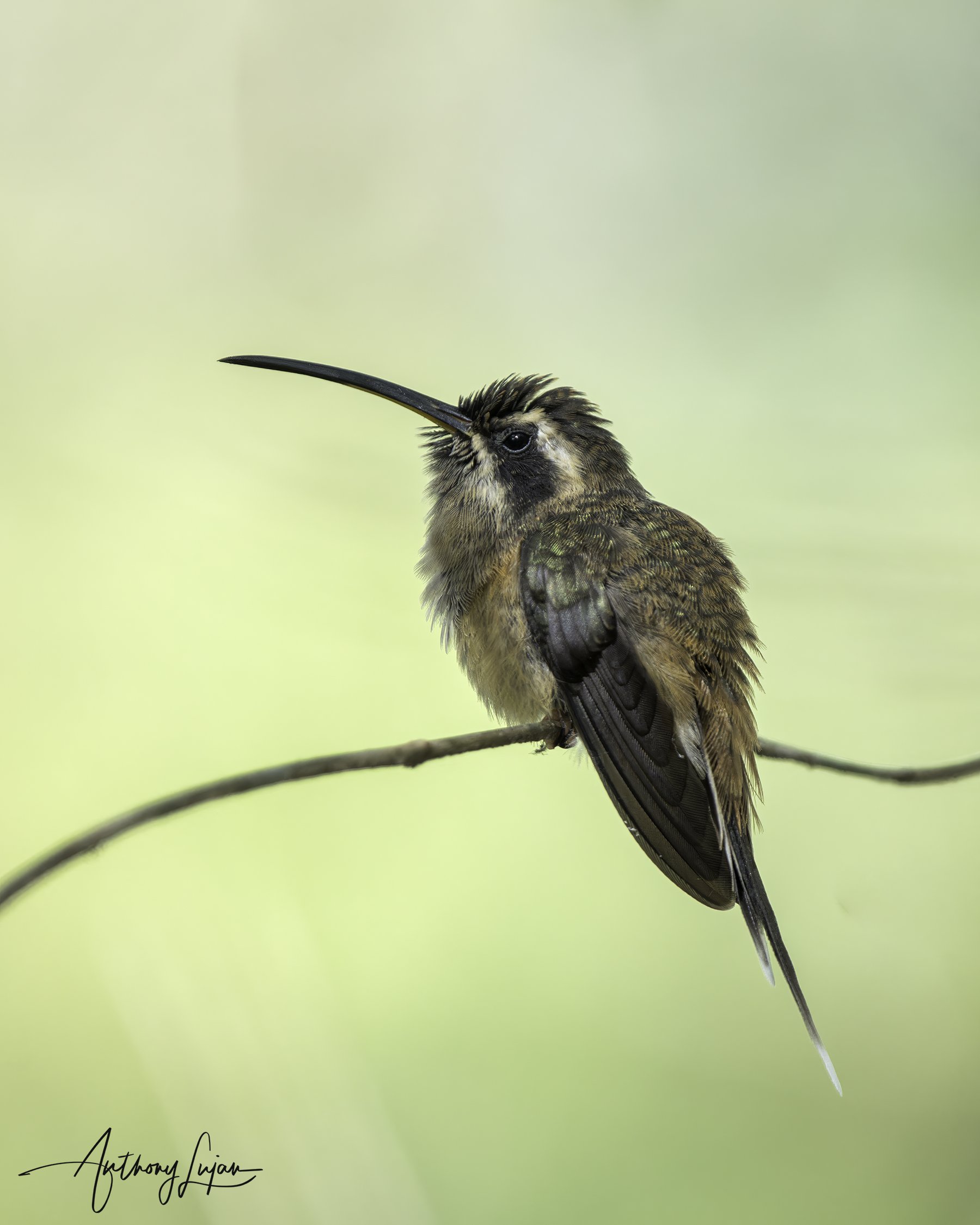
Related species in the Phaethornis genus (27 species total)




Please note: The content provided in this article reflects Anthony’s personal experience and photographic approach. Results can vary depending on light, weather, location, equipment, subject behavior, and field conditions.