
Great Sapphirewing
Scientific name: Pterophanes cyanopterus
The Great Sapphirewing is a huge, brilliant hummingbird of high Andean montane forests, elfin forest, and páramo edges from Colombia south through Ecuador and Peru to central Bolivia. It is treated as its own full species (not a subspecies), is currently listed as Least Concern, and remains locally common in suitable high-elevation habitats.
At a Glance
Family: Trochilidae (hummingbirds)
Clade: Heliantheini – Brilliants
Genus: Pterophanes — 1 species in total
Range: Andes of Colombia, Ecuador, Peru, and north-central Bolivia
Habitat: Humid montane forest, elfin forest, and shrubby páramo edges with scattered trees
Elevation: Mostly from about 2,600 to 3,800 m (8,500–12,500 ft), locally to around 4,000 m
Length: About 17–19 cm (6.7–7.5 in)
Weight: About 9.5–11 g (0.33–0.39 oz)
Number of mature individuals: Unknown
Population trend: Believed stable
Movement: Mostly sedentary, with some local downslope movements in the non‑breeding season
IUCN Red List category: Least Concern
Name Origin
The English name “Great Sapphirewing” reflects both this species’ very large size for a hummingbird and the male’s intense sapphire‑blue wings. The genus name Pterophanes comes from Greek roots meaning “wing” and “appearing,” again emphasizing the striking, shining wings that stand out in flight. The species name cyanopterus means “blue‑winged,” a direct reference to the shimmering blue primaries and secondaries.
Taxonomy & Distribution
Pterophanes cyanopterus is placed in the “brilliants,” tribe Heliantheini, within the hummingbird family Trochilidae. It is the only member of its genus, which has occasionally been suggested for merger with Coeligena, but genetic work supports keeping Pterophanes separate. The Great Sapphirewing occurs along the Andes from northern Colombia south through Ecuador and Peru to central Bolivia, where it inhabits upper montane forest, elfin forest, and shrubby páramo transitions on both slopes depending on locality.
Subspecies and Distribution
Three subspecies:
Pterophanes cyanopterus cyanopterus
Distribution: Eastern Andes of northern Colombia, including Norte de Santander and Cundinamarca.Pterophanes cyanopterus caeruleus
Distribution: Central and western Andes of Colombia, from Tolima south to Nariño.Pterophanes cyanopterus peruvianus
Distribution: Western Andes of Colombia, Ecuador, Peru, and north-central Bolivia (Cochabamba).
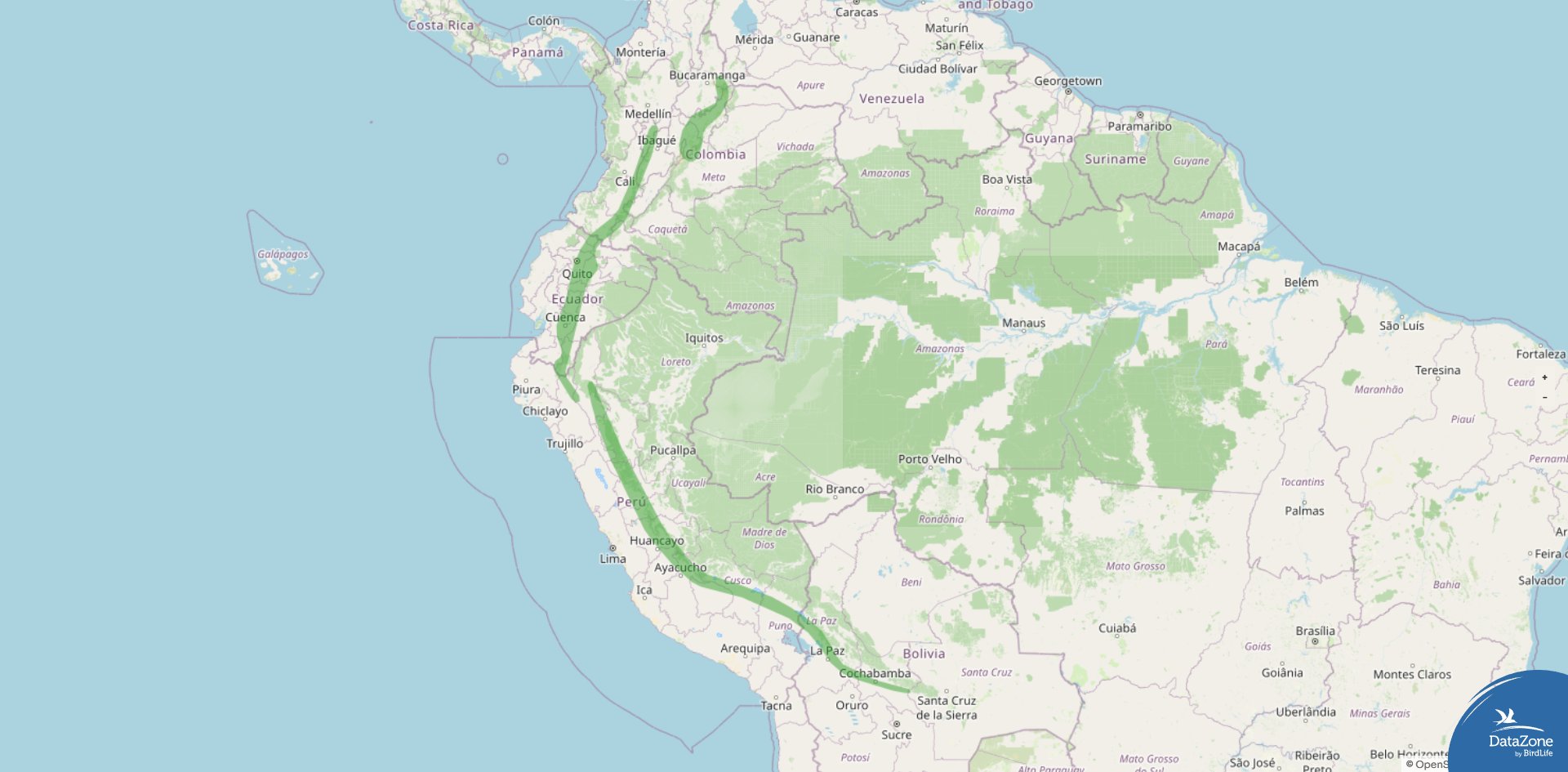
Legend
Green Resident
Species Overview
The Great Sapphirewing is one of the largest hummingbirds on Earth, second only to the giant hummingbird and the big Topaza jacobins in overall size. Males are instantly recognizable by their deep emerald‑green body, huge violet‑blue wings, and long, slightly wedge‑shaped dark tail. This species patrols flower‑rich edges and shrub zones at treeline, often making long, looping flights that show off its broad, flashing blue wings as it commutes between patches of flowers.
Male Description
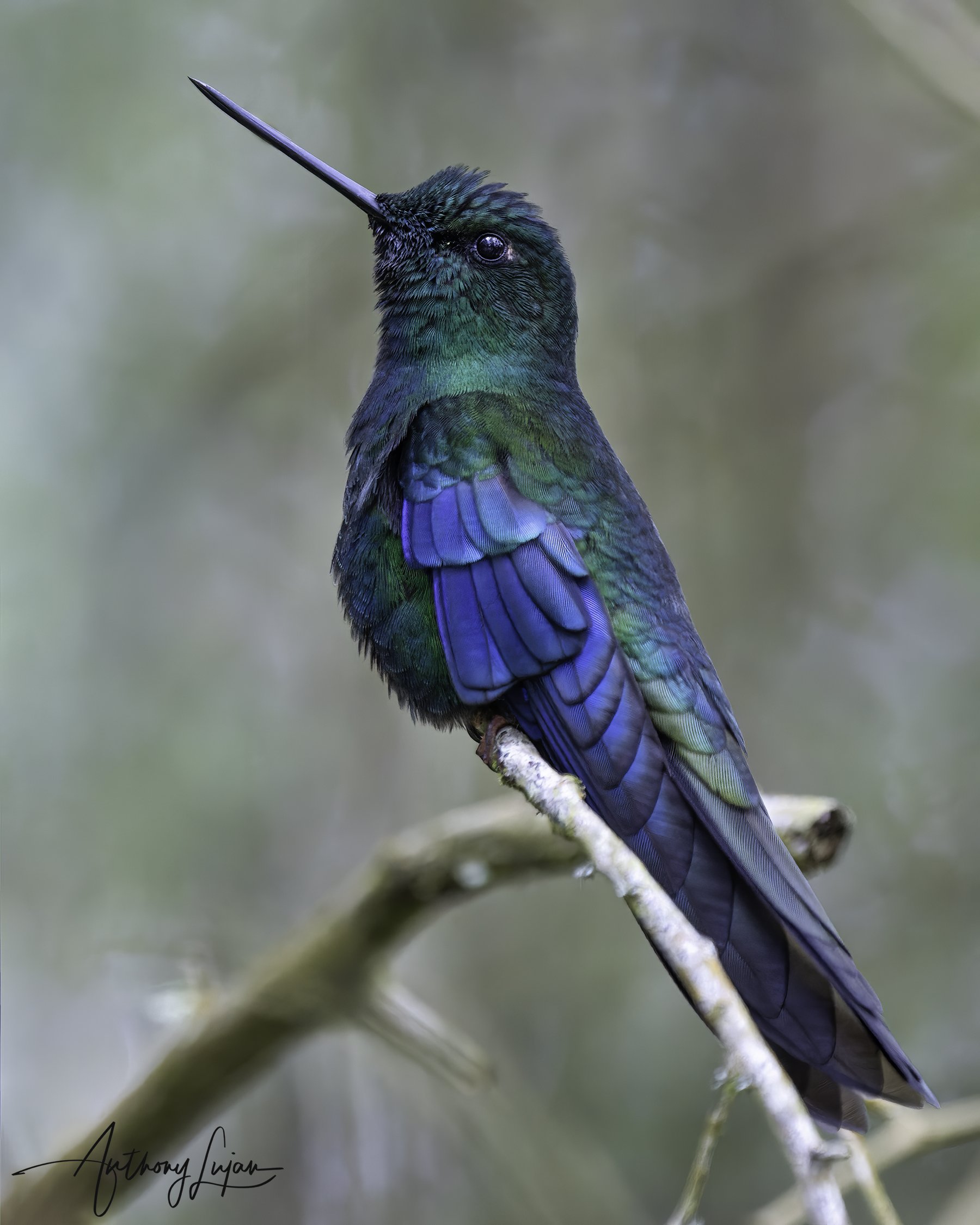
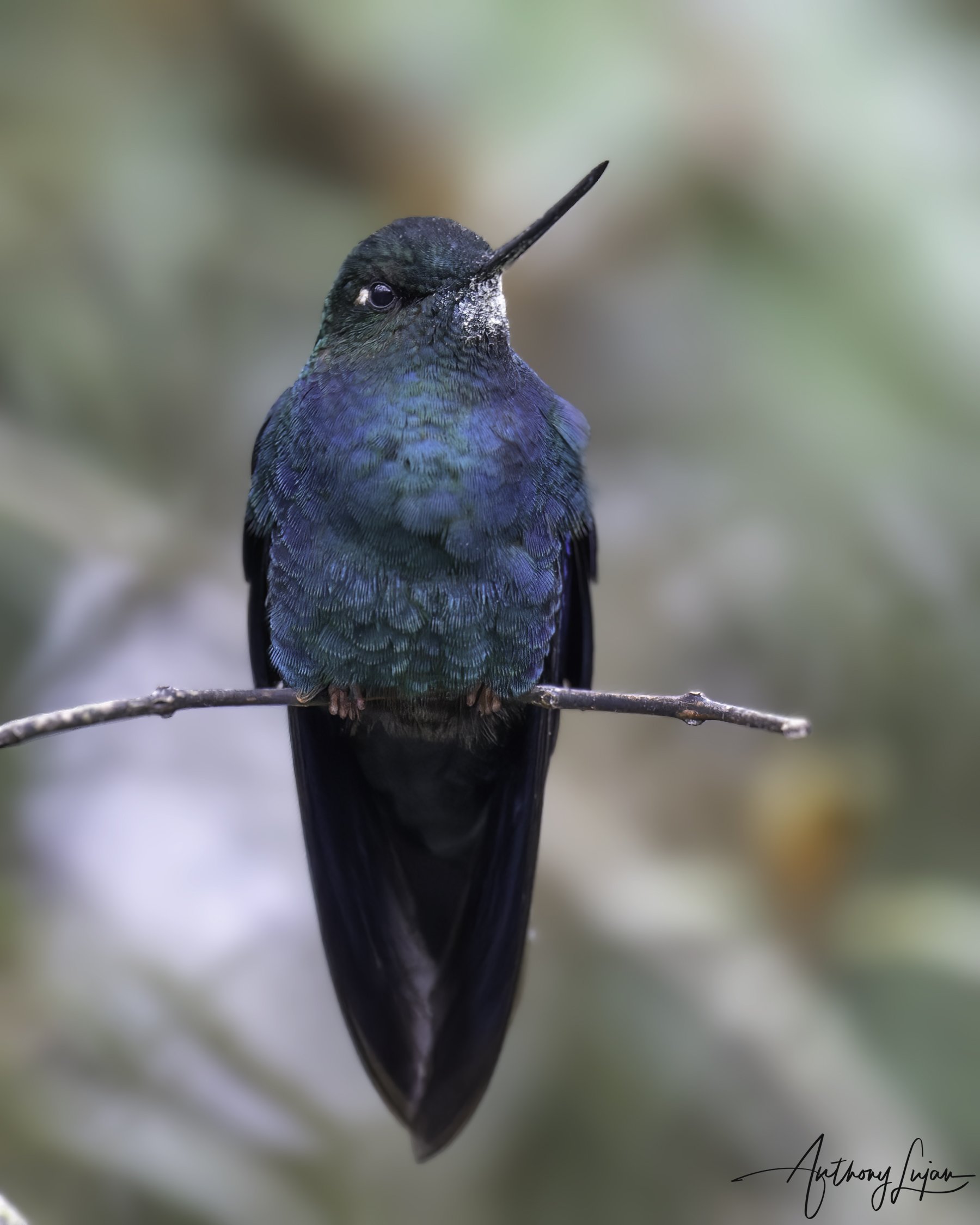
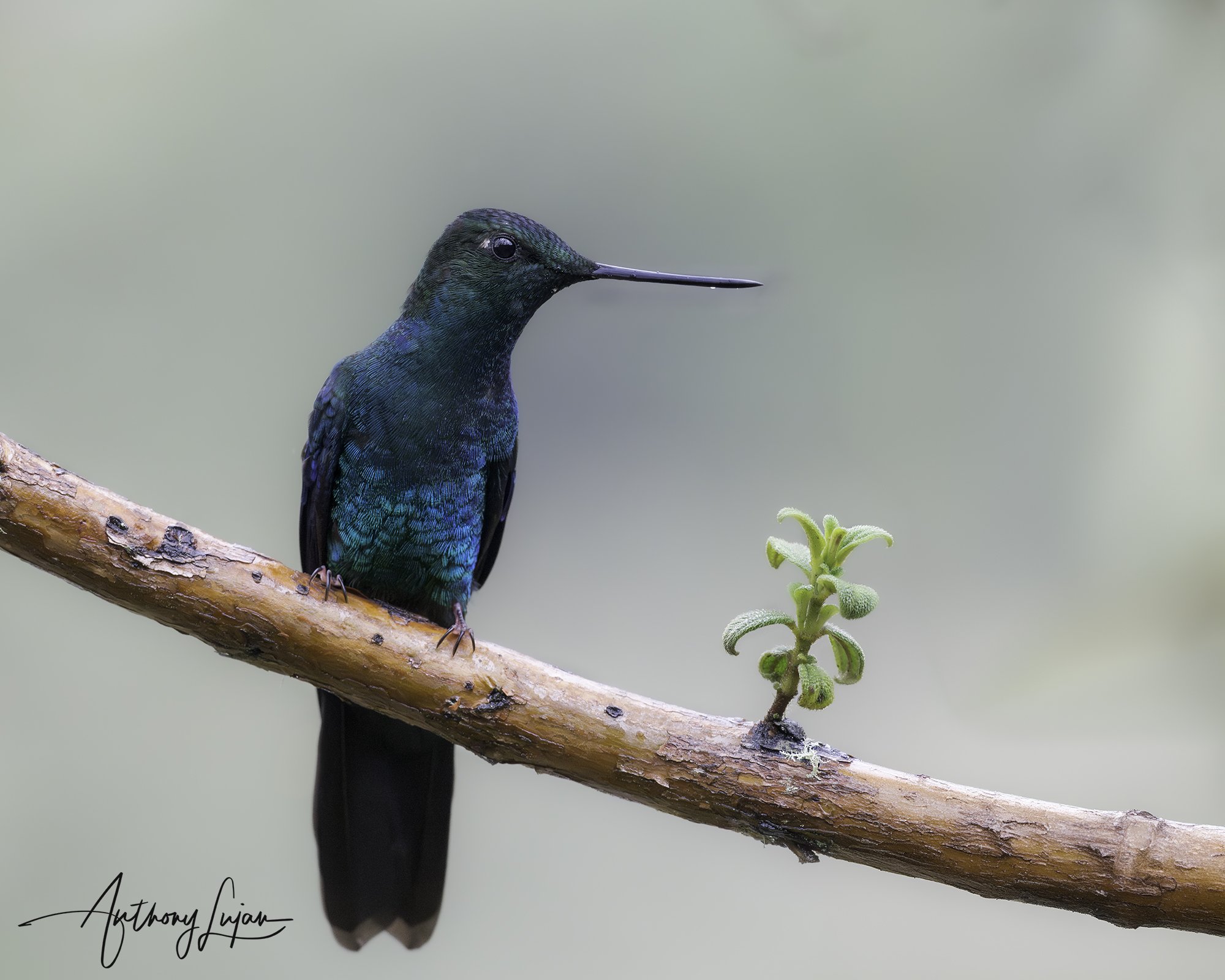
Adult males have dark, shining blue‑green upperparts and head, with a small white spot behind the eye. The wings are expansive and mostly bright sapphire‑blue, creating the “sapphirewing” effect in strong light, while the tail is greenish‑black and moderately long. The underparts are blue‑green to bluish, usually slightly bluer than the upperparts, and the bill is straight, fairly long, and dark. Overall, males give a powerful, bulky impression for a hummingbird, with a long silhouette, broad wings, and slow but strong wingbeats.
Female Description
Females are mostly dark metallic green above with a dusky gray crown and the same small white post‑ocular spot as males. Only the wing coverts are blue; the rest of the wing is dusky rather than fully sapphire‑blue. The tail is greenish‑black with much white on the outer tail feathers, which is conspicuous when the tail is fanned. The underparts are cinnamon to rufous, with some green mottling along the sides and flanks; cinnamon is strongest on the belly and lower breast. Females look distinctly warmer below and less brilliantly blue‑winged than males. Subspecies differ subtly: caeruleus tends to have more extensive and darker blue in both sexes; peruvianus males are greener above and below with a buffier belly, and females have paler cinnamon underparts and more white in the tail.
Habitat & Behavior
Great Sapphirewings inhabit the upper elevation belt of humid Andean forest, especially the edges of cloud forest and elfin forest, as well as shrubby slopes with scattered trees and the upper transition into páramo. They typically use elevations between about 2,600 and 3,800 m, occasionally higher, where cool, wet conditions and abundant epiphytes are typical. Birds often forage along forest edges, in clearings, and among flowering shrubs and small trees, frequently perching conspicuously between feeding bouts.
This species feeds on nectar from a wide variety of high‑elevation plants, including Fuchsia, Bomarea, Siphocampylus, mistletoes such as Tristerix, and rosette plants like Puya in páramo. It usually feeds by hovering at the outer parts of flowers or by perching and stretching to reach blossoms, making full use of its long bill and powerful wings. Great Sapphirewings commonly defend rich flower patches, especially males, but they also use trap‑lining, visiting a circuit of widely spaced feeding sites. Small arthropods are taken by gleaning from foliage or hawking in short sorties to supplement the nectar diet.
Breeding
The breeding season is not fully defined across the range but includes at least the late dry to early wet season in many areas; records suggest nesting from roughly February through May in parts of the Andes. The only well‑described nest was an unusual three‑compartment structure built mainly of moss and lined with soft plant fibers, attached to a vertical substrate. As with other hummingbirds, the female alone constructs the nest, incubates two white eggs, and raises the young. Incubation lasts around two weeks, and the nestling period is about three weeks, though precise timing varies with local climate and food availability.
Movement
Great Sapphirewings are mostly sedentary within their high Andean range. In some regions they move locally to slightly lower elevations during colder or drier periods, shifting from páramo edges down into upper montane forest when conditions at the highest sites become harsher or when flower availability changes. These movements are altitudinal and regional rather than long‑distance migrations, and birds remain within the same general Andean slopes and cordilleras year‑round.
Population
The total number of mature individuals is unknown, but the Great Sapphirewing has a fairly large, continuous distribution along the Andes. It is considered rare in some parts of its range and locally common in others, depending on local habitat quality and flower abundance. Overall, the population is believed to be stable, with no evidence of rapid declines, though localized reductions may occur where montane forests are heavily cleared or fragmented.

Conservation
The Great Sapphirewing is assessed as Least Concern, reflecting its broad Andean range and apparent population stability. Nevertheless, it is sensitive to loss and fragmentation of high montane forest, particularly where forest is replaced by intensive agriculture, cattle pasture, or heavy infrastructure. Its tolerance of forest edges and some secondary growth means it is less vulnerable than more interior‑forest specialists, but continued protection of cloud forest, elfin forest, and páramo corridors is important for maintaining healthy populations. The species occurs in several major protected areas in Colombia, Ecuador, Peru, and Bolivia, including national parks and reserves that safeguard large tracts of high‑elevation forest and shrublands.
Below is the Great Sapphirewing (Pterophanes cyanopterus cyanopterus)
Photographed at Reserva Bosque Guajira and Observatorio de Colibríes, Cundinamarca, Colombia
This individual belongs to the subspecies cyanopterus, which occurs along the Eastern Andes of Colombia and north through Venezuela. It inhabits humid montane and elfin forest between 2 400 and 3 800 meters.
Below is the Great Sapphirewing (Pterophanes cyanopterus caeruleus)
Photographed at Hotel Termales del Ruíz, Caldas, Colombia
This individual belongs to the subspecies caeruleus, found in the Central and Western Andes of Colombia from Tolima south to Nariño. It favors high-elevation forest edge and shrub zones between 2 800 and 3 800 meters.
Checkout Anthony’s playlist of this species! Click the top right dropdown to see all the videos.
No related species in the Pterophanes genus (1 species in total):
Please note: The content provided in this article reflects Anthony’s personal experience and photographic approach. Results can vary depending on light, weather, location, equipment, subject behavior, and field conditions.