Green-bellied Hummingbird
Scientific name: Saucerottia viridigaster
The Green-bellied Hummingbird is an Andean “emerald” hummingbird of Colombia and Venezuela, where it inhabits semi‑open Andean foothills and lower montane slopes on the eastern side of the Eastern Andes. Its rich metallic green underparts and bronzy tail make it a distinctive member of the Saucerottia complex in northern South America.
At a Glance
Family: Trochilidae (hummingbirds)
Clade: Trochilini – Emeralds
Genus group: Saucerottia — emerald hummingbirds of Mexico, Central America, and northern South America.
Range: Eastern slope of Colombia’s Eastern Andes and adjacent foothills, and the Andes of western Venezuela.
Habitat: Semi‑open to open subtropical landscapes including humid and dry montane forest edge, second growth, scrubby slopes, coffee plantations, and river‑edge woodland.
Elevation: Mostly between about 400 and 1,700–2,000 m (1,300–6,600 ft).
Length: about 9–10 cm (3.5–3.9 in).
Weight: about 4.0–4.5 g (0.14–0.16 oz).
Number of mature individuals: not quantified.
Population trend: Decreasing.
Status: Least Concern (IUCN).
Name Origin
The genus name Saucerottia honors Antoine Claudius Saucerotte, an 18th‑century French physician and naturalist who studied hummingbirds. The species name viridigaster combines Latin viridis (“green”) and gaster (“belly”), meaning “green‑bellied,” referring to the bird’s rich green underparts. The English name “Green-bellied Hummingbird” is a direct translation of this Latin epithet.
Subspecies and Distribution
Two subspecies are usually recognized.
Saucerottia viridigaster viridigaster
Distribution: Found along the eastern slope of the Eastern Andes of Colombia, in departments such as Boyacá, Arauca, Casanare, Cundinamarca, and Meta, southward as far as the Sierra de la Macarena in western Meta. It inhabits dry to humid montane forest edge, coffee plantations, shrubby slopes, and secondary woodland, typically between about 600 and 2,200 m.
Saucerottia viridigaster iodura
Distribution: Occurs in the Andes of western Venezuela—especially southwestern Barinas, southern Mérida, and Táchira—and extends into extreme northeastern Santander, Colombia. It uses similar semi‑open Andean foothill and lower montane habitats, including forest edges, river islands, scrub, and low secondary forest.
Together, these subspecies form a discontinuous band along the eastern Andean foothills and lower slopes from north‑central Colombia into western Venezuela.
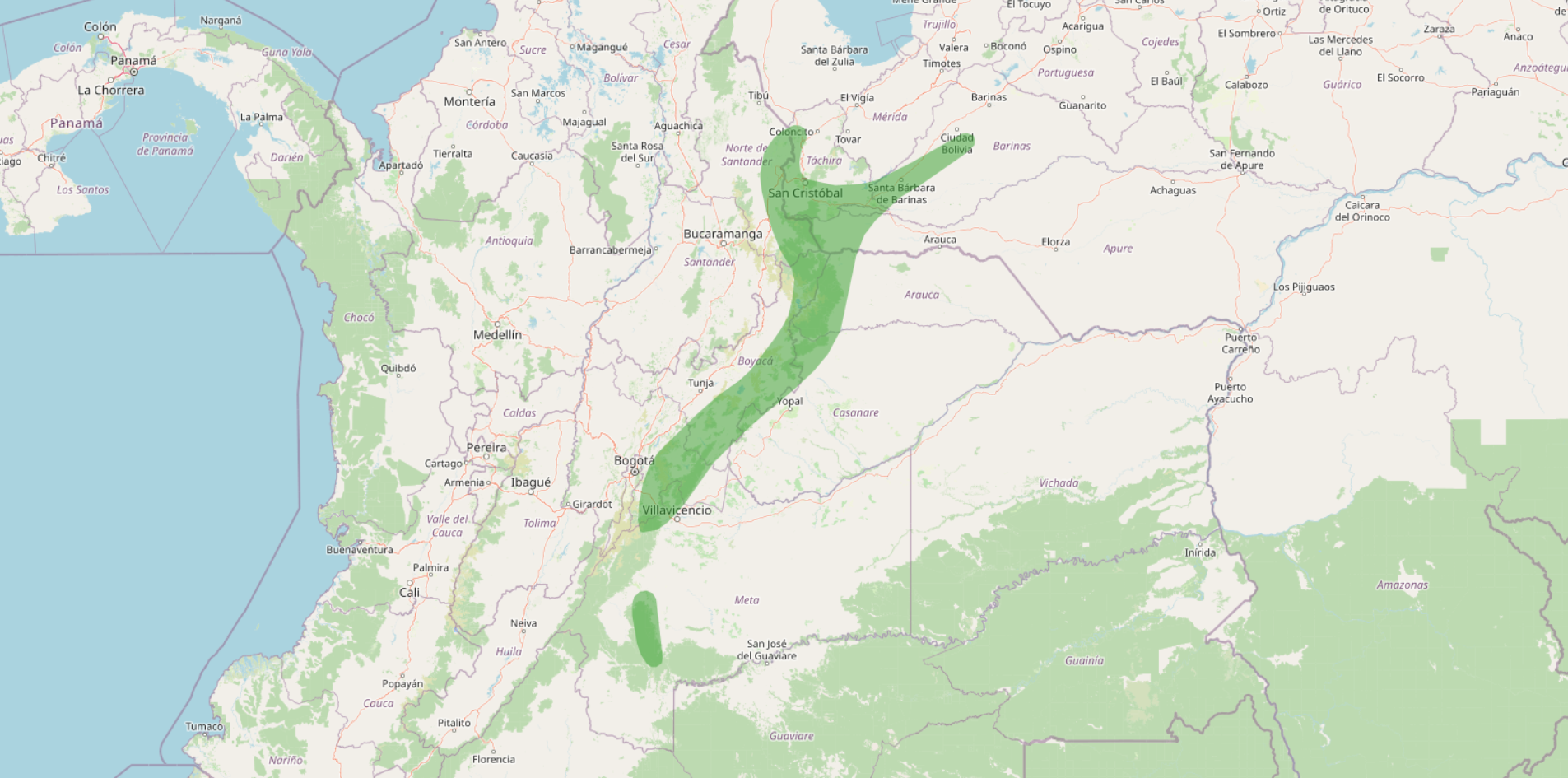
Map provided by Datazone Birdlife.org
Species Overview
The Green-bellied Hummingbird is a radiant Andean species distinguished by its metallic green underparts and bronzy tail. It thrives along humid and dry forest edges and secondary growth in the foothills of the Eastern Andes, where it visits flowering shrubs and small trees in both natural and human‑modified landscapes. Despite its localized range, it remains locally common in suitable habitats and forms part of the diverse Saucerottia complex across tropical America.
Identification
Male
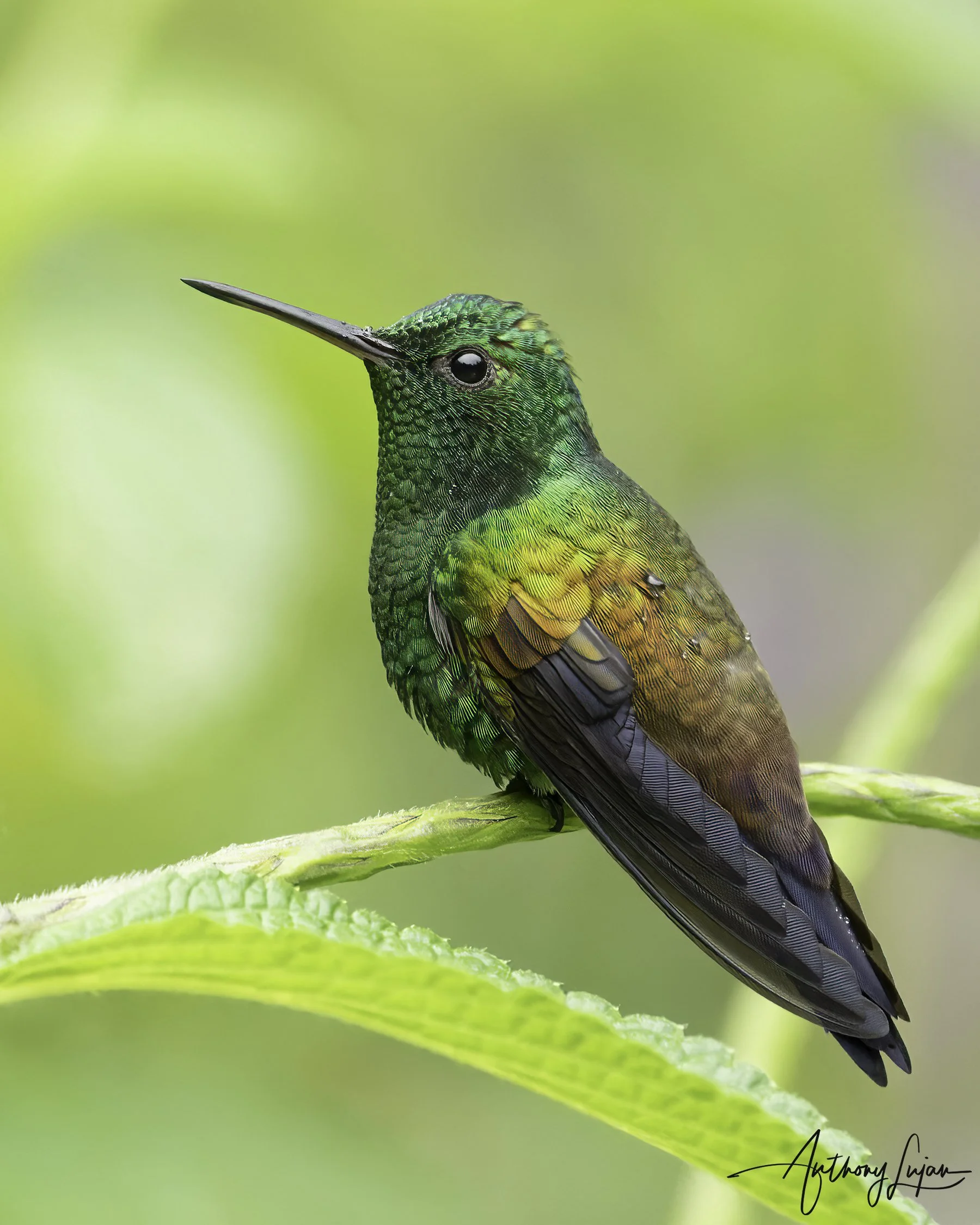
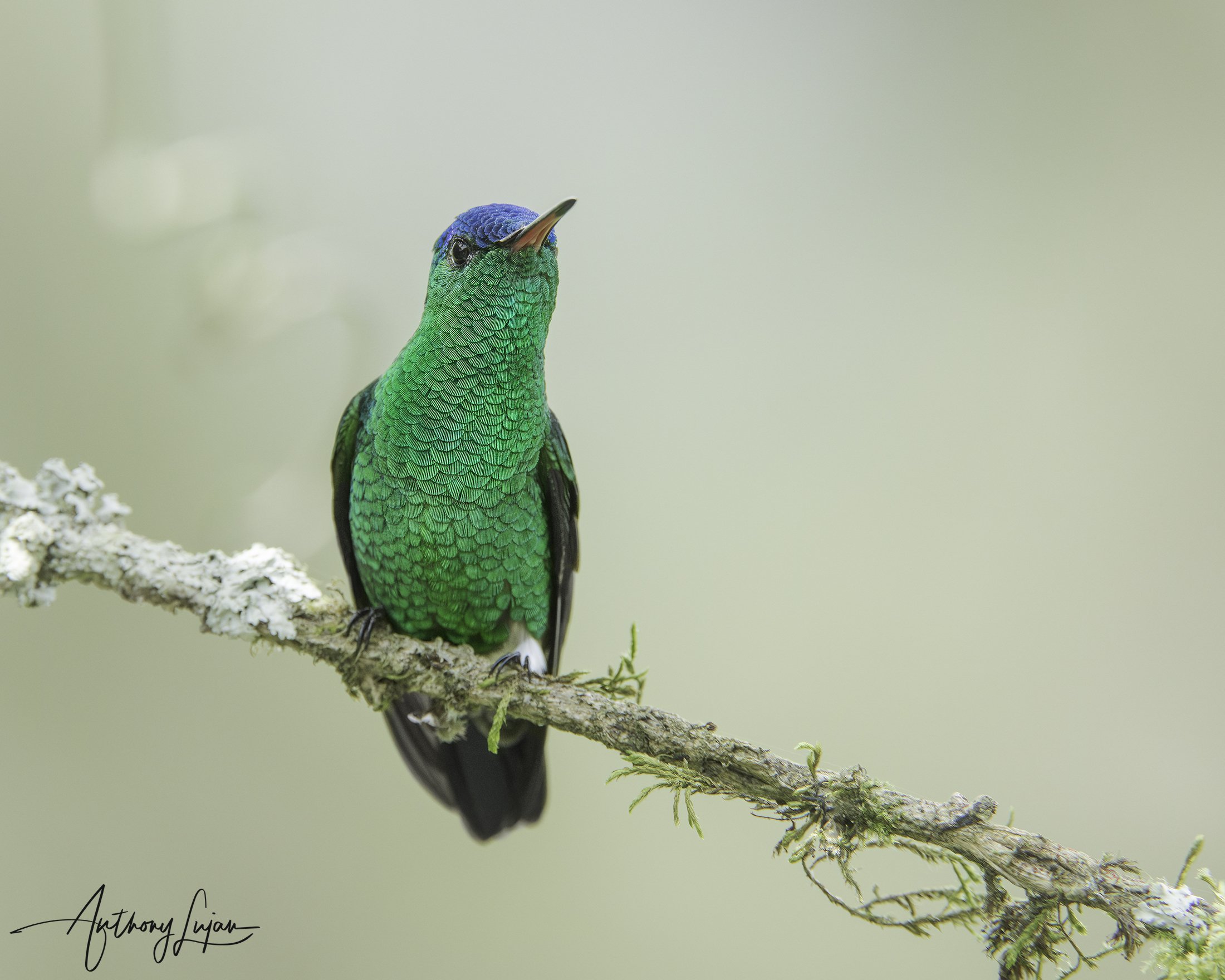
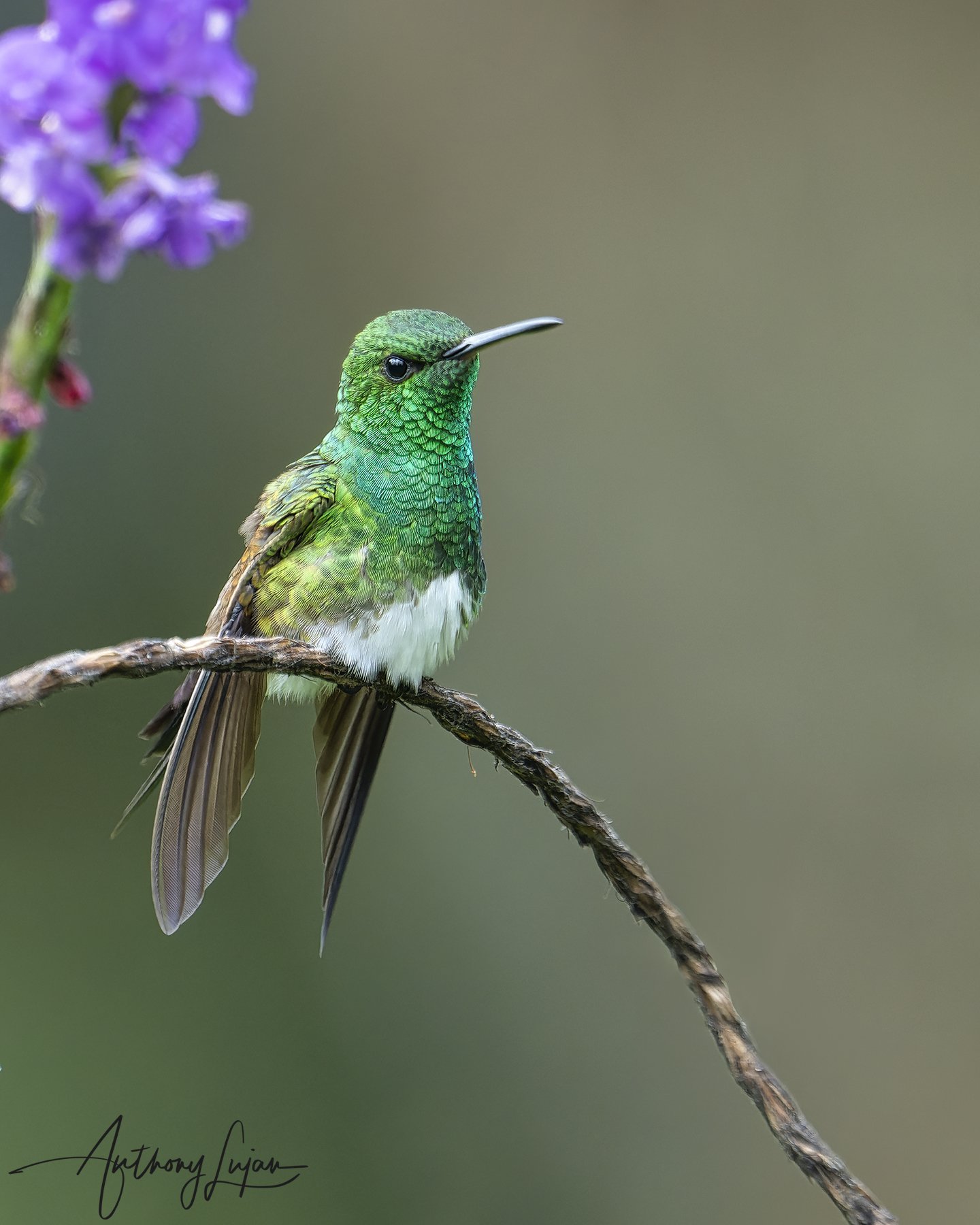
Adult males have bright green upperparts and a glittering metallic green throat and belly, giving the species its “green‑bellied” name. The tail is bronzy to coppery, often with darker undertones, and contrasts subtly with the greener body; the bill is straight and dark with a paler base to the lower mandible. In good light, the combination of luminous green underparts and bronzy tail stands out against the more subdued tones of Andean scrub and forest edge.
Female
Females are paler and slightly duller than males, with grayish underparts lightly washed with green rather than fully metallic green. Their tails are a bit shorter and may show small whitish tips on the outer feathers. Both sexes share the same basic structure and use the same habitats, and both can be separated from other regional emeralds by the rich green belly plus bronzy tail in semi‑open foothill landscapes.
Habitat and Behavior
Green-bellied Hummingbirds occur in humid and dry montane forests, secondary woodland, scrubby slopes, coffee plantations, and river‑edge vegetation along the lower and middle slopes of the Eastern Andes and western Venezuelan Andes. They typically range between about 400 and 1,700–2,000 m, and are frequently seen along forest edges and in areas of anthropogenic disturbance such as shade coffee and rural gardens. They feed on nectar from a variety of flowering plants, including shrubs and small trees at forest margins and in agroforestry systems, and also take small insects for protein. As with many Andean hummingbirds, they likely make local movements along elevation gradients in response to flowering patterns, though detailed movement ecology is not well documented.
Population and Threats
IUCN and BirdLife assess the Green-bellied Hummingbird as Least Concern, but its overall population trend is Decreasing, and the total number of mature individuals is not known. The species is considered uncommon to fairly common in Colombia, though its abundance in Venezuela remains poorly documented. The primary concern is habitat loss and degradation from deforestation, agricultural expansion, and conversion of montane forest and forest edge to more intensive land uses in the Eastern Andes and western Venezuela. Even though it tolerates some disturbance and uses secondary habitats and shade coffee, continued loss and fragmentation of Andean forest mosaics are expected to drive a slow decline.

Conservation
Although currently listed as Least Concern, the Green-bellied Hummingbird depends on a landscape of humid and dry montane forest, forest edges, and agroforestry systems such as shade coffee. It occurs in several protected areas, including Tamá National Park on the Colombia–Venezuela border and Sierra de la Macarena National Park in Colombia, which help safeguard parts of its range. Conservation of Andean forest corridors and maintenance of shade coffee and structurally diverse secondary forest will be crucial to sustaining gene flow between Colombian and Venezuelan populations and slowing habitat‑driven declines.
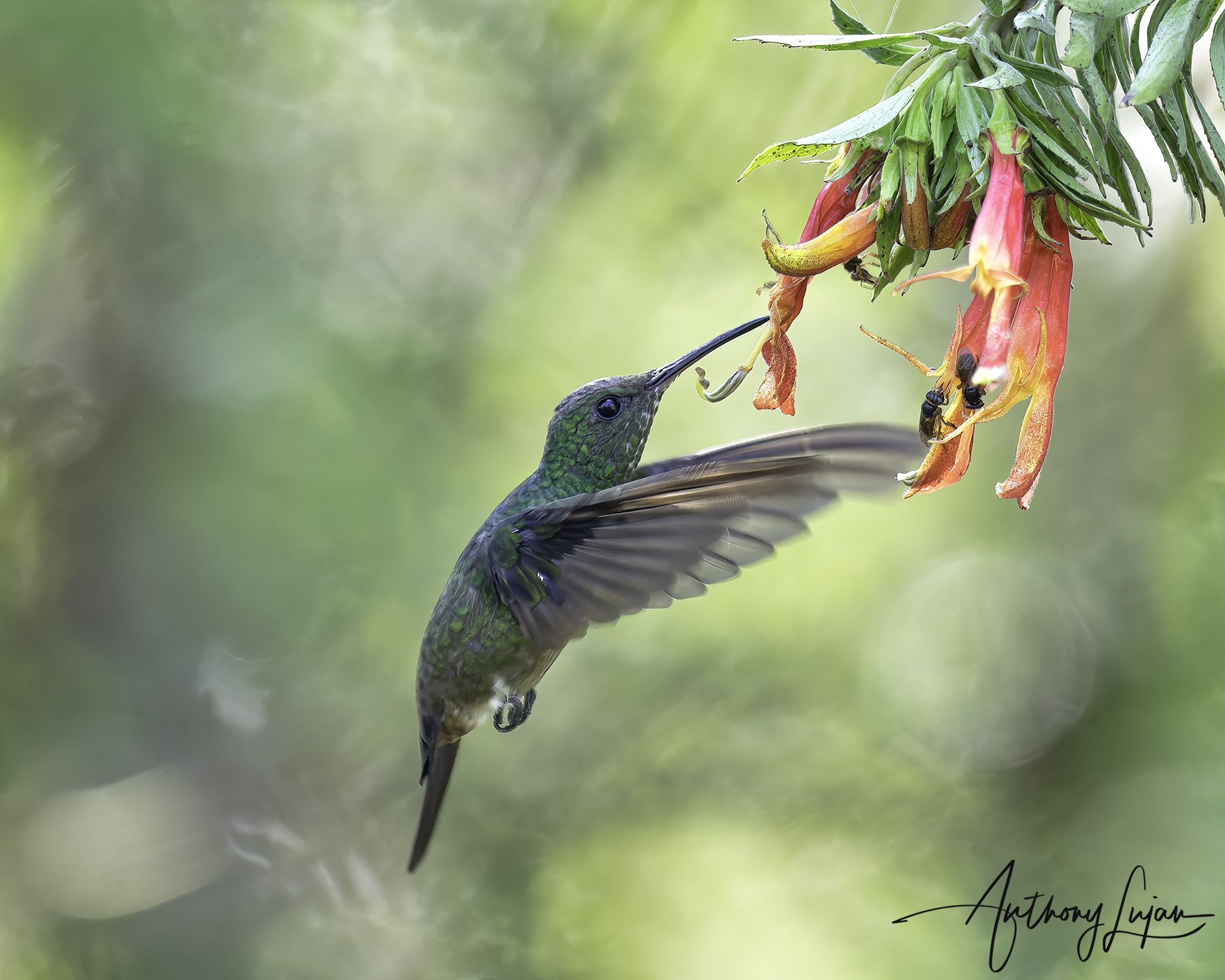
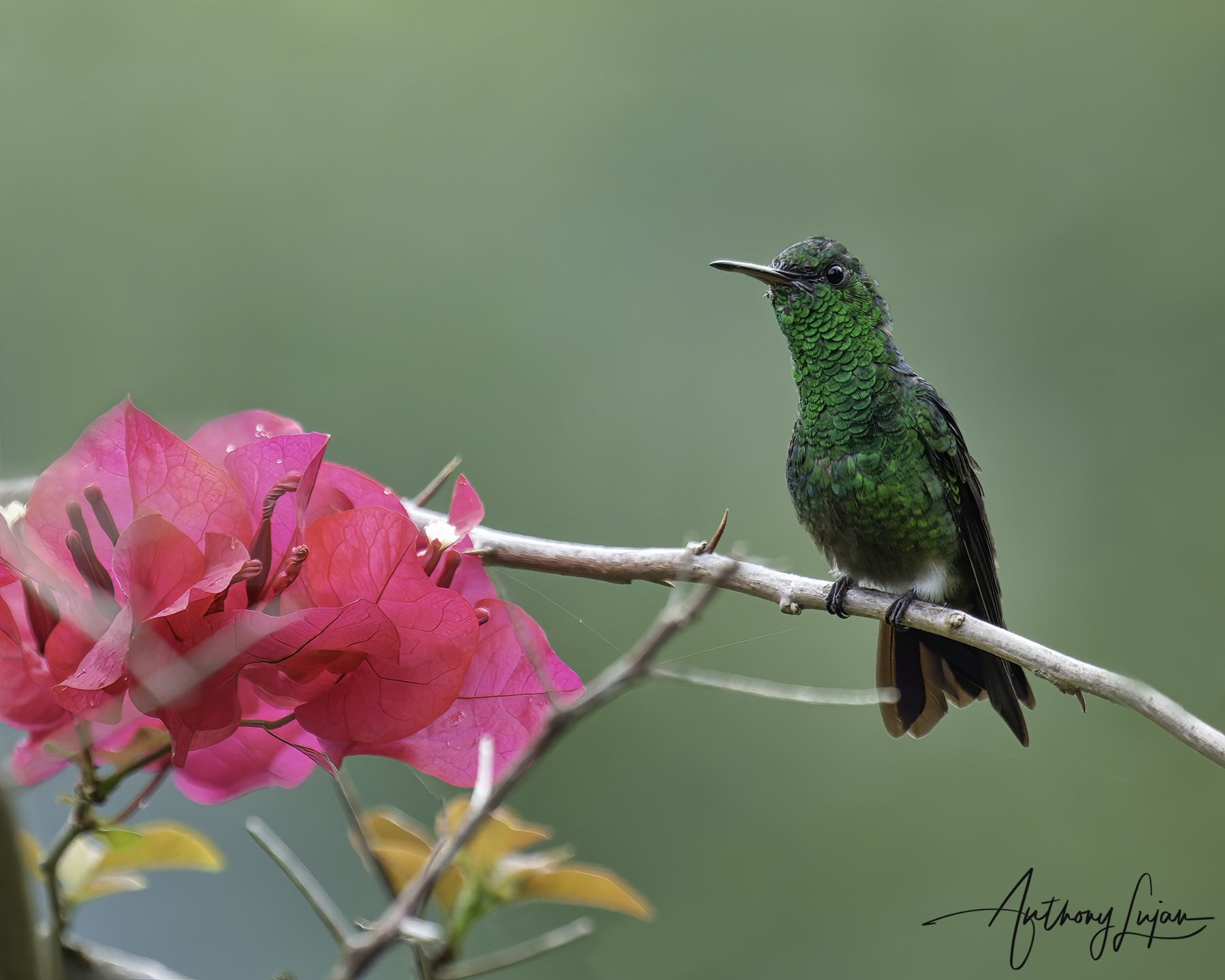
Below is the Green-bellied Hummingbird (Saucerottia viridigaster viridigaster)
Photographed at Hacienda La Leona Birdwatching, Cundinamarca, Colombia
This individual belongs to the nominate subspecies viridigaster, found along the Eastern Andes of Colombia from Santander through Boyacá and Cundinamarca, extending slightly into western Venezuela. It inhabits dry to humid montane forest edge, coffee plantations, and shrubby slopes between 1 200 and 2 200 m.
Related species in the Saucerottia genus (11 species total):