
Green-bearded Helmetcrest
Scientific name: Oxypogon guerinii
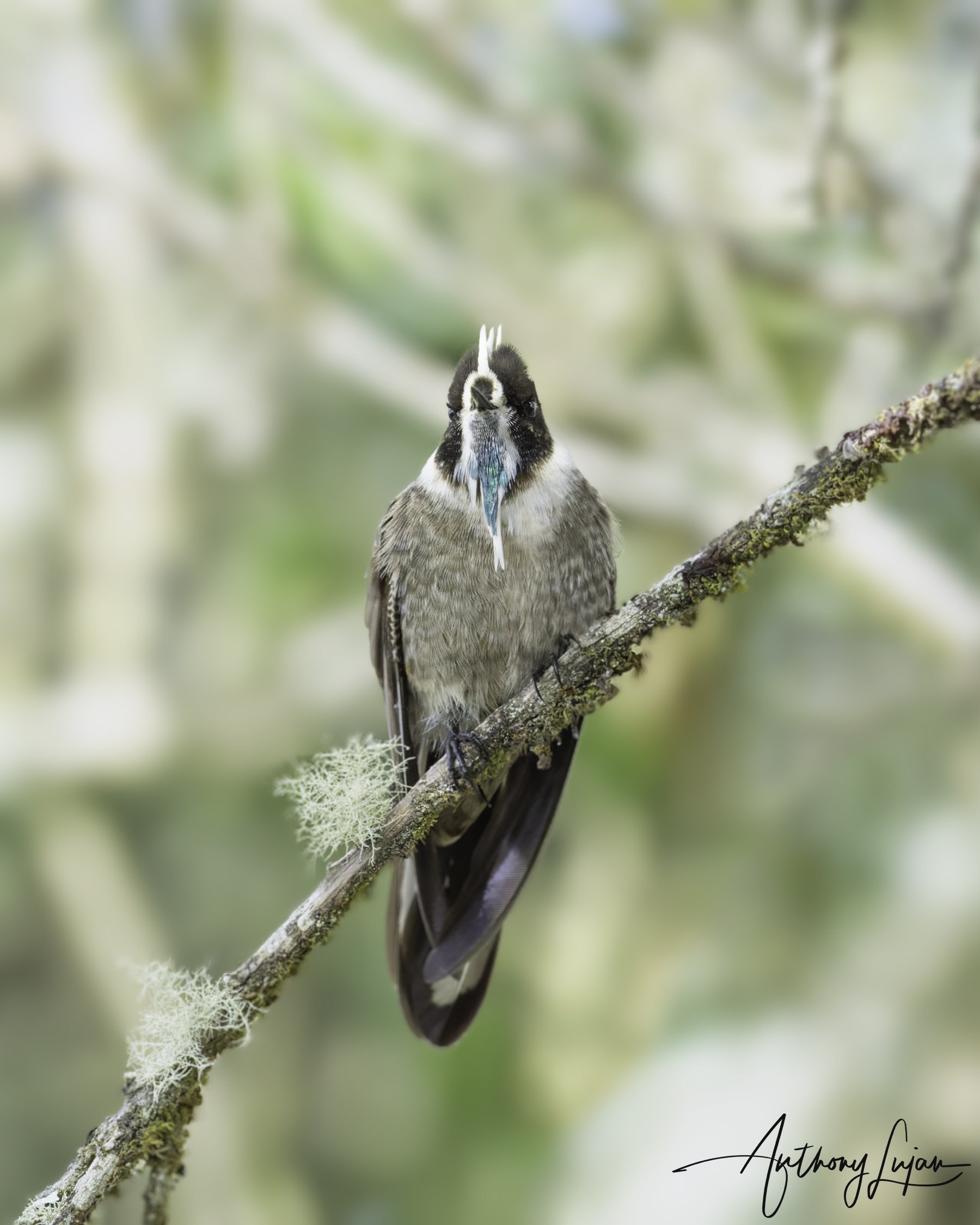
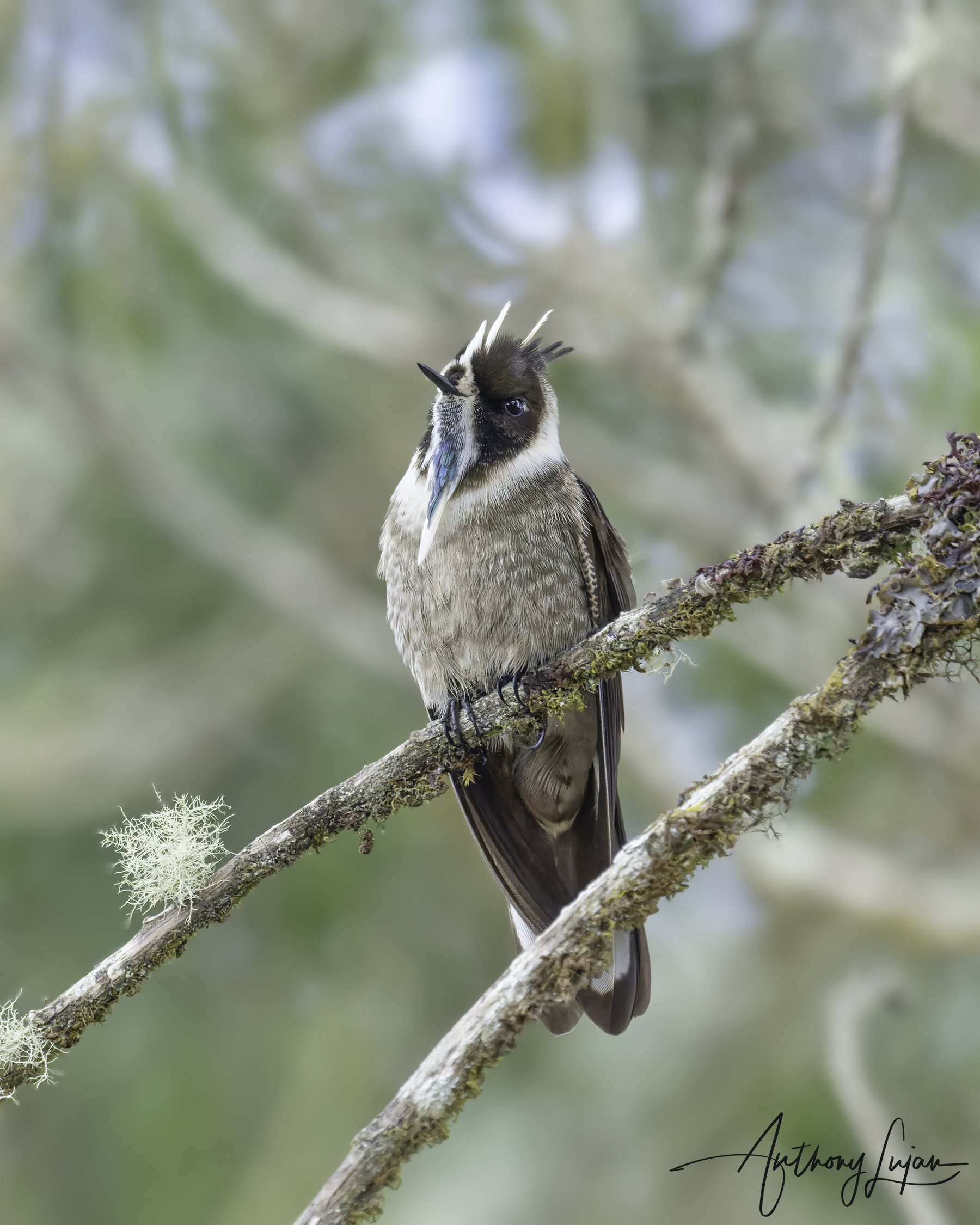
The Green‑bearded Helmetcrest is a striking high‑Andean hummingbird found only in Colombia’s Eastern Andes, where it inhabits humid páramo grasslands and Espeletia stands above treeline. With its white crest, bold black‑and‑white facial pattern, and glittering green throat “beard,” it is one of four Oxypogon helmetcrest species that have become symbols of Colombia’s páramo ecosystems.
At a Glance
Family: Trochilidae (hummingbirds)
Clade: Lesbiini (“coquettes”)
Genus group: Oxypogon — helmetcrests
Related species in this genus: Buffy Helmetcrest (O. stuebelii), Blue‑bearded Helmetcrest (O. cyanolaemus), White‑bearded Helmetcrest (O. lindenii)
Endemic to Colombia’s Eastern Andes (mainly Cundinamarca and Boyacá)
Habitat: Humid páramo grasslands, Espeletia (“frailejón”) rosettes, and edges of montane scrub and Polylepis woodland
Elevation: about 3,000–4,200 m (9,800–13,800 ft)
Length: about 4.3–4.9 in (11–12.5 cm)
Weight: about 0.16–0.18 oz (4.5–5 g)
Status: Least Concern (IUCN) – globally not threatened, but dependent on healthy páramo ecosystems
Name Origin
The genus name Oxypogon combines Greek roots meaning “sharp” or “pointed” and “beard,” referring to the elongated facial and throat plumes that characterize helmetcrests. The species name guerinii honors French naturalist Félix Édouard Guérin‑Méneville, linked to the period when this ornate hummingbird was first described from Colombia.
Subspecies and Distribution
Green‑bearded Helmetcrest is considered monotypic, with all individuals placed in a single subspecies.
Subspecies: Oxypogon guerinii (monotypic)
Distribution: Endemic to Colombia’s Eastern Andes, especially the Eastern Cordillera in Cundinamarca and Boyacá departments. It occupies humid páramo and sub‑páramo zones above treeline, typically between about 3,000 and 4,200 m, where Espeletia rosettes and other flowering shrubs dominate.
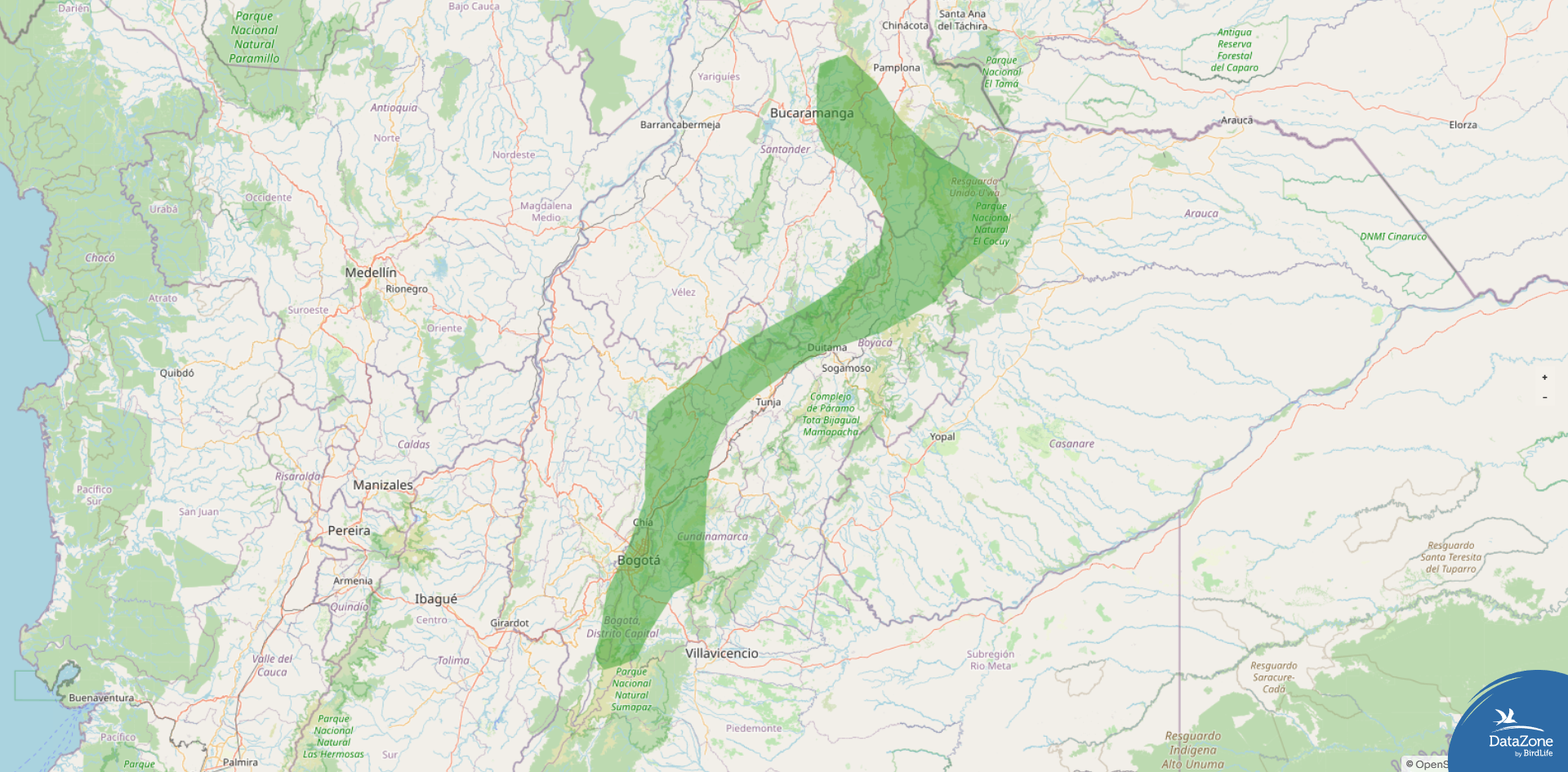
Legend
Green resident
Identification
Male
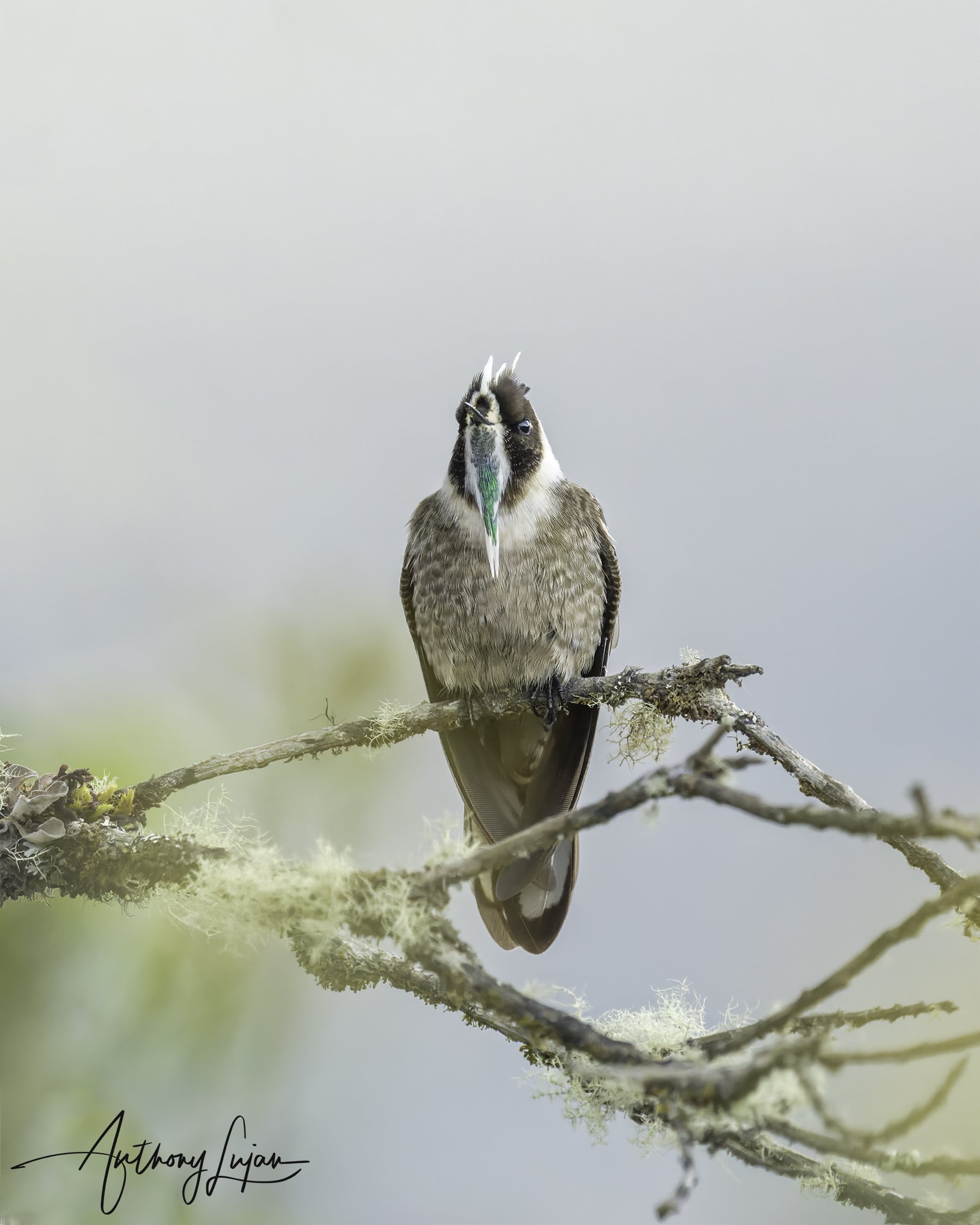
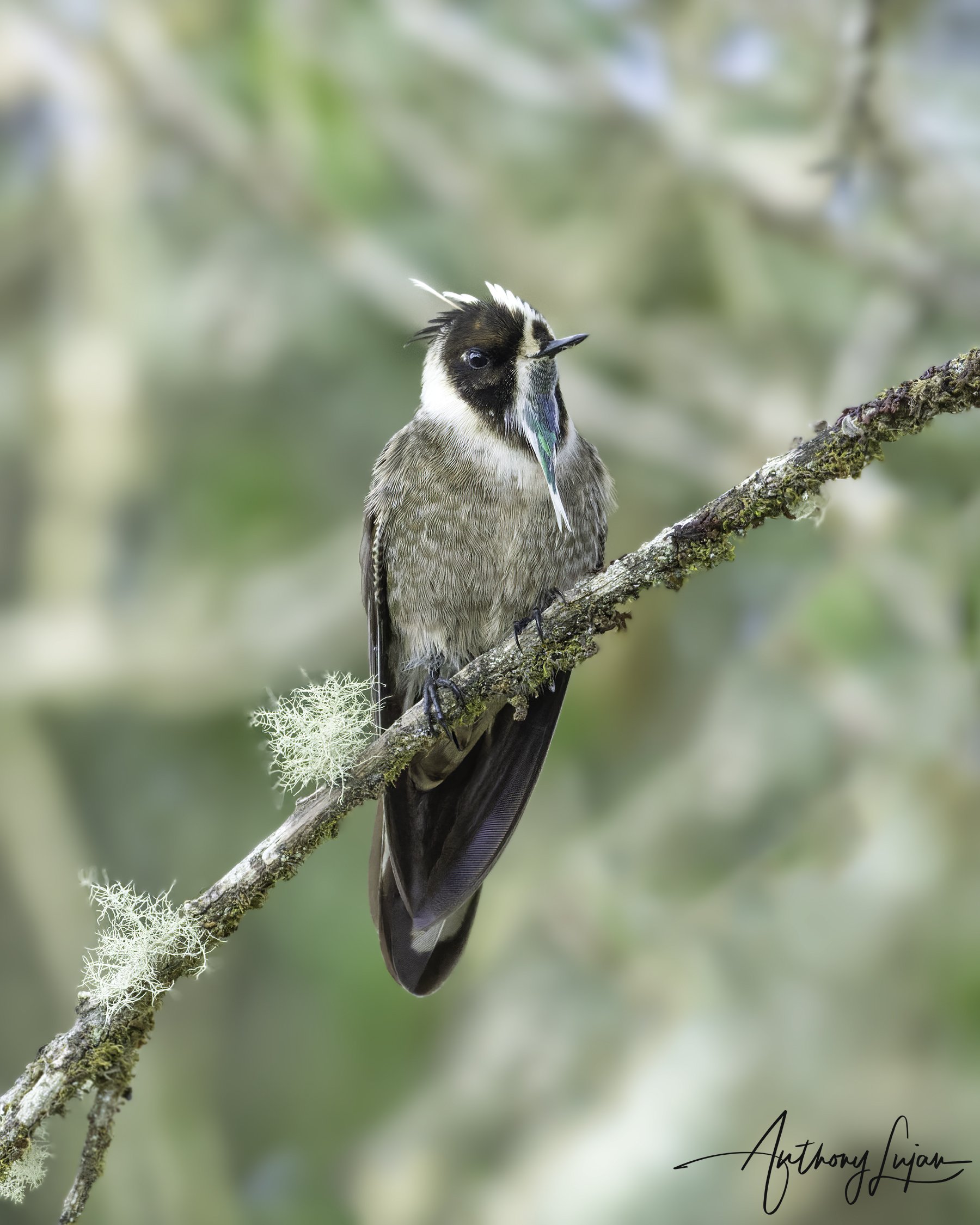
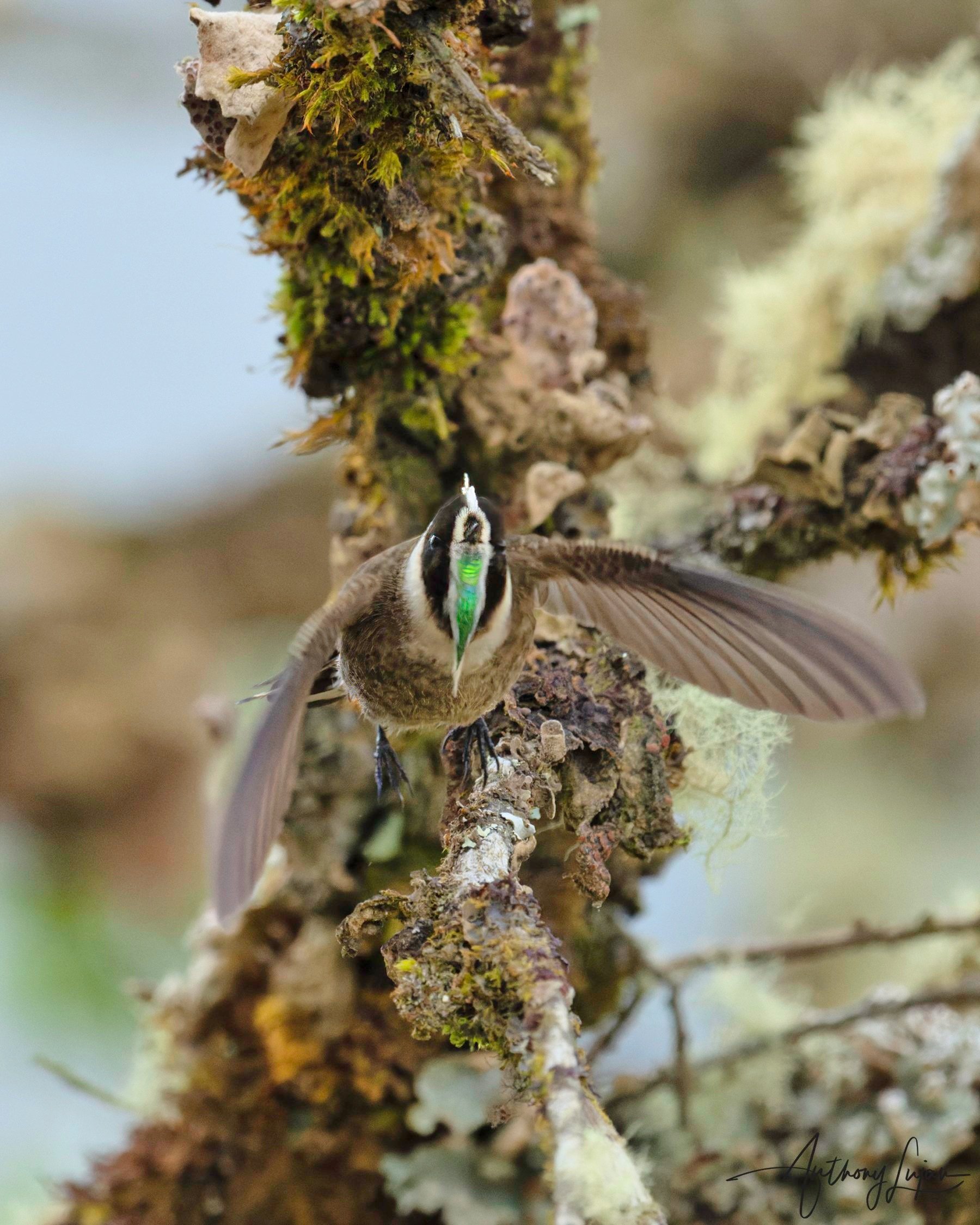
The male Green‑bearded Helmetcrest is a medium‑sized mountain hummingbird with bronzy‑green upperparts, buff‑washed underparts, and a long white crest that projects upward from the crown. Its face shows a bold black mask bordered by white, and from the throat hangs a narrow, shimmering green “beard” that gives the species its name. The bill is short, straight, and black, and the tail is bronze‑green with pale or buffy tips, often fanned when the bird perches atop Espeletia stalks or shrubs.
Female
Females are smaller and less ornate, with shorter crest feathers and a reduced green beard. Their facial pattern is softer, with less contrasting black and white, and the underparts are buffy or whitish with more subdued tones overall. Both sexes share the compact body, short bill, and habit of clinging to flowers or even perching on the ground while foraging in windy páramo conditions.
Habitat and Behavior
Green‑bearded Helmetcrests inhabit humid páramo and sub‑páramo, using Espeletia rosettes, shrubby patches, and rocky slopes as feeding and perching sites. They feed primarily on nectar from Espeletia and other páramo flowers, but also take small insects by gleaning or short sallies from exposed perches. Birds often cling to flower stalks instead of hovering, and have been observed moving locally in response to flowering cycles and weather, though they are not considered long‑distance migrants. Like other high‑Andean hummingbirds, they likely enter nocturnal torpor to survive freezing nights at high elevation.
Distribution and Status
The Green‑bearded Helmetcrest is restricted to the Eastern Cordillera of Colombia, with records from páramo complexes such as Sumapaz, Chingaza, and other high‑elevation sites in Cundinamarca and Boyacá. Its range is relatively narrow and fragmented among isolated páramo massifs, and closely tied to intact Espeletia–dominated vegetation. Despite local habitat pressures, global assessments currently classify the species as Least Concern, reflecting a broader distribution and larger population than its more threatened helmetcrest relatives.

Conservation
Although globally Least Concern, Green‑bearded Helmetcrest still depends on healthy páramo ecosystems that face pressure from burning, grazing, and agricultural expansion. Protecting Espeletia‑rich grasslands in páramo complexes such as Sumapaz and Chingaza, and promoting sustainable land‑use practices in surrounding communities, will help maintain habitat quality for this and many other high‑Andean species. As an endemic hummingbird tied to a vulnerable ecosystem, it remains an important flagship for páramo conservation in the Eastern Andes even without a high threat category.
Checkout Anthony’s playlist of this species! Click the top right dropdown to see all the videos.
Related species in this genus:



Please note: The content provided in this article reflects Anthony’s personal experience and photographic approach. Results can vary depending on light, weather, location, equipment, subject behavior, and field conditions.