
Green-breasted Mango
Scientific name: Anthracothorax prevostii
The Green-breasted Mango is a medium-sized, widespread hummingbird found from eastern and southern Mexico through much of Central America and in scattered populations in northern South America and Caribbean islands. The global number of mature individuals is estimated at 500,000–4,999,999, the population trend is Decreasing, it is assessed as Least Concern, and it is considered not a migrant overall (though some northern populations show seasonal movements).
At a Glance
Family: Trochilidae (hummingbirds)
Clade: Polytminae – Mangoes and Fairies
Genus: Anthracothorax
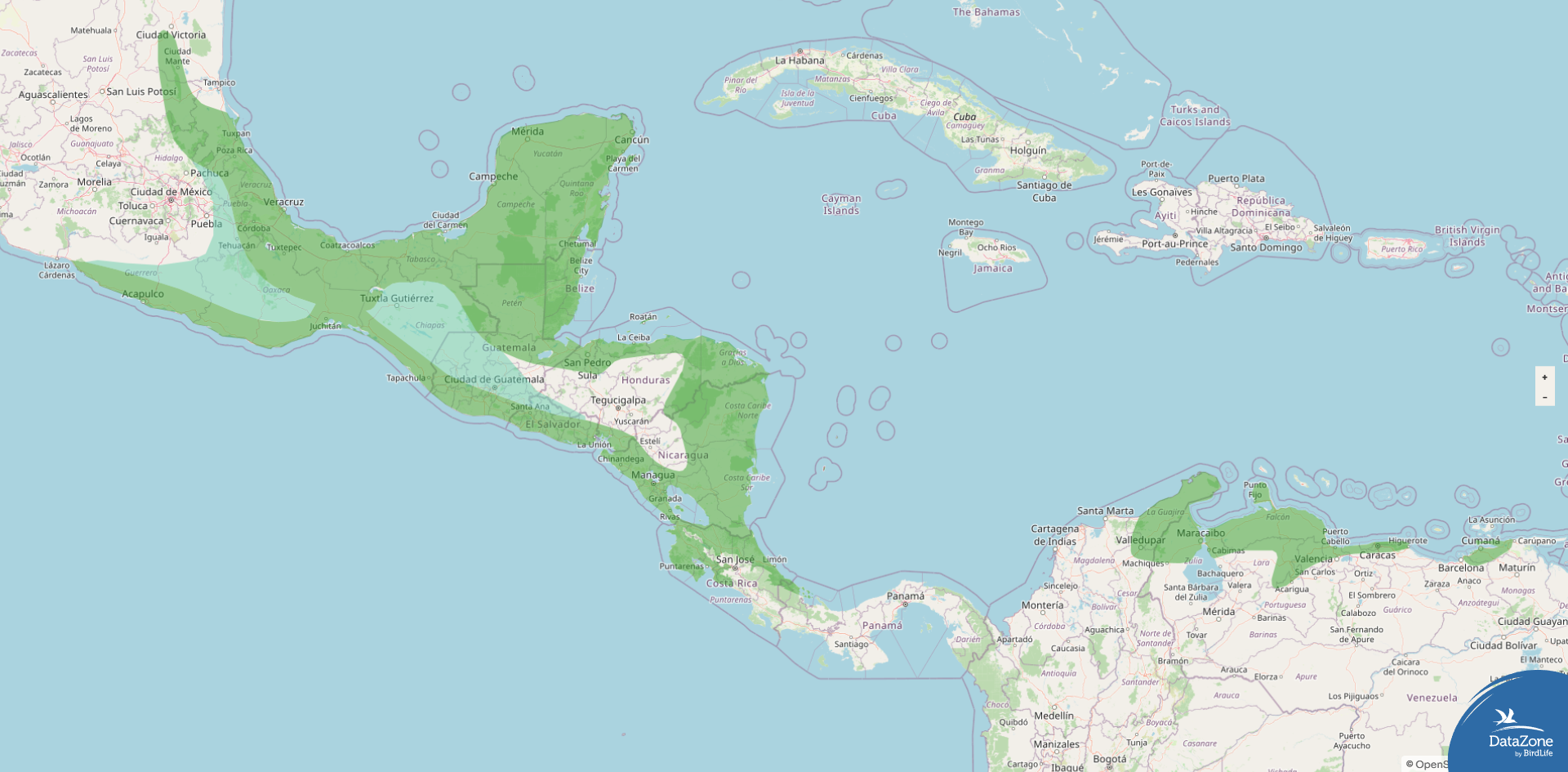
Range: Eastern and southern Mexico south through Central America to northwestern Panama, with isolated populations in northern South America (northeastern Colombia and northern Venezuela), the upper Cauca Valley of southwestern Colombia, and the coastal slope of southwestern Ecuador and extreme northwestern Peru, plus insular populations on San Andrés and Providencia and other Caribbean islands
Habitat: Semi-open and open tropical lowland habitats including tropical deciduous forest, shrubland with scattered trees, gallery forest, mangroves, secondary woodland, orchards, plantations, gardens, and suburban areas
Elevation: Mainly from sea level to about 500 m, locally up to 1,000–1,100 m, and occasionally to around 1,500 m in parts of the range
Length: About 10–12 cm (roughly 4.0–4.8 in)
Weight: About 5.7–7.5 g
Number of mature individuals: 500,000–4,999,999
Population trend: Decreasing
Status: Least Concern (IUCN)
Name Origin
The genus name Anthracothorax comes from Greek words meaning “coal” and “chest,” referring to the dark metallic coloration common in mango hummingbirds. The species name prevostii honors Florent Prévost, a 19th-century French naturalist and illustrator who contributed to the study of tropical birds. The English name “Green-breasted Mango” highlights the male’s extensive green underparts and its place within the mango group.
Subspecies & Distribution
Four subspecies are recognized:
Anthracothorax prevostii prevostii
Eastern and southern Mexico (from San Luis Potosí and southern Tamaulipas south through Veracruz and the Yucatán Peninsula) south to Guatemala, Belize, and El Salvador.Anthracothorax prevostii viridicordatus
Caribbean slope of Central America from eastern Honduras and Nicaragua south through eastern Costa Rica to western Panama.Anthracothorax prevostii gracilirostris
Pacific slope of southern Costa Rica and western Panama, including Chiriquí.Anthracothorax prevostii hendersoni
Isla de Providencia (Colombia) in the western Caribbean, with additional small, isolated populations in extreme northeastern Colombia and coastal northern Venezuela, the upper Cauca Valley in southwestern Colombia, and along the coastal slope of southwestern Ecuador into extreme northwestern Peru.
Together these subspecies form a discontinuous but wide distribution from eastern Mexico through Central America into northern South America and several Caribbean islands, mainly in lowland tropical and subtropical zones.
Ledged
Green Resident
Species Overview
The Green-breasted Mango is a conspicuous, adaptable hummingbird of open and semi-open lowland habitats, often seen around flowering trees, gardens, plantations, and coastal forests. It readily uses human-modified landscapes such as orchards and suburban gardens, where it visits feeders and ornamental flowers. Its broad range and tolerance of disturbed habitats support a Least Concern status, but regional declines and habitat changes, particularly in parts of Mexico and northern Central America, contribute to an overall Decreasing population trend.
Male Description
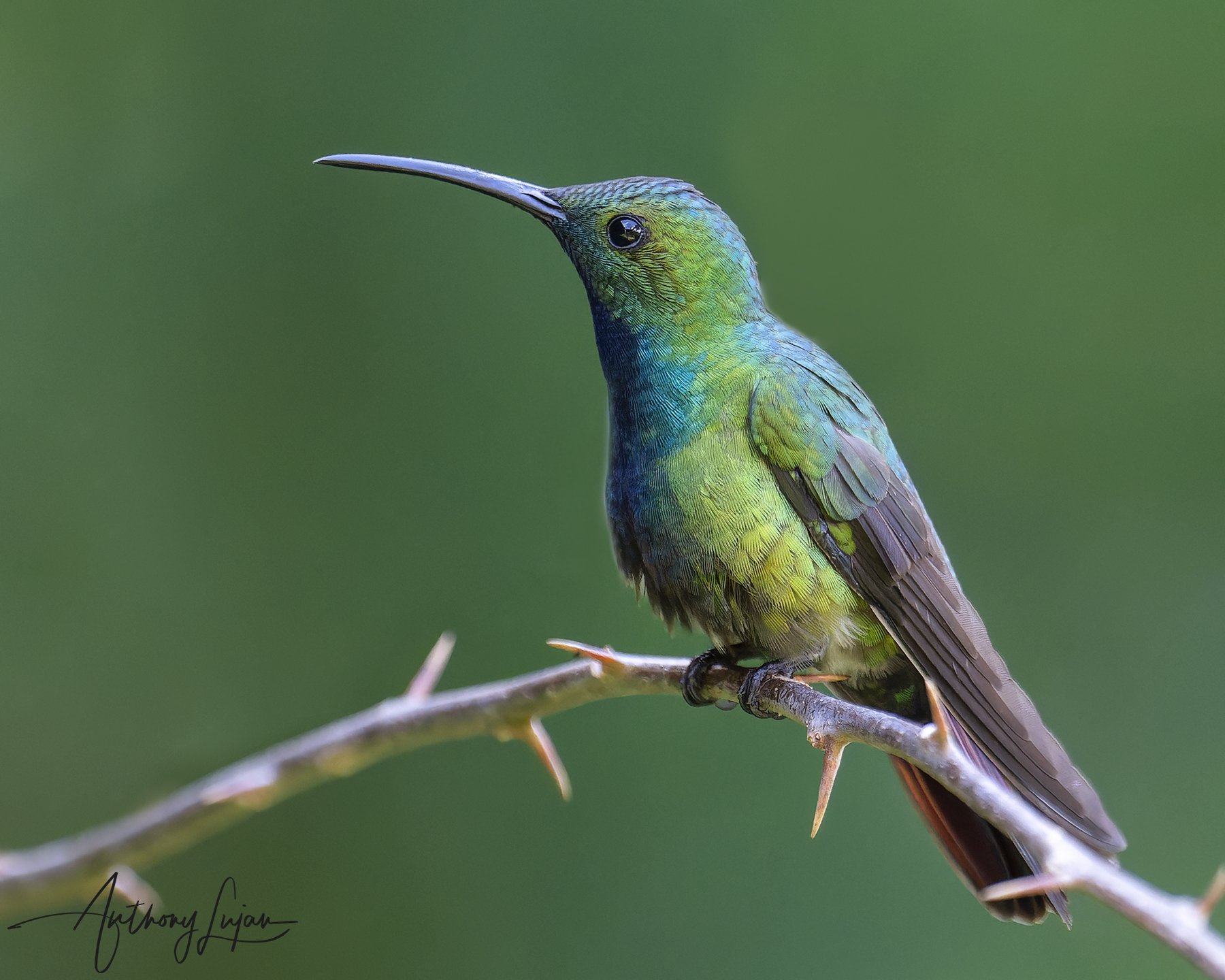
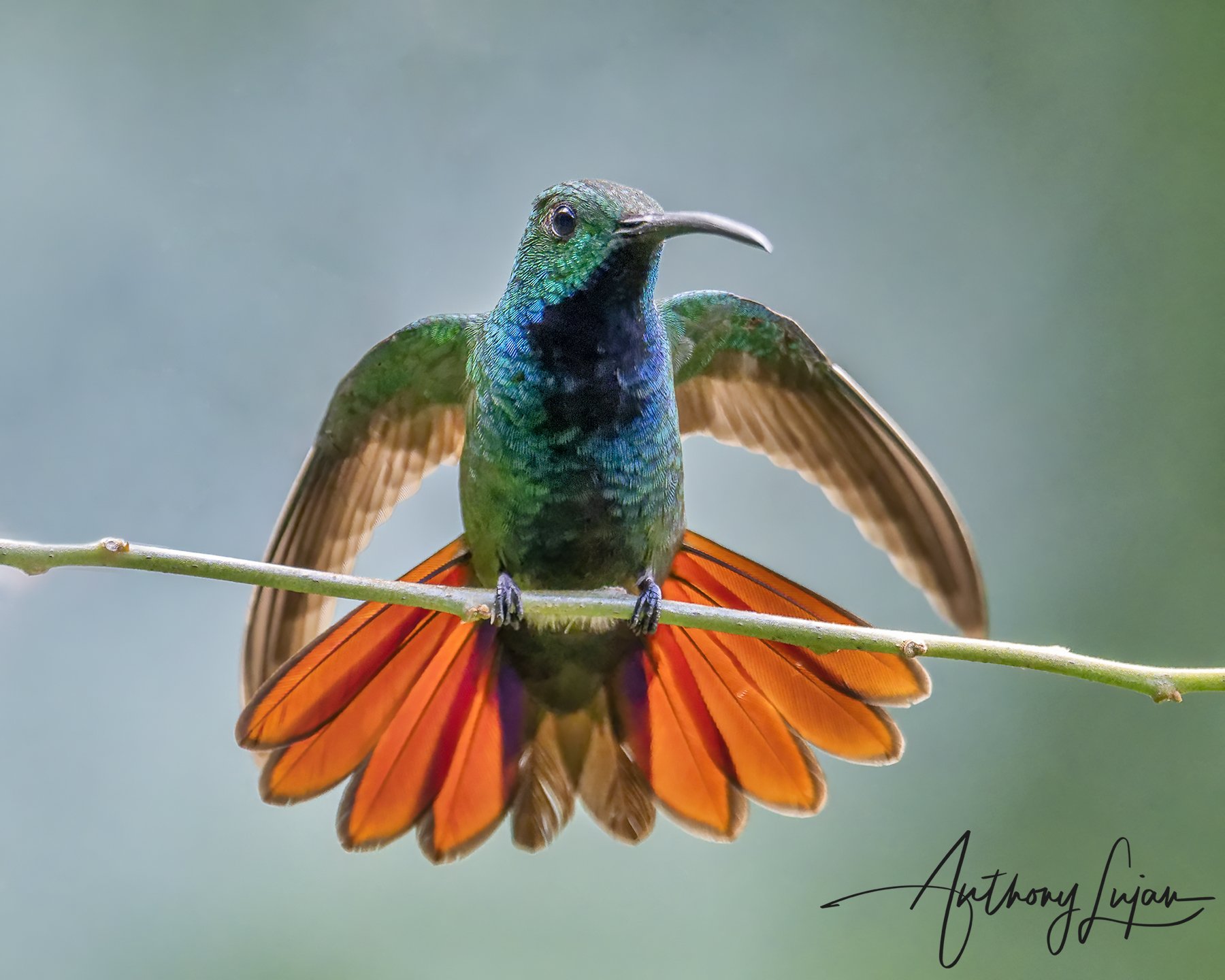
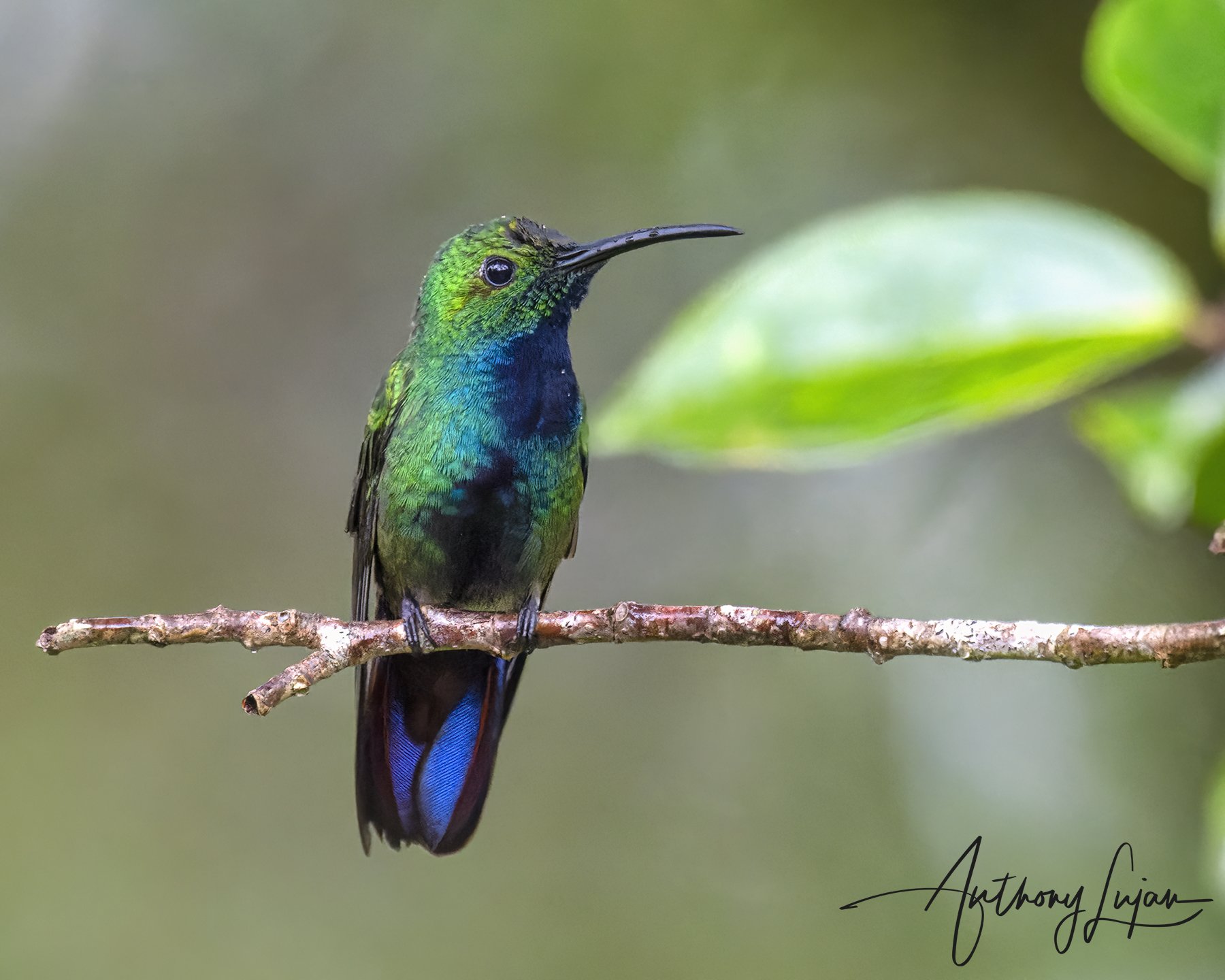
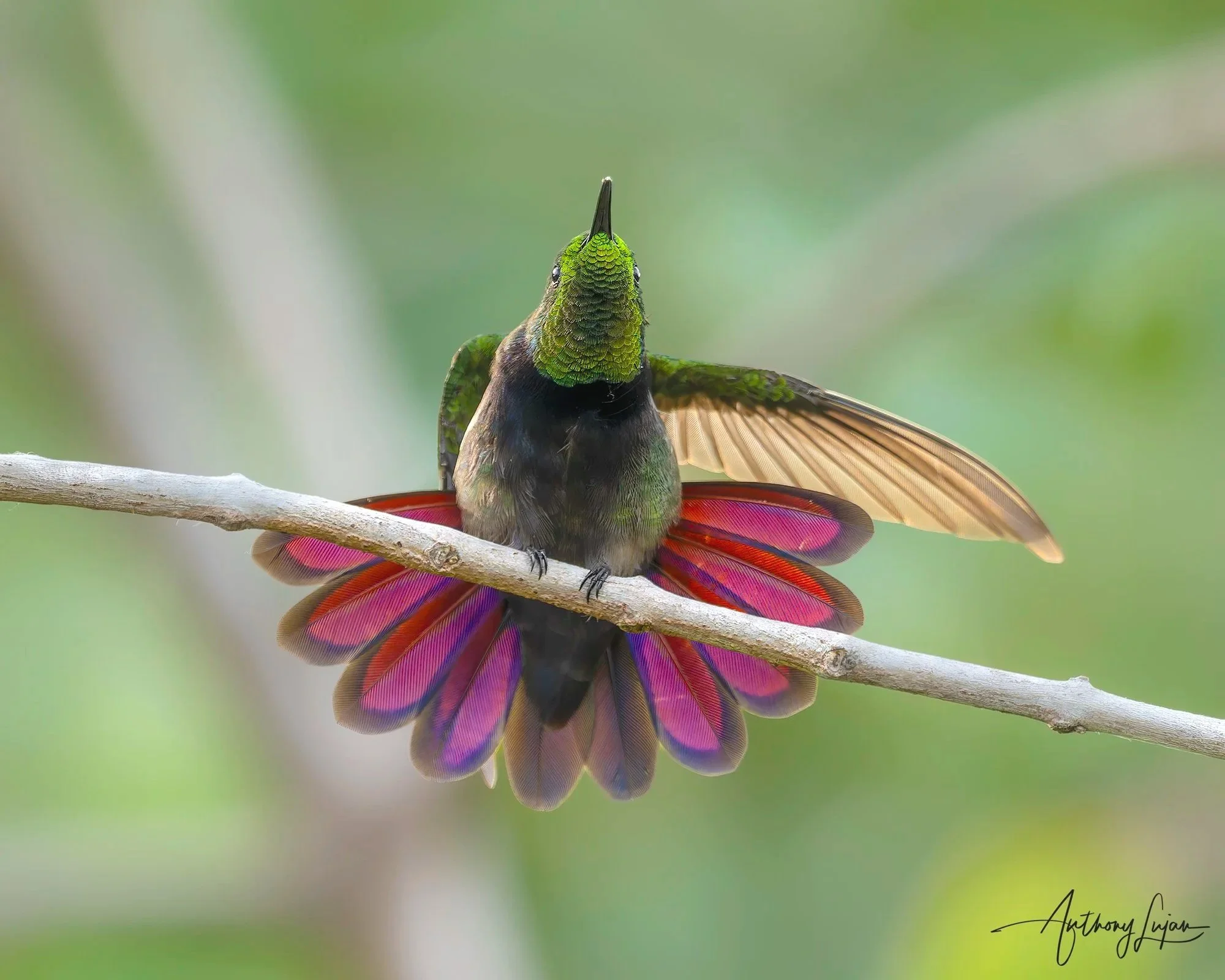
Adult males have metallic bronze-green upperparts and a relatively narrow, matte black central stripe running from the throat down the center of the chest, bordered by blue-green and flanked by bright green underparts. The flanks are vivid green, and the black stripe tapers onto the belly, creating a strong contrast against the surrounding green. The tail shows dull bronzy to purplish central feathers and more brightly colored lateral feathers with magenta or purple tones and pale edging depending on angle and subspecies. The bill is straight, rather short, and black, and the overall impression is of a bronzy-green hummingbird with a bold dark central stripe on a green breast.
Female Description
Females and immature males have bronze-green upperparts and largely white underparts with a dark central stripe that runs from the chin down the center of the throat and breast, changing from mostly black at the chin to blue-green on the throat and chest. The sides and flanks are washed with green, and the tail is strongly patterned with purplish or magenta outer feathers often edged or tipped with whitish, contrasting with darker central tail feathers. The bill is straight and black, and the underparts pattern—white with a dark central stripe—is a key field mark separating females from those of other mango species.
Habitat & Behavior
Green-breasted Mangos inhabit a variety of semi-open to open tropical habitats, including tropical deciduous forest, shrublands with scattered large trees, gallery forest, mangroves, secondary woodland, orchards, gardens, cultivated areas, and suburban and urban landscapes with flowering plants. They typically occur from sea level to about 500 meters but can be found locally up to 1,000–1,100 meters and, in some areas, to about 1,500 meters.
They feed on nectar from a wide variety of flowering trees, shrubs, and herbs, making frequent visits to genera such as Inga, Heliconia, and Hamelia, as well as ornamental species in gardens. They also hawk small insects in flight for protein and may glean arthropods from foliage. Green-breasted Mangos often show moderate territoriality around rich nectar sources and are regular visitors to hummingbird feeders in their range. Overall the species is considered not a migrant, but some northern populations—especially in northeastern Mexico—are partially migratory, moving south seasonally in response to flowering patterns.
Population
The global population is estimated at 500,000–4,999,999 mature individuals. Within its range, the Green-breasted Mango is generally uncommon to fairly common, with local abundance influenced by the availability of flowering trees, plantations, and gardens. Its ability to use disturbed and cultivated landscapes provides some resilience, but habitat conversion and changes in land use, particularly in northern portions of its range, are thought to be driving a Decreasing overall trend.

Conservation
Green-breasted Mango is listed as Least Concern due to its broad, though patchy, distribution from Mexico through Central America into northern South America and the Caribbean, and its adaptability to human-modified habitats. Nevertheless, deforestation, conversion of tropical deciduous forest and coastal habitats, and urban expansion can reduce or fragment its preferred semi-open landscapes. Conservation measures that maintain flowering trees in agricultural and urban areas, protect remaining tropical dry and coastal forests, and promote wildlife-friendly orchards and gardens will benefit this species. Continued monitoring of regional populations, particularly in Mexico and northern Central America, is important for tracking future changes.
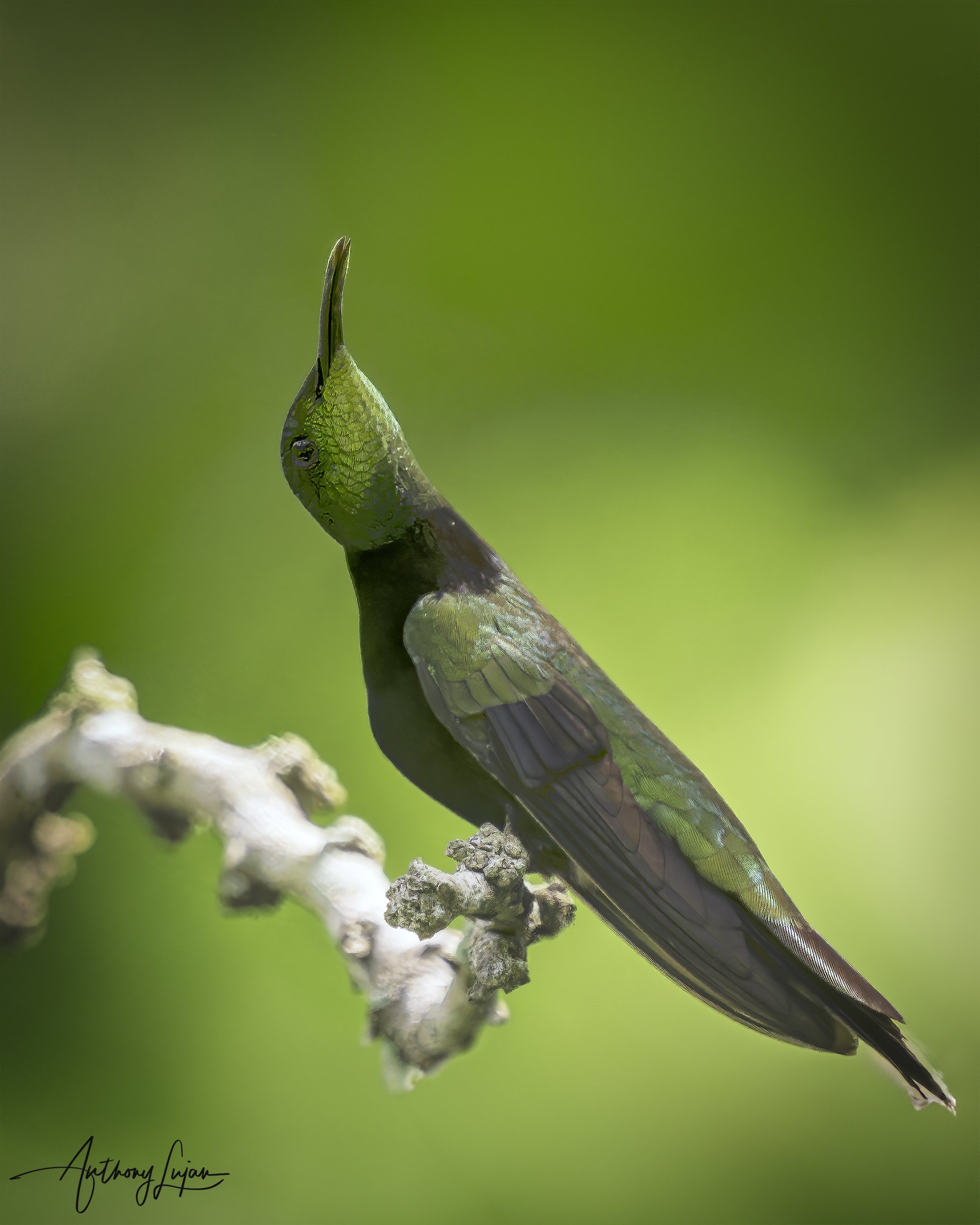
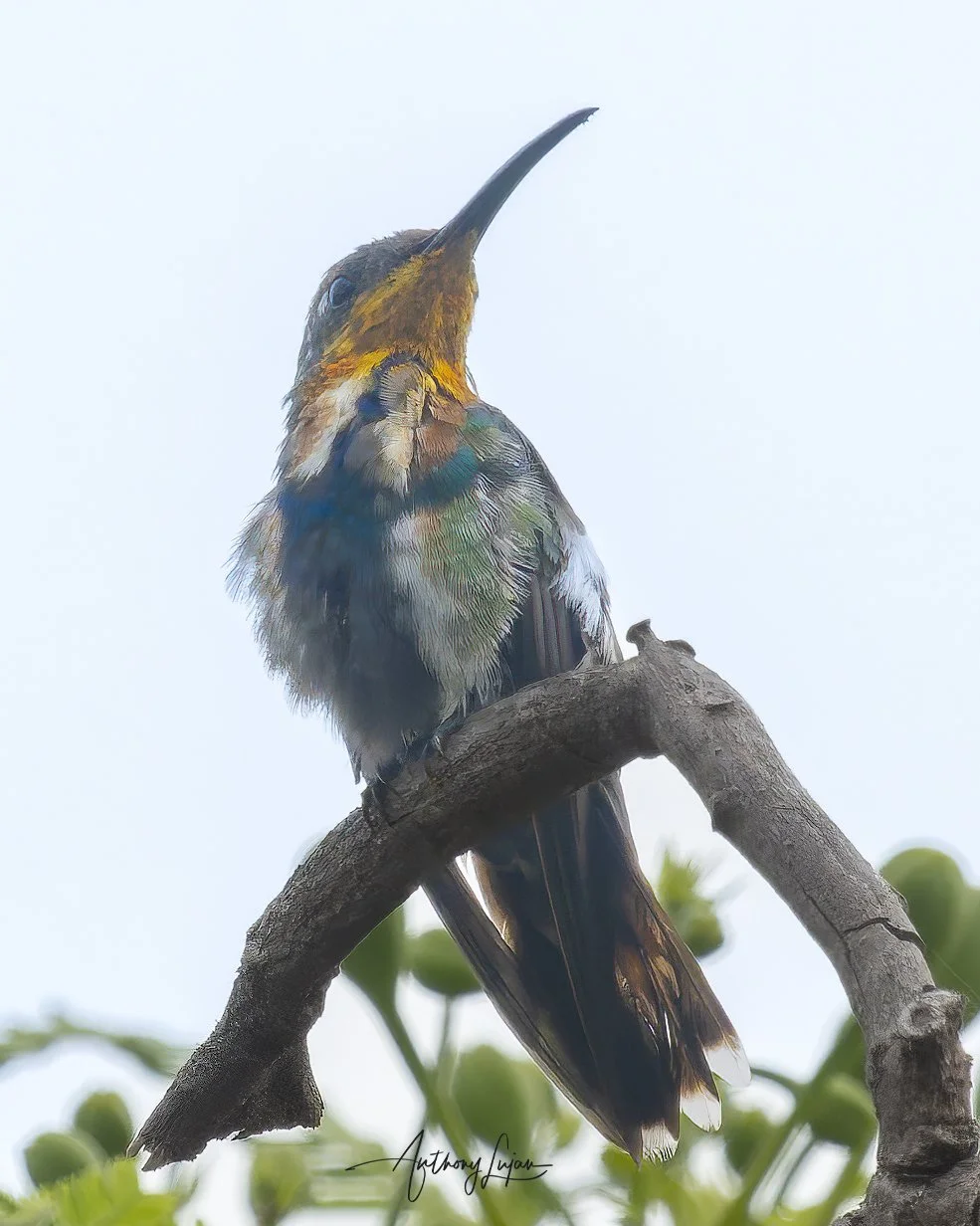
Below is the Green-breasted Mango (Anthracothorax prevostii viridicordatus)
Photographed at Rancho Naturalista and Tranki_Garden, Cartago, Costa Rica
This individual belongs to the subspecies viridicordatus, which occurs along the Caribbean slope of Central America from eastern Honduras through Nicaragua to eastern Costa Rica and western Panama. It inhabits forest edge, gardens, and plantations, often near flowering Inga and Erythrina trees, from sea level to about 1,200 meters.


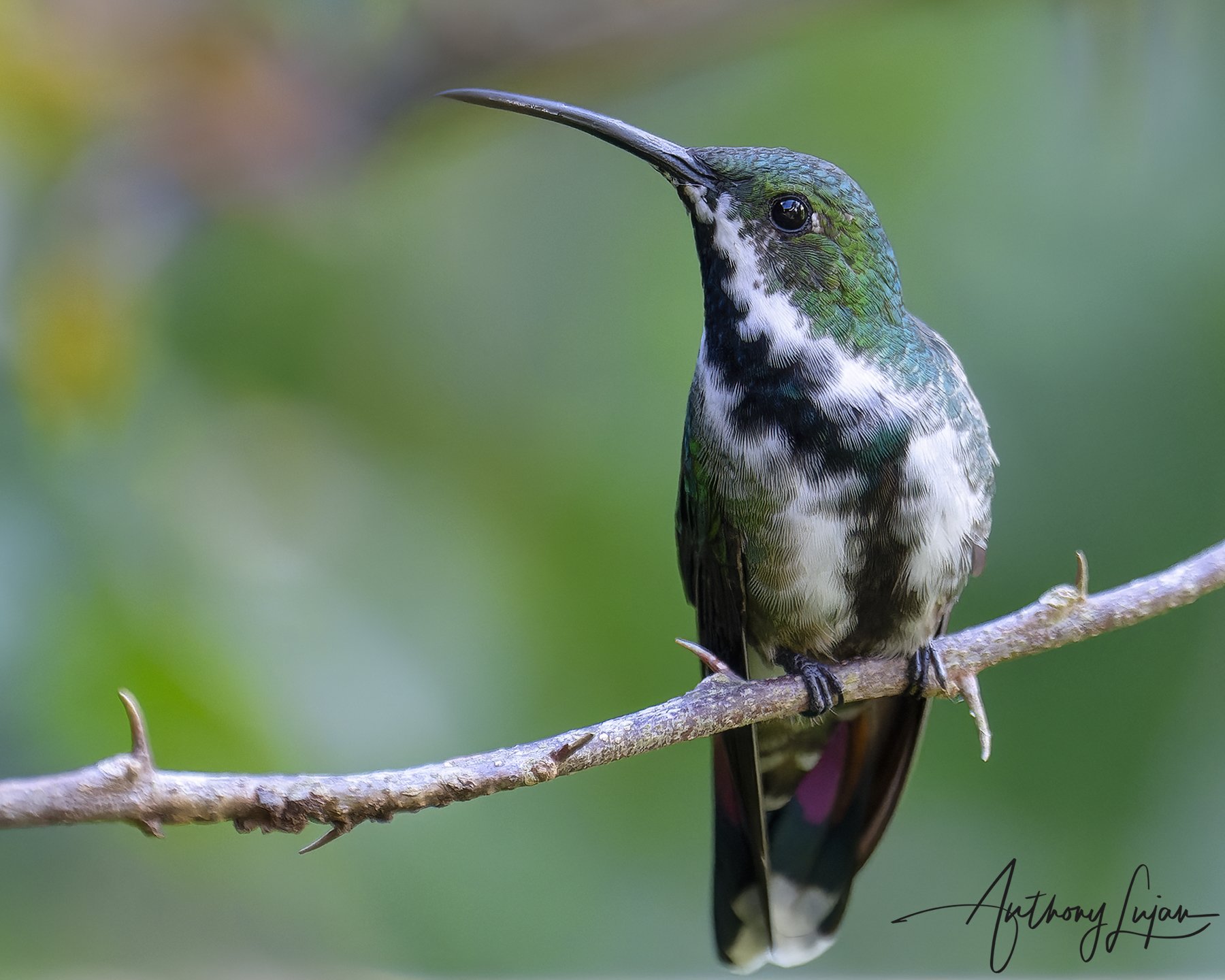
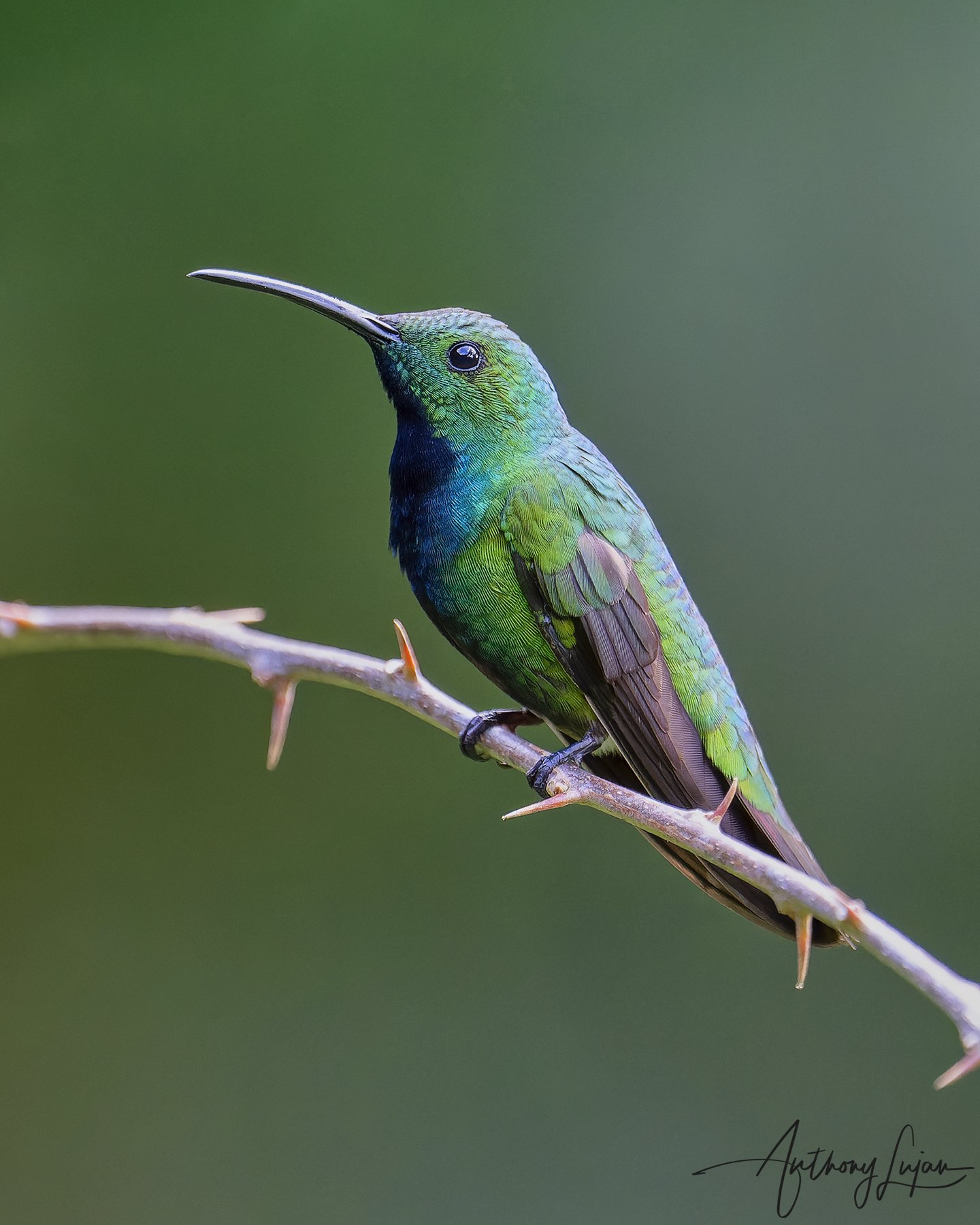
Checkout Anthony’s playlist of this species! Click the top right dropdown to see all the videos.
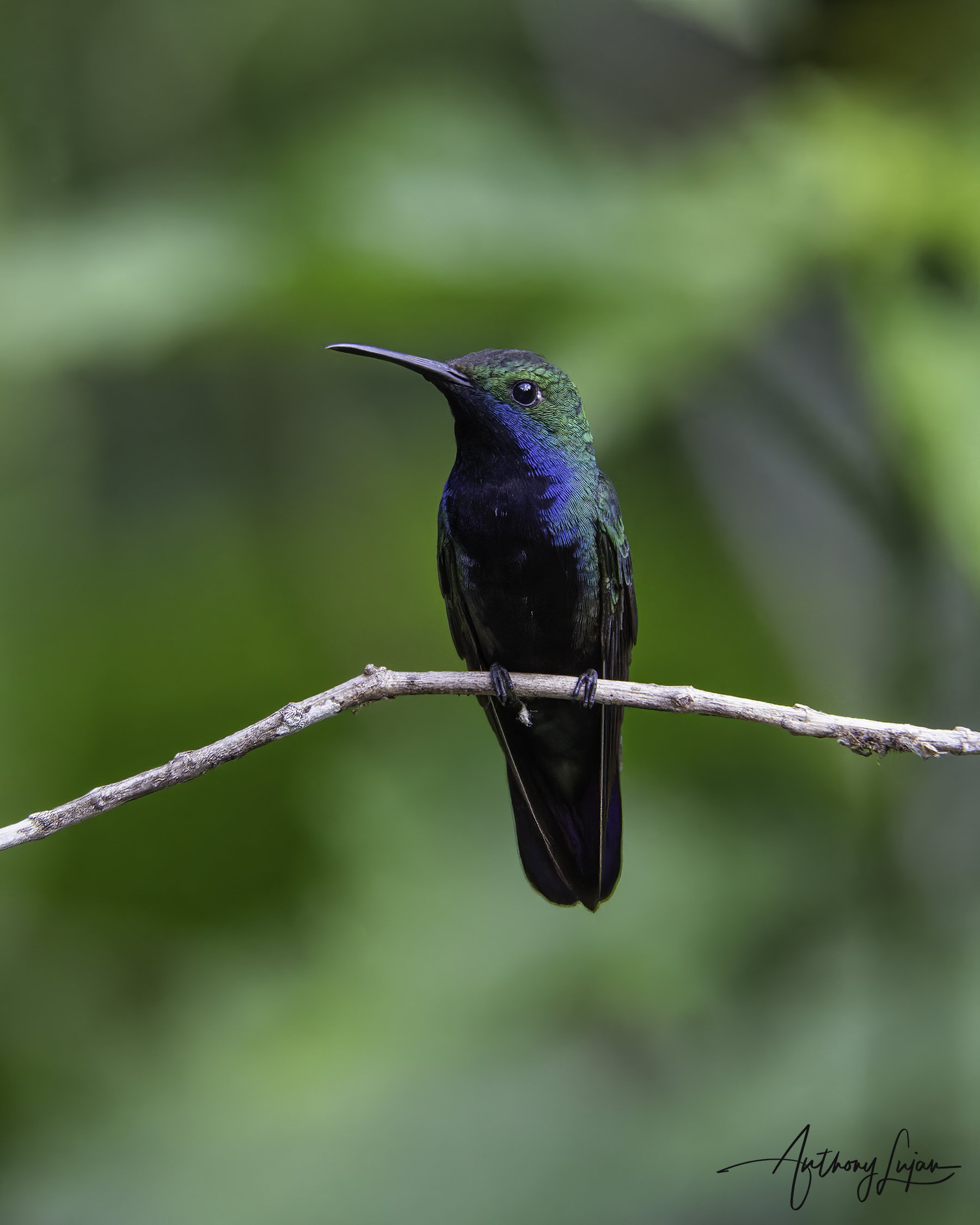
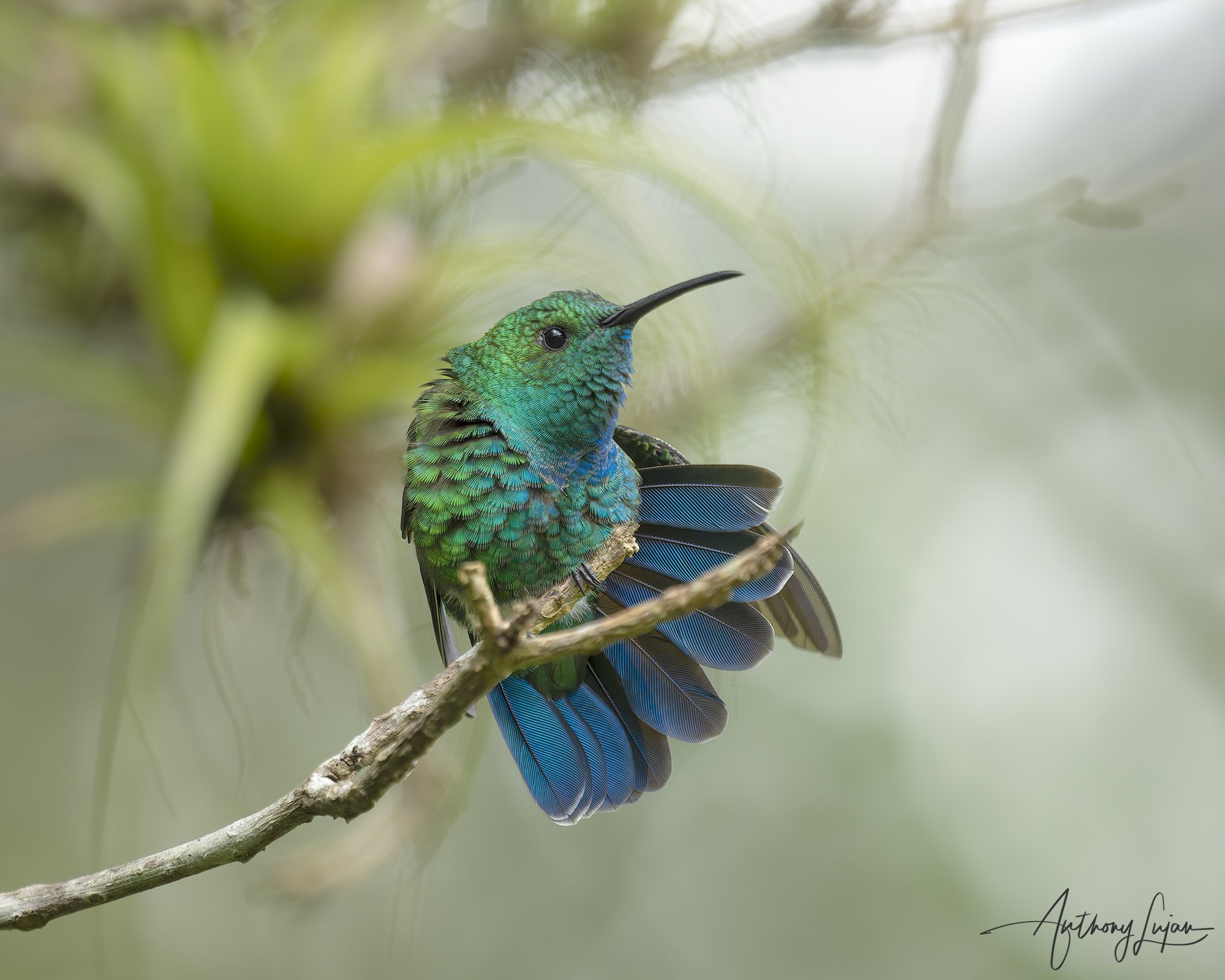
Related species in the Anthracothorax genus (8 species total):

Please note: The content provided in this article reflects Anthony’s personal experience and photographic approach. Results can vary depending on light, weather, location, equipment, subject behavior, and field conditions.