
Scientific name: Anthracothorax viridigula
The Green-throated Mango is a small coastal hummingbird found from northeastern Venezuela through the Guianas into northeastern Brazil and on Trinidad. The number of mature individuals is unknown, its population trend is Decreasing, it is assessed as Least Concern, monotypic, and considered not a migrant overall (though it makes local seasonal movements inland).
At a Glance
Family: Trochilidae (hummingbirds)
Clade: Polytminae – Mangoes and Fairies
Genus: Anthracothorax
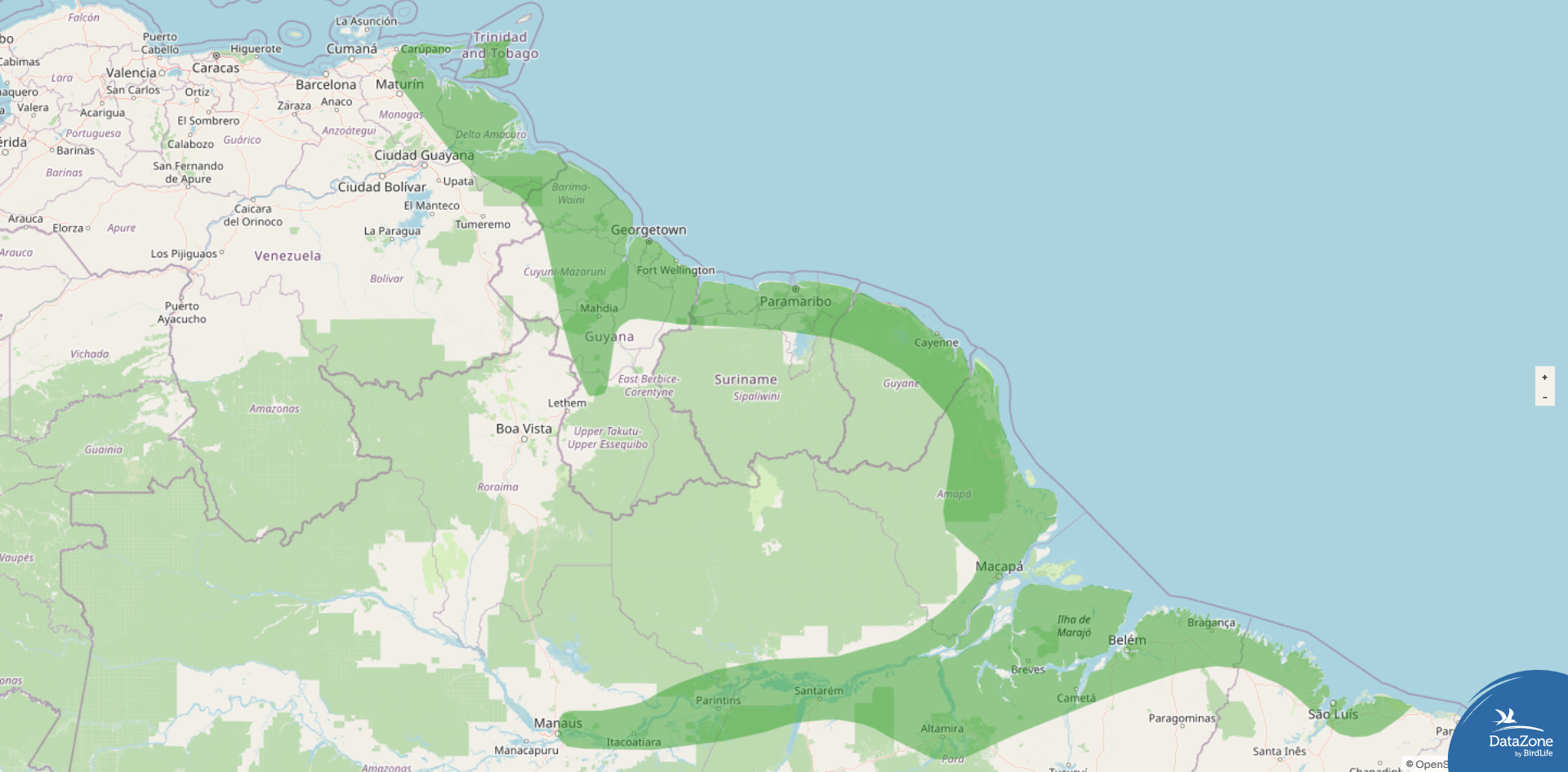
Range: Coastal northeastern Venezuela, Guyana, Suriname, French Guiana, and Brazil east to Maranhão, also along the Amazon River to the Negro River and on Trinidad (but not Tobago)
Habitat: Mangrove swamps, moist lowland savanna, and similar swampy or seasonally flooded landscapes with scattered large trees
Elevation: From sea level up to about 500 m
Length: About 10–12.5 cm (4.1–4.9 in)
Weight: Males roughly 7.5–9 g; females around 6 g
Number of mature individuals: Unknown
Population trend: Decreasing
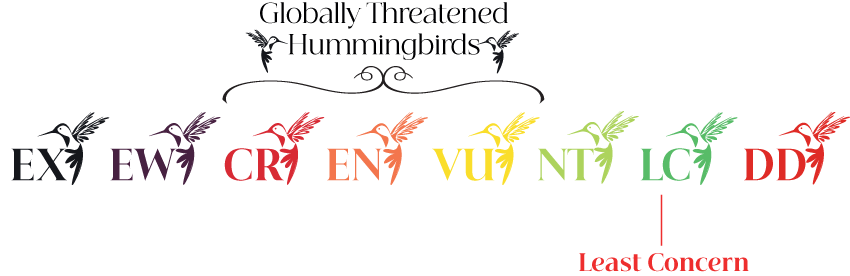
Status: Least Concern (IUCN)
Name Origin
The genus name Anthracothorax combines words meaning “coal” and “chest,” referring to the dark areas on the breast typical of mango hummingbirds. The species name viridigula comes from Latin for “green throat,” directly describing the male’s bright green throat. The English name “Green-throated Mango” highlights this same key field mark and its membership in the mango group.
Subspecies & Distribution
Green-throated Mango is monotypic, with no recognized subspecies.
It occurs coastally from northeastern Venezuela through Guyana, Suriname, and French Guiana into Brazil as far east as Maranhão, and inland along the Amazon River to the Negro River. It also occurs on Trinidad, where it is now rare due to habitat loss. Across this range it is strongly associated with coastal and lowland wet habitats, especially mangroves and moist savannas with scattered large trees.
Ledged
Green Resident
Species Overview
The Green-throated Mango is a localized but distinctive hummingbird of coastal mangroves and wet lowland savannas in northeastern South America. Compared with other mangoes, it has a relatively limited range tied to specific coastal and riverine habitats, making it more vulnerable to habitat changes. Despite this, its overall distribution and occurrence in several countries support a Least Concern status, though ongoing habitat loss contributes to a Decreasing trend.
Male Description
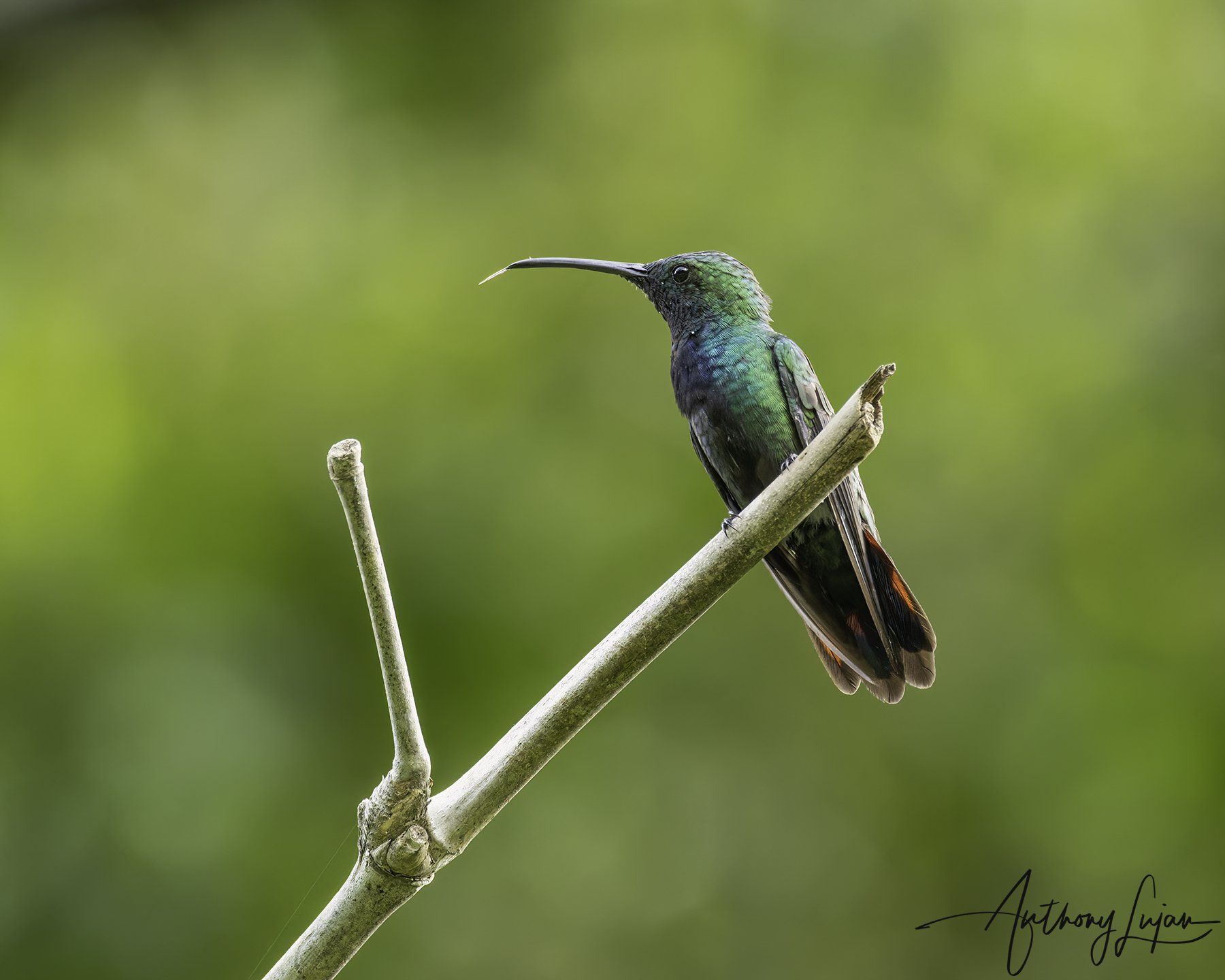
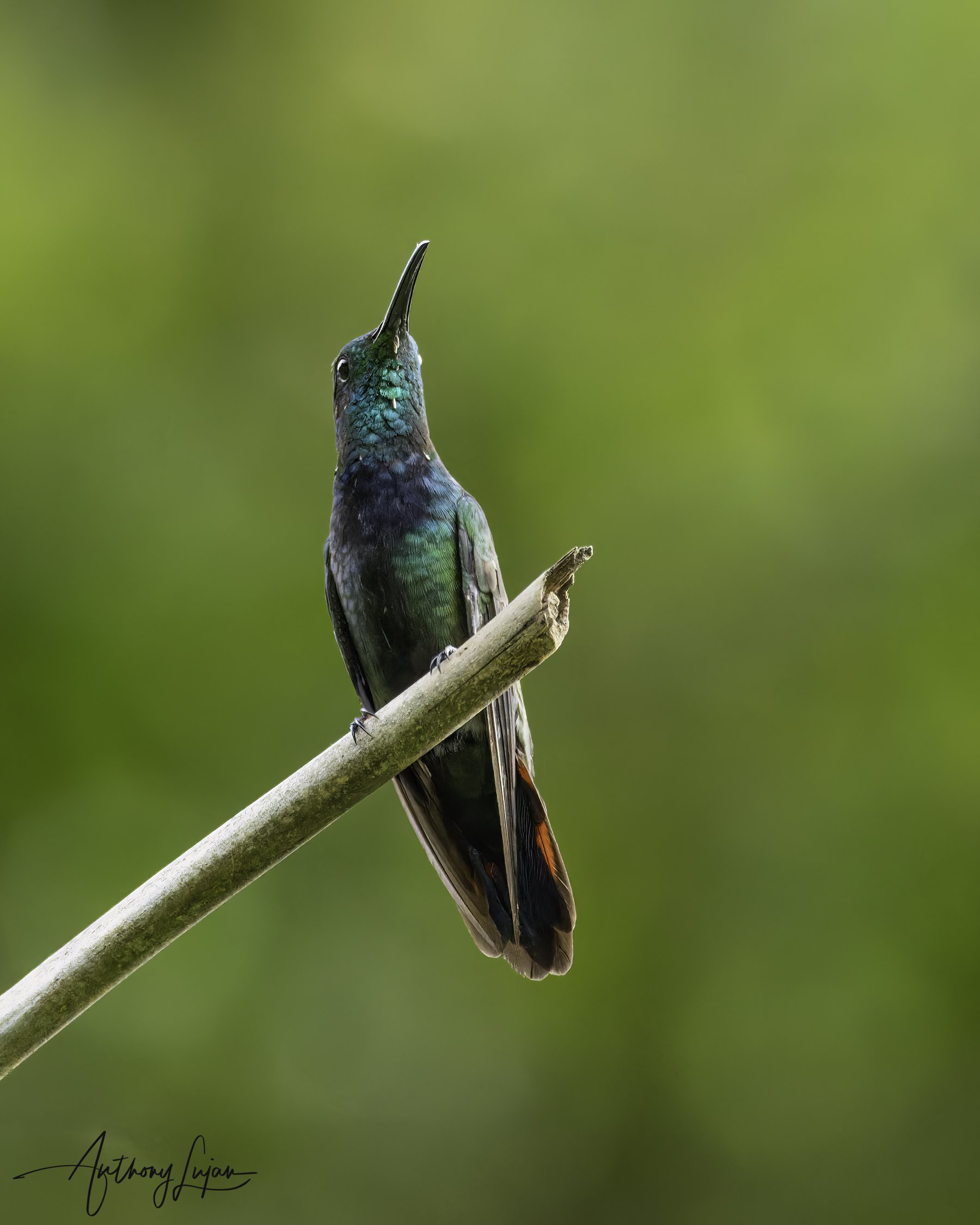
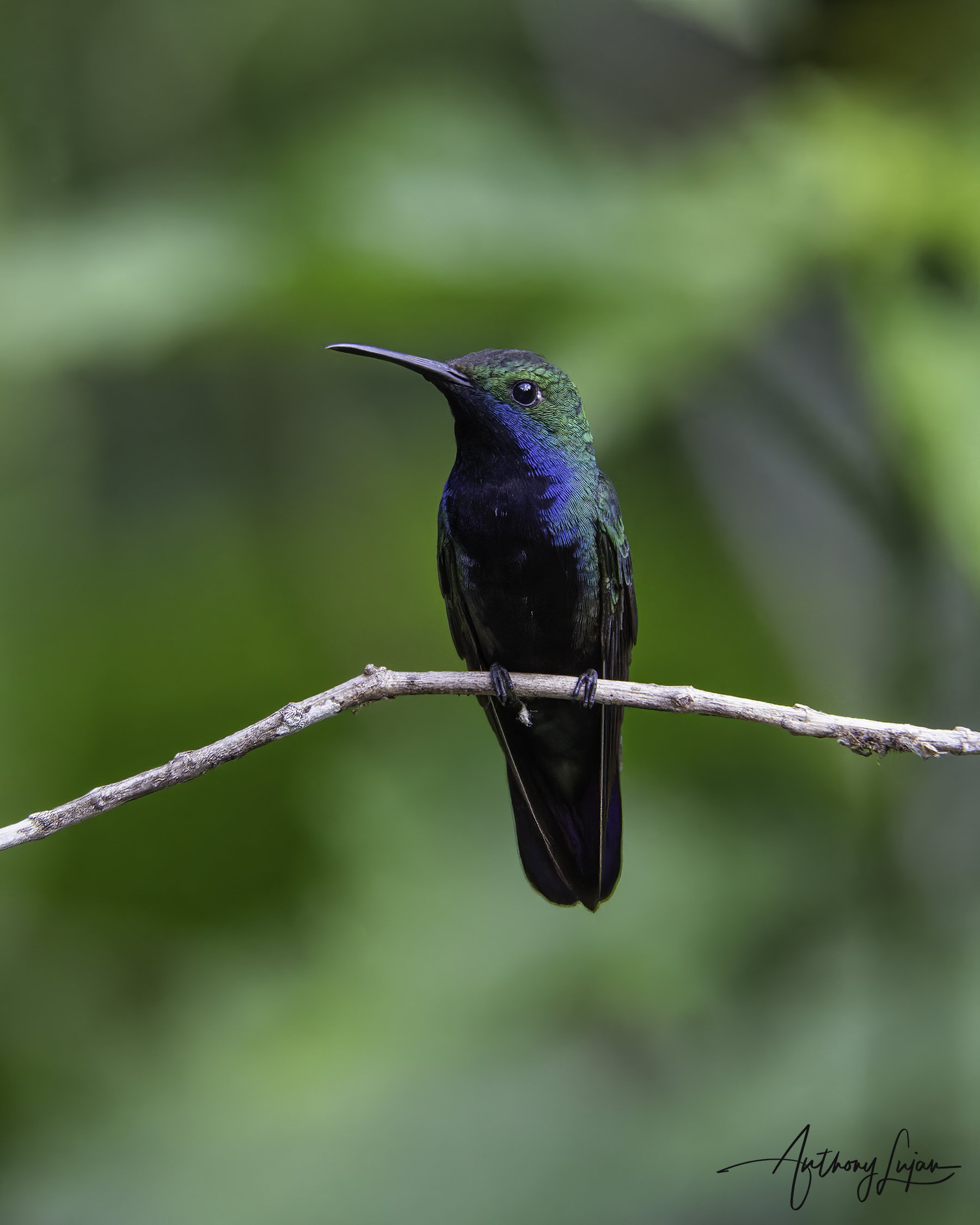
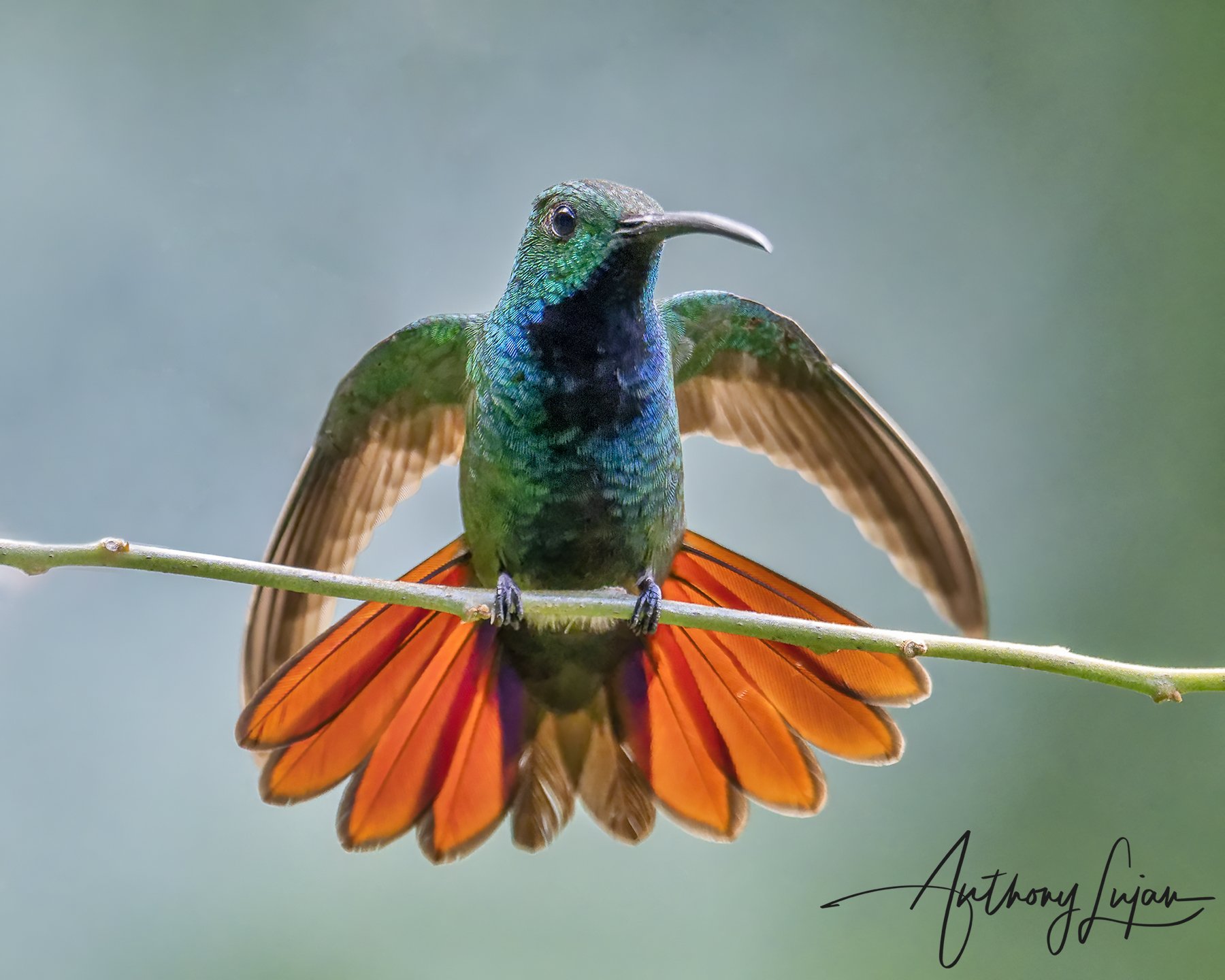
Adult males are small mangoes with glossy bronzy-green upperparts and a longish, slightly decurved black bill. The throat and underparts are bright green with a narrow black central line down the breast and belly, giving a subtle but distinctive dark stripe against the green. The central tail feathers are dark brown to green, while the outer tail feathers are shiny purple with dark blue tips, creating a strongly colored tail in flight. Overall, the male appears as a bronzy-green hummingbird with a vivid green throat and belly, accented by a thin black line and a bright purple tail.
Female Description
Females have bronzy-green upperparts with a warmer, more reddish tinge than males. Their underparts are paler, with a whitish or buffy base and a narrower, less solid central dark stripe compared to the male, often mixed with green or dusky tones. The tail pattern is similar in structure, with darker central feathers and more purplish outer ones, but the contrast with the body can appear less striking than in males. In the field, females are best identified by their bronzy upperparts, pale underparts with a central dark line, and typical mangrove or moist savanna habitat.
Habitat & Behavior
Green-throated Mangos inhabit mangrove swamps, moist lowland savannas, and similar swampy or seasonally flooded landscapes with scattered large trees, mainly in lowland coastal zones and along major rivers. They feed primarily on nectar from tall flowering trees, often high in the canopy, where males defend feeding territories around favored blossoms. They are also notably insectivorous, catching small arthropods on the wing or gleaning them from foliage, making invertebrates an important part of their diet. The species is considered sedentary (not a migrant) in coastal areas, but individuals farther inland move seasonally to track flowering trees along the Amazon and its tributaries.
Population
The total number of mature individuals is unknown, but the Green-throated Mango is generally described as locally common in coastal parts of its range and less common inland along the Amazon. Its distribution is patchy, following suitable mangrove and moist savanna habitats, and it is rare on Trinidad due to extensive habitat loss. The overall population is believed to be Decreasing, primarily because of the draining, degradation, and conversion of mangroves and wet savannas.
Conservation
Green-throated Mango is listed as Least Concern because it occupies a relatively broad though coastal-skewed range across northeastern South America and still has locally common populations in some regions. However, its dependence on mangroves and wet lowland savannas makes it sensitive to coastal development, mangrove clearance, and changes in hydrology and land use. Conservation measures that protect and restore mangrove forests, maintain moist savanna and swampy lowlands with scattered trees, and limit destructive coastal development will benefit this species. Monitoring trends in key coastal and riverine habitats, especially in the Guianas and Brazil, is important to prevent further declines.
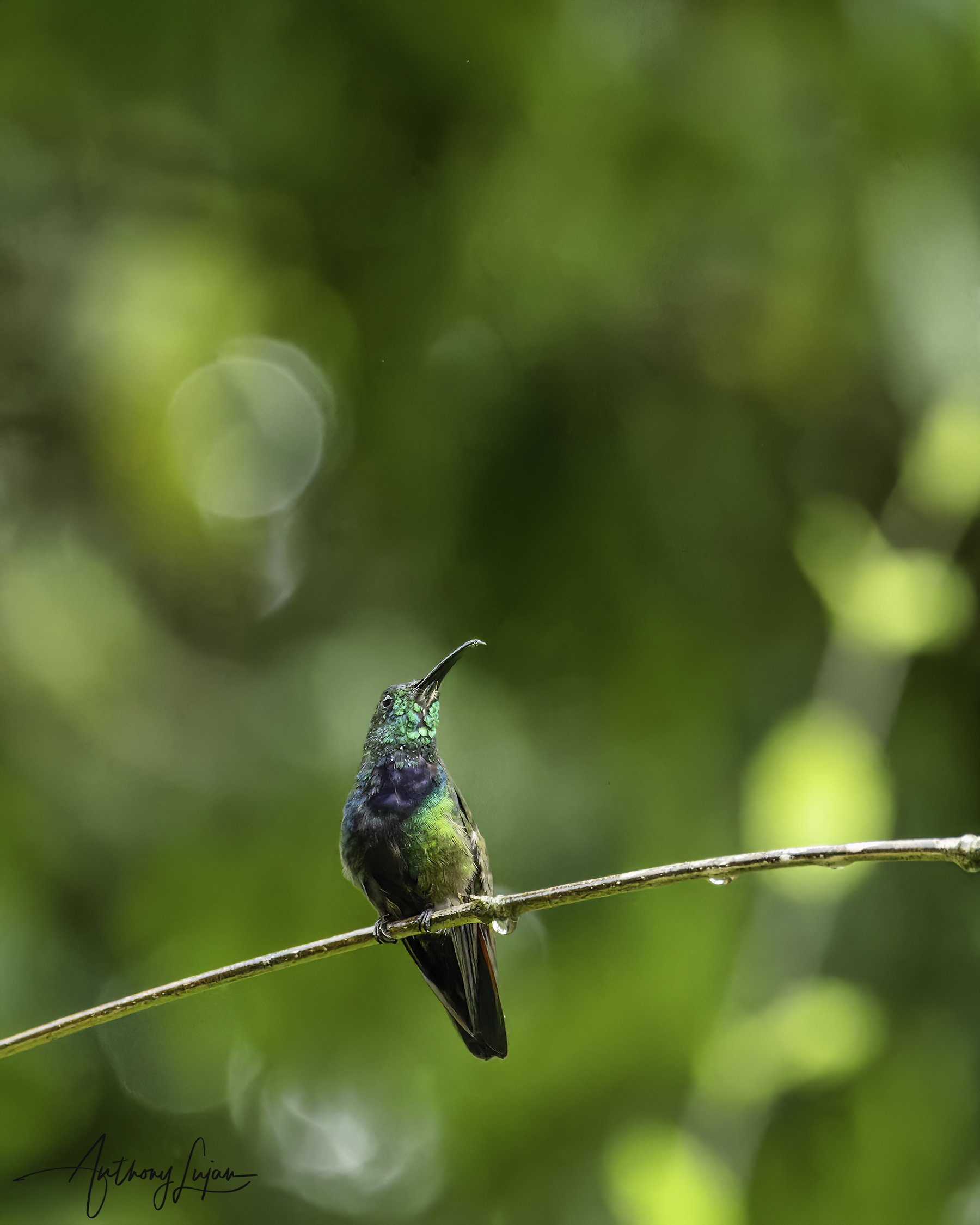
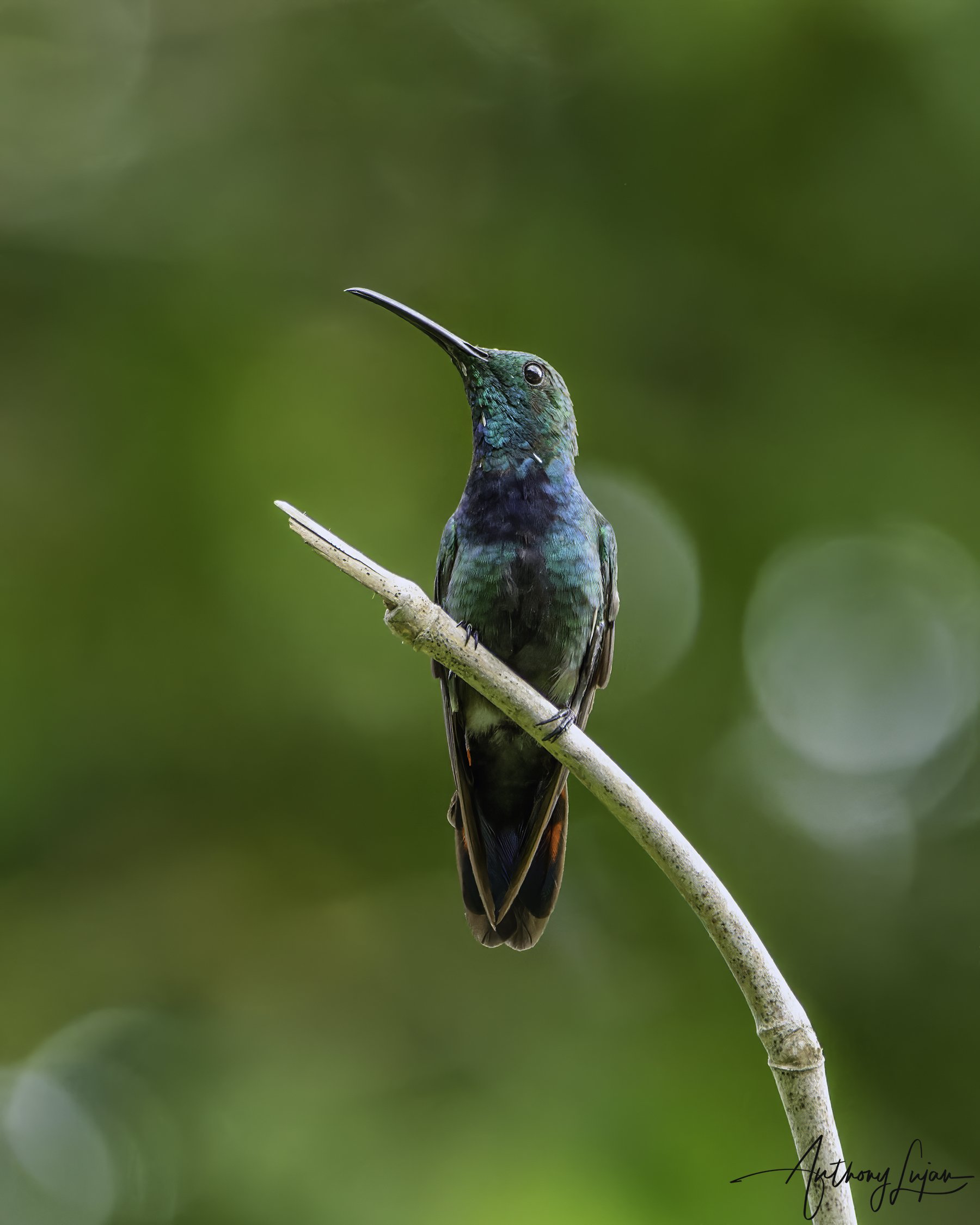
Checkout Anthony’s playlist of this species! Click the top-right dropdown to see all the videos.
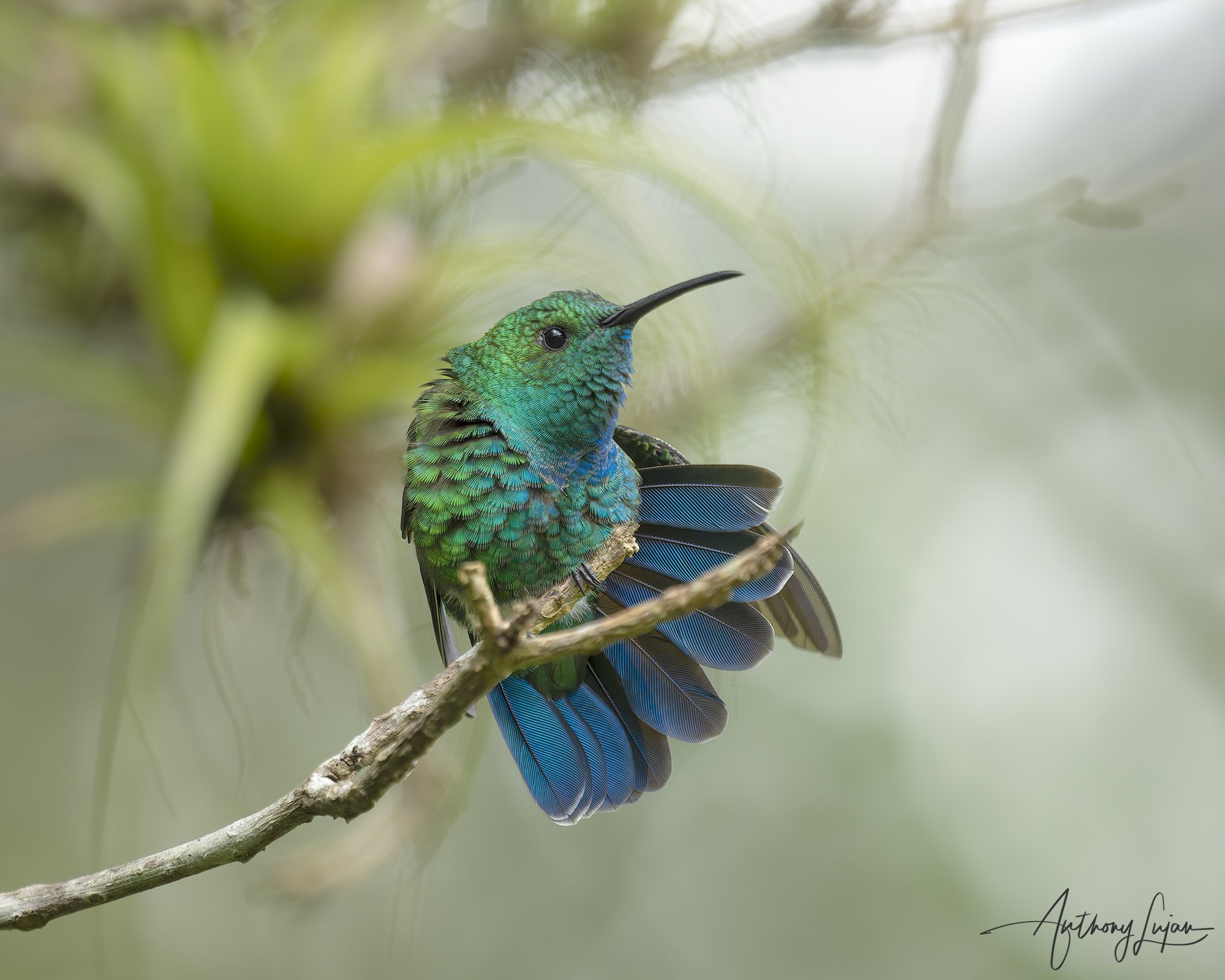
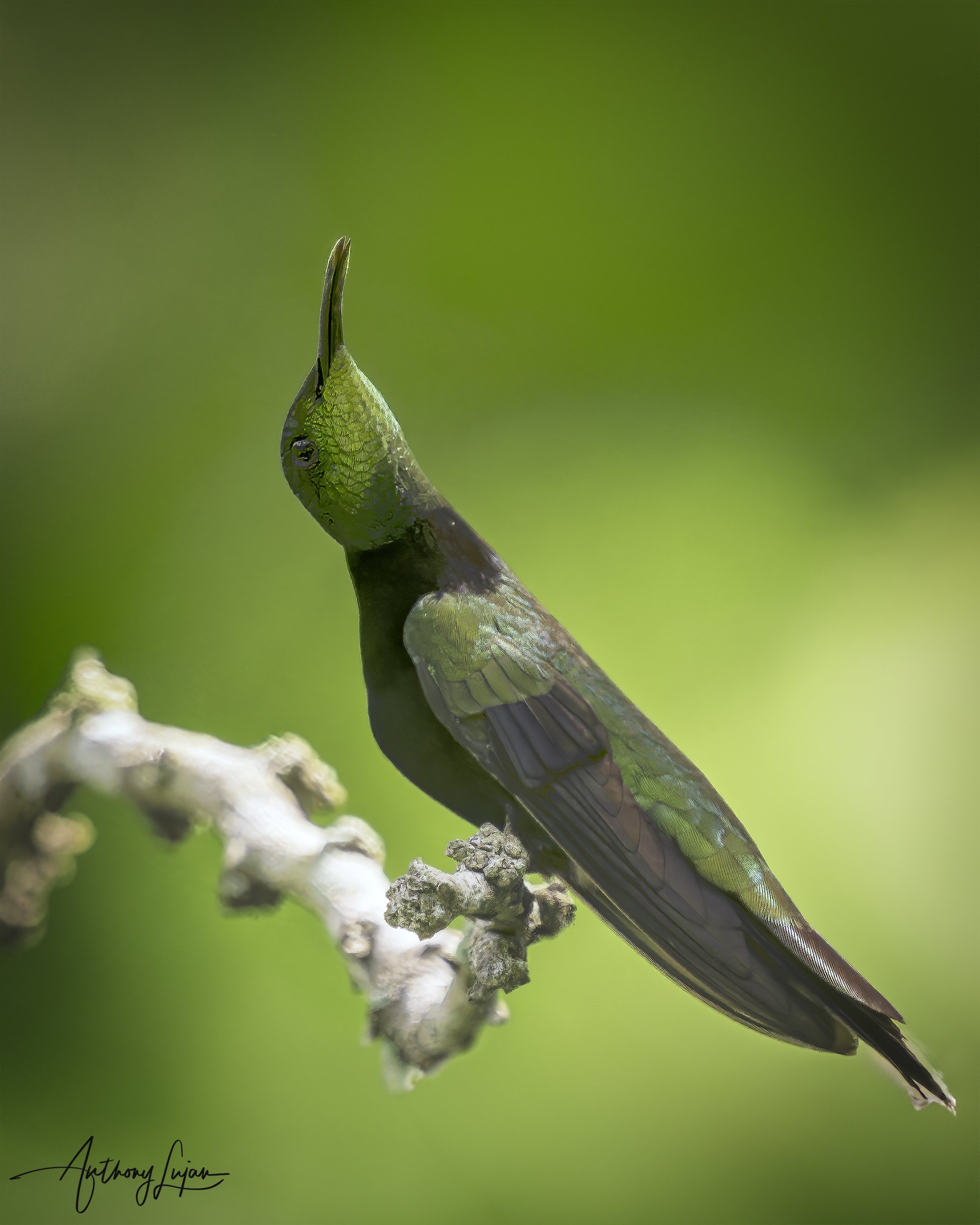
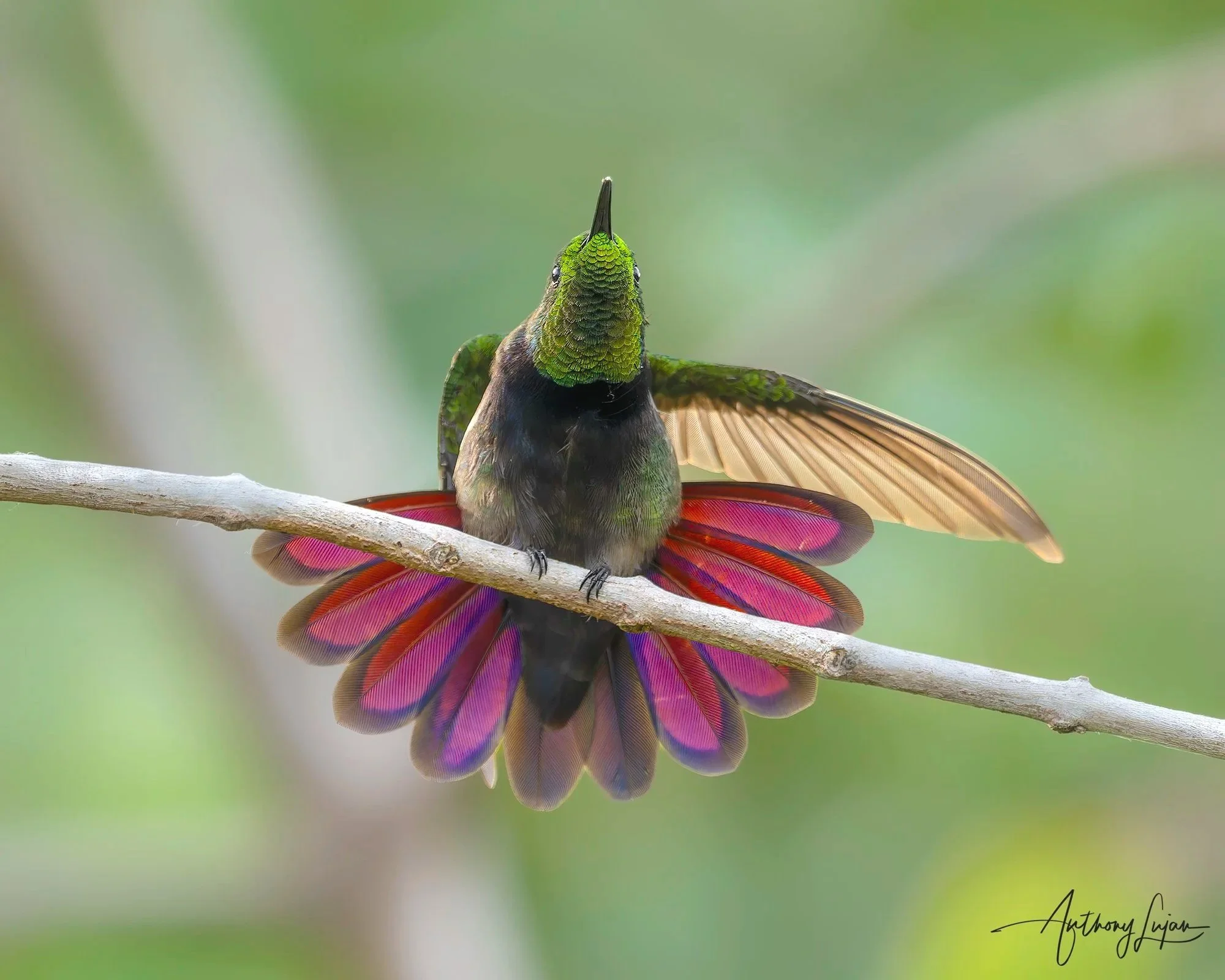
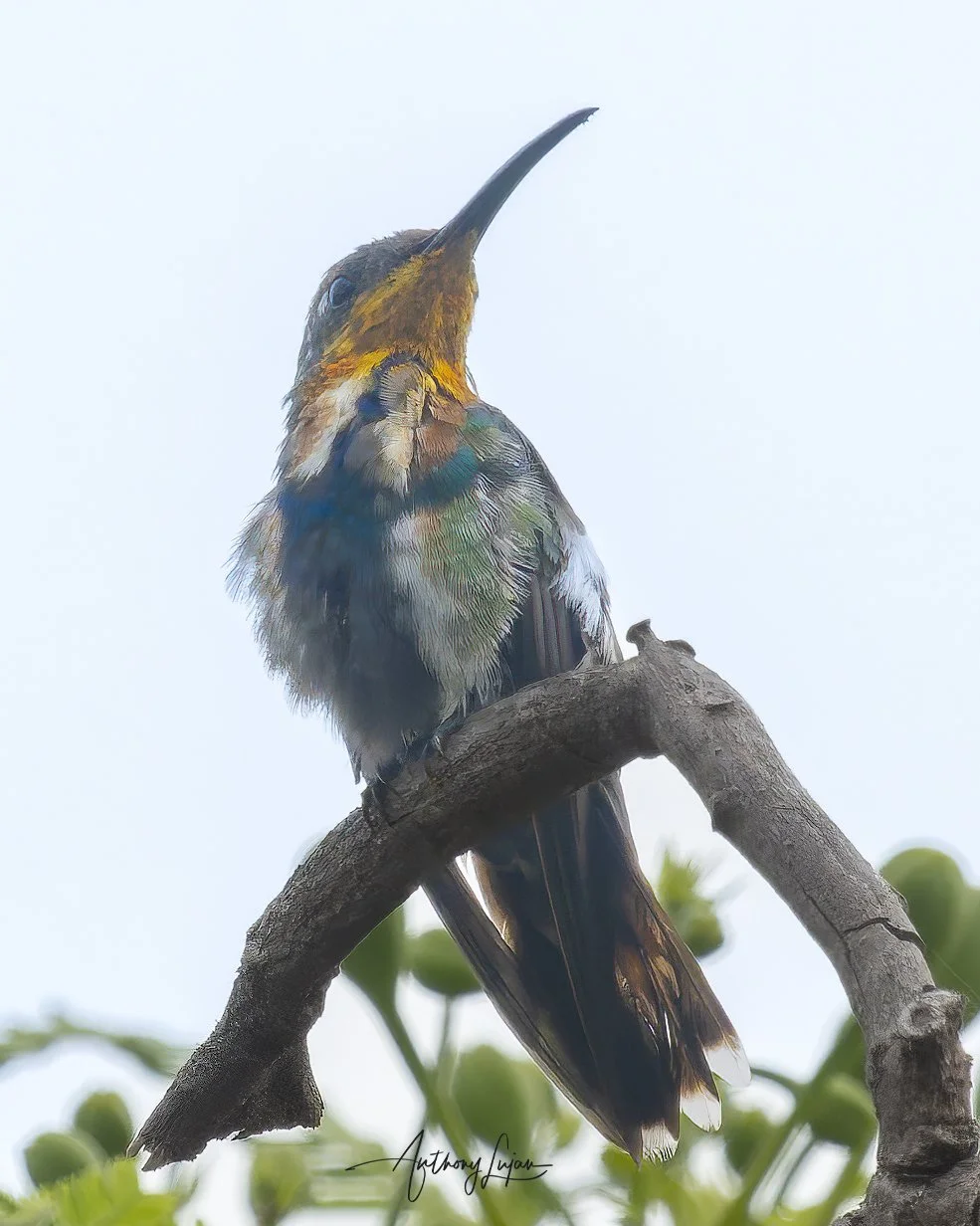
Related species in the Anthracothorax genus (8 species total):

Please note: The content provided in this article reflects Anthony’s personal experience and photographic approach. Results can vary depending on light, weather, location, equipment, subject behavior, and field conditions.