

Scientific name: Lampornis viridipallens
The Green-throated Mountain-gem is a highland hummingbird of southern Mexico and northern Central America, where it inhabits humid evergreen and pine–oak forests. It is one of the most regularly seen hummingbirds in suitable mid‑elevation forests within its restricted range. Despite an estimated 50,000–499,999 mature individuals and a Decreasing population trend, it is currently assessed as Least Concern.
At a Glance
Family: Trochilidae (hummingbirds)
Clade: Mellisugini – “Bee” hummingbirds
Genus group: Lampornis — mountain-gems, medium to large highland hummingbirds with bold facial patterns and colorful throats
Range: Highlands of southern Mexico (Chiapas and southeastern Oaxaca), southern Guatemala, El Salvador, and western Honduras
Habitat: Interior and edges of humid evergreen and cloudforest, and semi‑humid pine–oak and pine–evergreen forest, especially at forest edges and in second growth
Elevation: About 900–2,700 m (3,000–8,900 ft)
Length: About 10–11 cm (around 4.0–4.3 in)
Weight: Roughly 4–6 g (0.14–0.21 oz)
Number of mature individuals: 50,000–499,999
Population trend: Decreasing
Status: Least Concern (IUCN)
Name Origin
The genus name Lampornis combines Greek lampros (“bright,” “shining”) and ornis (“bird”), referring to the bright, glittering throats and bold patterns of mountain-gems. The species name viridipallens comes from Latin viridis (“green”) and pallens (“pale”), referencing the pale green tones of the throat and plumage. Together, Lampornis viridipallens means roughly “pale green bright bird,” matching the species’ soft green throat and mountain-gem sheen.
Subspecies and Distribution
Four subspecies:
Lampornis viridipallens amadoni
Distribution: Sierra Atravesada in southeastern Oaxaca, Mexico.Lampornis viridipallens ovandensis
Distribution: Highlands of southern Mexico (Chiapas) and northwestern Guatemala.Lampornis viridipallens viridipallens
Distribution: Highlands of eastern Guatemala, extreme northern El Salvador, and western Honduras.Lampornis viridipallens nubivagus
Distribution: Santa Ana Volcano and upper tropical highlands in western El Salvador.
Across these subspecies, Green-throated Mountain-gem is found in the highlands of southern Mexico (Chiapas and southeastern Oaxaca), southern Guatemala, El Salvador, and western Honduras, primarily in humid evergreen and pine–oak forests between about 900 and 2,700 m.
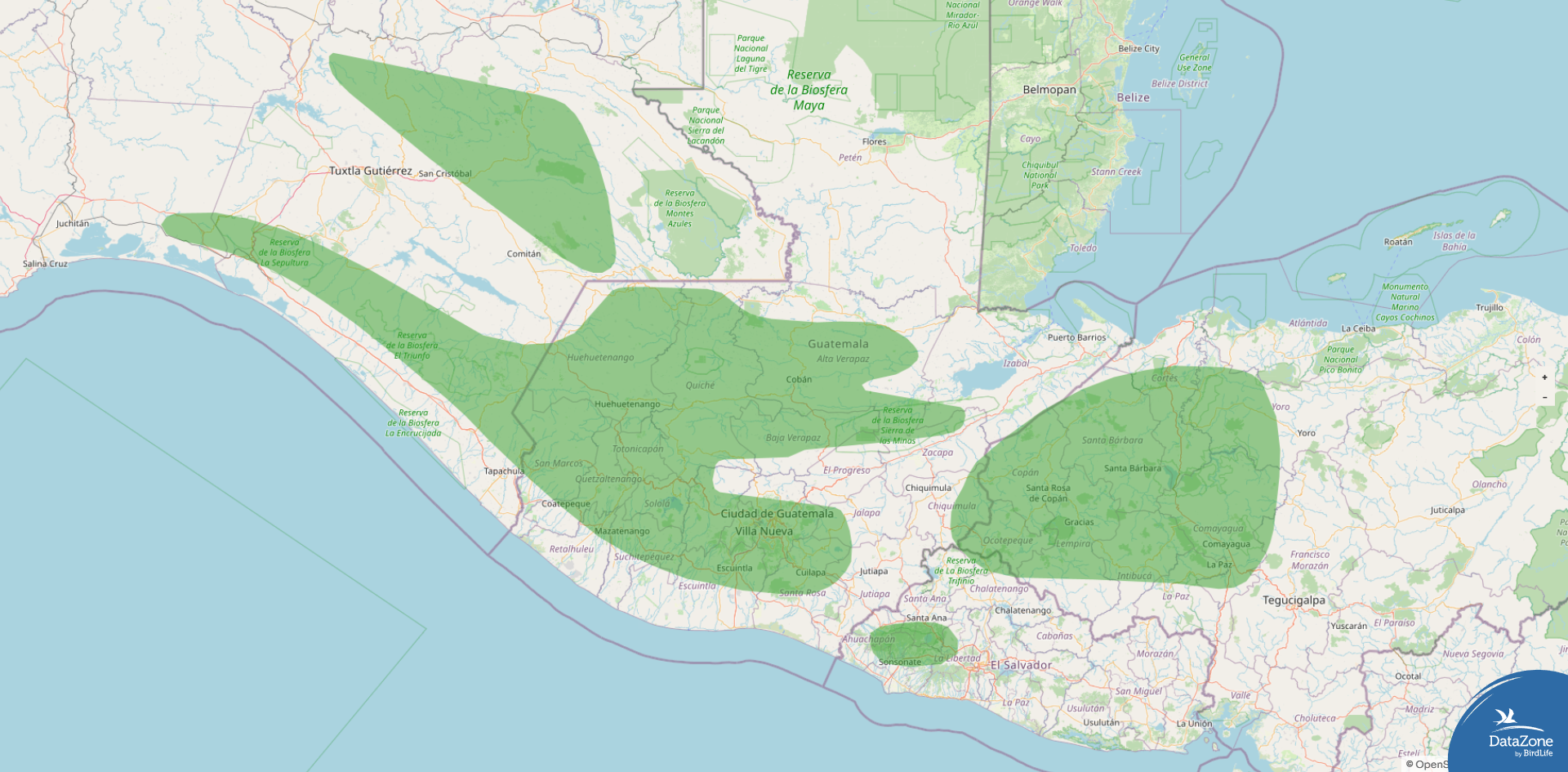
Legend
Green Resident
Species Overview
Green-throated Mountain-gem is a characteristic hummingbird of mid‑elevation cloudforest and pine–oak forest in Chiapas, Guatemala, El Salvador, and western Honduras. It is often one of the most commonly observed hummingbirds in suitable forest and edge habitats, despite its relatively small global range. With an estimated 50,000–499,999 mature individuals and a Decreasing population trend, it remains Least Concern but warrants attention as highland forests face ongoing pressure.
Identification
Male
Adult males are medium‑sized mountain-gems with dark green upperparts and a slightly bronzy rump. The throat is green, often appearing bright or shining in good light, contrasting with a whitish to pale gray breast and belly and buffy flanks. As in other Lampornis, they have a bold facial pattern with a whitish stripe above and sometimes below the eye, and a relatively straight dark bill. The tail is fairly long and dark with some paler corners or tips, though less strikingly white than in Blue-throated Mountain-gem.
Female
Females are similar in structure but have a paler throat, usually whitish with some green spotting, and overall somewhat duller coloration. The underparts are grayish to whitish with buffy flanks, and the facial pattern is similar but slightly less bold than in males. Juveniles resemble adult females until young males begin to develop more extensive green on the throat and a crisper facial pattern.
Habitat and Behavior
Green-throated Mountain-gems inhabit the interior and edges of humid evergreen and cloudforest and semi‑humid pine–oak and mixed pine–evergreen forest. They are especially common along forest edges, clearings, second growth, and roadsides where flowering shrubs and epiphytes are abundant. The species occurs from about 900 to 2,700 m, being most frequent in mid‑elevation highlands.
They feed on nectar from a wide range of flowering plants, including forest shrubs, canopy flowers, and epiphytes, and also take small insects and spiders for protein. Green-throated Mountain-gems are active and often vocal, using repeated perches and small feeding circuits within their territories or home ranges. They can be locally common around flowering trees and shrubs and will sometimes visit feeders in highland communities.
Population and Threats
Green-throated Mountain-gem has a relatively small total population estimated at 50,000–499,999 mature individuals and a Decreasing trend. Its range is restricted to highland forests of southern Mexico and northern Central America, ecosystems that are experiencing ongoing deforestation, fragmentation, and degradation from agriculture, logging, and development. Because it depends on humid evergreen and pine–oak forest, especially edges and mid‑elevation cloudforest, continued habitat loss could further reduce its population and local abundance.

Conservation
Conservation of Green-throated Mountain-gem hinges on protecting cloudforest and pine–oak forest in southern Mexico, Guatemala, El Salvador, and western Honduras. Maintaining continuous forest cover, preserving edge and second‑growth habitats with abundant flowering plants, and limiting deforestation in highland regions are all important. Protected areas that include mid‑elevation montane forests, combined with bird‑friendly coffee and agroforestry practices, can help slow the Decreasing trend for this regional highland endemic.
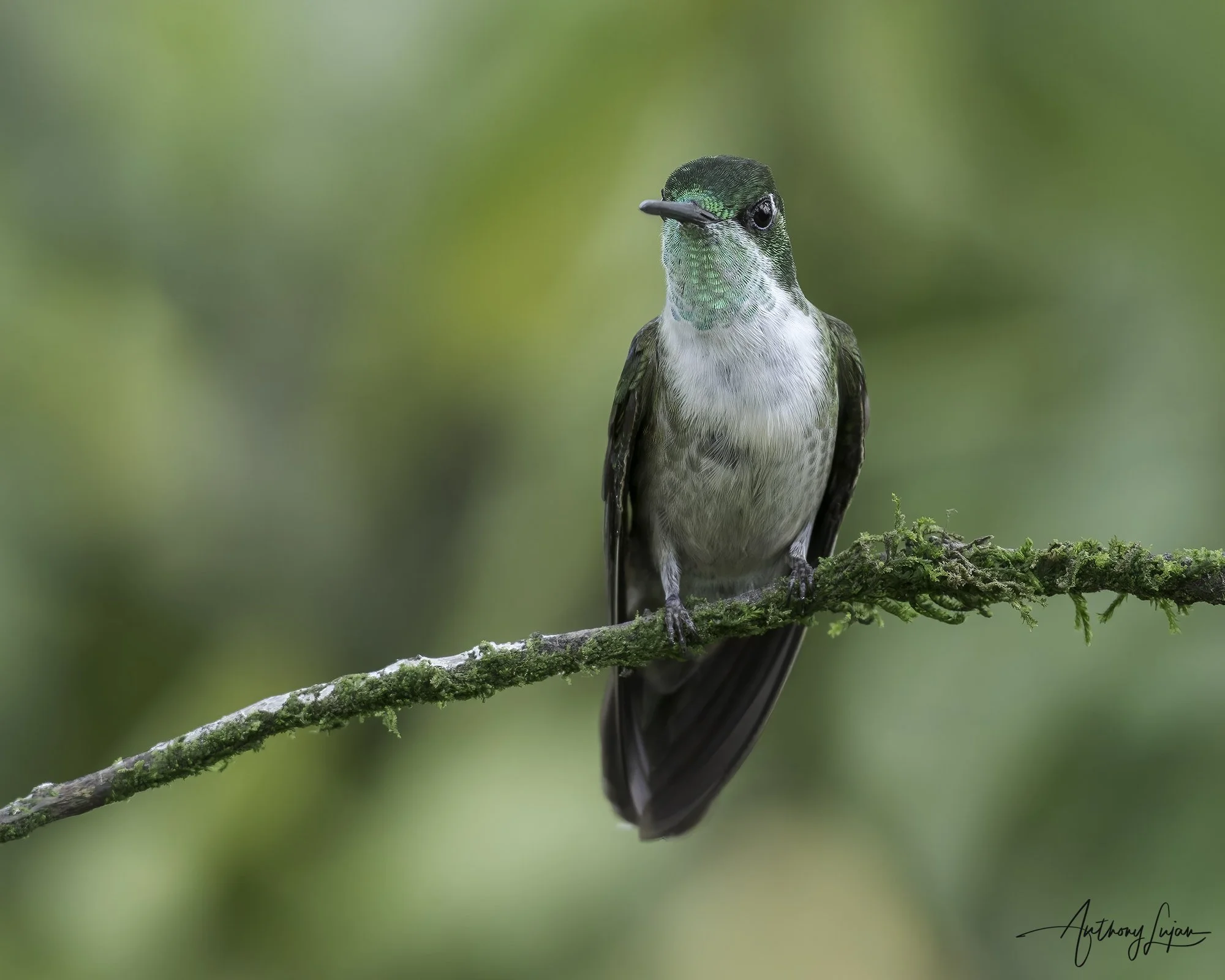
Below is the Green‑throated Mountain‑gem (Lampornis viridipallens viridipallens)
Photographed in Guatemala.
These individuals belong to the subspecies viridipallens, which occupies the highlands of eastern Guatemala (and extends into extreme northern El Salvador and western Honduras). It inhabits humid montane forest and adjacent edges at elevations roughly between 900 and 2,700 m.


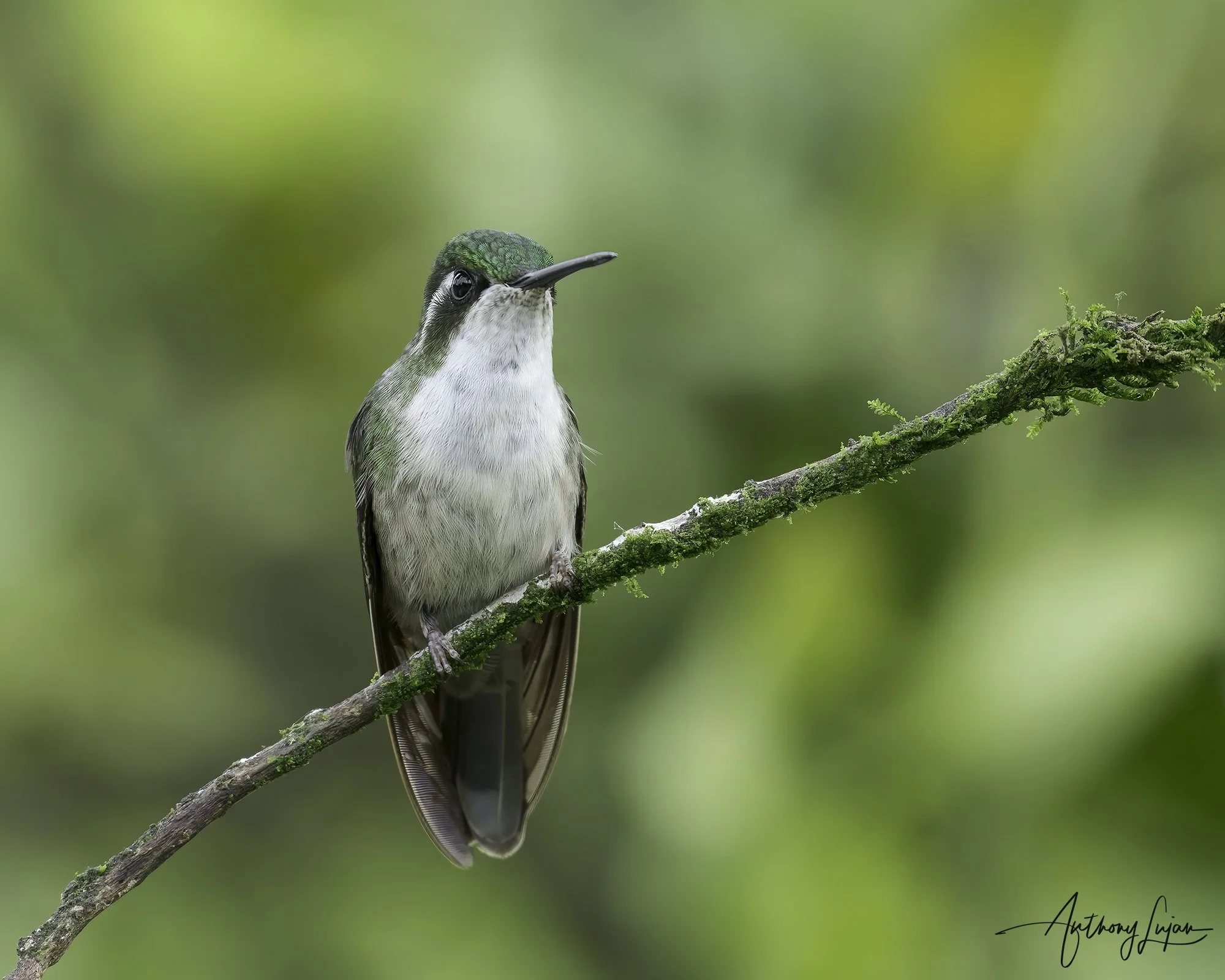
Below is the Green-throated Mountain-gem (Lampornis viridipallens ovandensis)
Photographed in San Marcos, Guatemala.
These individuals belong to the subspecies ovandensis, which occurs in northwestern Guatemala and adjacent Chiapas, Mexico. It inhabits high-elevation humid forest and pine-oak zones and may be distinguishable by reduced green spotting on the underparts compared to the nominate form.
View all the videos by clicking the three lines in the top right corner for the playlist.
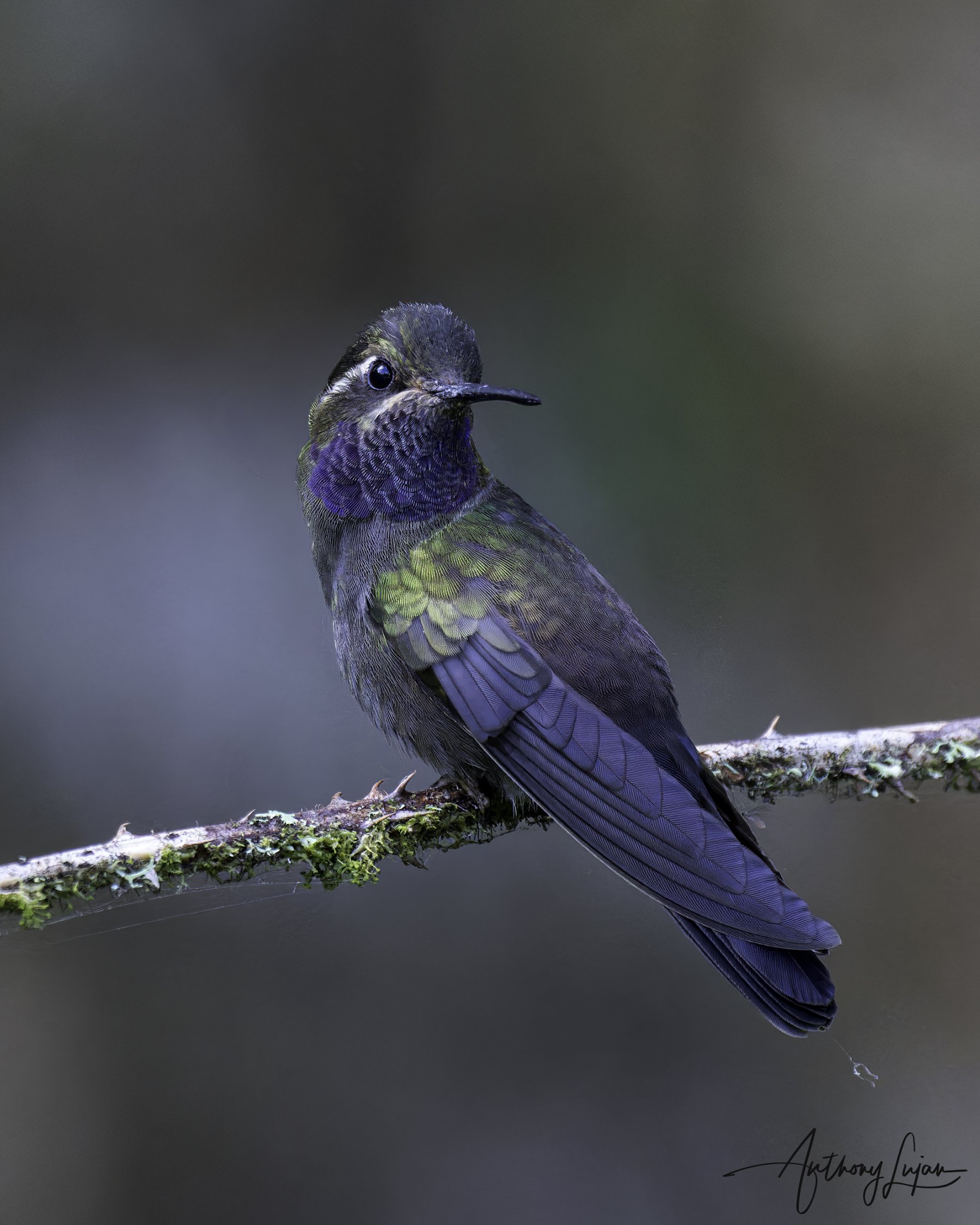
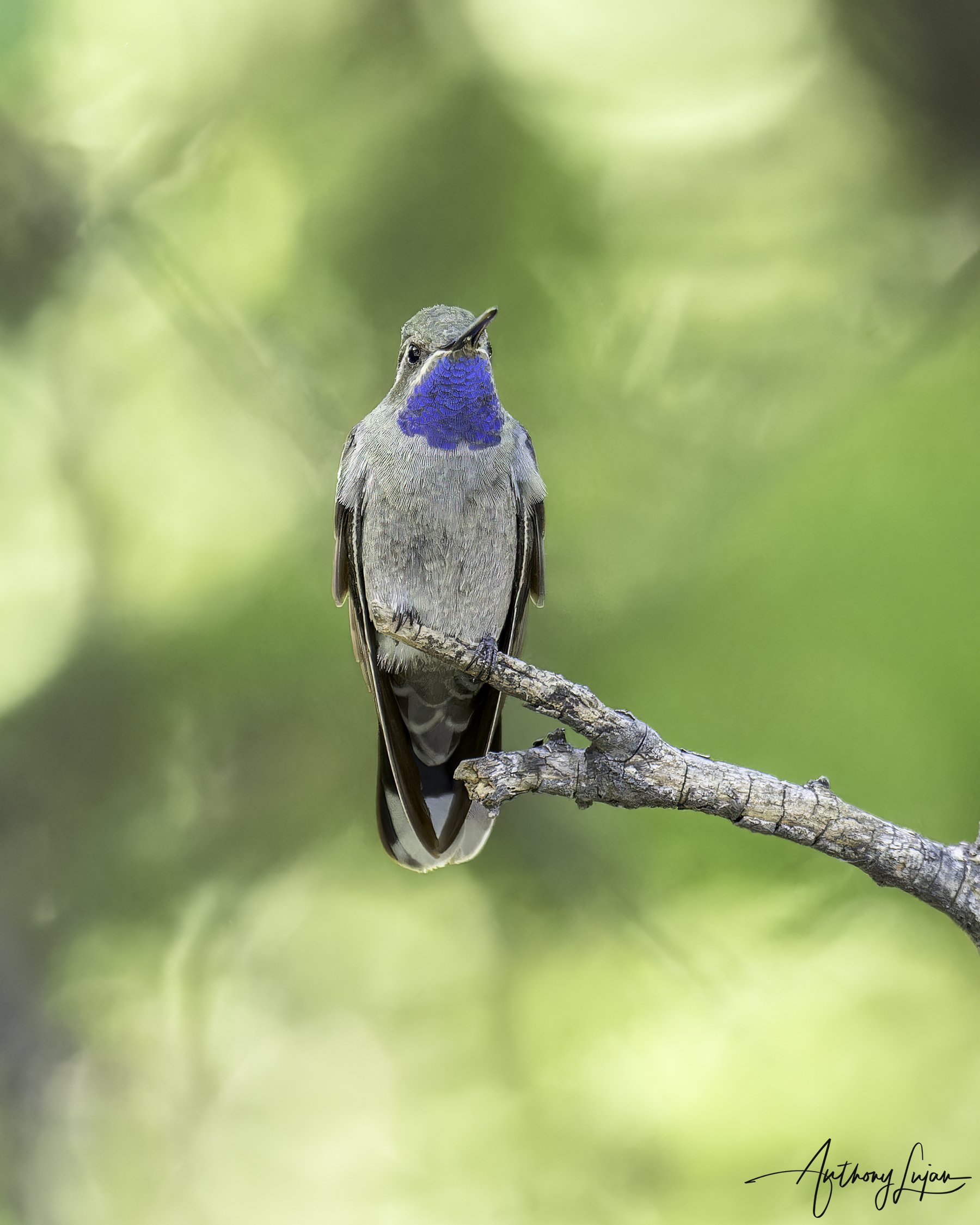
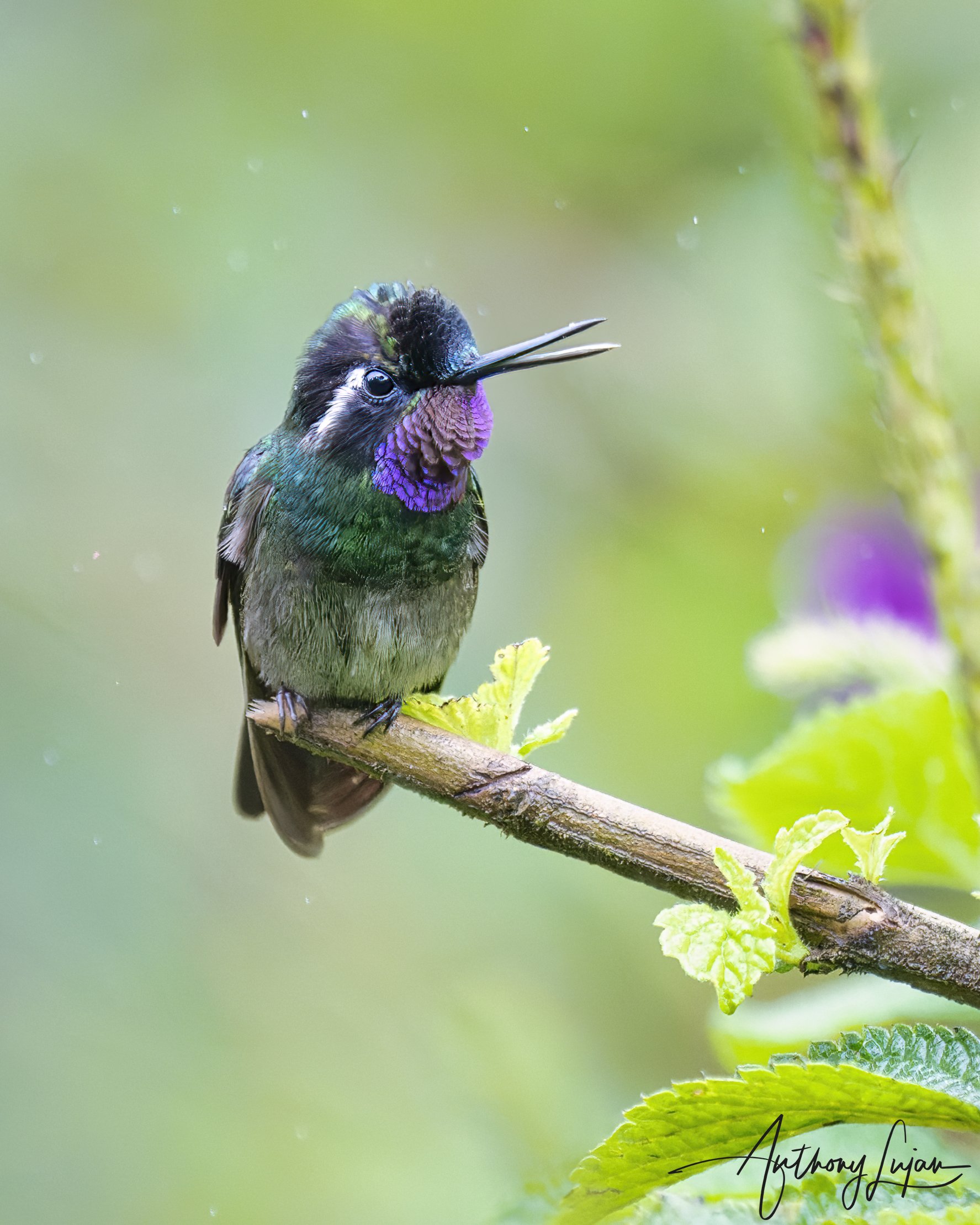
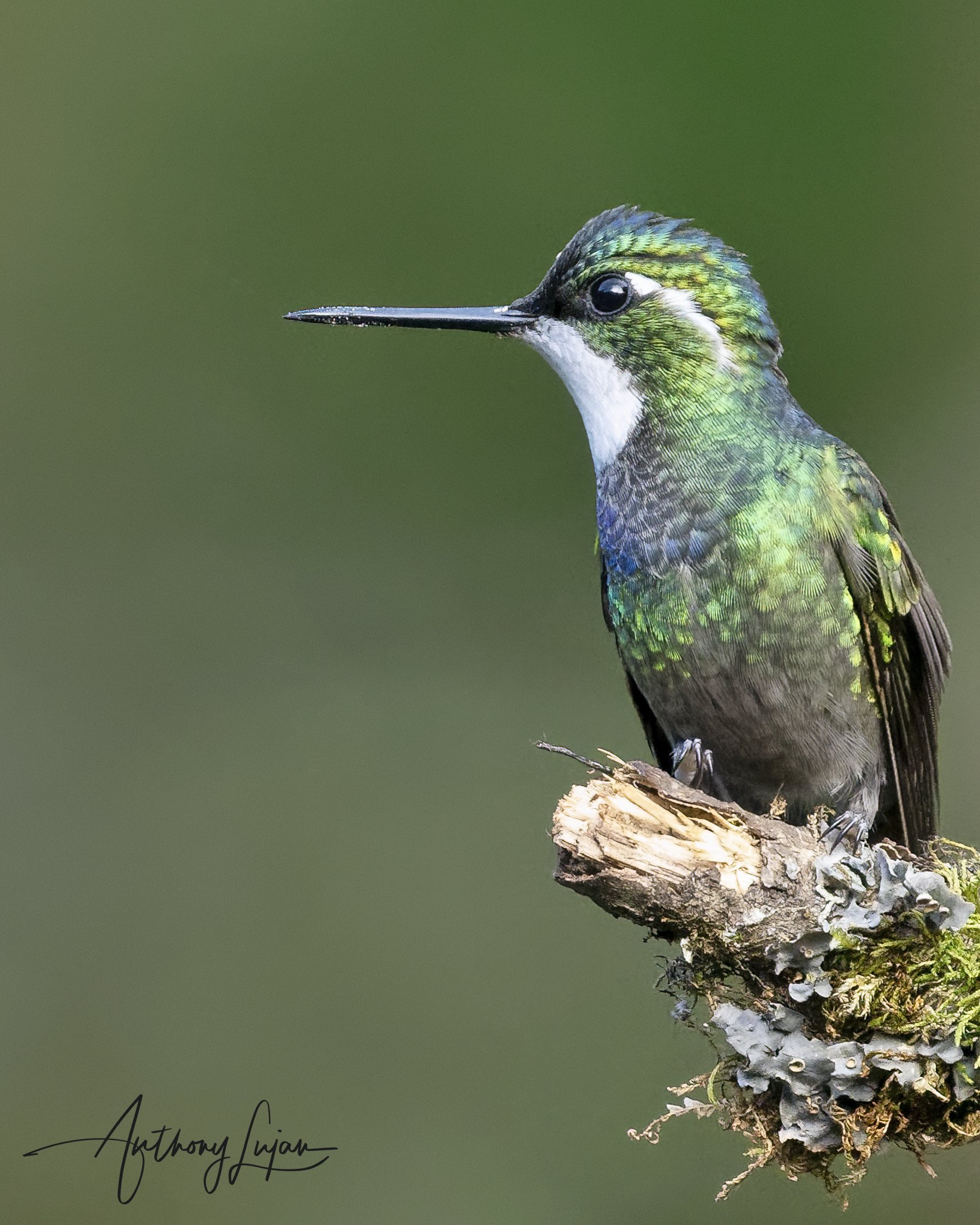
Related species in the Lampornis genus (7 species total):


Please note: The content provided in this article reflects Anthony’s personal experience and photographic approach. Results can vary depending on light, weather, location, equipment, subject behavior, and field conditions.