
Green Thorntail
Scientific name: Discosura conversii
The Green Thorntail is a tiny, long‑tailed hummingbird of humid foothill and lowland forests from Costa Rica south through Panama and western Colombia to western Ecuador. Its total number of mature individuals is unknown, its population trend is decreasing, it is considered non‑migratory, and it is assessed as Least Concern.
At a Glance
Family: Trochilidae (hummingbirds)
Clade: Lesbiini – Coquettes
Genus: Discosura — 5 species in total
Range: Costa Rica, Panama, western Colombia, and western Ecuador
Habitat: Humid evergreen and montane foothill forest, primarily in the canopy and at forest edges; also at flowering trees in clearings and along forest borders
Elevation: Mostly from about 300 to 1,400 m, locally from near sea level up to roughly 1,500 m depending on region
Length: About 9.5–10.5 cm (3.7–4.1 in), including the long tail in males
Weight: About 2.5–3 g (0.09–0.11 oz)
Number of mature individuals: Unknown
Population trend: Decreasing
Movement: Not a migrant (resident, with only local shifts)
IUCN Red List category: Least Concern
Name Origin
The name “Green Thorntail” refers to the bird’s overall green plumage and the male’s extremely long, narrow, pointed tail feathers that resemble thorns. The genus name Discosura combines roots meaning “disc” and “tail,” likely referencing the distinctive tail shapes of members of this genus. The species name conversii honors French naturalist François Jules Pictet de la Rive, known as “de la Rive’s thorntail” in some older texts, though usage has settled on Green Thorntail in English.
Taxonomy & Distribution
Discosura conversii belongs to the “coquettes” (tribe Lesbiini) within the subfamily Lesbiinae of Trochilidae. The genus Discosura includes five small, ornate species known as thorntails. The Green Thorntail is found on the Caribbean slope in Costa Rica and on the Pacific slopes of Panama, western Colombia, and western Ecuador almost to the Peruvian border. It is mainly a forest‑canopy species, inhabiting the upper levels of humid evergreen and foothill forests and their edges, sometimes descending to mid‑story or lower when feeding at flowering trees in clearings.
Subspecies and Distribution
Monotypic — no subspecies recognized.
The Green Thorntail occurs from Costa Rica south through Panama and western Colombia to western Ecuador, mainly on the Caribbean slope in Costa Rica and the Pacific slopes of Panama, Colombia, and Ecuador almost to the Peruvian border.
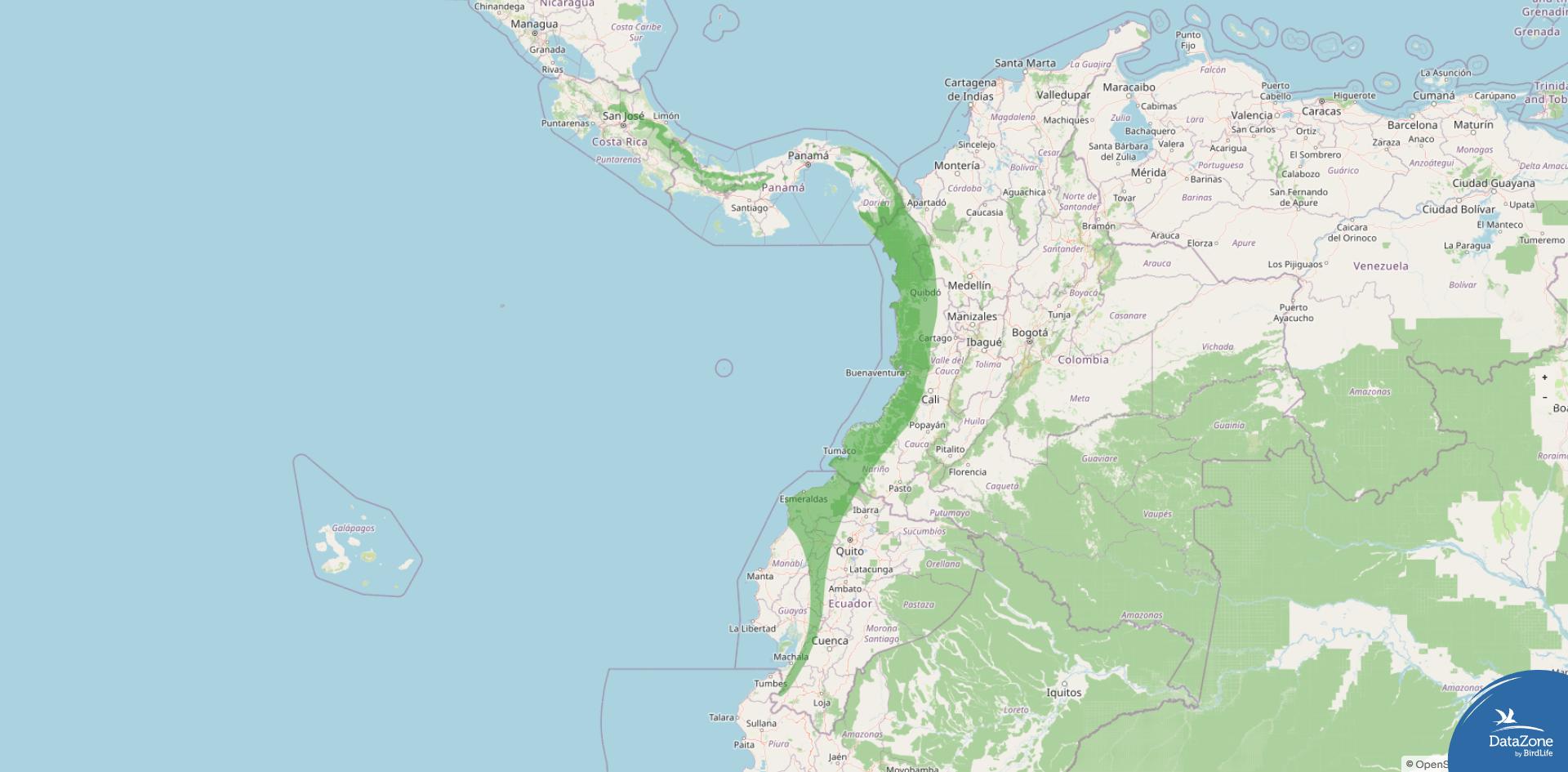
Legend
Green Resident
Species Overview
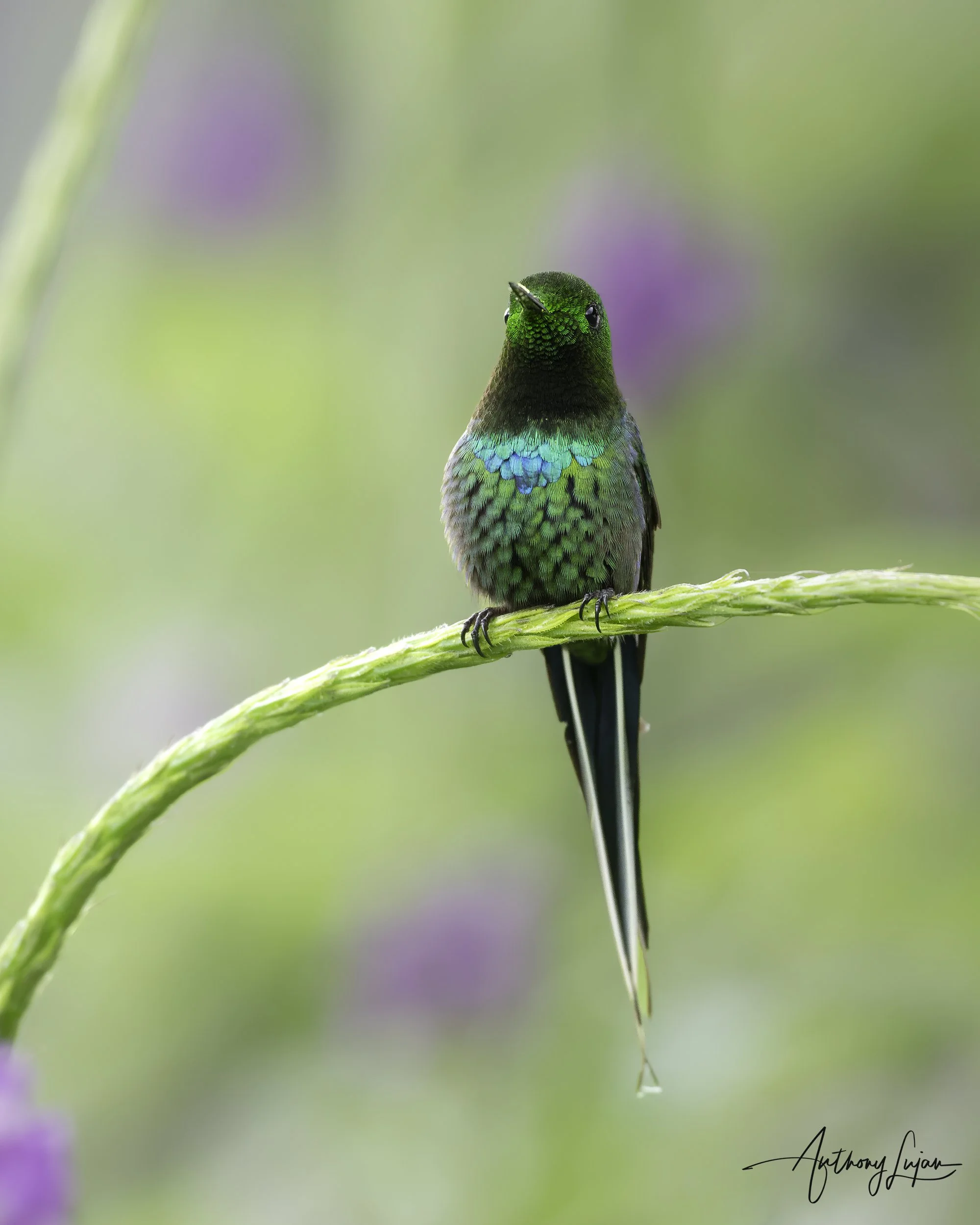
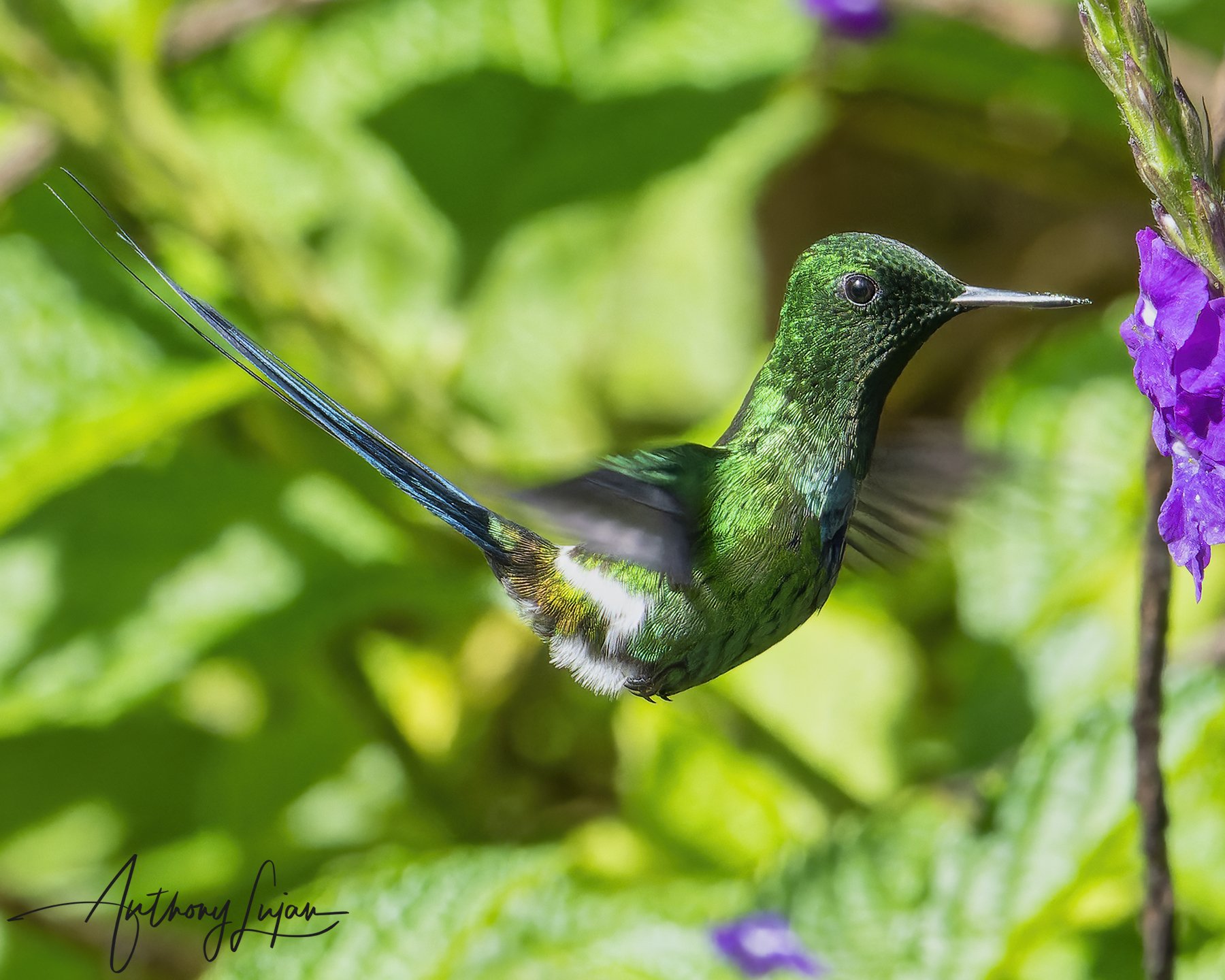
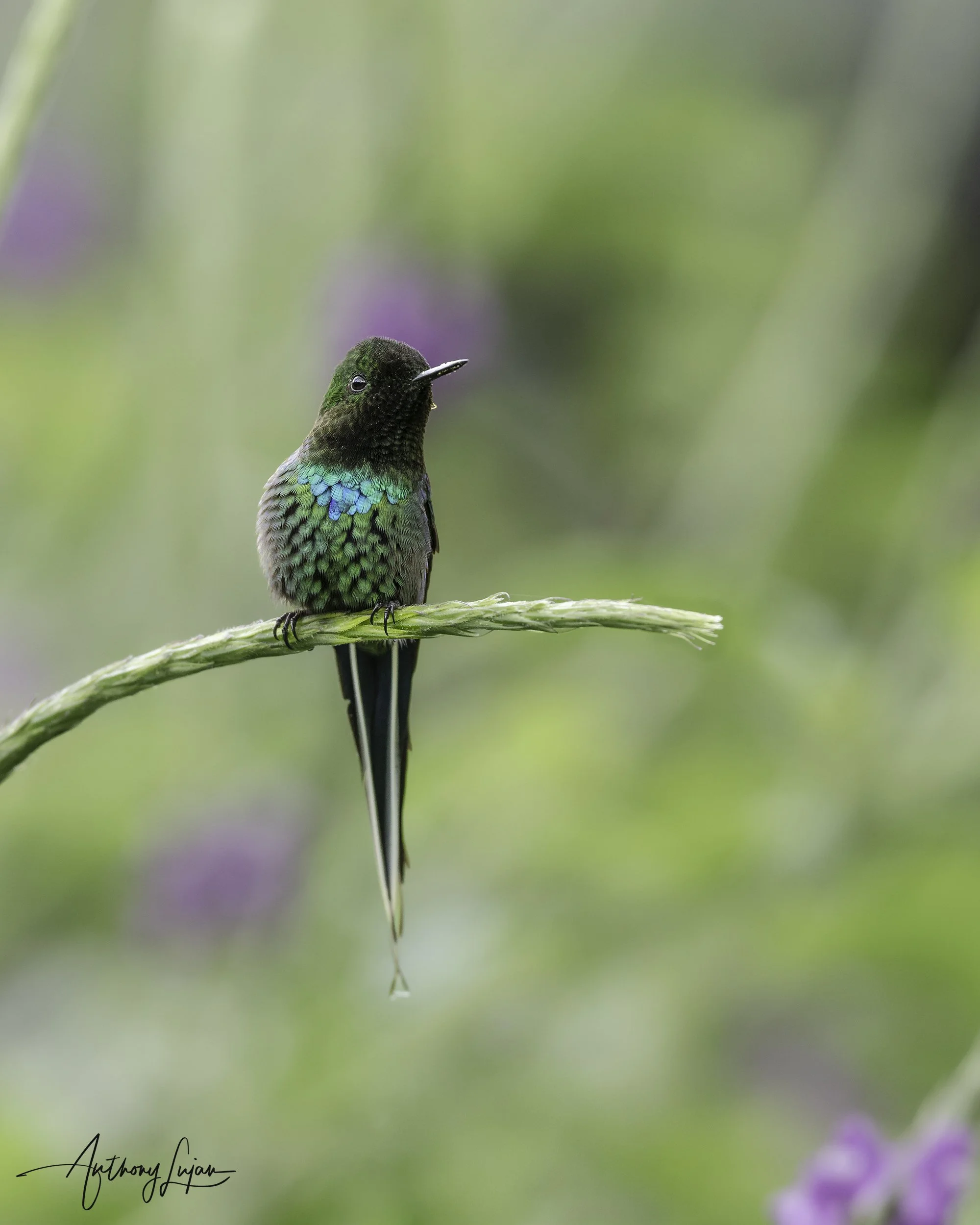
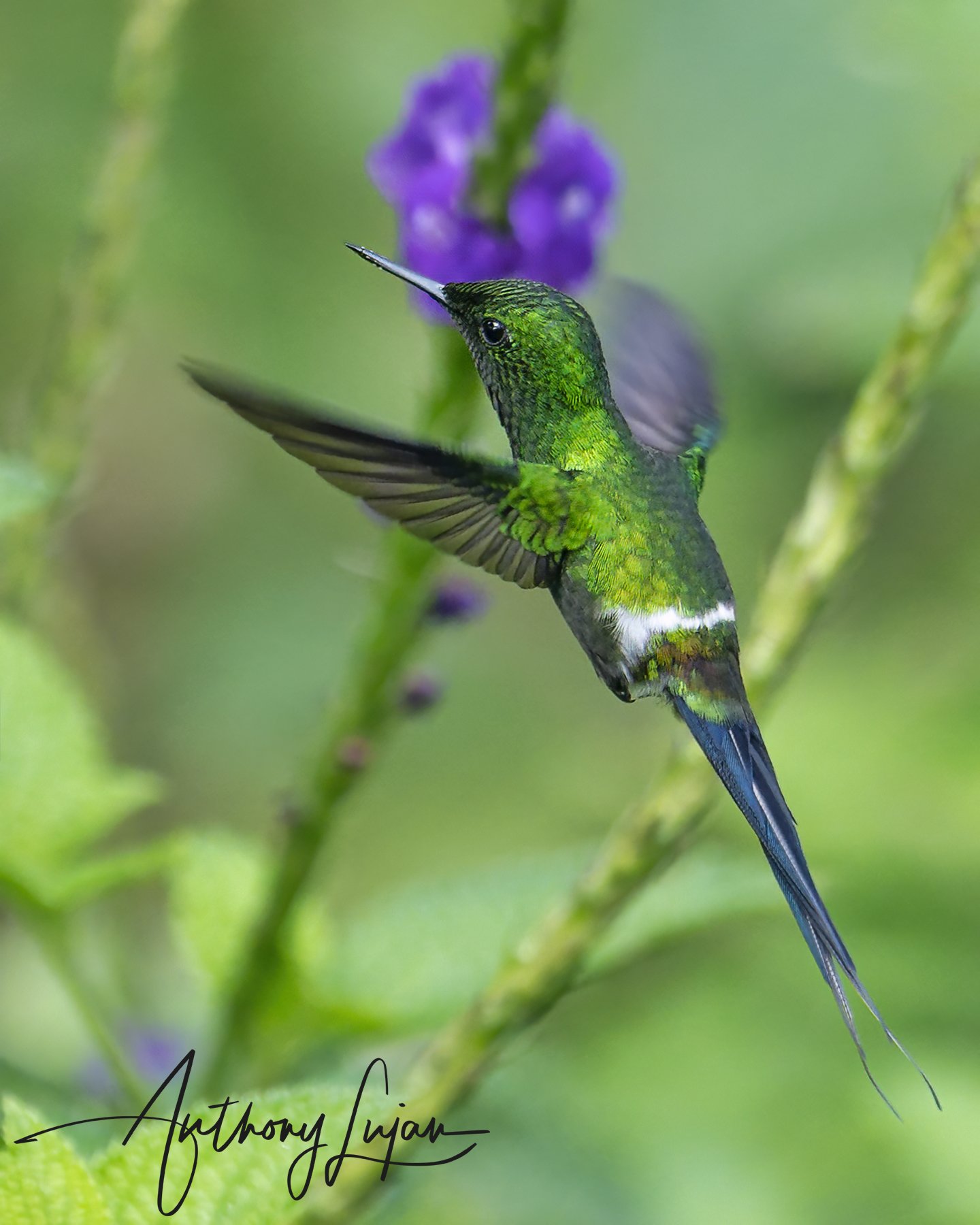
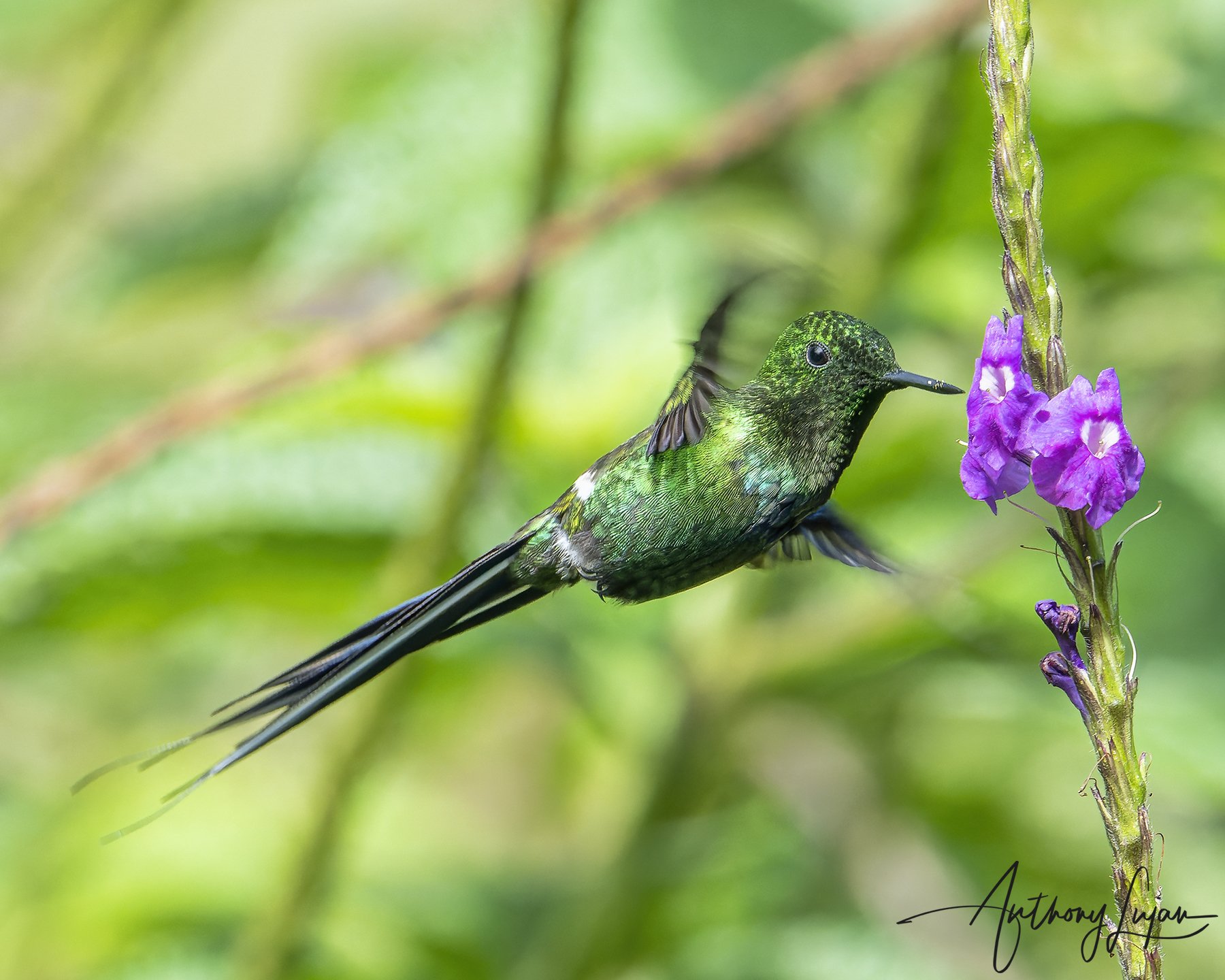
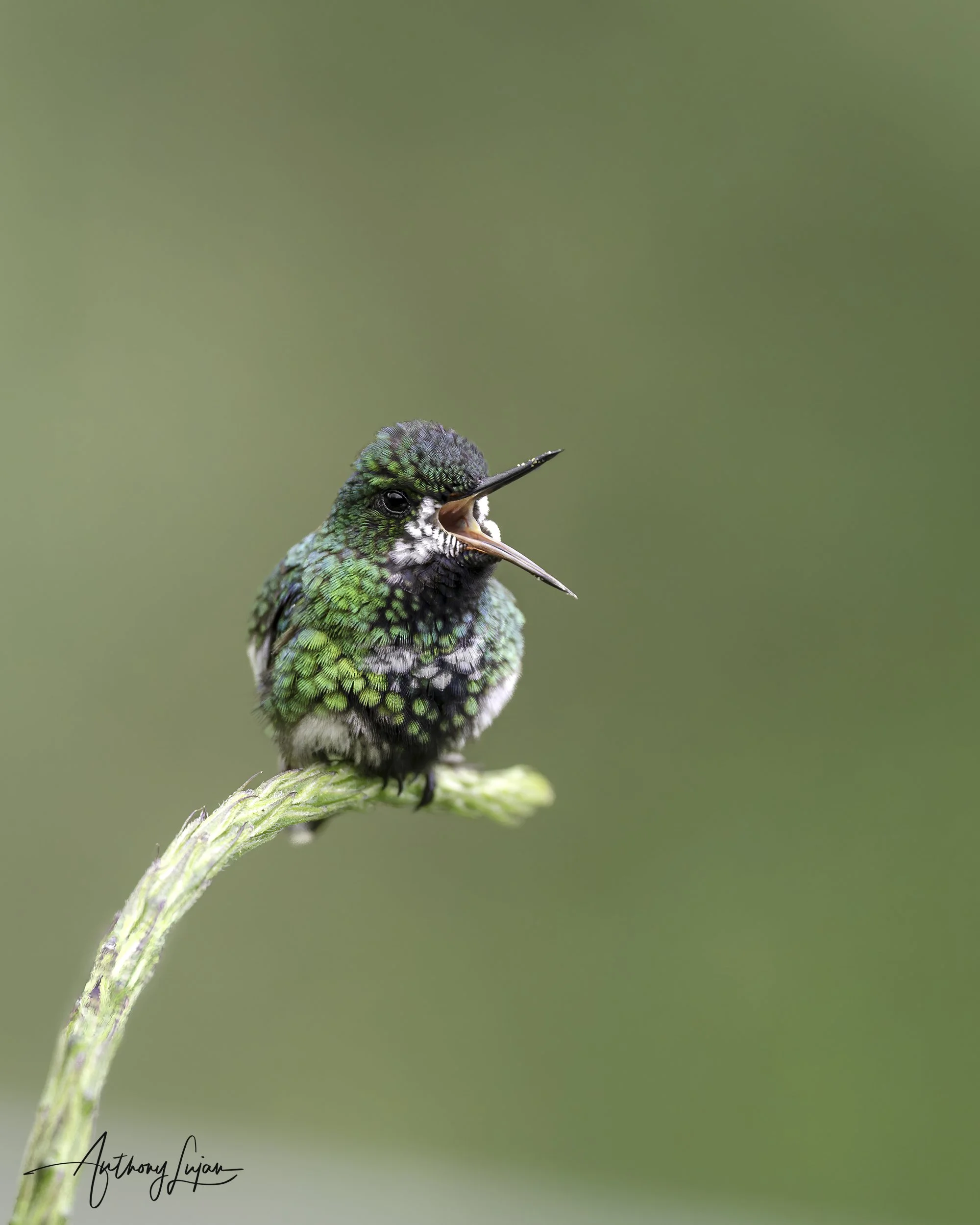
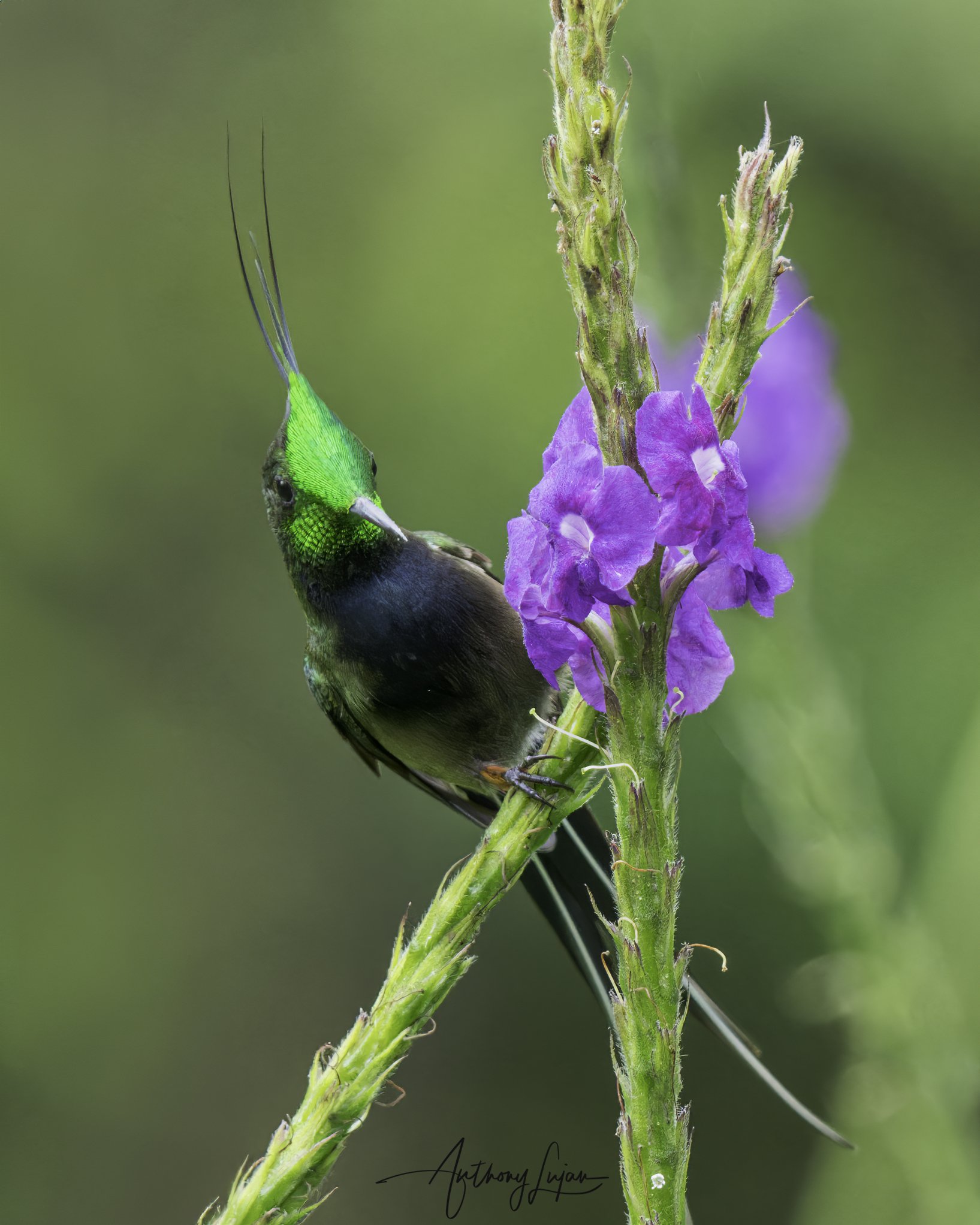
The Green Thorntail is one of the smallest hummingbirds in its range and is especially striking in the male, which shows an all‑green body, white rump band, and an extremely long, deeply forked tail with wiry outer feathers. It is typically encountered at flowering canopy trees and edges, often hovering at blossoms high above the ground or making brief visits to feeders at foothill lodges. Although it can be locally fairly common, it remains patchy and is vulnerable to loss and degradation of foothill forest, which has led to a decreasing population trend.
Male Description
Adult males are shimmering metallic green above and below, with a prominent white band across the rump that is conspicuous in flight. The head, back, and underparts are largely bright green, sometimes with darker shading on the flanks. The tail is extremely long and deeply forked, with very narrow, pointed outer feathers that give a “thorn‑tailed” look; the tail is dark with greenish gloss. The bill is very short, straight, and black. In good light, the combination of tiny size, all‑green body, white rump band, and wiry tail makes the male unmistakable.
Female Description
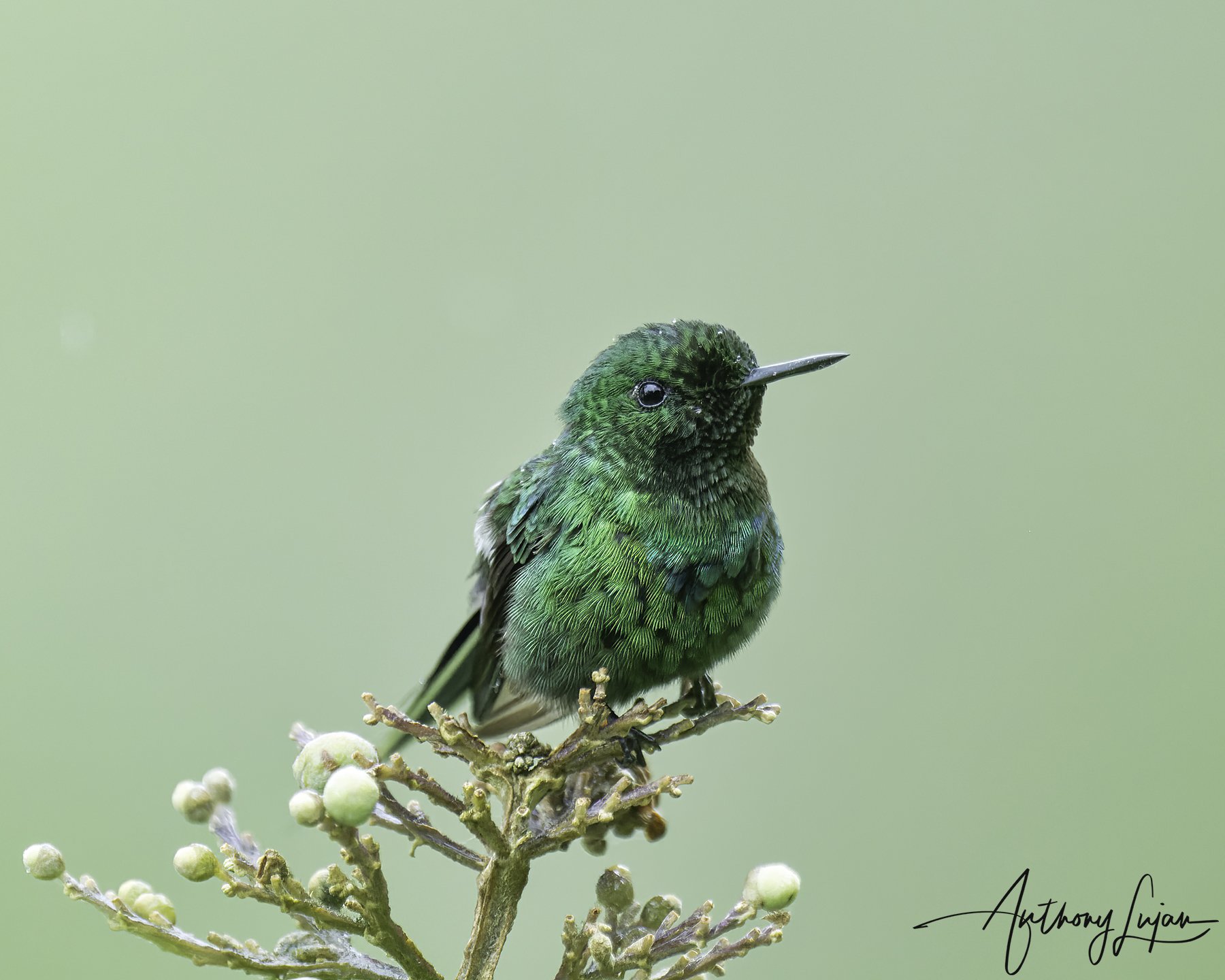
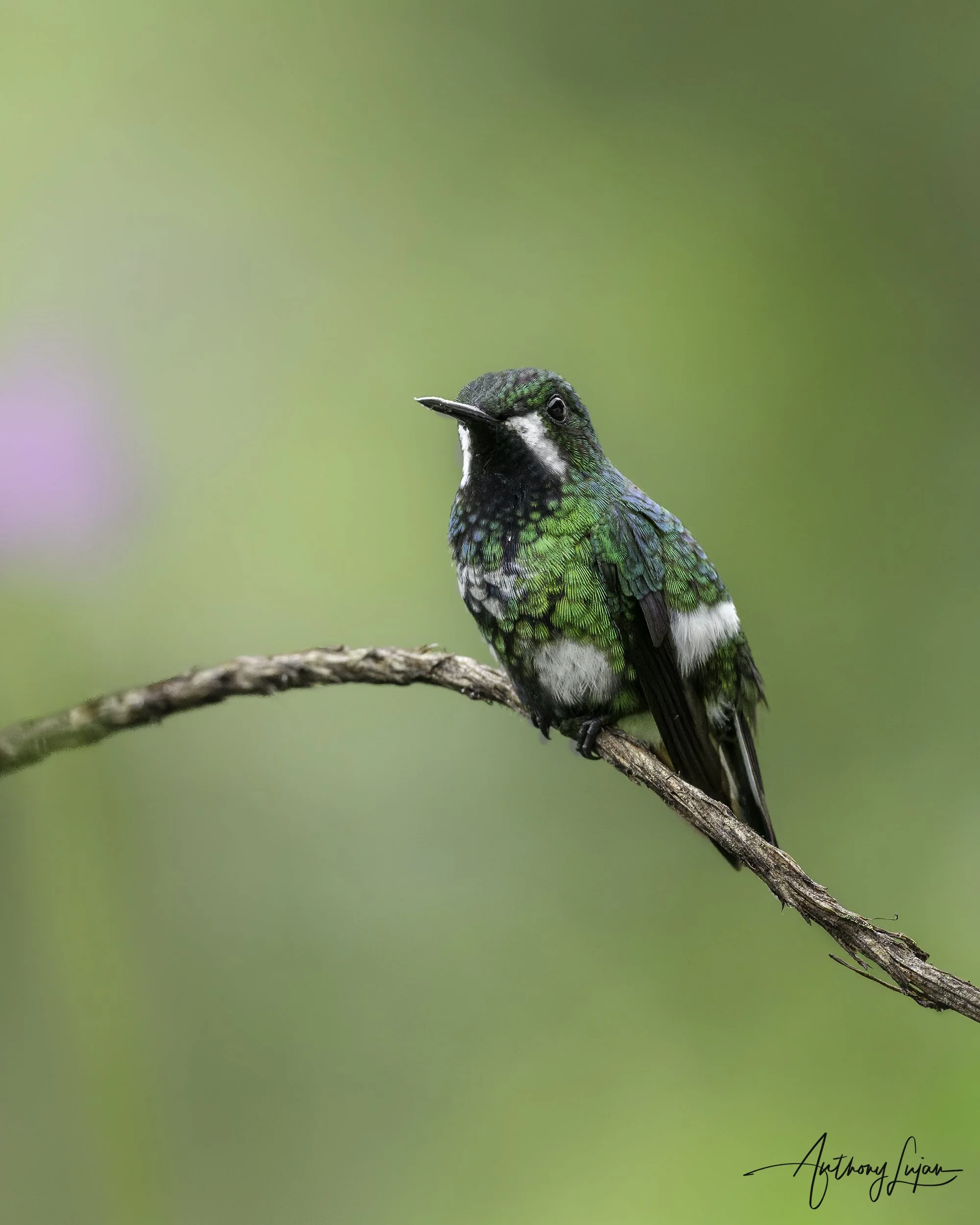
Females are also small and green above but differ markedly in tail and underparts. The tail is shorter, only slightly forked, with more normal proportions and prominent white on the outer tail feathers. The upperparts are metallic green, while the underparts are whitish with dark spotting or streaking on the throat and breast and greenish flanks. A white rump band is present, though less striking than in the male when the bird is at rest. Juveniles resemble females, with short tails and spotted throats; young males gradually acquire the much longer, pointed tail feathers and cleaner green underparts as they mature.
Habitat & Behavior
Green Thorntails inhabit humid evergreen and foothill forests, spending much of their time in the canopy and upper levels of forest edges. They also visit flowering trees in clearings, along roads, and in semi‑open areas near forest, including gardens and lodge grounds at suitable elevations. Birds typically forage at medium to high levels, often hovering at blossoms in the outer foliage of flowering trees, where they can be difficult to see from the ground.
They feed mainly on nectar from small, tubular flowers of canopy and mid‑story trees and shrubs, and also take tiny insects for protein, usually hawked from perches or gleaned near flowers. Their flight is agile and rapid, with quick, darting movements between feeding sites; males often display by hovering and flicking their long tail. Green Thorntails are usually seen singly or in pairs and may concentrate around particularly rich flowering trees.
Breeding
The breeding season varies somewhat by region but generally occurs in the drier and early wet months when flower availability is high at foothill elevations. The female alone builds a tiny cup nest of soft plant fibers and spiderweb, often placed on a slender branch or in a fork in the mid‑story or understory, sometimes overhanging paths or clearings. The outside of the nest is usually camouflaged with bits of lichen or bark.
The clutch consists of two white eggs. The female performs all incubation and chick‑rearing, with incubation lasting around two weeks and the young fledging about three weeks after hatching, in line with other very small hummingbirds. Nests of this species are often hard to find due to their small size and placement in dense foliage.
Movement
The Green Thorntail is treated as a resident species throughout its range and is classed as not a migrant. It does not undertake long‑distance migrations, though local elevational and short‑range movements likely occur as birds track flowering canopy trees along foothill slopes and between lowland and lower montane sites. These shifts keep birds within the same general regions, especially along continuous foothill forest belts, rather than involving large‑scale directional migration.
Population
The total number of mature individuals is not known, but the Green Thorntail has a relatively limited and patchy range, confined to foothill and lowland forests from Costa Rica to western Ecuador. It is considered rare and local in Panama, uncommon to common in parts of Colombia, and generally uncommon in Costa Rica and Ecuador. Habitat loss and fragmentation, particularly the clearing of foothill forests and conversion of lowland evergreen forest to agriculture or pasture, are likely drivers of the observed decreasing population trend.

Conservation
The Green Thorntail is assessed as Least Concern, primarily because its range spans several countries and includes a number of protected foothill and lowland forest sites. However, its dependence on humid forest canopies and edges at specific elevations makes it vulnerable to deforestation, forest degradation, and fragmentation. Maintaining continuous tracts of foothill forest, protecting flowering canopy trees used as key nectar sources, and limiting further clearing at mid‑elevations are important for sustaining this species. Despite its small size and localized distribution, it benefits from existing reserves and eco‑tourism lodges that preserve and value flowering forest habitats.


For more details on the trips behind this species, visit the Costa Rica Hummingbird Expedition | July 2025 page and explore My Travel 2025-05 Costa Rica for guides and trip reports.
Checkout Anthony’s playlist of this species! Click the top right dropdown to see all the videos.
Related species in the Discosura genus (5 species in total):

Please note: The content provided in this article reflects Anthony’s personal experience and photographic approach. Results can vary depending on light, weather, location, equipment, subject behavior, and field conditions.