
Greenish Puffleg
Scientific name: Haplophaedia aureliae
The Greenish Puffleg is a small, highland hummingbird of humid montane and cloud forests from eastern Panama south along the Andes of Colombia and Ecuador into northern Peru. Its global population is estimated at roughly 336,000–570,000 mature individuals, the overall population trend is decreasing, it is considered an altitudinal migrant, and it is assessed as Least Concern.
At a Glance
Family: Trochilidae (hummingbirds)
Clade: Heliantheini – Brilliants
Genus: Haplophaedia — 3 species in total
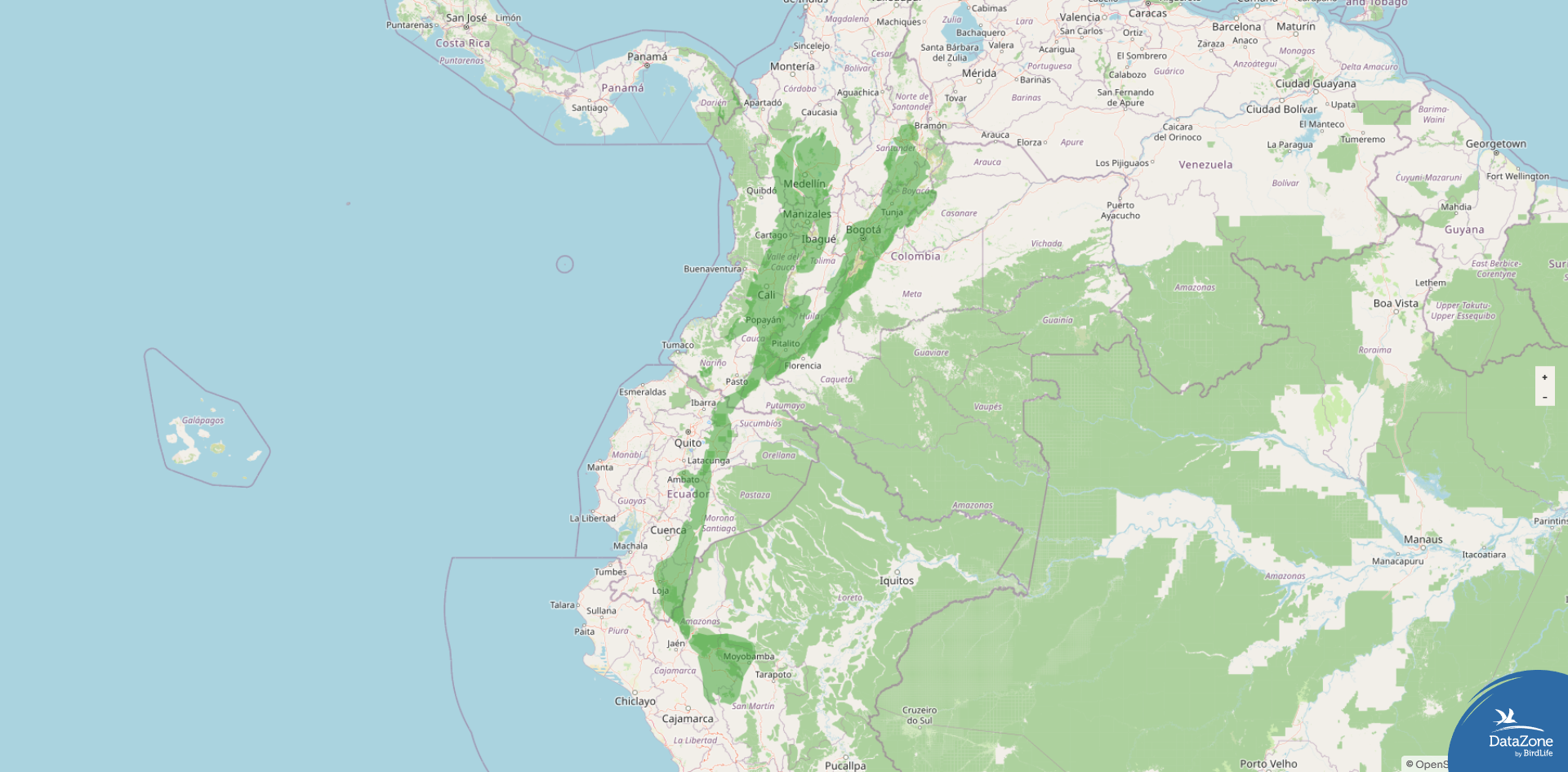
Range: Eastern Panama and northwestern Colombia south through the Western, Central, and Eastern Andes of Colombia and along the eastern slope of the Andes in Ecuador into northern Peru
Habitat: Humid montane forest, cloud forest, and forest edges with dense understory, mossy thickets, and shrubby clearings
Elevation: Mostly from about 1,500 to 3,100 m (4,900–10,200 ft)
Length: About 9–11.6 cm (3.5–4.6 in)
Weight: About 4–6.5 g (0.14–0.23 oz)
Number of mature individuals: 336,000–570,000
Population trend: Decreasing
Movement: Altitudinal Migrant
IUCN Red List category: Least Concern
Name Origin
The name “Greenish Puffleg” refers to the bird’s overall green plumage and the distinctive tufts of fluffy white feathers around its legs, the “puffs” that give pufflegs their name. The genus name Haplophaedia combines Greek roots meaning “simple” and “brightness,” reflecting the relatively plain but iridescent plumage compared with more extravagantly patterned brilliants. The species name aureliae honors an individual named Aurelia, commemorated in the original description.
Taxonomy & Distribution
Haplophaedia aureliae belongs to the “brilliants” (tribe Heliantheini) within the hummingbird family Trochilidae. The genus Haplophaedia includes three species: Greenish Puffleg (H. aureliae), Hoary Puffleg (H. lugens), and Buff‑thighed Puffleg (H. assimilis). Greenish Puffleg occurs from extreme eastern Panama and adjacent northwestern Colombia south through the Western, Central, and Eastern Andes of Colombia and along the eastern slope of the Andes in Ecuador into northern Peru, inhabiting humid montane and cloud forests and their edges.
Subspecies and Distribution
Six subspecies:
Haplophaedia aureliae floccus
Distribution: Extreme eastern Panama and adjacent northwestern Colombia (Cerro Malí, Cerro Tacarcuna).Haplophaedia aureliae galindoi
Distribution: Extreme eastern Panama (Cerro Pirre).Haplophaedia aureliae caucensis
Distribution: Mountains of southeastern Panama through the Western and Central Andes of Colombia.Haplophaedia aureliae aureliae
Distribution: Eastern Andes of Colombia, possibly also the eastern slope of the Central Andes.Haplophaedia aureliae russata
Distribution: Eastern slope of the Andes in Ecuador, south at least to western Pastaza.Haplophaedia aureliae cutucuensis
Distribution: Eastern slope of southern Ecuador (Cutucú Range and Cordillera del Cóndor).
Legend
Green Resident
Species Overview
The Greenish Puffleg is a compact, robust hummingbird of wet, mossy Andean forest and mountain ravines, easily recognized by its shimmering green body and conspicuous white leg puffs. It typically keeps to shaded undergrowth and forest edges, feeding from tubular flowers on shrubs and low trees and often perching low between feeding bouts. Although it can be locally common in suitable habitat, especially in parts of Colombia and Ecuador, its Andean forest home is naturally patchy and increasingly affected by human disturbance.
Male Description
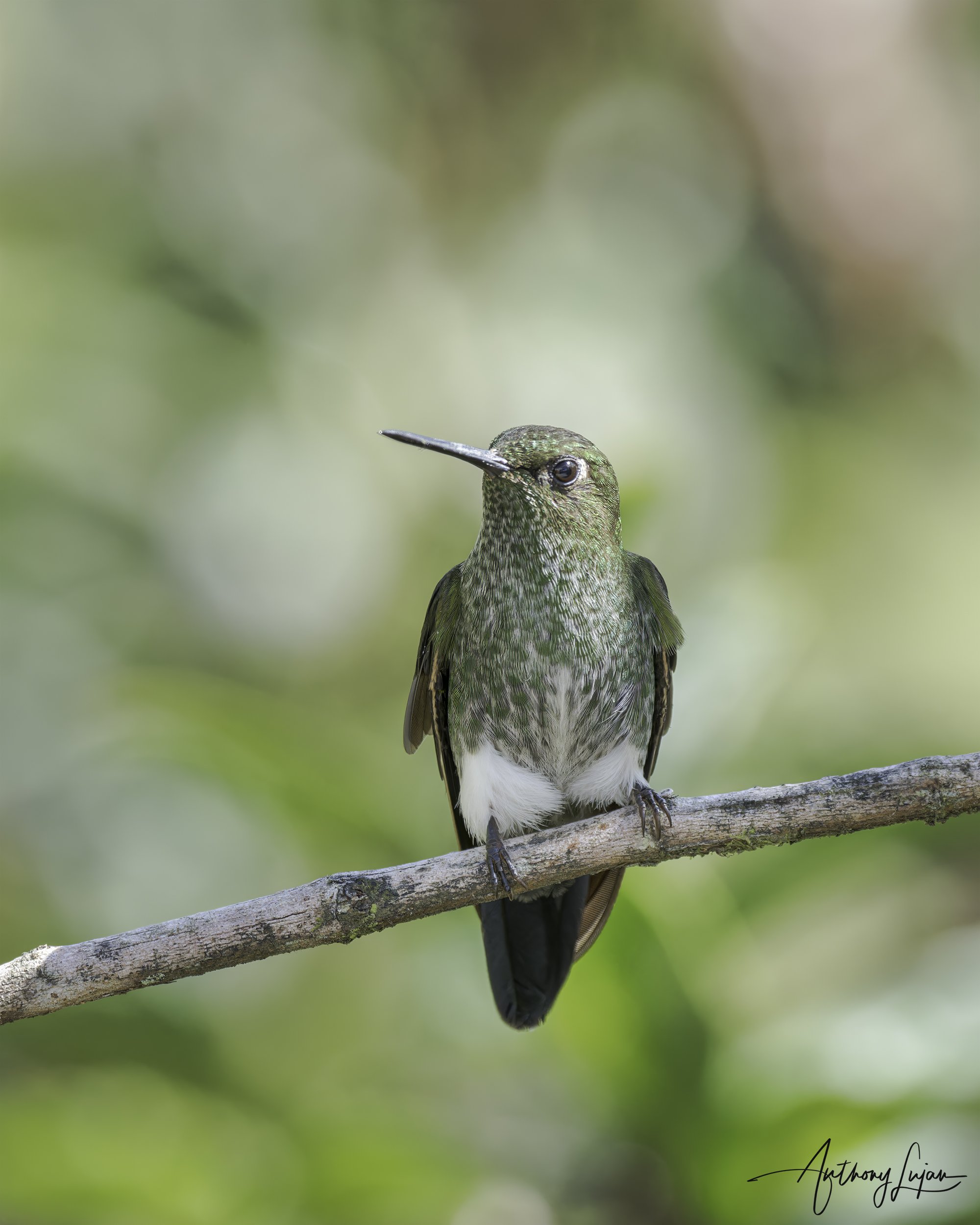
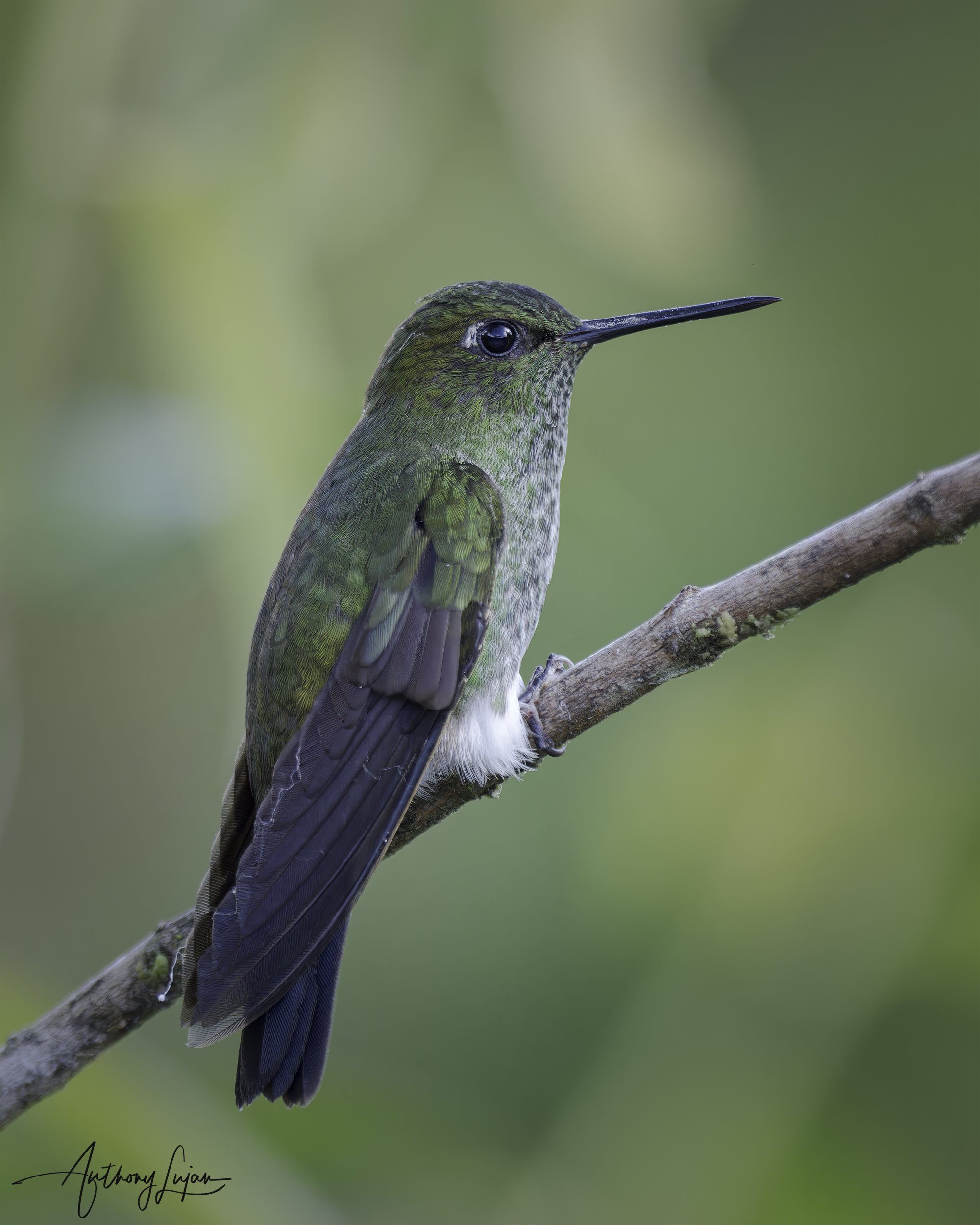
The Greenish Puffleg measures about 9–11.6 cm in length and weighs 4–6.5 g. Adult males of the nominate subspecies have bright grass‑green upperparts with bronzy or coppery tones on the head and neck, which can look especially warm in good light. The underparts are green to duller gray‑green with a diffuse, scaled appearance, and some subspecies show paler bellies or small white patches. The tail is slightly forked, dark bluish‑black to dusky green. The bill is relatively short, straight, and black. The most distinctive feature is the dense tuft of white feathers around each leg, forming prominent “puffs” that contrast strongly with the green body. Subspecies vary subtly: for example, some have more intense copper on the head and rump, brighter copper upperparts, or underparts that are scaled brown rather than gray‑white.
Female Description
Females are similar to males but somewhat duller overall. The upperparts are green with less intense bronzy or coppery sheen, and the underparts show more obvious grayish or whitish scaling, especially on the throat and breast. The leg puffs are present and white, though they may appear slightly less voluminous. Juveniles resemble females, with duller green plumage, less sheen on the head and neck, and less developed leg puffs; young males gradually acquire the brighter metallic tones and fuller puffs as they mature.
Habitat & Behavior
Greenish Pufflegs inhabit humid montane forest and cloud forest, favoring wet, mossy slopes, ravines, and forest edges with dense understory, shrubs, and small trees. They are typically found between about 1,500 and 3,100 m, often in areas with heavy epiphyte growth and mixed sun and shade. Birds usually forage in the lower to mid‑levels of the forest, visiting tubular flowers on shrubs, herbs, and low trees, but they also move into the canopy to exploit flowering Inga and other nectar sources when available.
They feed mainly on nectar, hovering briefly at blossoms or perching to reach flowers, and they supplement this with small insects gleaned from leaves and branches. Individuals can be quite territorial around rich flower patches, aggressively defending clusters of blossoms in the understory or along edges. Their flight within forest is agile but relatively short‑ranged, with frequent returns to favored feeding and perching spots.
Breeding
The breeding season appears to run mainly from December to March, though nests and breeding activity have been recorded in other months, suggesting some flexibility tied to local climate and flower availability. The female builds a small cup nest of moss and cobwebs lined with fine plant material, often suspending it below a large leaf that helps shield it from rain and dripping water. Nests are typically placed within about 2 m of the ground in dense understory vegetation.
The clutch consists of two white eggs. The female alone incubates and cares for the young. Exact incubation and fledging periods have not been firmly documented for this species but are likely similar to other Andean brilliants, with around two weeks of incubation and about three weeks from hatching to fledging.
Movement
Greenish Pufflegs are altitudinal migrants, making seasonal elevational movements along Andean slopes. They move up or down within their montane range in response to changes in flowering patterns, temperature, and moisture, concentrating at certain elevations when key resources are abundant and shifting as conditions change. These movements remain within the same general mountain ranges rather than involving long‑distance latitudinal migration.
Population
With an estimated 336,000–570,000 mature individuals, the Greenish Puffleg has a moderate global population for a montane forest hummingbird. It occupies a fairly wide range across the Andes of Panama, Colombia, Ecuador, and northern Peru, but its habitat is naturally fragmented by topography and increasingly fragmented by human land use. Within intact forest it can be locally common, especially in some Colombian and Ecuadorian sites, while subspecies with small, restricted ranges in Panama and localized Andean regions are more vulnerable. Overall, the population trend is decreasing, primarily due to habitat loss and degradation.

Conservation
The Greenish Puffleg is assessed as Least Concern because of its relatively large total population and broad distribution, yet its decreasing trend and dependence on humid montane forest warrant ongoing attention. Deforestation for agriculture, cattle pasture, logging, and infrastructure projects continues to reduce and fragment Andean cloud forests and montane forests. The species occurs in several protected areas and reserves across its range, which secure important strongholds. Maintaining and restoring continuous elevational corridors of forest, protecting cloud forest remnants, and limiting further conversion of montane forest will be important for stabilizing and supporting its populations.
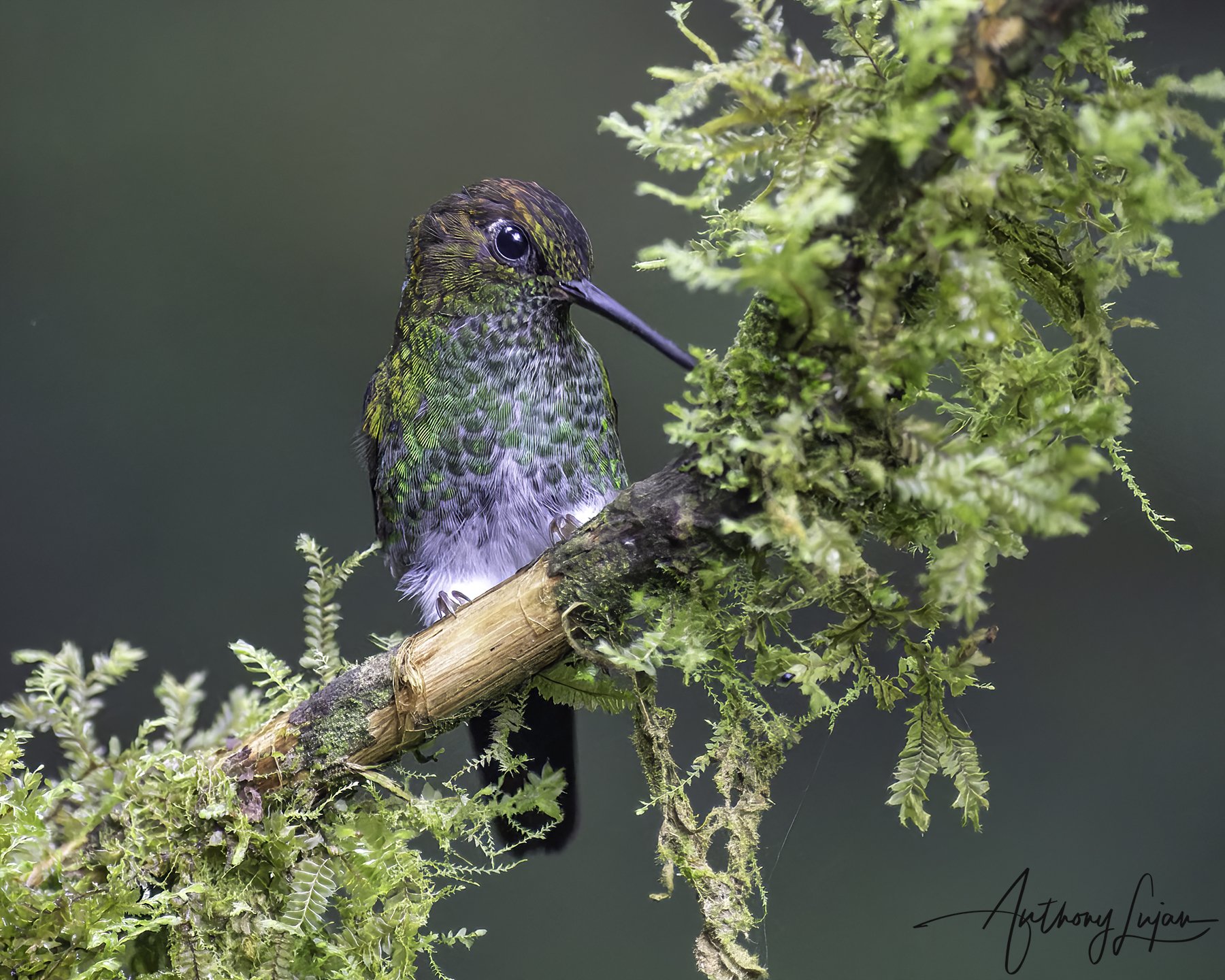
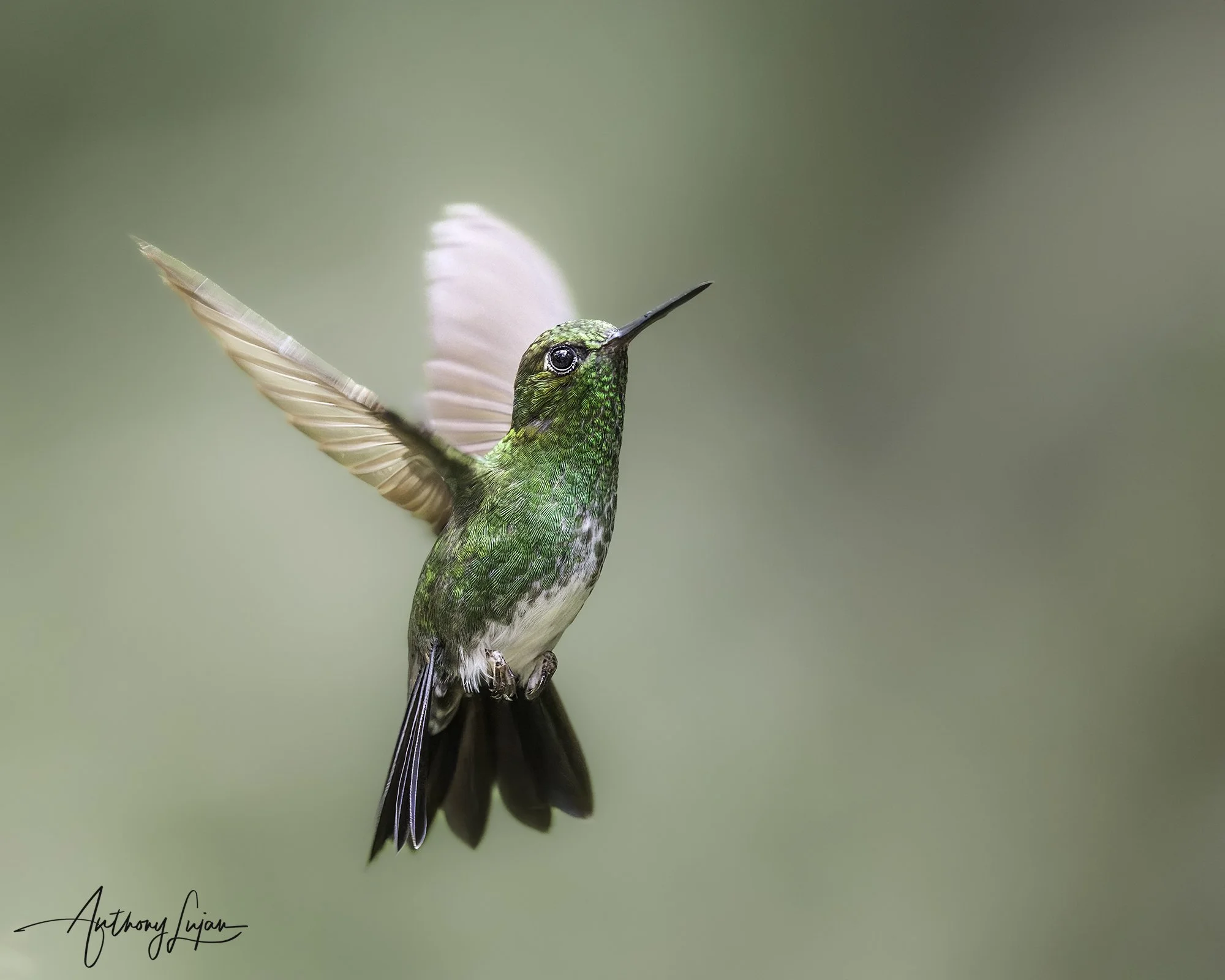
Below is the Greenish Puffleg (Haplophaedia aureliae caucensis)
Photographed at:
La Florida - Bosque de Las Aves, Valle del Cauca, Colombia
Finca Alejandría "El Paraiso de Los Colibries", Valle del Cauca, Colombia
These individuals belong to the subspecies caucensis, found from southeastern Panama into the Western and Central Andes of Colombia. It inhabits humid cloud forest and forest edge, particularly between 1,500 and 2,400 meters elevation. This form shows grass-green upperparts with a slight coppery gloss, and males often show a contrasting white belly patch.

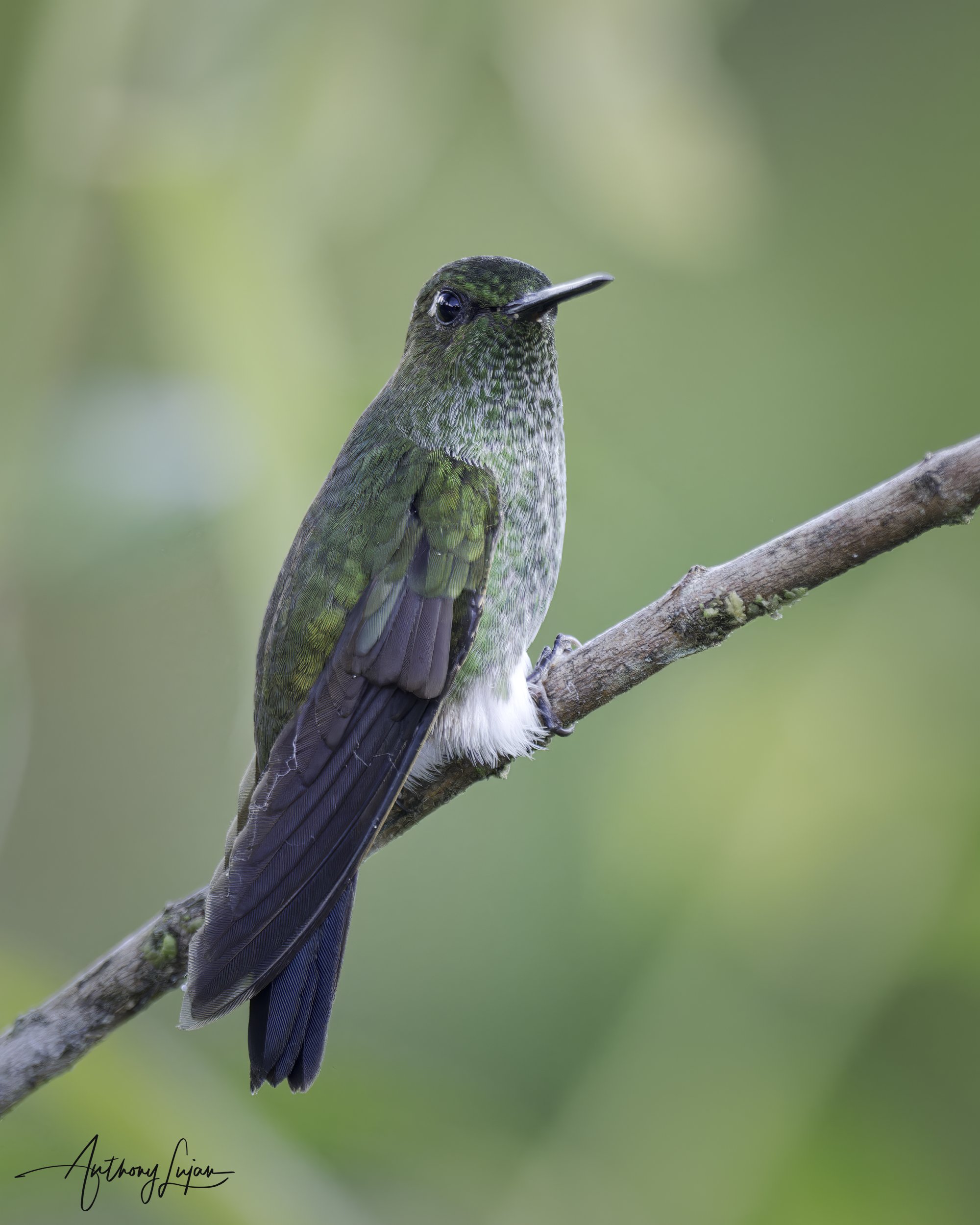
Below is the Greenish Puffleg (Haplophaedia aureliae cutucuensis)
Photographed at:
Bosque de Protección Alto Mayo – Fundo Alto Nieva, San Martín, Peru
These individuals belong to the subspecies cutucuensis, found along the eastern slope of southern Ecuador (Cutucú and Cóndor ranges) and extending into adjacent northern Peru, including San Martín. It inhabits humid montane forest and mossy ravines between 1,400 and 2,300 meters. This form resembles the nominate but has heavier grayish-white scaling on the underparts and subtle differences in tail and bill proportions.
Checkout Anthony’s playlist of this species! Click the top right dropdown to see all the videos.
Related species in the Haplophaedia genus (3 species in total):
Please note: The content provided in this article reflects Anthony’s personal experience and photographic approach. Results can vary depending on light, weather, location, equipment, subject behavior, and field conditions.