
Scientific name: Riccordia swainsonii
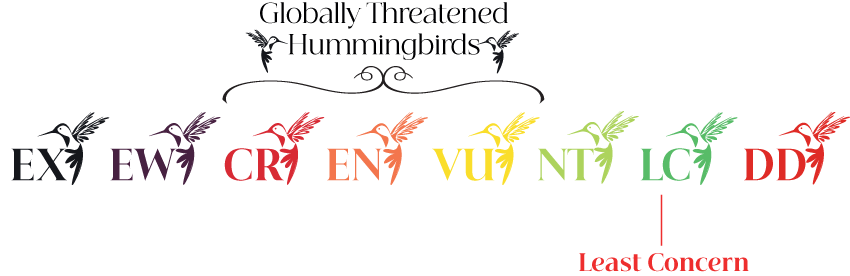
The Hispaniolan Emerald is a small, glittering green hummingbird endemic to the island of Hispaniola, where it inhabits a range of forested and semi‑open habitats in both the Dominican Republic and Haiti. It is listed as Least Concern, with an unknown number of mature individuals, a decreasing population trend, and it is considered not a migrant.
At a Glance
Family: Trochilidae (hummingbirds)
Clades: Trochilini – Emeralds
Genus group: Riccordia — Caribbean emeralds (6 species in total, including 2 possibly extinct: Brace’s Emerald and Gould’s Emerald)
Range: Endemic to Hispaniola, occurring in both the Dominican Republic and Haiti.
Habitat: Subtropical and tropical moist lowland and montane forests, humid broadleaf forest, pine–broadleaf mosaics, shade coffee plantations, scrub, and heavily degraded former forest.
Elevation: Mostly between about 300 and 2,500 m (980–8,200 ft), but recorded from sea level up to above 3,000 m (9,800 ft).
Length: About 9–10 cm (3.5–4.0 in).
Weight: Around 3–4 g (about 0.1 oz).
Number of mature individuals: Unknown.
Population trend: Decreasing.
Status: Least Concern (IUCN Red List category).
Migration: Not a migrant (local altitudinal shifts may occur).
Name Origin
The genus name Riccordia honors Alexandre Ricord, a 19th‑century French naturalist and surgeon who worked extensively in the Caribbean. The species name swainsonii commemorates English naturalist William Swainson, recognized for his contributions to ornithology. The English name “Hispaniolan Emerald” reflects its restricted range on the island of Hispaniola and its bright emerald‑green plumage.
Taxonomy & Distribution
Monotypic — no subspecies recognized.
Hispaniolan Emerald belongs to the emerald clade (tribe Trochilini) and is one of several Caribbean island endemics in the genus Riccordia, along with Cuban, Puerto Rican, Blue‑headed, and other emeralds. It is restricted to the island of Hispaniola, shared by the Dominican Republic and Haiti, where it occurs in suitable forested and semi‑open habitats from low elevations up into the highlands.
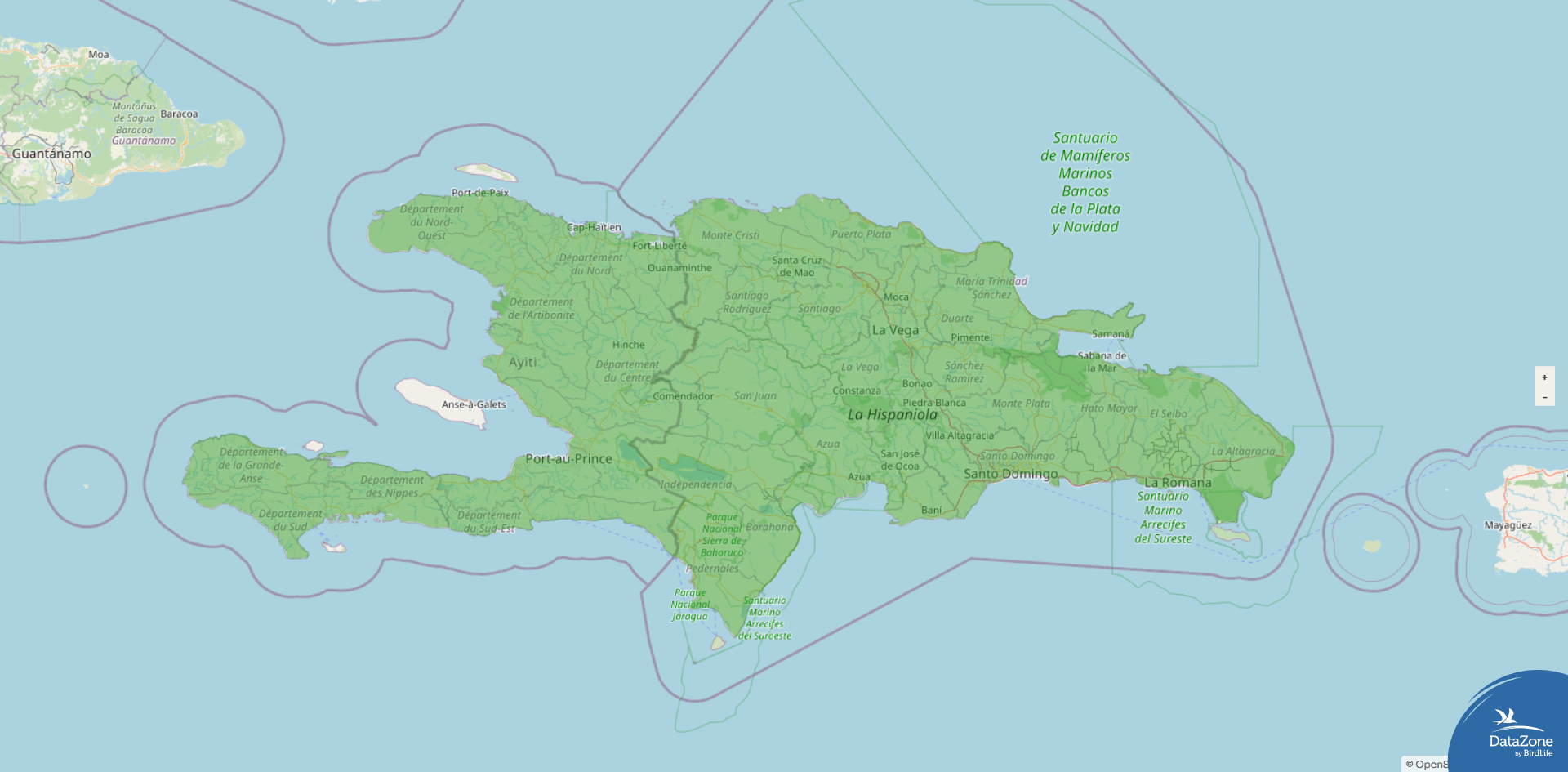
Legend
Green Resident
Species Overview
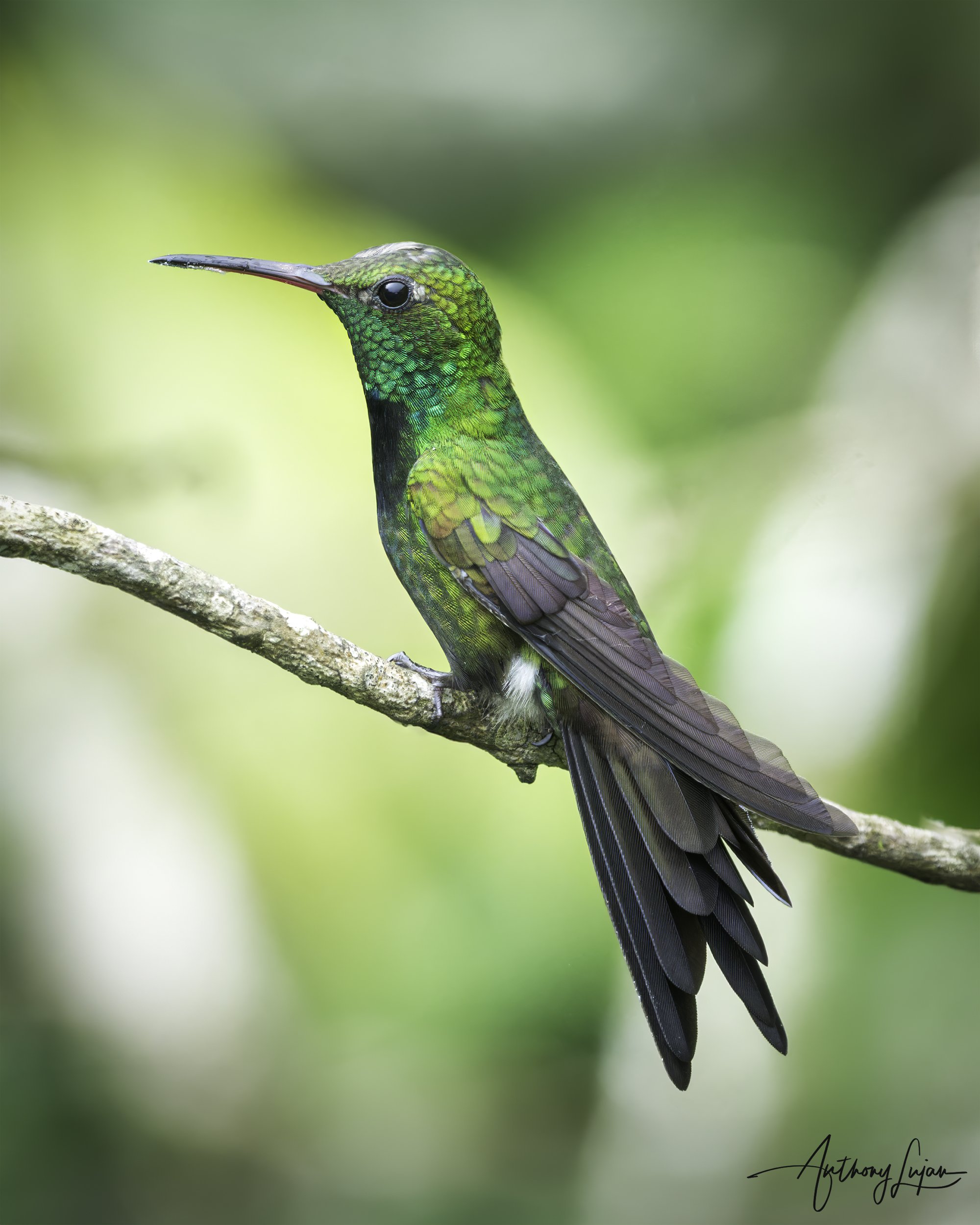
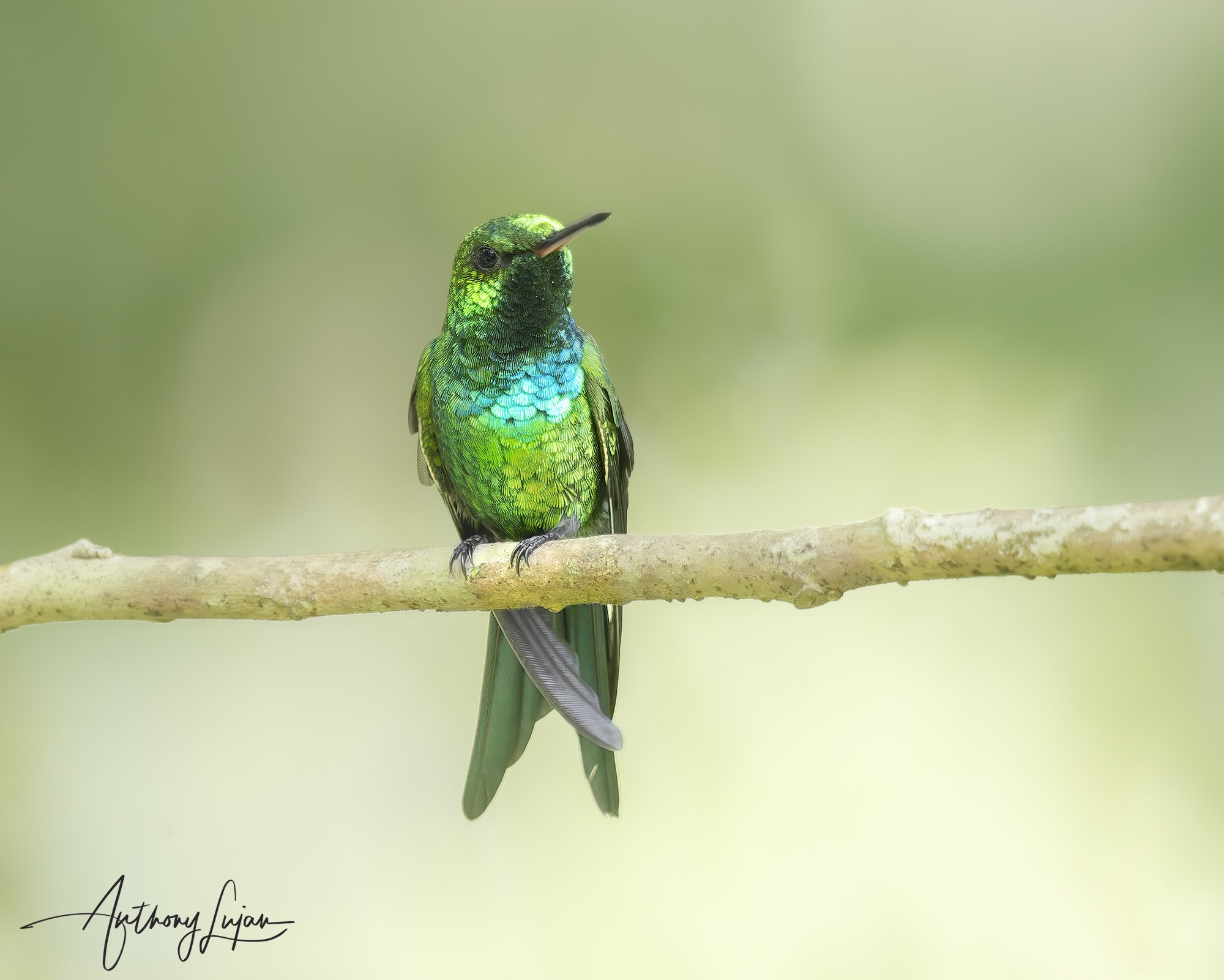
The Hispaniolan Emerald is one of the island’s most distinctive hummingbirds, with both males and females showing glittering green plumage adapted to a variety of forested environments. It is most common in humid broadleaf forest and montane habitats, but also uses shade coffee plantations, scrub, and degraded forests, especially in the Dominican Republic. Despite its adaptability, ongoing deforestation and forest degradation—particularly in Haiti—are contributing to a gradual decline.
Male Description
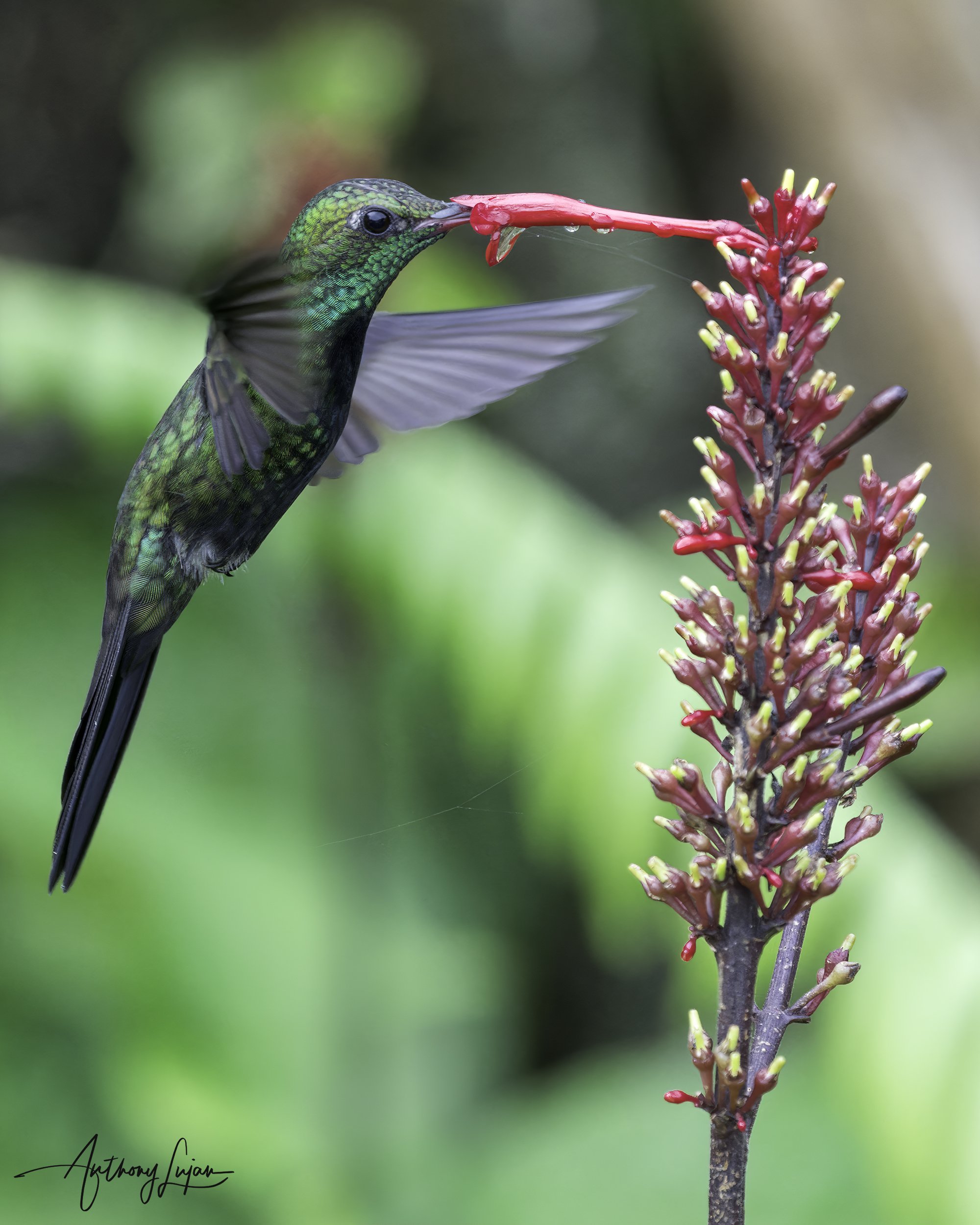
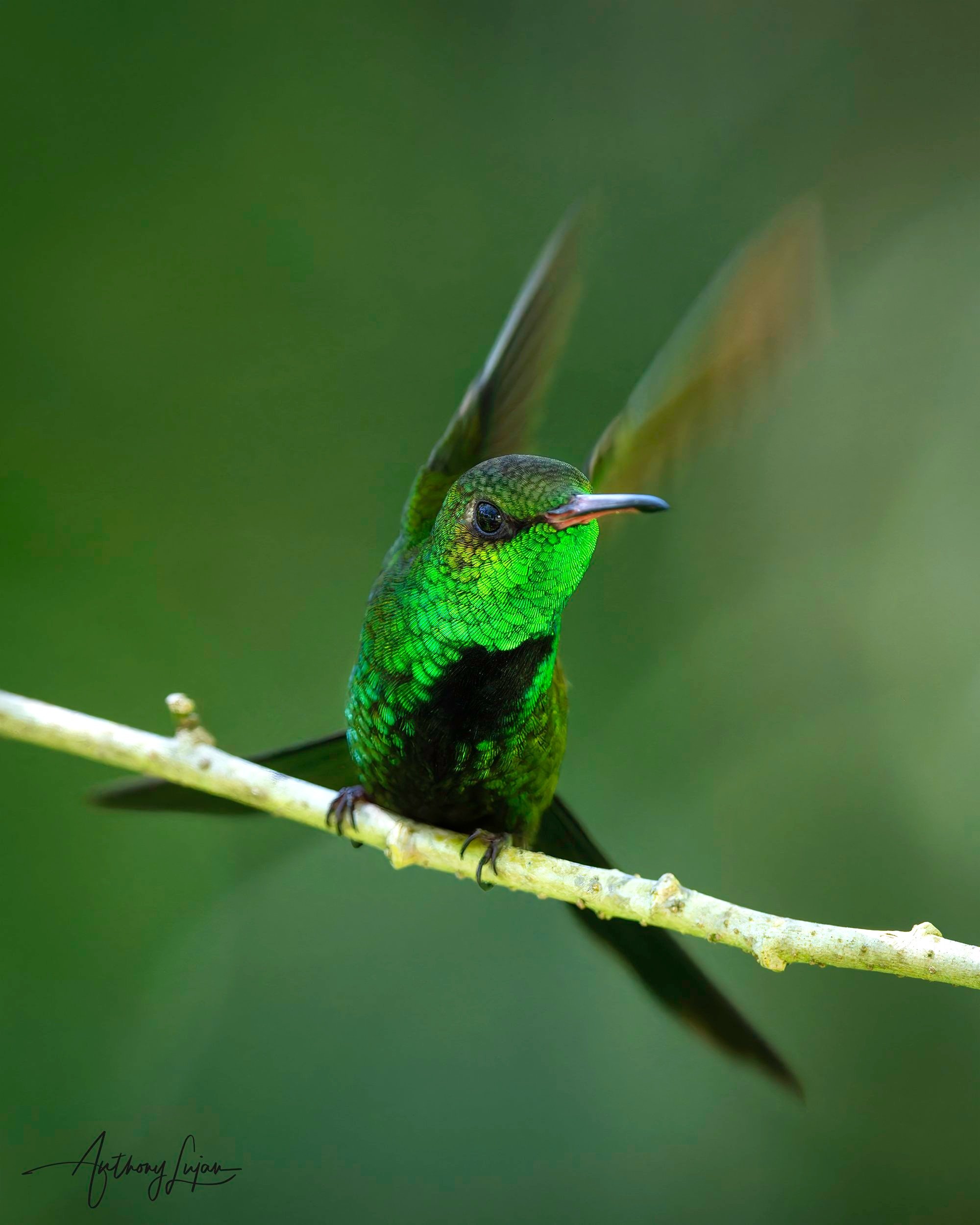
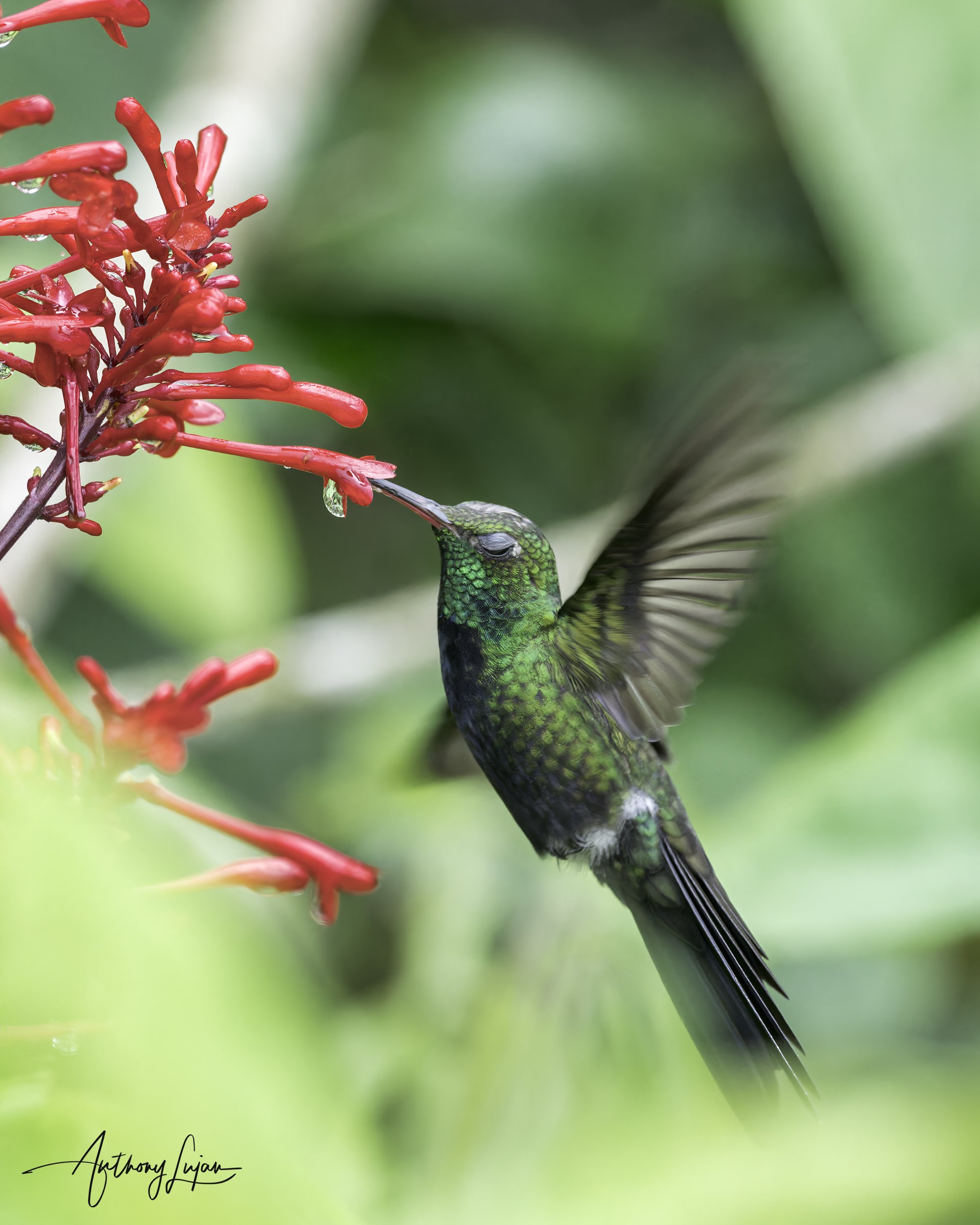
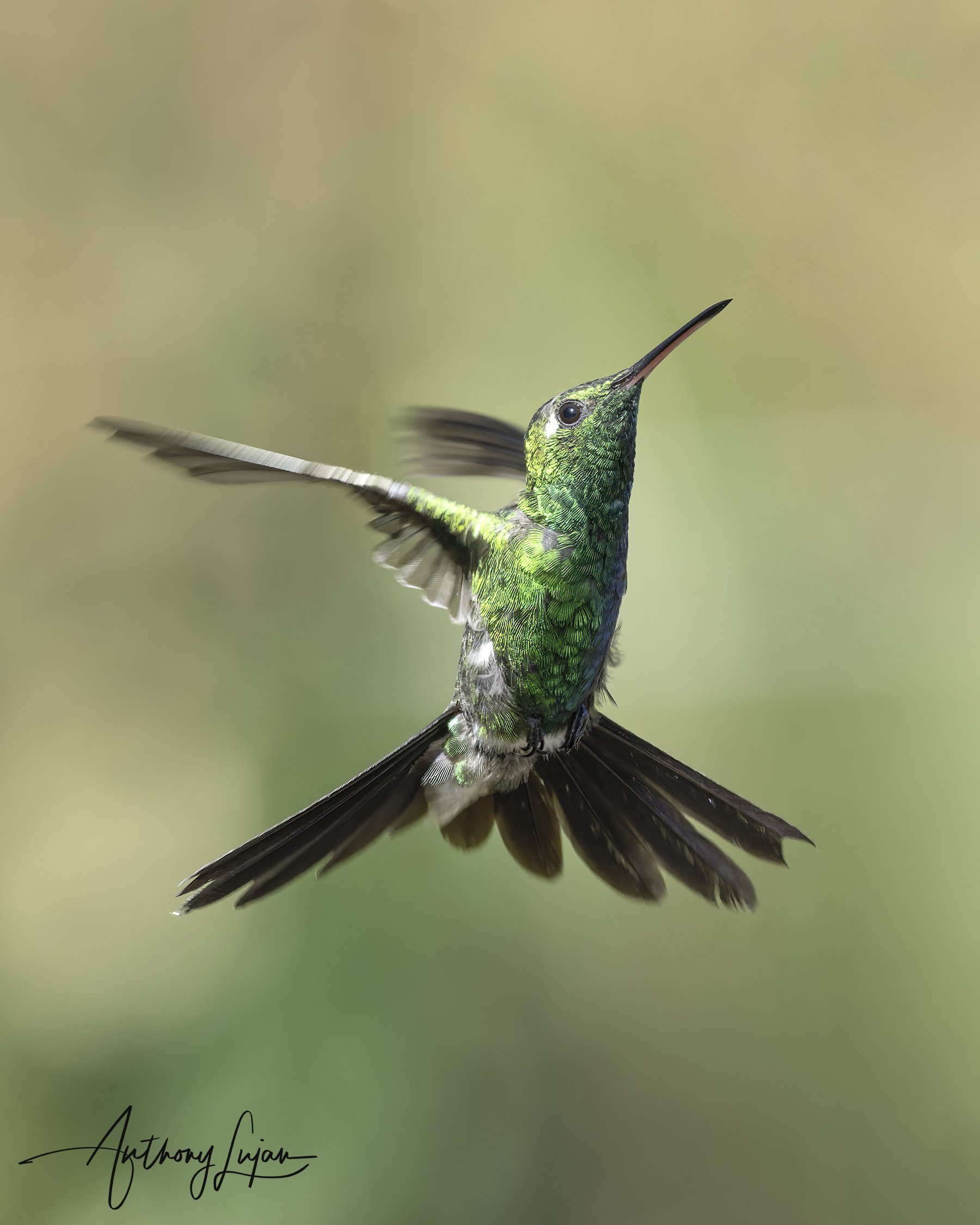
Adult males are small and long‑tailed, with a relatively short, straight black bill. The head, back, and underparts are a rich, iridescent emerald to dark green, sometimes appearing almost blackish green in poor light. The tail is fairly long and slightly forked, with dark, metallic green or bluish‑black feathers that can show a sheen in sunlight. In good light, males appear as compact, dark‑green hummingbirds with a bright emerald tone and a clean, dark tail, often standing out against forest foliage.
Female Description
Females are similar in size but somewhat duller and more contrasting. The upperparts are metallic green, and the underparts are paler—whitish to grayish—with greenish flanks and sometimes faint green mottling on the throat and breast. The tail is long and darker with paler or whitish tips on the outer feathers, giving more pattern than in males. The bill is straight and black, like the male’s. Juveniles resemble females but are duller, often with more brown or gray mixed into the underparts and less defined tail patterning; young males gradually develop richer overall green and a more uniformly dark tail.
Habitat & Behavior
Hispaniolan Emeralds inhabit moist lowland and montane forests, humid broadleaf forest, pine–broadleaf mosaics, scrub, shade coffee plantations, and heavily degraded forests, often favoring edges, clearings, and regenerating sites. They feed on nectar from a wide variety of flowering trees, shrubs, and herbs, often visiting flowers at mid‑levels and in the understory, and may also frequent flowering plants in rural gardens and coffee farms. They supplement their diet with small insects and spiders, catching them in short sallies from perches or gleaning near flowers, and can be moderately territorial around rich nectar sources.
Breeding
The breeding season extends mainly from January to June, sometimes continuing into August depending on local conditions. The female builds a cup‑shaped nest of plant fibers, moss, and lichens bound with spiderweb, typically placed on a slender branch or in a shrub between about 1 and 10 m (3–33 ft) above the ground. The elastic structure allows the nest to stretch as the nestlings grow. She lays two white eggs and incubates them for about 15–16 days; the chicks fledge approximately 20–22 days after hatching.
Population
The total number of mature individuals is unknown, but the Hispaniolan Emerald is generally considered fairly common in suitable highland and forested habitats in the Dominican Republic, while populations in Haiti are more heavily impacted by widespread deforestation. The species persists in several protected areas, especially in Dominican highland forests, but its overall population is thought to be decreasing due to habitat loss and degradation.
Conservation
Hispaniolan Emerald is currently assessed as Least Concern, reflecting its island‑wide distribution and continued presence in a variety of habitats, including some degraded forests. However, severe deforestation and habitat degradation, particularly in Haiti, and ongoing fragmentation of forest and coffee landscapes threaten local populations. Conservation priorities include protecting remaining moist lowland and montane forests, maintaining shade coffee systems that mimic natural forest structure, restoring degraded habitats, and strengthening protected areas and community‑based conservation in both the Dominican Republic and Haiti.
Checkout Anthony’s playlist of this species! Click the top right dropdown to see all the videos.
Related species in the Riccordia genus (6 species in total, 2 possibly extinct):
Brace’s Emerald (Riccordia bracei, possibly extinct)
Gould’s Emerald (Riccordia elegans, possibly extinct)

Please note: The content provided in this article reflects Anthony’s personal experience and photographic approach. Results can vary depending on light, weather, location, equipment, subject behavior, and field conditions.