
Scientific name: Augastes lumachella
The Hooded Visorbearer is a small, striking hummingbird endemic to the high rocky grasslands of the Chapada Diamantina region in Bahia, eastern Brazil. An estimated 35,000–100,000 mature individuals exist, the population is decreasing, it is considered non-migratory, and it is currently listed as Near Threatened, monotypic, and confined to this unique highland habitat.
At a Glance
Family: Trochilidae (hummingbirds)
Clade: Polytminae – Mangoes
Genus group: Augastes — 2 species, 2 subspecies (this species is monotypic)
Range: Endemic to eastern Brazil, restricted to high elevations in the Chapada Diamantina region of Bahia.
Habitat: Campo rupestre (“rocky fields”)—open, semi-arid highland grasslands and shrublands with rocky outcrops, poor soils, cactus, and low shrubs on the summits of mountains and mesas.
Elevation: Mostly from about 900 to 2,000 m on high plateaus and mountain tops.
Length: About 8.3–10 cm (3.3–3.9 in).
Weight: Around 4–4.8 g.
Number of mature individuals: 35,000–100,000
Population trend: Decreasing
Status: Near Threatened (IUCN)
Name Origin
The genus name Augastes was applied by early taxonomists to a small group of Brazilian hummingbirds and is now reserved for the two “visorbearer” species. The species name lumachella refers to a type of iridescent stone or shell, alluding to the bird’s shimmering plumage. The English name “Hooded Visorbearer” describes the male’s dark, hooded head and the brilliant, visor-like iridescent gorget and forehead.
Subspecies & Distribution
Monotypic — no subspecies are recognized. It occurs only in the Chapada Diamantina highlands of Bahia, eastern Brazil, where it is restricted to rocky campo rupestre grasslands and shrublands on mountain summits and plateaus.
Across this limited range, Augastes lumachella is essentially confined to scattered high-elevation outcrops and mesas, making it a highly localized Brazilian endemic.
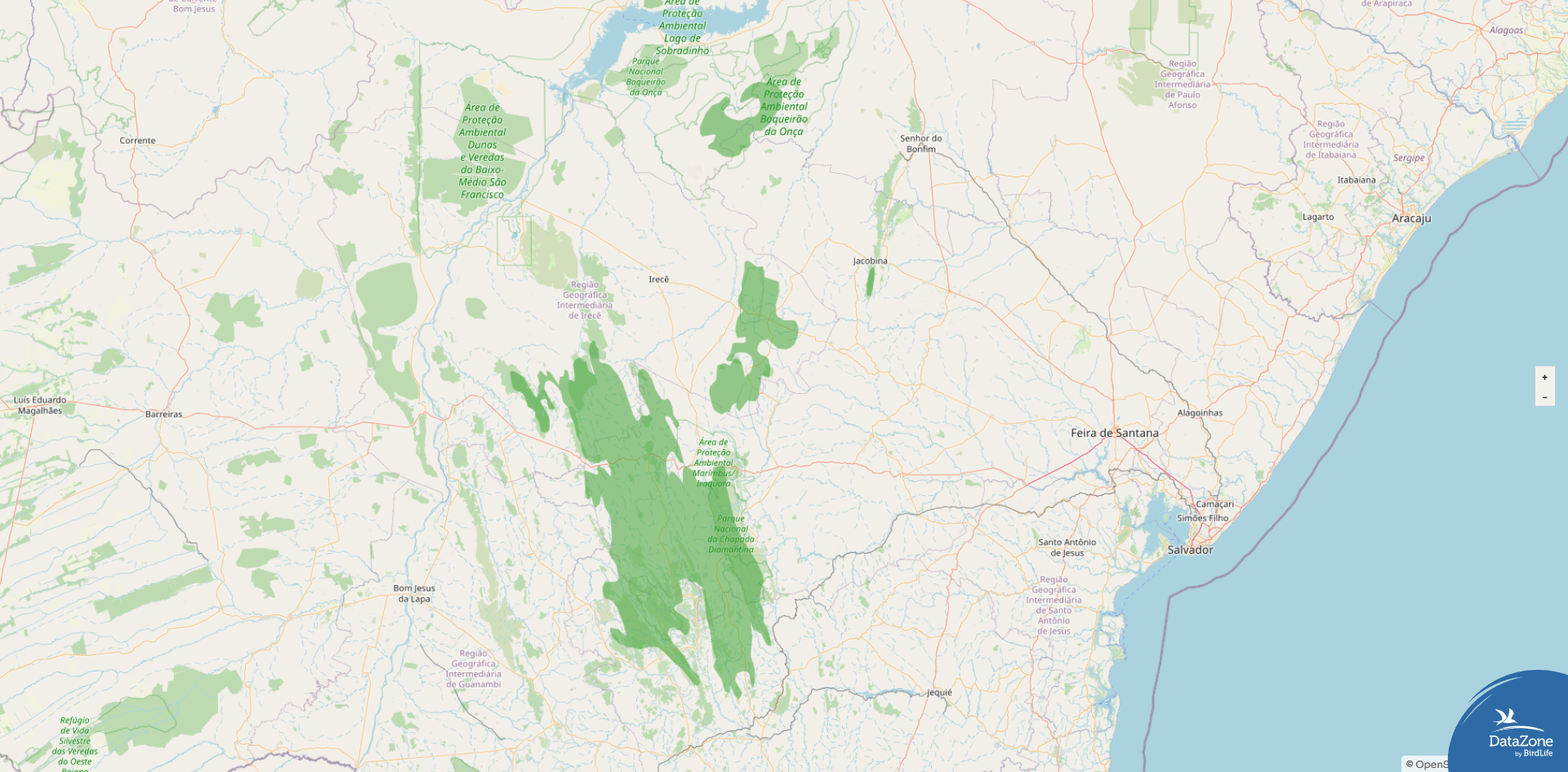
Legend
Green Resident
Species Overview
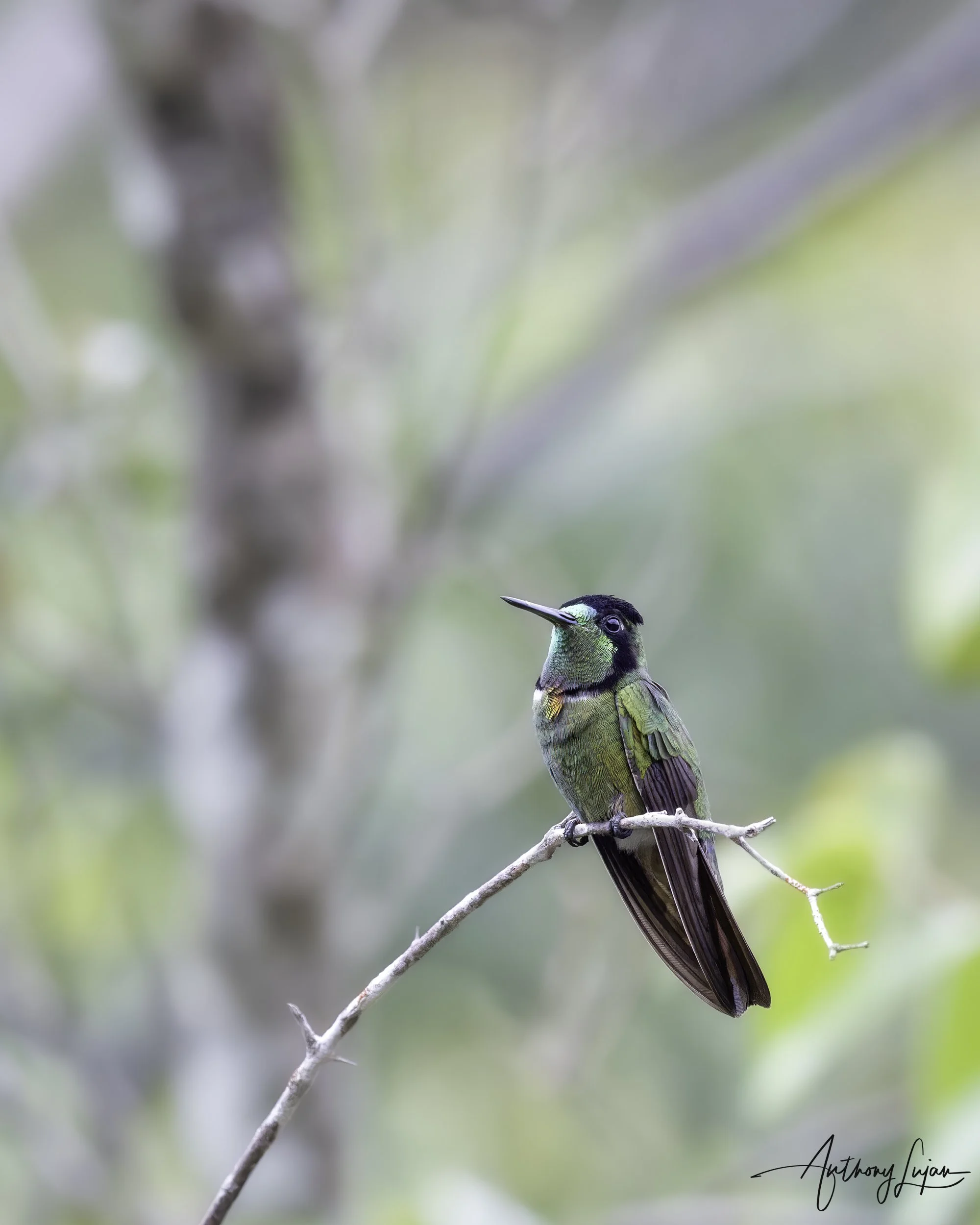
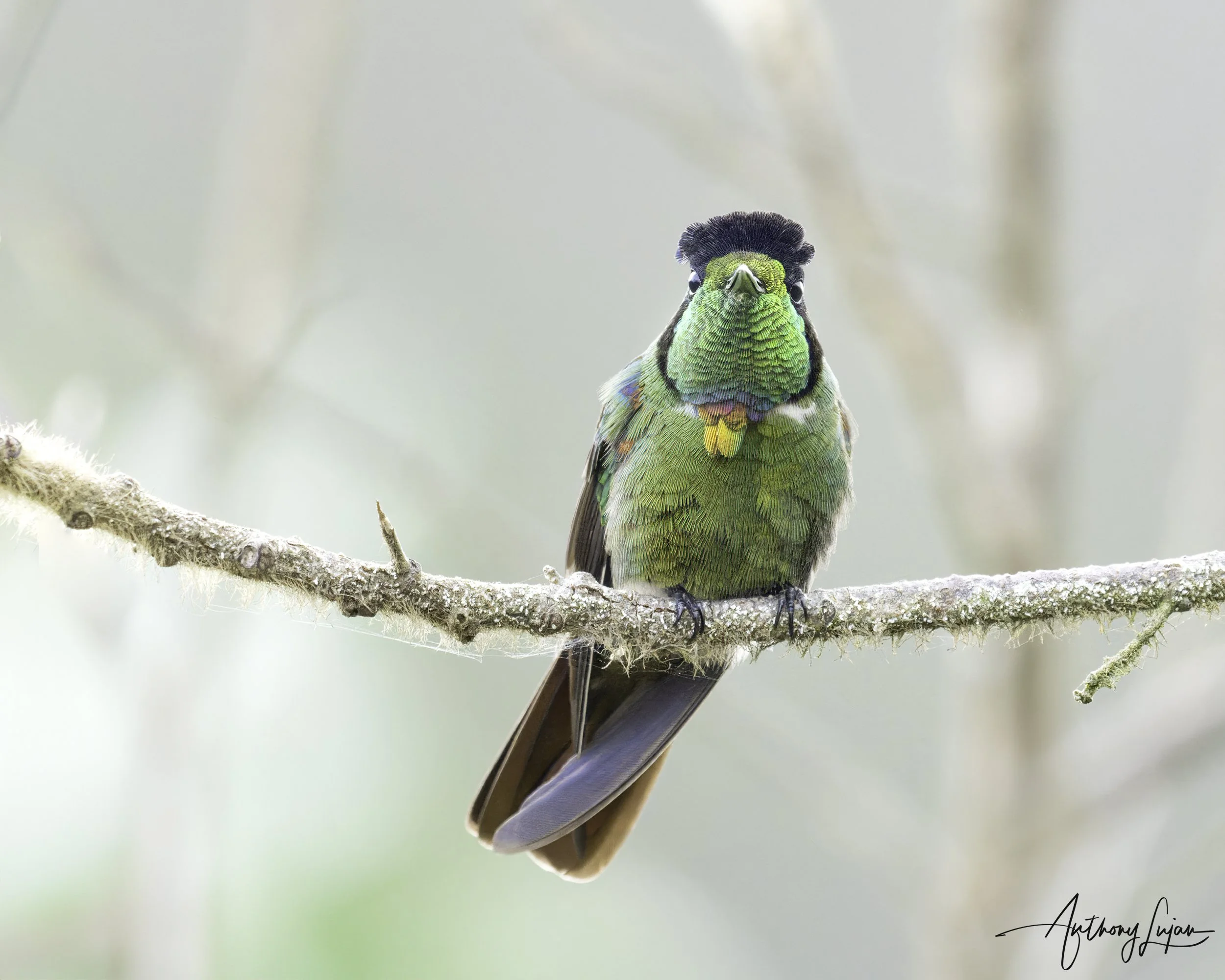
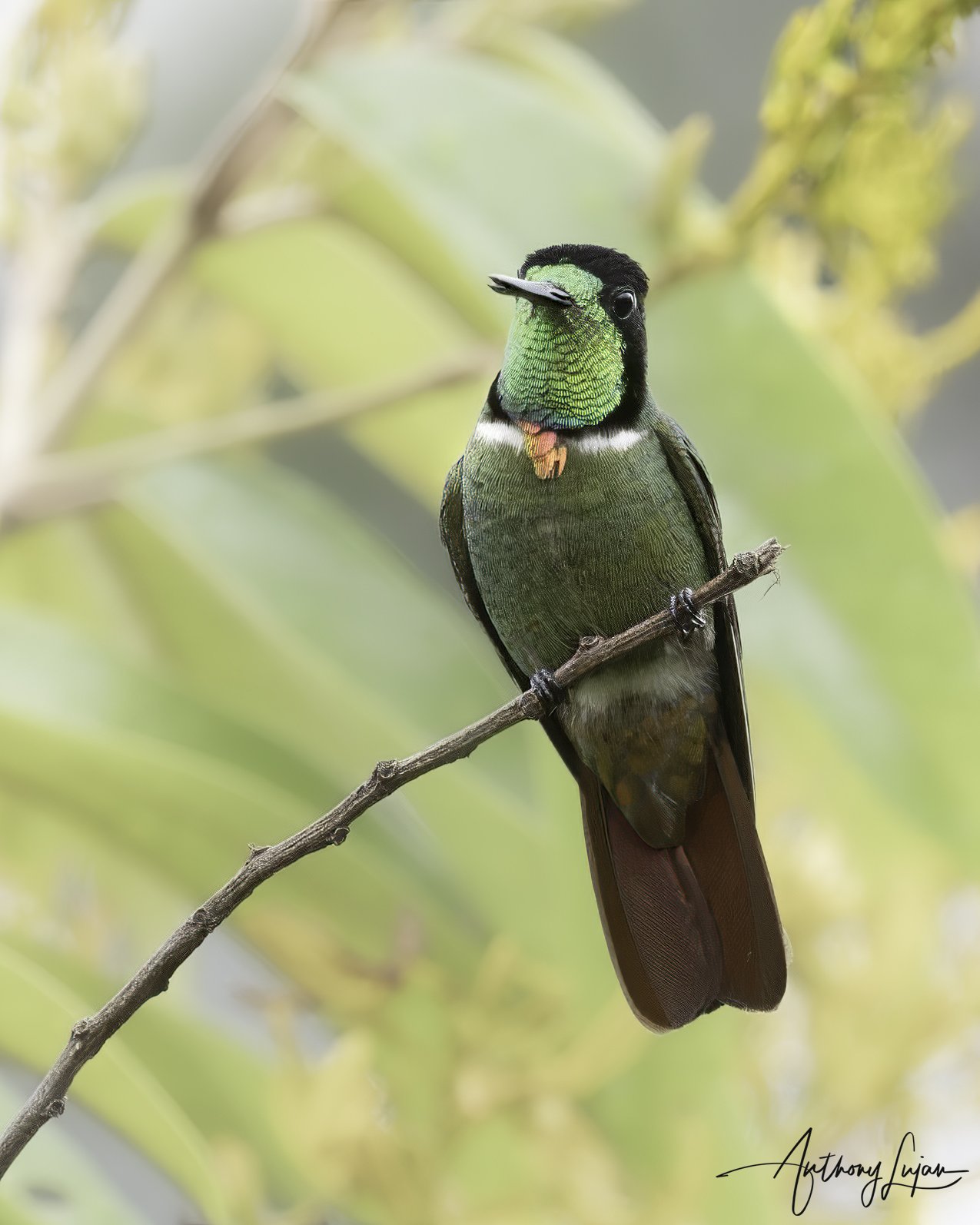
The Hooded Visorbearer is a specialized inhabitant of Brazil’s campo rupestre, an open, rocky, high-elevation habitat with harsh climatic conditions and nutrient-poor soils. It is one of very few hummingbirds adapted to this arid, wind-swept environment, where it feeds at flowering shrubs, cacti, and other hardy plants scattered among rocks. Its dazzling bronzy-green body, dark hood, golden-green throat, and crimson tail make it one of the most visually striking hummingbirds of eastern Brazil.
Male Description
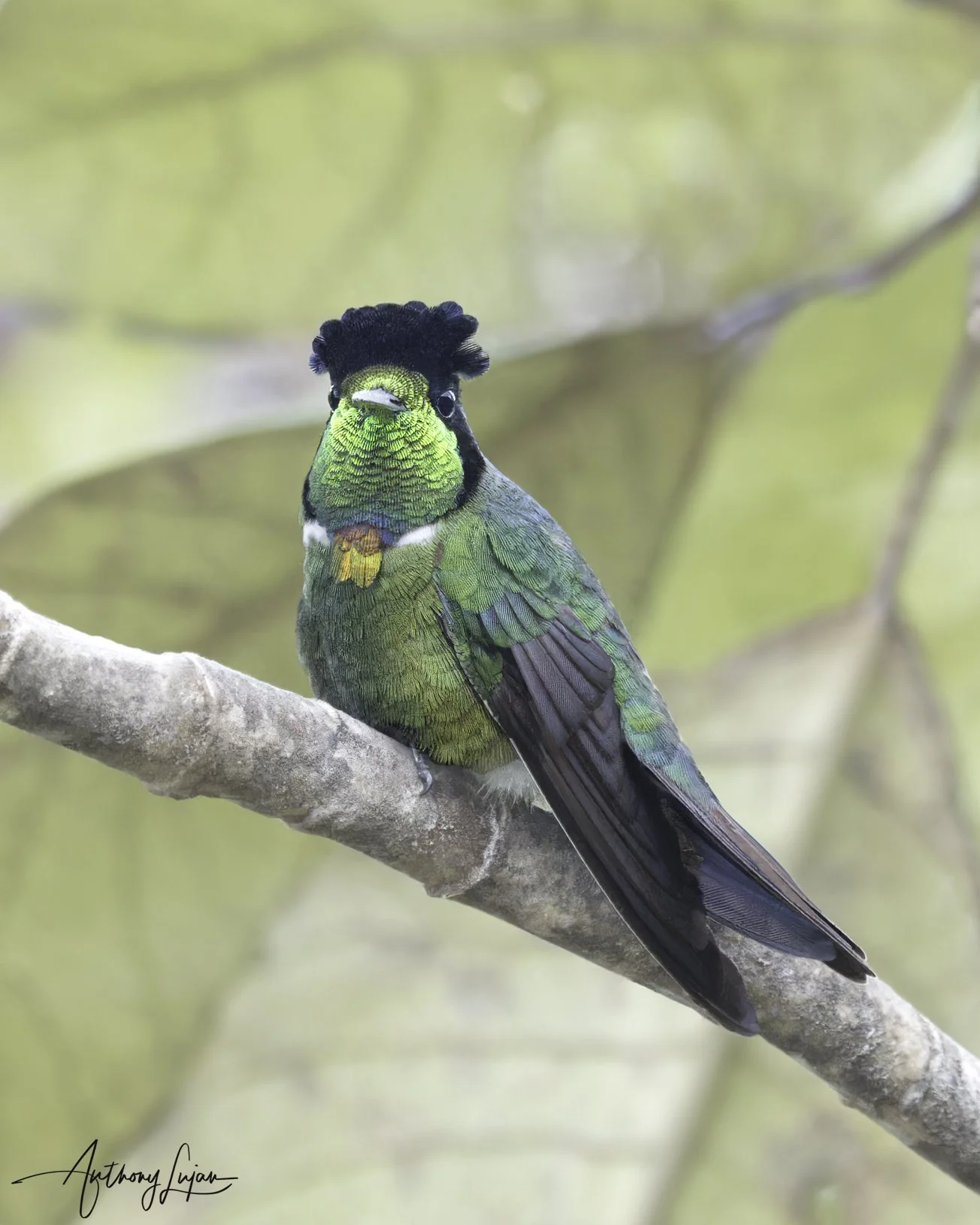
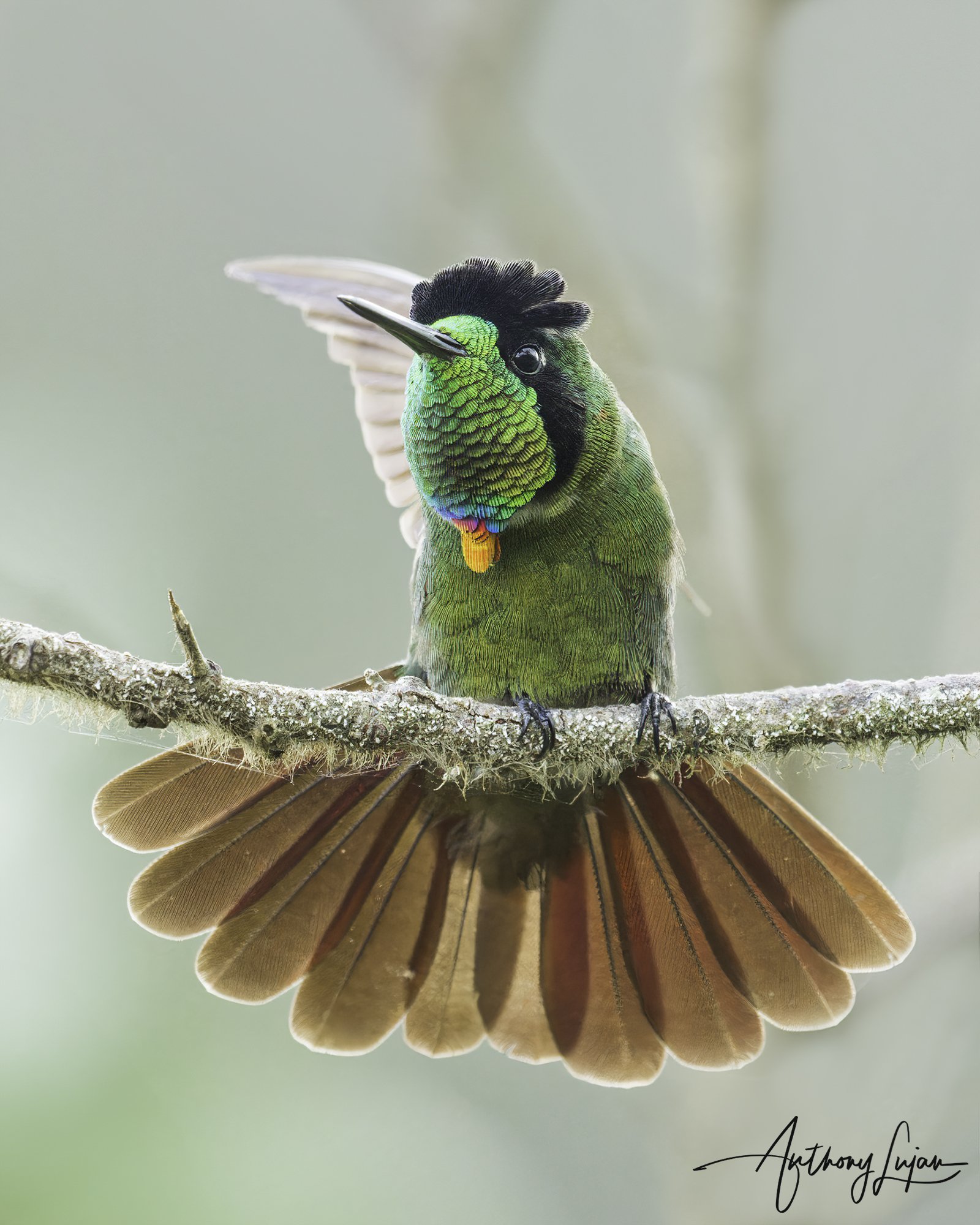
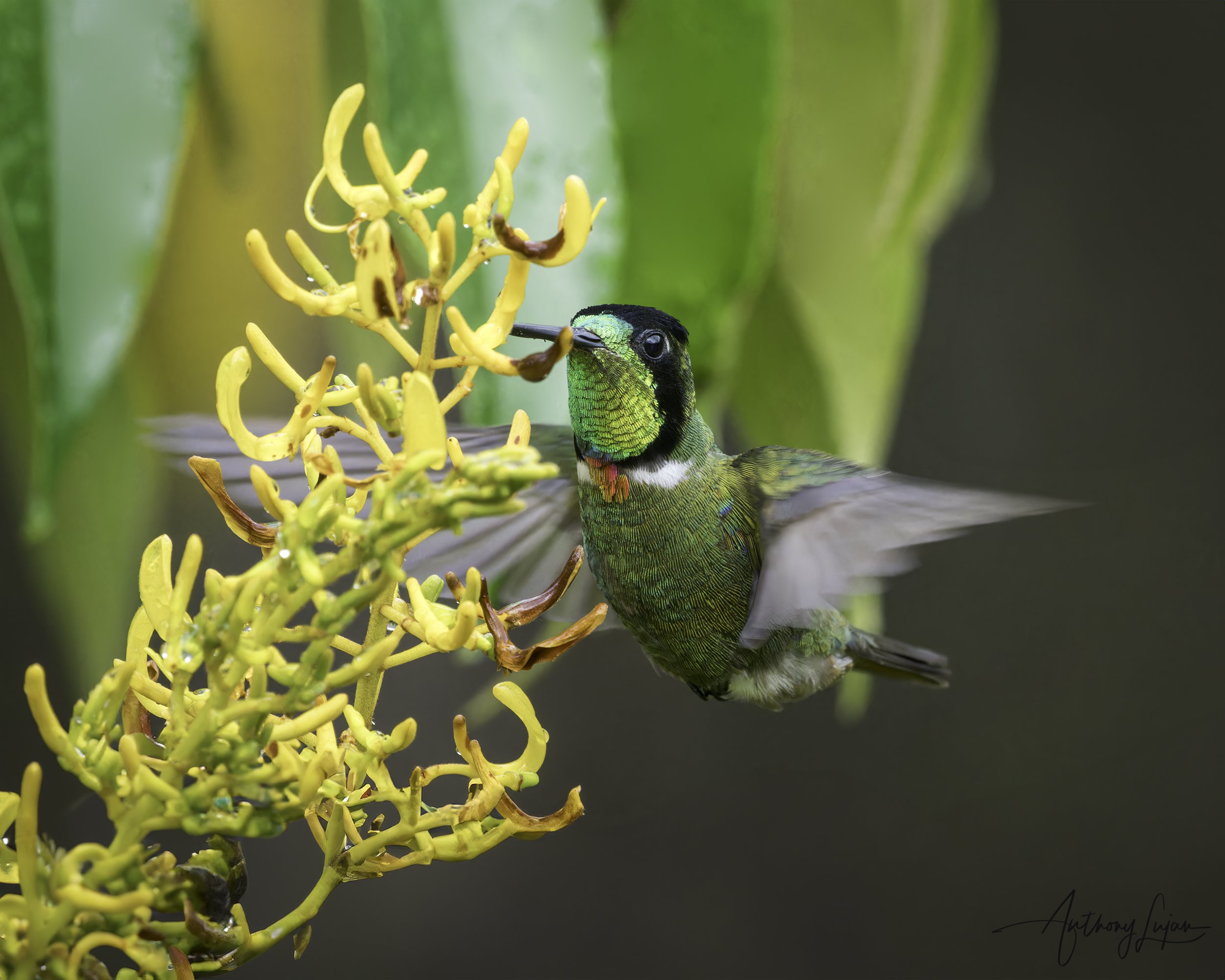
Adult males are iridescent bronzy-green above and below, with a short, straight black bill. The forehead and throat are an intense, iridescent golden-green, shading to bluish-green at the lower edge of the throat and narrowly bordered by a thin black line. The sides and crown of the head form a dark “hood,” blackish in tone, emphasizing the shining throat patch like a visor. A narrow white breast band separates the gorget from the green underparts, and in the center of this band is a brilliant golden-orange spot. The wings are purplish-brown, and the tail is deep bronzy-crimson, flashing rich reddish tones in flight. Overall, males appear as compact, bronzy-green hummingbirds with a dark hood, blazing golden-green throat, white breast band with an orange spot, and a crimson tail.
Female Description
Adult females are more bronzy overall, with bronzy-green upperparts and underparts, and lack the male’s dark hood. The crown is green rather than black, and the sides of the head are brown instead of black, giving a softer, less sharply defined head pattern. The throat is green but less intensely iridescent than the male’s, with a stronger bluish-green border at the lower edge and no iridescence on the forehead. Females share the narrow white breast band, though the central golden-orange spot is less obvious, and they also have crimson tails, though slightly less brilliant than the male’s. Immature birds are bronzy-green above and brown below, with a white throat speckled with green and a coppery-bronze tail above and crimson below, duller than adults.
Habitat & Behavior
Hooded Visorbearers inhabit rocky, semi-arid campos rupestres on high plateaus and mountain summits in Chapada Diamantina, where low shrubs, cacti, and hardy herbs grow among rock outcrops. They forage at flowering shrubs, cacti, and ground-level plants typical of this highland savanna, sipping nectar and also taking insects for protein. Birds often perch on exposed rocks or low shrubs between feeding bouts, and males may defend rich flowering patches in this resource-scarce environment. The species is considered resident, with no evidence of long-distance migration, though individuals may shift locally within the highland landscape as flowers come into bloom.
Population
The global population is estimated at roughly 35,000–100,000 mature individuals, all confined to a relatively small highland area in Bahia. Within suitable campo rupestre habitat it can be locally fairly common, but the overall range is limited and fragmented by valleys and unsuitable lowlands. Habitat degradation and projected climate-driven range contraction are expected to continue reducing the amount and quality of suitable habitat, leading to a gradual population decline.

Conservation
The Hooded Visorbearer is listed as Near Threatened because of its restricted range, ongoing habitat loss, and severe projected impacts from climate change. Unregulated mining for gold, diamonds, quartz, and manganese, as well as conversion of campo rupestre to pasture and human habitation, has reduced and fragmented its rocky grassland habitat. Frequent uncontrolled fires and climate change are expected to shrink its suitable range dramatically, potentially by as much as 90 percent in coming decades. Conservation priorities include protecting and effectively managing key campo rupestre areas within and beyond existing reserves, regulating mining and land conversion, controlling fires, and monitoring population trends as climate conditions change.
Checkout Anthony’s playlist of this species! Click the top right dropdown to see all the videos.
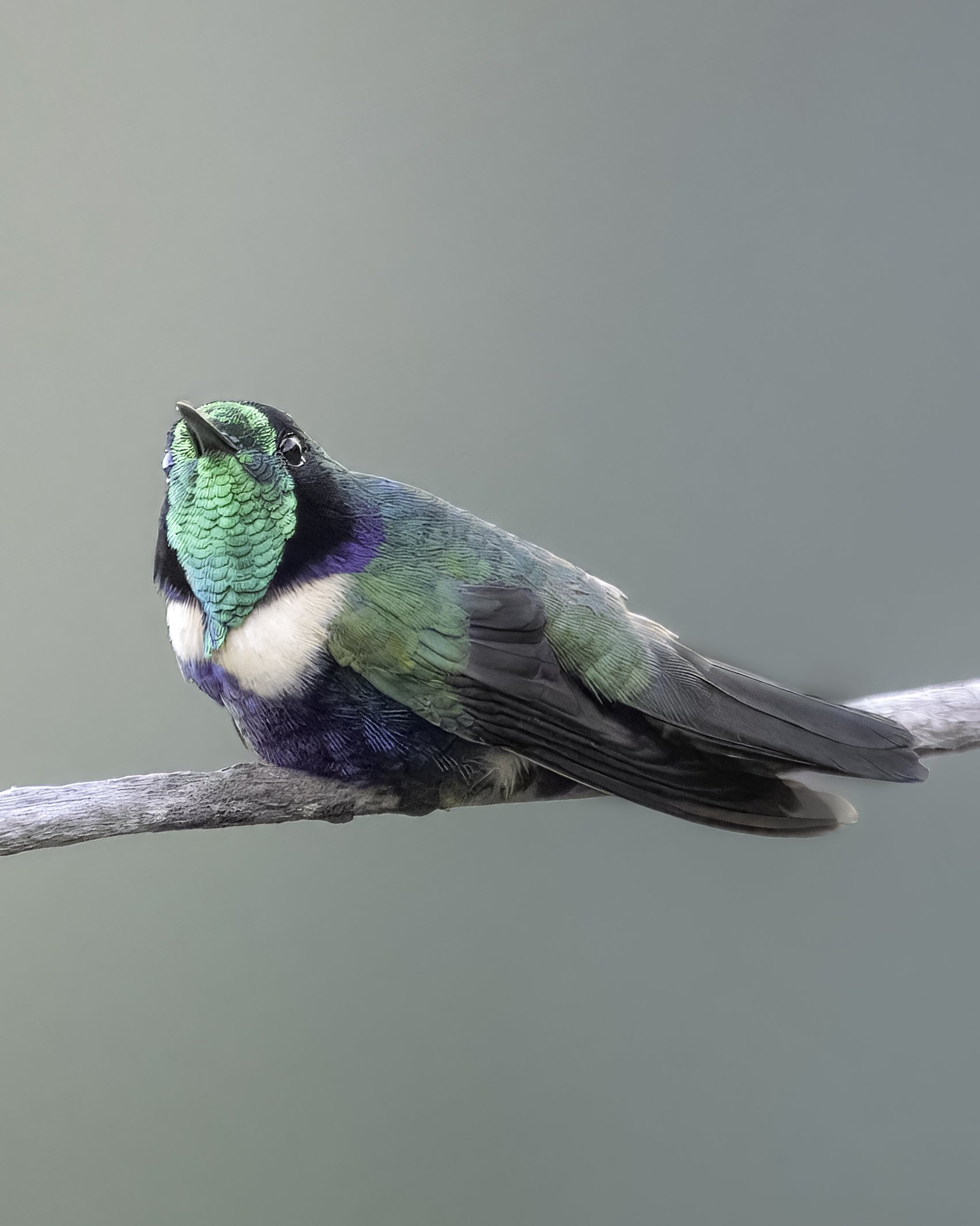
Related species in the Augastes genus (2 species total):

Please note: The content provided in this article reflects Anthony’s personal experience and photographic approach. Results can vary depending on light, weather, location, equipment, subject behavior, and field conditions.