
Lazuline Sabrewing
Scientific name: Campylopterus falcatus
The Lazuline Sabrewing is a medium-sized hummingbird of humid montane forests and forest edges in the northern Andes of Venezuela, Colombia, and Ecuador. The number of mature individuals is unknown, its population is believed to be decreasing, and it is listed as Least Concern, monotypic, non-migratory, and associated with mid- to high-elevation forests and human-modified landscapes.
At a Glance
Family: Trochilidae (hummingbirds)
Clade: Trochilini – Emeralds
Genus group: Campylopterus — 10 species, 6 subspecies
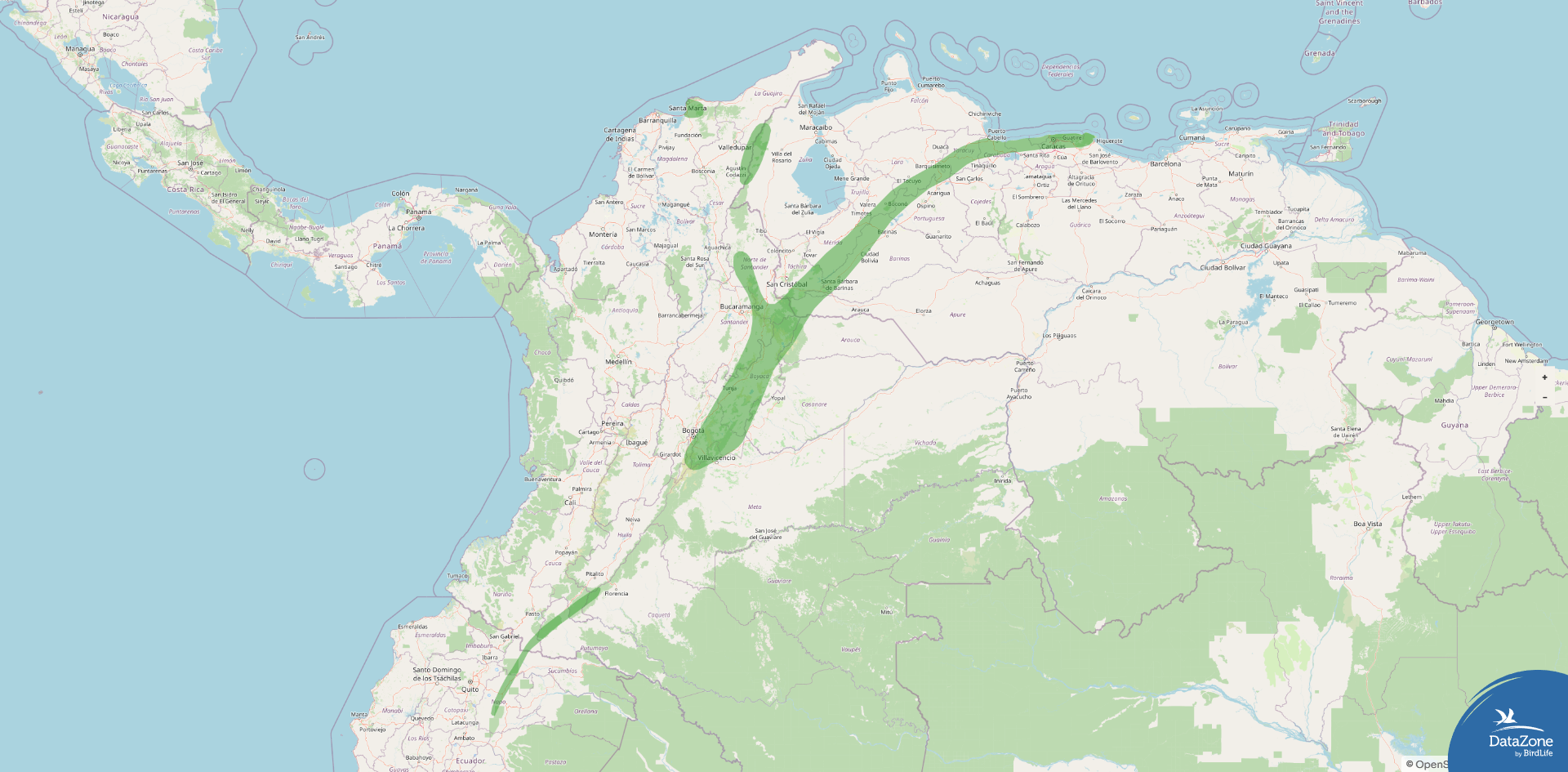
Range: Mountains of north-central and western Venezuela, the Serranía de Perijá on the Venezuela–Colombia border, the Sierra Nevada de Santa Marta and Eastern Andes of Colombia, and south in Ecuador to Napo Province.
Habitat: Semi-deciduous and evergreen montane forest, forest edges, plantations, lower margins of páramo, secondary forest, and gardens.
Elevation: Generally from about 900–3,000 m; most common between roughly 1,200–2,300 m, with records as low as 450 m in Colombia.
Length: About 11.5–13 cm (4.5–5.1 in).
Weight: About 6.4–8 g.
Number of mature individuals: Unknown
Population trend: Decreasing
Status: Least Concern (IUCN)
Name Origin
The genus name Campylopterus means “curved wing,” referring to the thickened, sabre-shaped outer primaries typical of sabrewings. The species name falcatus comes from Latin for “sickle-shaped,” again referencing the curved, powerful wing structure. The English name “Lazuline Sabrewing” highlights the bird’s rich blue (lazuline) tones and its membership in the sabrewing group.
Subspecies & Distribution
The Lazuline Sabrewing is monotypic, with no recognized subspecies.
Occurs in the mountains of north-central and western Venezuela, the Serranía de Perijá on the Venezuela–Colombia border, the Sierra Nevada de Santa Marta and Eastern Andes of Colombia, and south into Ecuador as far as Napo Province. Across this range it inhabits semi-deciduous and evergreen montane forest, forest edges, plantations, lower páramo margins, and gardens.
Overall, the species forms a discontinuous band along the northern Andes and adjacent ranges, with scattered populations in suitable montane forest and edge habitats from Venezuela through Colombia into northern Ecuador.
Ledged
Green Resident
Species Overview
The Lazuline Sabrewing is a striking blue-and-green hummingbird of montane forests and edges in the northern Andes. It is generally uncommon and patchily distributed, often found in scattered populations where suitable forest and second-growth persist. Although it appears to tolerate some habitat modification and uses gardens and plantations, it is sensitive to major habitat changes, and ongoing deforestation and degradation are thought to be causing a gradual population decline, even though it remains classed as Least Concern.
Male Description
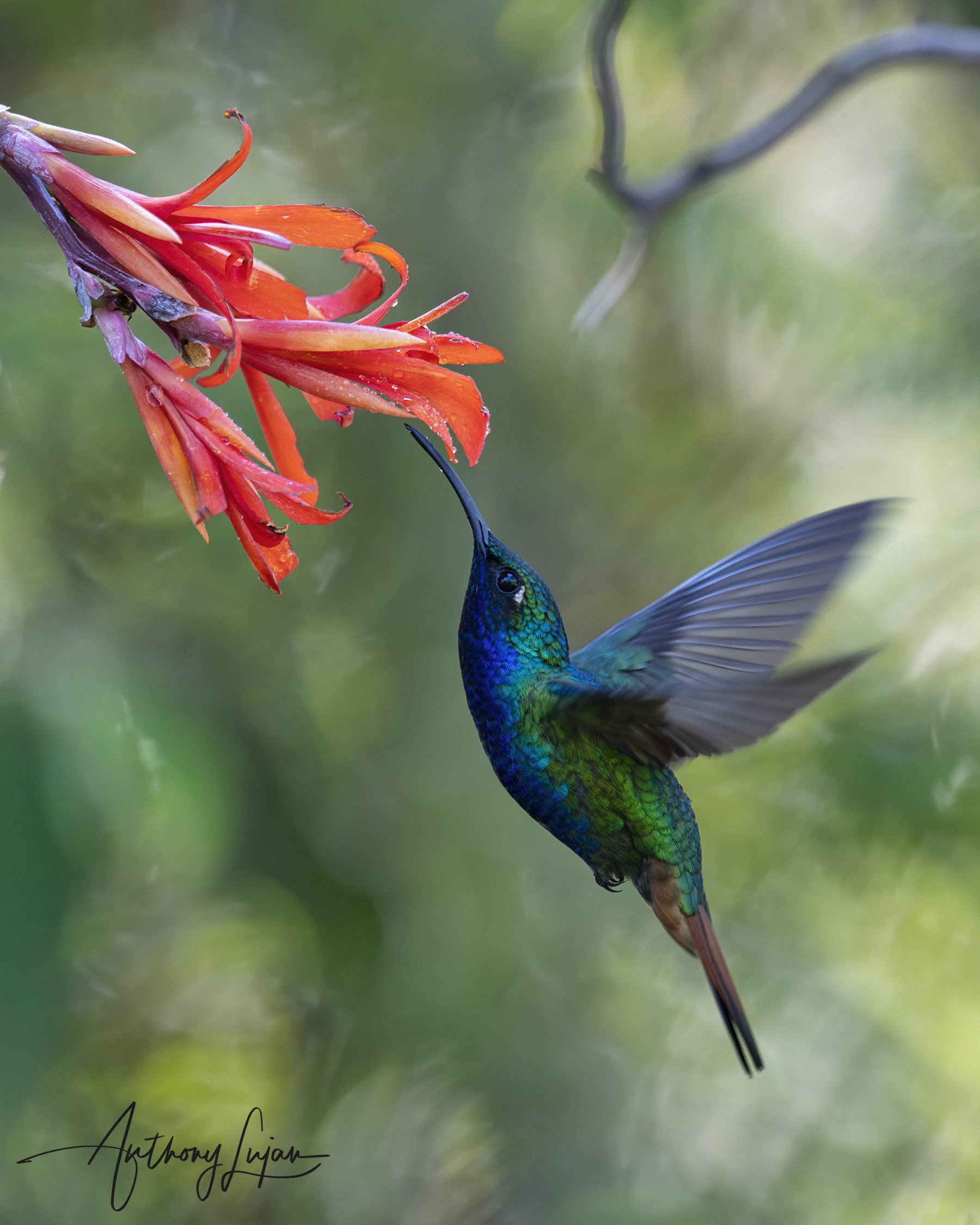
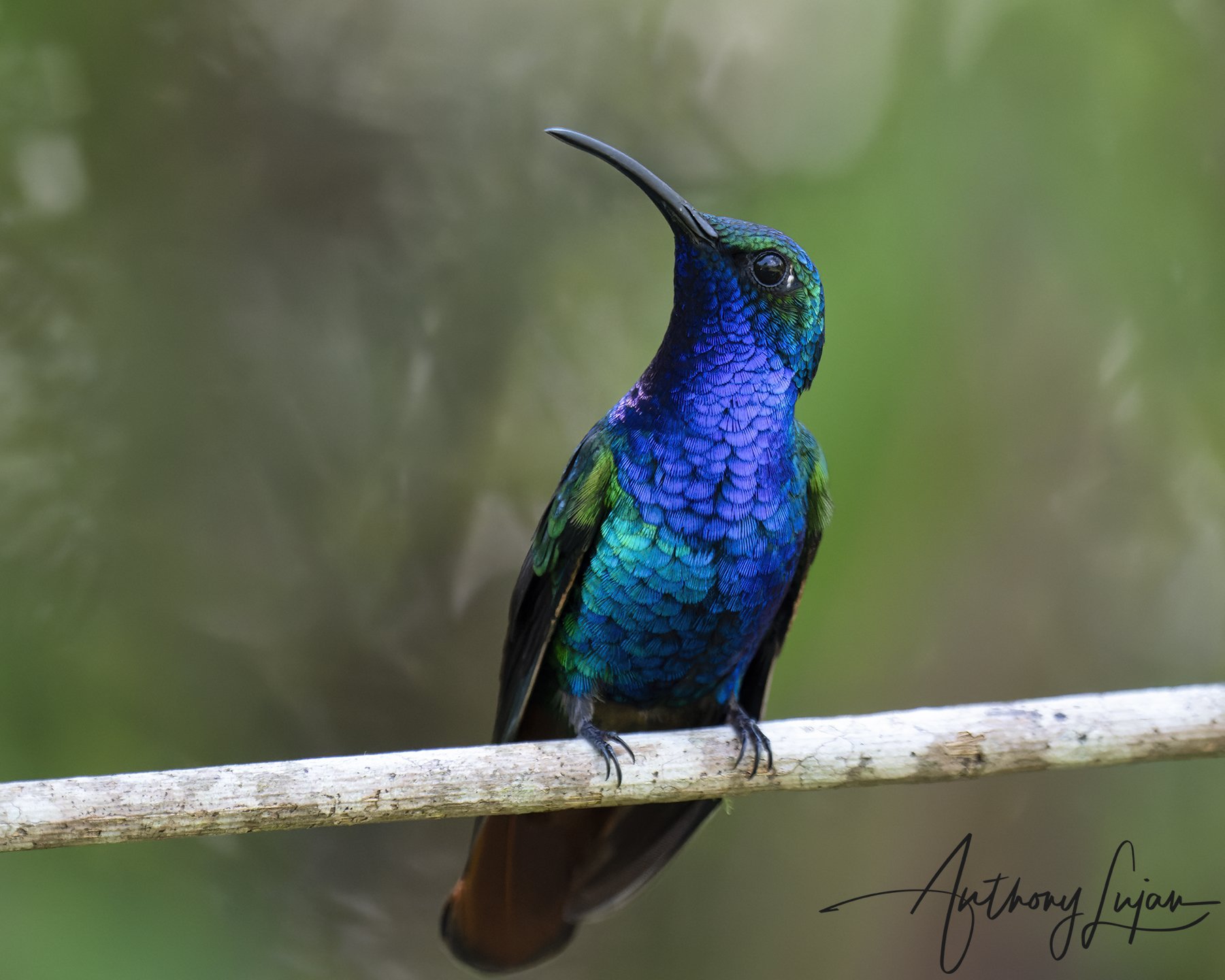
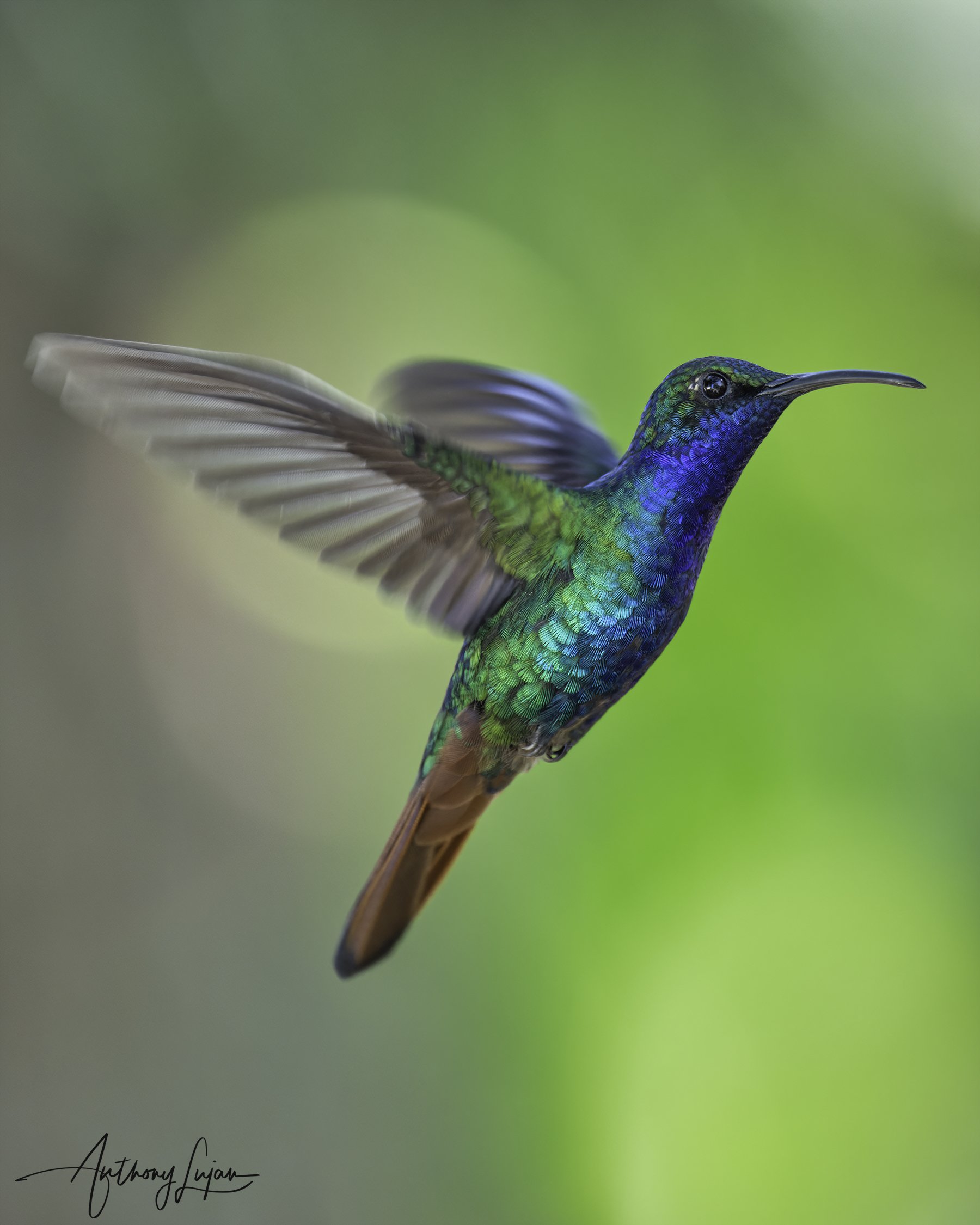
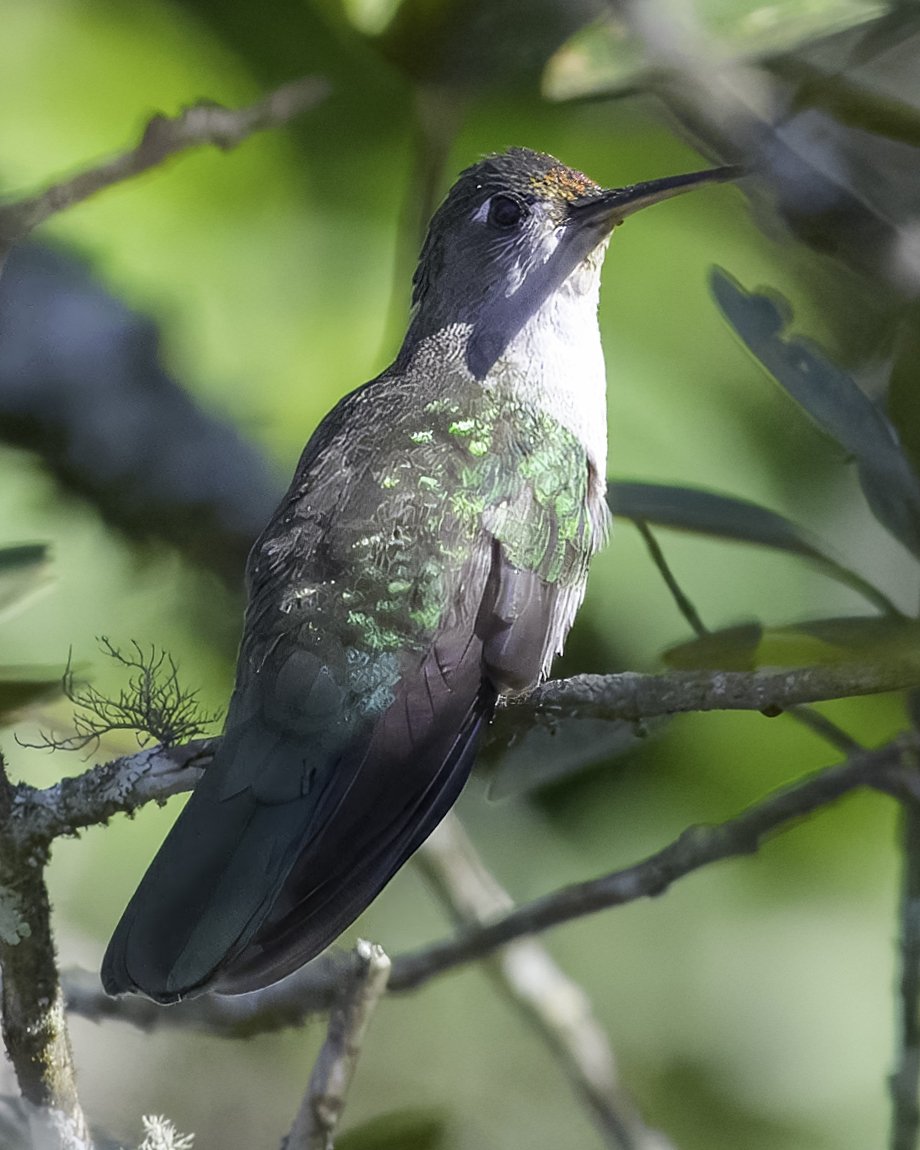
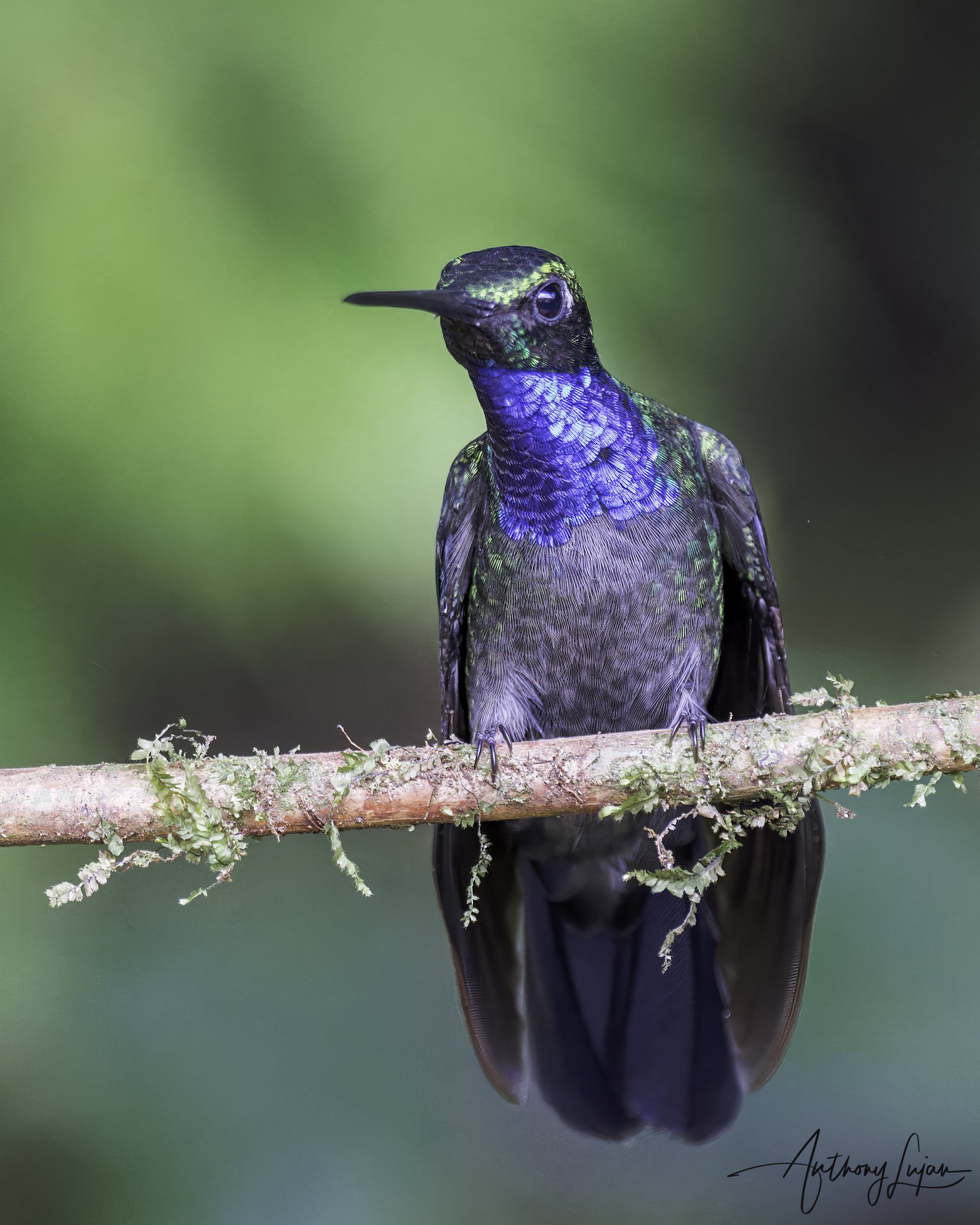
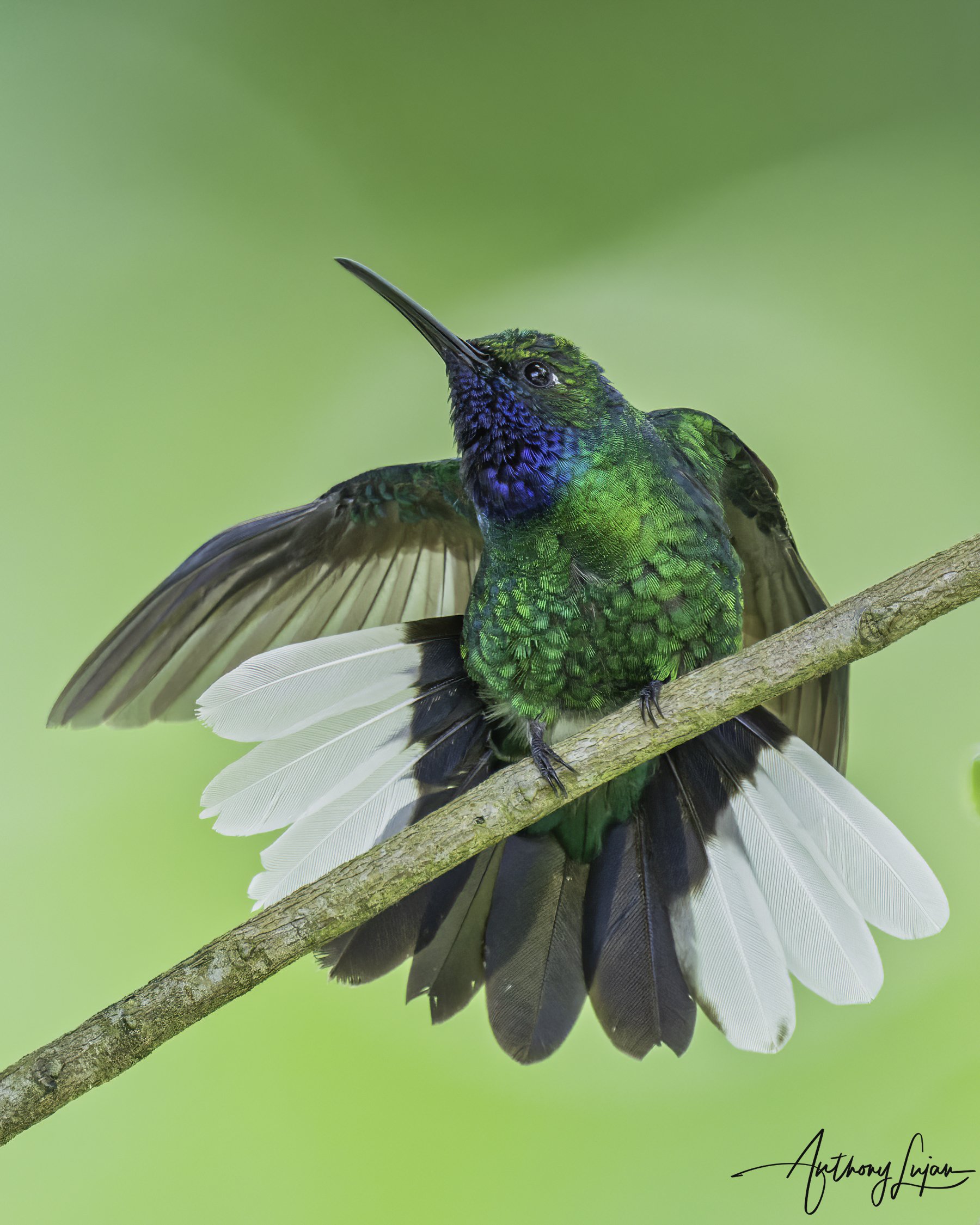
Adult males are medium-sized sabrewings with a black, slightly decurved bill and a small white spot behind the eye. The upperparts are glittering green, becoming bluer on the crown, and the throat and breast are glittering dark violet-blue that grades into bright blue toward the green belly. The tail is chestnut with wide bronze-green tips on the central pair of feathers, creating a strong color contrast in flight. Overall, males appear as bright green-and-blue hummingbirds with a rich blue-violet front and a chestnut tail tipped with bronze-green.
Female Description
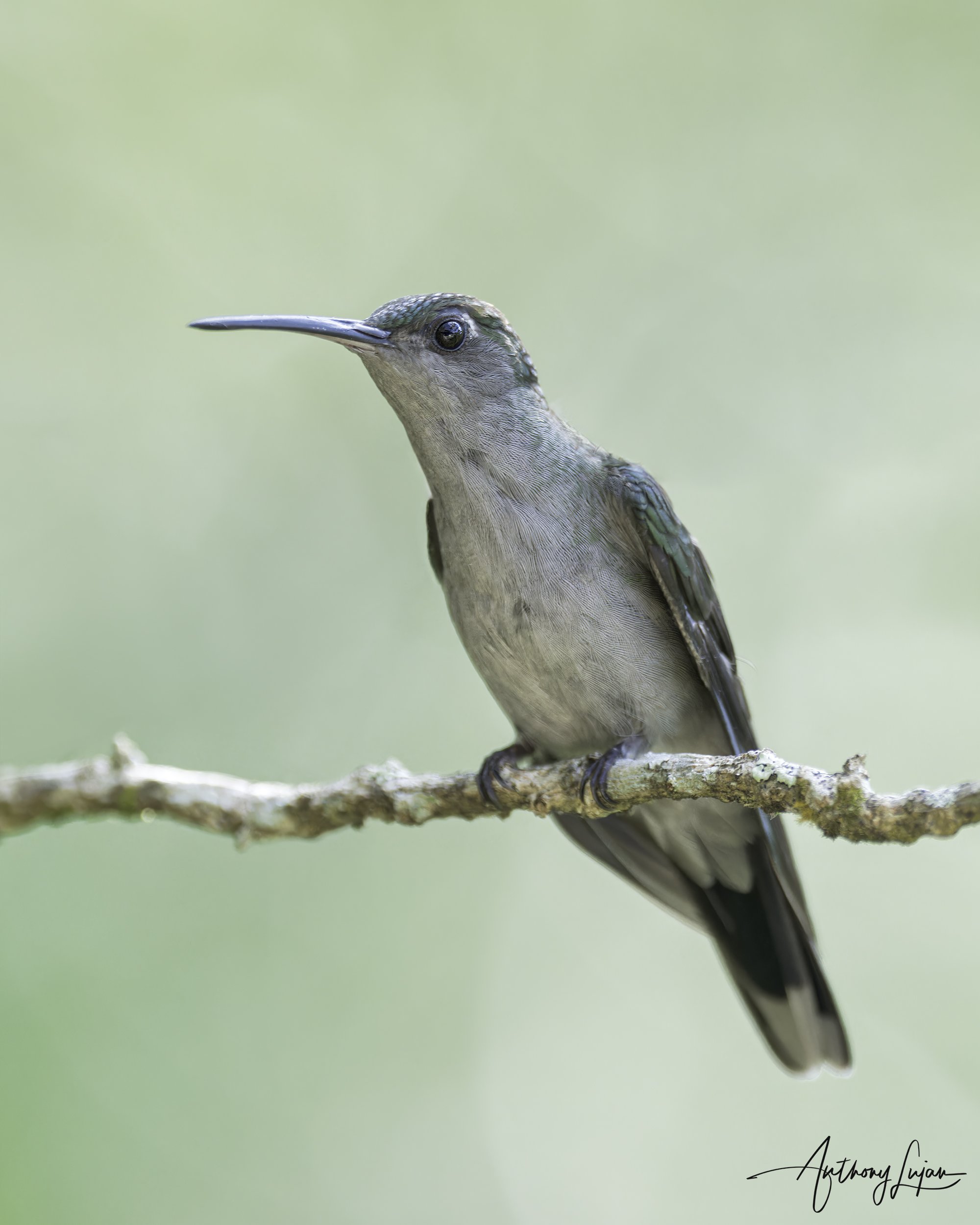
Females share the male’s general structure, including the decurved black bill and white post-ocular spot, and the upperparts are similar glittering green. The throat is a glittering bluish tone, but the rest of the underparts are pale gray with green spots on the flanks rather than solid blue. The tail is chestnut like the male’s, but the green tips on the central feathers are smaller and less extensive. Females thus look like paler, gray-bellied versions of the male, with bluish throats and spotted flanks.
Habitat & Behavior
Lazuline Sabrewings inhabit semi-deciduous and evergreen montane forest, forest edges, the edges of plantations, lower slopes near páramo, and gardens in mountainous regions of Venezuela, Colombia, and Ecuador. They forage mostly from the understory to the mid-levels of the forest, taking nectar from a variety of flowers by trap-lining—following regular routes among widely spaced blossoms—and sometimes defending patches of flowers when resources are concentrated. They also consume insects, catching them in the air or gleaning them from vegetation. The species is believed to be sedentary, remaining within the same general areas year-round, although individuals may shift locally with flowering and seasonal conditions.
Population
The total number of mature Lazuline Sabrewings is unknown, and the species is considered generally uncommon and locally distributed across its range. It occurs in scattered montane forest patches, and its sensitivity to major habitat changes means that extensive deforestation and forest degradation can significantly reduce local populations. Even though it can use human-modified habitats such as gardens and plantations, the ongoing loss and fragmentation of montane forest across the northern Andes likely contribute to a decreasing population trend.

Conservation
Lazuline Sabrewing is assessed as Least Concern because it occupies several countries and a relatively broad elevational band, and it occurs in numerous protected areas. However, its dependence on montane forest and edges, combined with an apparent intolerance of heavy habitat alteration, means it remains vulnerable to deforestation, agricultural expansion, and other land-use changes. Conservation measures that maintain and restore humid montane forests, protect forest edges and riparian zones, and encourage the retention of native flowering plants in gardens and plantations will benefit this species. Ongoing monitoring of population trends and habitat changes in Venezuela, Colombia, and Ecuador is important to ensure that declines do not accelerate unnoticed.


Checkout Anthony’s playlist of this species! Click the top right dropdown to see all the videos.
Related species in the Campylopterus genus (10 species total):


Please note: The content provided in this article reflects Anthony’s personal experience and photographic approach. Results can vary depending on light, weather, location, equipment, subject behavior, and field conditions.