

Scientific name: Phaethornis koepckeae
Koepcke’s Hermit is a range‑restricted hermit hummingbird of humid lower montane and foothill forests along the eastern Andean slope of Peru. Its global population is estimated at 13,000–57,000 mature individuals, the population trend is decreasing, it is not a migrant, and it is currently assessed as Least Concern.
At a Glance
Family: Trochilidae (hummingbirds)
Clade: Phaethornithinae – Hermits
Genus: Phaethornis — 27 species in total
Range: Endemic to the eastern foothills of the Peruvian Andes
Habitat: Humid evergreen and montane forest understory, ravines, and foothill forest, often in dense shaded understory
Elevation: About 450–1,300 m (1,500–4,300 ft)
Length: About 14–15 cm (5.5–5.9 in)
Weight: About 4.5–5.8 g
Number of mature individuals: 13,000–57,000
Population trend: Decreasing
Movement: Not a migrant
IUCN Red List category: Least Concern
Name Origin
The genus name Phaethornis comes from Phaethon, meaning “shining” or “radiant,” reflecting the iridescent qualities of hummingbirds. The species name koepckeae honors German‑Peruvian ornithologist Maria Koepcke, who made major contributions to the study of Peruvian birds. The common name “Koepcke’s Hermit” likewise commemorates her.
Taxonomy
Phaethornis koepckeae is a hermit hummingbird in the subfamily Phaethornithinae. It is part of the large genus Phaethornis, which includes many other understory hermits such as the Green Hermit (P. guy) and Great-billed Hermit (P. malaris).
Subspecies and Distribution
Monotypic — no subspecies recognized.
Distribution:
Koepcke’s Hermit is endemic to Peru. It occurs patchily along the eastern foothills of the Peruvian Andes from just south of the Marañón River in Amazonas south at least to central Madre de Dios, primarily between about 450 and 1,300 m. It inhabits the understory of tall evergreen forest and humid montane forest (“hill forest”), usually shunning heavily degraded secondary forest.
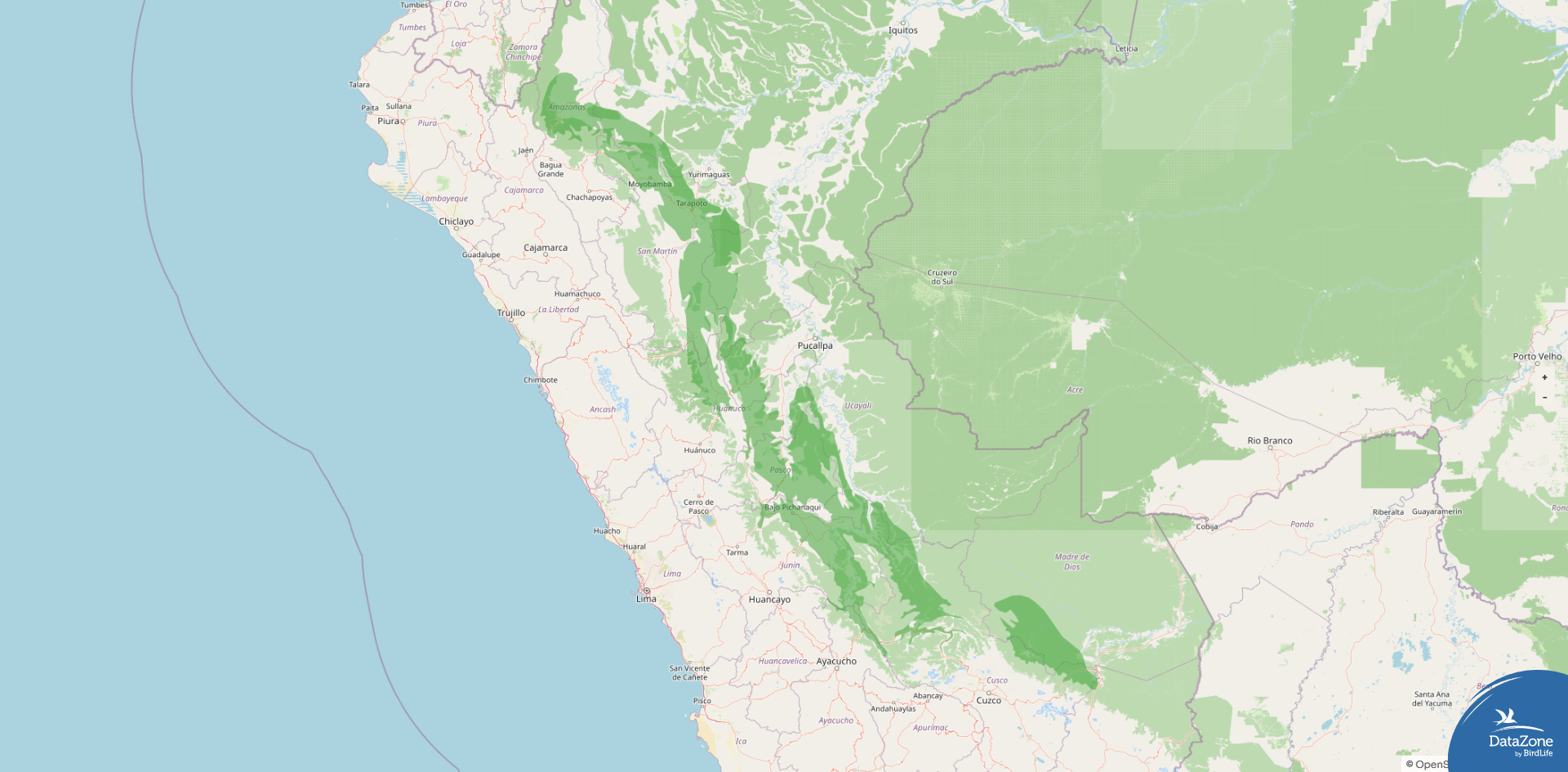
Legend
Green Resident
Species Overview
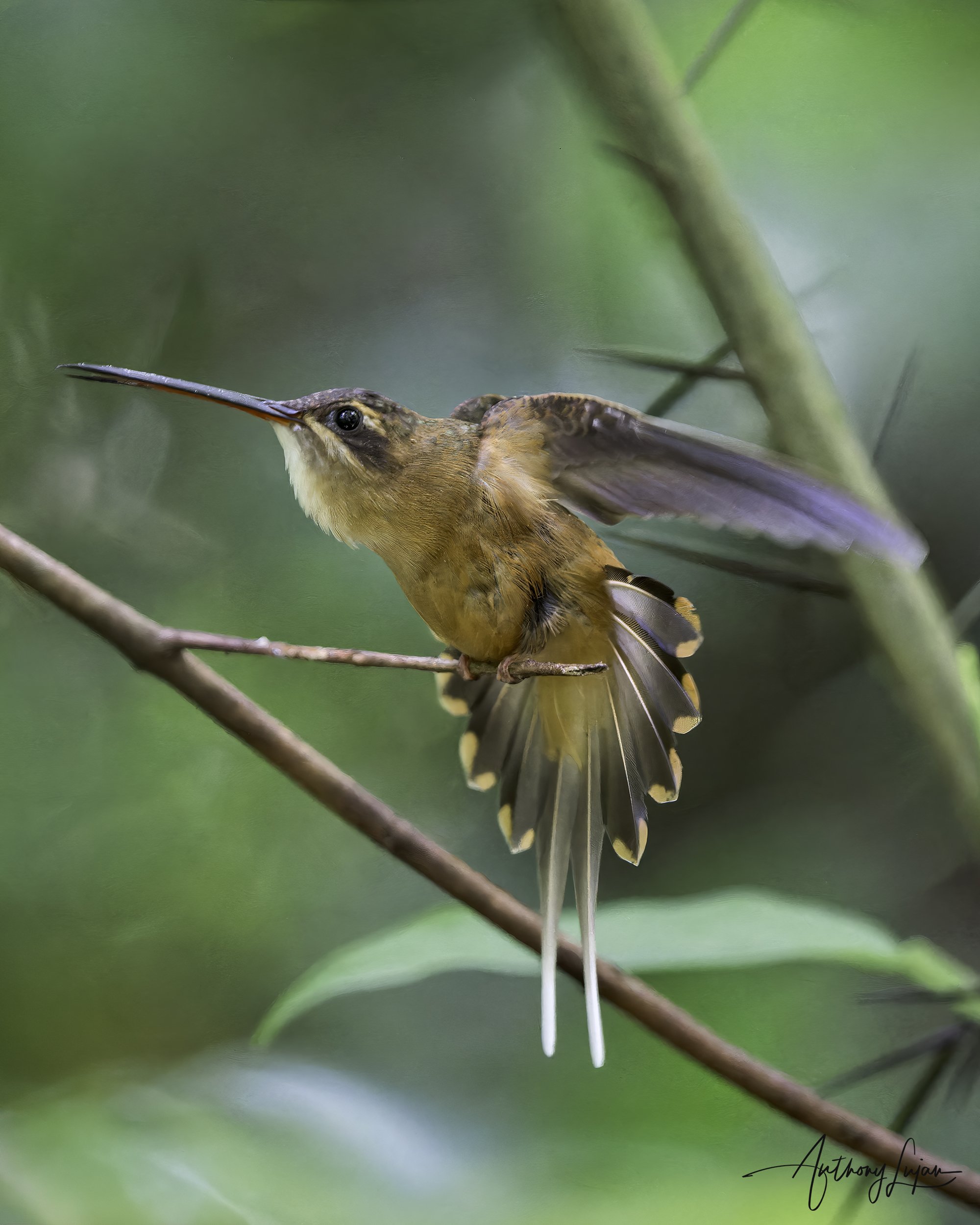
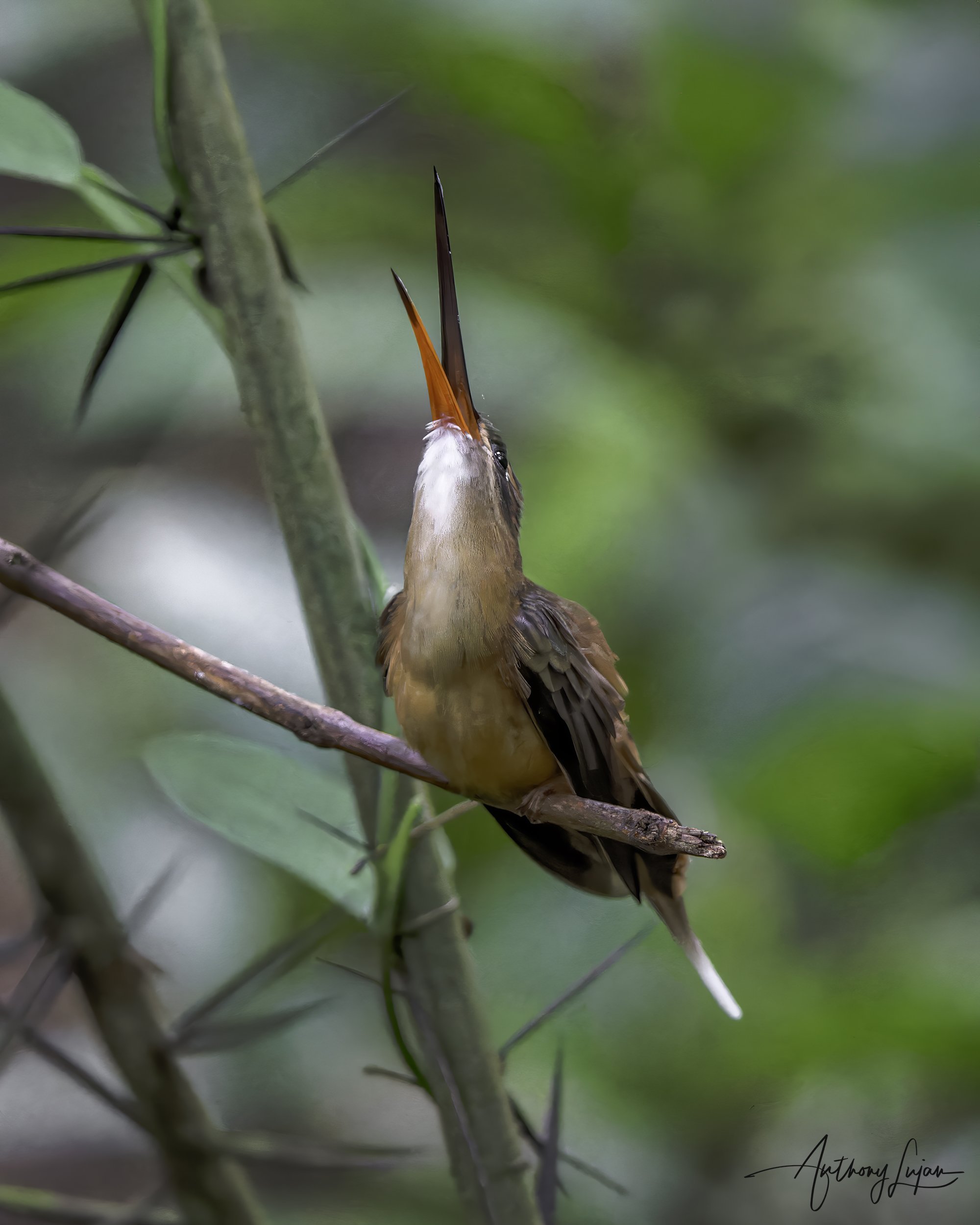
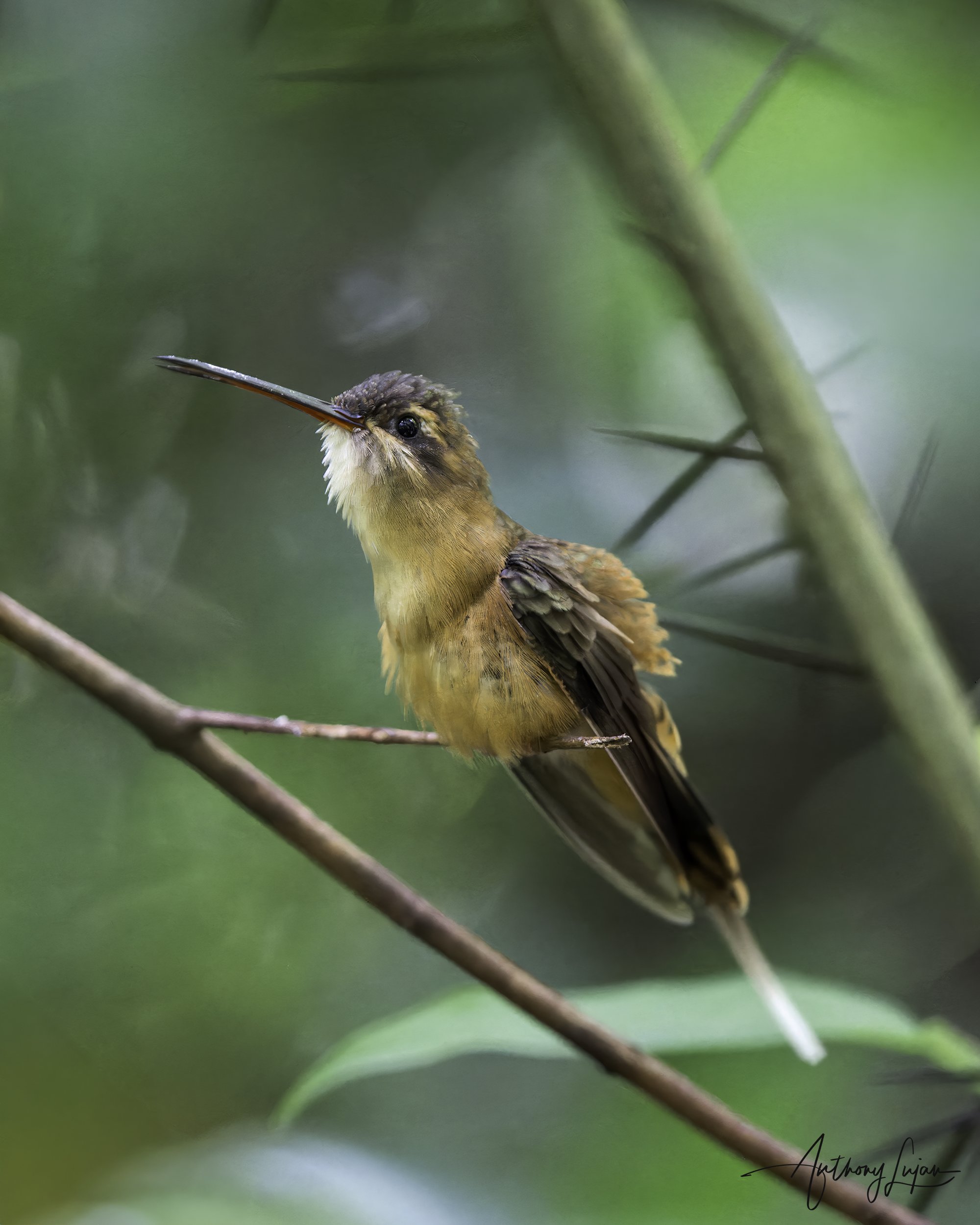
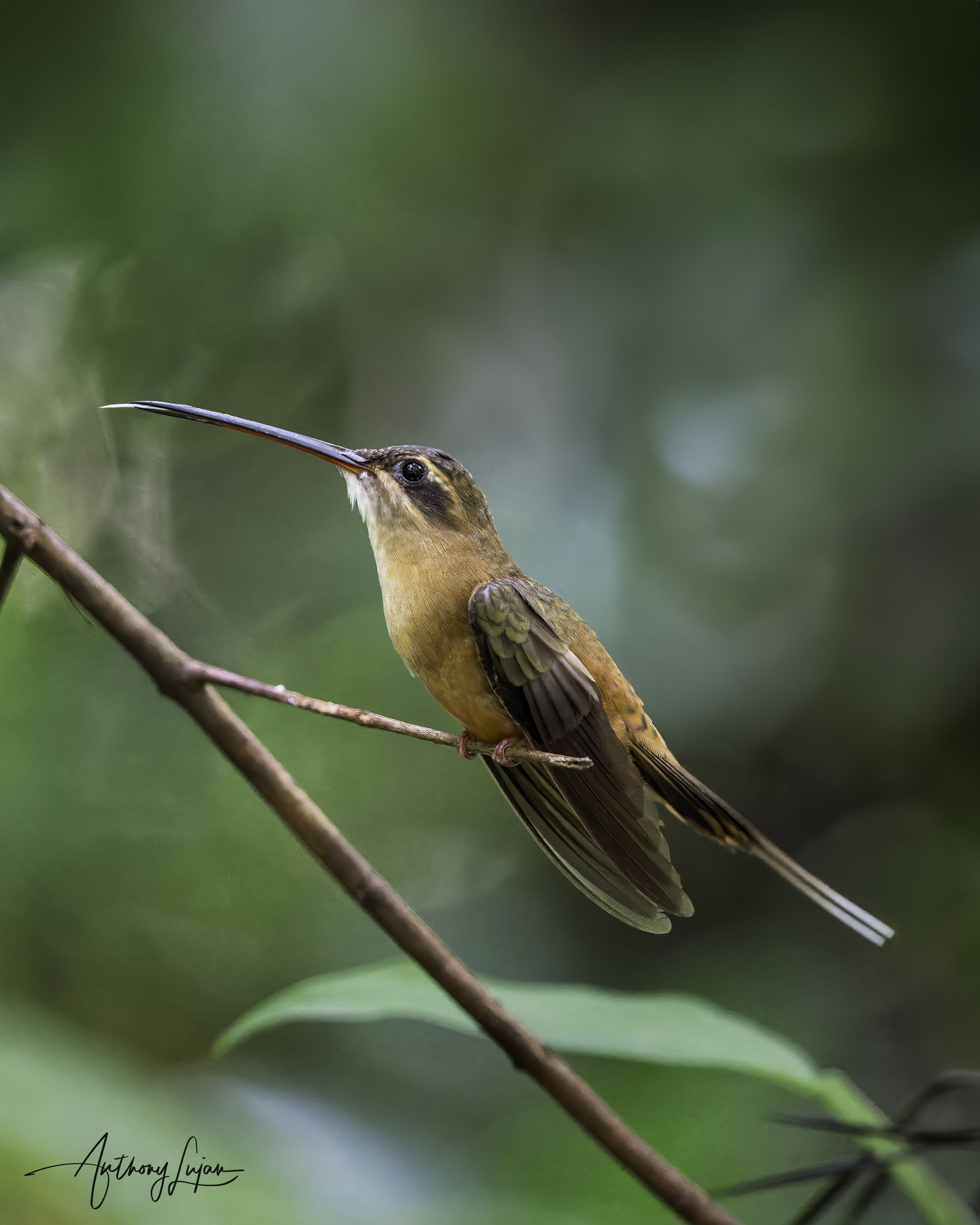
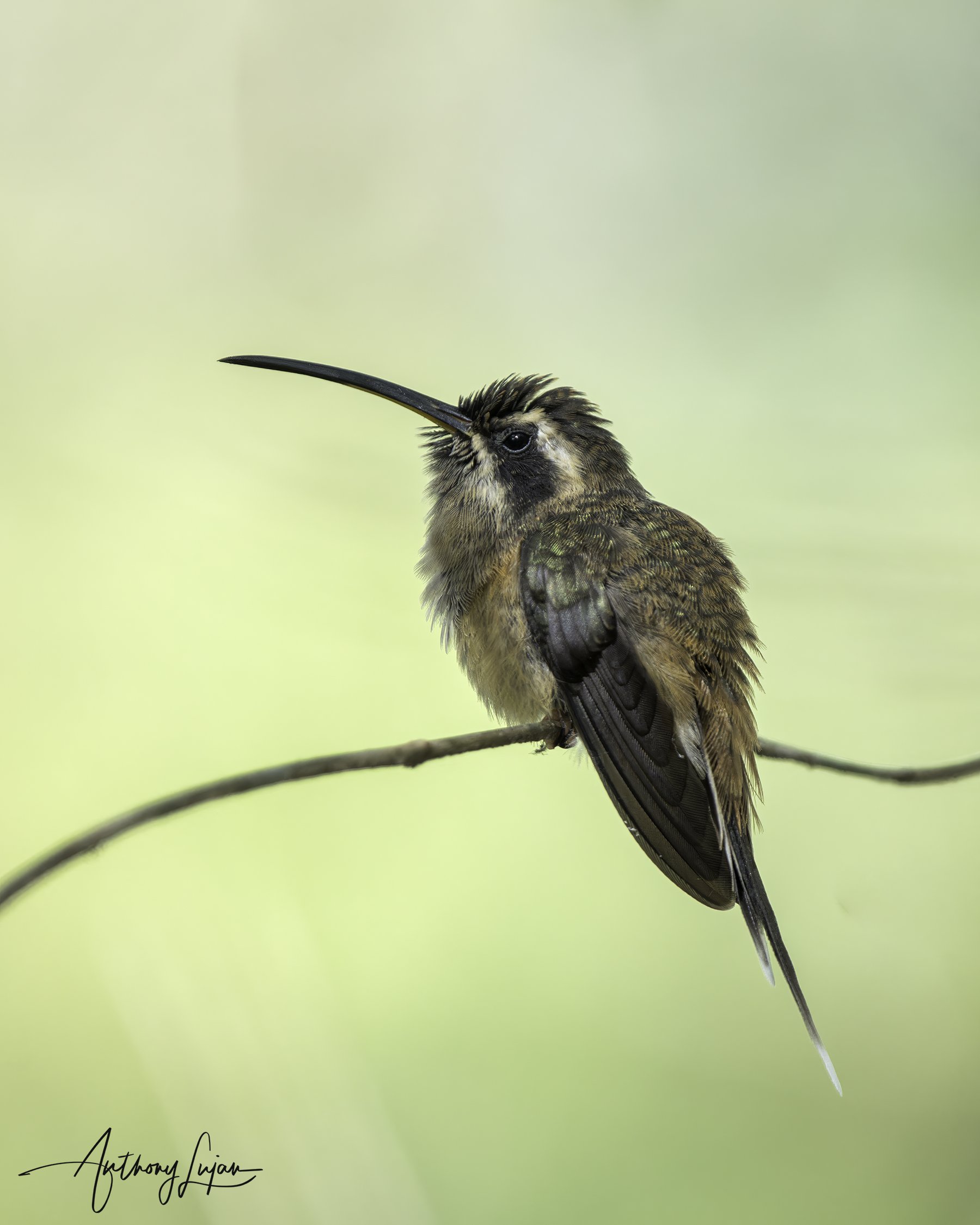
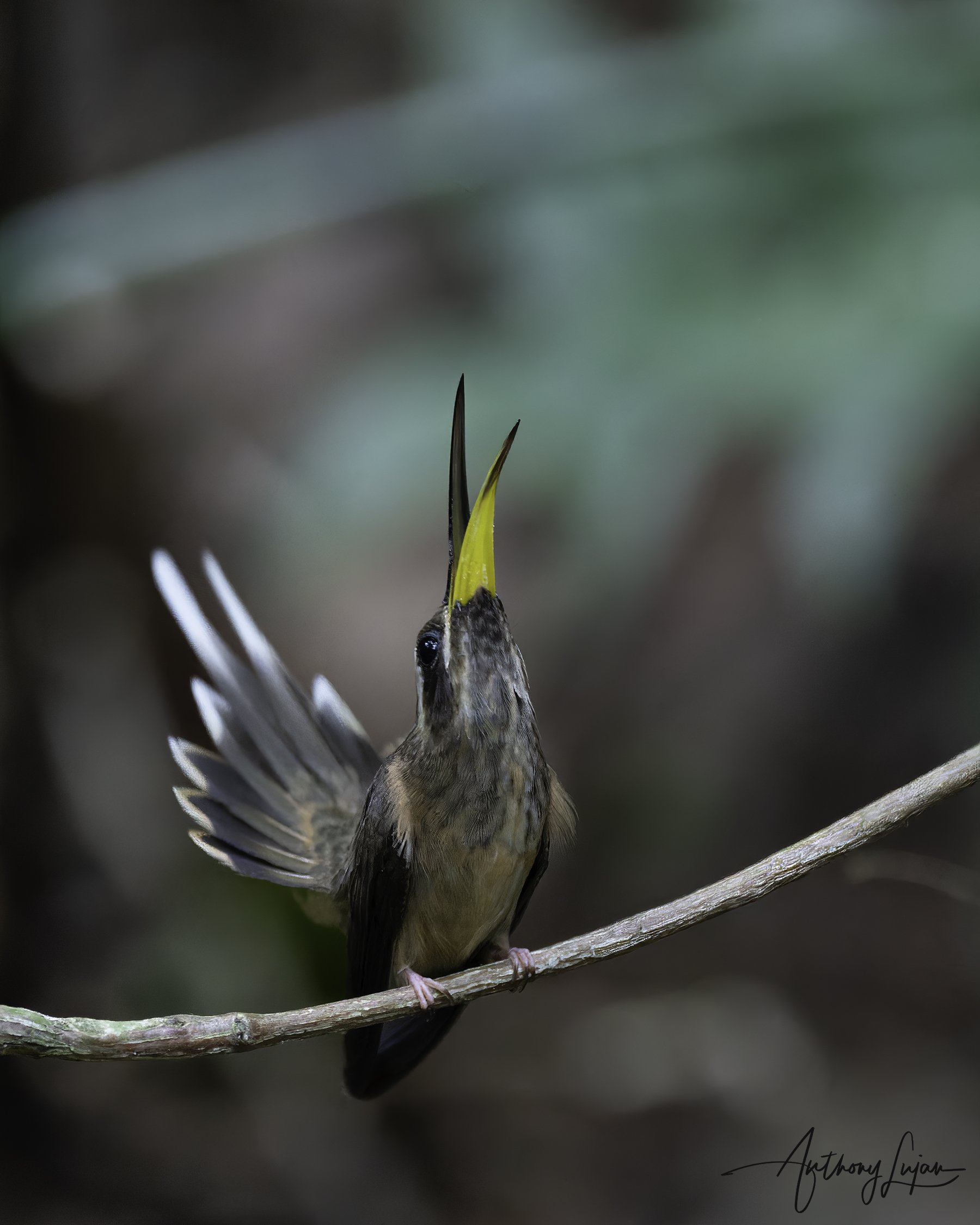
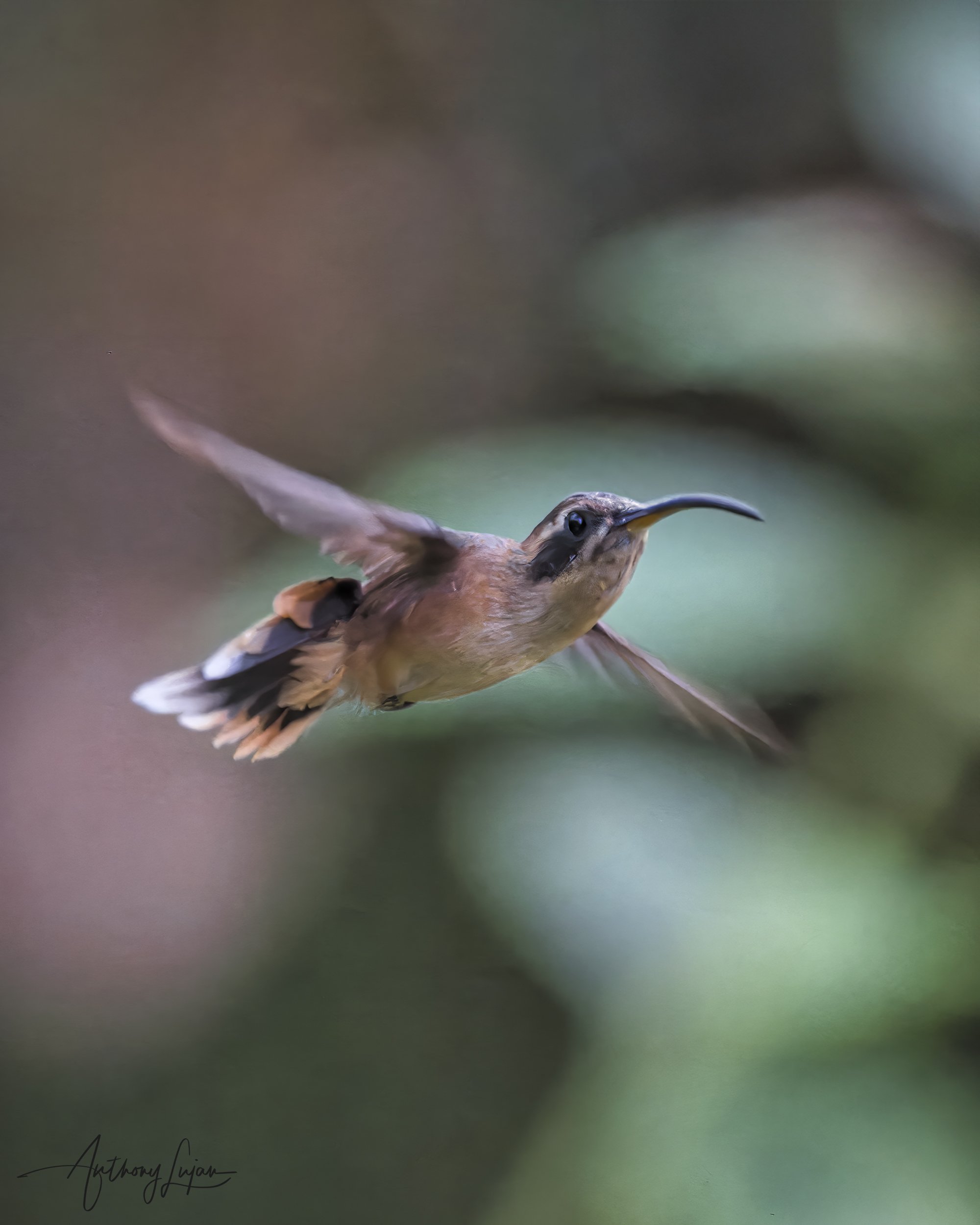
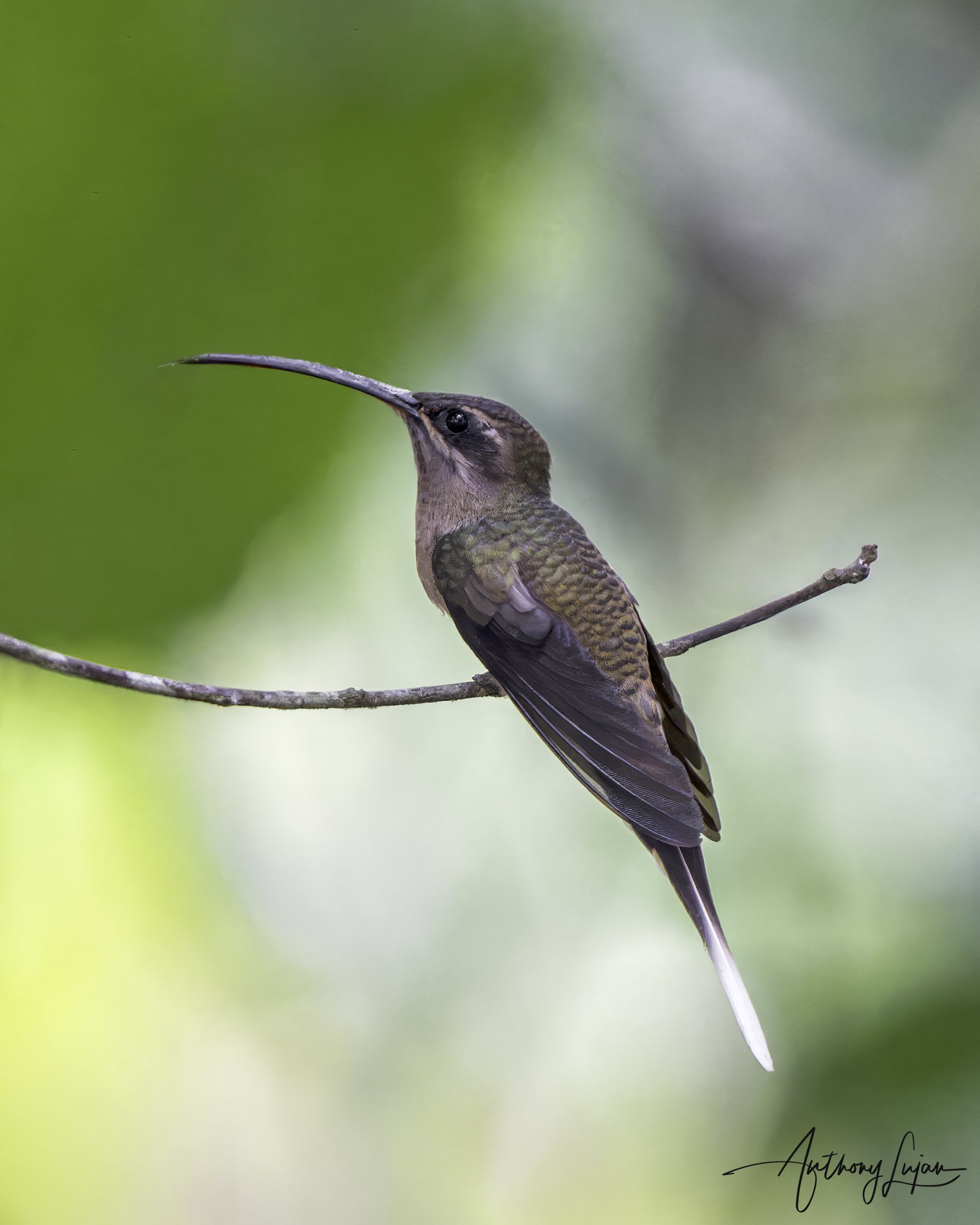
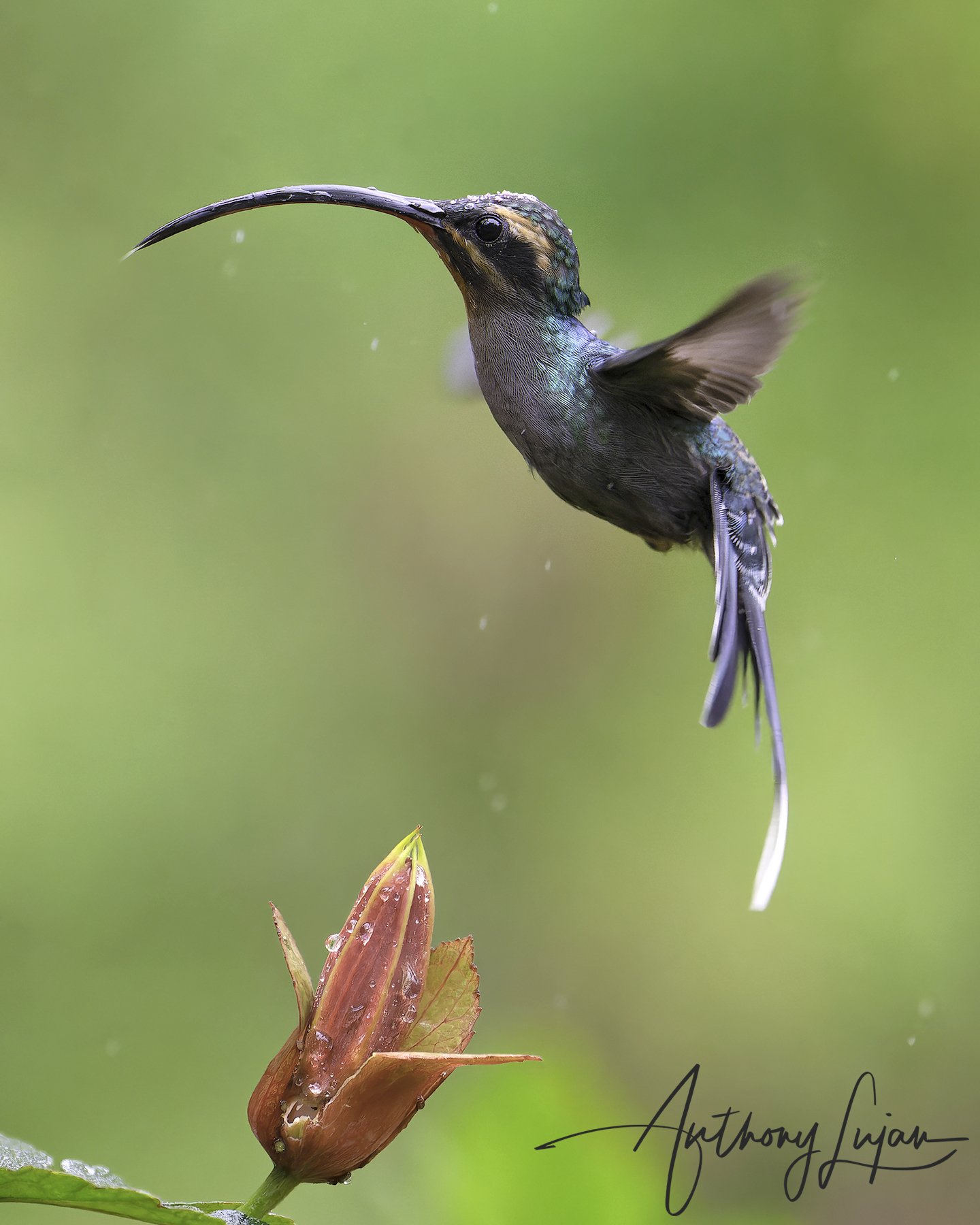
Koepcke’s Hermit is a small to medium hermit with a comparatively straight bill for a hermit, dusky head with greenish gloss, bronzy upperparts, and a rufous rump. It shows the typical hermit facial pattern of dark mask with pale facial stripes, and a tail with longer central feathers and pale or buff tips to the other feathers. It is a shy, inconspicuous understory bird, often detected only when it visits flowering plants along its regular trapline routes.
Male Description
Males measure about 14–15 cm in length and weigh around 4.7–5.8 g. The crown is blackish with a greenish sheen, the nape is glossy greenish‑bronze, and the back is a glossy bronze, with the rump more rufous or reddish‑brown. The chin and throat are dusky, framed by a pale or buff malar/superciliary pattern typical of hermits. The bill is nearly straight to only slightly curved, an unusual feature among hermits. The tail is mostly dark glossy green, with the central pair of tail feathers longer and tipped white, and the other rectrices showing broad buffy‑rufous tips.
Female Description
Females are very similar to males in plumage and size, though they may be marginally smaller and slightly duller overall. The bill in females is similar in shape and nearly as straight. Juveniles resemble adults but may show somewhat softer, less glossy plumage and more diffuse facial markings until they mature.
Habitat & Behavior
Koepcke’s Hermits live in the understory of humid evergreen and montane forests on the eastern slopes of the Andes. They occur in lower montane (“hill”) forests, dense ravines, and steep forested slopes, often close to streams and in areas with abundant understory flowering plants. They generally avoid open areas and heavily disturbed secondary forest, preferring intact or lightly disturbed forest with a closed canopy and dense understory.
Their foraging strategy is typical hermit traplining: individuals follow regular routes between scattered nectar sources, visiting tubular flowers of shrubs, understory plants, and sometimes epiphytes. They also take small arthropods—such as insects and spiders—by gleaning from leaves and spiderwebs or catching them in short aerial sallies. The species is usually solitary and can be quiet and difficult to see in the shadowed undergrowth.
Breeding
Breeding biology is inferred from general hermit patterns and limited observations. The female likely builds a cone‑shaped or small cup nest of plant fibers and spiderweb, suspended from the underside of broad leaves or similar supports 1–2 m above ground, often along trails or near streams within forest.
The usual clutch is two white eggs. The female alone incubates the eggs and tends the nestlings. Incubation typically lasts around two to three weeks, with a similar period from hatching to fledging, as in related Phaethornis species.
Movement
Koepcke’s Hermit is considered non‑migratory. It is resident within its Peruvian hill‑forest range throughout the year. Individuals may shift locally within the elevational band (roughly 450–1,300 m) in response to flowering patterns and seasonal moisture, but there is no evidence of long‑distance or regular seasonal migration.
Population
The estimated global population is 13,000–57,000 mature individuals, making Koepcke’s Hermit a naturally scarce species with a restricted range. It appears locally uncommon to fairly common in suitable hill forest, but its distribution is patchy, and it can be absent from seemingly similar nearby areas. Ongoing deforestation and forest degradation along the eastern Andean slope are believed to be driving a gradual decline.

Conservation
Koepcke’s Hermit is assessed as Least Concern, but its small, range‑restricted population and patchy distribution warrant attention. Habitat loss due to logging, agricultural expansion, and infrastructure development in lower montane forests threatens its specialized environment. Protecting foothill and lower montane forests, especially along the eastern Andean slopes in Peru, and maintaining continuous tracts of evergreen forest are important for its long‑term conservation.
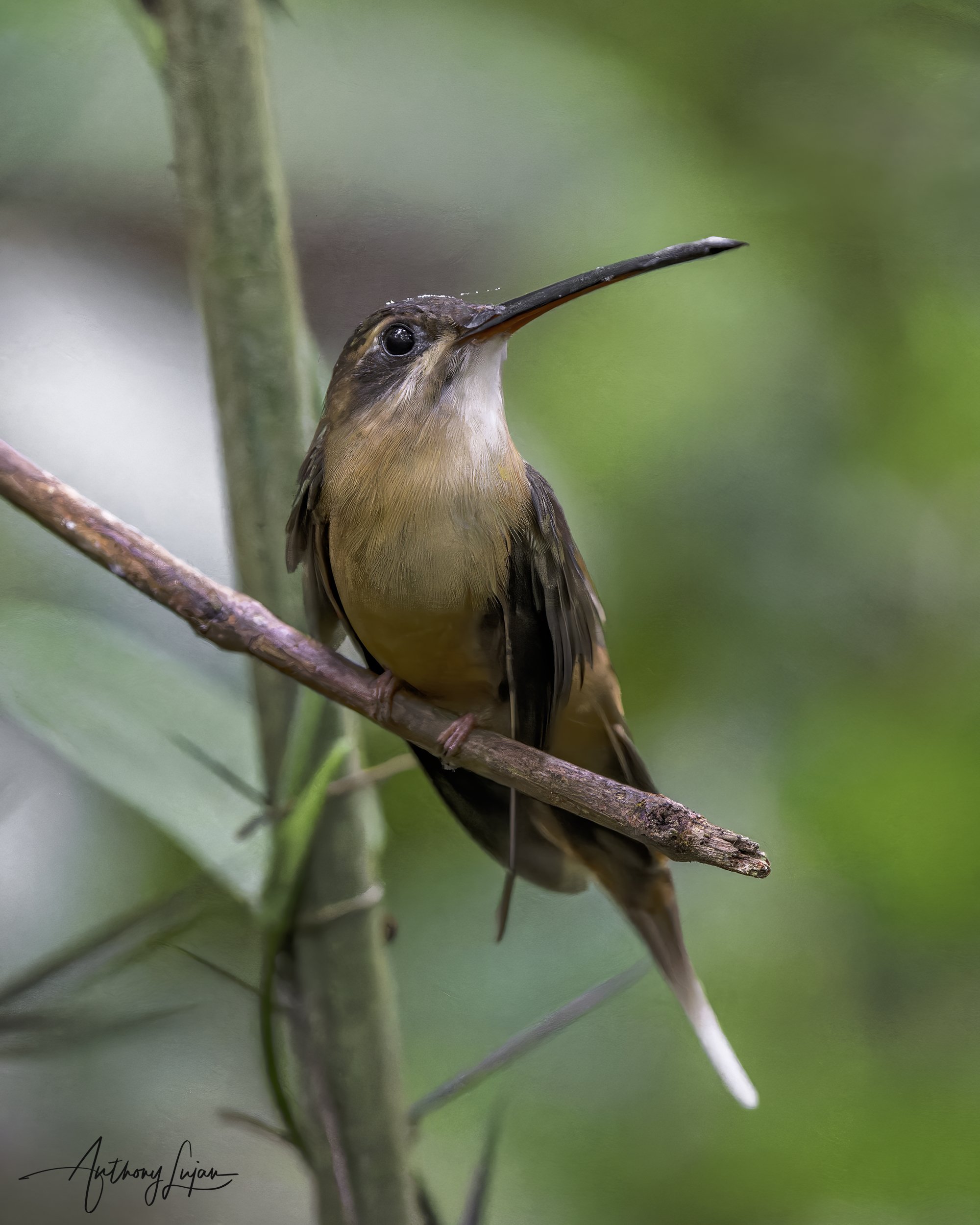
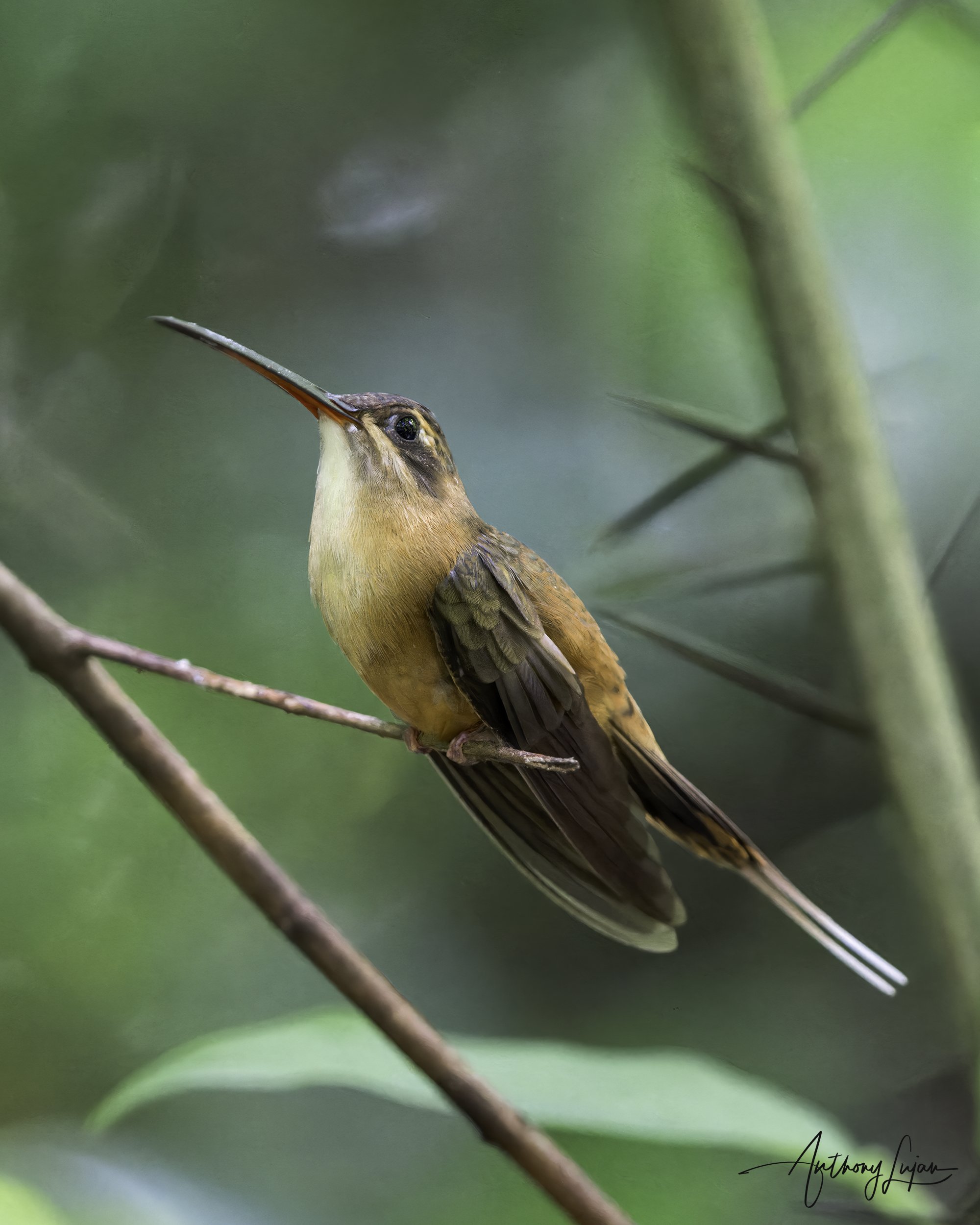
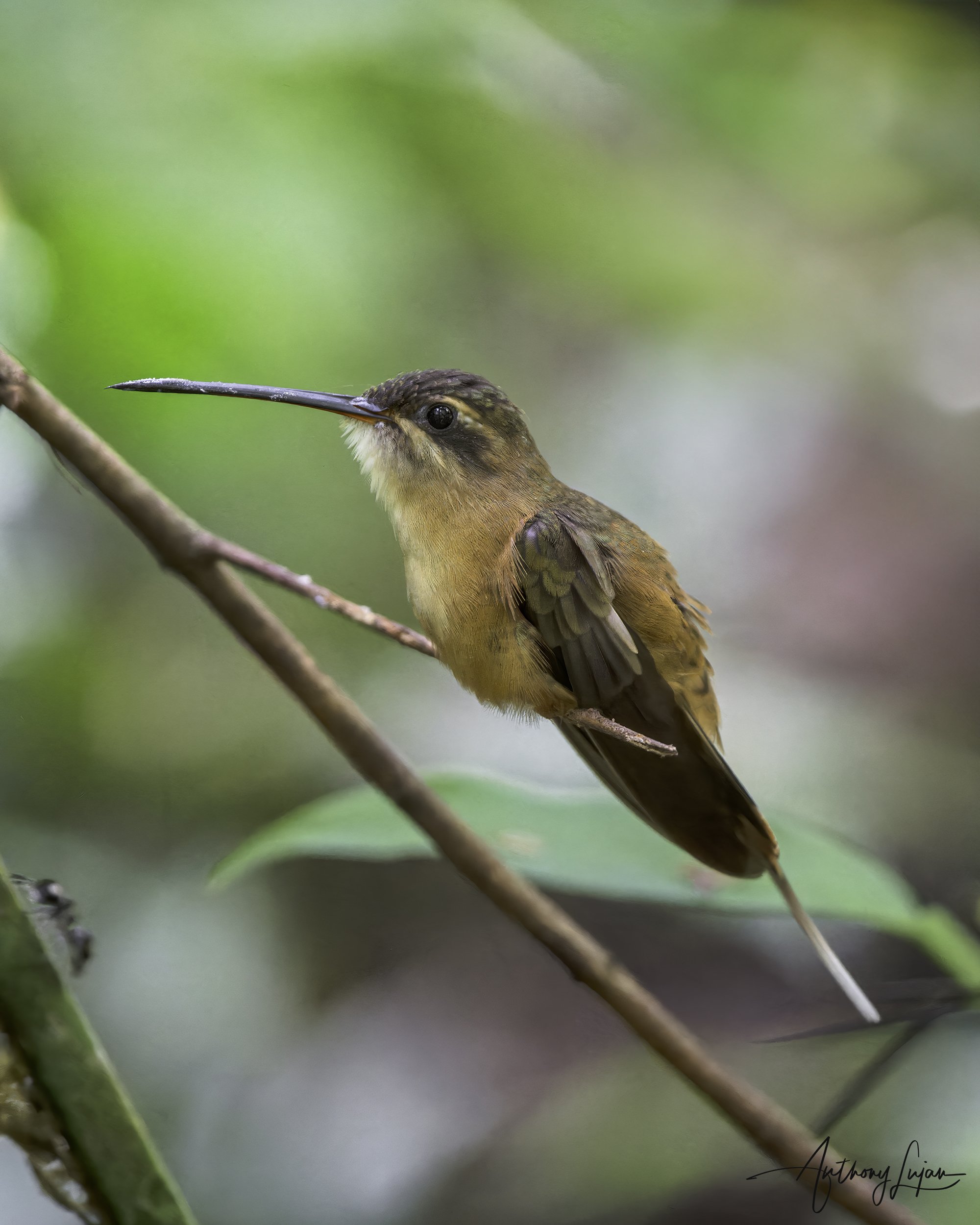
Checkout Anthony’s playlist of this species! Click the top right dropdown to see all the videos.
Related species in the Phaethornis genus (27 species total)




Please note: The content provided in this article reflects Anthony’s personal experience and photographic approach. Results can vary depending on light, weather, location, equipment, subject behavior, and field conditions.