
Lesser Violetear
Scientific name: Colibri cyanotus
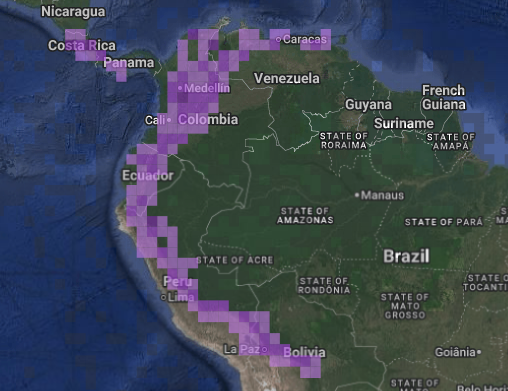
The Lesser Violetear, also known as the mountain violetear, is a medium-sized, metallic green hummingbird of humid montane forests from Costa Rica south through the Andes into Bolivia and east to Venezuela. BirdLife International still lumps it with Mexican Violetear as “Green Violetear,” but this site follows Birds of the World and eBird, which recognize Lesser Violetear as a distinct species with four subspecies and list it as Least Concern.
At a Glance
Family: Trochilidae (hummingbirds)
Clades: Polytminae – Mangos
Genus group: Colibri — medium to large “violetears” with violet ear patches in males (5 species: Brown, Mexican, Lesser, Sparkling, White-vented)
Range: Highlands of Costa Rica and western Panama; mountains of northern Venezuela; Andes from western Venezuela south through Colombia, Ecuador, Peru, and western Bolivia.
Habitat: Humid montane and cloud forests, forest edges, secondary woodland, scrub, and clearings and gardens in the subtropical and lower temperate zones.
Elevation: Mostly 1,500–3,300 m (4,900–10,800 ft), occasionally down to about 900 m (3,000 ft).
Length: About 11 cm (4.3 in).
Weight: About 4.5–5.5 g.
Number of mature individuals: Large but not precisely estimated; widespread and locally common.
Population trend: Believed to be stable, with no evidence of rapid decline.
Status: Least Concern (IUCN-equivalent treatment for Lesser Violetear as a full species).
Name Origin
The genus name Colibri is a European rendering of a Caribbean word for hummingbird, used for this group of violetears. The species name cyanotus combines Greek roots meaning “blue-marked,” referring to the bluish-violet ear patch and facial area. The English name “Lesser Violetear” distinguishes this species from the slightly larger Mexican Violetear and highlights the violet “ear” patch behind the eye.
Taxonomy & Distribution
Colibri cyanotus
BirdLife International still treats Lesser and Mexican Violetear as a single species (“Green Violetear”), but eBird, Birds of the World, and this site follow the split, recognizing Lesser Violetear as a separate species with four subspecies.
Subspecies and Distribution
Lesser Violetear has four recognized subspecies.
Colibri cyanotus cabanidis
This subspecies is resident in the highlands of Costa Rica south into western Panama, mainly in humid montane and cloud forests, forest edges, and nearby clearings and gardens at mid‑ to high elevations.Colibri cyanotus cyanotus
The nominate subspecies ranges through the mountains of Colombia, northwestern Venezuela, and Ecuador, occupying humid montane forest, cloud forest, and forest edge, where it is a common visitor to flowering trees and shrubs.Colibri cyanotus crissalis
This subspecies occurs in the Andes of Peru and Bolivia, using similar humid montane and cloud‑forest habitats along ridges, slopes, and forest edges, often frequenting flowering trees in clearings and highland gardens.Colibri cyanotus kerdeli
This localized subspecies is restricted to the mountains of northeastern Venezuela, where it inhabits humid montane forests and edges, visiting nectar‑rich flowers in forest gaps, scrub, and highland gardens.
Overall, the species breeds in highlands from Costa Rica and western Panama, in the mountains of northern Venezuela, and along the Andes from western Venezuela south through Colombia, Ecuador, Peru, and western Bolivia.
Species Overview
The Lesser Violetear is a shimmering green hummingbird with a bold violet patch on the sides of the head and ear coverts, giving the group its name. It favors humid montane and cloud forests and adjacent edges, often visiting flowering trees along ridges, forest gaps, and highland gardens. Compared with Sparkling Violetear, it is smaller, lacks a blue patch on the belly, and shows rufous-brown undertail coverts.
Male Description
Adult males are mostly metallic green above and below, with a conspicuous violet-blue patch behind and below the eye forming the “violetear,” and often a slightly more iridescent crown. The underparts are green-washed, without a central blue belly patch, and the undertail coverts are distinctly rufous-brown. The tail is fairly square and bicolored, darker with some green or bluish gloss, and the bill is black and gently decurved. In good light, a glowing green body, violet ear patch, and rufous undertail coverts help separate it from other violetears.
Female Description
Females resemble males but are slightly duller, with a somewhat less extensive or intense violet ear patch. The underparts can be a bit grayer with green mottling, and the rufous-brown undertail coverts are still present but less striking than on bright males. Juveniles show more subdued iridescence and a less defined violet patch on the sides of the head.
Habitat & Behavior
Lesser Violetears frequent the canopy and edges of subtropical and lower temperate forests, cloud forests, secondary woodland, and scrub, as well as clearings and gardens at higher elevations. They feed primarily on nectar from a variety of flowering trees, shrubs, and epiphytes, often visiting abundant blooms such as flowering Inga. Like many violetears, they are assertive and territorial, vigorously defending rich nectar patches and chasing other hummingbirds away. They also take small insects for protein, often hawking from perches or gleaning near flowers.
Movement (Altitudinal Movements)
The species is mainly resident within its highland range but shows local elevational movements, shifting up and down slopes as flowers bloom at different levels. In some regions, birds may appear seasonally more common at certain elevations or ridges as they track nectar availability.
Breeding
Lesser Violetears breed in montane habitats, with timing varying regionally but generally linked to peaks in flowering. The female builds a small cup nest from plant fibers, moss, and spiderweb, usually placed on a horizontal branch in forest or edge vegetation a few meters above the ground. She lays two white eggs and alone incubates and feeds the chicks, as is typical for hummingbirds.
Population
Lesser Violetear is widespread across suitable highland habitats and is often fairly common where good flowering resources persist. Although no precise global population estimate exists, its broad range, presence in multiple countries, and frequent local abundance indicate a large total population.

Conservation
The species is considered Least Concern, with no evidence of rapid global decline. However, ongoing loss and fragmentation of cloud forests and humid montane forests from agriculture, logging, and development can reduce local habitat quality and continuity. Protecting montane forests, maintaining forest edges and flowering trees in agricultural landscapes, and conserving elevational corridors all support Lesser Violetear and other highland hummingbirds.
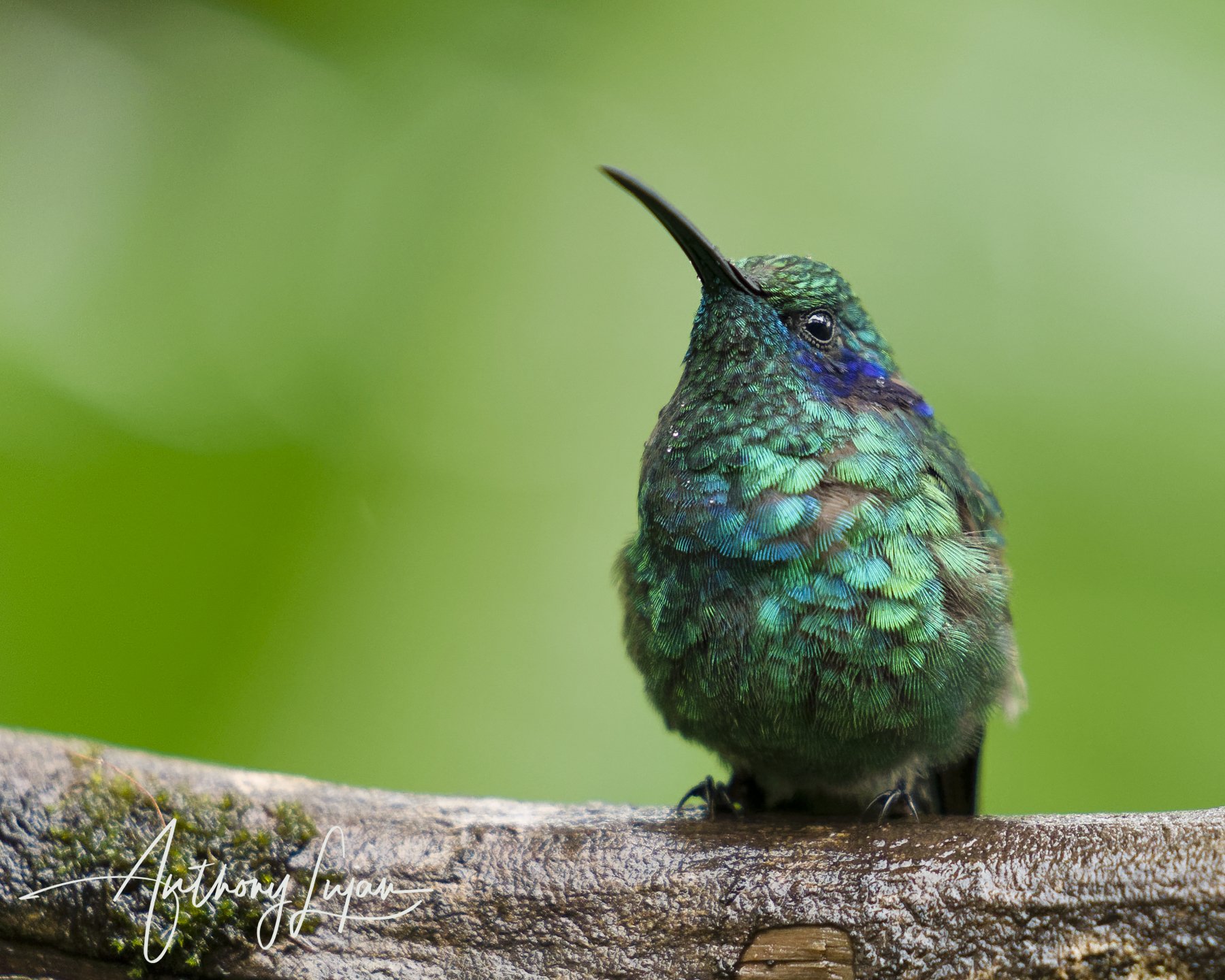
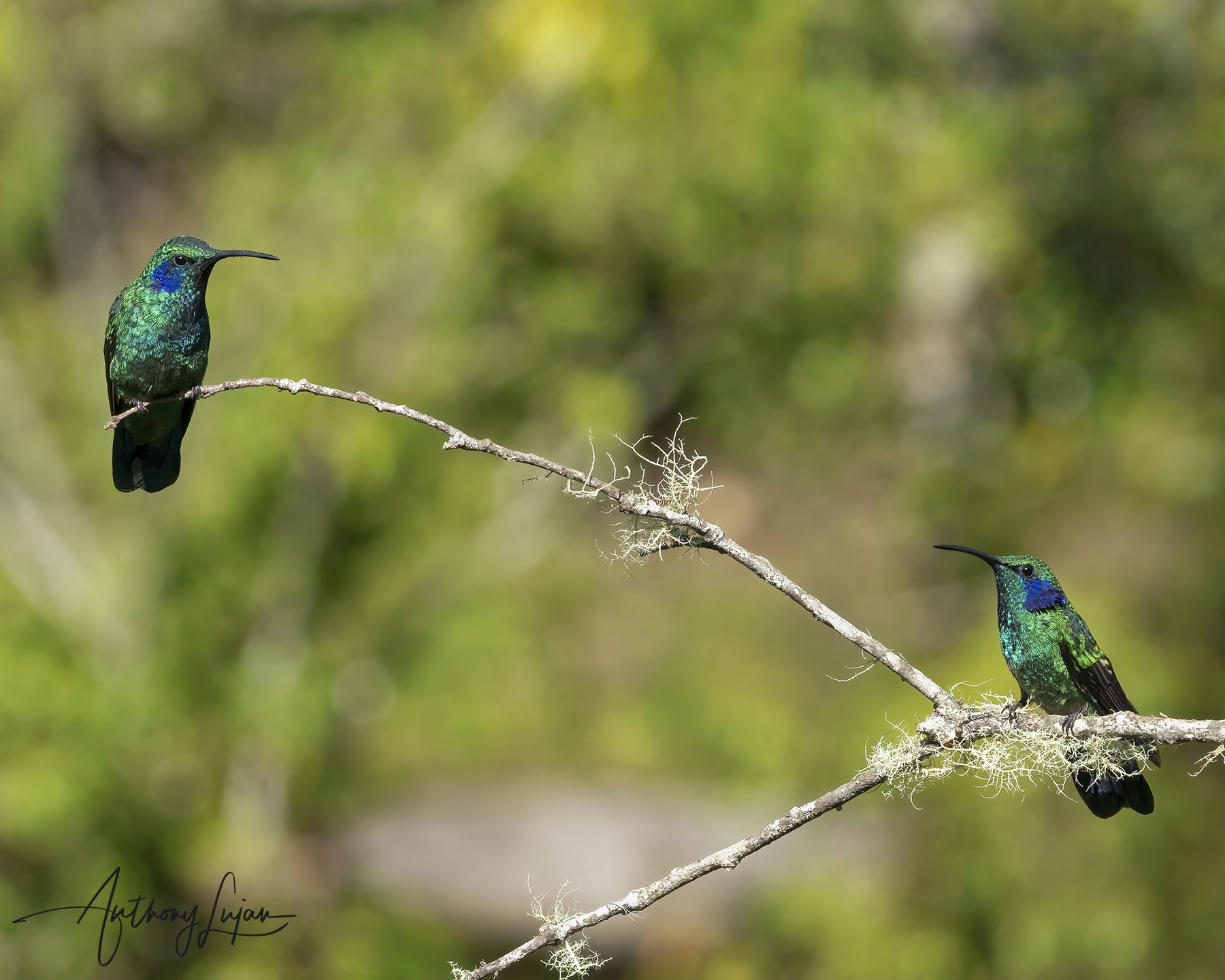
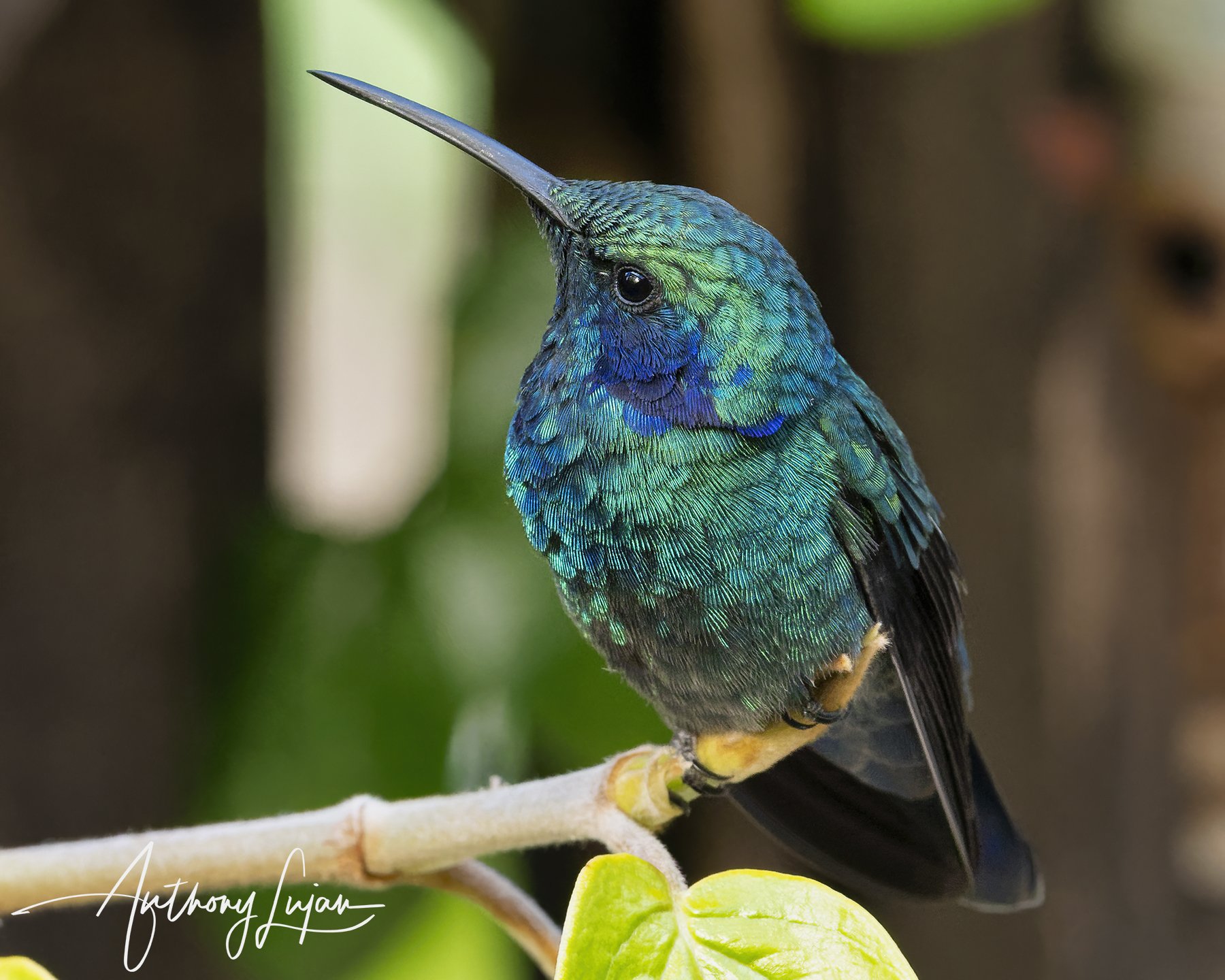
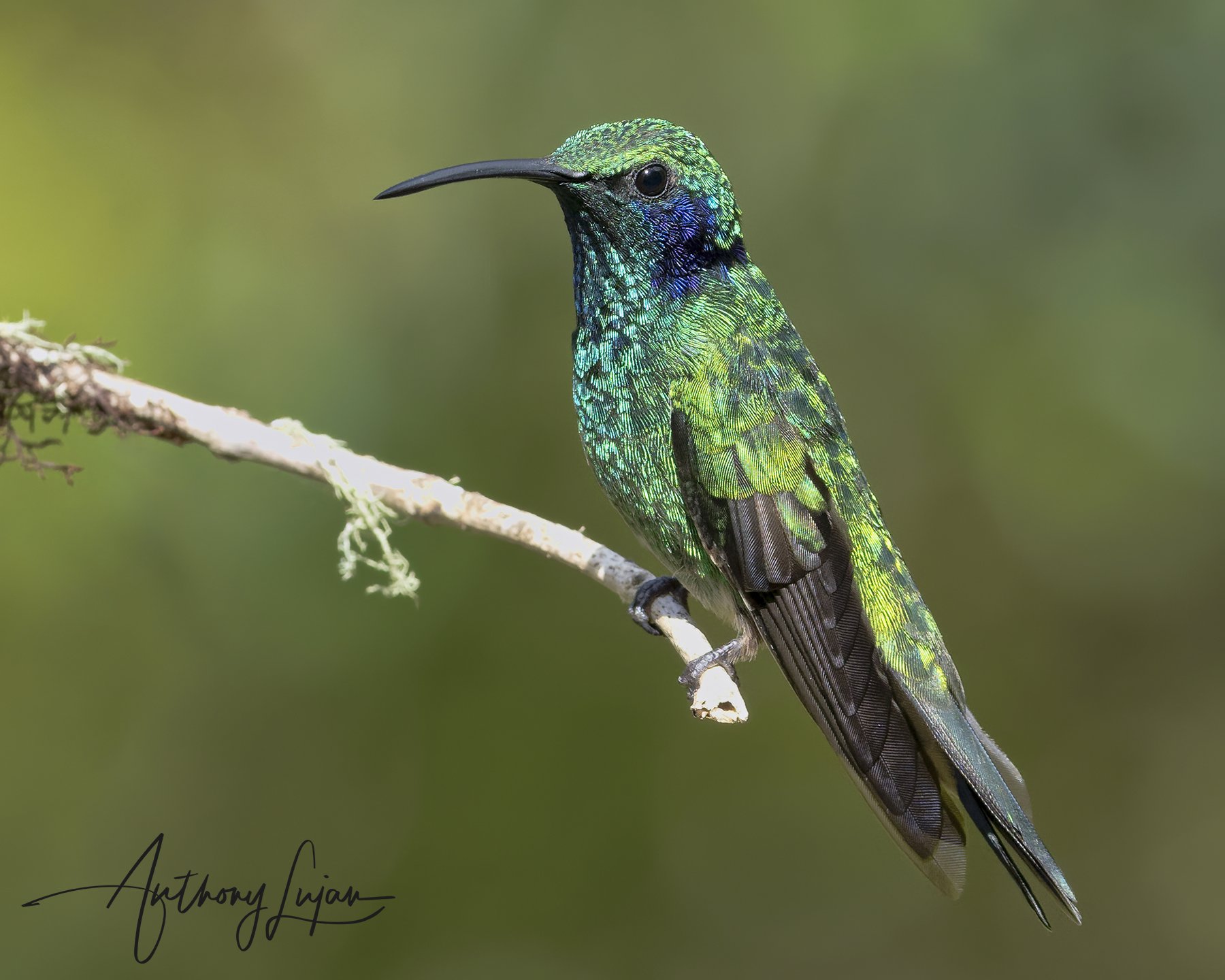
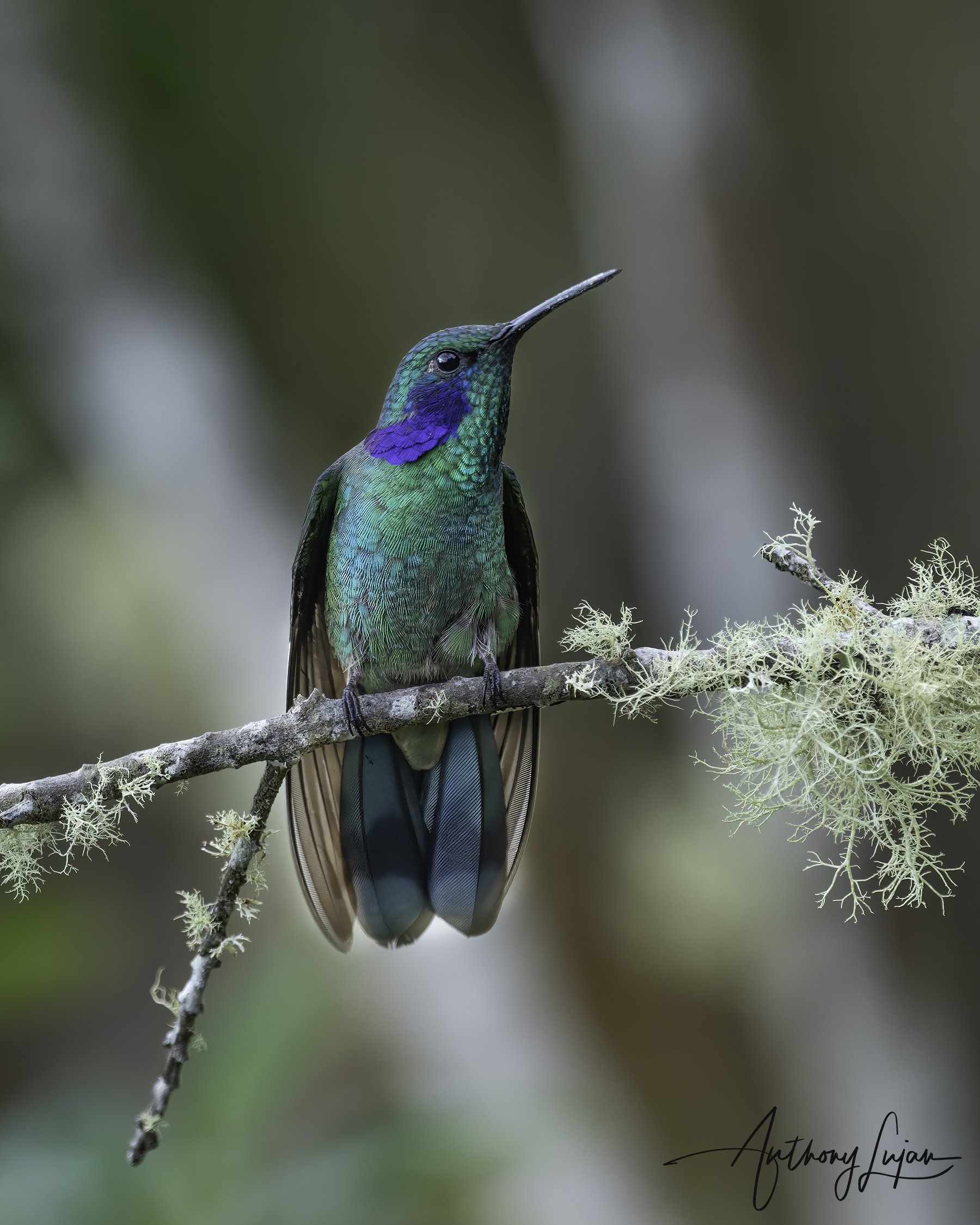
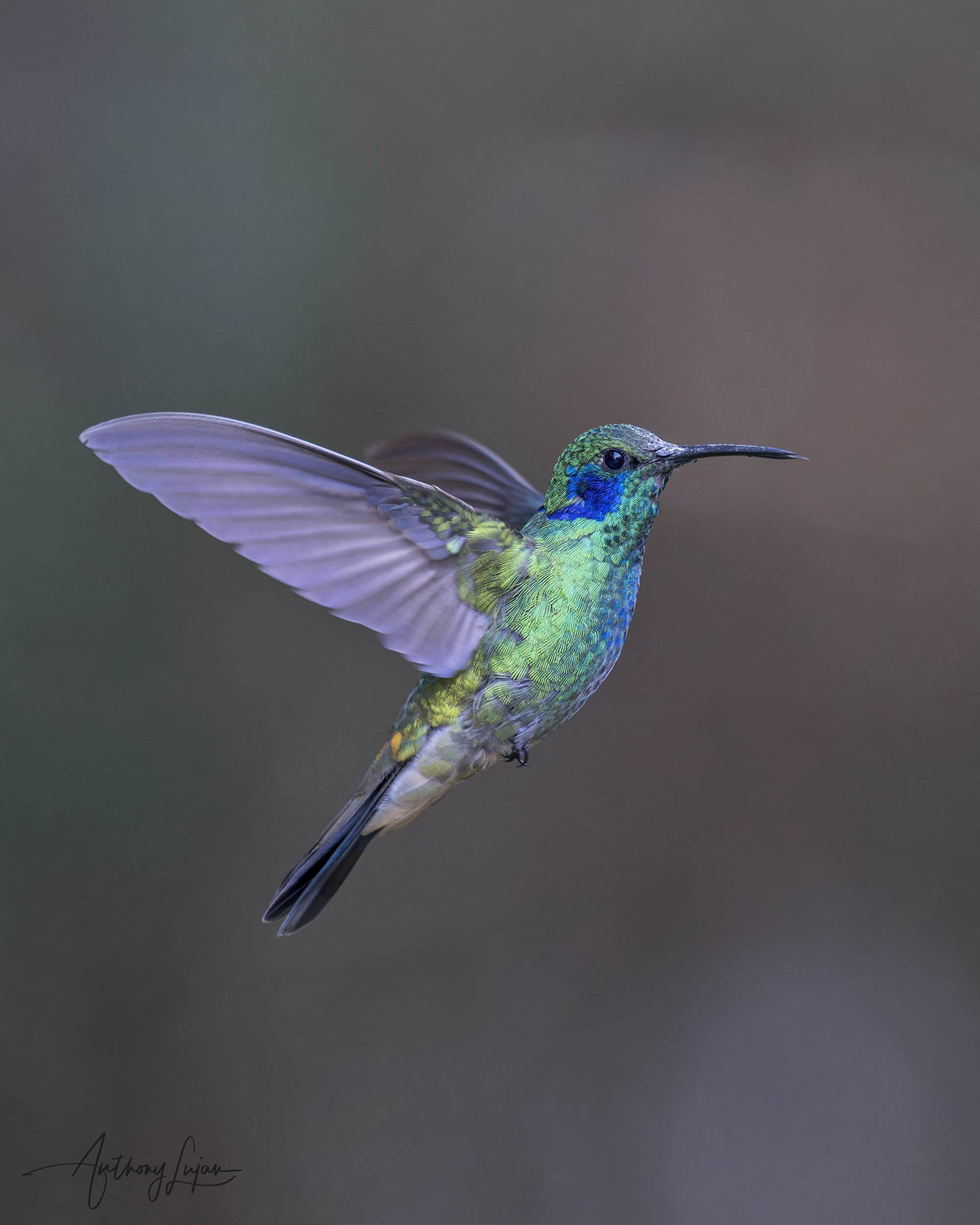
Below is the Lesser Violetear (Colibri cyanotus cabanidis)
Photographed in Costa Rica
This individual belongs to the subspecies cabanidis, which occurs in the highlands of Costa Rica and western Panama. It is common in montane forest, forest edge, and high elevation gardens where flowering shrubs and canopy blooms provide nectar throughout the year.
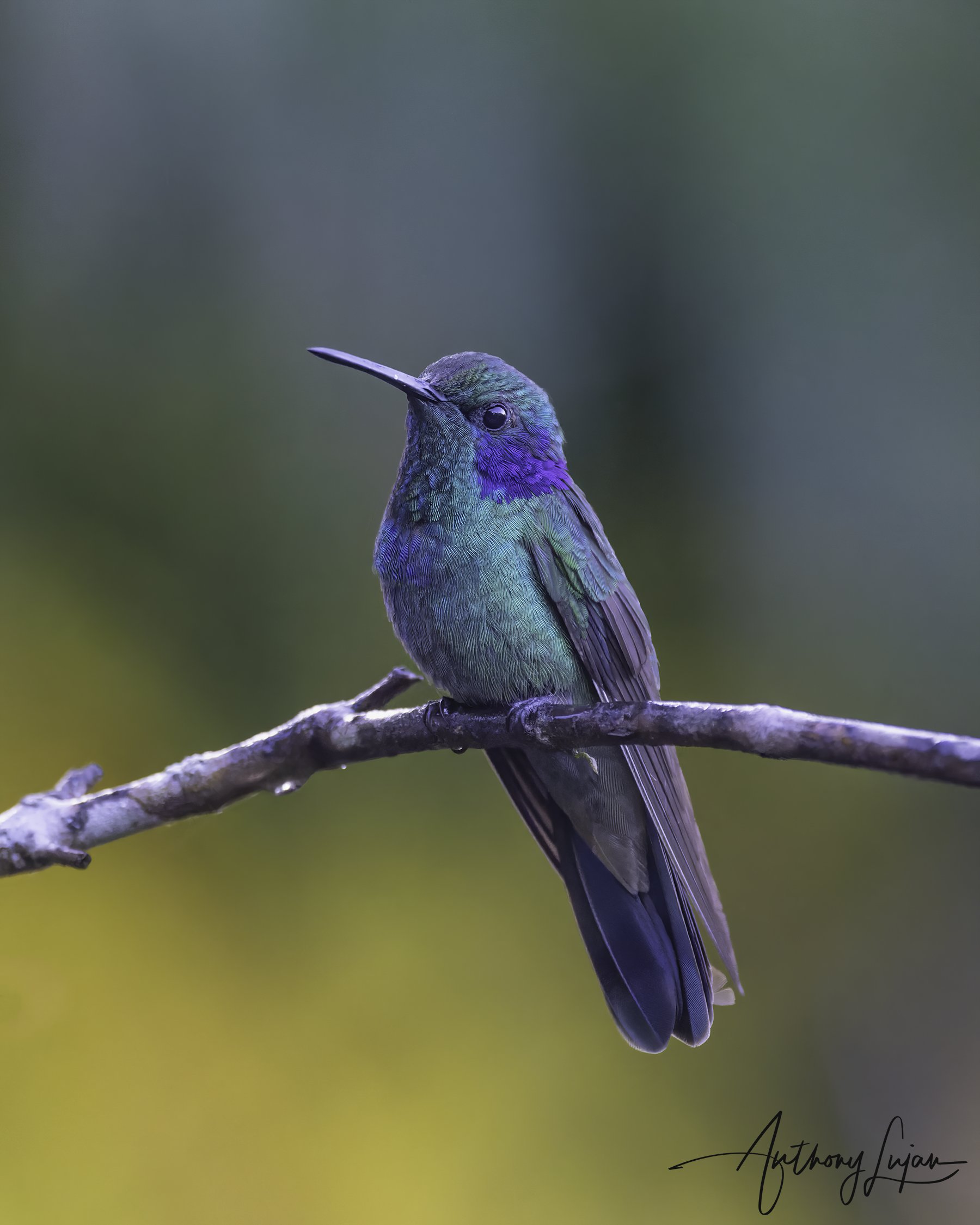
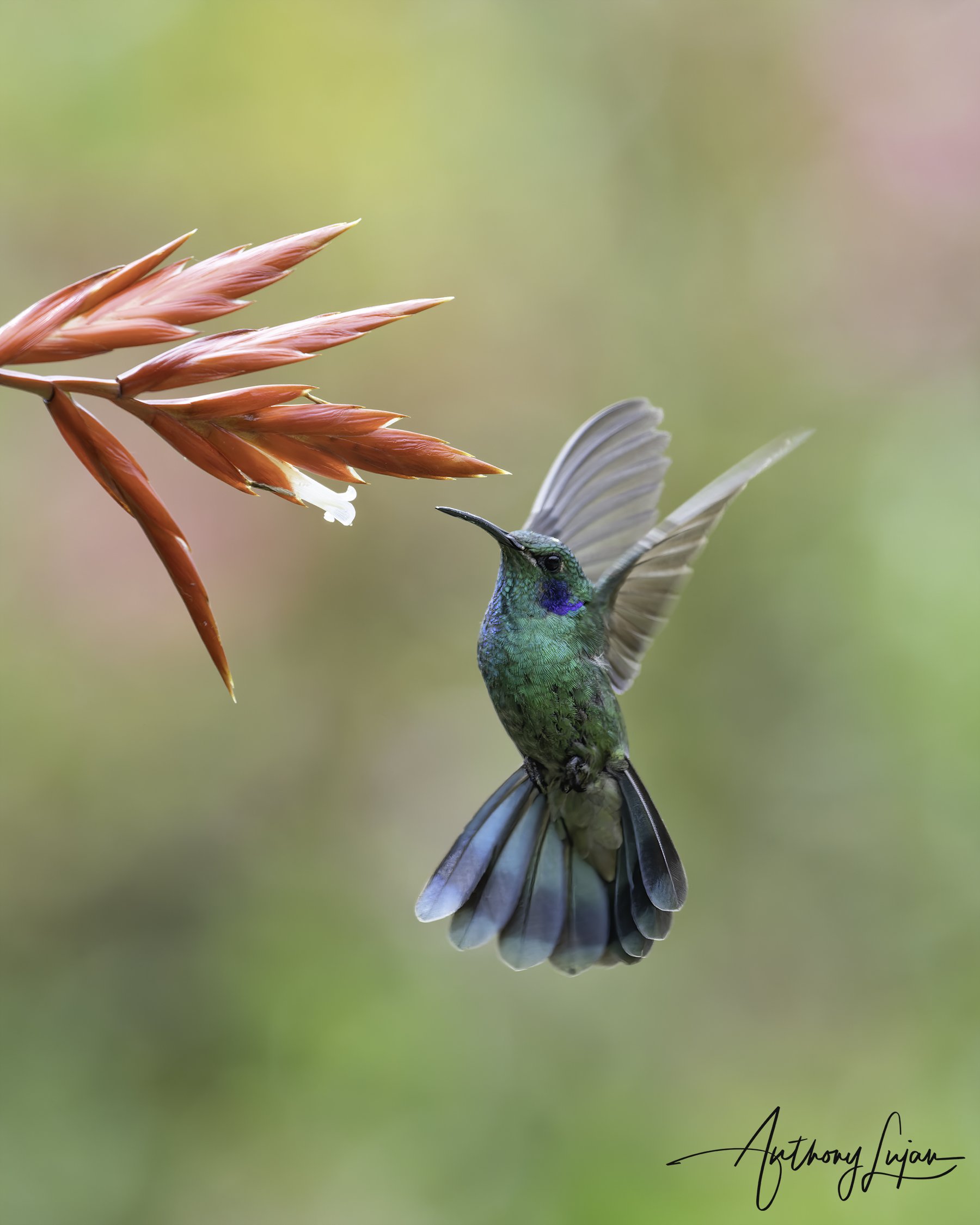
Below is the Lesser Violetear (Andean), (Colibri cyanotus cyanotus)
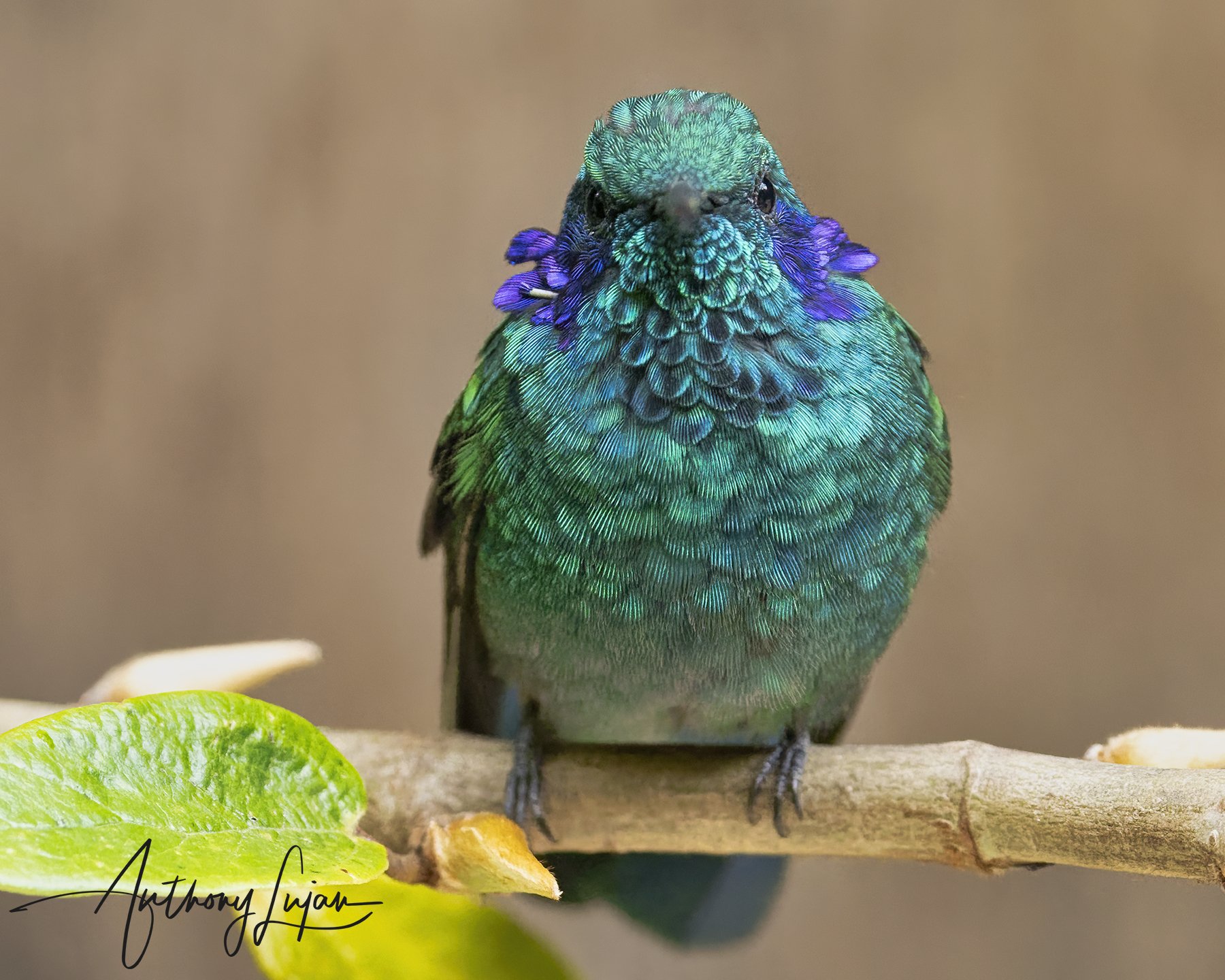
Photographed in Colombia
These individuals belong to the nominate subspecies cyanotus, which is widespread in the Andes of Colombia. It is typically found in humid montane forest, páramo transition zones, and high elevation gardens and forest edges.
It shares the same general structure as cabanidis but may appear slightly more saturated green depending on elevation and light conditions. The violet ear patch is prominent during display or when the bird turns sharply toward the light. The flight is direct and fast, often accompanied by persistent vocalizations.
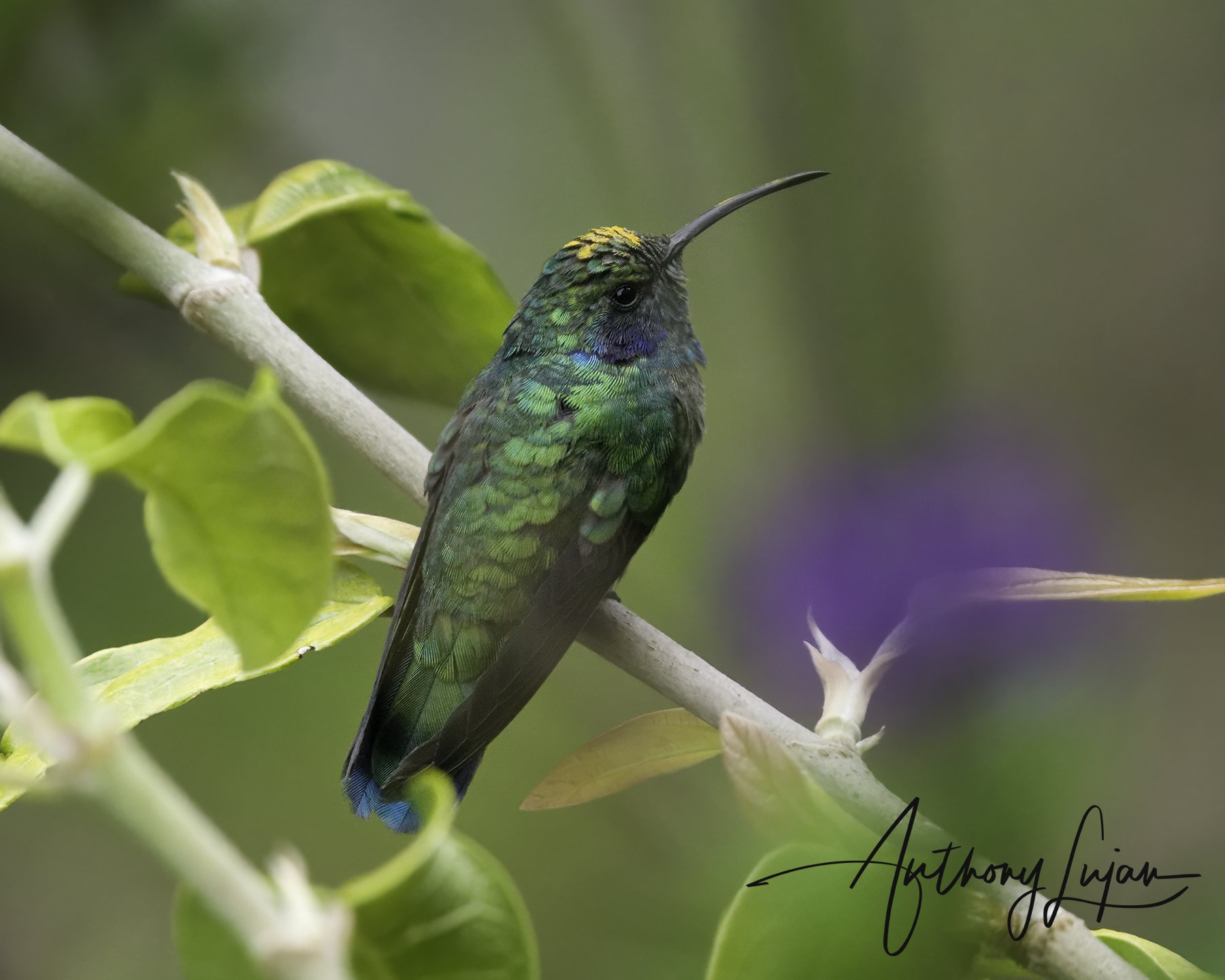
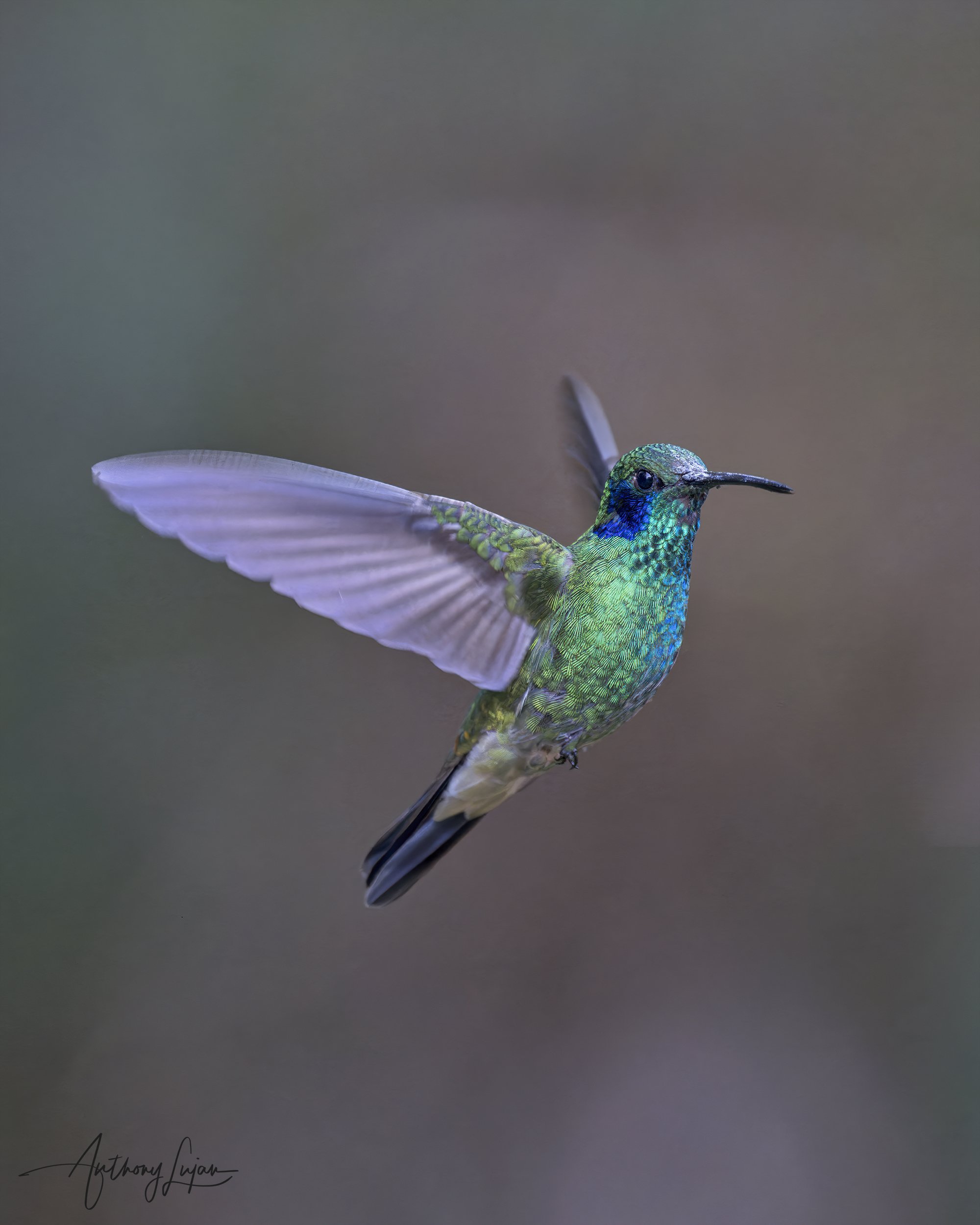
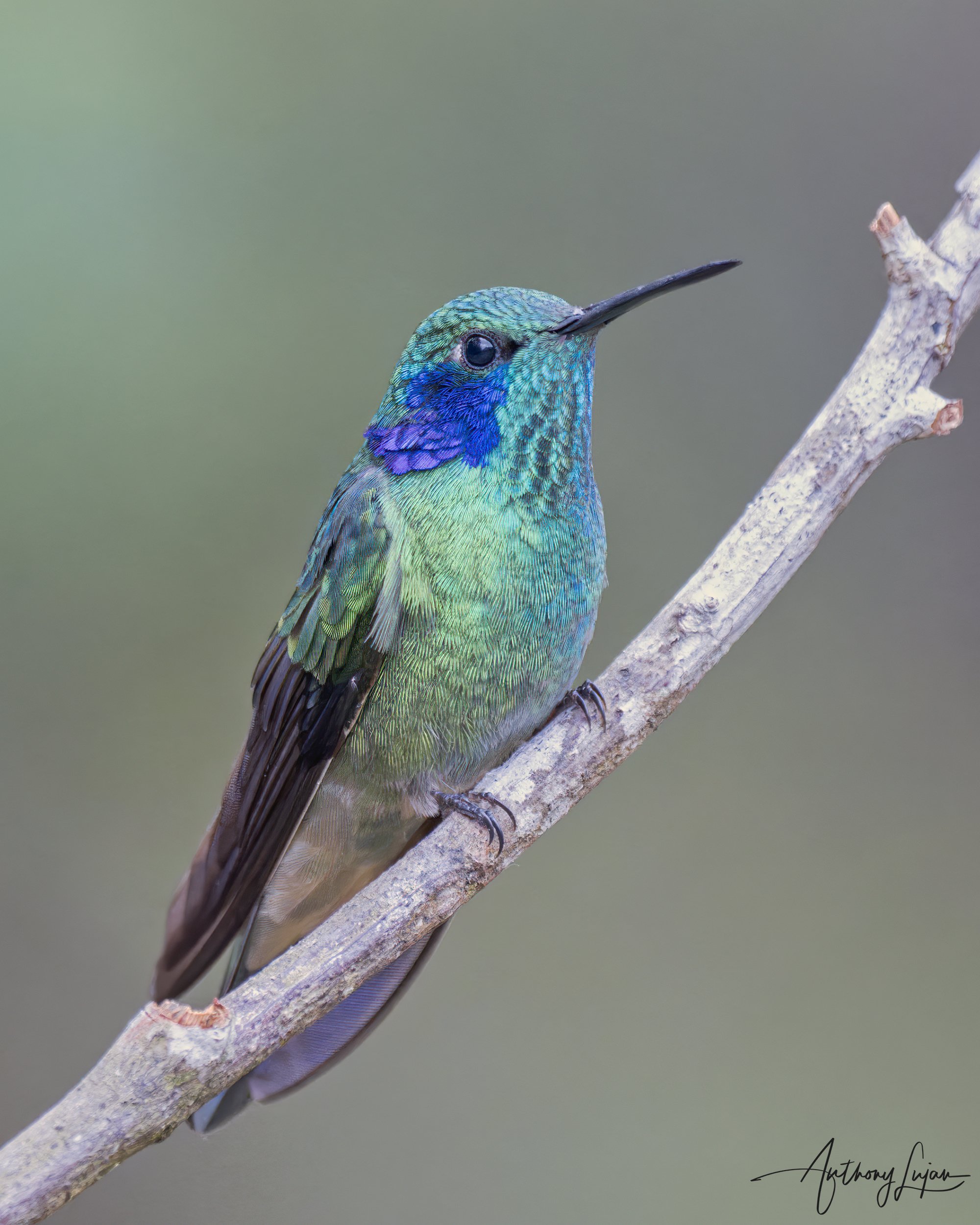
Below is the Lesser Violetear (Andean), (Colibri cyanotus crissalis)
Photographed in Peru
This individual belongs to the subspecies crissalis, which occurs in the southern Andes from southern Colombia through Ecuador and into Peru. In Peru it is typically found in humid montane forest, cloud forest edge, and high elevation shrub zones where flowering trees and bushes are scattered.
For more details on the trips behind this species, visit the Costa Rica Hummingbird Expedition | July 2025 page and explore My Travel 2025-05 Costa Rica for guides and trip reports.
Checkout Anthony’s playlist of this species! Click the top right dropdown to see all the videos.
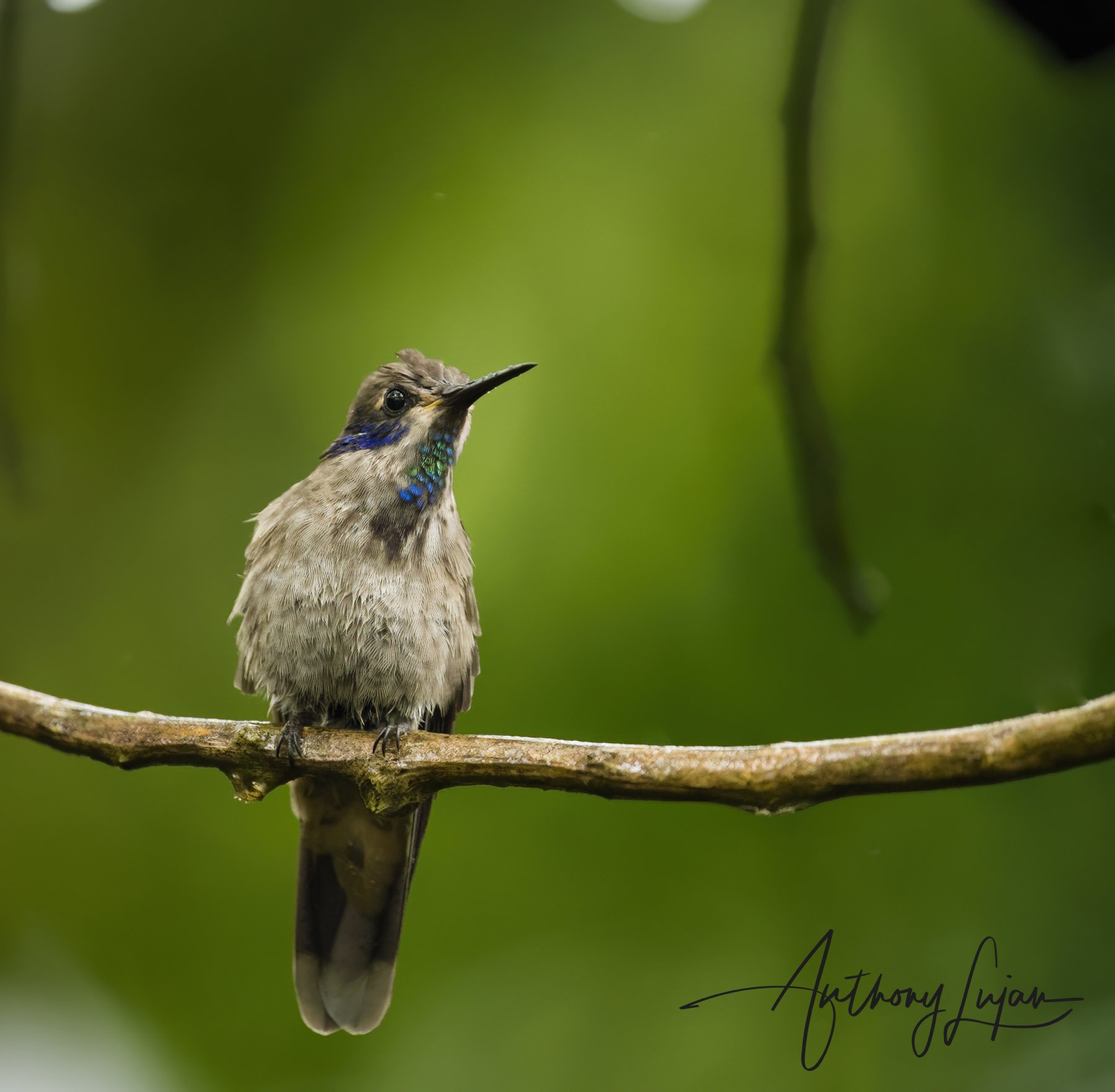
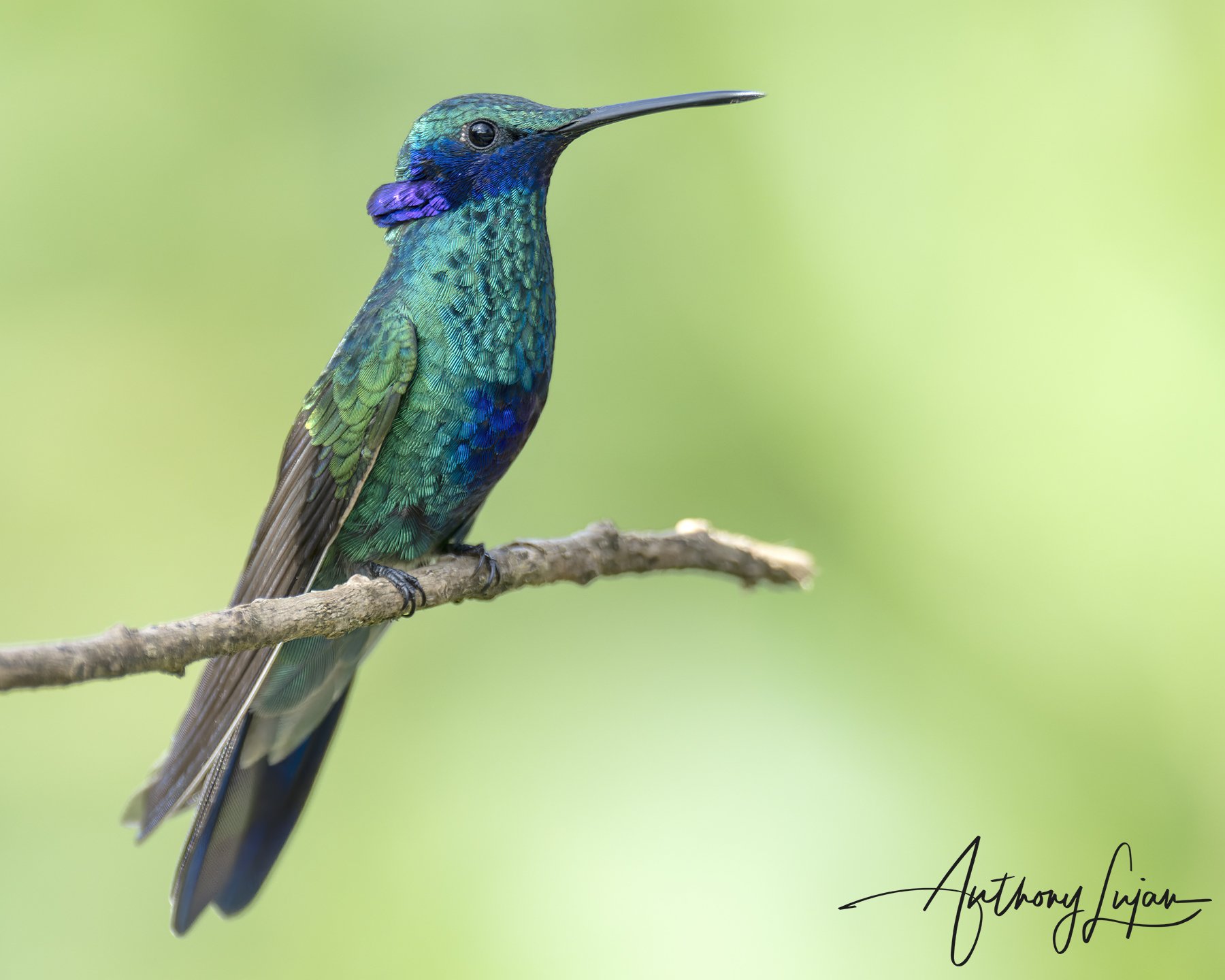
Related species in the Colibri genus (5 species total):


Please note: The content provided in this article reflects Anthony’s personal experience and photographic approach. Results can vary depending on light, weather, location, equipment, subject behavior, and field conditions.