
Little Hermit
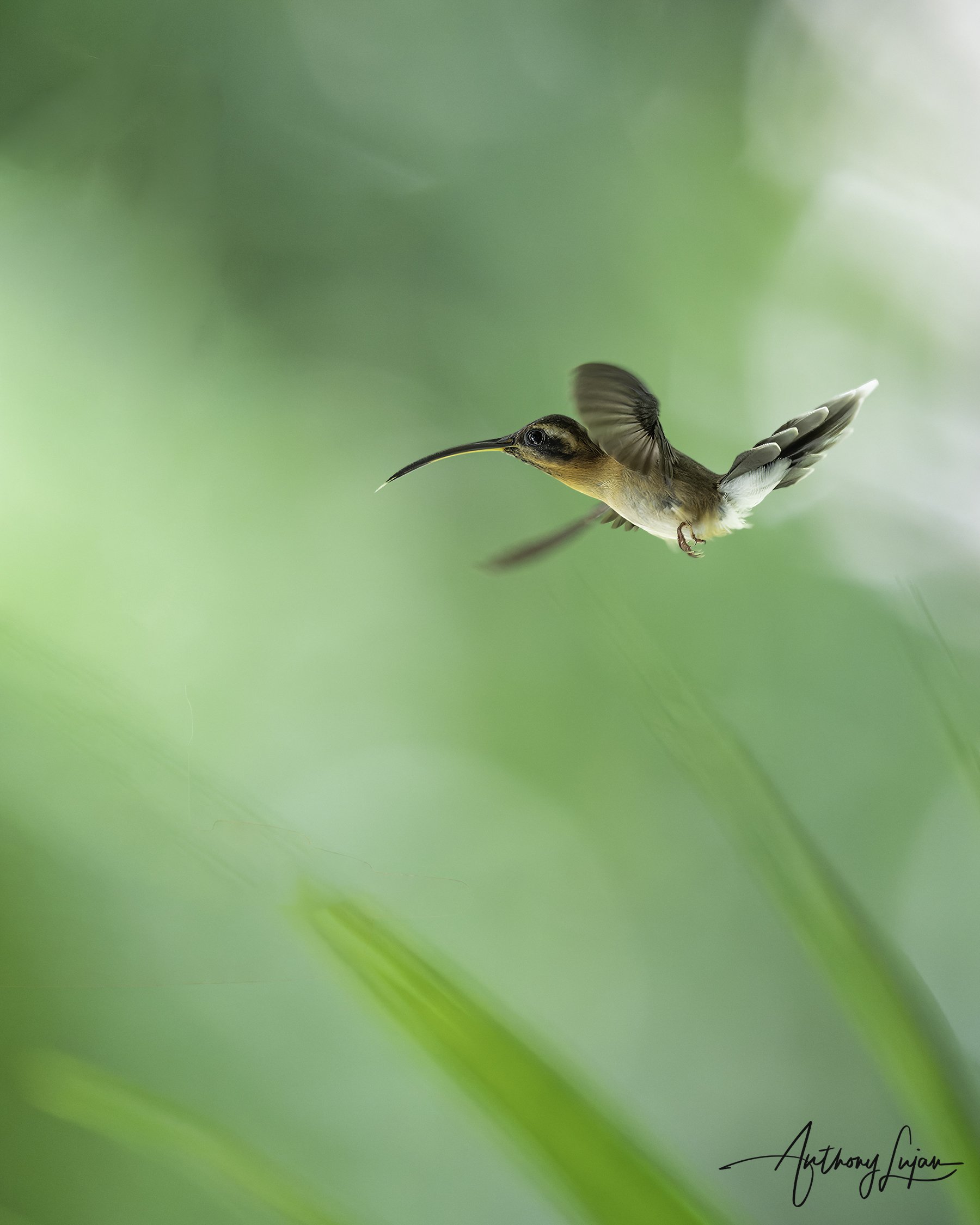
Scientific name: Phaethornis longuemareus
The Little Hermit is a tiny hermit hummingbird of humid lowland forests, mangroves, and semi‑open wooded habitats in northeastern South America and Trinidad. The number of mature individuals has not been quantified, the population trend is decreasing, it is not a migrant, and it is currently assessed as Least Concern.
At a Glance
Family: Trochilidae (hummingbirds)
Clade: Phaethornithinae – Hermits
Genus: Phaethornis — 27 species in total
Range: Northeastern Venezuela, northern Guyana, Suriname, French Guiana, and Trinidad
Habitat: Humid lowland forest understory, mangroves, secondary forest, plantations, scrub, and rainforest edges
Elevation: Mainly lowlands, generally below about 500 m
Length: About 9–10 cm (3.5–3.9 in)
Weight: About 2.5–3.5 g
Number of mature individuals: Unknown
Population trend: Decreasing
Movement: Not a migrant
IUCN Red List category: Least Concern
Name Origin
The genus name Phaethornis comes from Phaethon, meaning “shining” or “radiant,” reflecting the shimmering plumage common in hummingbirds. The species name longuemareus commemorates French naturalist Longuemare. The common name “Little Hermit” refers both to its very small size and its membership in the hermit group.
Taxonomy
Phaethornis longuemareus is a hermit hummingbird in the subfamily Phaethornithinae. It is one of 27 recognized species in the genus Phaethornis, which includes a range of small to large hermits in Central and South America.
Subspecies and Distribution
Monotypic — no subspecies recognized.
Distribution:
The Little Hermit is found in northeastern Venezuela, northern Guyana, Suriname, French Guiana, and on the island of Trinidad. It inhabits humid lowland zones, using mangroves, semi‑open wooded habitats, secondary forest, plantations, scrub, and, in Trinidad, also rainforest. It is typically associated with shaded understory and forest edges near water.
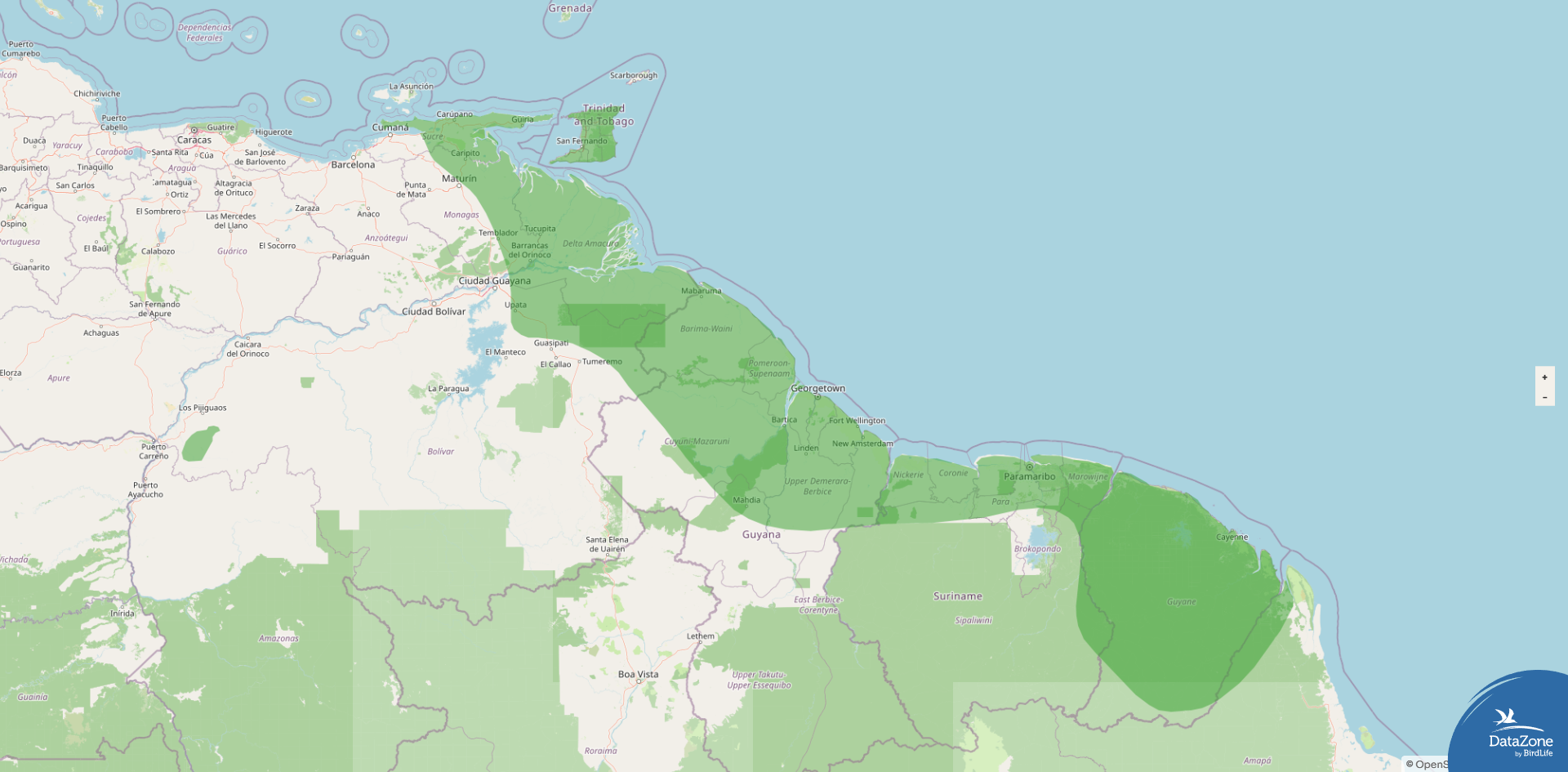
Legend
Green Resident
Species Overview
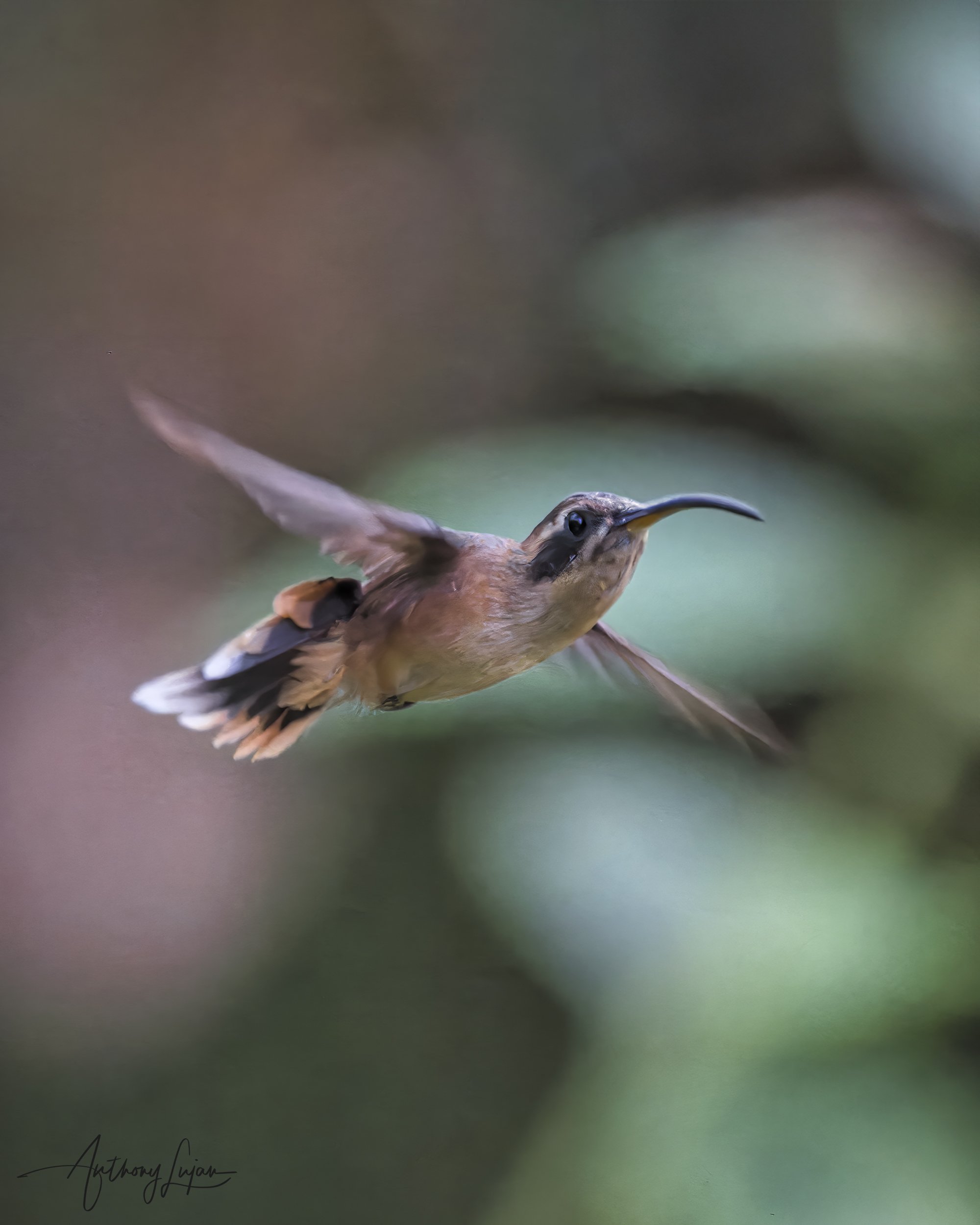
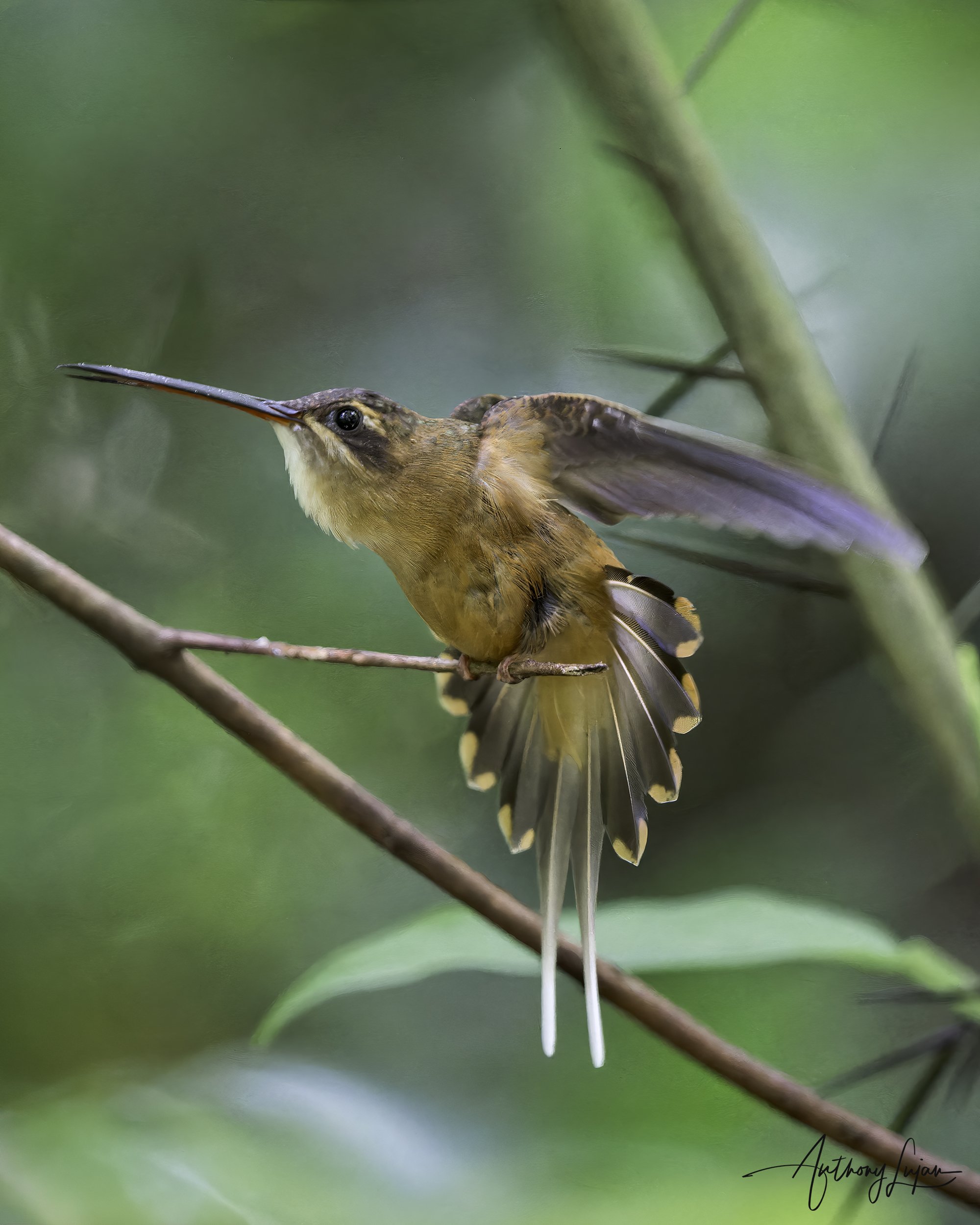
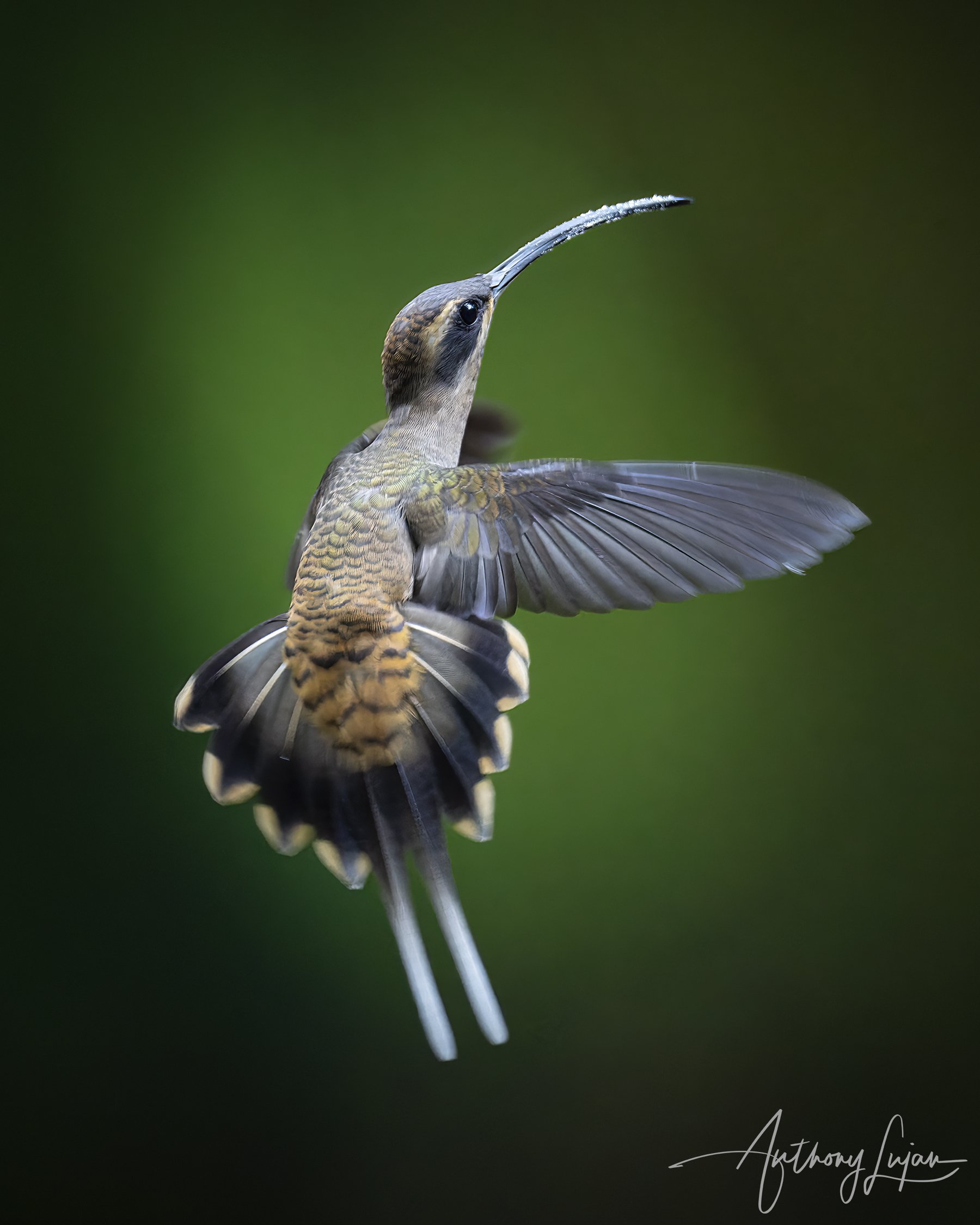
The Little Hermit is one of the smallest hummingbirds, with a slim build and typical hermit facial pattern but tiny size and short tail compared to many relatives. Olive‑green above with orange‑ochre rump and underparts (often with greyer belly), it blends into the low, shaded vegetation it frequents. Despite its small size, it can be locally common and is often located by its high, squeaky song at leks.
Male Description
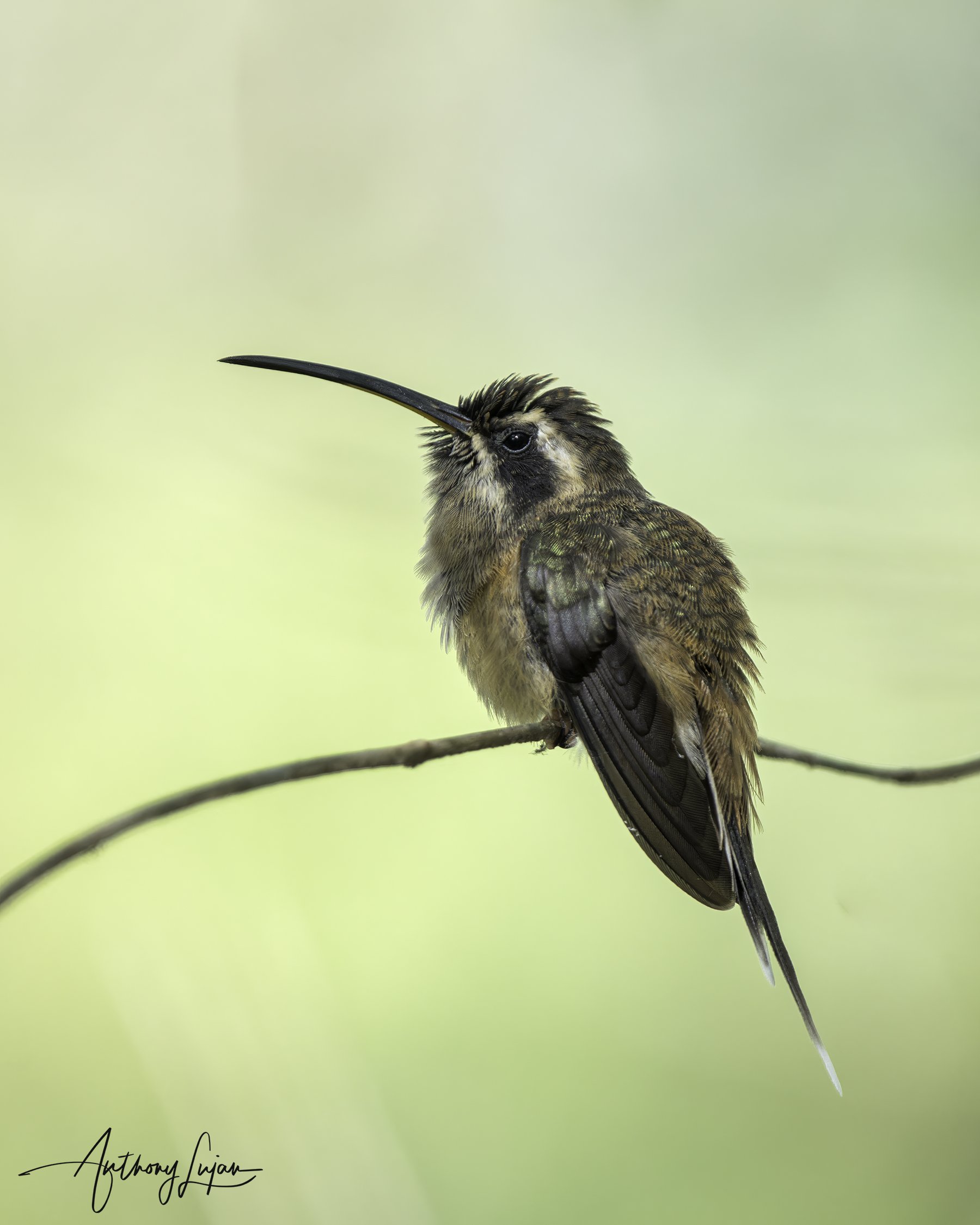
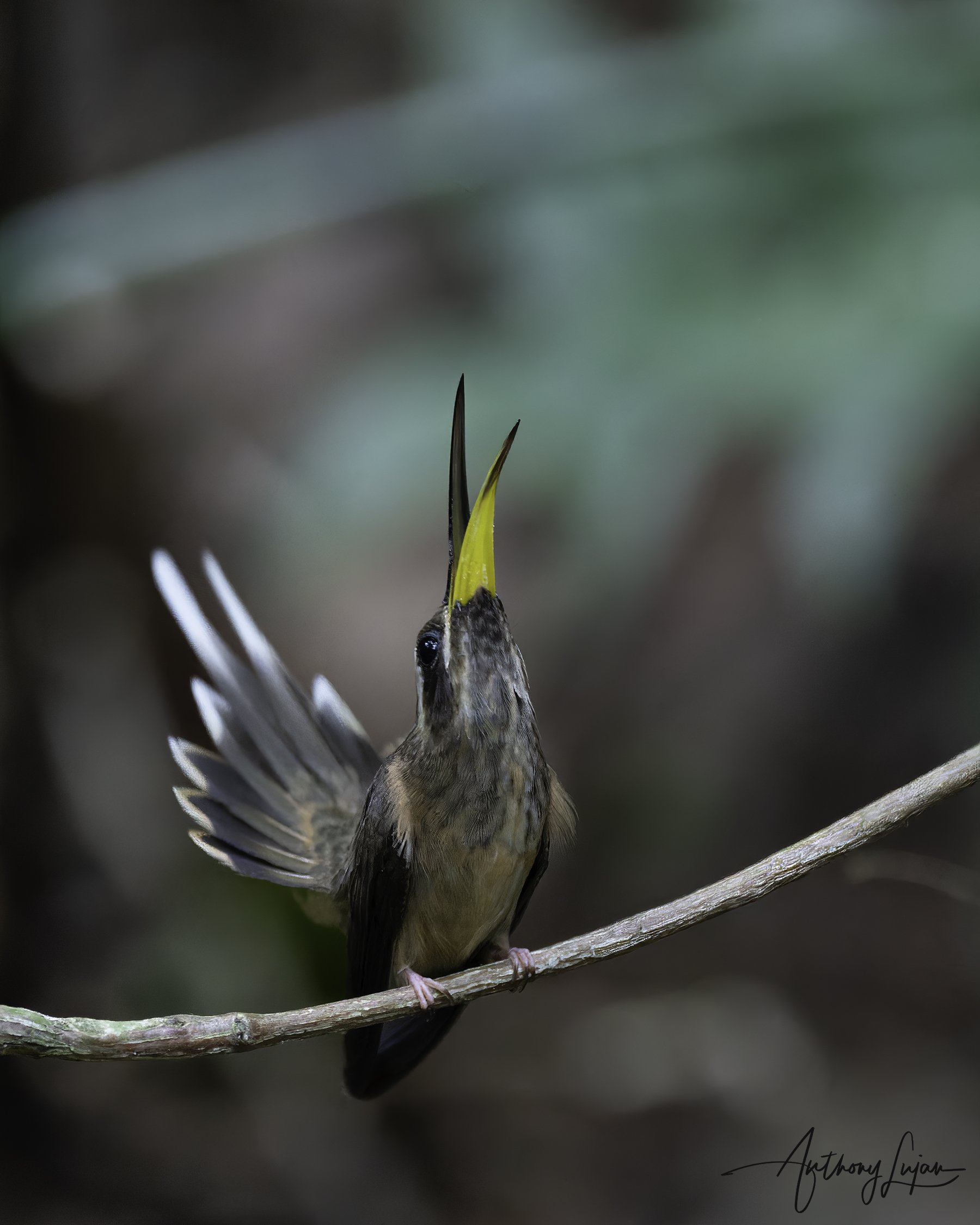
Males are about 9–10 cm long and weigh around 2.5–3.5 g. They have olive‑green upperparts, orange‑ochre uppertail coverts, and orange‑ochre underparts with a somewhat greyer belly. The head is dark with a typical hermit pattern of dark mask and contrasting pale facial stripes. The bill is black, slender, and distinctly down‑curved, about 2.5 cm long. The tail is brown with white tips to the rectrices. Males tend to have slightly darker throats than females.
Female Description
Females closely resemble males in plumage, with olive‑green upperparts, orange‑ochre rump, and ochre underparts. They may be slightly paler on the throat and underparts. Overall, sexual dimorphism is subtle, and field separation by plumage alone is difficult. Juveniles resemble adults but may show somewhat duller colors and softer contrasts in the facial pattern.
Habitat & Behavior
Little Hermits occupy humid lowland zones in a variety of semi‑open wooded habitats: mangroves, secondary forest, plantations, scrub, and rainforest edges, often near water. In Trinidad they also occur in interior rainforest, especially in shaded understory and along streams. They usually stay low, generally within two meters of the ground, moving through undergrowth and shaded edges.
They feed primarily on nectar from a range of tubular flowers on low plants, shrubs, and small trees, including Heliconia and other brightly colored, highly scented species. They follow traplines, visiting a circuit of nectar sources rather than defending a single patch. They also take small arthropods for protein, gleaned from foliage or caught in short sallies.
Breeding
Males gather at communal leks where they sing high, squeaky, complex songs repeatedly and flash their tails to attract females. These displays can occupy a large portion of daylight hours during the breeding season. Females visit the leks to choose mates, after which they alone handle nesting and chick rearing.
The nest is a small conical structure suspended under a large leaf, such as Heliconia or broad understory foliage, constructed of plant fibers, spiderweb, and other soft materials. The clutch typically consists of two white eggs. Incubation and fledging periods are not precisely known for this species, but, as in related hermits, incubation likely lasts about 14–16 days and fledging occurs 20–23 days after hatching.
Movement
The Little Hermit is considered non‑migratory. It is a resident breeder throughout its range in northeastern South America and Trinidad. Individuals may move locally within lowland forests, mangroves, and scrub in search of flowering plants, but there is no evidence of regular long‑distance or seasonal migration.
Population
Although the total number of mature individuals has not been quantified, the Little Hermit is generally considered fairly common within much of its range. It remains widespread in Trinidad, French Guiana, Suriname, and parts of northeastern Venezuela. Nevertheless, habitat changes in lowland forests, mangroves, and coastal zones likely contribute to a gradual long‑term decline.

Conservation
The Little Hermit is currently assessed as Least Concern due to its broad distribution and generally common status in many parts of its range. However, ongoing habitat loss and degradation of lowland forest, mangrove, and scrub, especially near coasts and river deltas, may negatively affect populations. Maintaining semi‑open wooded habitats, mangroves, and structurally complex secondary forests is important for sustaining this species.
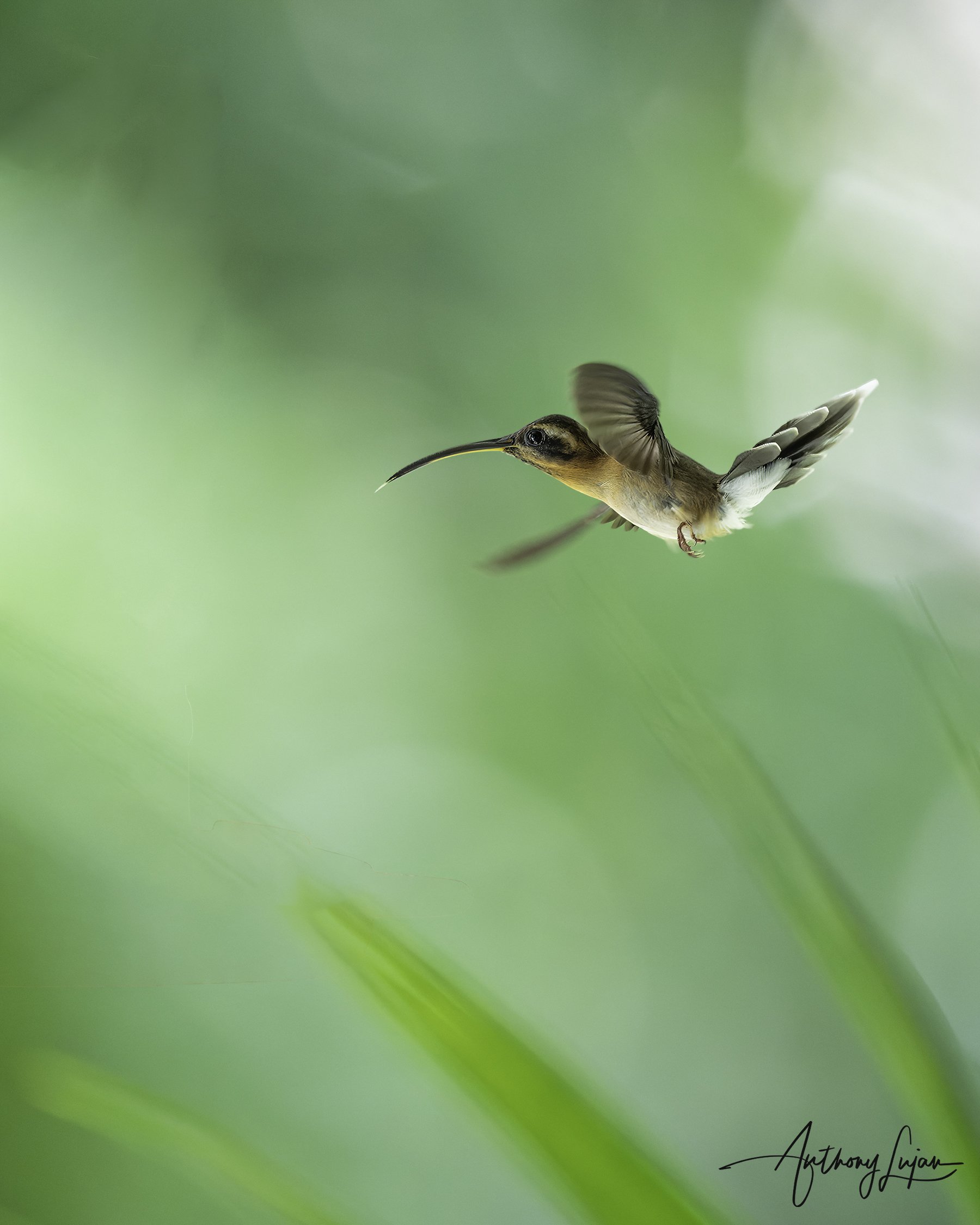

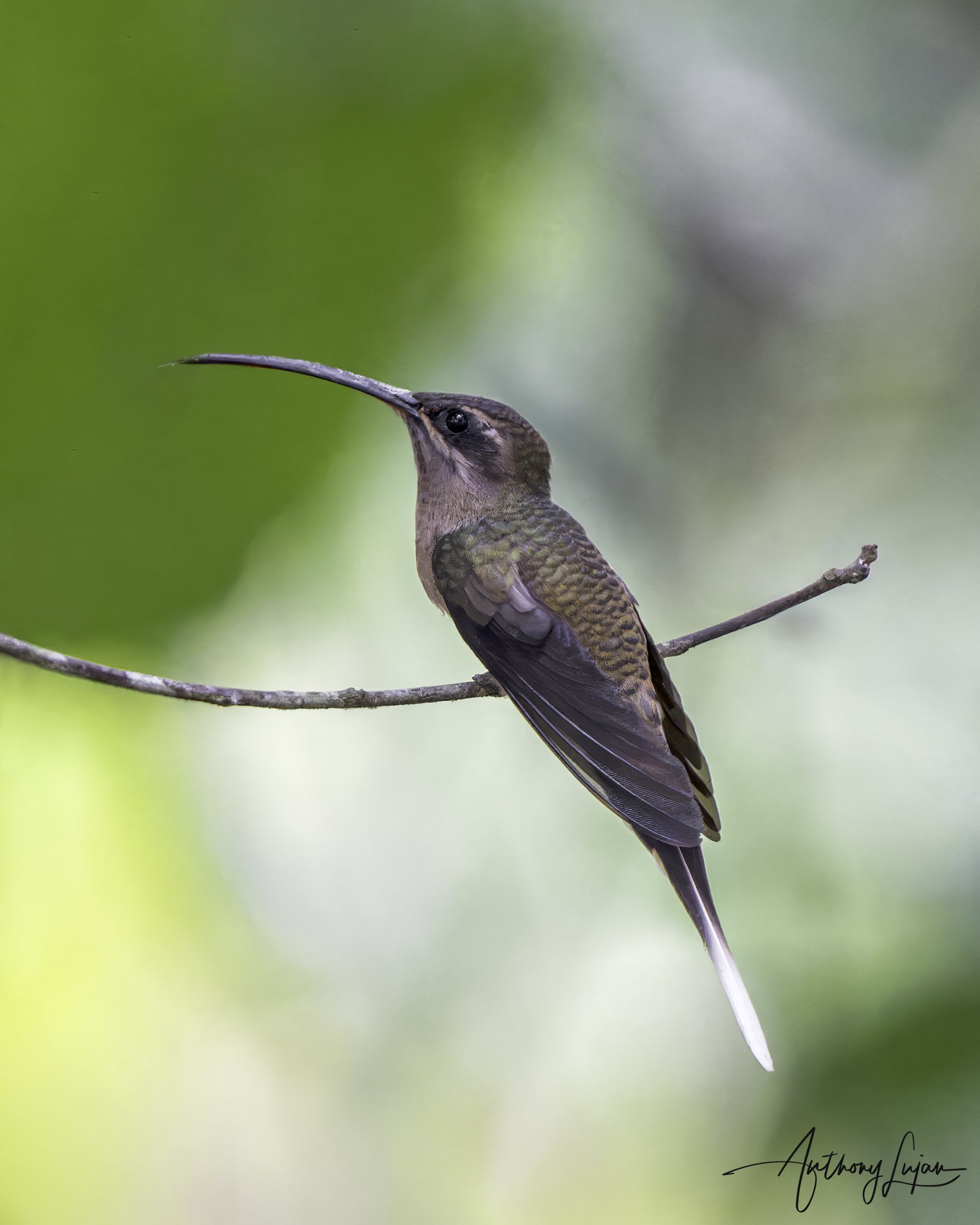
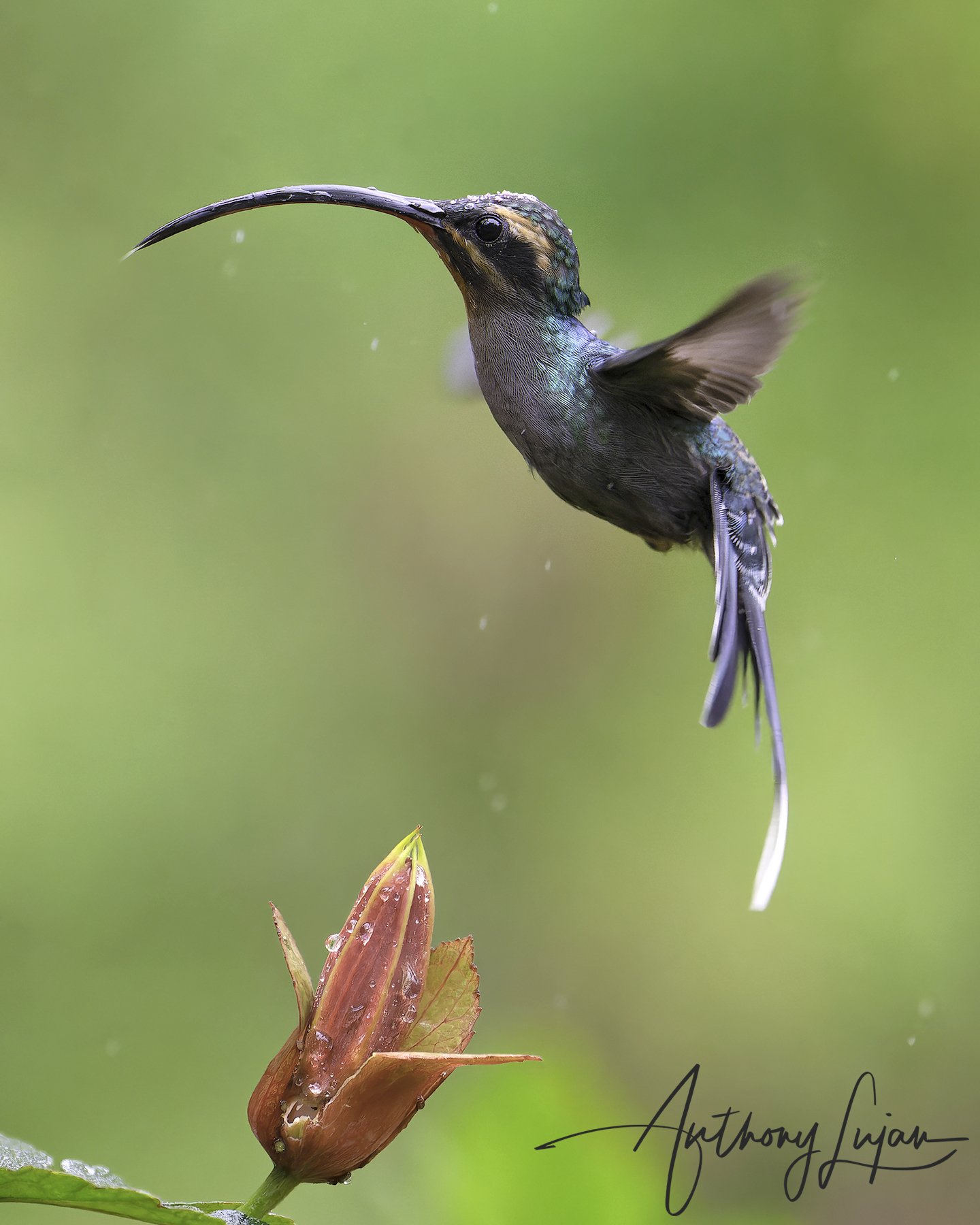
Related species in the Phaethornis genus (27 species total)



Please note: The content provided in this article reflects Anthony’s personal experience and photographic approach. Results can vary depending on light, weather, location, equipment, subject behavior, and field conditions.