
Lucifer Hummingbird
Scientific name: Calothorax lucifer
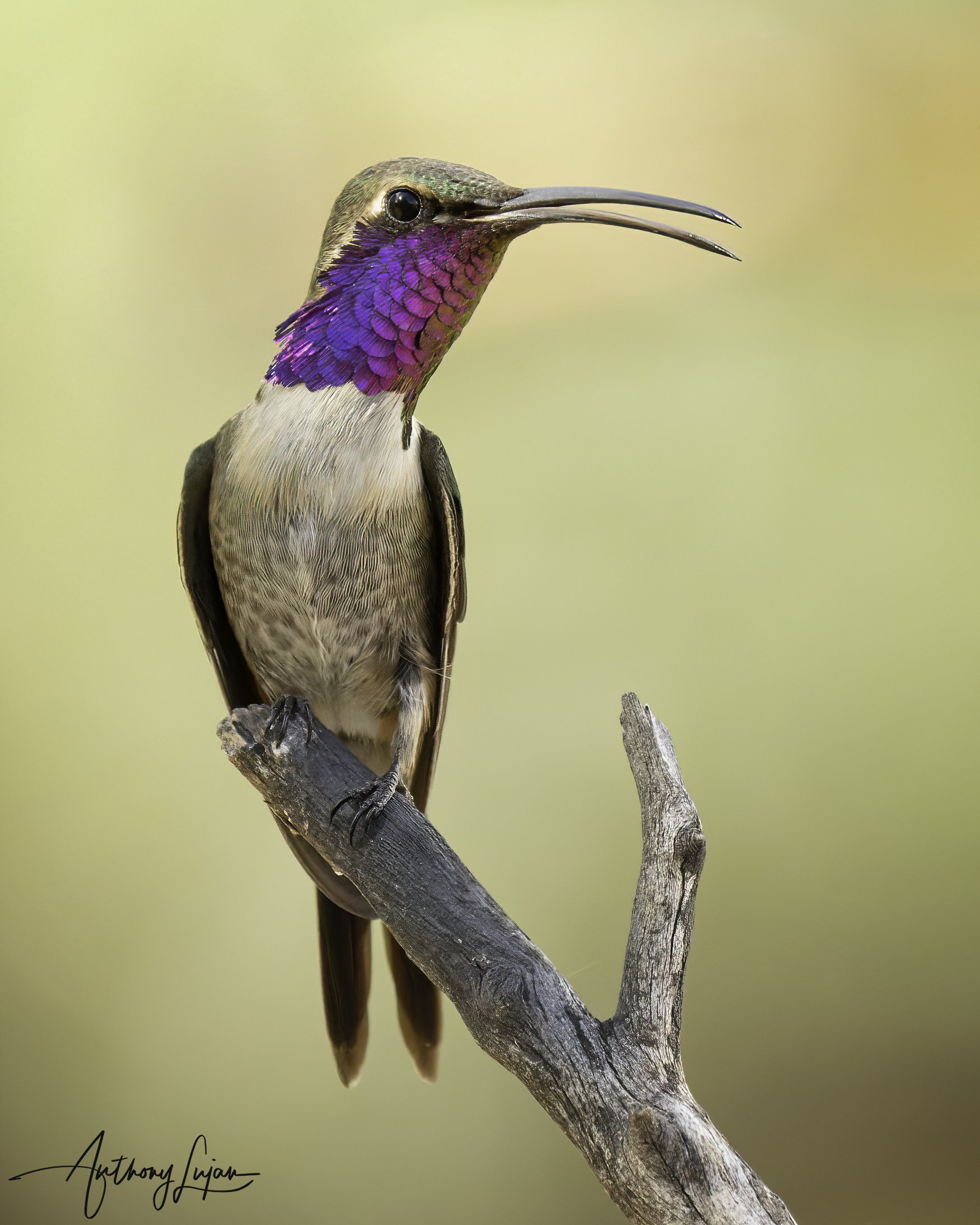
The Lucifer Hummingbird is a small, long‑tailed sheartail of arid northern and central Mexico, with a limited breeding spillover into the desert canyons of the southwestern United States. It favors dry slopes, canyons, and desert foothills dominated by agaves, ocotillo, cacti, and thorny shrubs, where scattered flowering plants punctuate otherwise harsh landscapes. Males are instantly recognizable by their strongly decurved bill, deeply forked tail, and flaring purple gorget that glows when it catches the light.
At a Glance
Family: Trochilidae (hummingbirds)
Clade: Mellisugini – “Bee” hummingbirds
Genus group:Calothorax — small, long‑tailed sheartails of arid Mexico (Lucifer and Beautiful Hummingbirds)
Range: Primarily northern and central Mexico (Chihuahuan Desert foothills and central plateau), with breeding range extending into extreme southern Arizona, southwestern New Mexico, and west Texas
Habitat: Arid slopes, desert canyons, dry washes, and scrubby foothills with agaves, ocotillo, sotol, cacti, and thorny shrubs; occasionally more open grassland with scattered oaks
Elevation: Roughly 1,000–1,800 m (3,300–5,900 ft) in much of its range; about 3,500–5,500 ft in the U.S.
Length: About 9–10 cm (3.5–3.9 in)
Weight: About 3–4 g (0.10–0.14 oz)
Number of mature individuals: Approximately 200,000
Population trend: Believed roughly stable or only moderately declining overall; watch‑list concern due to small distribution and population
Status: Least Concern (IUCN)
Name Origin
The genus name Calothorax derives from Greek kalos (“beautiful”) and thorax (“breast” or “chest”), referring to the intense iridescent throat and upper breast of males in this genus. The species name lucifer is Latin for “light‑bearer,” historically associated with the morning star (Venus) rather than with satanic imagery. In this context it likely refers to the male’s brilliant, light‑catching purple gorget, making Calothorax lucifer the “beautiful, light‑bearing hummingbird.”
Subspecies and Distribution
Lucifer Hummingbird is generally treated as monotypic — no recognized subspecies.
It breeds primarily in northern and central Mexico, including the central plateau and Chihuahuan Desert foothills, from central Mexico north to the U.S. border. In the United States it occurs locally in extreme southwestern Texas (especially the Big Bend and Chisos Mountains region), southwestern New Mexico (notably the Peloncillo Mountains), and southeastern Arizona in desert canyons and foothills. Birds winter mainly in central Mexico, with seasonal movements along desert and foothill corridors.
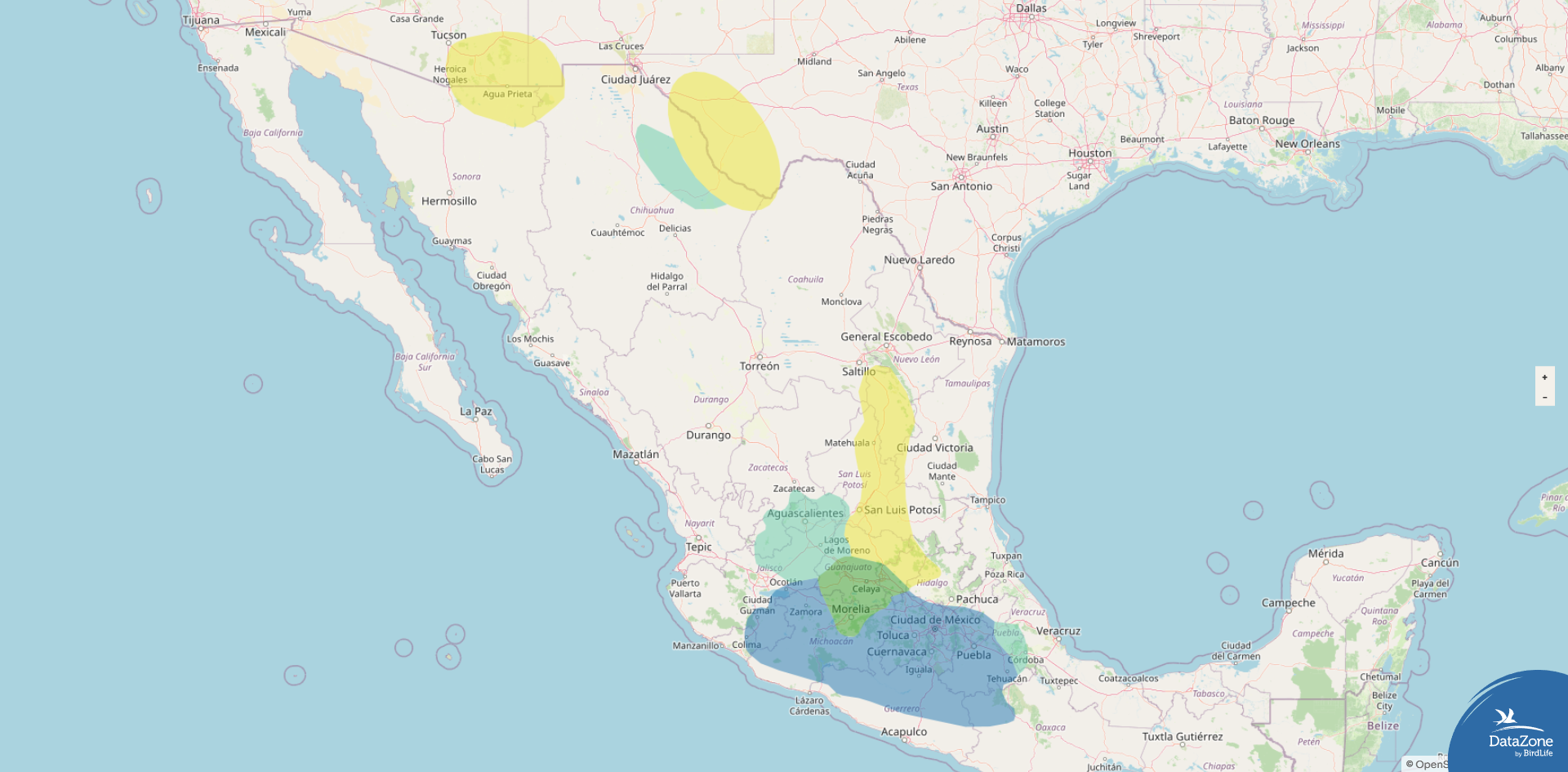
Legend
Green Resident
Yellow Breeding
Blue Non-breeding
Species Overview
Lucifer Hummingbird is a desert‑edge sheartail adapted to dry, rugged slopes and canyons where agaves, ocotillo, and cacti dominate. Its combination of a strongly decurved bill, deeply forked tail, and flaring purple gorget makes it one of the most sought‑after hummingbirds in the southwestern United States and northern Mexico. With an estimated global breeding population of around 200,000 and a range centered in Mexico, it remains uncommon but regularly encountered in favored canyons and foothills, and is monitored closely due to its relatively small population and concentrated distribution.
Identification
Male
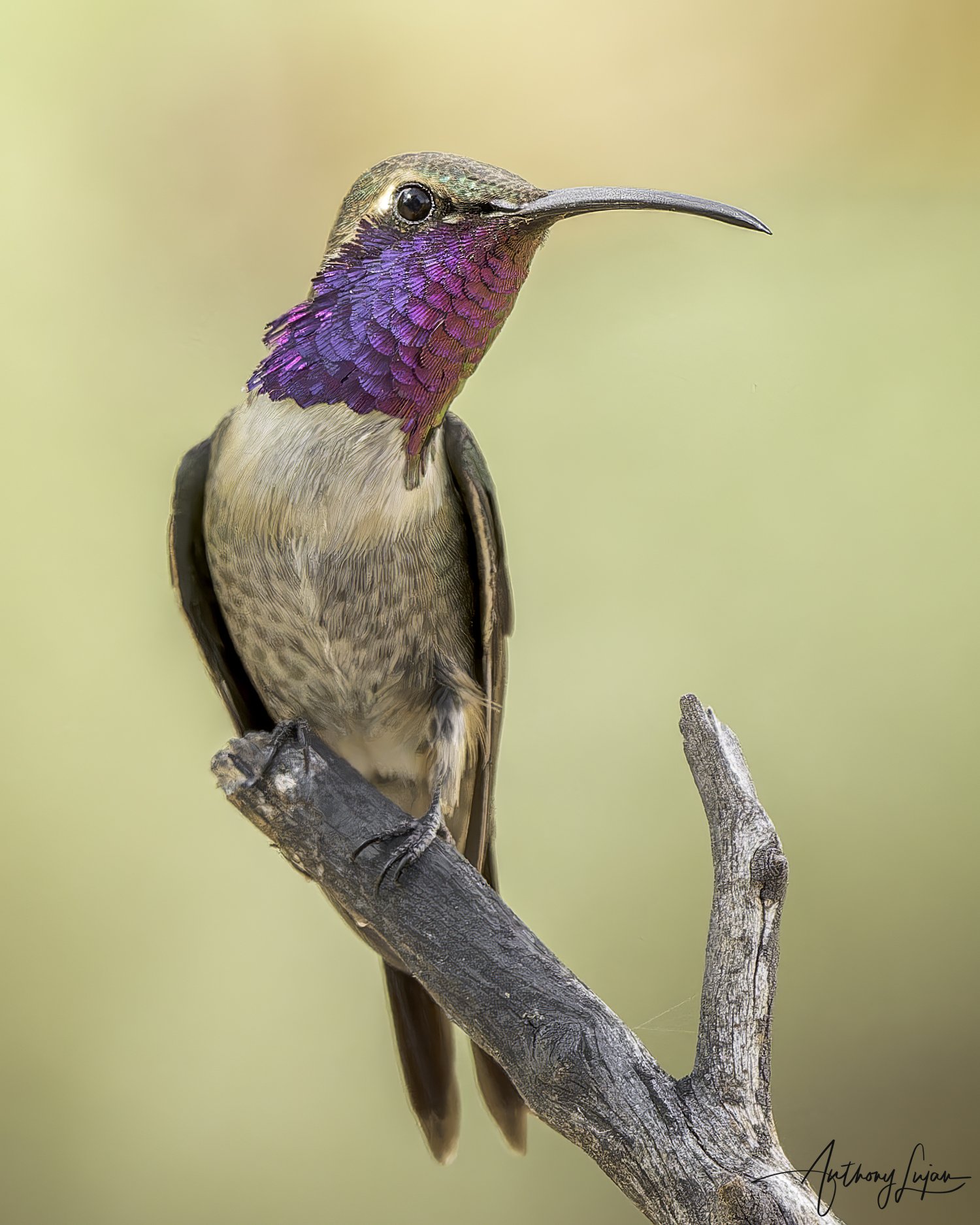
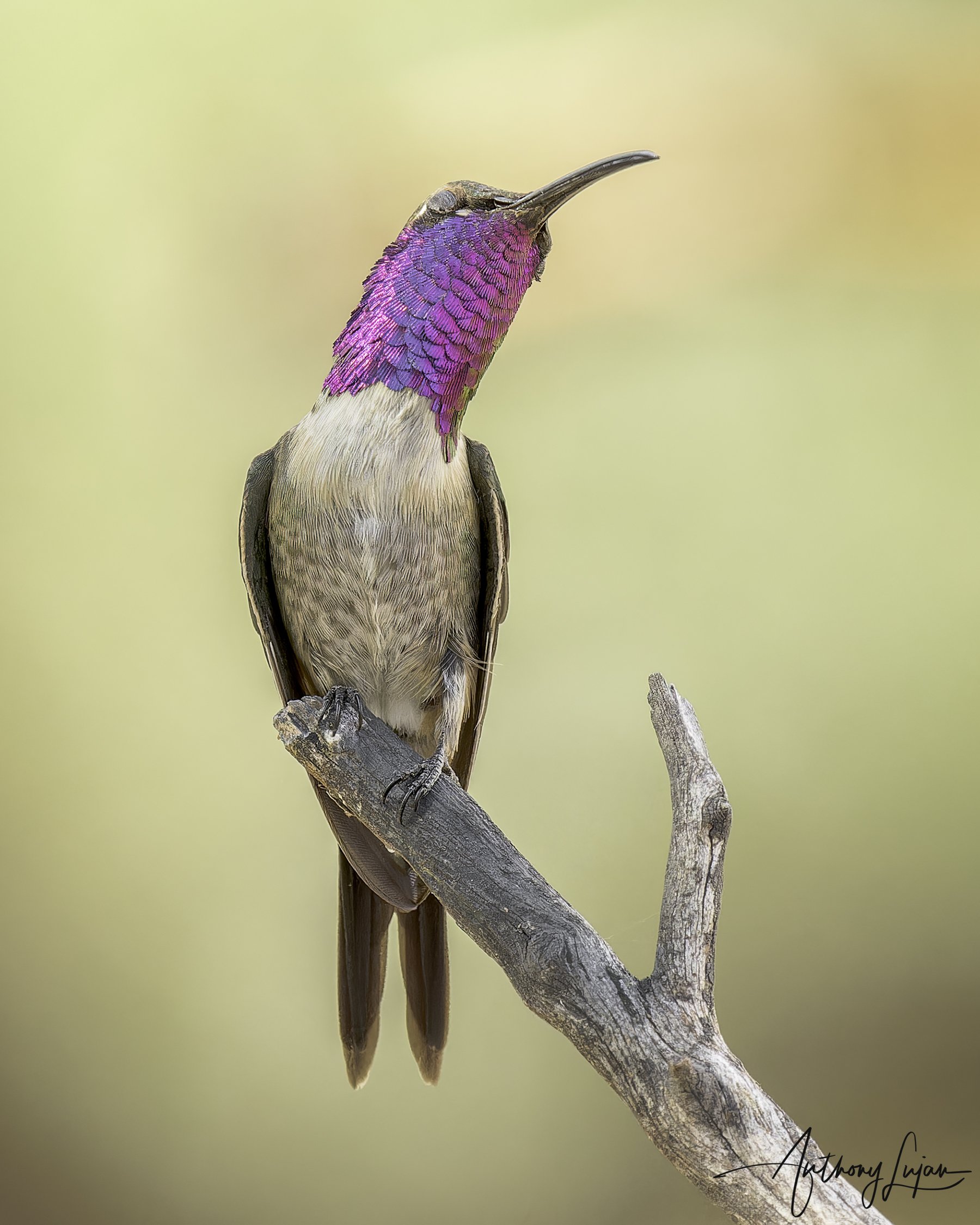
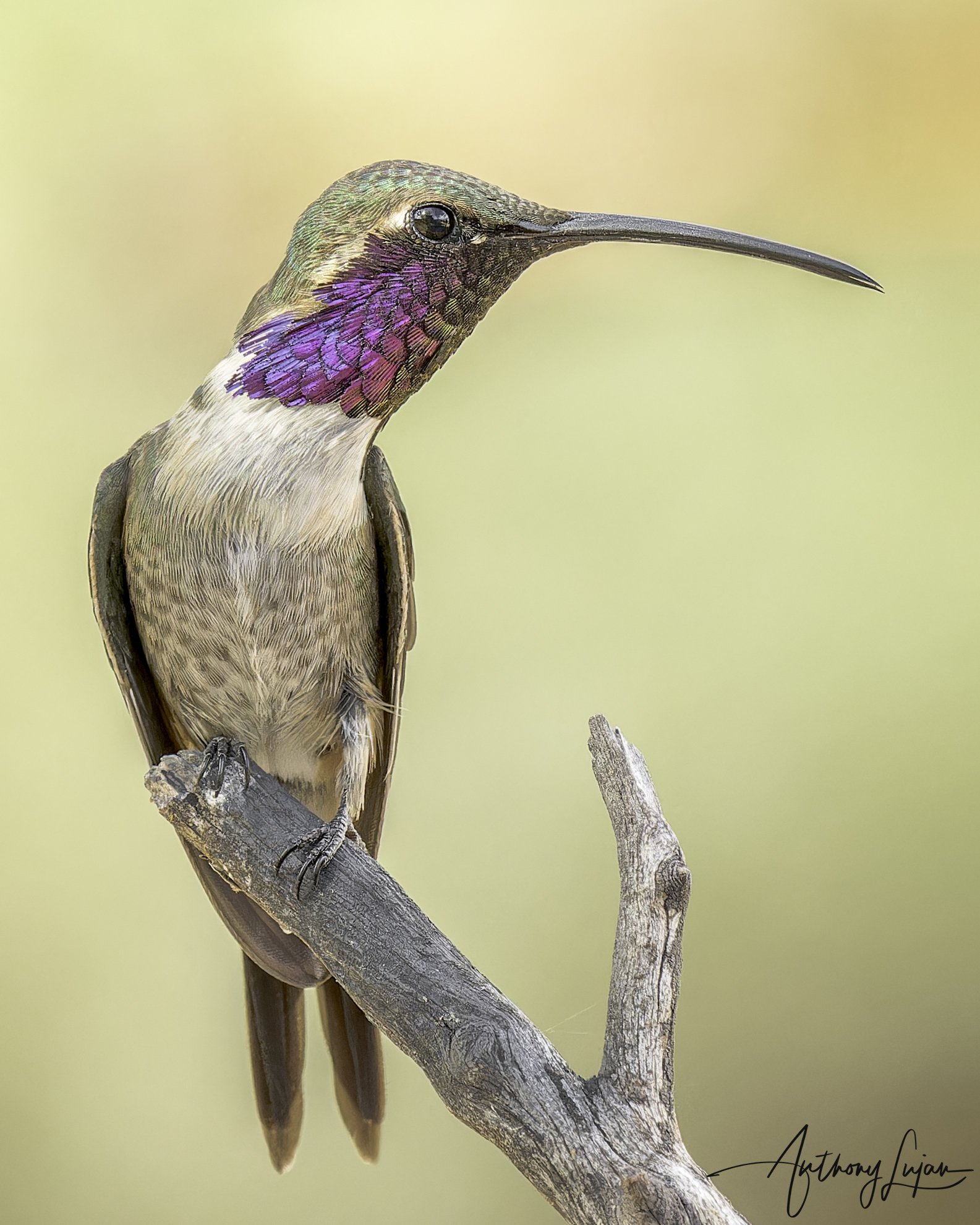
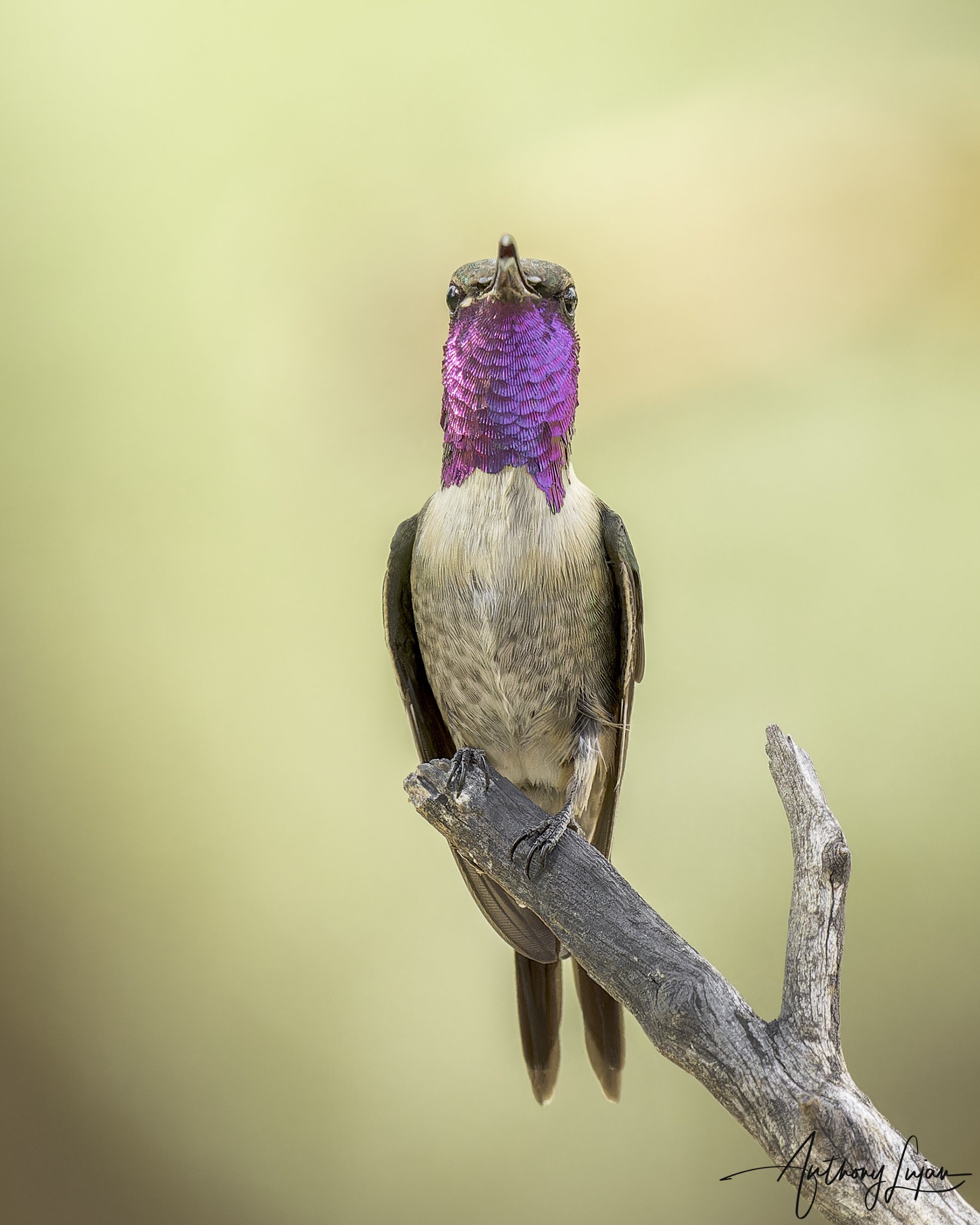
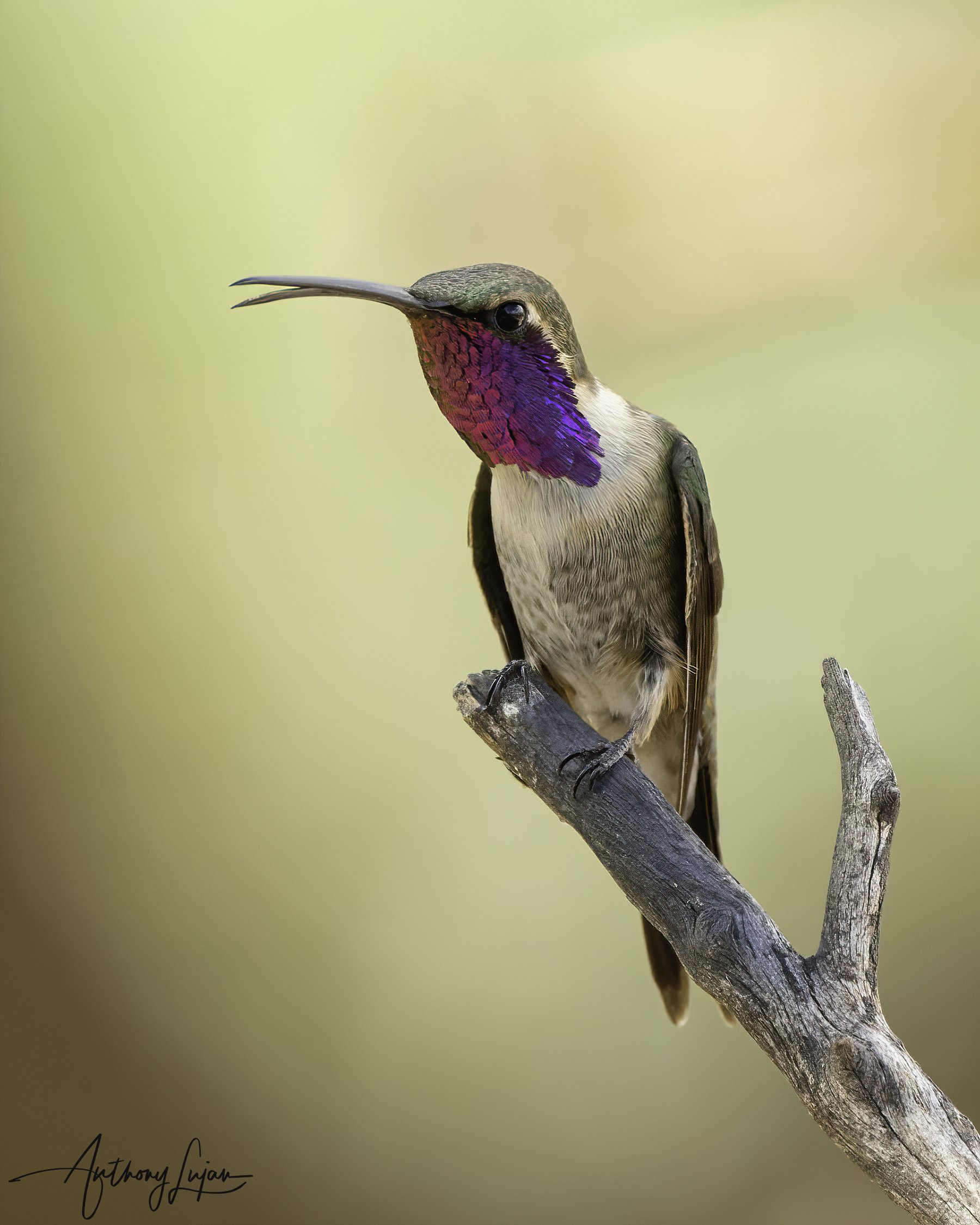
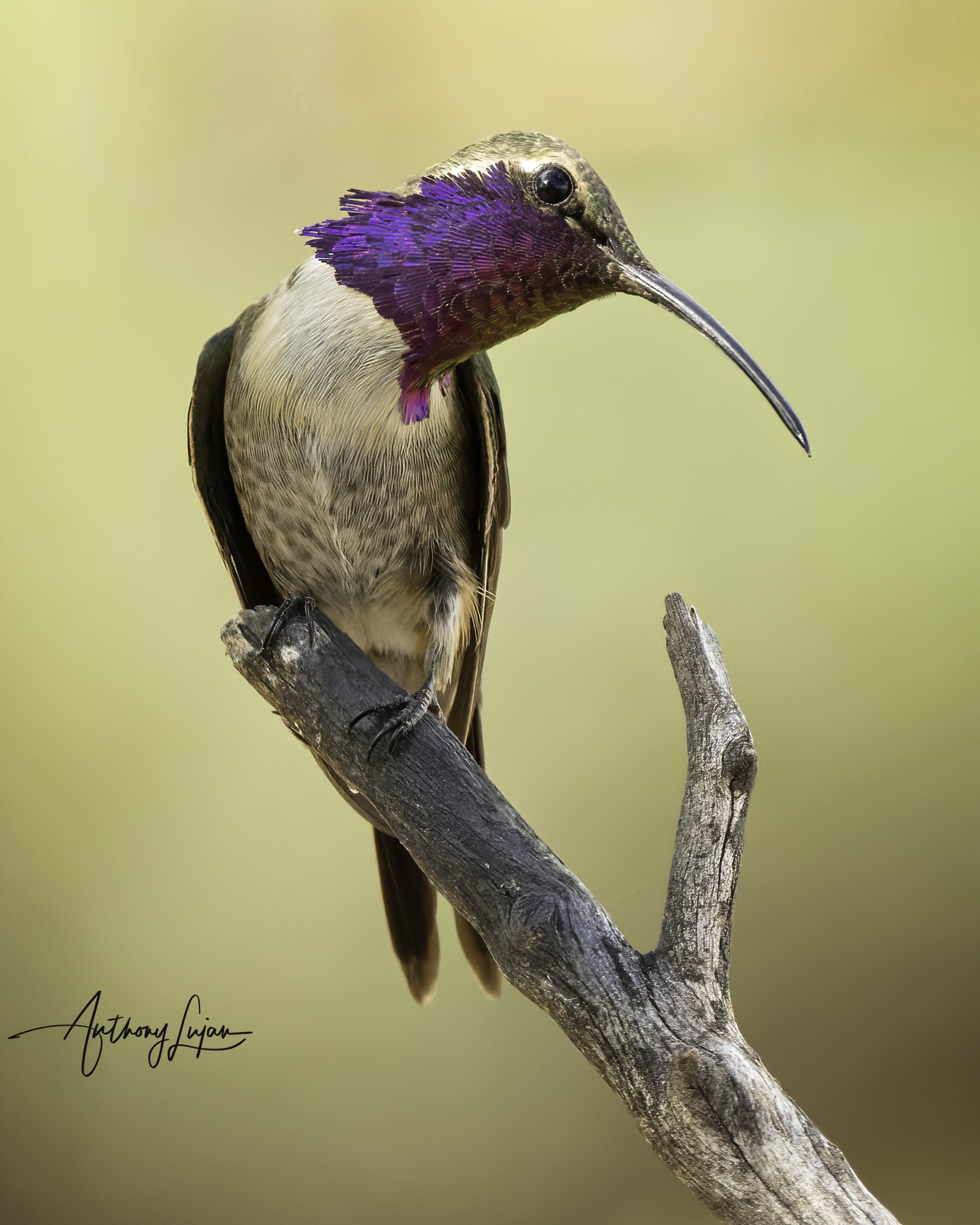
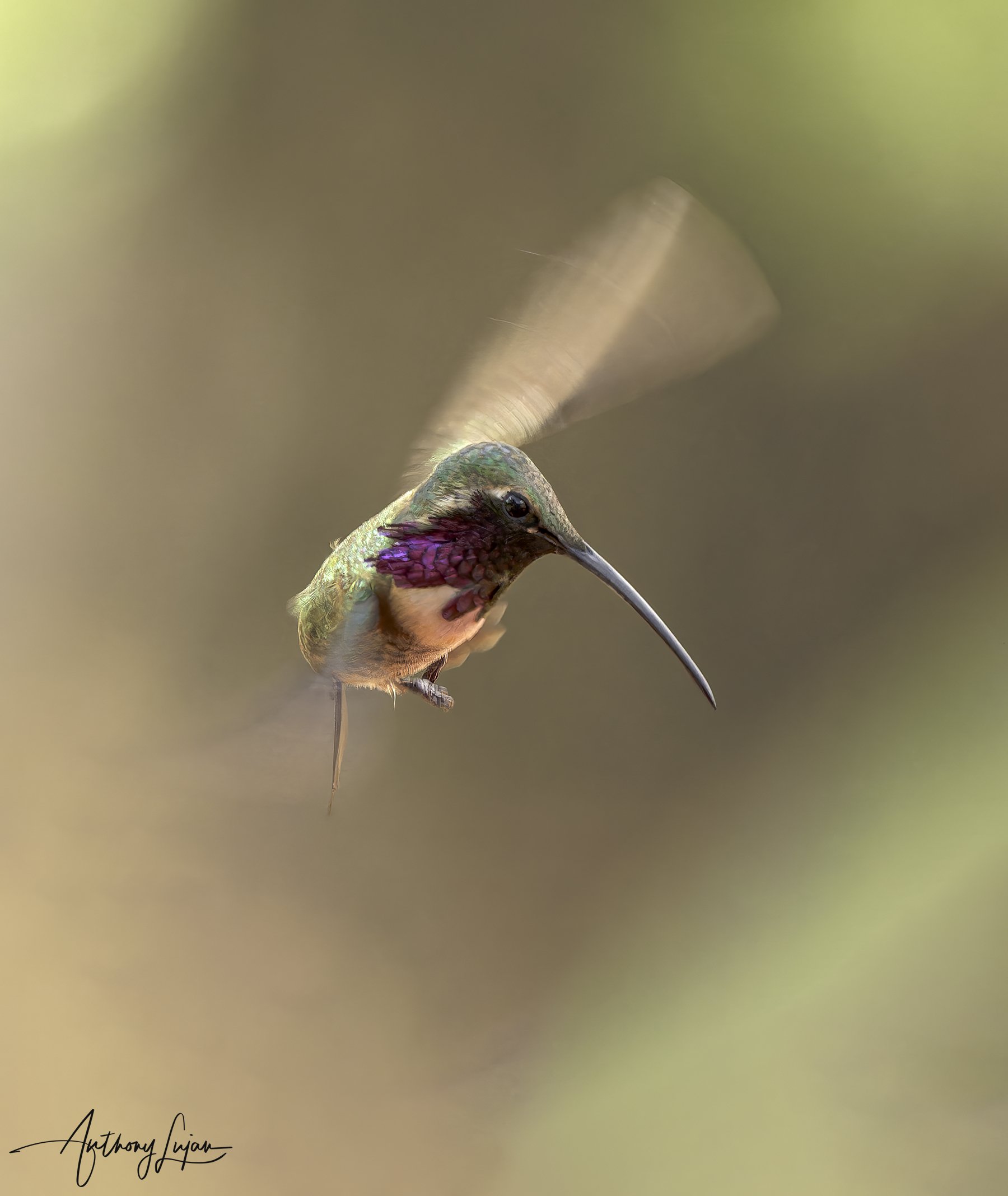
Adult males are small hummingbirds with greenish upperparts, grayish underparts, and a distinctive, strongly decurved dark bill that looks heavy for the bird’s size. The throat and upper breast bear a brilliant purple or magenta‑violet gorget that flares into pointed side panels, appearing almost flame‑shaped when the bird turns into the light. The tail is long, narrow, and deeply forked, with dark central feathers and paler outer feathers that accentuate the sheartail look, often extending well beyond the wingtips at rest. In flight, the combination of long forked tail, curved bill, and flashing purple throat makes males unmistakable in their desert canyon haunts.
Female
Females lack the full purple gorget and instead show a mostly whitish to buffy throat with some fine spotting, grayish underparts, and greenish upperparts. The bill is also curved, though sometimes appearing slightly less heavy than in males, and the tail is long and somewhat forked but less dramatically so than in males. Females can resemble female Beautiful Hummingbirds, but Lucifer tends to have a more strongly decurved bill, different tail proportions, and a more northerly, Chihuahuan Desert‑centered range. Juveniles resemble females until young males begin to develop the purple gorget and more pronounced tail shape.
Habitat and Behavior
Lucifer Hummingbirds are specialists of arid slopes, desert canyons, dry washes, and scrubby foothills, particularly in the Chihuahuan Desert region. They favor areas with scattered agaves, ocotillo, sotol, cacti, and thorny shrubs, and may also use more open grassland with scattered oaks and desert trees. Within these habitats they forage at low to mid‑levels, visiting tubular flowers on agave stalks, ocotillo, penstemons, chollas, and other desert plants, and they also come to feeders in some areas.
Like other hummingbirds, Lucifer Hummingbirds combine nectar feeding with insect hunting, hawking small insects from perches and gleaning them from foliage to obtain protein. They are notable for their unique courtship behavior: males perform flight displays directly at the nest of a female rather than at communal leks or generic display perches, diving and hovering to show off their purple gorget and long, forked tail. The species is migratory within its range, with birds occupying breeding areas in northern Mexico and the southwestern U.S. in spring and summer and then moving to central Mexico to winter.
Population and Threats
Lucifer Hummingbird has an estimated global breeding population of about 200,000 individuals, with the vast majority living in Mexico and only a small fraction venturing into the United States. Overall population trend data are limited, but Partners in Flight considers the species to have a relatively small distribution and population, placing it on watch lists for conservation concern in some regions. Local threats include habitat loss and degradation in desert canyons and foothills due to overgrazing, development, and disturbance, which can reduce flowering agaves, ocotillo, and other key nectar plants.

Conservation
Conservation of Lucifer Hummingbird focuses on protecting arid canyon and foothill habitats in northern and central Mexico and the southwestern United States. Maintaining healthy stands of agaves, ocotillo, and native desert shrubs is critical, as these plants provide essential nectar resources and perches. In U.S. strongholds such as the Big Bend region of Texas and canyons in southern Arizona and New Mexico, limiting habitat degradation from overgrazing, development, and excessive human disturbance helps safeguard breeding sites for this distinctive sheartail.
Related species in the Calothorax genus (2 species total):

Please note: The content provided in this article reflects Anthony’s personal experience and photographic approach. Results can vary depending on light, weather, location, equipment, subject behavior, and field conditions.