
Scientific name: Philodice bryantae
The Magenta-throated Woodstar is a tiny, bee‑like hummingbird of montane forest edges, clearings, and gardens in the highlands of Costa Rica and western Panama. Its global population is estimated at 20,000–49,999 mature individuals, the overall trend is decreasing, it is considered non‑migratory, and it is assessed as Least Concern.
At a Glance
Family: Trochilidae (hummingbirds)
Clade: Mellisugini – Bee Hummingbirds
Genus: Philodice — 2 species in total
Range: Highlands of Costa Rica south into western Panama (Talamancan montane forests)
Habitat: Humid montane forest edges, clearings, thinned woodland, secondary growth, shrubby pastures, and gardens with flowering shrubs and trees
Elevation: Mostly from about 1,200 to 2,400 m (3,900–7,900 ft)
Length: About 7–8 cm (2.8–3.1 in)
Weight: About 2.5–3 g (0.09–0.11 oz)
Number of mature individuals: 20,000–49,999
Population trend: Decreasing
Movement: Not a migrant (resident, with local movements only)
IUCN Red List category: Least Concern
Name Origin
The name “Magenta-throated Woodstar” refers to the male’s brilliant magenta‑colored gorget and its “woodstar” body type: tiny, with a short bill and bumblebee‑like flight. The genus name Philodice comes from Greek mythology and was resurrected based on genetic work grouping this species with Purple-throated Woodstar. The species name bryantae honors the American ornithologist Annie Maria Henshaw Bryant.
Taxonomy & Distribution
Philodice bryantae belongs to the bee hummingbird tribe Mellisugini within the hummingbird family Trochilidae. The genus Philodice includes two species: Magenta-throated Woodstar (P. bryantae) and Purple-throated Woodstar (P. mitchellii). Magenta-throated Woodstar is restricted to the highlands of Costa Rica and western Panama, mainly on the Pacific slope but also locally on the Caribbean slope in suitable montane habitats. It is especially associated with the Talamancan montane forest ecoregion.
Subspecies
Monotypic — no subspecies recognized.
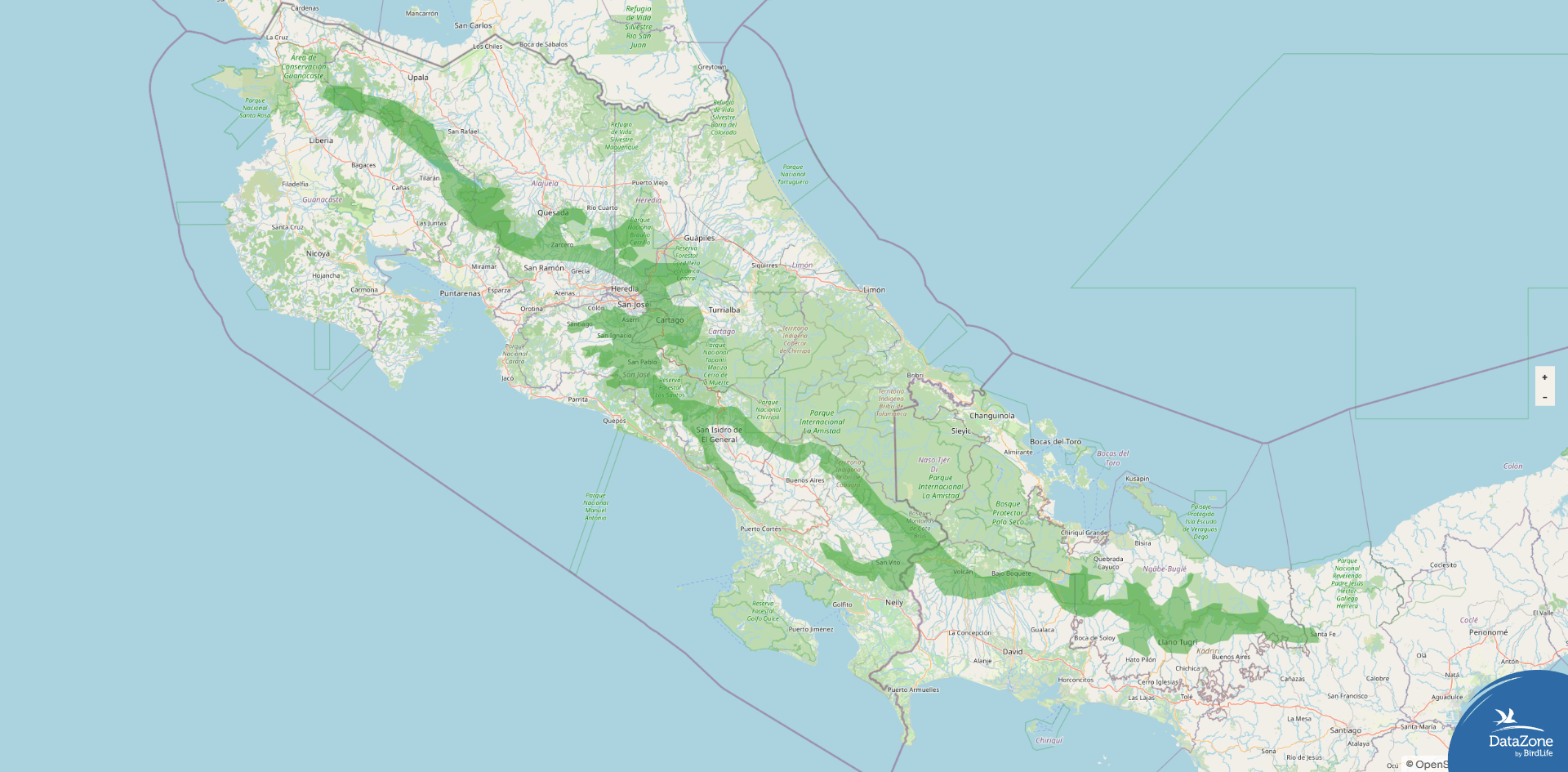
Legend
Green Resident
Species Overview
The Magenta-throated Woodstar is a near‑endemic highland hummingbird noted for its tiny size, loud wing hum, and the male’s glowing magenta throat patch. It frequents semi‑open montane habitats—forest edges, clearings, second growth, shrubby pastures, and gardens—often hovering bumblebee‑like around flowering shrubs and small trees. Within its limited range it can be locally common, especially where flowering hedges and gardens are maintained, but its overall population is relatively small and declining.
Male Description
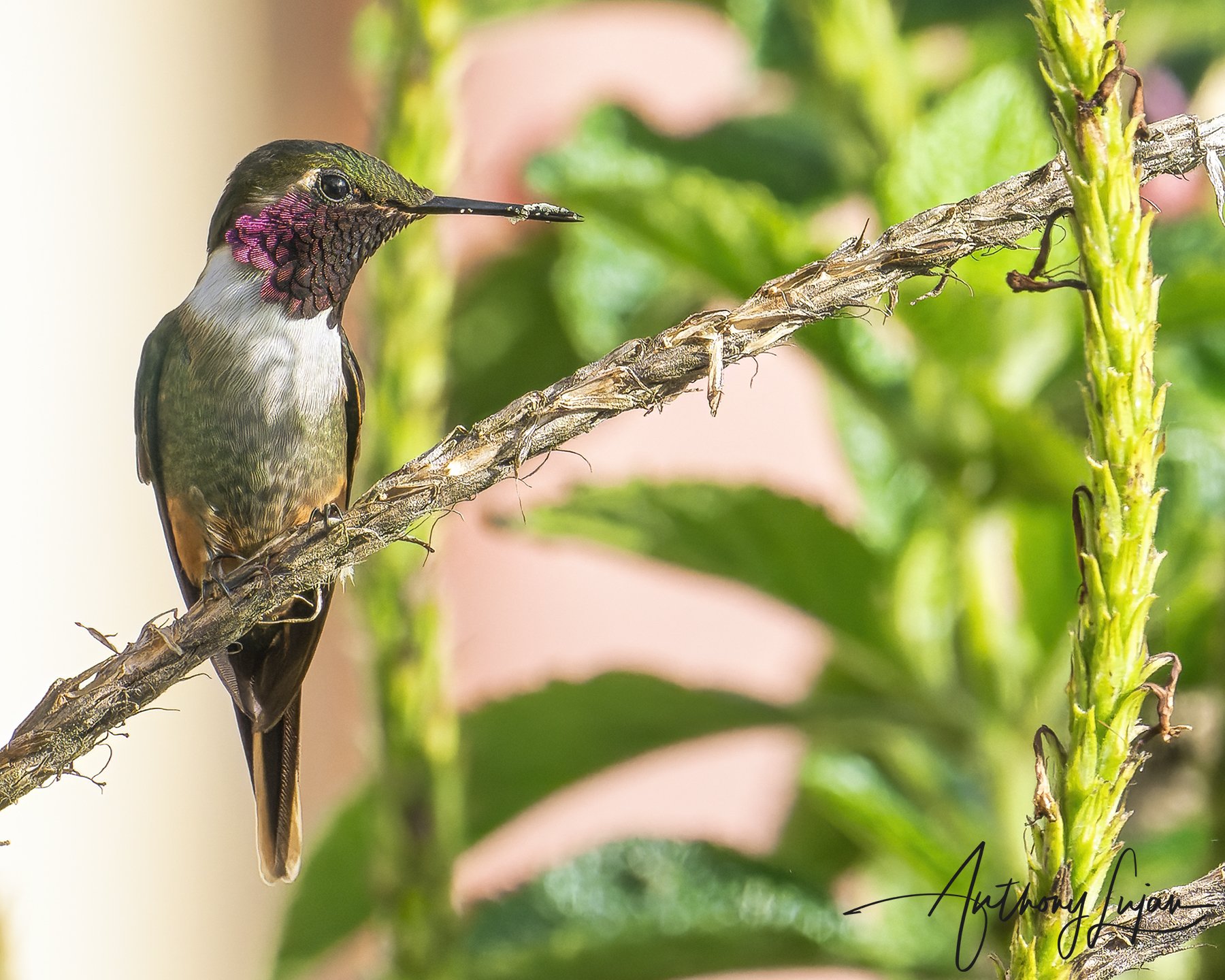
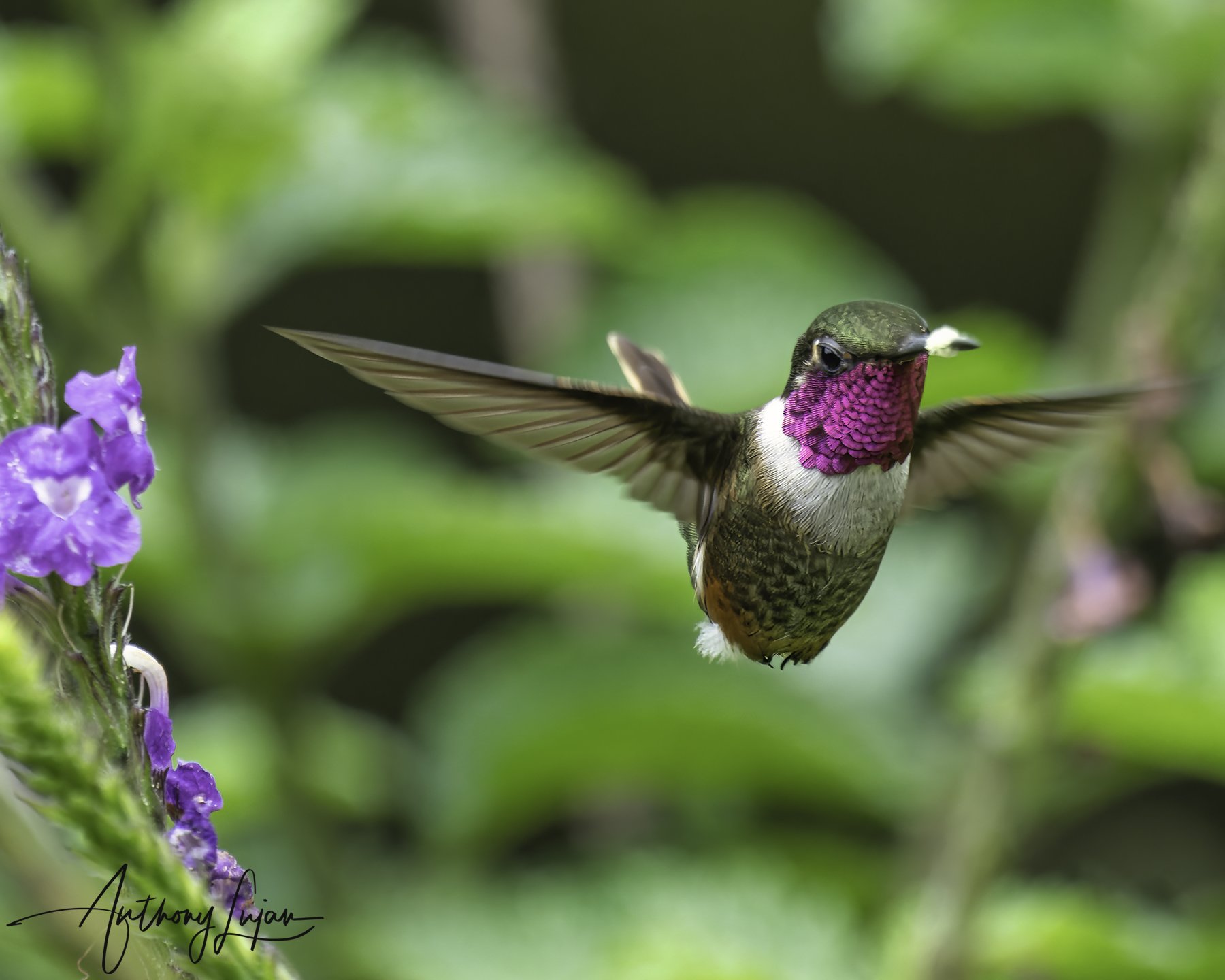
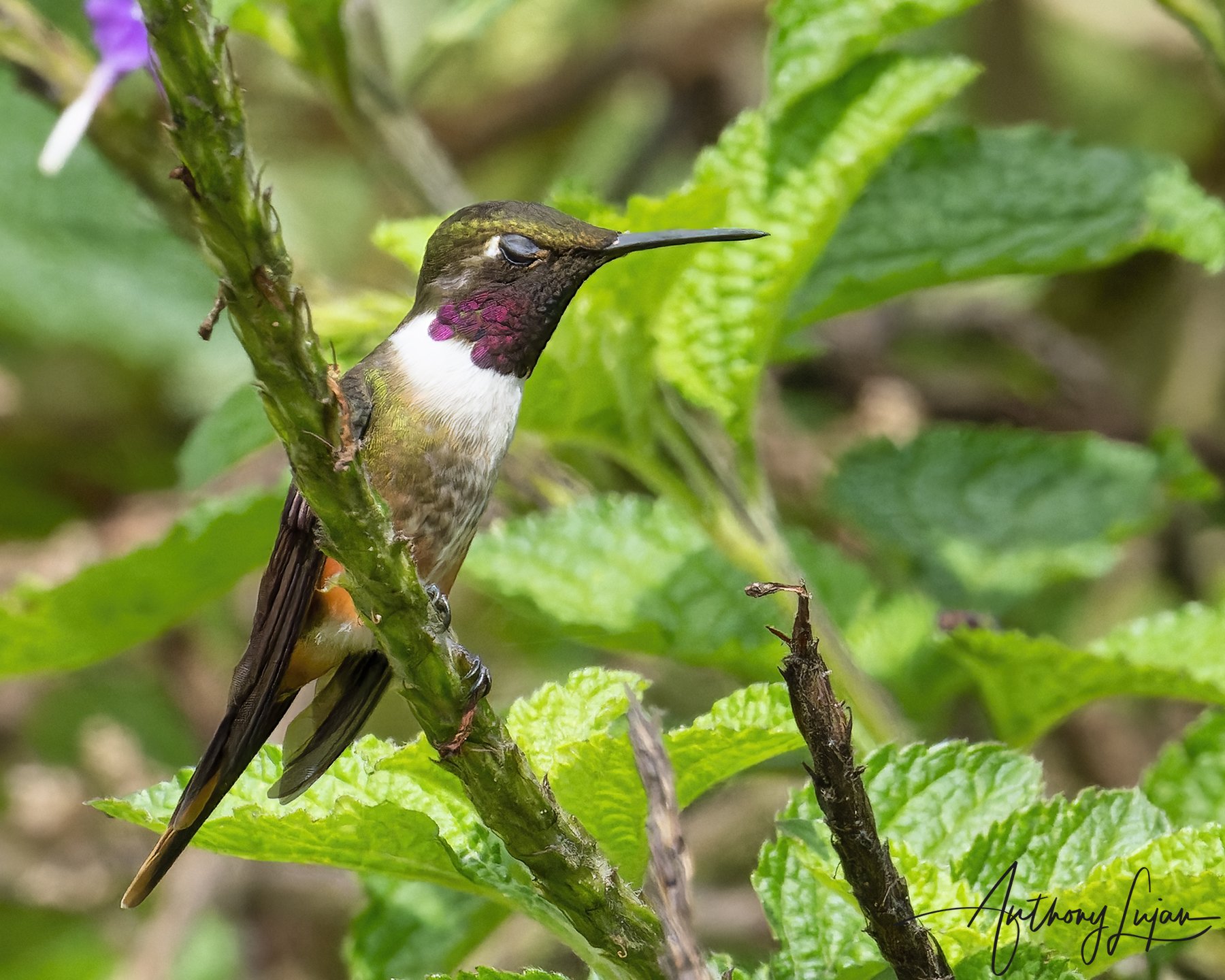
Adult males are very small, with dark green upperparts and a conspicuous, iridescent magenta‑purple gorget that can look blackish out of direct light. Below the gorget is a white band across the upper breast, followed by buffy to cinnamon underparts. The tail is relatively long for the bird’s size, mostly dark with pale edges, and is often held cocked and closed when hovering or feeding. The bill is short, straight, and black. In flight, males produce a loud, insect‑like hum and resemble a large bumblebee with a flashing magenta throat.
Female Description
Females lack the male’s magenta gorget and show green upperparts with whitish or buffy underparts. The throat is pale, often with fine dusky spotting or light mottling, and the belly is buffy to cinnamon. The tail is relatively long, with dark central feathers and white tips or edges on the outer feathers, producing a noticeable pattern when fanned. Juveniles resemble females, with duller plumage; young males gradually develop the distinctive magenta throat patch and sharper white breast band as they mature.
Habitat & Behavior
Magenta-throated Woodstars inhabit humid montane forest edges, clearings, thinned woodland, secondary forest, shrubby pastures, and gardens in the Talamancan highlands. They favor semi‑open habitats where flowering shrubs, vines, and small trees are abundant, often at forest borders, along roads, and around rural houses and lodges.
They feed mainly on nectar from a wide variety of flowering plants, including both native species and ornamentals, hovering briefly at blossoms or perching to feed. Both sexes may defend small feeding territories, chasing intruders with rapid, darting flights and loud wing hums. They also take small insects and spiders for protein, caught by hawking from perches or gleaning near flowers. Their flight is notably slow and bumblebee‑like compared to many other hummingbirds, with frequent pauses to hover.
Breeding
Breeding takes place primarily during the wetter months and periods of peak flowering in the highlands, often from about November through April in Costa Rica, with some variation by locality and elevation. The female constructs a tiny cup nest of plant fibers and down bound with spiderweb, decorating the outside with bits of lichen and bark for camouflage. Nests are usually placed on slender horizontal branches, in forks of shrubs, or on hanging twigs in semi‑open woodland, forest edges, or gardens, a few meters above the ground.
The typical clutch consists of two white eggs. The female alone incubates and cares for the chicks. Incubation lasts around two weeks, and fledging usually occurs about three weeks after hatching, in line with other very small hummingbirds. During the nesting period, females may be especially secretive around the nest, but adults continue to use nearby flowering patches and feeders.
Movement
The Magenta-throated Woodstar is considered resident and is classed as not a migrant. It does not undertake long‑distance migrations, though short‑distance, local movements likely occur within the highlands as birds track flowering plants and adjust to seasonal changes in weather. These shifts may involve minor elevational movements or movements between different slopes and valleys, but the species remains within the Talamancan montane region of Costa Rica and western Panama year‑round.
Population
The global population is estimated at 20,000–49,999 mature individuals, making it a relatively scarce hummingbird in global terms, though it can be locally common in suitable habitats. Its range is restricted to the highlands of Costa Rica and western Panama, where ongoing habitat change and fragmentation affect montane forest and semi‑open habitats. Despite this, the species shows some tolerance of forest clearance and persists in rural mosaics and gardens that retain flowering shrubs and trees. The overall population trend is decreasing.

Conservation
The Magenta-throated Woodstar is assessed as Least Concern, reflecting its occurrence in multiple protected areas and its ability to use semi‑open, human‑modified habitats. However, its small global population, restricted range, and decreasing trend mean that continued habitat loss, agricultural expansion, and development in Talamancan highlands could pose future risks. Conservation of montane forest edges, maintenance of shrubby pastures and gardens with native flowering plants, and protection of key highland reserves all support the long‑term persistence of this species.
Related species in the Philodice genus (2 species in total):

Please note: The content provided in this article reflects Anthony’s personal experience and photographic approach. Results can vary depending on light, weather, location, equipment, subject behavior, and field conditions.