
Mangrove Hummingbird
Scientific name: Chrysuronia boucardi
The Mangrove Hummingbird is a localized, Endangered hummingbird found only in mangrove forests along Costa Rica’s Pacific coast. An estimated 1,500–7,000 mature individuals exist, the population is decreasing, it is considered non-migratory, and it is endemic to Costa Rica.
At a Glance
Family: Trochilidae (hummingbirds)
Clade: Trochilini – Emeralds
Genus group: Amazilia — 15 species, 37 subspecies (varies by authority)
Range: Very local along the Pacific coast of Costa Rica from the outer Nicoya Peninsula south to the Golfo Dulce, in scattered mangrove stands.
Habitat: Subtropical and tropical mangrove forest dominated by tea mangrove Pelliciera rhizophorae, sometimes adjacent second growth and coastal forest edge.
Elevation: Essentially at sea level in coastal mangrove systems.
Length: About 9.5–11 cm (3.7–4.3 in).
Weight: Around 4.5 g.
Number of mature individuals: 1,500–7,000
Population trend: Decreasing
Status: Endangered (IUCN)
Name Origin
The genus name Amazilia comes from a literary reference in an eighteenth‑century French novel and has been widely applied to bright green “emerald” hummingbirds. The species name boucardi honors French naturalist Adolphe Boucard, who collected many Neotropical birds. The English name “Mangrove Hummingbird” directly reflects its tight association with Pacific-coast mangrove forests in Costa Rica.
Subspecies & Distribution
The Mangrove Hummingbird is Monotypic no recognized subspecies
Occurs only along Costa Rica’s Pacific coast, from the outer Nicoya Peninsula south through scattered mangrove tracts to the Golfo Dulce region, in discontinuous patches of suitable mangrove habitat.
Across this narrow range, Amazilia boucardi is restricted to a broken chain of mangrove forests and nearby coastal vegetation, making it one of Costa Rica’s most localized endemic hummingbirds.
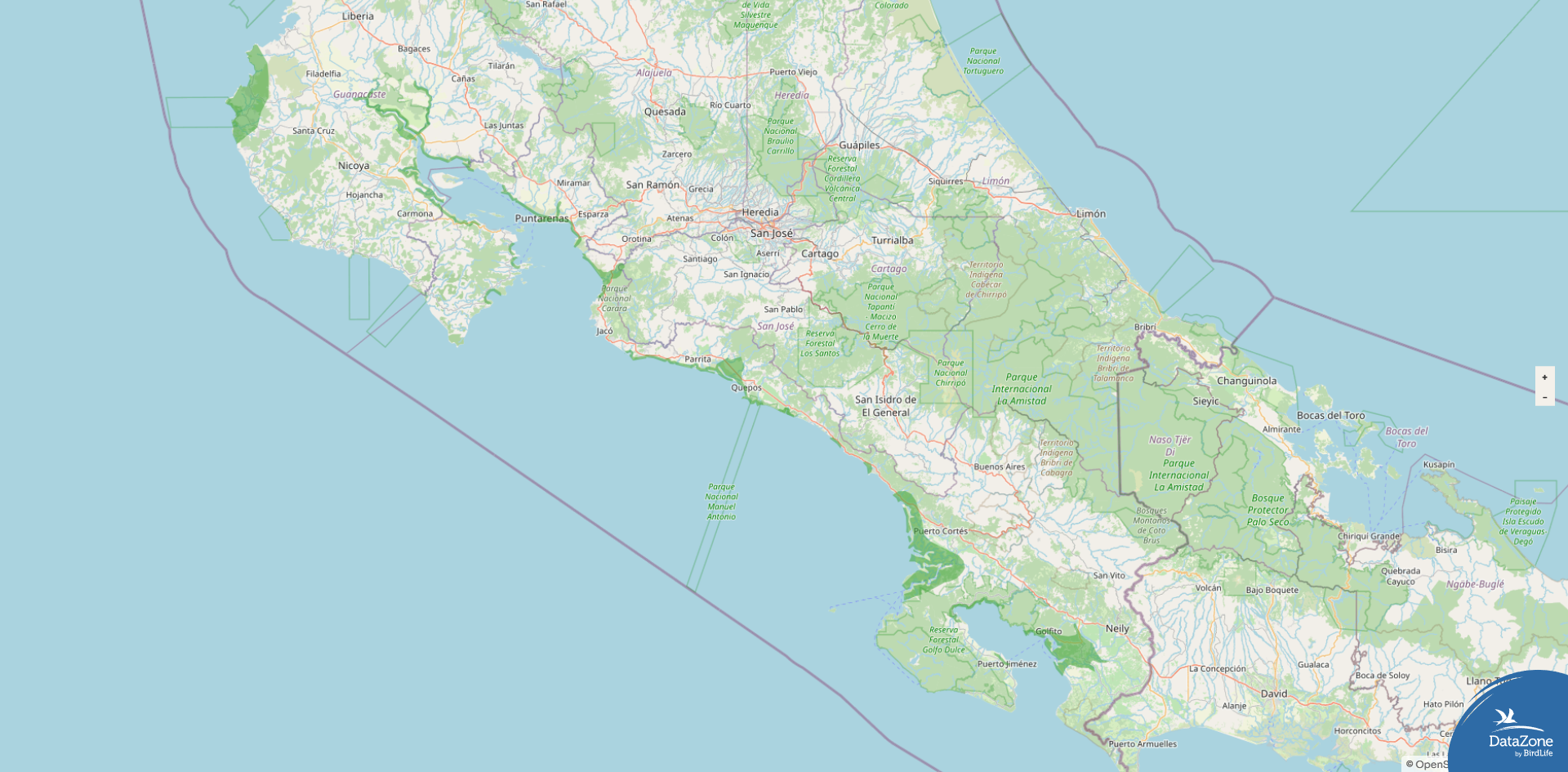
Legend
Green Resident
Species Overview
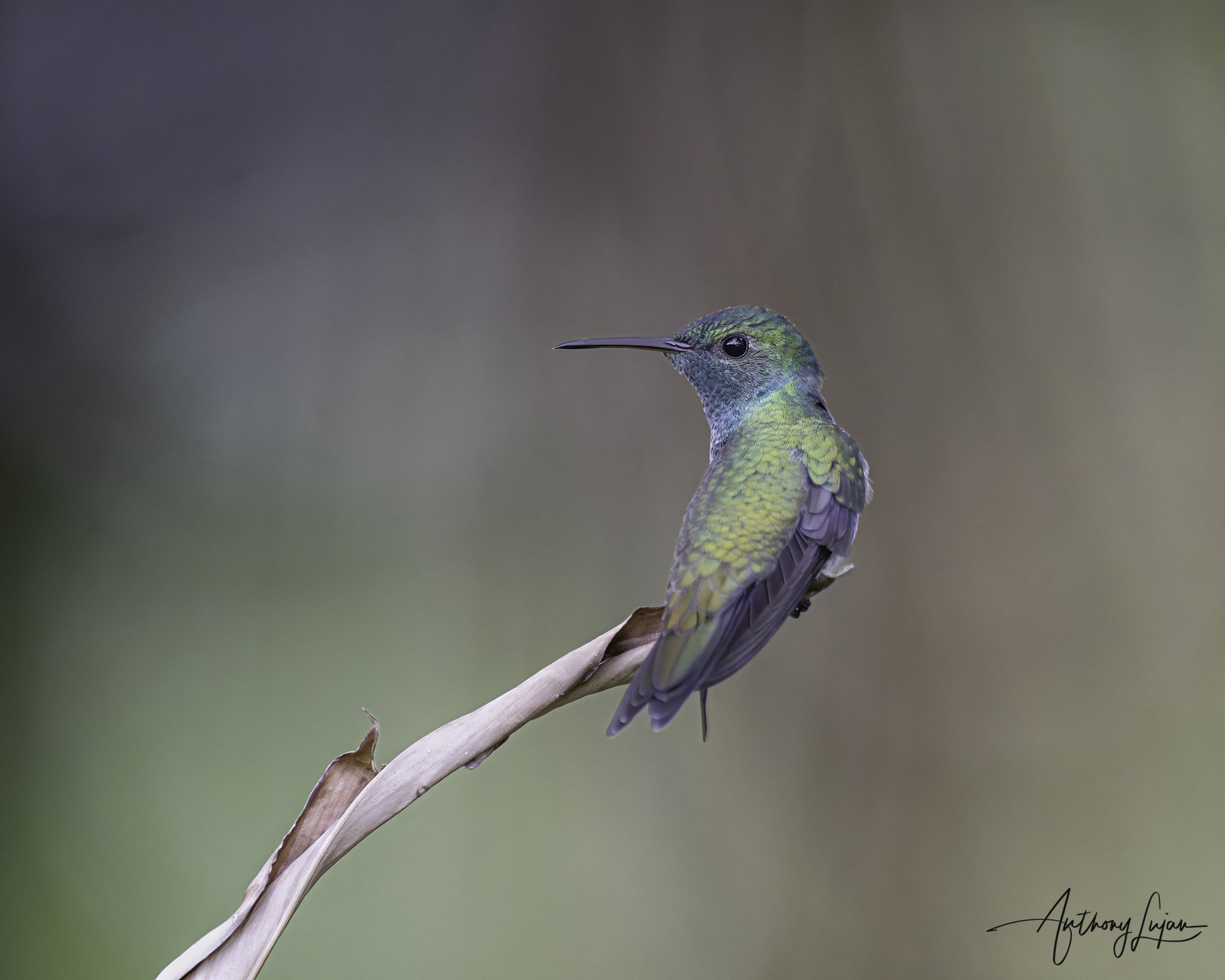
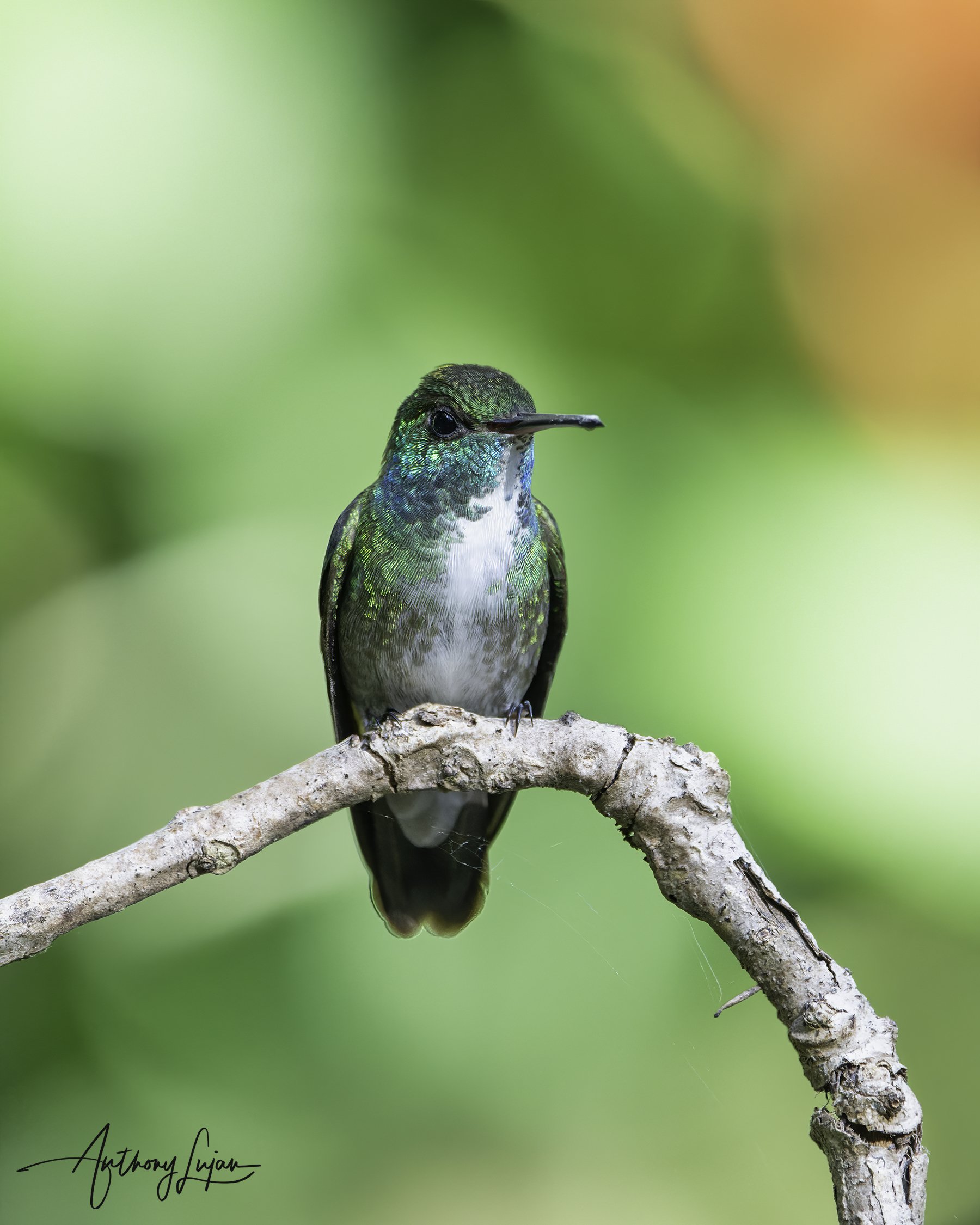
The Mangrove Hummingbird is a small emerald hummingbird that lives almost entirely within Pacific-coast mangrove systems, especially where tea mangrove Pelliciera rhizophorae is abundant. Its combination of a bluish-green throat and breast with bronzy-green upperparts and a whitish belly stands out against the dark, tangled mangrove roots and foliage. Because it is both endemic and strongly tied to a threatened habitat, the species has become a symbol of coastal conservation in Costa Rica.
Male Description
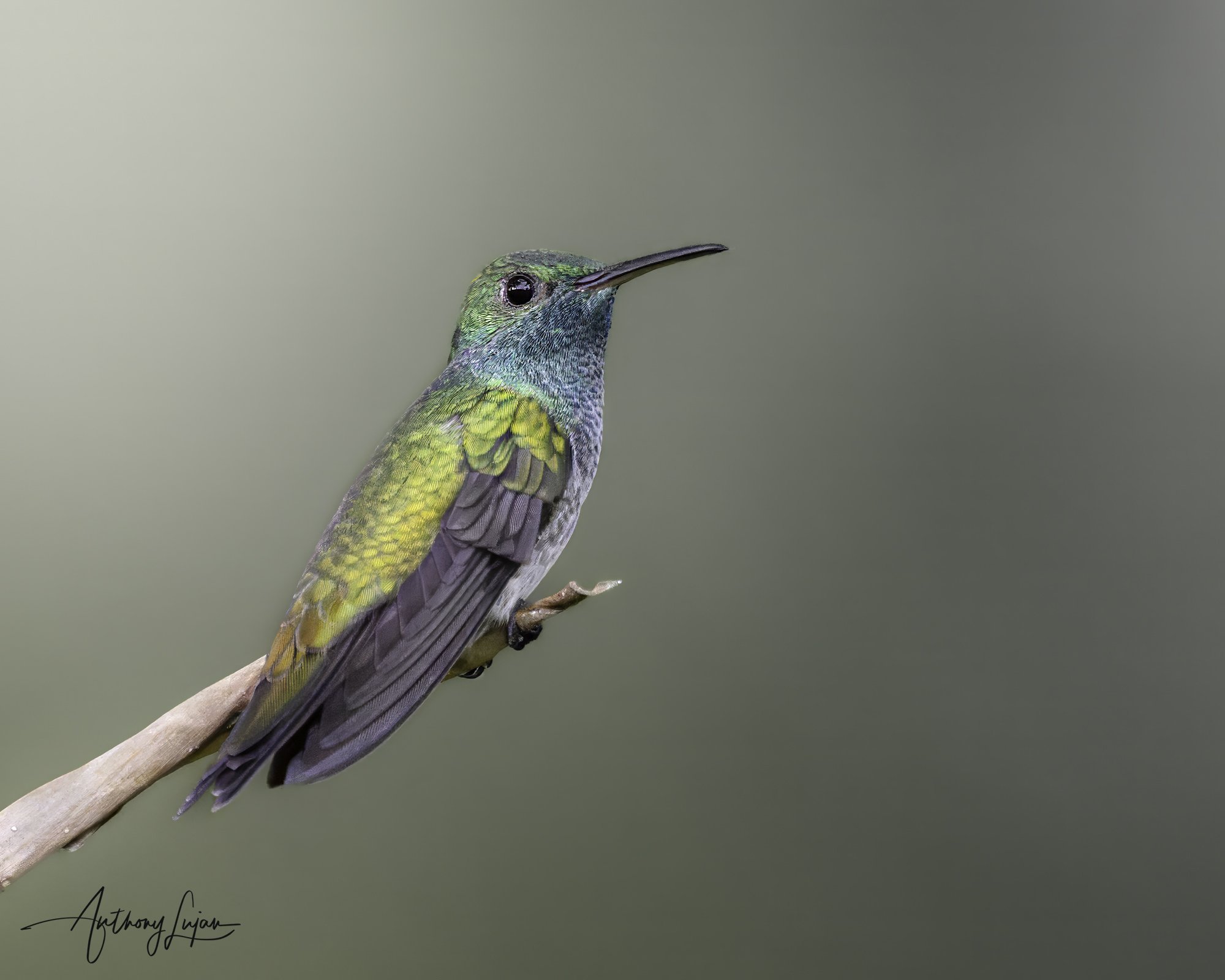
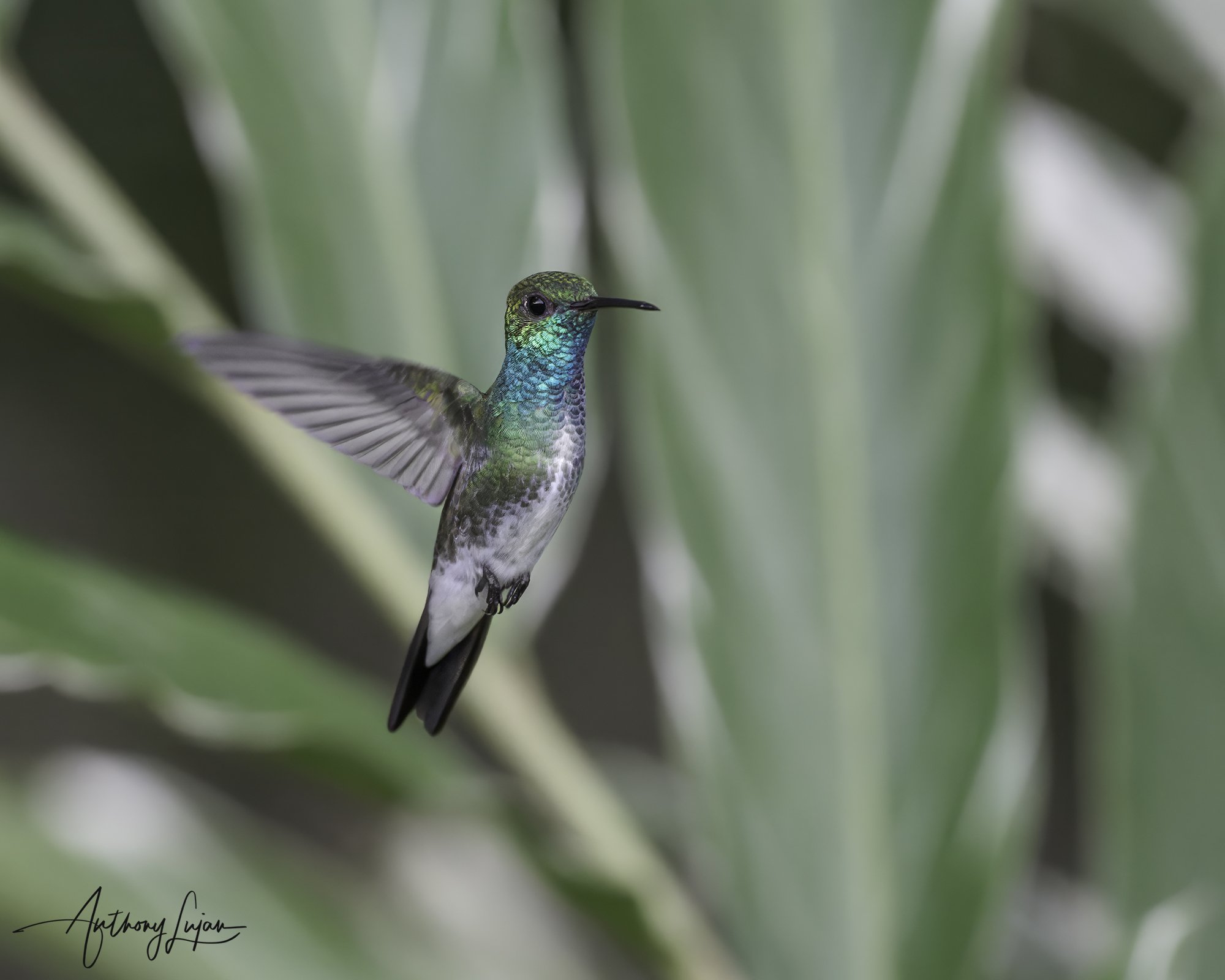
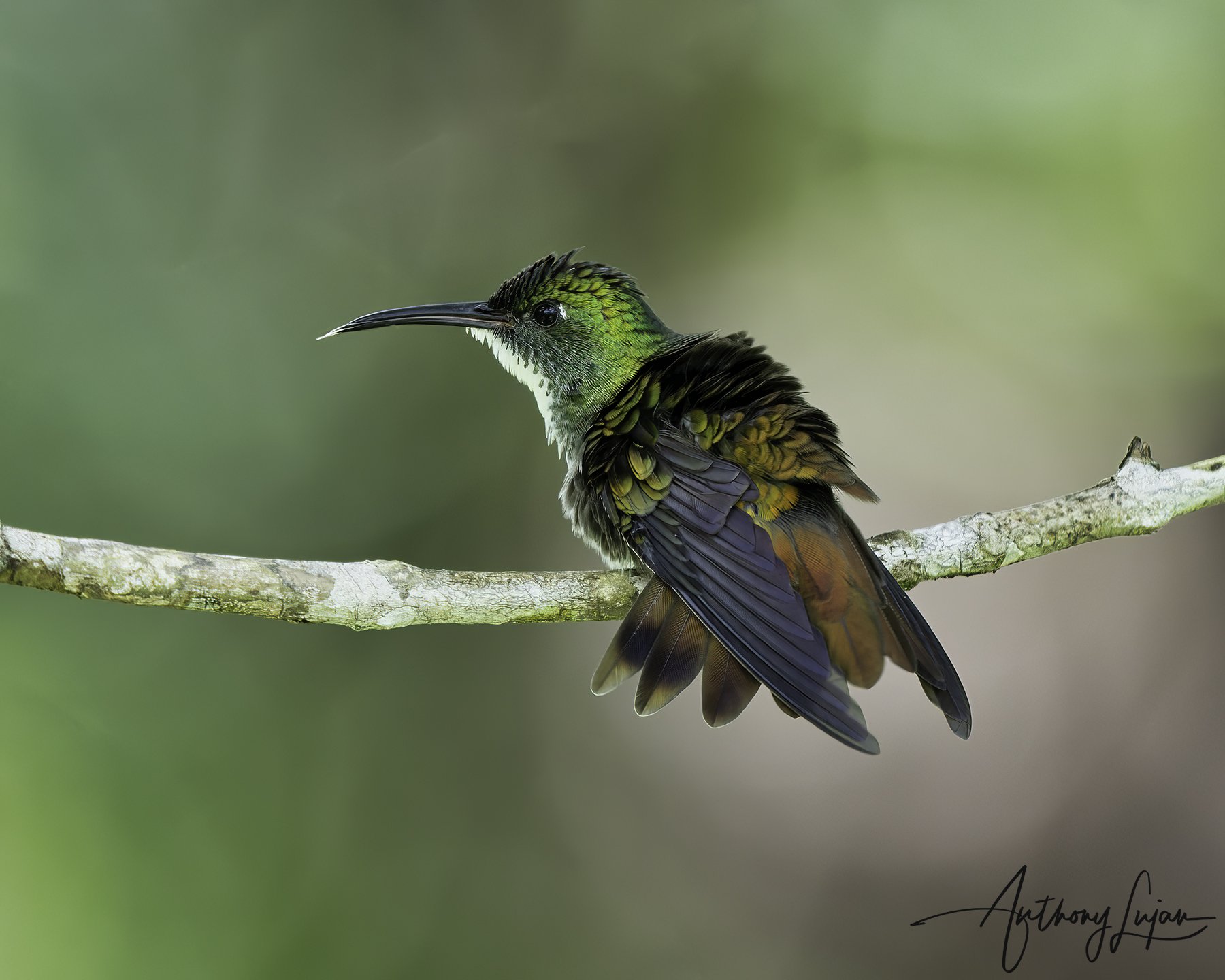
Adult males have bronze- to golden‑green upperparts and flanks, with a bright bluish-green throat and breast that can appear glittering in good light. The lower belly and undertail coverts are whitish, often contrasting with bronzy green along the sides, and the tail is shallowly forked, bronzy green to blackish with darker edges and tips on the outer feathers. The bill is mostly dark with a reddish or pinkish base to the lower mandible. Overall, males look like compact, bronzy-green hummingbirds with a glittering blue-green throat and white belly, set off by a slightly decurved, dark bill with a pale base.
Female Description
Adult females are similar to males above, with bronze-green upperparts, but the underparts are paler, mostly whitish with limited green spotting or wash on the throat and sides. The tail is blackish with the outer rectrices narrowly tipped grayish-white, giving a slightly more contrasting tail pattern than in males. Immature birds resemble adult females but are generally duller and more grayish below. In the field, females appear as bronzy-green hummingbirds with mostly white underparts, modest green spotting on the sides, and a darker tail showing fine pale tips on the outer feathers.
Habitat & Behavior
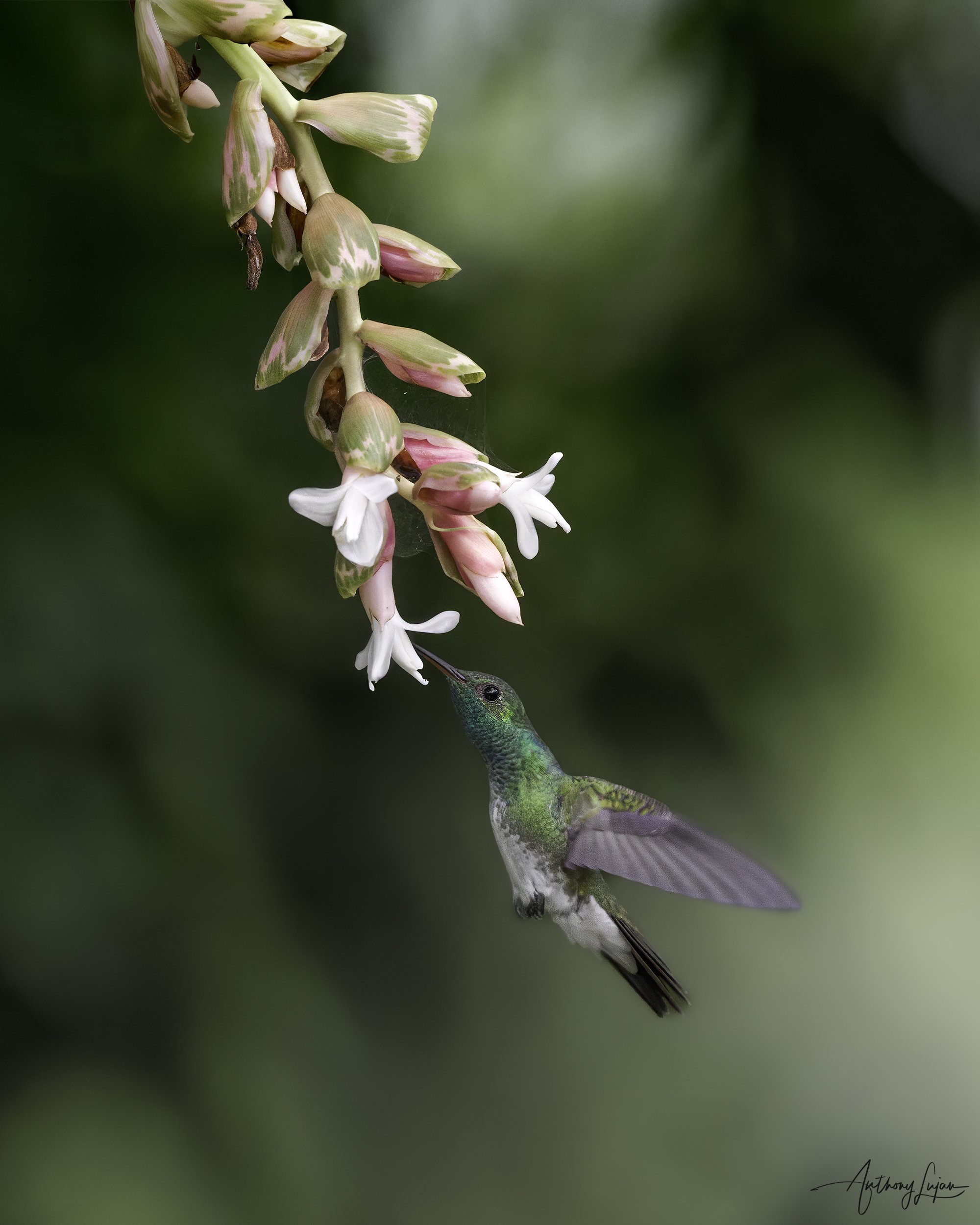
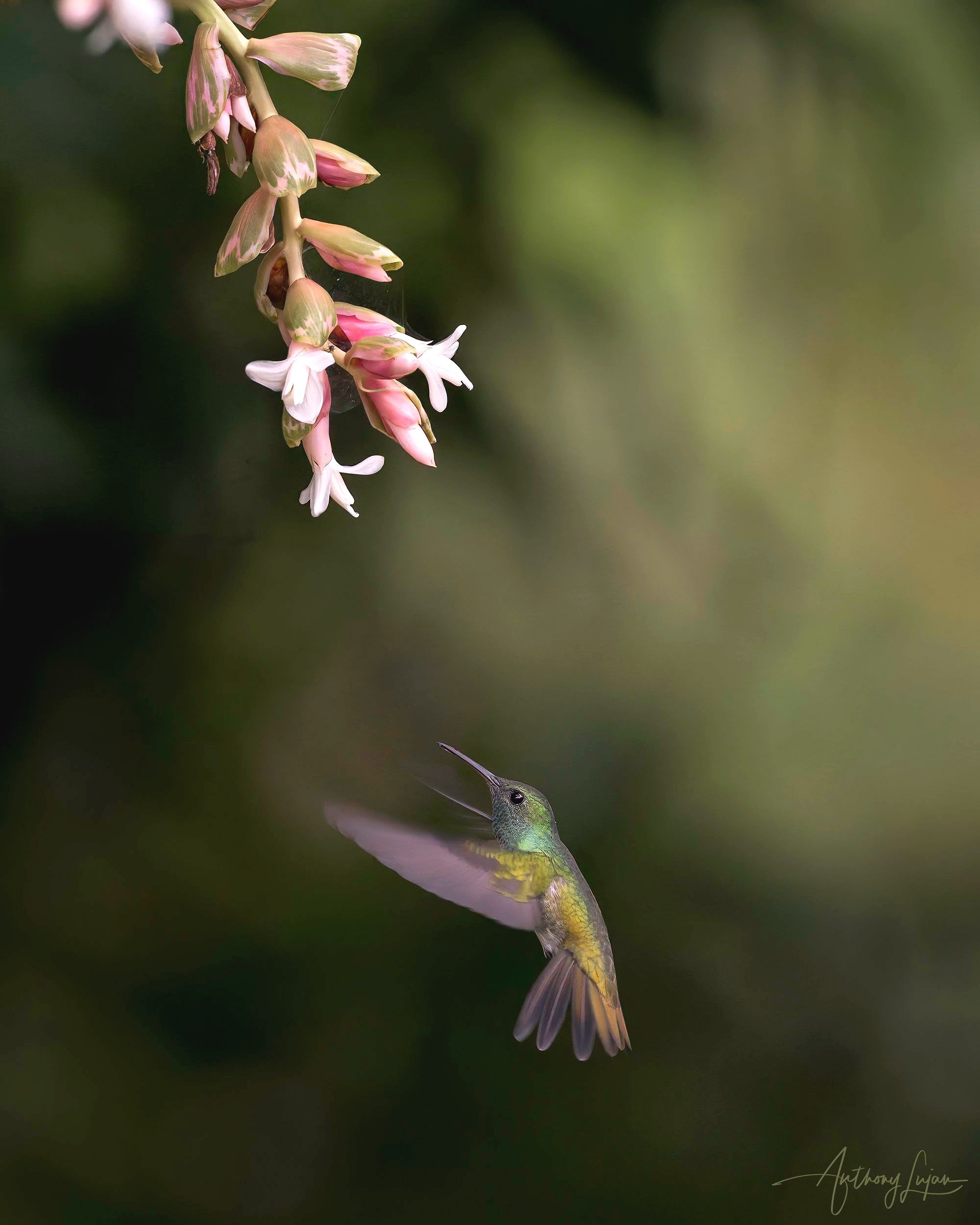
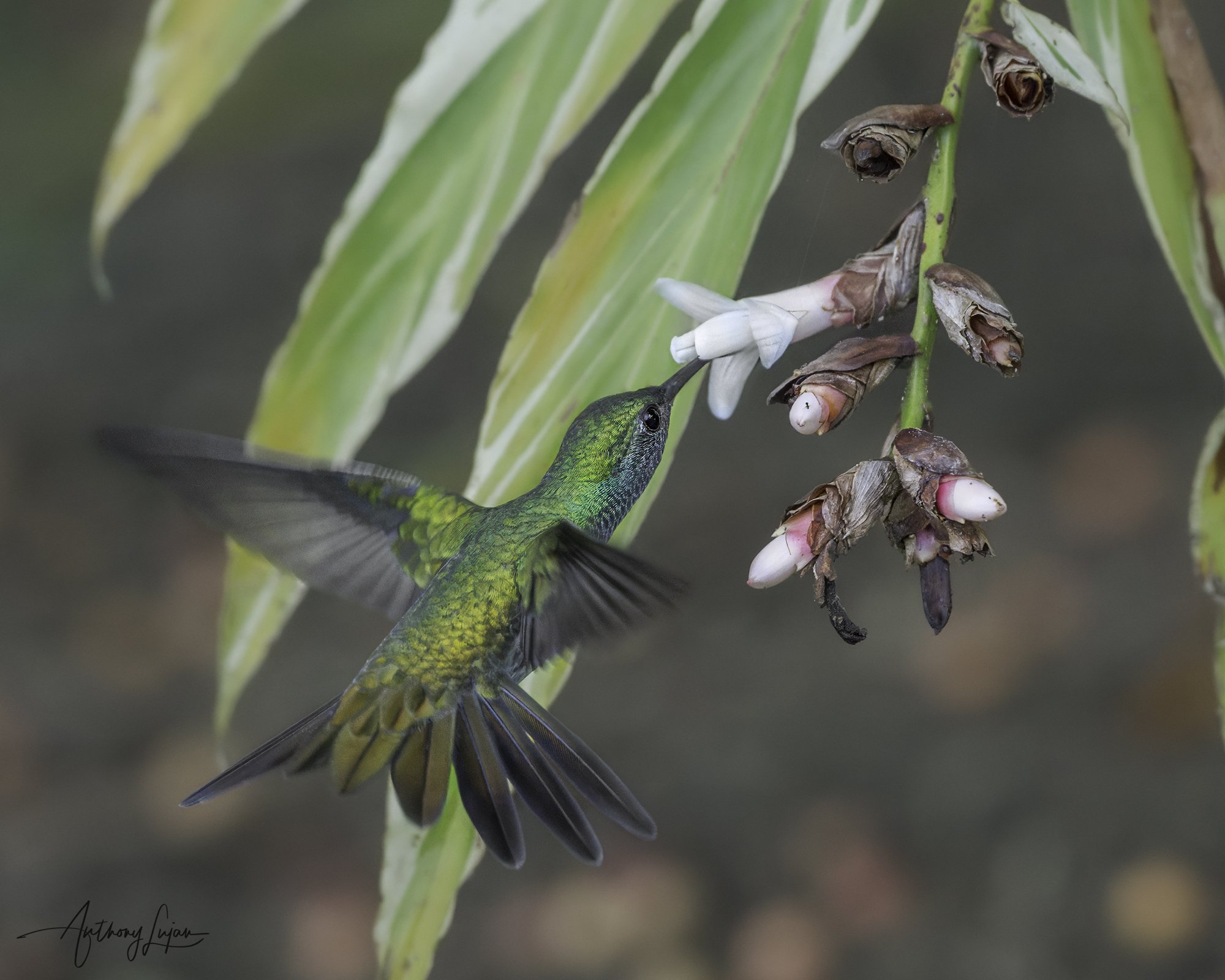
Mangrove Hummingbirds inhabit subtropical and tropical mangrove forests, especially stands dominated by tea mangrove Pelliciera rhizophorae, and occasionally adjacent second growth or coastal forest edge. They feed primarily on nectar from tea mangrove flowers but also visit other coastal trees, vines, and epiphytes, and they supplement their diet with small insects and spiders. Birds usually forage at low to mid-levels within mangrove canopies, moving among flowering trees and defending productive patches on a small scale. The species is considered sedentary, with no evidence for long-distance movements; individuals tend to remain within their local mangrove stands, possibly making only short excursions into nearby secondary growth.
Population
The global population is estimated at roughly 1,500–7,000 mature individuals, all confined to the Pacific coast of Costa Rica. Within suitable mangrove stands it can be locally fairly common, especially where tea mangrove is abundant and flowering. However, its overall distribution is highly fragmented, with birds occupying a series of isolated mangrove patches separated by stretches of unsuitable coastline, and this narrow, patchy range underlies a continuing decreasing population trend.

Conservation
The Mangrove Hummingbird is listed as Endangered due to its small, declining population, extremely restricted range, and dependence on a threatened habitat. Large areas of mangrove have been destroyed or degraded by construction of salt pans and shrimp ponds, selective logging for charcoal, illegal cutting, coastal development, and road and dyke construction. Pollution and potential sea-level rise pose additional long-term risks to remaining mangrove systems. Conservation priorities include strict protection and restoration of key mangrove stands, control of destructive coastal development, maintenance of hydrological regimes that sustain mangroves, and ongoing monitoring of population trends. As a Costa Rican endemic tied to a specific habitat, the Mangrove Hummingbird is an important flagship for mangrove conservation along the country’s Pacific coast.
Interested in coming along? Visit Travel with Me!
Also visit Costa Rica Hummingbird Expedition | July 2021 | 10 Species | Where It All Started
Also visit Costa Rica Hummingbird Expedition | November 2021 | 22 New Species | Second Chances
Also visit Costa Rica Hummingbird Expedition | July 2025 | 32 Species | 10 New | Closing the Gap
Checkout Anthony’s playlist of this species! Click the top right dropdown to see all the videos.
Related species in the Chrysuronia genus (10 species total)



Please note: The content provided in this article reflects Anthony’s personal experience and photographic approach. Results can vary depending on light, weather, location, equipment, subject behavior, and field conditions.