
Many-spotted Hummingbird
Scientific name: Taphrospilus hypostictus
The Many-spotted Hummingbird is a medium-sized emerald hummingbird of humid foothill and subtropical forests on the eastern slope of the Andes in Colombia, Ecuador, Peru, and Bolivia. The total number of mature individuals is unknown, the overall population trend is decreasing, it is considered non‑migratory, and it is currently assessed as Least Concern.
At a Glance
Family: Trochilidae (hummingbirds)
Clade: Trochilini – Emeralds
Genus: Taphrospilus — monotypic (1 species)
Range: Eastern Andes from southern Colombia through eastern Ecuador and Peru into central Bolivia; possibly reaches northwestern Argentina and is listed hypothetically for Brazil
Habitat: Interior and edges of humid foothill and subtropical forest, especially small ravines, forest borders, clearings, and second growth with dense vegetation
Elevation: Mostly 400–1,500 m (1,300–4,900 ft), locally up to about 2,800 m (9,200 ft), most numerous around 600–1,000 m
Length: About 10.5–11.4 cm (4.1–4.5 in)
Weight: About 6.7–9 g (0.24–0.32 oz)
Number of mature individuals: Unknown
Population trend: Decreasing (believed to be slowly declining)
Movement: Not a migrant (year‑round resident)
IUCN Red List category: Least Concern
Name Origin
The genus name Taphrospilus likely derives from Greek roots meaning “notched column” or “grooved pillar,” though the reference is unclear and may relate to subtle structural features noted in the original description. The species name hypostictus means “under‑spotted,” referring directly to the thick green spotting on the bird’s otherwise white underparts. The English name “Many-spotted Hummingbird” also highlights this heavy spotting below.
Taxonomy & Distribution
Taprospilus hypostictus belongs to the emerald clade (tribe Trochilini) within the hummingbird family Trochilidae. It is the only species in the genus Taphrospilus and is considered monotypic, with no recognized subspecies. The core range runs along the eastern slope of the Andes from southern Colombia through eastern Ecuador and eastern Peru into central Bolivia, where it inhabits humid foothill and subtropical forests. It is most characteristic of the lower to mid‑elevation eastern Andes but may occur locally slightly higher or lower along suitable forested valleys. Some authorities list the species for Brazil and hypothetically for northwestern Argentina based on uncertain or undocumented records, but these outlying occurrences remain poorly substantiated.
Subspecies and Distribution
Monotypic — no subspecies recognized.
Distribution: The Many-spotted Hummingbird occurs mainly on the eastern Andean foothills from southern Colombia through eastern Ecuador and eastern Peru into central Bolivia, inhabiting humid foothill and subtropical forests and their edges between about 400 and 1,500 m, locally up to 2,800 m. It favors the interior and borders of forest, especially small ravines and gullies where moisture and flowering plants are concentrated. Reports from Brazil and Argentina are unconfirmed or based on sight records and are not accepted by all authorities.
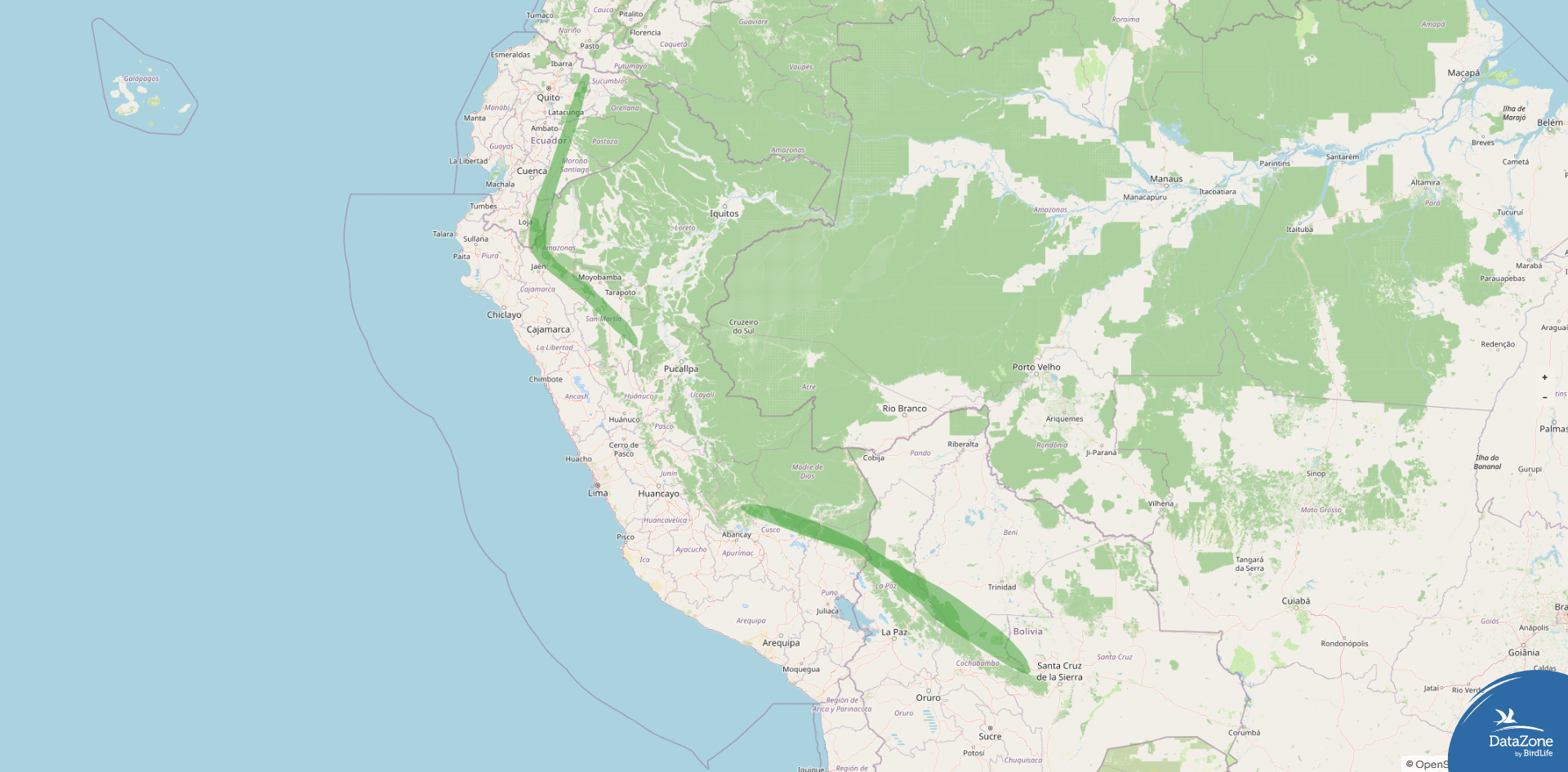
Legend
Green Resident
Species Overview
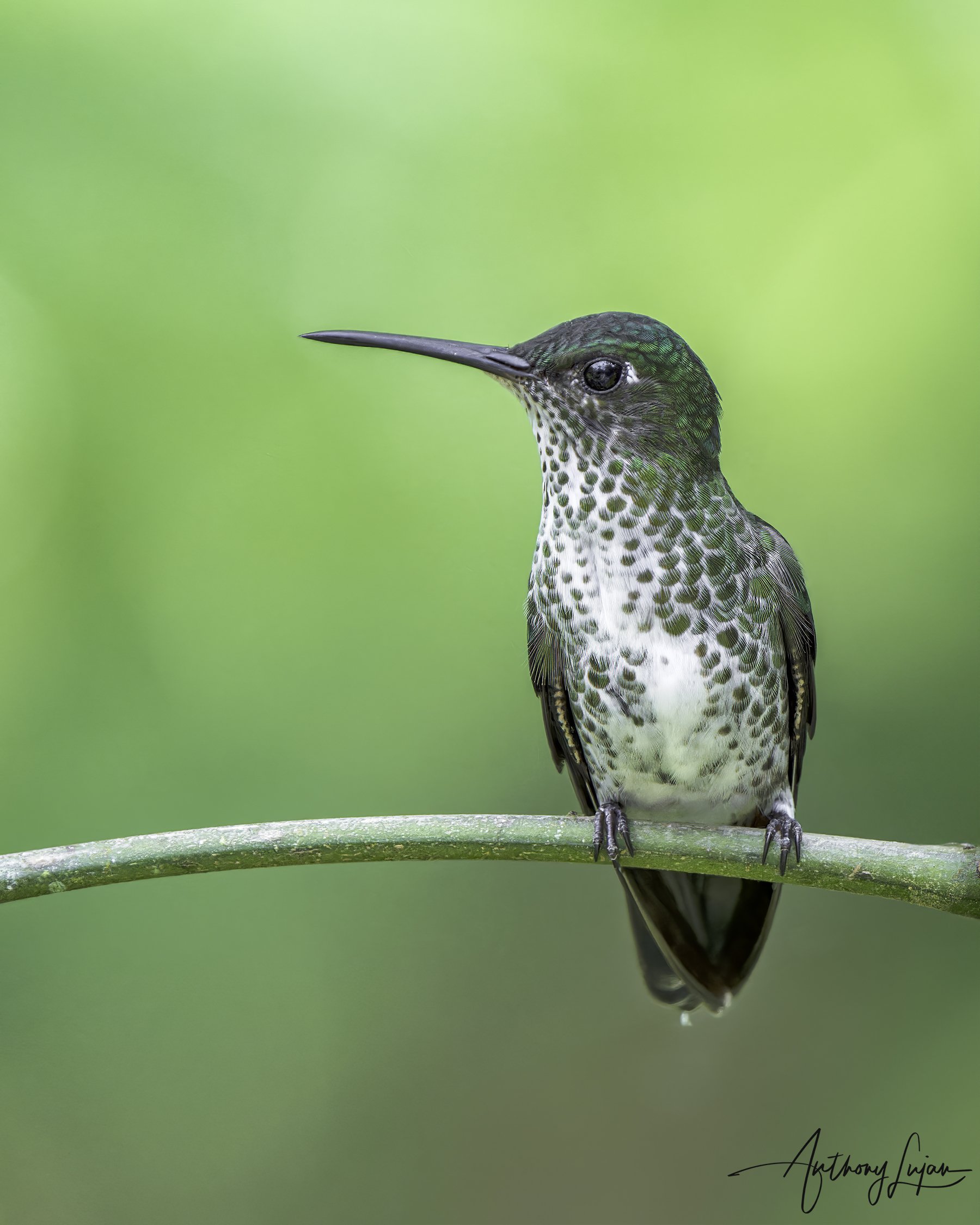
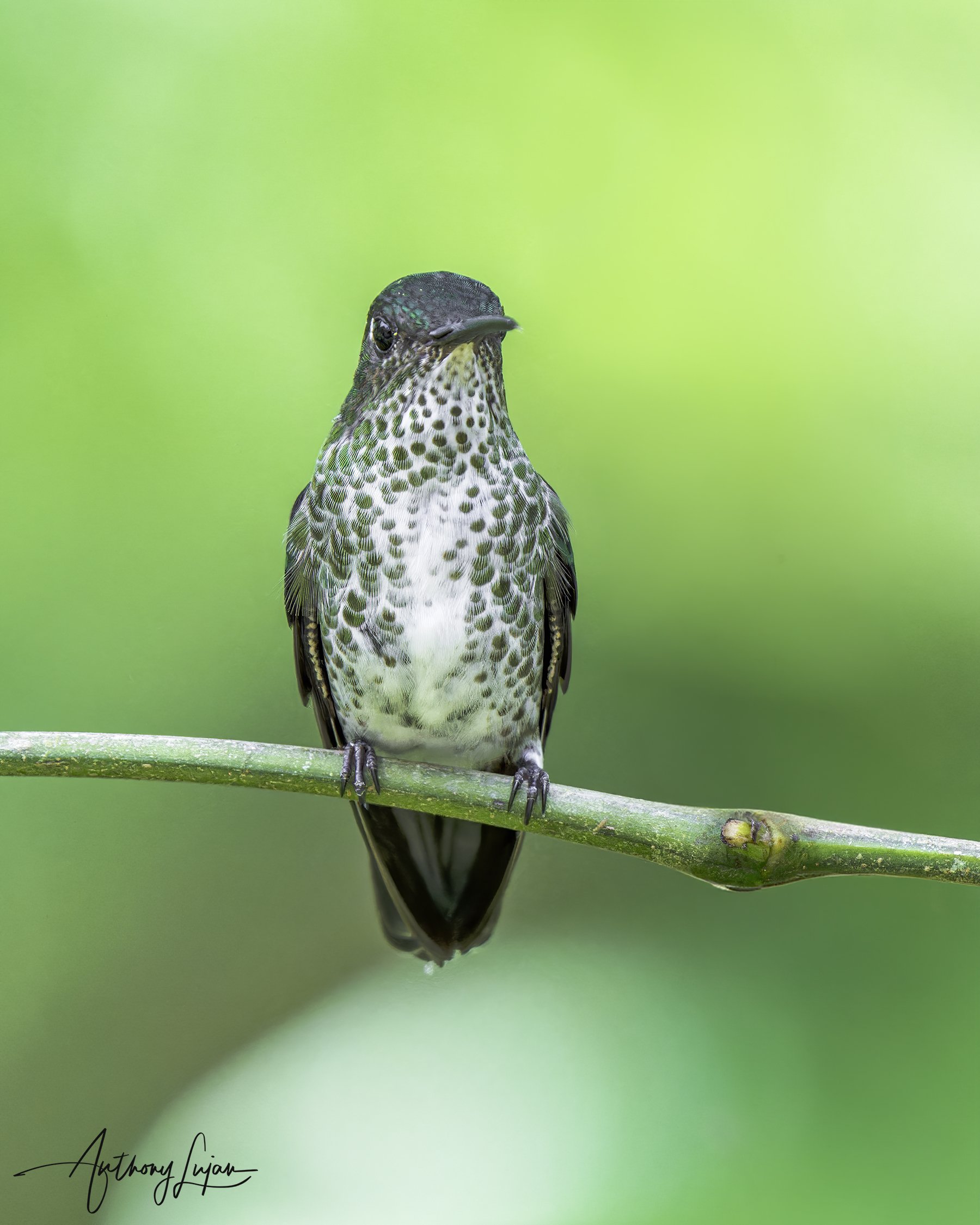
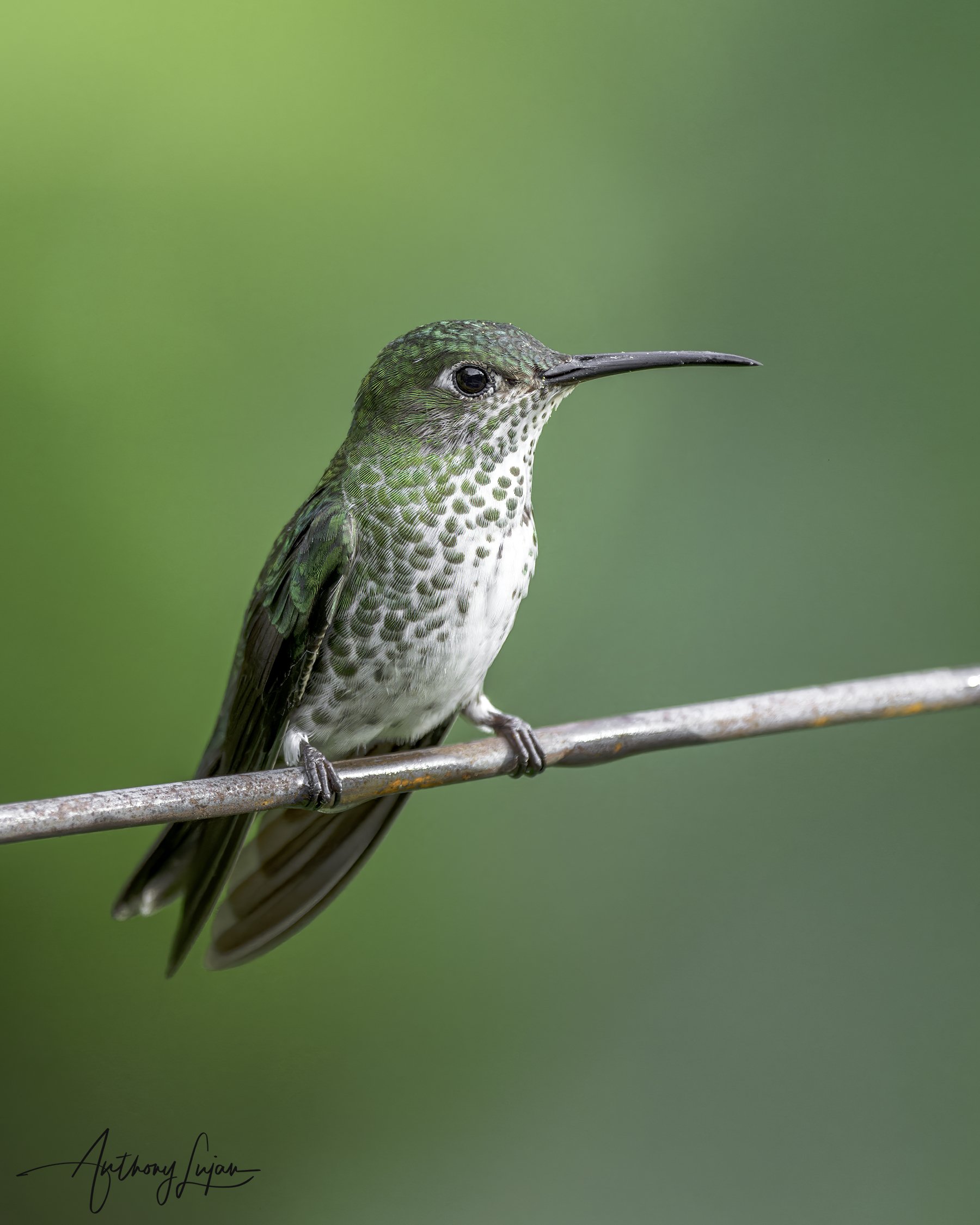
The Many-spotted Hummingbird is a chunky, medium-sized emerald with grass‑green to coppery upperparts and white underparts thickly spotted with green, giving it a distinctive speckled look. It frequents humid forest interiors and edges, small ravines, and clearings along the eastern Andes, typically foraging at low and mid levels in dense vegetation. Although it is generally considered common to locally common across parts of its range, it is scarce in some regions and its overall population is thought to be slowly declining due to ongoing habitat loss and fragmentation in foothill forests.
Male Description
Adults are 10.5–11.4 cm long and weigh about 6.7–9 g. The upperparts, including crown, back, and rump, are grass green to coppery bronze, with a subtle metallic sheen in good light. The underparts are white and heavily spotted with green across the breast and flanks, leaving only the central belly less marked; males usually show slightly denser spotting than females. The tail is blue‑green with dusky gray tips to the feathers and is relatively straight‑edged. The bill is slightly decurved, black, and about 2.3 cm long. Overall, males appear as robust, green‑backed hummingbirds with conspicuously spotted white underparts.
Female Description
Females are very similar to males in structure and plumage, with grass‑green to bronzy upperparts and white underparts thickly spotted with green, though the spotting may be a little less dense or slightly smaller. The tail pattern is the same, blue‑green with dark gray tips, and the bill is likewise slightly decurved and black. Juveniles resemble adults but can show buffy or light brown fringes on the head feathers and may have slightly less sharply defined spotting below, which becomes more pronounced as they molt into adult plumage.
Habitat & Behavior
Many-spotted Hummingbirds inhabit the interior and edges of humid foothill and subtropical forests on the eastern Andean slope. They favor small ravines, wet gullies, and forest borders where flowering trees, shrubs, vines, and terrestrial bromeliads are abundant. They occur mostly between about 400 and 1,500 m, sometimes up to 2,800 m in Peru, and are often most numerous in the lower part of this band around 600–1,000 m.
They feed primarily on nectar, visiting a variety of flowers on trees, shrubs, vines, and ground‑level bromeliads, usually at lower and mid levels within thick vegetation. Foraging is typically solitary; birds follow trap‑lining routes between widely spaced nectar sources, though they will join other species at hummingbird feeders in some areas. In addition to nectar, they take small insects, which they catch by hawking from perches or snatching from around flowers. Their vocalizations are sharp, insect‑like chips and buzzy notes, and the species is often heard before it is seen in dense undergrowth.
Breeding
The breeding season appears to run from roughly January to May across much of the range, likely coinciding with local peaks in flowering and favorable weather. The Many-spotted Hummingbird builds a bulky cup nest of fine rootlets and moss, usually attaching it to a tree trunk within about 0.5 m of the ground in shaded forest interior or along ravines. The nest is well camouflaged against the mossy bark.
The typical clutch consists of two white eggs. The female alone incubates the eggs for about 14–15 days and continues to care for the chicks until fledging, which occurs approximately 20–22 days after hatching. Males do not participate in nest construction or chick care, focusing instead on foraging and courtship.
Movement
The Many-spotted Hummingbird is a year‑round resident throughout its range and is considered non‑migratory. There is no evidence of long‑distance or regular seasonal migrations, though local movements within its elevational range almost certainly occur as birds track flowering plants and respond to local changes in climate and resource availability. These shifts keep birds within the same general foothill and subtropical forest zones on the eastern slope of the Andes.
Population
The total number of mature individuals is unknown. The species is generally described as common to locally common across large parts of its Andean range, though in some regions, such as Ecuador, it is considered scarce to locally common. It occupies a relatively wide geographic and elevational range within the foothill and lower montane zones, but its preferred habitats—humid foothill and subtropical forests—are subject to persistent deforestation and fragmentation. These pressures likely underpin the inferred slow overall population decline, even though no acute, species‑specific threats have been identified.

Conservation
The Many-spotted Hummingbird is assessed as Least Concern, reflecting its broad distribution and generally common status in many areas. It tolerates some habitat disturbance and can persist in partially degraded forests, edges, and second growth, and it is present in a number of protected areas along the eastern Andes. Nonetheless, continued deforestation and fragmentation of humid foothill and subtropical forests for agriculture, pasture, logging, and infrastructure development are long‑term concerns. Protecting foothill forest blocks, maintaining forested ravines and edges, and conserving flowering understory and mid‑story plants will be important for sustaining healthy populations.
No related species are currently recognized within Taphrospilus; the Many-spotted Hummingbird is the only member of this genus.
Please note: The content provided in this article reflects Anthony’s personal experience and photographic approach. Results can vary depending on light, weather, location, equipment, subject behavior, and field conditions.