
Scientific name: Loddigesia mirabilis
The Marvelous Spatuletail is a rare, highly specialized hummingbird of humid montane forest edges and shrubby clearings in northern Peru. Endemic to a very small area in the eastern Andes, it is globally Endangered, with a small and declining population threatened by habitat loss and fragmentation.
At a Glance
Family: Trochilidae (hummingbirds)
Clade: Heliantheini – Brilliants
Genus group: Loddigesia — 1 species (monotypic genus)
Range: Endemic to northern Peru, centered on the Utcubamba River valley in Amazonas Department, with a few records east into San Martín.
Habitat: Edges of mature montane forest, secondary forest, and montane scrublands, especially thorny Rubus thickets mixed with alder and other shrubs.
Elevation: Mostly between about 2,100 and 2,900 m.
Length: Around 15 cm (6 in), including the male’s elongated tail feathers.
Weight: Small-bodied hummingbird despite its long tail; only a few grams.
Number of mature individuals: 1,000–2,499
Population trend: Decreasing
Status: Near Threatened (IUCN)
Name Origin
The genus name Loddigesia honors the Loddiges family, noted British horticulturists and plant collectors. The species name mirabilis means “marvelous” or “wonderful,” referring to its extraordinary tail and overall appearance. The English name “Marvelous Spatuletail” highlights the remarkable racket-shaped “spatules” at the tips of the male’s outer tail feathers.
Subspecies & Distribution
Monotypic — no subspecies are recognized. This species is confined to a small region of northern Peru, mainly along the east side of the Utcubamba River valley in Amazonas Department, with a few records farther east in neighboring San Martín.
Within this small range, the Marvelous Spatuletail occupies forest edges, secondary growth, and scrubby slopes on steep Andean hillsides, making it one of Peru’s most localized hummingbirds.
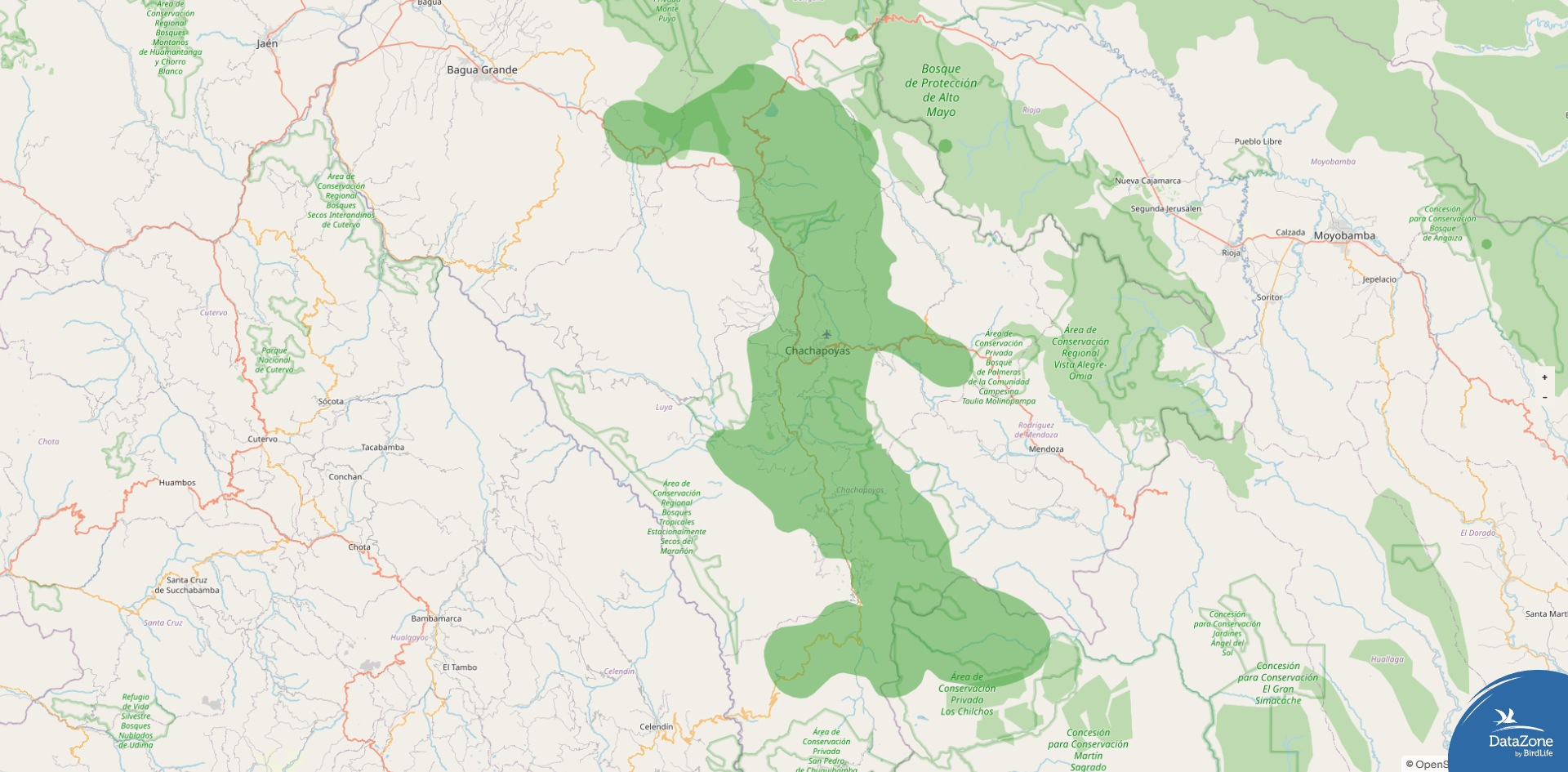
Legend
Green Resident
Species Overview
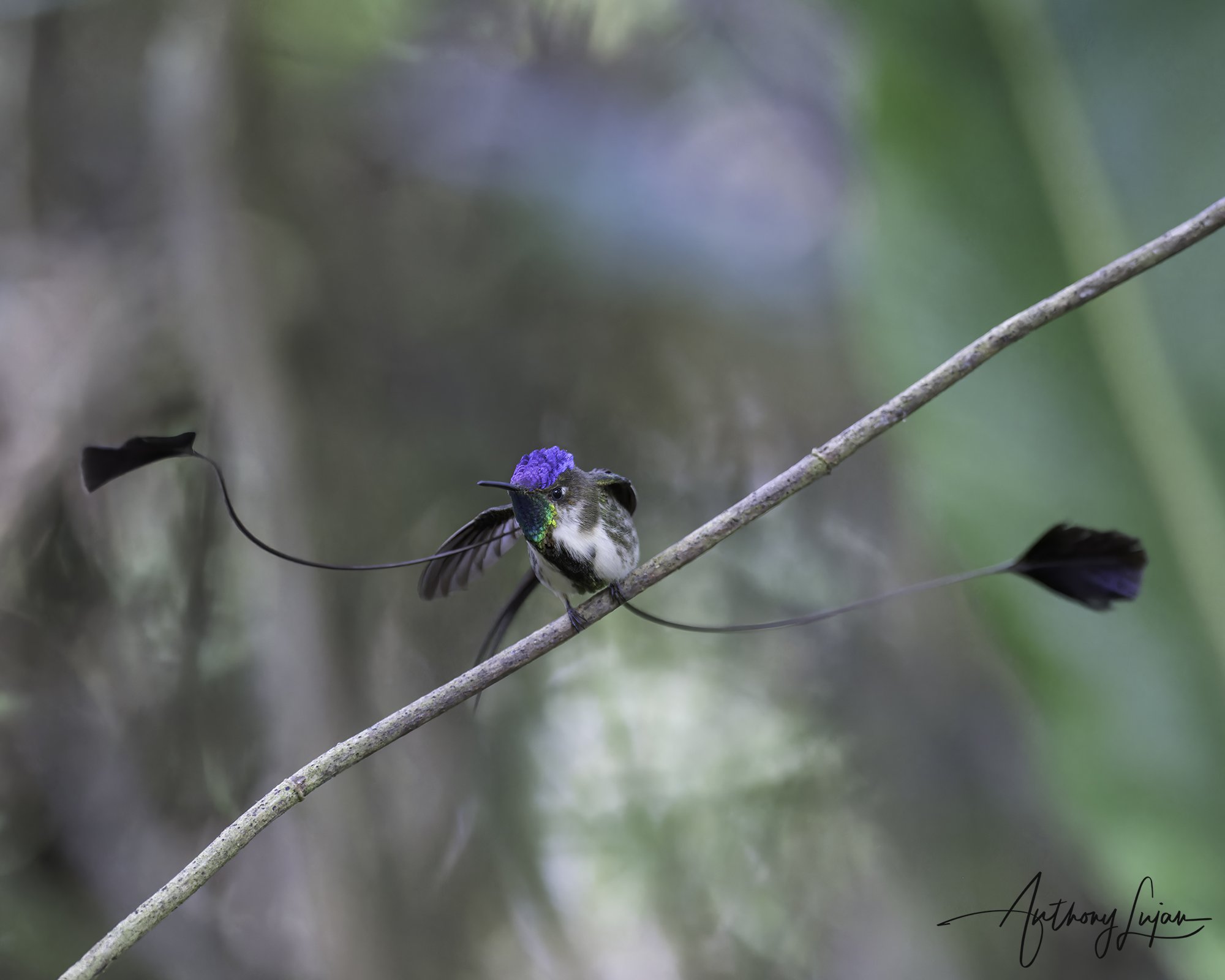
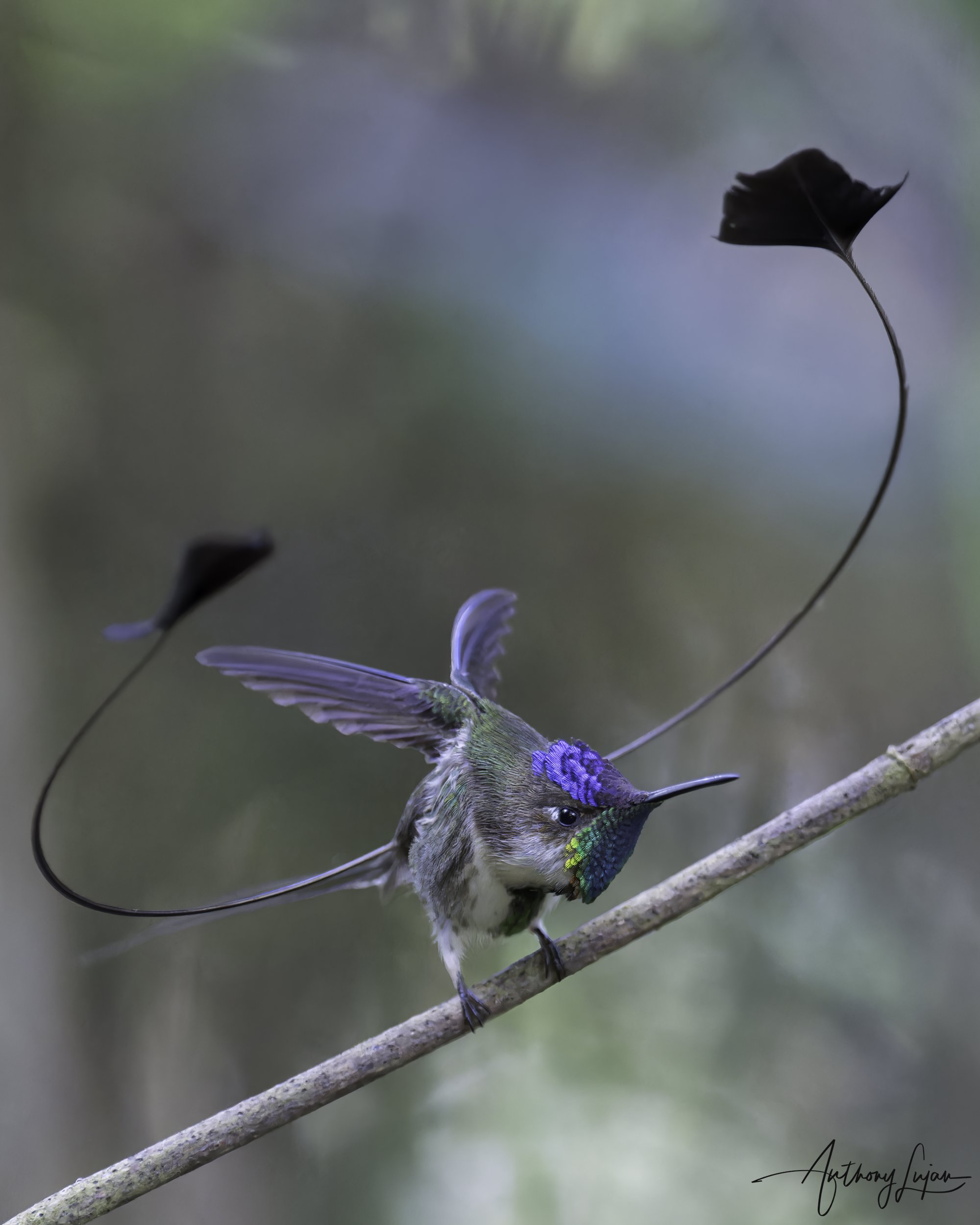
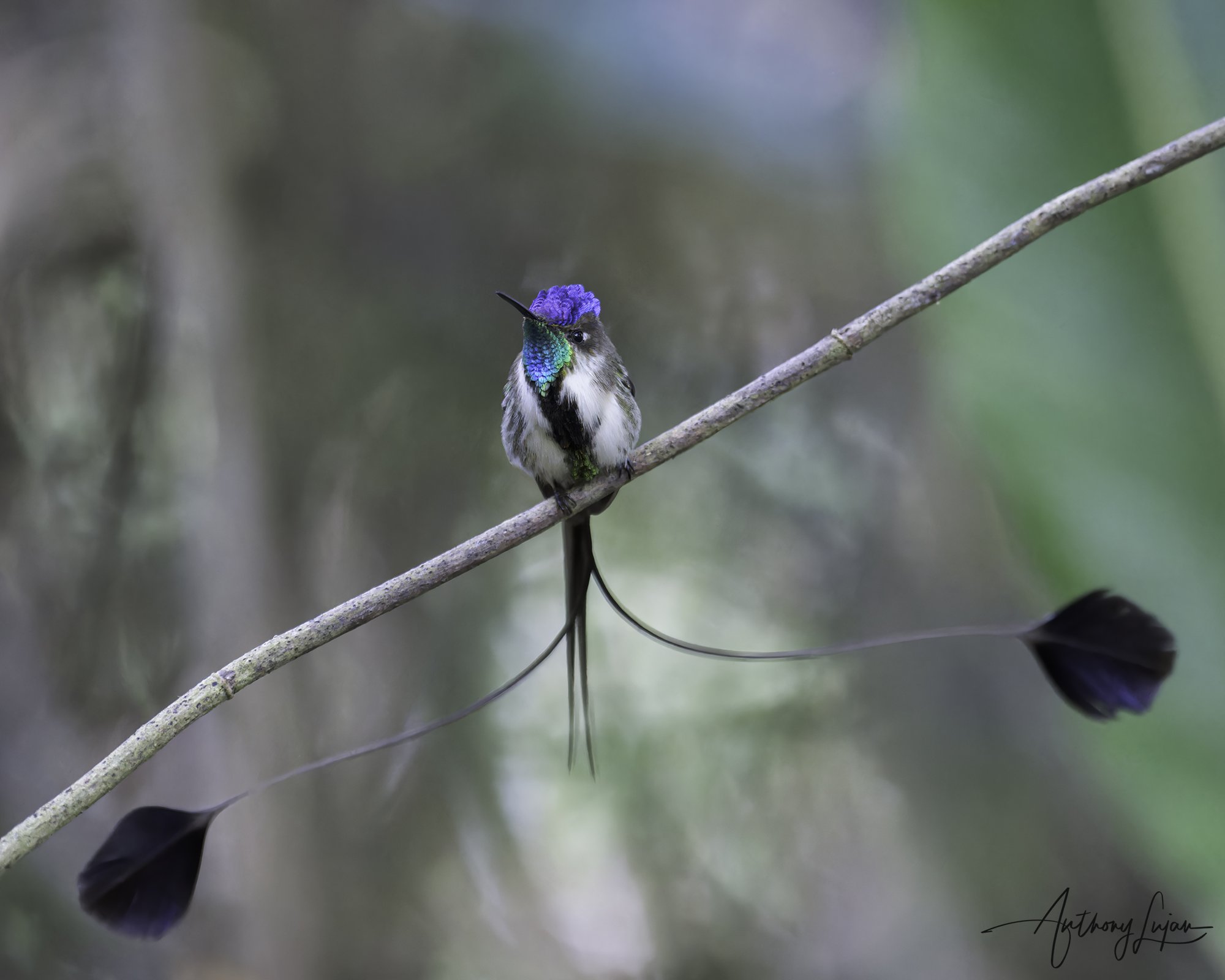
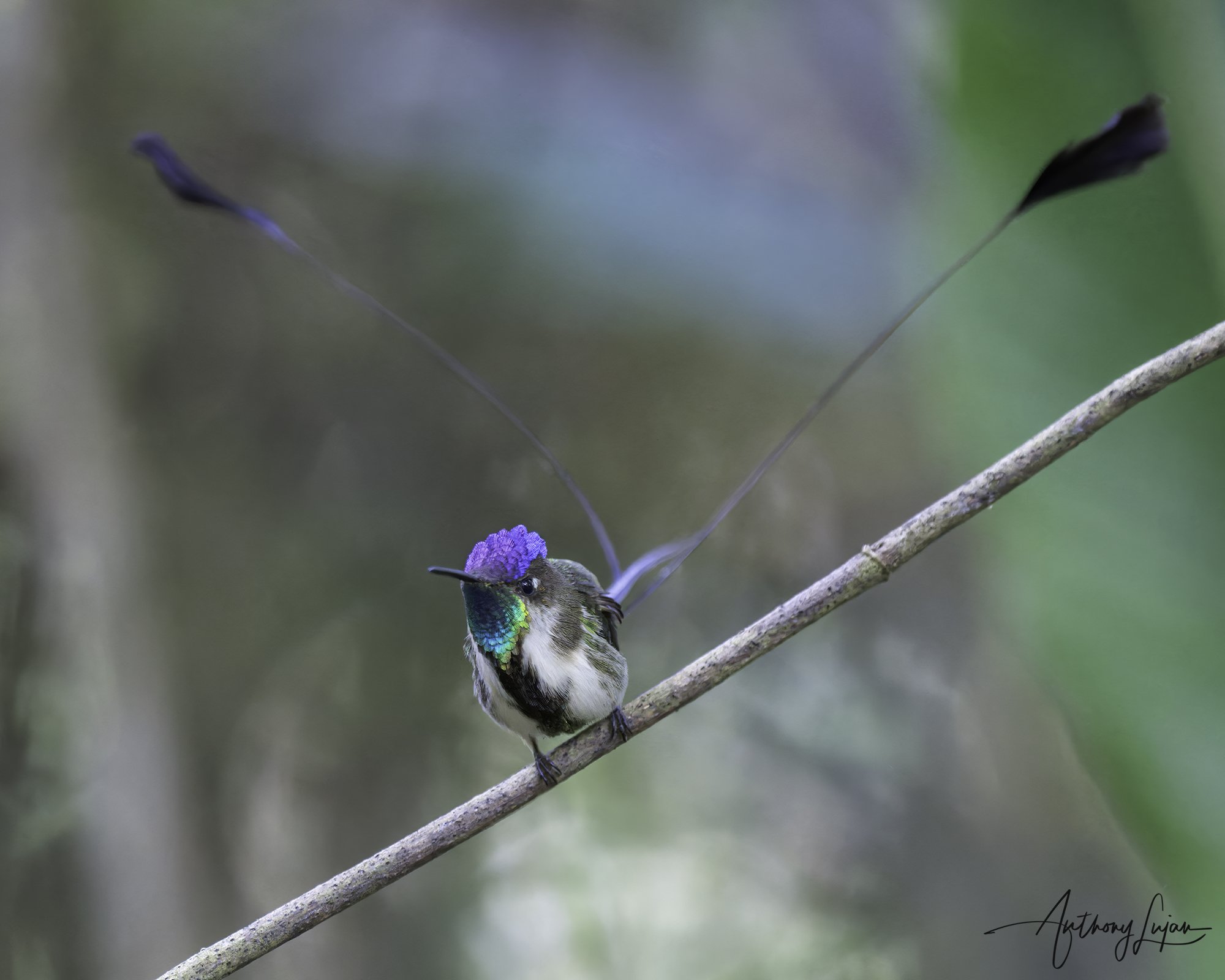
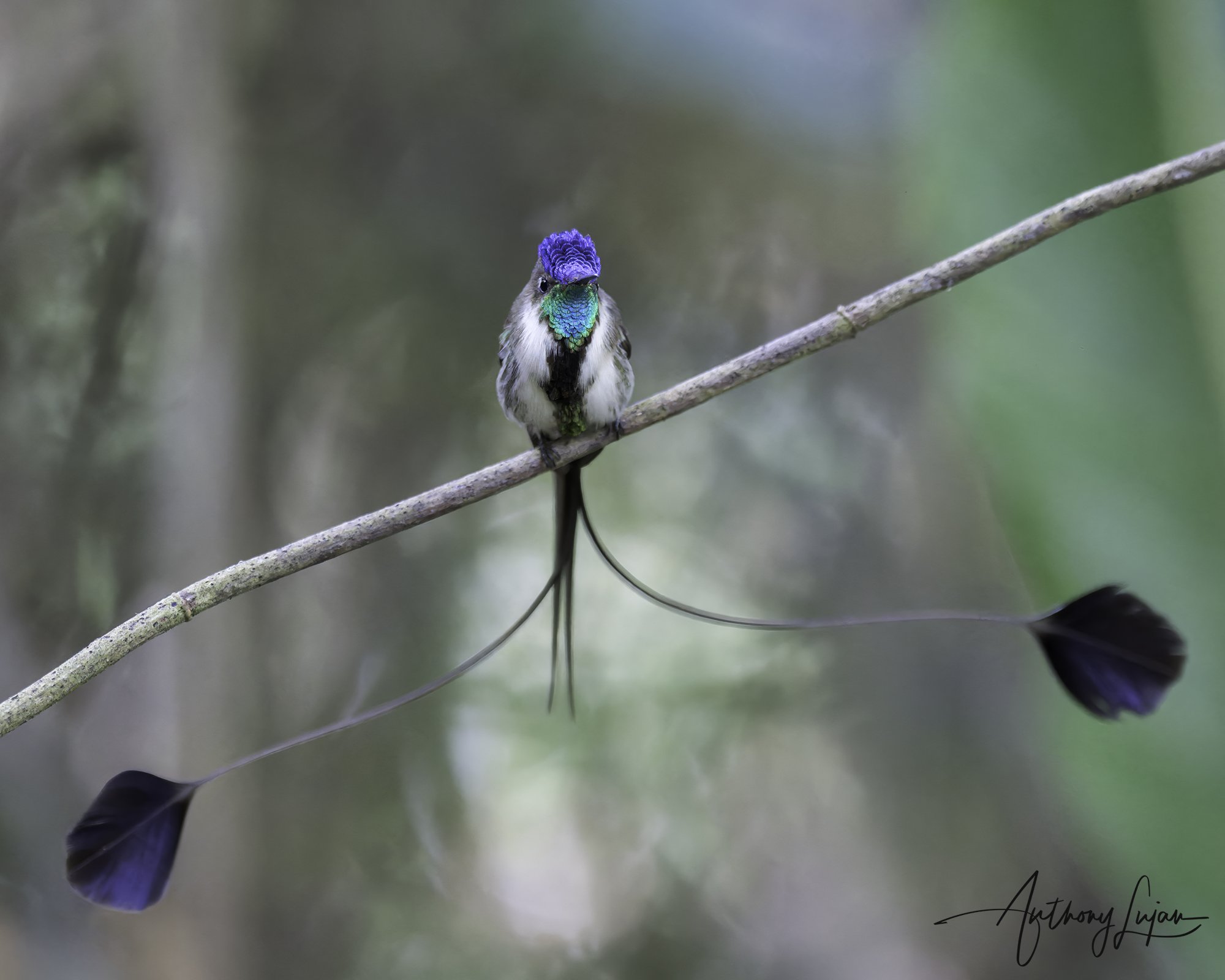
The Marvelous Spatuletail is famous for the male’s extraordinary tail, which has only four feathers; the outer pair form long, wiry shafts tipped with large violet-blue discs. It frequents forest edge, second growth, and montane scrub, especially dense, thorny thickets where Rubus and other flowering shrubs provide nectar. Its tiny global population, restricted range, and ongoing habitat loss have made it a flagship species for Andean conservation in northern Peru.
Male Description
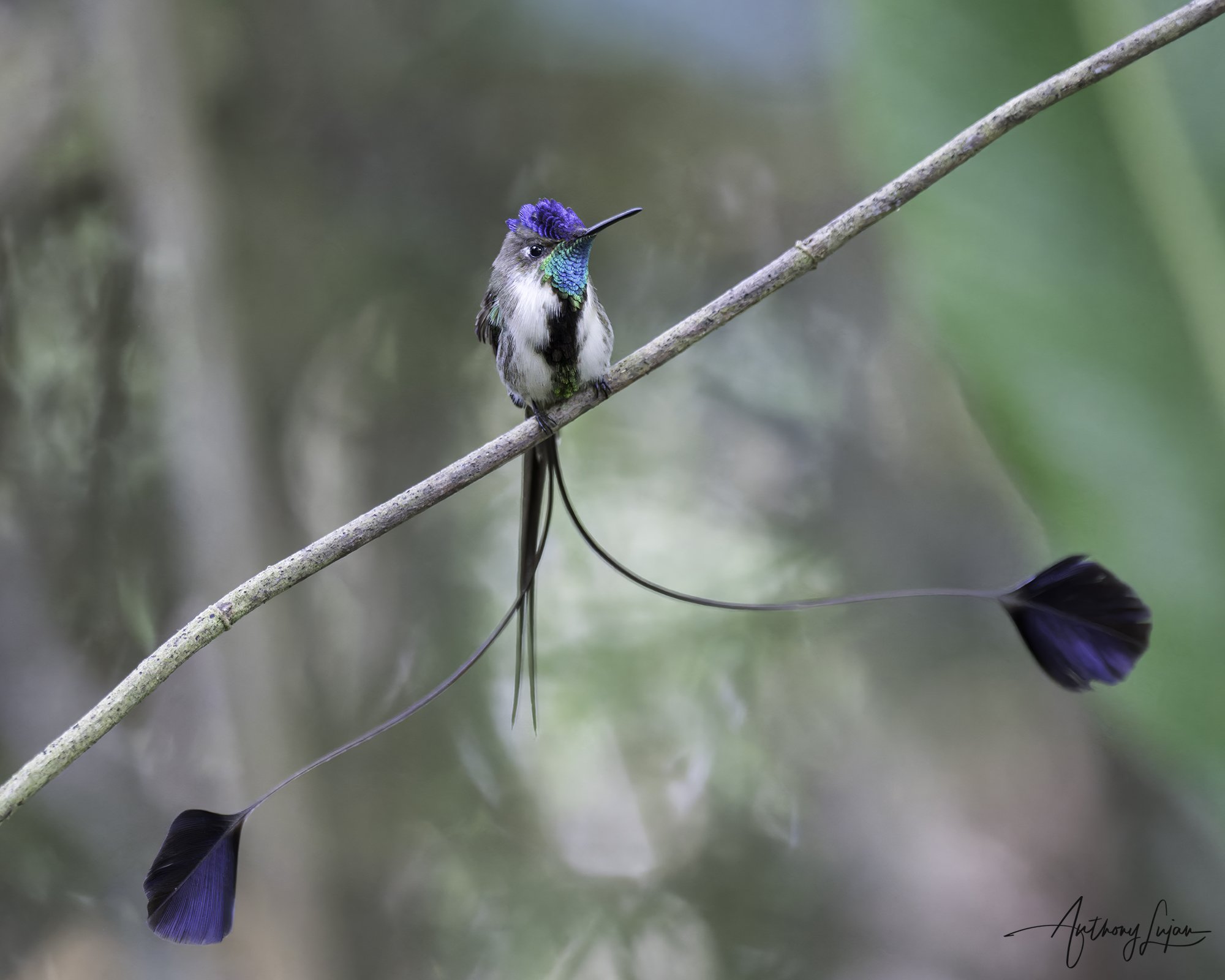
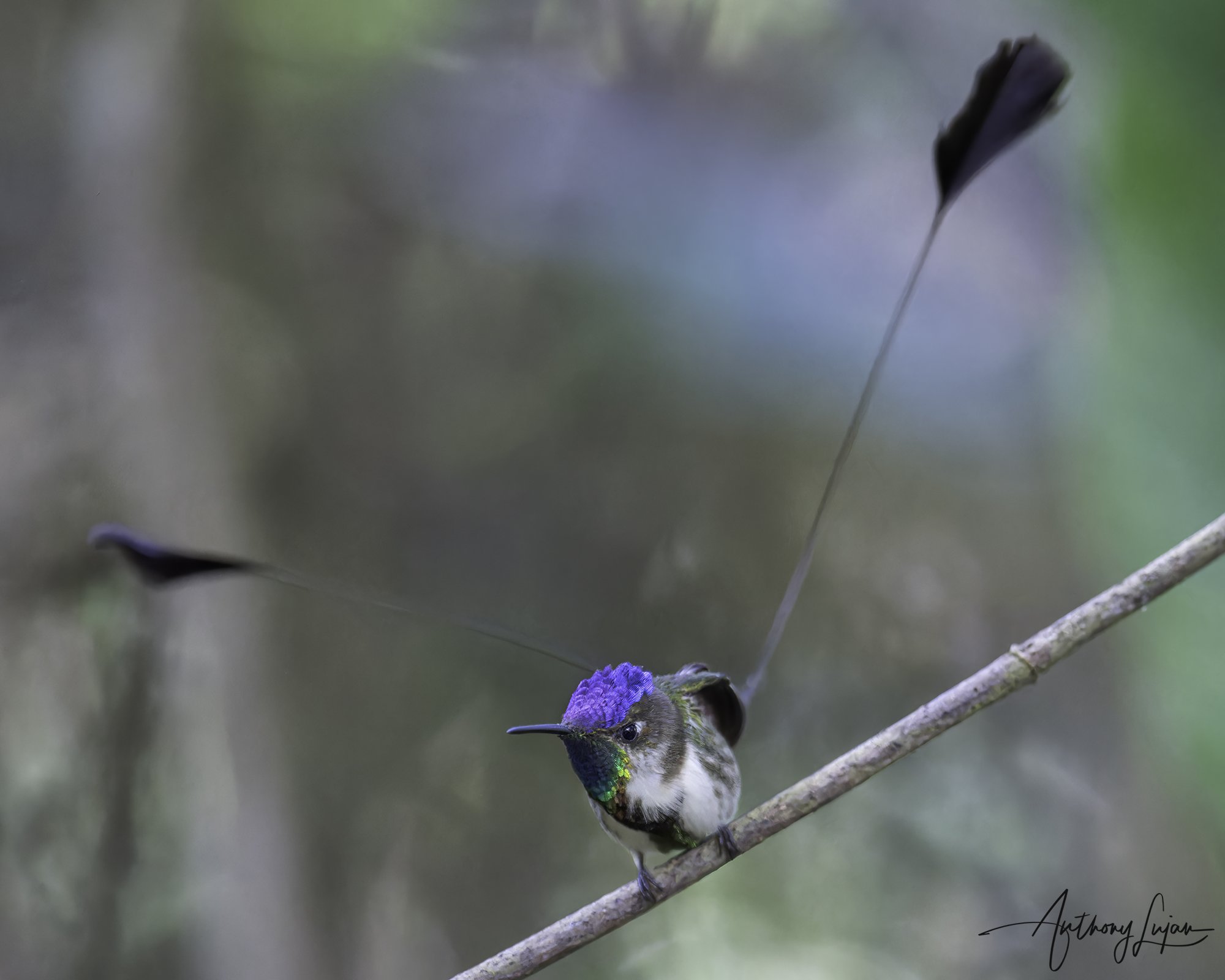
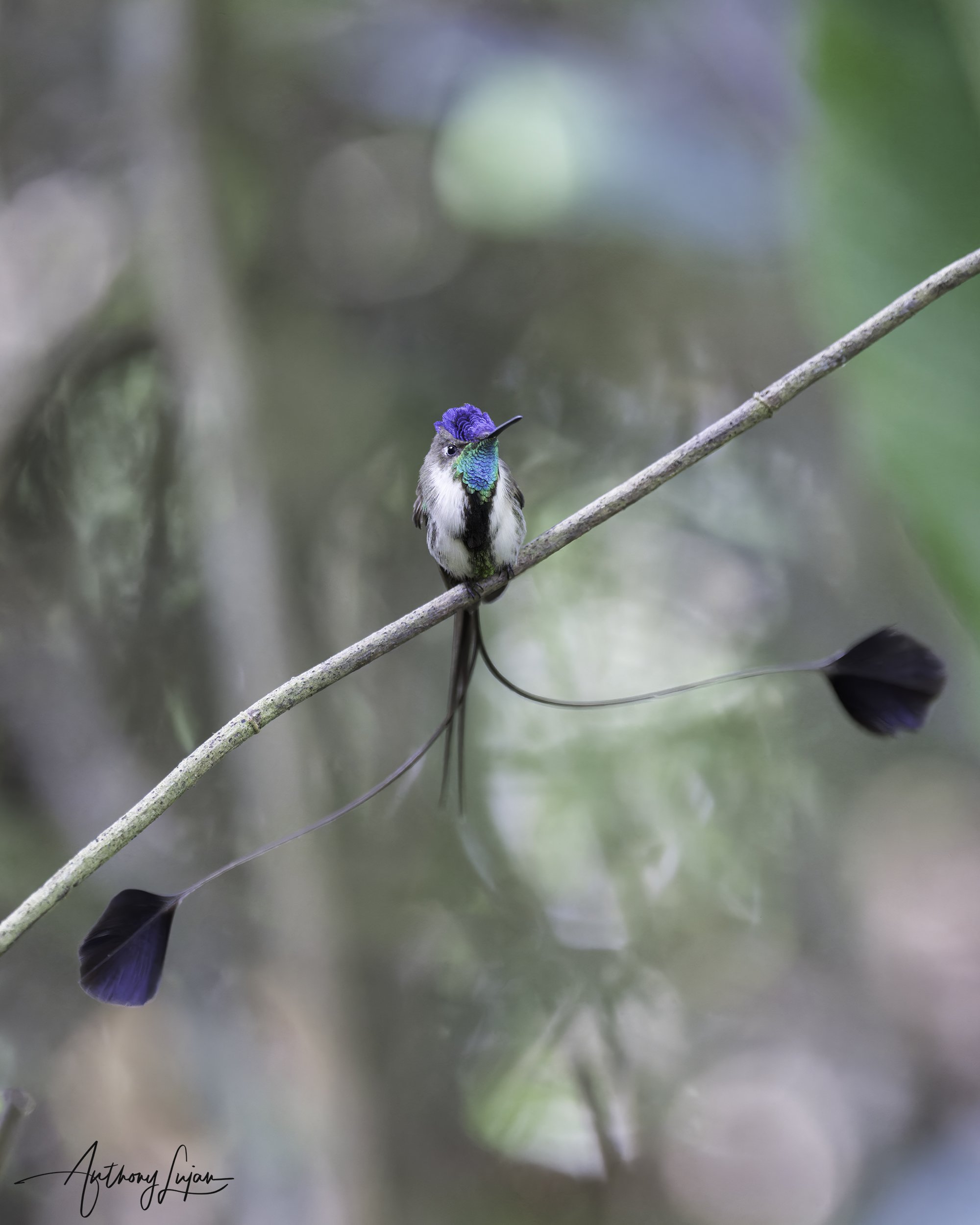
Adult males have a small green-and-white body that contrasts dramatically with their outsized tail. The upperparts are bright green with bronze tones, the underparts are mostly white with a bold black line running down the center of the chest and belly, and the crown is vivid blue to bluish-violet. The throat (gorget) is a brilliant turquoise or emerald, forming a glowing patch on the upper breast. The tail consists of only four feathers: the inner pair are relatively short and straight, while the outer pair are extremely long, wire-like shafts that cross behind the bird and end in large violet-blue spatules larger than the bird’s head. The male can move each racket independently and uses them in elaborate courtship displays.
Female Description
Adult females lack the male’s crest, gorget, and racketed tail, but are still attractive small hummingbirds. The upperparts are iridescent green to bronze, and the underparts are white to pale buff without the male’s black midline stripe. The tail is more typical, with up to ten feathers, shorter and without spatules, often showing green central feathers and whitish or buff outer edges with darker subterminal shading. Females are thus much less conspicuous, appearing as small green-and-white hummingbirds with a relatively short tail and without the extreme ornamentation of males.
Habitat & Behavior
Marvelous Spatuletails inhabit the edges of mature cloud forest, secondary forest, and montane scrublands on steep Andean slopes. They show a strong preference for dense, thorny Rubus thickets mixed with alder and other shrubs, where they find abundant tubular flowers. They typically forage by trap-lining, following a regular circuit of flowering plants, and are often seen visiting red-flowered lilies such as Bomarea formosissima as well as several other nectar sources. Like other hummingbirds, they also take small insects for protein. The species is considered a year-round resident within its narrow range, with no large-scale migratory movements documented.
Population
The global population is estimated at roughly 1,000–2,499 mature individuals, all confined to a very small area of northern Peru. Even within this limited range, the species is patchily distributed and usually occurs at low densities. Habitat loss and degradation, combined with such a small population and range, underpin its decreasing population trend and conservation concern.

Conservation
The Marvelous Spatuletail is listed as Near Threatened due to its small, declining population, extremely restricted range, and ongoing habitat loss. Deforestation for agriculture, cattle pasture, and human settlement has reduced and fragmented its forest-edge and scrub habitats, and traditional hunting of males for supposed medicinal or aphrodisiac uses has been an additional pressure. Protection and restoration of forest edges, secondary growth, and Rubus-dominated scrub within its range, along with community-based conservation and ecotourism initiatives, are crucial for securing this species’ future. As one of the world’s most spectacular hummingbirds, it serves as a powerful ambassador for conserving the Andean cloud forests of northern Peru.
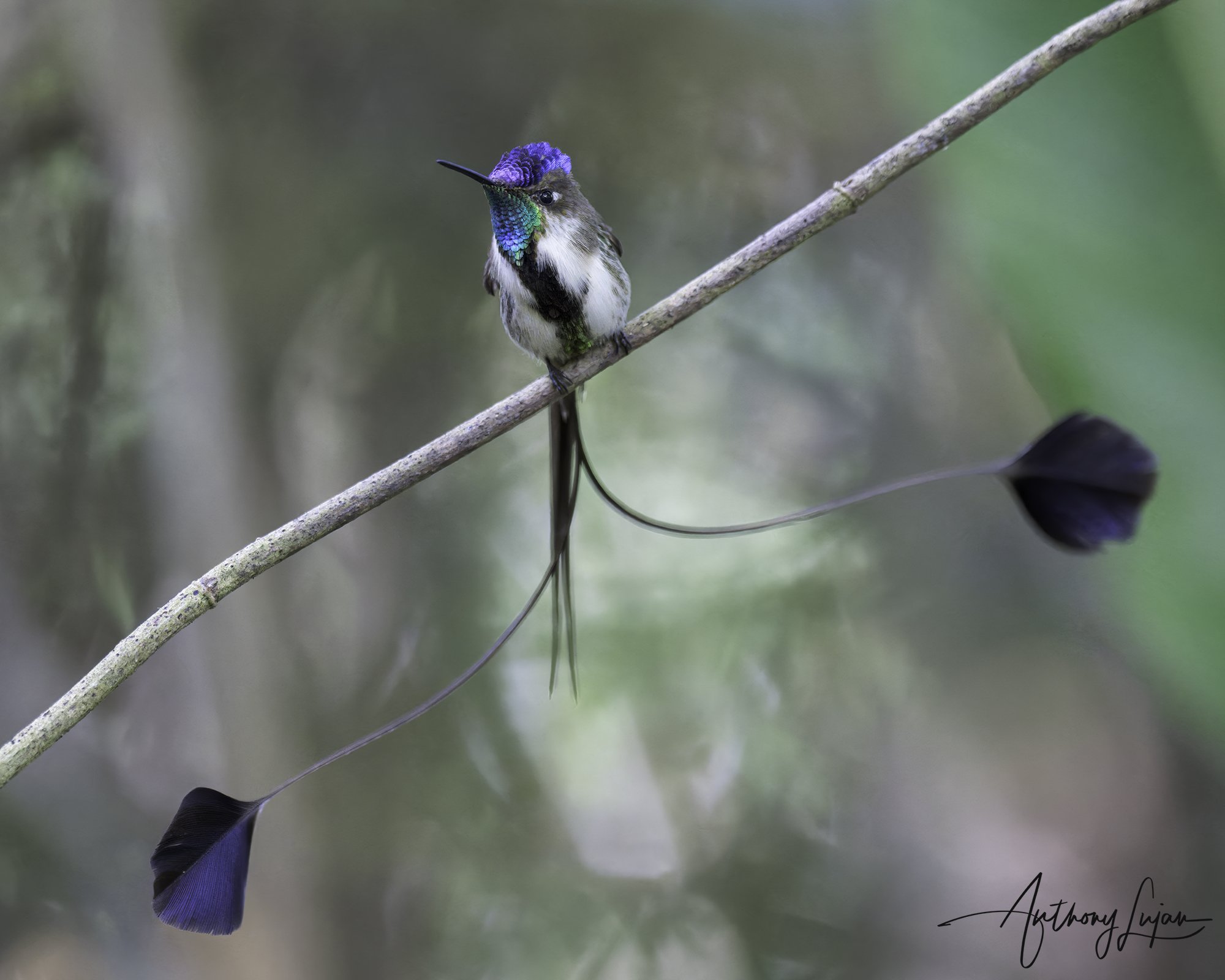
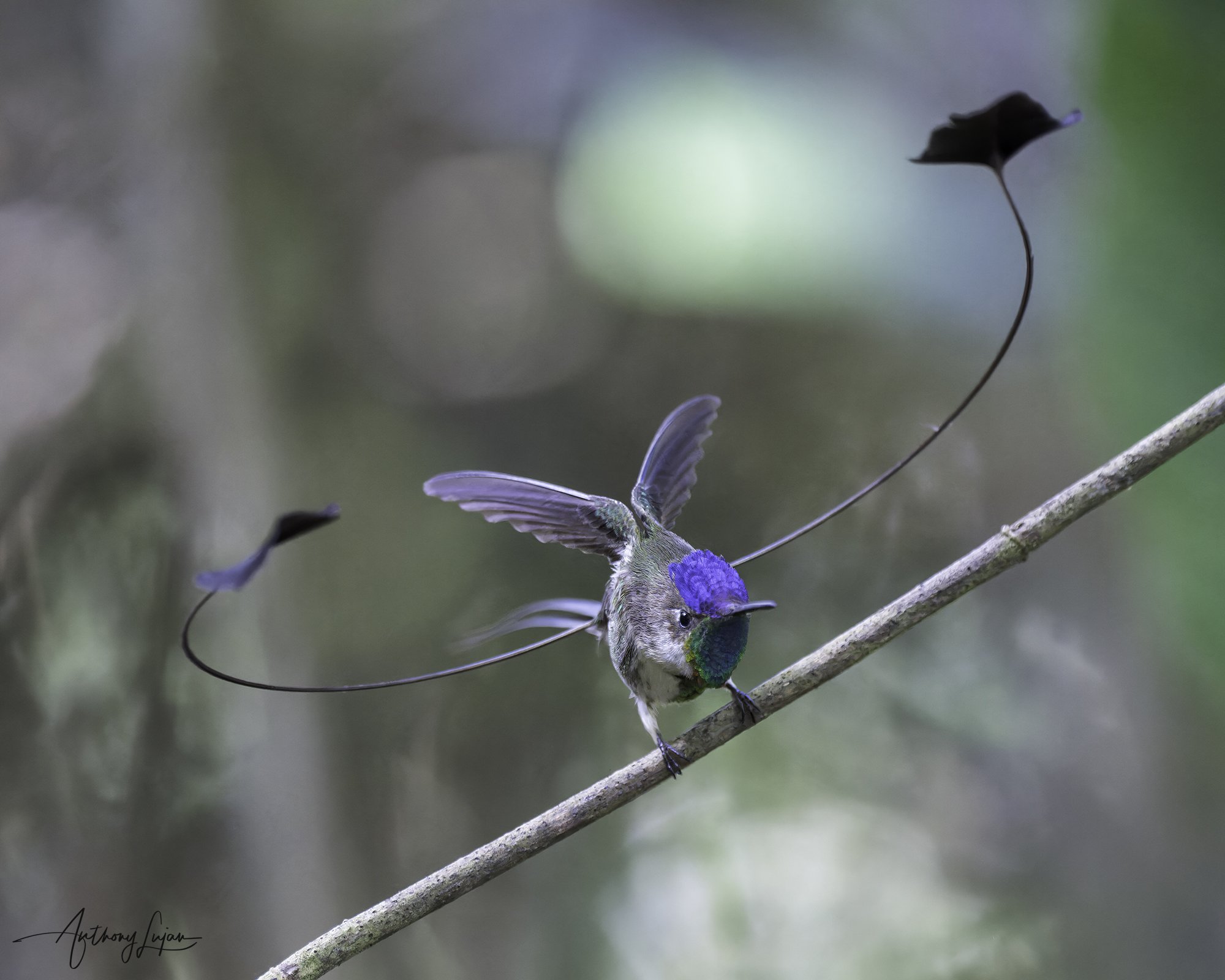
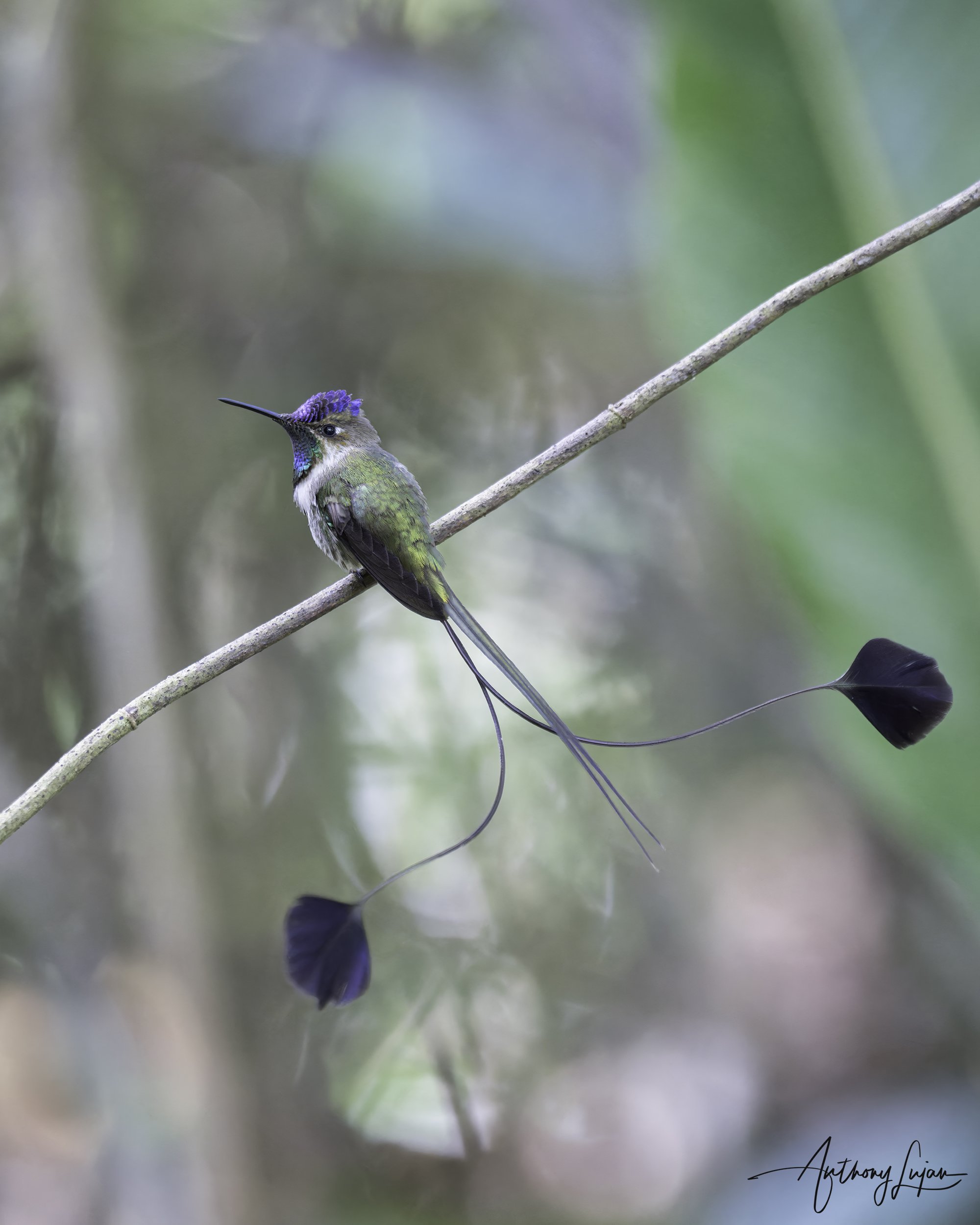
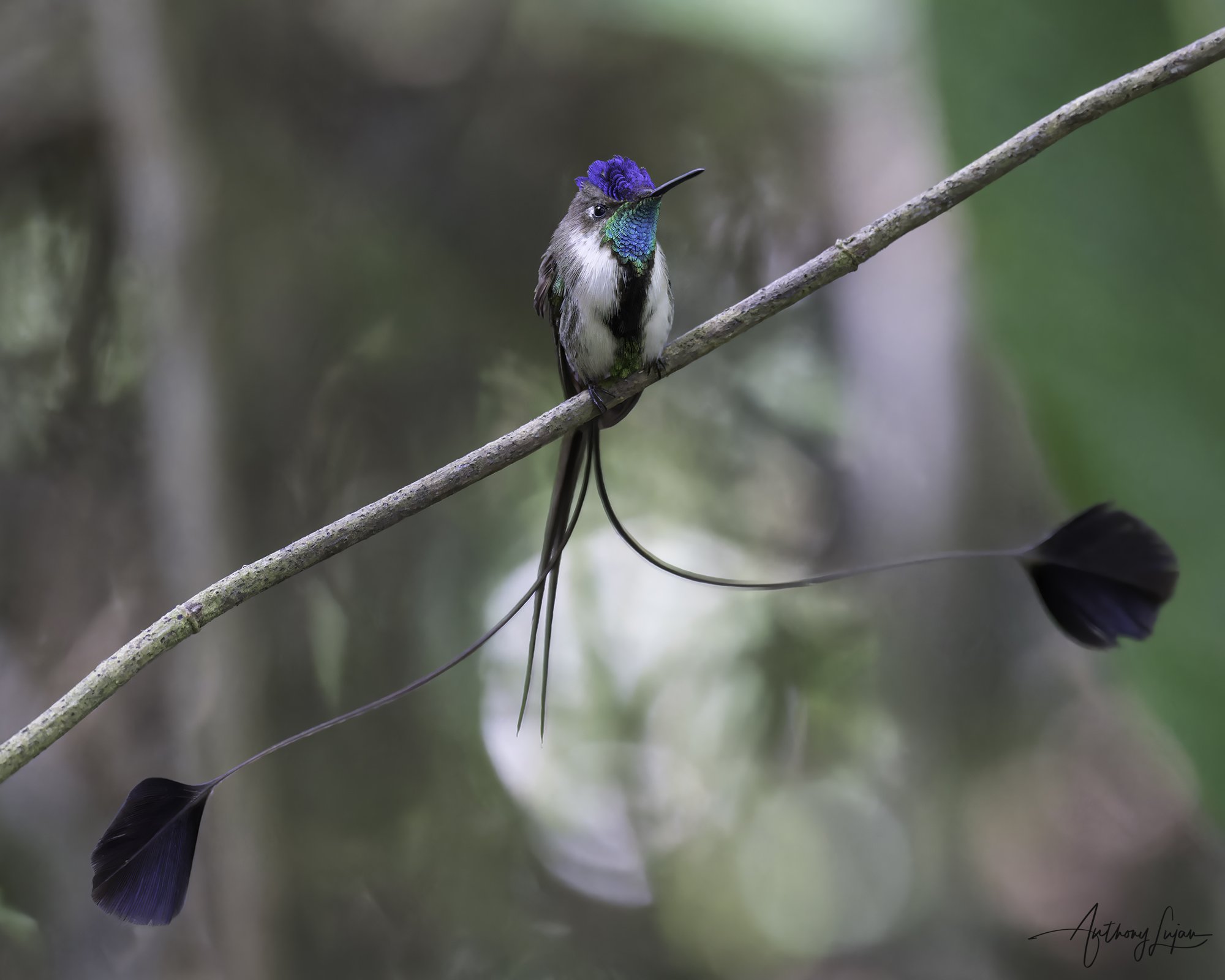
Checkout Anthony’s playlist of this species! Click the top right dropdown to see all the videos.
No related species in the Loddigesia genus.
Please note: The content provided in this article reflects Anthony’s personal experience and photographic approach. Results can vary depending on light, weather, location, equipment, subject behavior, and field conditions.