
Perijá Metaltail
Scientific name: Metallura iracunda
The Perijá Metaltail is a high-Andean hummingbird restricted to the remote Serranía del Perijá along the Colombia–Venezuela border. An estimated 14,000–37,000 mature individuals remain, the population is considered stable, it is treated as non-migratory, and it is currently listed as Near Threatened, endemic to the Serranía del Perijá and monotypic with no recognized subspecies.
At a Glance
Family: Trochilidae (hummingbirds)
Clade: Lesbiini – “coquettes” of the Andean highlands
Genus group: Metallura — high-elevation “metaltails” of the northern and central Andes
Range: Endemic to the Serranía del Perijá, which straddles the border of northern Colombia and northwestern Venezuela.
Habitat: Elfin forest, open bushy slopes, bamboo patches, grassy páramo, and scrubby areas with rocky or sandstone outcrops near and above treeline.
Elevation: About 2,400–3,200 m, descending locally to around 1,850 m.
Length: About 10–11 cm (3.9–4.3 in).
Weight: Roughly 3.6–4.1 g.
Number of mature individuals: 14,000–37,000
Population trend: Stable
Status: Near Threatened (IUCN)
Name Origin
The genus name Metallura combines “metal” and “tail,” referring to the metallic sheen and brightly colored tails that characterize metaltails. The species name iracunda comes from Latin for “fiery” or “wrathful,” likely alluding to the intense red of the tail or the bird’s bold appearance. The English name “Perijá Metaltail” ties the bird directly to the Serranía del Perijá and emphasizes its glittering, metallic tail.
Subspecies & Distribution
Monotypic — no subspecies are recognized.
Distribution: The Perijá Metaltail is confined to the Serranía del Perijá, a remote north–south mountain range forming part of the Colombia–Venezuela border. It occurs on several peaks and ridges, primarily in high-montane and subpáramo zones where elfin forest, bushy slopes, bamboo patches, and páramo grasslands meet.
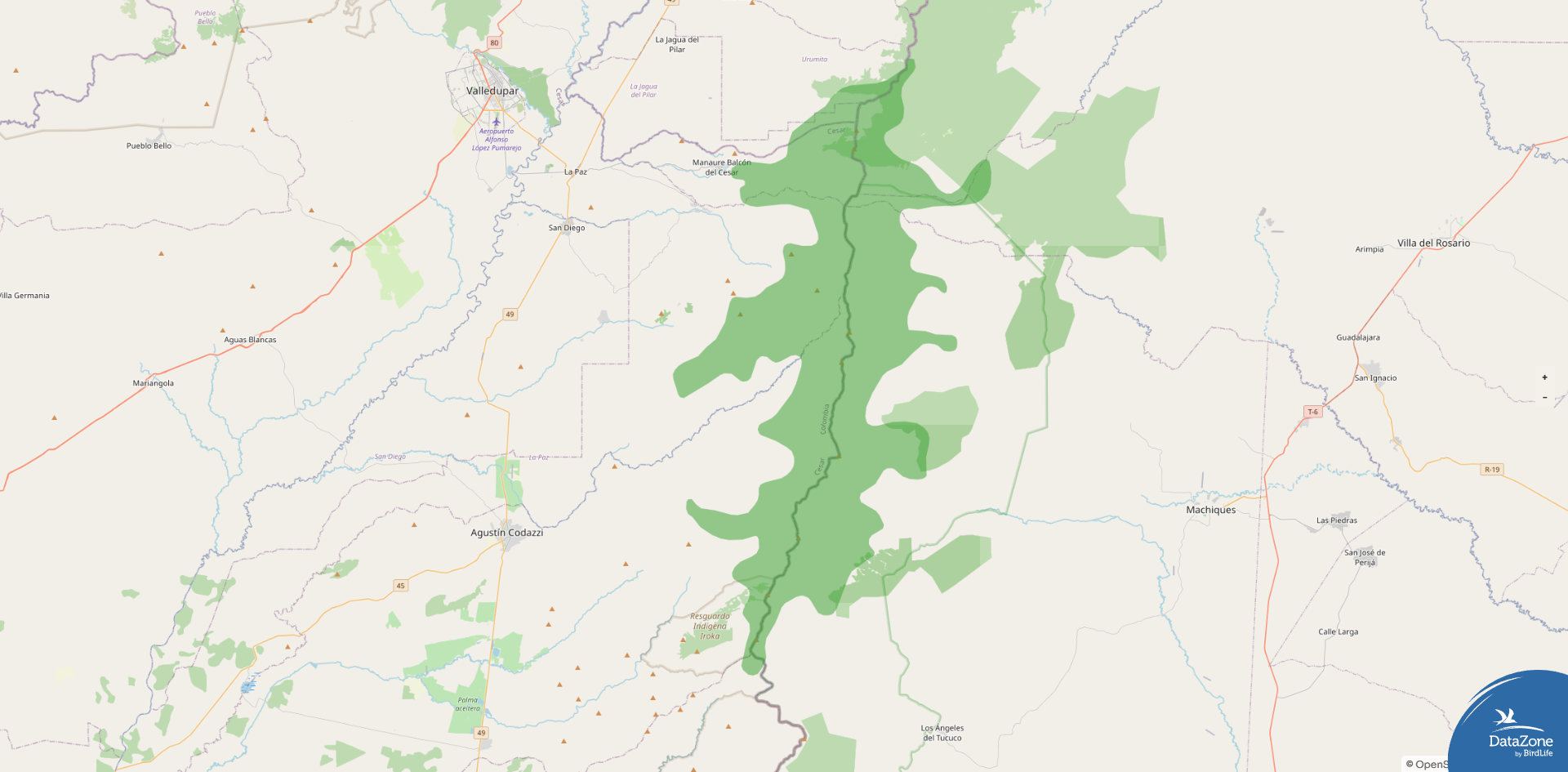
Legend
Green Resident
Species Overview
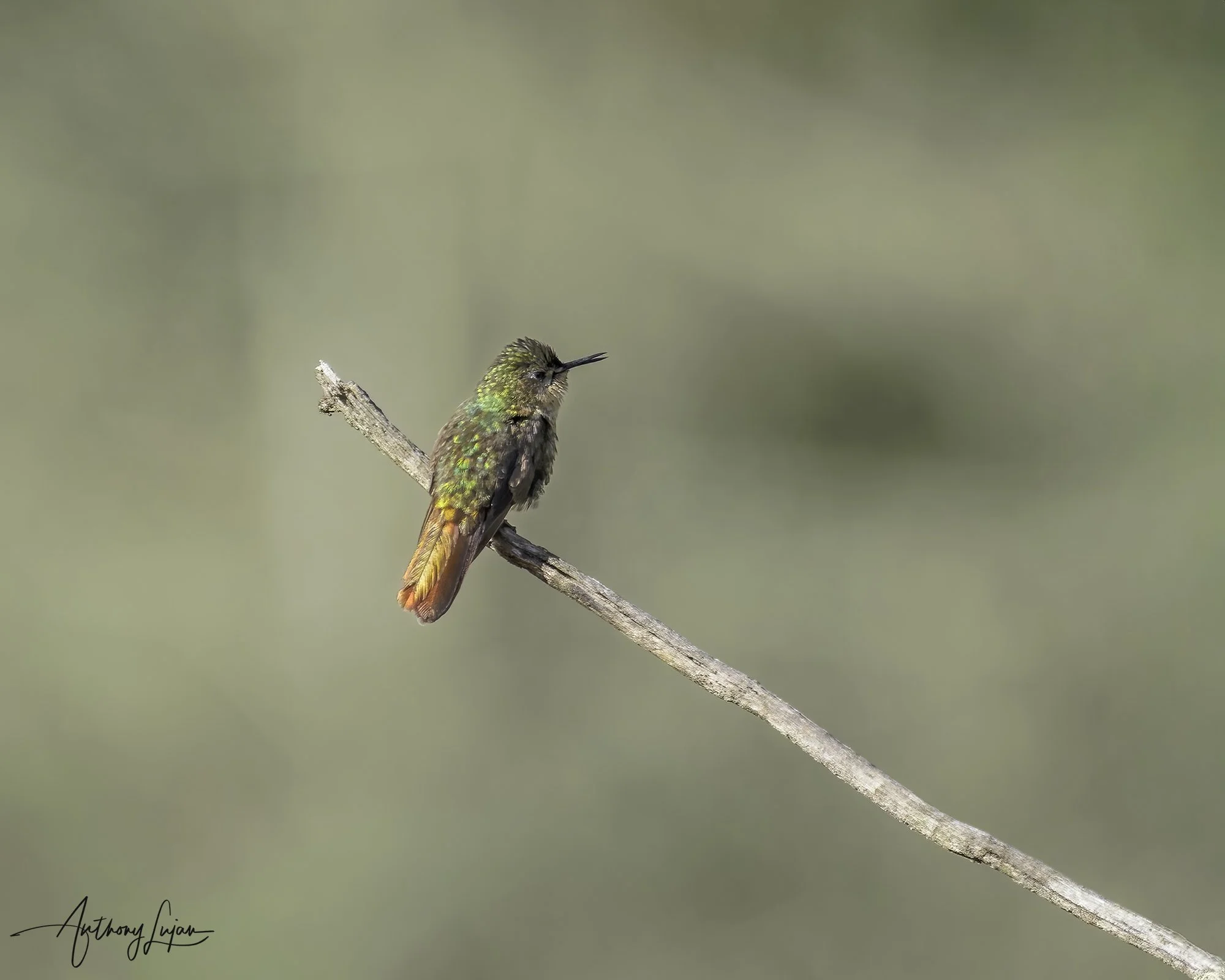
The Perijá Metaltail is a small, dark hummingbird with a brilliant green throat and glowing reddish tail, adapted to cool, windswept ridges and high Andean scrub. It forages in patchy elfin forest, bushy clearings, and páramo edges, often perching conspicuously on exposed twigs near flowering plants. Its extremely limited range and specialized high-elevation habitat make it vulnerable to habitat alteration, though within suitable areas it can be locally fairly common.
Male Description
Adult males are compact hummingbirds with a short, straight black bill. The upperparts are very dark, almost black, with a subtle golden or bronzy wash on the mantle and back. The underparts are dark bronzy green with golden highlights, giving a dusky metallic sheen. The throat bears a bright emerald green gorget that flashes strongly in good light. The tail is slightly forked and glittering ruby red to reddish-violet, standing out sharply against the otherwise dark body. Perched males appear as shadowy birds with a glowing green throat and fiery red tail that catches the light during short sallies.
Female Description
Adult females are also nearly black above, with similarly dark upperparts to the male. The throat and upper breast are ochre-orange to buff, heavily spotted with olive green, giving a scaly appearance. The lower breast and belly are rich buff with scattered green spots. The tail is slightly forked; the outer tail feathers have buffish or pale tips, softening the dark tail. Females thus appear as small, dark-backed hummingbirds with warm, buffy underparts marked with green spotting and a subtly tipped tail. Juveniles resemble females.
Habitat & Behavior
Perijá Metaltails inhabit a mosaic of elfin forest, open bushy terrain, bamboo stands, grassy páramo, and scrubby rocky outcrops near and just above treeline. They favor shrubby edges and openings where low flowers are abundant, often perching on exposed twigs to sally to nearby blooms. Like other hummingbirds, they feed on nectar and also capture small insects while hovering or by short aerial sallies. The species is believed to be sedentary, remaining year-round in the Perijá highlands, though individuals may shift locally along the elevational gradient as flowering patterns change.
Population
Based on its very restricted range but relatively common status within suitable habitat patches, the Perijá Metaltail’s population is estimated at roughly 14,000–37,000 mature individuals. While threats such as habitat loss and degradation are present, particularly from agriculture, grazing, burning, and localized extraction activities, current evidence suggests the overall population is roughly stable rather than undergoing rapid decline.

Conservation
The Perijá Metaltail is treated as Near Threatened due to its extremely restricted range, specialized high-elevation habitat, and ongoing pressures on páramo and elfin forest. Deforestation, burning of páramo for pasture, agricultural expansion, and other land-use changes contribute to habitat loss and fragmentation in the Serranía del Perijá. Conservation priorities include protecting remaining elfin forest and páramo mosaics, controlling burning and land conversion, and improving management in key areas on both sides of the border. Maintaining intact high-Andean shrub and grassland communities will benefit this and other Perijá endemics.
only the female was photographed and this one frame and video
Related species in the Metallura genus (9 species total):


Please note: The content provided in this article reflects Anthony’s personal experience and photographic approach. Results can vary depending on light, weather, location, equipment, subject behavior, and field conditions.