

Scientific name: Chalcostigma herrani
The Rainbow-bearded Thornbill is a spectacular high-Andean thornbill of Colombia, Ecuador, and northern Peru. The number of mature individuals is unknown, the population is decreasing, it is considered non-migratory, and it is currently listed as Least Concern with two recognized subspecies.
At a Glance
Family: Trochilidae (hummingbirds)
Clades: Lesbiini – “coquettes” within subfamily Lesbiinae
Genus group: Chalcostigma — short-billed, high-Andean thornbills with colorful gorgets and metallic tails (5 species total)
Range: Western and Central Andes of southern Colombia south along both slopes of the Andes through Ecuador into northern Peru (Piura and northwestern Cajamarca).
Habitat: High-elevation shrubs and scrubby slopes, humid Polylepis and other elfin forests, weedy edges, páramo and subpáramo bushes, and rocky slopes with ferns and bromeliads.
Elevation: About 2,700–3,600 m (8,900–11,800 ft).
Length: About 10–12 cm (3.9–4.7 in).
Weight: About 5.6–6.2 g (0.20–0.22 oz), males slightly heavier than females.
Number of mature individuals: Unknown
Population trend: Decreasing
Status: Least Concern (IUCN)
Name Origin
The genus name Chalcostigma combines Greek for “bronze” and “mark,” referring to the bronzy, iridescent throat patches typical of thornbills. The species name herrani honors the Colombian statesman and naturalist Pedro Alcántara Herrán. The English name “Rainbow-bearded Thornbill” highlights the male’s long, multi-colored throat “beard,” one of the most striking gorgets among Andean hummingbirds.
Subspecies & Distribution
Two subspecies:
Chalcostigma herrani tolimae
Distribution: Restricted to Volcán Tolima and adjacent high ridges in the Central Andes of Colombia. This subspecies is darker overall than the nominate and has a longer, more extensive gorget.Chalcostigma herrani herrani (nominate)
Distribution: Western Andes of southern Colombia (Munchique and south to Nariño), continuing on both slopes of the Andes in Ecuador, and into northern Peru (departments of Piura and northwestern Cajamarca). It inhabits high-elevation scrub, páramo edges, and elfin forest margins throughout this range.
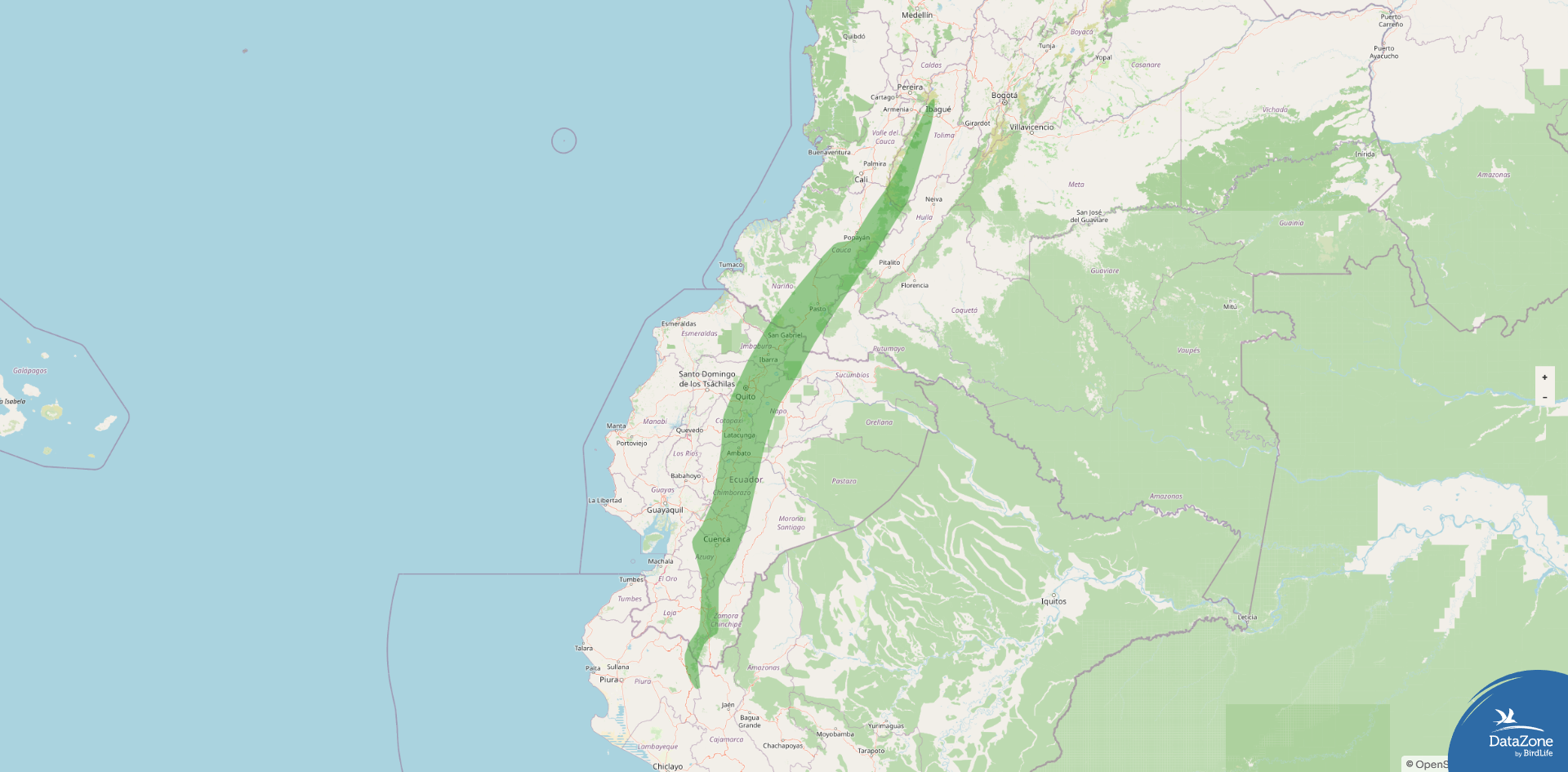
Legend
Green Resident
Species Overview
The Rainbow-bearded Thornbill is one of the most visually spectacular hummingbirds of the high Andes, renowned for its elongated, rainbow-colored throat patch. It occupies a narrow elevational band of shrublands, páramo edges, and elfin forest margins above the continuous forest belt. Although it can be locally fairly common in suitable habitat, ongoing habitat alteration and climate change affecting high-elevation ecosystems are thought to be driving a gradual decline.
Male Description
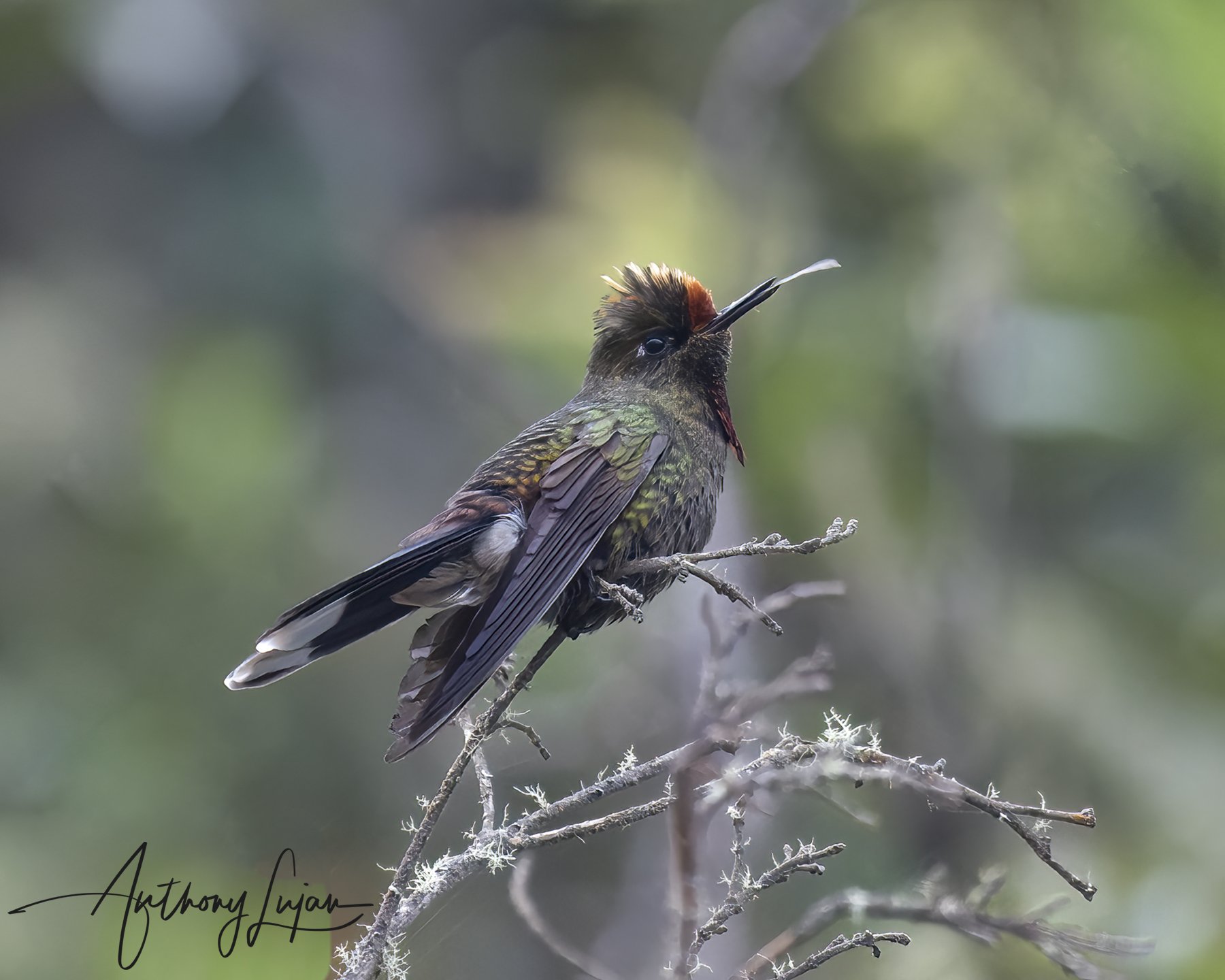
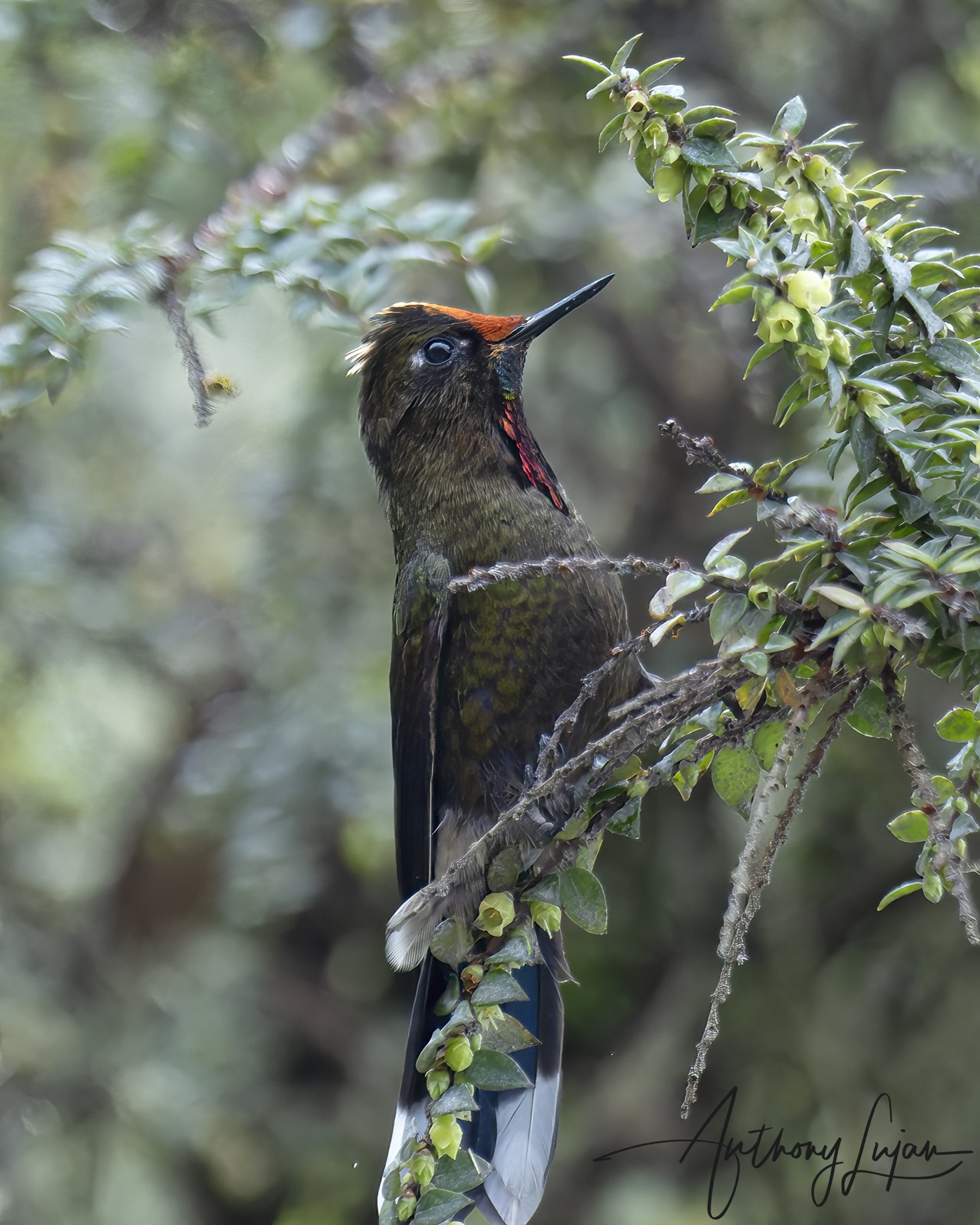
Adult males have a short, needle-like black bill and a compact, thickset body. The crown often shows an orange or rusty cap contrasting with dark bronzy-green upperparts. The face is dark with a small pale spot behind the eye. The most distinctive feature is the long, narrow, multi-colored gorget or “beard,” which can show bands or patches of blue, green, yellow, orange, and reddish tones, forming a vertical rainbow hanging from the throat. The underparts are mostly dark bronzy green, with the vent and undertail coverts pale buff. The tail is long, rounded to slightly forked, purplish to blue-violet with broad white tips on the outer feathers. In the field, males appear as dark, high-Andean hummingbirds with an orange cap, long rainbow “beard,” and a dark tail with bold white tips.
Female Description
Adult females are similar in size and structure, with the same short black bill and often an orange-tinged crown, but are duller overall. The upperparts are greenish-brown, and the underparts are more uniformly greenish-brown or grayish with only a rudimentary, much-reduced gorget—often a small, dull patch rather than a full rainbow beard. The tail is dusky with large white tips on the outer feathers, similar to the male. Females thus appear as greenish-brown thornbills with an orange cap, pale vent area, and a dark tail with conspicuous white tips, lacking the male’s dramatic throat ornament.
Habitat & Behavior
Rainbow-bearded Thornbills favor humid scrub and tall shrubbery at and above treeline, including weedy edges, páramo bushes, rocky slopes with ferns and bromeliads, and the borders of Polylepis and other elfin forests. They feed mainly on nectar from small flowers on low bushes and shrubs, often clinging to the flowers while feeding to steady themselves in the wind. They also consume insects, gleaned from leaves or bark or taken in short sallies, providing essential protein in the harsh high-Andean climate. Birds are typically territorial around dense flower patches, chasing away other hummingbirds, and are considered resident throughout their range, with only local movements along the elevation gradient in response to weather and flowering cycles.
Breeding
Breeding biology is not fully documented but follows the general high-Andean pattern. Nests are presumed to be small cups made of plant fibers, moss, and spiderweb, placed low in dense shrubs or on sheltered rocky ledges within scrub or at forest edges. The female likely lays two eggs and alone incubates and raises the chicks. Timing varies regionally but tends to coincide with periods of good flowering and relatively stable weather, often during the local dry season within the high-Andean climate cycle.
Population
The total number of mature individuals is unknown, but the species’ distribution is restricted to a narrow high-elevation band from southern Colombia through Ecuador into northern Peru. It can be locally fairly common where suitable shrublands and páramo edges remain intact, yet these habitats are naturally patchy and limited in area. Burning, grazing, agriculture, and infrastructure development at high elevations, along with climate-driven shifts in vegetation zones, are likely causing a slow but ongoing decline.

Conservation
The Rainbow-bearded Thornbill is currently classified as Least Concern, reflecting its presence at multiple sites across three countries and occurrence in some protected areas. However, its decreasing trend, reliance on fragile high-Andean habitats, and narrow elevational range make it vulnerable to land-use change and climate warming. Protecting páramo and subpáramo scrub, limiting burning and overgrazing, conserving Polylepis and elfin forests, and maintaining high-elevation reserves are key steps to safeguard this species and other specialized Andean hummingbirds.
Below is the Rainbow-bearded Thornbill (Chalcostigma herrani herrani)
Photographed at Hotel Termales del Ruíz, Caldas, Colombia
These individuals belong to the subspecies herrani, which occurs along the Western Andes of southern Colombia and southward through Ecuador and into northern Peru. Although Caldas is typically considered part of the Central Andes, the population near Nevado del Ruíz is consistent with herrani based on range continuity and current distribution records. This form is noted for its vibrant rainbow-colored gorget, especially in males, and its adaptation to cold, windswept páramo zones.


Checkout Anthony’s playlist of this species! Click the top right dropdown to see all the videos.
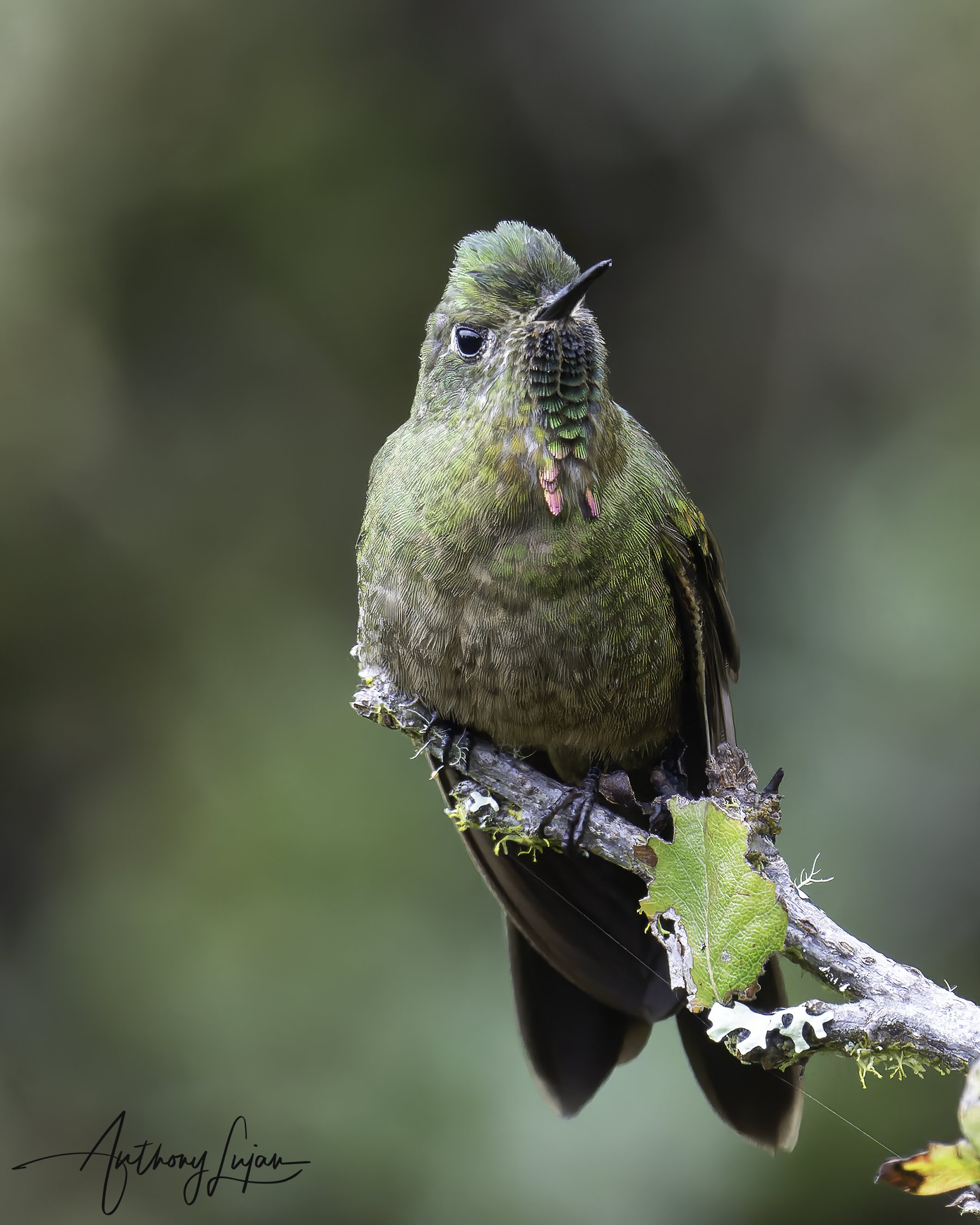
Related species in the Chalcostigma genus (5 species total):

Please note: The content provided in this article reflects Anthony’s personal experience and photographic approach. Results can vary depending on light, weather, location, equipment, subject behavior, and field conditions.