
Scientific name: Chlorostilbon gibsoni
The Red-billed Emerald is a small “emerald” hummingbird largely restricted to northern Colombia and adjacent northwestern Venezuela. The number of mature individuals is unknown, the population is decreasing, it is considered non-migratory, and it is currently listed as Least Concern with three recognized subspecies.
At a Glance
Family: Trochilidae (hummingbirds)
Clades: Trochilini – Emeralds
Genus group: Chlorostilbon — small, iridescent green “emerald” hummingbirds of the Neotropics (10 species total)
Range: Northern Colombia (Upper Magdalena Valley and Caribbean slope) and extreme northwestern Venezuela west and north of the Andes.
Habitat: Dry to semi-arid scrublands, thorny woodland, desert shrub, open dry forest, farmed areas, and parks and gardens with scattered trees and shrubs.
Elevation: Mostly below 500 m (1,600 ft), locally up to about 2,300 m (7,500 ft) in the upper Magdalena Valley.
Length: About 7.6–9 cm (3.0–3.5 in).
Weight: About 2.5–3 g (0.09–0.11 oz).
Number of mature individuals: Unknown
Population trend: Decreasing
Status: Least Concern (IUCN)
Name Origin
The genus name Chlorostilbon comes from Greek roots meaning “green” and “shining,” referring to the metallic green plumage typical of these emeralds. The species name gibsoni honors a person named Gibson, commemorated in the original description. The English name “Red-billed Emerald” highlights the coral-red bill that distinguishes this species from many other small green hummingbirds.
Subspecies & Distribution
Three subspecies:
Chlorostilbon gibsoni gibsoni
Distribution: Upper Magdalena Valley in central Colombia. This nominate form inhabits dry to semi-dry forest, scrub, and human-modified landscapes along the valley, often at slightly higher elevations than coastal forms.Chlorostilbon gibsoni chrysogaster
Distribution: Northern Colombia from eastern Córdoba east to Cesar and Norte de Santander. It occurs in dry and semi-arid lowland habitats on the Caribbean slope and interior basins.Chlorostilbon gibsoni nitens
Distribution: Extreme northern Colombia (Guajira Peninsula) and northwestern Venezuela (west and north of the Andes). This subspecies is associated with very dry scrub, desert-like thorn woodland, and nearby cultivated and urban areas in this arid region.
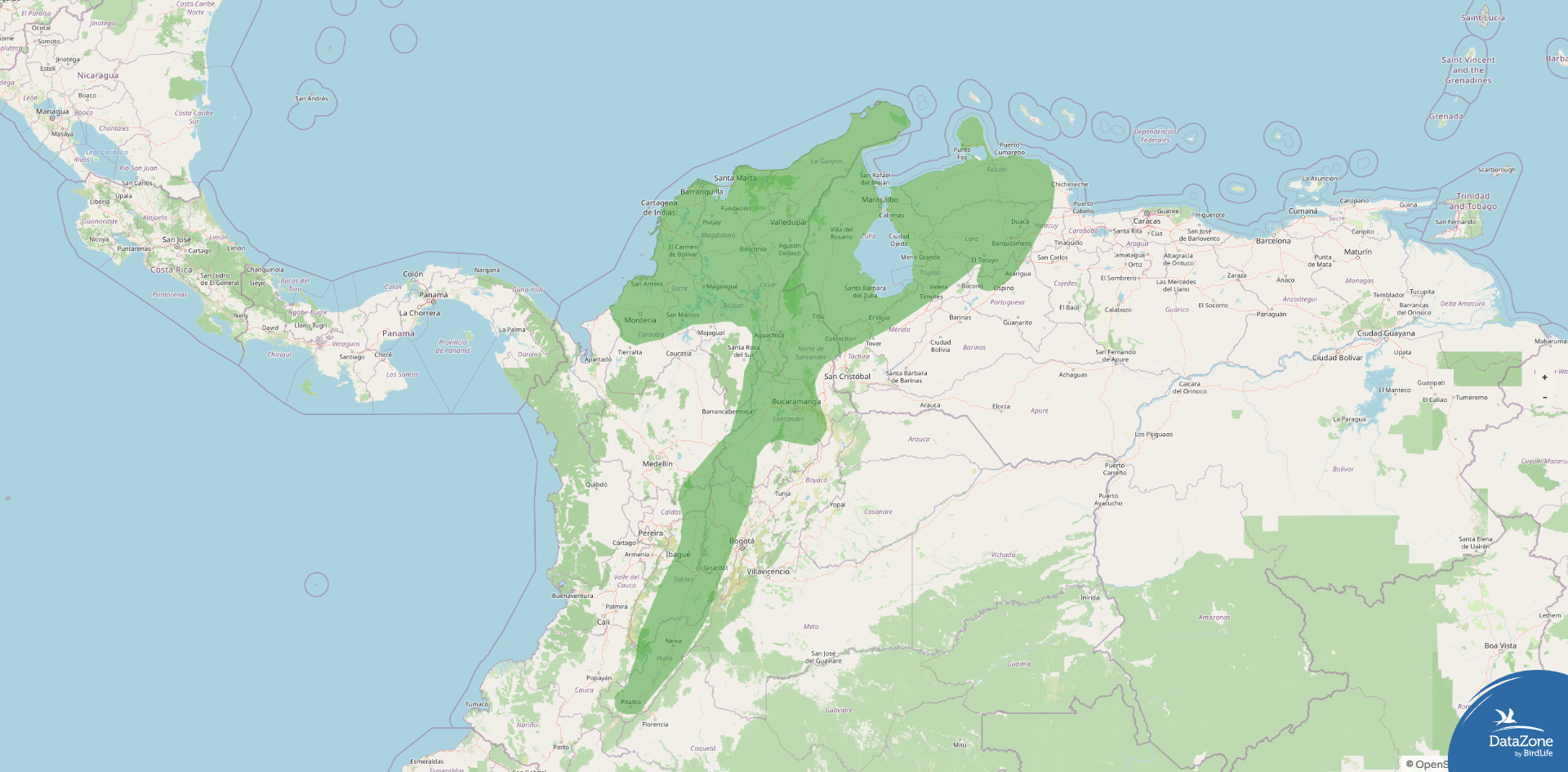
Legend
Green Resident
Species Overview
The Red-billed Emerald is a classic small emerald of dry country, often one of the commonest hummingbirds in arid scrub and open farmland within its limited range. It thrives in human-modified environments, frequenting gardens, hedgerows, and scattered trees around settlements. Despite its adaptability and local abundance, ongoing habitat changes and fragmentation in northern Colombia and northwestern Venezuela are thought to be contributing to a slow decline.
Male Description
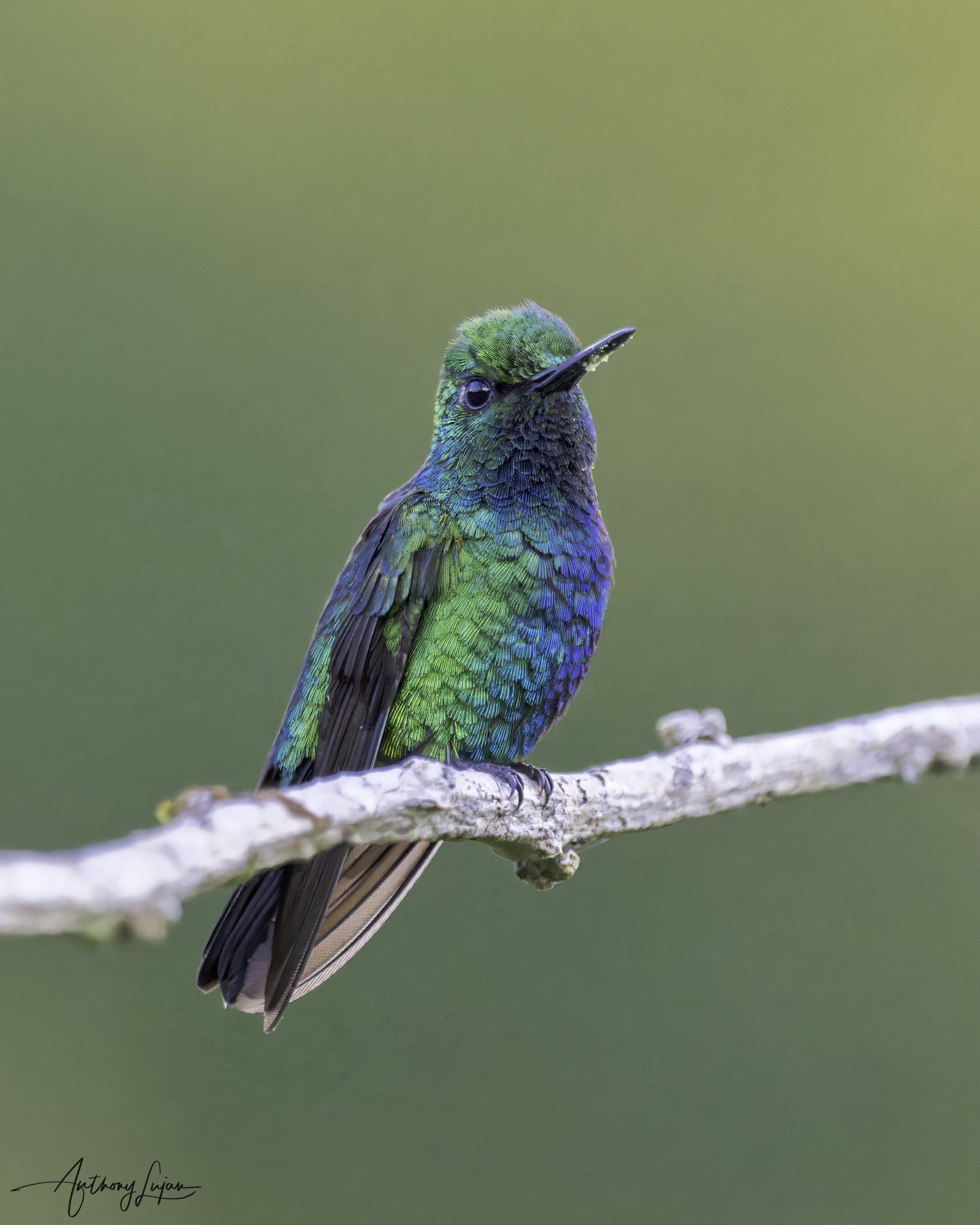
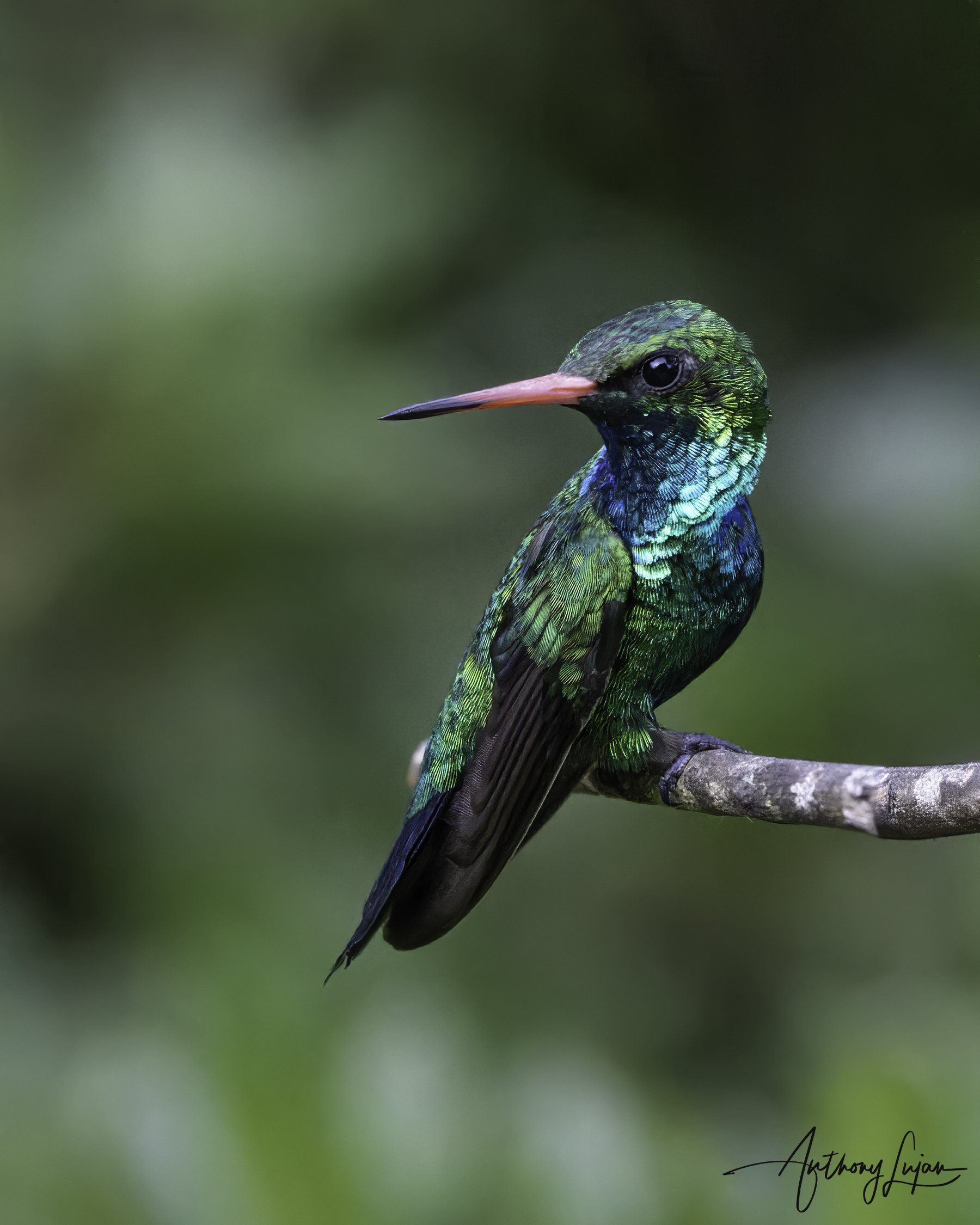
Adult males are tiny, slender hummingbirds with a straight, coral-red bill tipped dusky to black. The head, back, and rump are metallic emerald to bronze-green. The underparts are mostly green, sometimes slightly paler on the belly, with white undertail coverts. The tail is moderately forked and dark, often blackish with a subtle blue or blue-green sheen in good light. In the field, males appear as very small, bright green birds with a conspicuous red bill and a dark, slightly forked tail.
Female Description
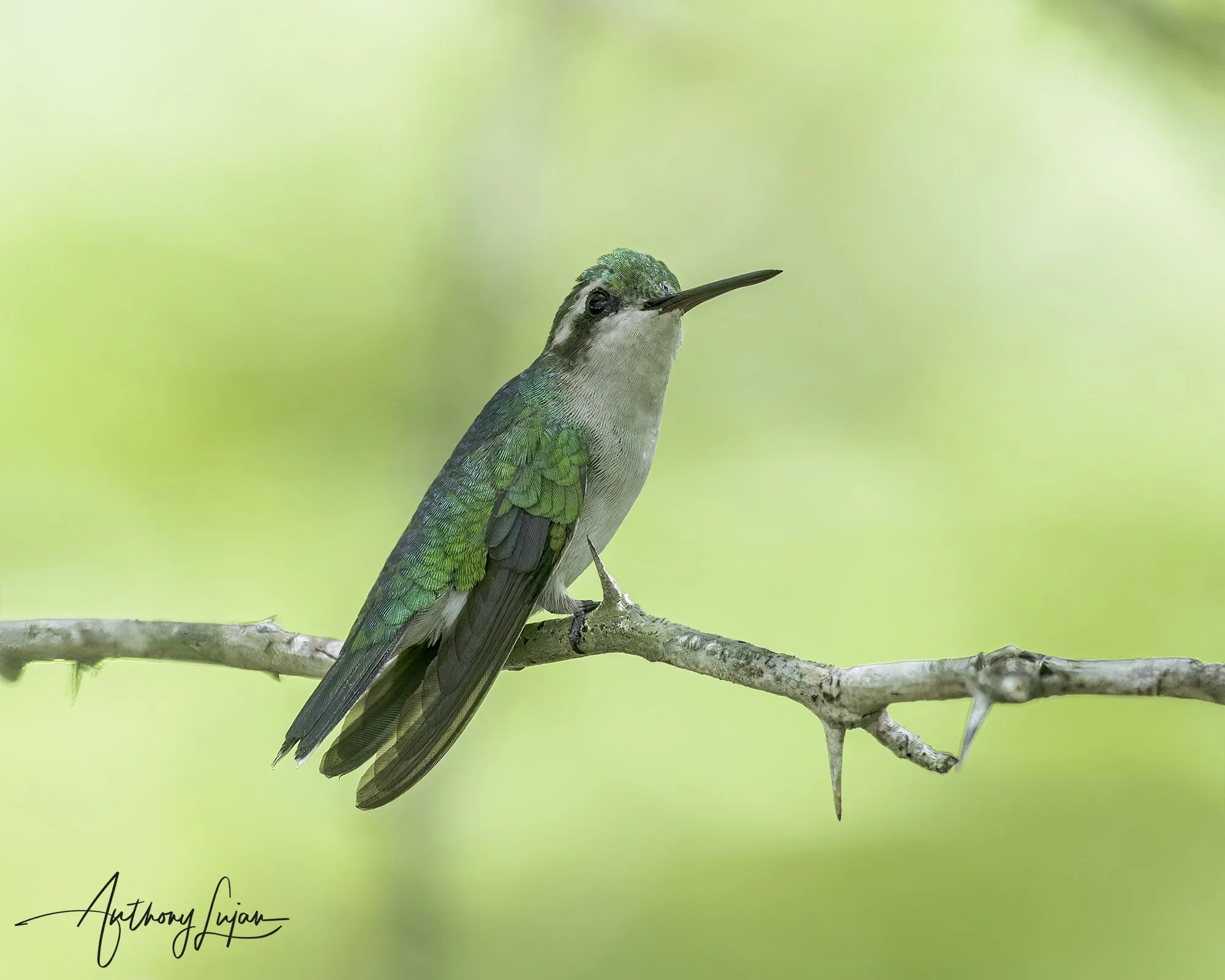
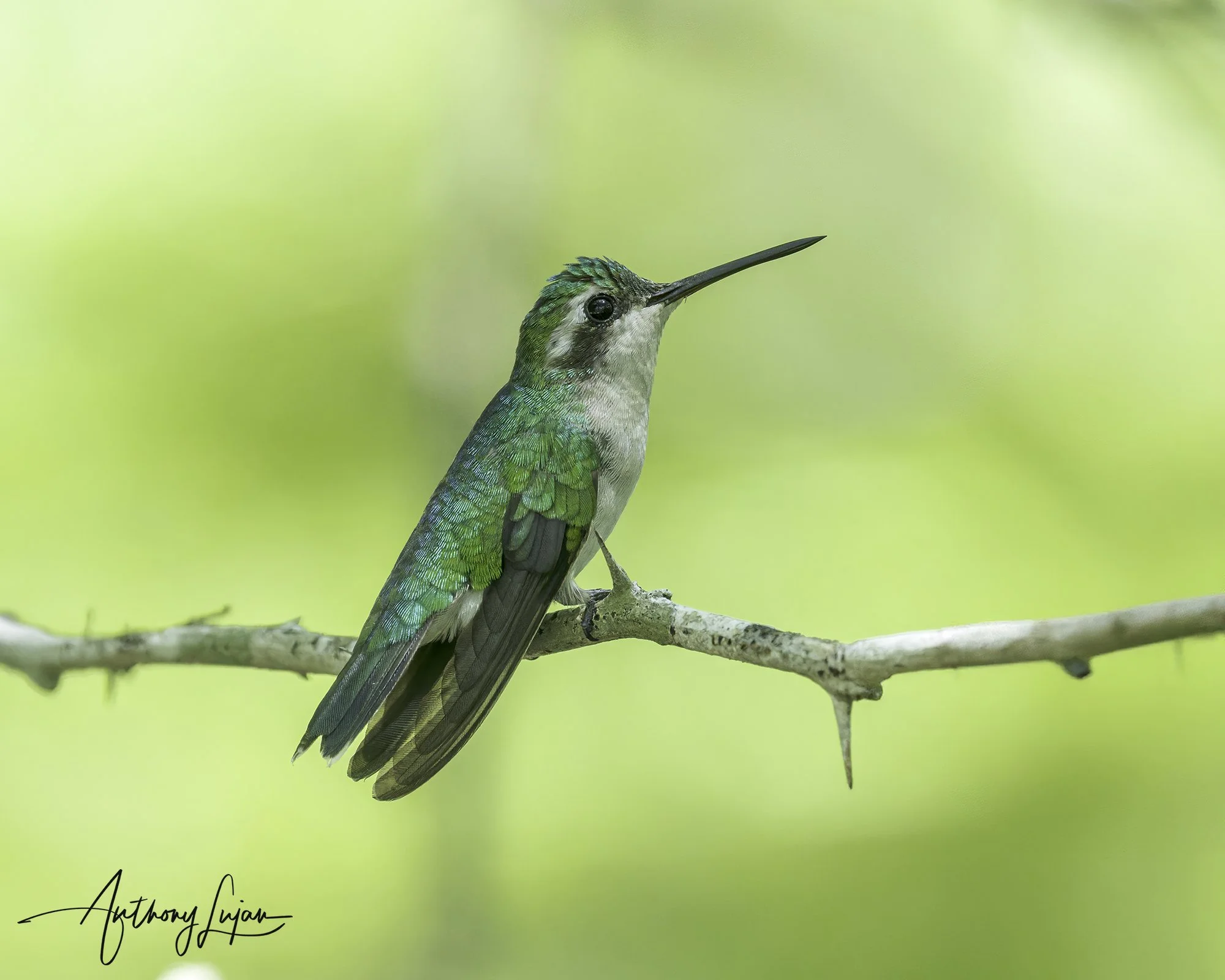
Adult females have green upperparts like the male, but the underparts are pale grayish or whitish. The face shows a darker cheek patch with a pale line or spot behind the eye. The throat and breast are whitish to grayish, usually with little or no green spotting, and the belly is whitish. The tail is slightly notched, dark with pale or whitish tips or corners on the outer feathers. The bill is similar in shape, with a red base and darker tip, though the colors may be slightly duller than in the male. Females therefore appear as small green-backed hummingbirds with a pale underside, subtle facial pattern, and a dark tail with white corners.
Habitat & Behavior
Red-billed Emeralds favor dry and semi-arid environments, including desert scrub, thorny woodland, open dry forest, cattle pastures with scattered trees, farm edges, and gardens and parks. They feed on nectar from flowers on shrubs, trees, cacti, and herbaceous plants, often favoring tubular and brushy blossoms, and also take small insects. Birds forage by hovering at flowers or briefly perching, and males may aggressively defend rich nectar sources against other hummingbirds. The species is considered non-migratory, remaining in its regional dry zones year-round, though local movements may occur in response to flowering and rainfall patterns.
Population
The total number of mature individuals is unknown, but within suitable dry habitats the Red-billed Emerald can be fairly common to abundant. Its global range is relatively small and confined to parts of Colombia and northwestern Venezuela, making it more vulnerable to regional land-use changes than many widespread emeralds. Agricultural expansion, urban growth, and shifts in land management can alter or reduce the dry scrub and open woodland this species prefers, contributing to a decreasing population trend.

Conservation
The Red-billed Emerald is listed as Least Concern due to its local abundance and ability to exploit human-modified landscapes, but its overall range is limited and its population is thought to be declining. Conservation actions that maintain dry forest, thorn scrub, and tree- and shrub-rich agricultural mosaics will benefit this species. Encouraging native flowering shrubs and trees in rural and urban areas, protecting remaining natural scrublands, and avoiding complete clearing of hedgerows and isolated trees can help sustain populations.
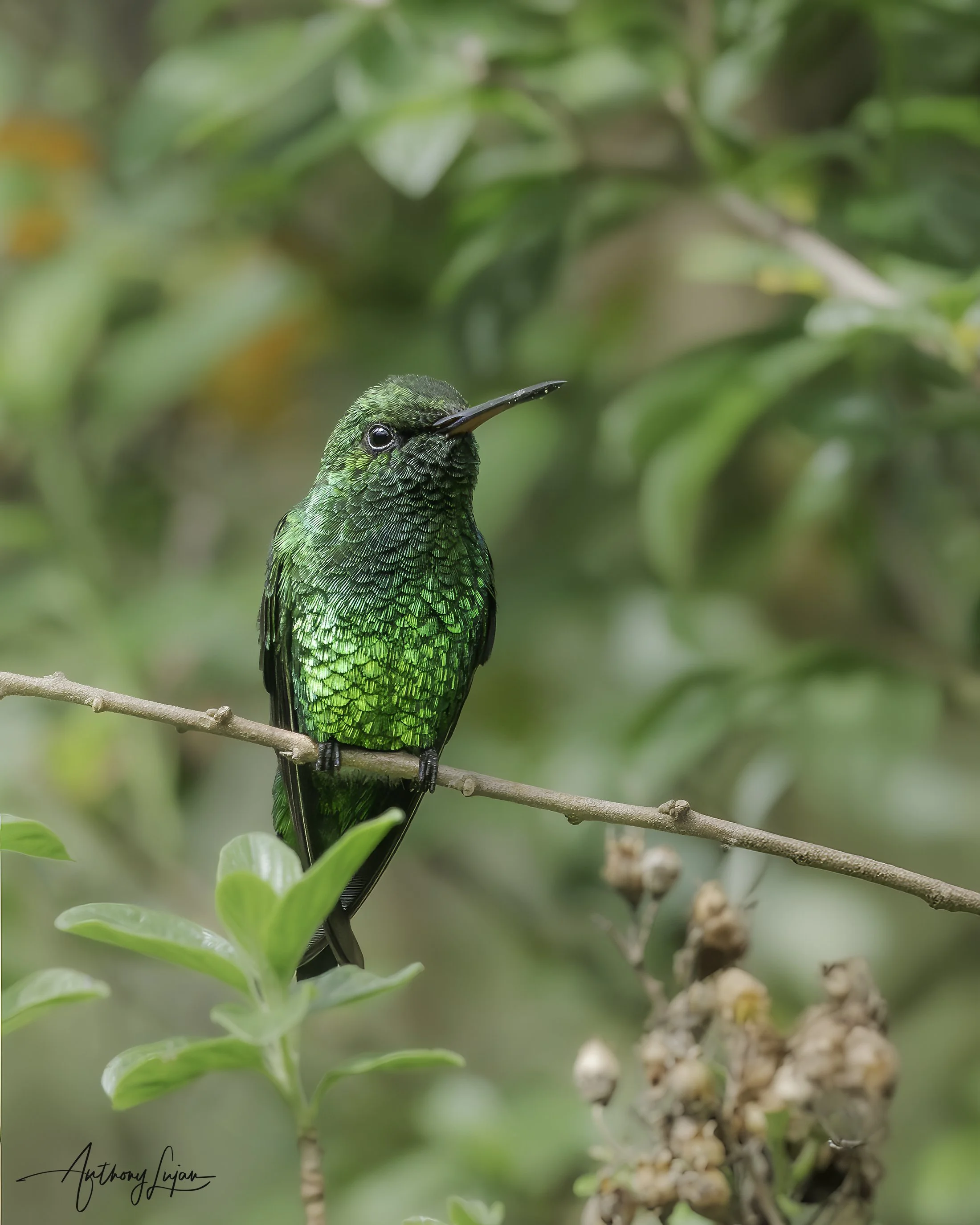
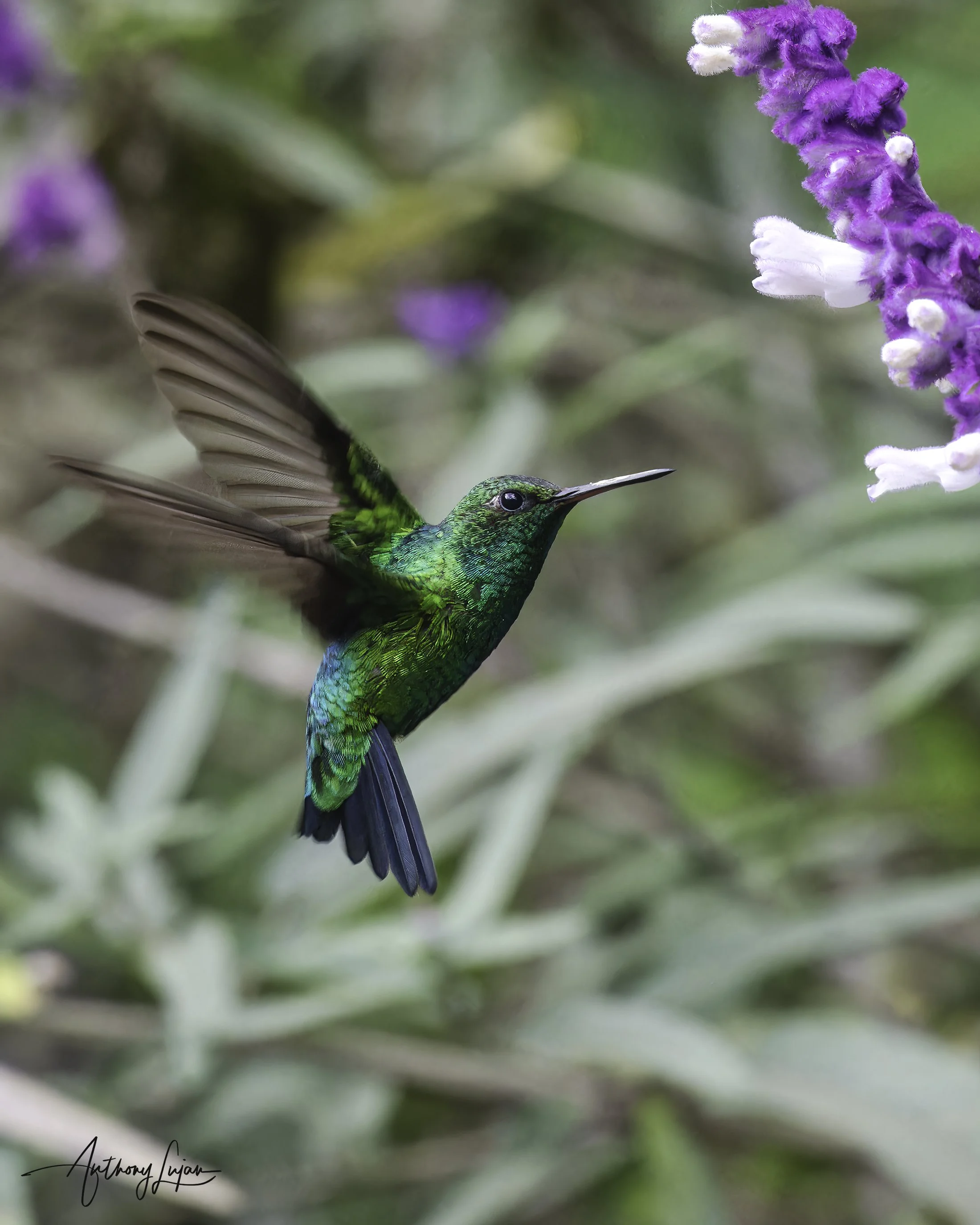
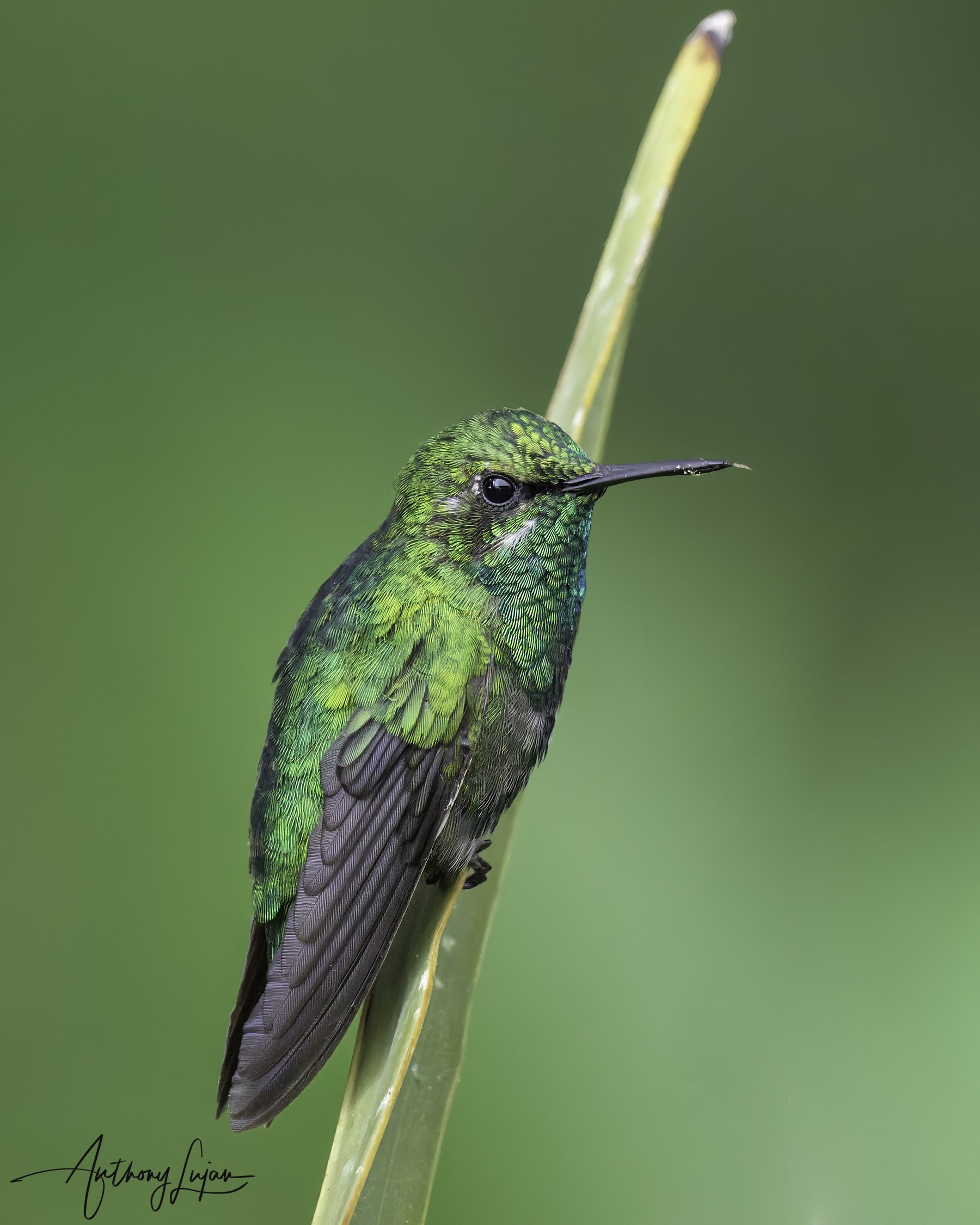
Below is the Red-billed Emerald (Chlorostilbon gibsoni nitens)
Photographed at Camarones, La Guajira, Colombia
These individuals belong to the subspecies nitens, which is found in extreme northern Colombia and into northwestern Venezuela. This population occupies dry forest, thorn scrub, and coastal desert zones. The nitens form is generally smaller and paler overall, with less extensive green iridescence than southern forms, and shows strong adaptation to arid environments.
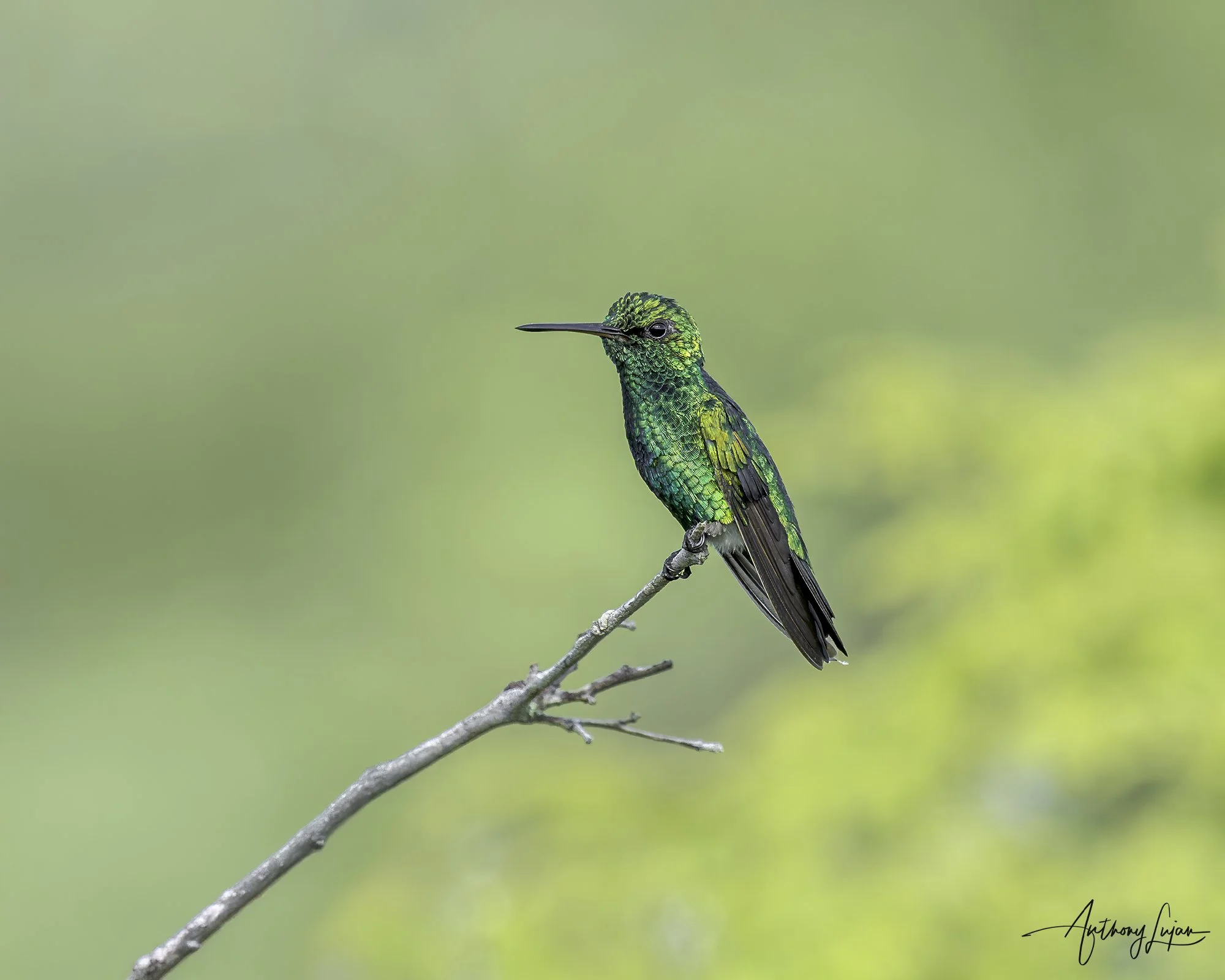
Below is the Red-billed Emerald (Chlorostilbon gibsoni gibsoni)
Photographed at Ibagué, Tolima, Colombia
These individuals belong to the subspecies gibsoni, which occurs in the upper Magdalena Valley of central Colombia. This form typically inhabits drier inter-Andean valleys and scrubby open areas. It is characterized by its rich green plumage, contrasting red bill, and bright overall iridescence, particularly in males.
Related species in the Chlorostilbon genus (10 species total):




Please note: The content provided in this article reflects Anthony’s personal experience and photographic approach. Results can vary depending on light, weather, location, equipment, subject behavior, and field conditions.