
Rivoli’s Hummingbird

Scientific name: Eugenes fulgens
Rivoli’s Hummingbird is a large, dark “mountain gem” hummingbird of pine‑oak forests, mixed conifer woodland, and shady canyons from the southwestern United States south through Mexico to Nicaragua. The global population is estimated at about 2,000,000 mature individuals, the overall population trend is stable, it is treated as a full migrant in part of its range, and it is currently assessed as Least Concern.
At a Glance
Family: Trochilidae (hummingbirds)
Clade: Lampornithini – Mountain Gems
Genus: Eugenes — 2 species in total
Range: Southwestern United States (Arizona, New Mexico, occasional Texas) south through the highlands of Mexico to Honduras and Nicaragua
Habitat: Interior and edges of pine‑oak and mixed conifer forest, shady canyons, open montane woodland, and adjacent clearings with flowering trees and shrubs; often visits feeders near forest
Elevation: Typically about 1,500–3,500 m (4,900–11,500 ft), lower locally in some canyons
Length: About 11–13 cm (4.3–5.1 in)
Weight: About 6–10 g (0.21–0.35 oz), making it one of the larger hummingbirds of its range
Number of mature individuals: ~2,000,000
Population trend: Stable
Movement: Full Migrant (strongly migratory at the northern limit of its range, more resident farther south)
IUCN Red List category: Least Concern
Name Origin
The genus name Eugenes combines Greek roots meaning “well‑born” or “noble,” hinting at the bird’s impressive size and appearance. The species name fulgens means “shining” or “glittering,” referencing the male’s striking emerald throat and crown. The English name “Rivoli’s Hummingbird” honors François Victor Masséna, Duke of Rivoli; the species was also long known as the “Magnificent Hummingbird,” a name still widely used in the birding community.
Taxonomy
Eugenes fulgens belongs to the mountain gem tribe Lampornithini in subfamily Trochilinae. The genus Eugenes currently includes two species: Rivoli’s Hummingbird (E. fulgens) and Talamanca Hummingbird (E. spectabilis), which was formerly treated as a southern subspecies of fulgens but is now widely recognized as distinct.
Rivoli’s Hummingbird occurs from the highlands of southern Arizona and southwestern New Mexico (and occasionally western Texas) south through the Sierra Madre ranges of Mexico into Guatemala, Honduras, El Salvador, and northern Nicaragua. Within this range it is strongly associated with montane pine‑oak and mixed conifer forests, as well as cloud‑forest edges, shady canyons, and adjacent open woodland and clearings. In the southwestern United States it is primarily a summer breeder in mid‑ to high‑elevation mountains; farther south it is more resident.
Subspecies and Distribution
Monotypic — no subspecies recognized.
Distribution:
United States: Breeds in southeastern Arizona and southwestern New Mexico, with occasional breeding or summer records in western Texas and the Chisos Mountains of Texas; in the U.S. it is largely a summer visitor that withdraws southward in winter.
Mexico: Widespread in montane regions from the Sierra Madre Occidental and Sierra Madre Oriental south through the Trans‑Mexican Volcanic Belt into southern highlands, in pine‑oak, fir, and mixed conifer forests and shady canyons.
Central America: Continues south through the highlands of Guatemala, Honduras, El Salvador, and northern Nicaragua, generally in similar montane forest and canyon habitats.
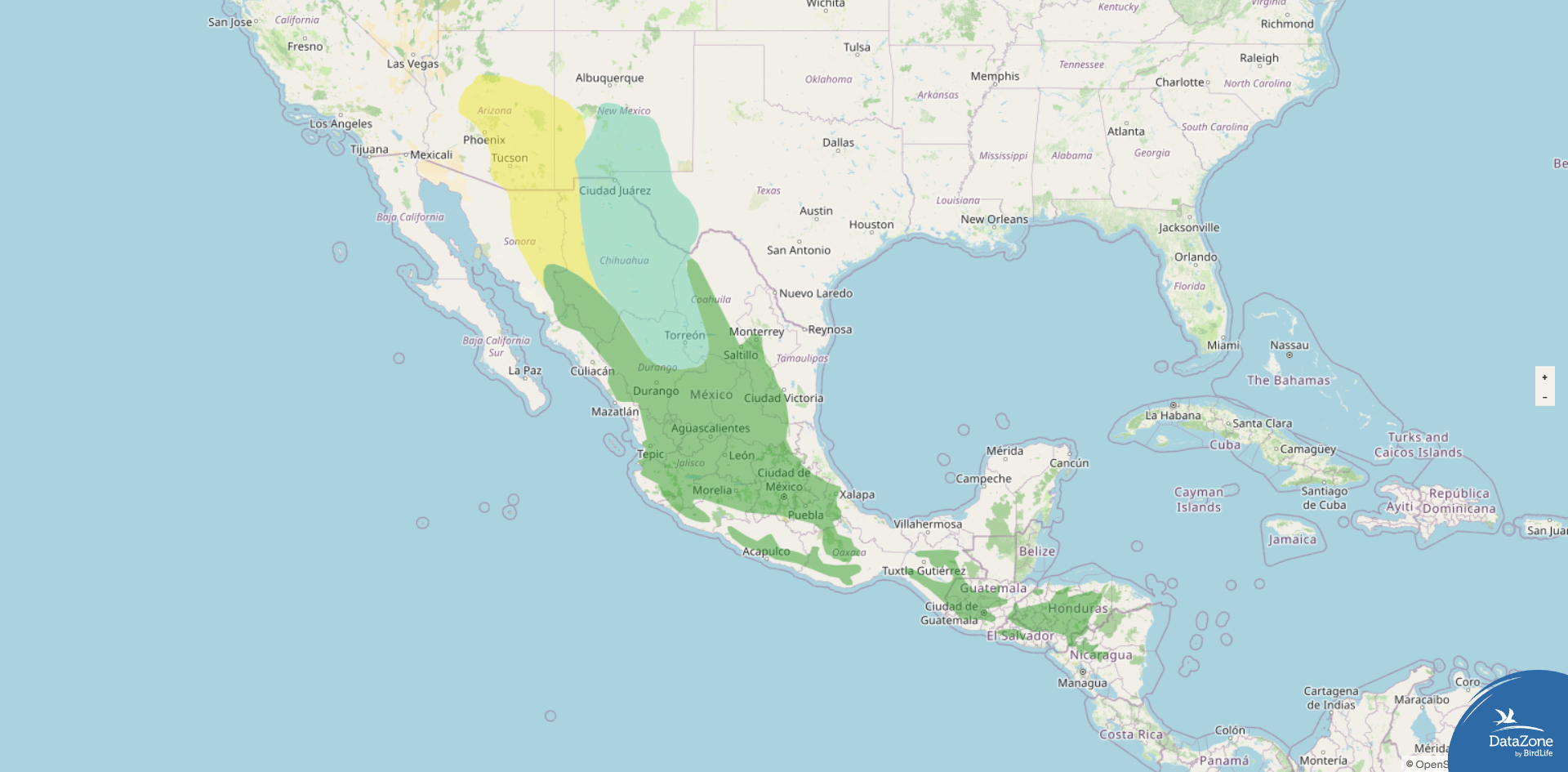
Legend
Green Resident
Yellow Breeding
Blue Non-breeding
Species Overview
Rivoli’s Hummingbird is a large, somewhat dark hummingbird that can look plain until the light catches it, revealing a brilliant emerald throat and shining purple crown in adult males. It is a characteristic bird of pine‑oak ridges and shady canyons, often quietly trap‑lining between scattered patches of flowers rather than aggressively dominating feeders. Its broad distribution from the southwestern U.S. through much of montane Mexico and northern Central America, combined with a large, stable population, supports its status as Least Concern.
Male Description
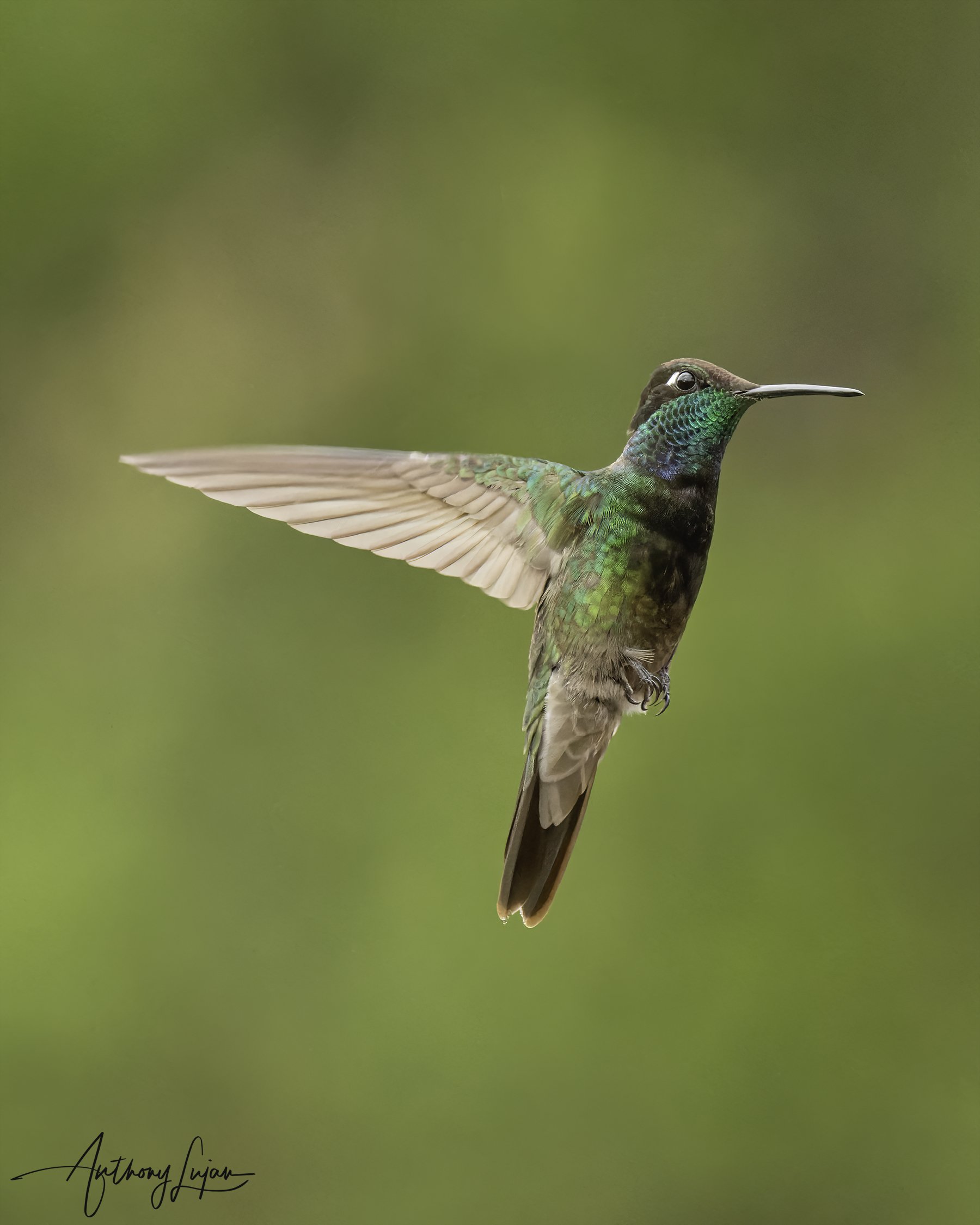
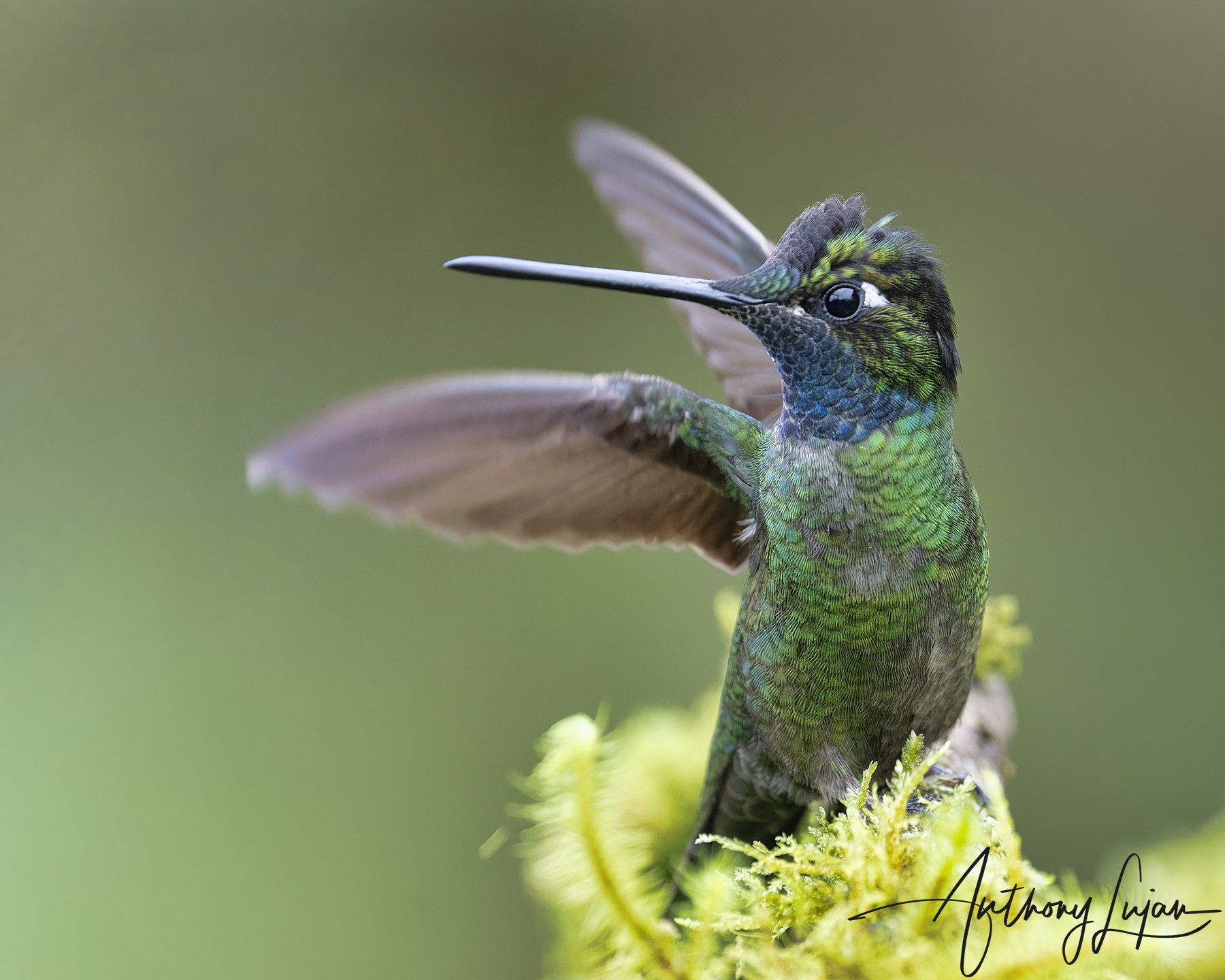
Adult males are robust hummingbirds, noticeably larger than most other species in their range. The head crown is iridescent purple and can appear dull or blackish until it flashes in direct light. The throat is a sparkling emerald green gorget bordered below by a darker band that blends into the dusky chest and belly. The back and upperparts are dark green to bronzy green, and the wings are dark with broad bases.
The tail is slightly forked and relatively long, dark with a bluish or greenish sheen and paler tips on some feathers. The bill is long, straight, and black, suited for probing deep, tubular flowers. In low light, males can appear almost blackish with only hints of green and purple, but when they turn toward the sun the head and throat ignite with color.
Female Description
Females are slightly smaller and lack the brilliant crown and throat coloration. The upperparts are green, and the underparts are grayish to buffy, often with some faint streaking or spotting on the throat. The tail is somewhat rounded or slightly forked, with dark central feathers and outer feathers that may show pale or grayish tips. The bill is long, straight, and black like the male’s. Juveniles resemble females, with young males gradually developing the purple crown and bright green gorget as they age.
Habitat & Behavior
Rivoli’s Hummingbirds inhabit mountainous pine‑oak forests, mixed conifer woods, and shady canyons, often near streams or moist drainages but not strictly tied to water. They also use edges of cloud forest, forest clearings, and open hillsides with scattered trees and shrubs, and they readily visit hummingbird feeders around cabins and lodges. In the U.S., they are typical birds of mid‑ to high‑elevation “sky island” mountain ranges.
They feed mainly on nectar, using their long bills to access deep tubular flowers that some smaller hummingbirds cannot reach. Rather than aggressively defending a single patch of flowers, Rivoli’s Hummingbirds often “trap‑line,” following a regular route among widely separated flowering shrubs and trees. They also catch small insects in the air or glean them from foliage for protein. Their flight is strong and direct, with measured wingbeats compared to smaller, more frenetic hummingbirds.
Breeding
The breeding season varies geographically but in the southwestern United States generally spans spring and summer, often from April through July, while in Mexico and Central America it follows local seasonal patterns, often aligning with increased flowering in montane forests. The female builds a compact cup nest of plant down, fine fibers, and spiderweb, lined with softer material and externally camouflaged with lichen and bark flakes. Nests are usually placed on horizontal branches of trees or shrubs, often over or near ravines, streams, or canyon slopes.
The clutch typically consists of two white eggs. The female alone incubates and cares for the chicks. Incubation lasts roughly two weeks, and chicks fledge about three weeks after hatching, similar to other large hummingbirds. During nesting, males continue to feed and display in the territory but do not assist with nest duties.
Movement
Rivoli’s Hummingbird is migratory in part of its range and resident in others. Birds breeding in the southwestern United States and northernmost Mexico are strongly migratory: they move south and to lower elevations after breeding, vacating most U.S. sites in winter and wintering in Mexico. Farther south, from north‑central Mexico into northern Nicaragua, Rivoli’s Hummingbird is largely resident or shows only local elevational shifts as it tracks flowering along mountain slopes. Across the species’ range, these combined patterns mean it functions as a full migrant at the northern limit and a partial resident migrant farther south.
Population
The global population is estimated at around 2,000,000 mature individuals. Within suitable montane forest and canyon habitats it is generally uncommon to fairly common, with local densities depending on flower availability and elevation. There is no evidence of rapid declines, and its broad distribution across numerous mountain ranges in the U.S., Mexico, and northern Central America provides a measure of security.

Conservation
Rivoli’s Hummingbird is assessed as Least Concern, with a large, stable population and a wide elevational and geographic range. It occurs in many protected areas across Mexico and Central America and in national forests and parks in the southwestern United States. Primary long‑term concerns include loss or degradation of pine‑oak and mixed conifer forests from logging, development, and climate‑related changes, as well as potential mismatches between flowering phenology and migration. Protecting montane forest habitats, maintaining shady canyons and riparian corridors, and preserving flowering plant diversity are all beneficial for this species.
taken in Guatemala


taken in the United States
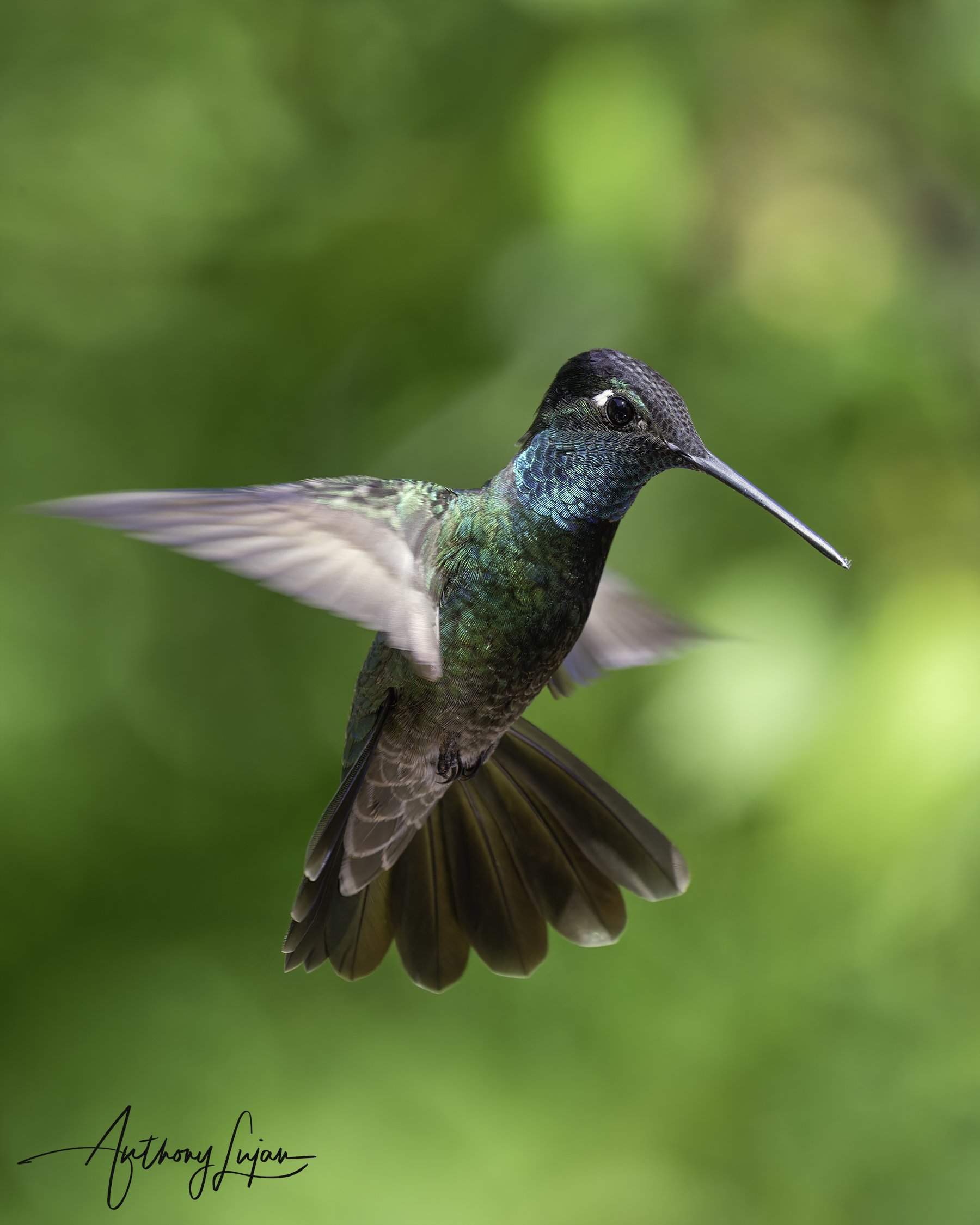
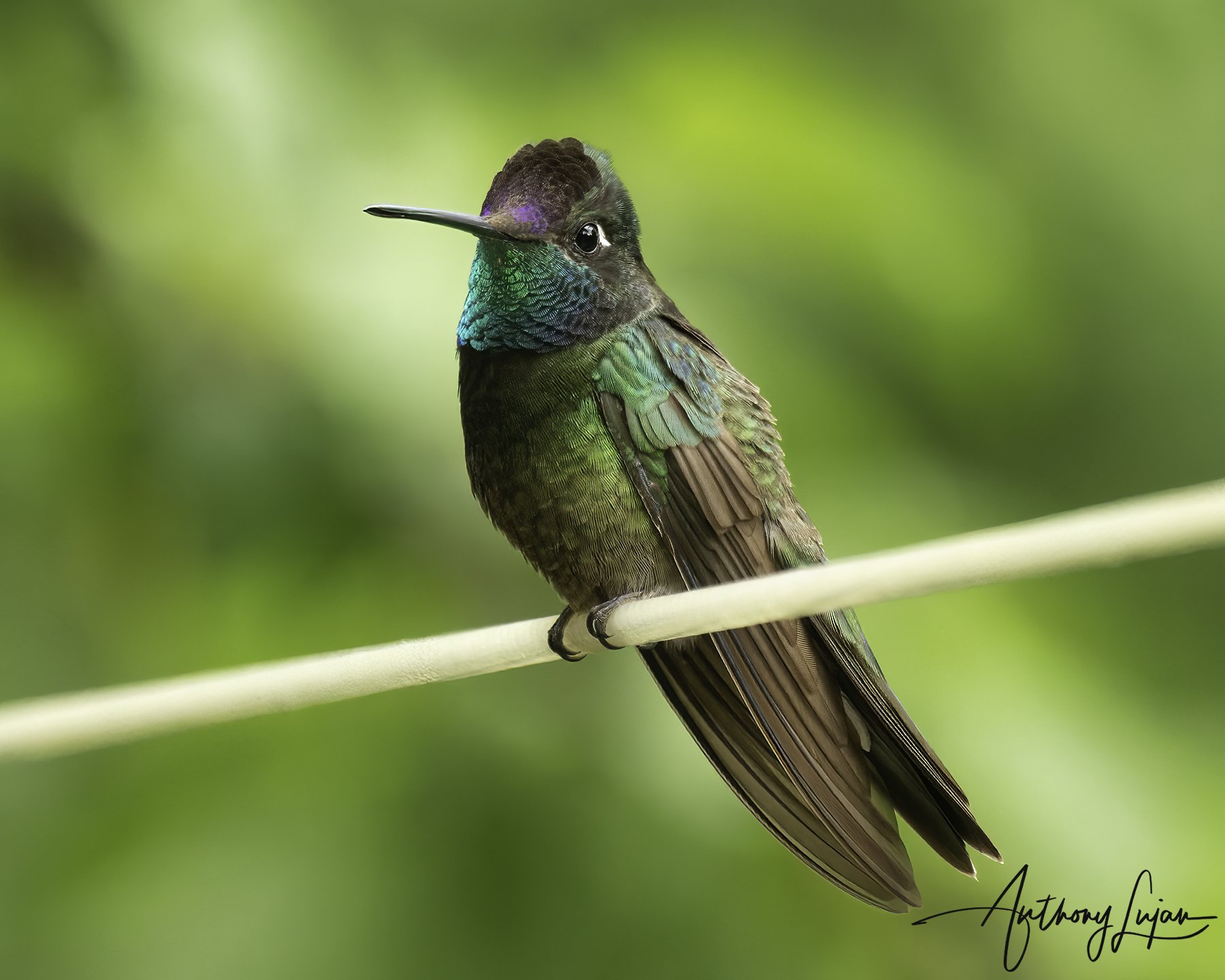
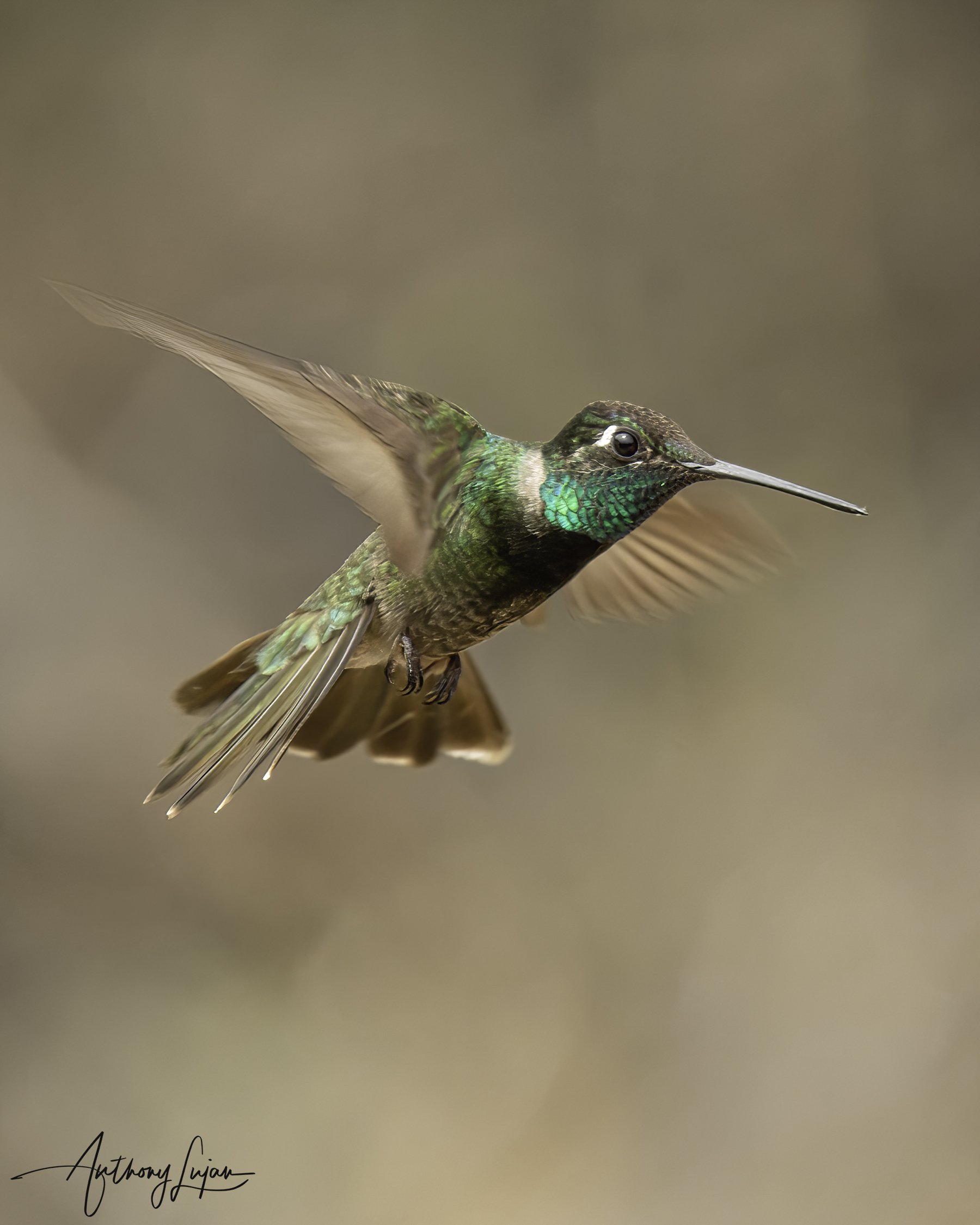
View all the videos by clicking the three lines in the top right corner for the playlist.
Related species in the Eugenes genus (2 species in total):

Please note: The content provided in this article reflects Anthony’s personal experience and photographic approach. Results can vary depending on light, weather, location, equipment, subject behavior, and field conditions.