
Royal Sunangel
Scientific name: Heliangelus regalis
The Royal Sunangel is a rare Andean hummingbird with a small, fragmented range in extreme southern Ecuador and northern Peru. An estimated 3,000–8,999 mature individuals remain, the population is decreasing, it is considered non-migratory, and it is currently listed as Near Threatened with two recognized subspecies.
At a Glance
Family: Trochilidae (hummingbirds)
Clade: Lesbiini – “brilliants” of the Andean highlands
Genus group: Heliangelus — “sunangels,” small, often high-elevation hummingbirds with intense iridescence
Range: Fragmented along the eastern Andean slope of southern Ecuador and northern Peru, including the Cordillera del Cóndor, Cordillera Azul, and nearby ridges.
Habitat: Humid elfin scrub, mossy stunted forest, high-elevation shrublands, steep wooded ravines, and well-vegetated foothills and lower montane forest.
Elevation: Most abundant between about 1,500 and 2,200 m; recorded from roughly 1,250 m, with a few lower foothill records.
Length: About 10–12 cm (3.9–4.7 in).
Weight: Approximately 3.4–4.5 g.
Number of mature individuals: 3,000–8,999
Population trend: Decreasing
Status: Near Threatened (IUCN)
Name Origin
The genus name Heliangelus combines Greek roots for “sun” and “messenger” or “angel,” referring to the brilliant, sunlit iridescence of these hummingbirds. The species name regalis means “royal,” highlighting the bird’s rich, purple-to-indigo sheen and striking appearance. The English name “Royal Sunangel” reflects both its regal coloration and its placement among the radiant “sunangels.”
Subspecies & Distribution
Two subspecies:
Heliangelus regalis regalis
Distribution: Extreme southern Ecuador and northern Peru (Cajamarca, Amazonas), including the Cordillera del Cóndor and the eastern Andean slope in San Martín and Loreto. It is most closely associated with elfin scrub and adjacent humid forest on isolated ridges and sandstone plateaus.Heliangelus regalis johnsoni
Distribution: Cordillera Azul of northern Peru, where it occurs in similar high-elevation scrub and forest-edge habitats. Males of this subspecies are noted for especially intense indigo iridescence on the crown, throat, and upper breast.
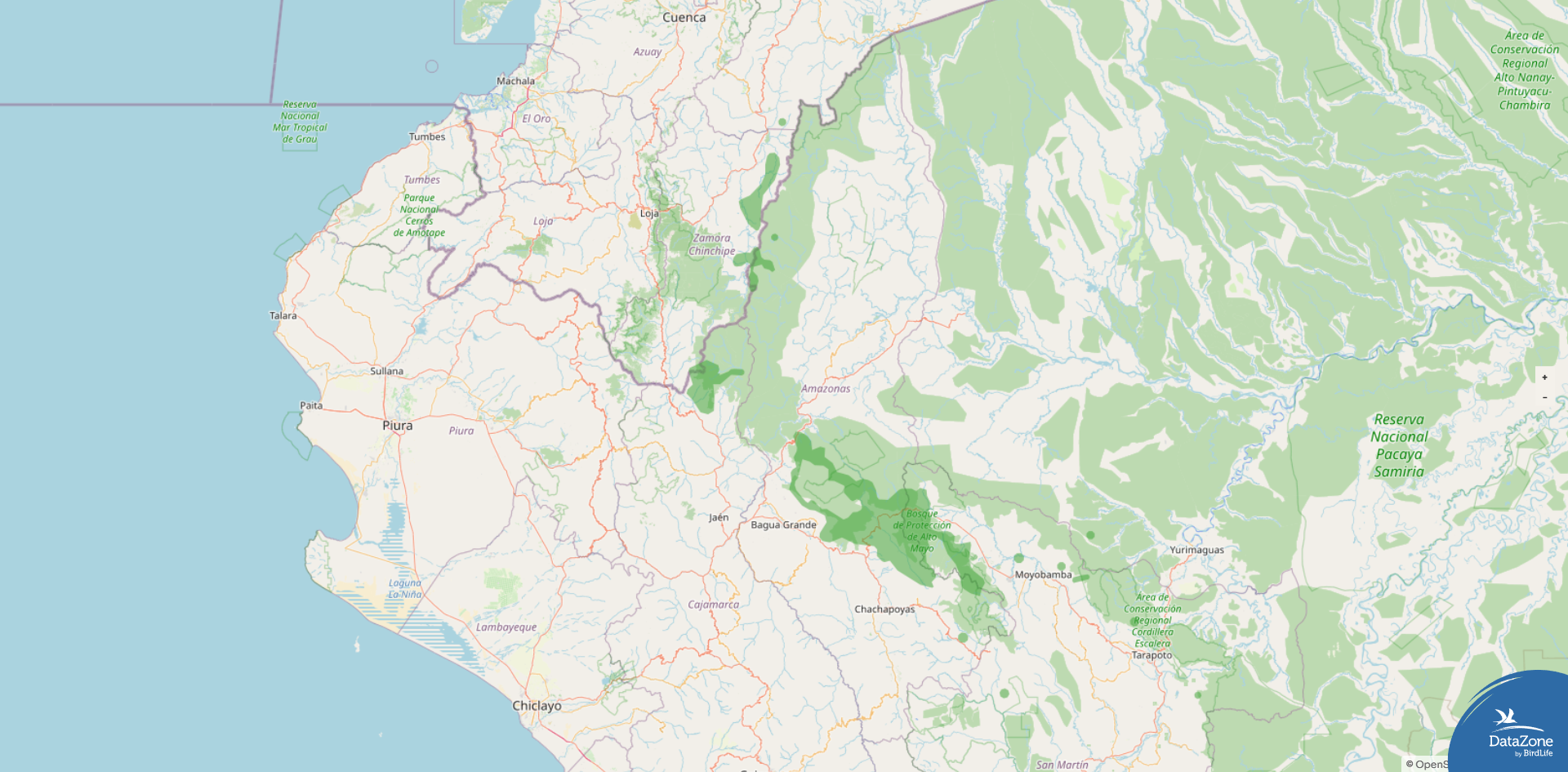
Legend
Green Resident
Species Overview
The Royal Sunangel is a small, intensely iridescent hummingbird that specializes in high-elevation scrub and stunted forest along a narrow Andean band. It often occurs in “elfin scrub,” a mosaic of grasses, low bushes, lichens, and mossy, stunted trees on exposed ridges, as well as steep ravines and humid foothill forest margins. Its patchy range, dependence on fire-influenced ridge-top vegetation, and continuing deforestation have made it a conservation priority in northern Peru and southern Ecuador.
Male Description
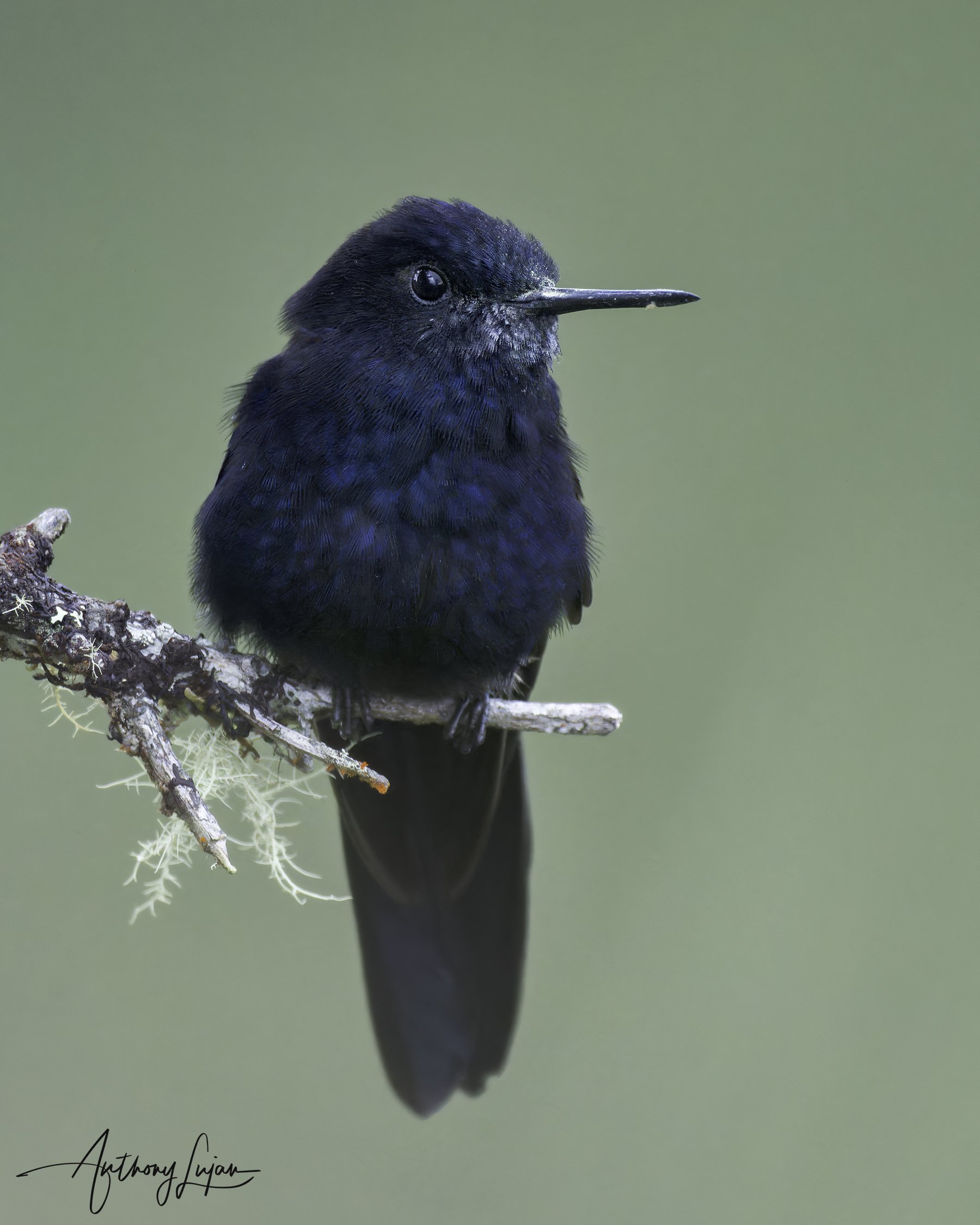
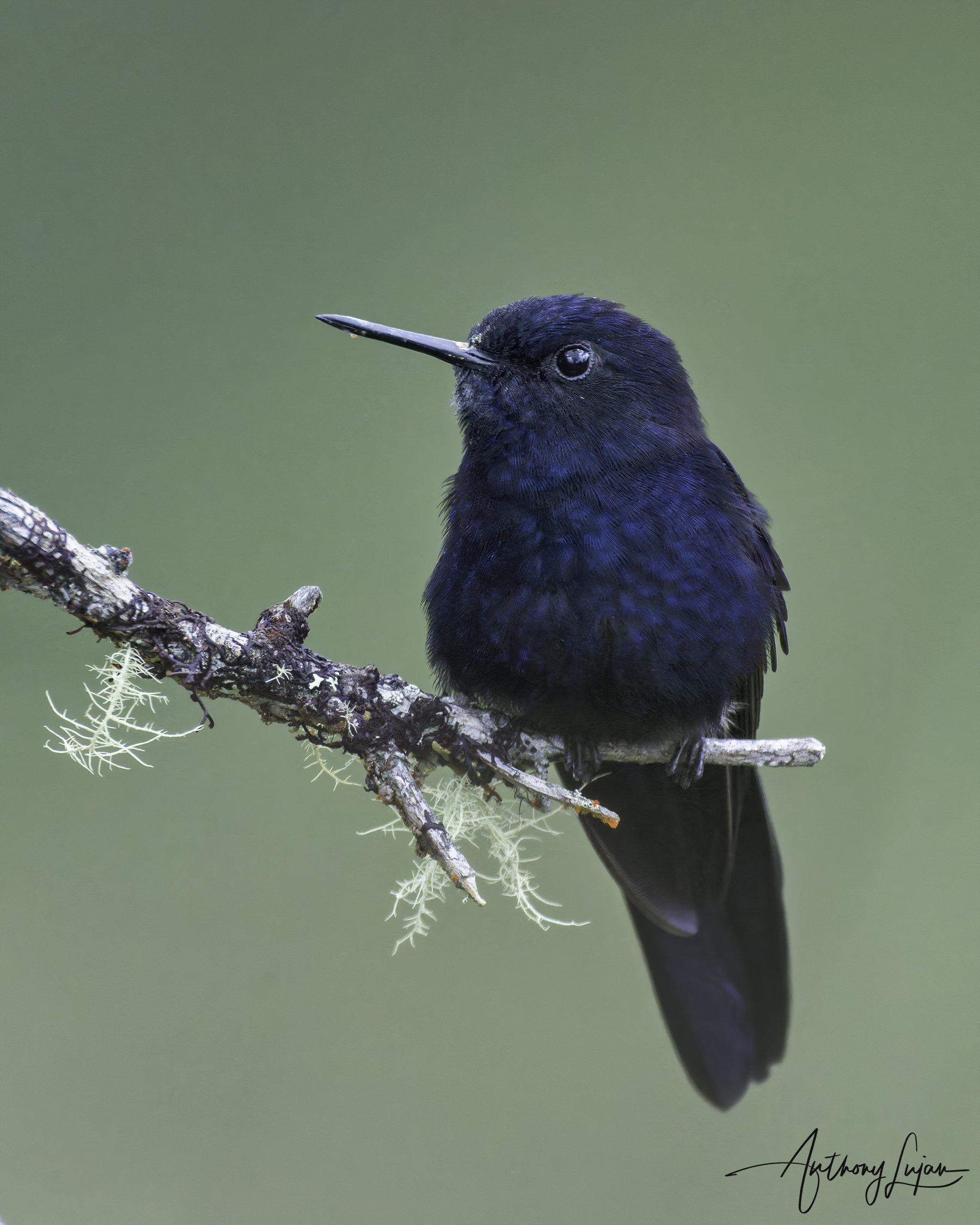
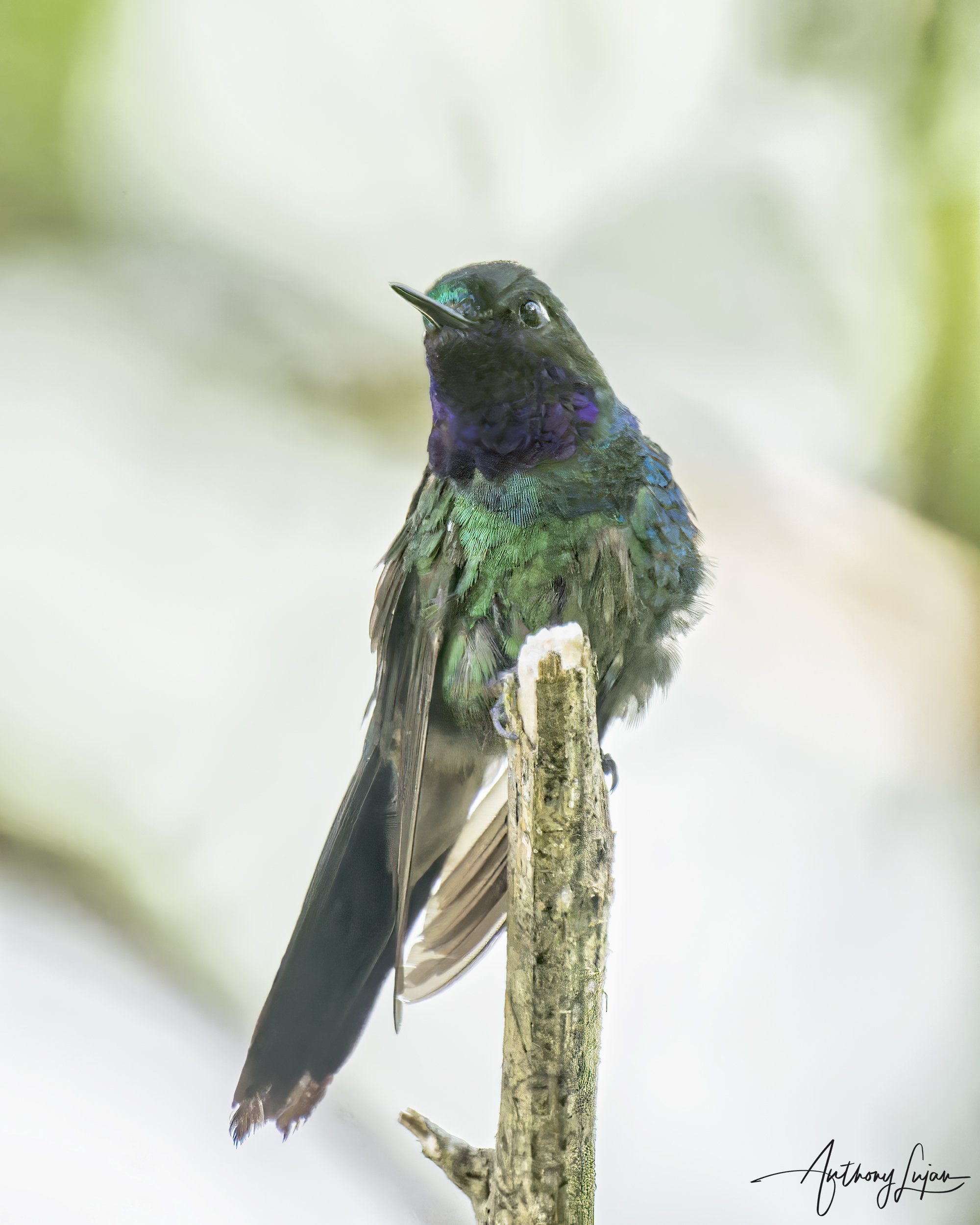
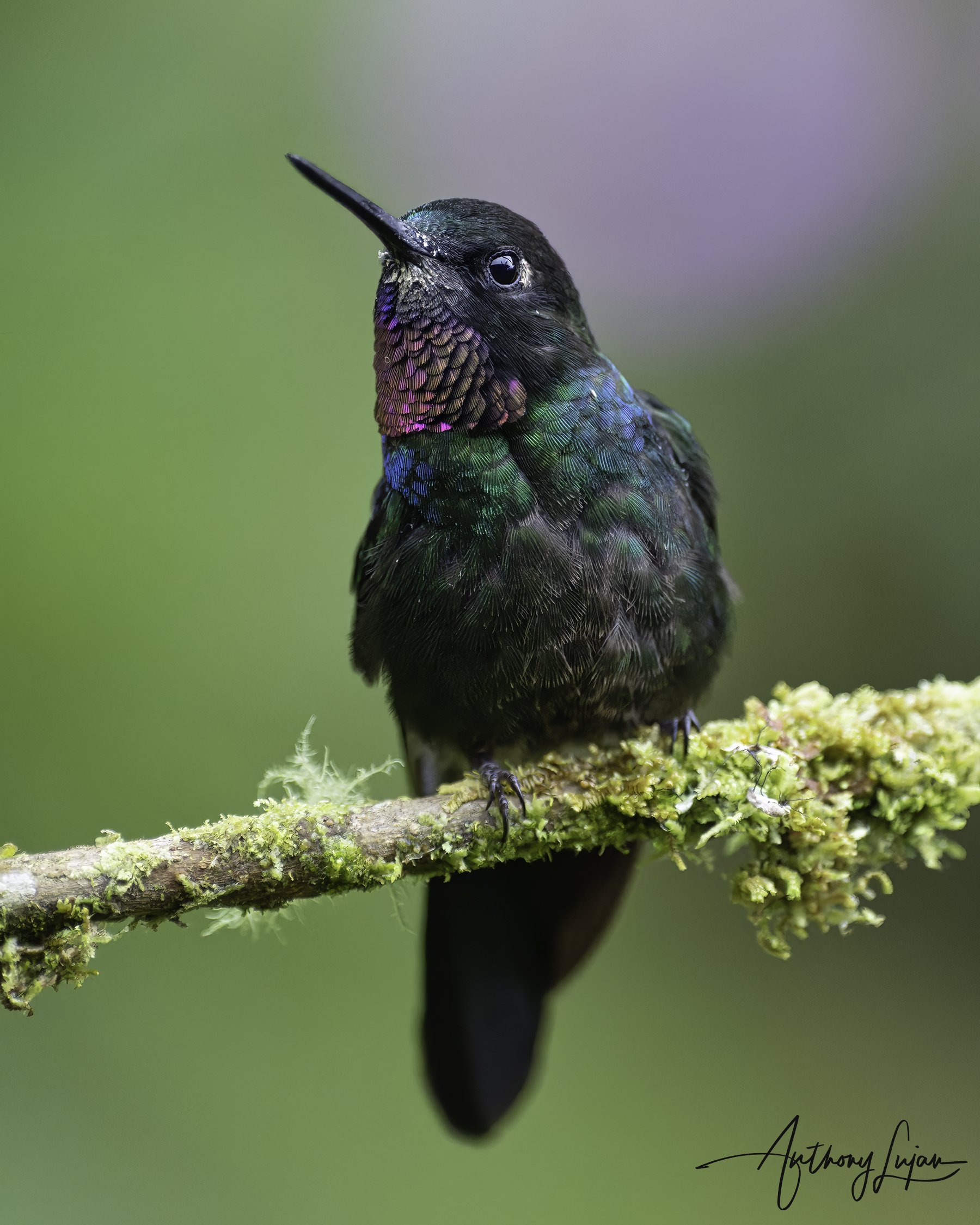
Adult males are compact with a straight black bill. The head, throat, and upper breast shimmer deep violet, purple, or indigo depending on subspecies, with johnsoni showing particularly intense indigo tones. The rest of the upperparts are dark green to bluish-green, with a velvety, almost blackish mantle and back in certain lights. The underparts below the breast are darker, often bluish-black to deep violet. The tail is moderately long and slightly forked, dark with bluish or purplish gloss. In the field, males appear as small, dark birds that suddenly flash electric indigo and royal purple when they turn into the light.
Female Description
Adult females are much duller, with green upperparts and a more subdued pattern below. The throat and upper breast are buffy or grayish with fine dark spotting or scaling, while the lower breast and belly are pale buff to whitish. The tail is dark with paler or grayish tips on the outer feathers, lacking the male’s saturated indigo tones. Females look like small green-backed hummingbirds with softly scaled, pale underparts and a modest, dark tail, relying on habitat and range for confident identification.
Habitat & Behavior
Royal Sunangels favor elfin scrub on exposed ridgetops, where mossy, stunted forest merges with grassland and lichen-covered shrubs, as well as steep wooded ravines and nearby humid montane forest. They often concentrate where ericaceous shrubs and other tubular flowers are abundant, particularly on ridges maintained by periodic fire. They feed on nectar from shrubs, herbs, and small trees, and also take small insects. Birds typically perch on low, exposed twigs from which they make short sallies to blossoms, and they may defend rich flowering patches against other hummingbirds. The species is considered resident within its limited Andean range, with no large-scale migratory movements known.
Population
The global population is estimated at roughly 3,000–8,999 mature individuals, all within a small, fragmented range on the eastern Andean flank of southern Ecuador and northern Peru. Habitat loss and fragmentation from deforestation, agricultural expansion, and changes in fire regimes are ongoing across its range. These pressures, combined with its naturally small range and patchy distribution, underlie its decreasing population trend and Near Threatened status.

Conservation
The Royal Sunangel is listed as Near Threatened due to its small, declining population and highly localized, fragmented habitat. Deforestation for agriculture, logging, and development reduces both elfin scrub and adjacent humid forest, while altered fire regimes can either eliminate scrub or prevent its natural maintenance. Conservation priorities include protecting ridge-top elfin scrub and surrounding forests in the Cordillera del Cóndor and Cordillera Azul, managing fire carefully, and maintaining continuous habitat corridors between key sites. The species’ striking appearance and restricted range make it an ideal flagship for conserving these unique Andean scrub and forest ecosystems.
Below is the Royal Sunangel (Heliangelus regalis regalis)
Photographed at ACP Abra Patricia–Trocha Royal Sunangel, Amazonas, Peru
These individuals belong to the subspecies regalis, which inhabits the eastern slope of the Andes in northern Peru (Amazonas, Cajamarca, San Martín, Loreto) and extreme southern Ecuador. This form is known for its vivid royal-blue iridescence and confined elevation range along isolated ridges. It favors humid montane forest with dense understory and is often detected by its sharp, high-pitched calls.
Checkout Anthony’s playlist of this species! Click the top right dropdown to see all the videos.
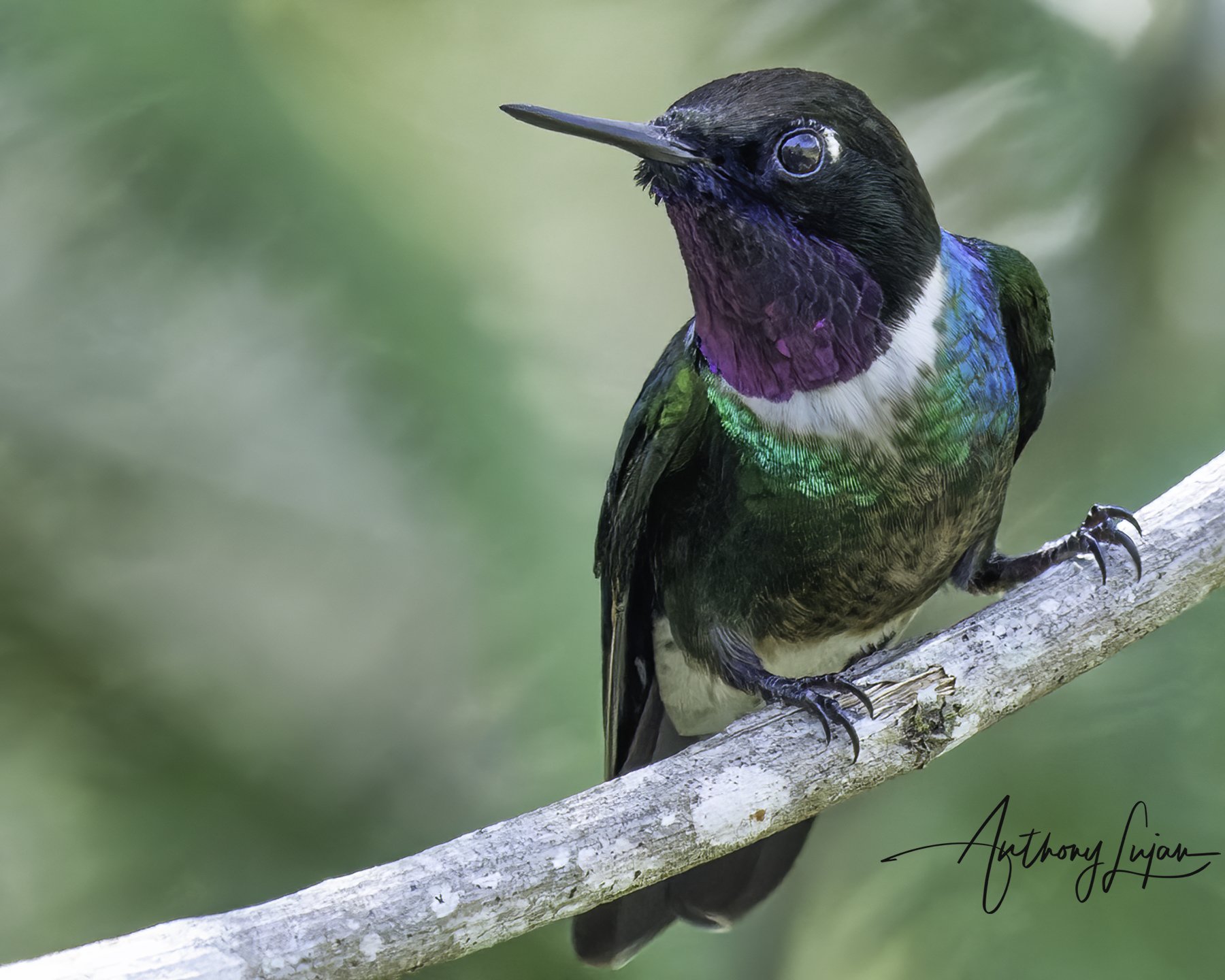
Related species in the Heliangelus genus (9 species total):
Please note: The content provided in this article reflects Anthony’s personal experience and photographic approach. Results can vary depending on light, weather, location, equipment, subject behavior, and field conditions.