
Rufous-gaped Hillstar
Scientific name: Urochroa bougueri
The Rufous-gaped Hillstar is a medium-sized hummingbird of humid montane forests and forest edges on the Pacific slope of the Andes in southern Colombia and western Ecuador. The total number of mature individuals is unknown, the overall population trend is decreasing, it is considered non‑migratory, and it is currently assessed as Least Concern.
At a Glance
Family: Trochilidae (hummingbirds)
Clade: Heliantheini – Brilliants
Genus: Urochroa — 2 species in total
Range: Pacific slope of the Andes from southern Colombia (Chocó and adjacent departments) south into western Ecuador (at least to Pichincha)
Habitat: Interior and edges of mature humid montane forest and secondary forest, shrubby slopes, and ravines, often near streams
Elevation: Generally from about 1,600 to 2,800 m (5,200–9,200 ft), most numerous around 1,800 m (5,900 ft); occasionally lower
Length: About 13–14 cm (5.1–5.5 in) including an approximately 3 cm (1.2 in) bill
Weight: About 8.5–12.5 g (0.30–0.44 oz)
Number of mature individuals: Unknown
Population trend: Decreasing
Movement: Not a migrant (essentially sedentary with some local elevational shifts)
IUCN Red List category: Least Concern
Name Origin
The genus name Urochroa combines Greek words for “tail” and “color,” referring to the contrasting white and dark pattern of the tail. The species name bougueri honors French mathematician and geophysicist Pierre Bouguer, who participated in early expeditions to South America. The English name “Rufous-gaped Hillstar” describes the broad rufous or orange malar (cheek) stripe bordering the mouth, a key field mark separating it from its sister species, the Green-backed Hillstar.
Taxonomy
Urochroa bougueri belongs to the brilliants (tribe Heliantheini) within subfamily Lesbiinae. The genus Urochroa contains two species: Rufous-gaped Hillstar (U. bougueri) on the western Andean slopes and Green-backed Hillstar (U. leucura) on the eastern Andean slopes. These were once treated together as “White-tailed Hillstar” but are now widely recognized as separate species based on differences in plumage, especially the rufous malar of bougueri, and distribution.
The Rufous-gaped Hillstar is found on the Pacific slope of the Andes from Colombia’s Chocó Department and adjacent areas south into western Ecuador as far as at least Pichincha Province. It inhabits humid montane forest interiors and edges, tall secondary forest, and shrubby slopes, often in steep ravines and along streams.
Subspecies and Distribution
Monotypic — no subspecies recognized.
Distribution: The species is confined to the western Andean slope in southern Colombia and western Ecuador. In Colombia it is recorded mainly in Chocó and neighboring departments, while in Ecuador it ranges south along the western cordillera to Pichincha and possibly slightly beyond. Within this region it occupies elevations from around 1,600 to 2,800 m, being most abundant near 1,800 m, and can occasionally be found below its usual elevational minimum in some valleys.
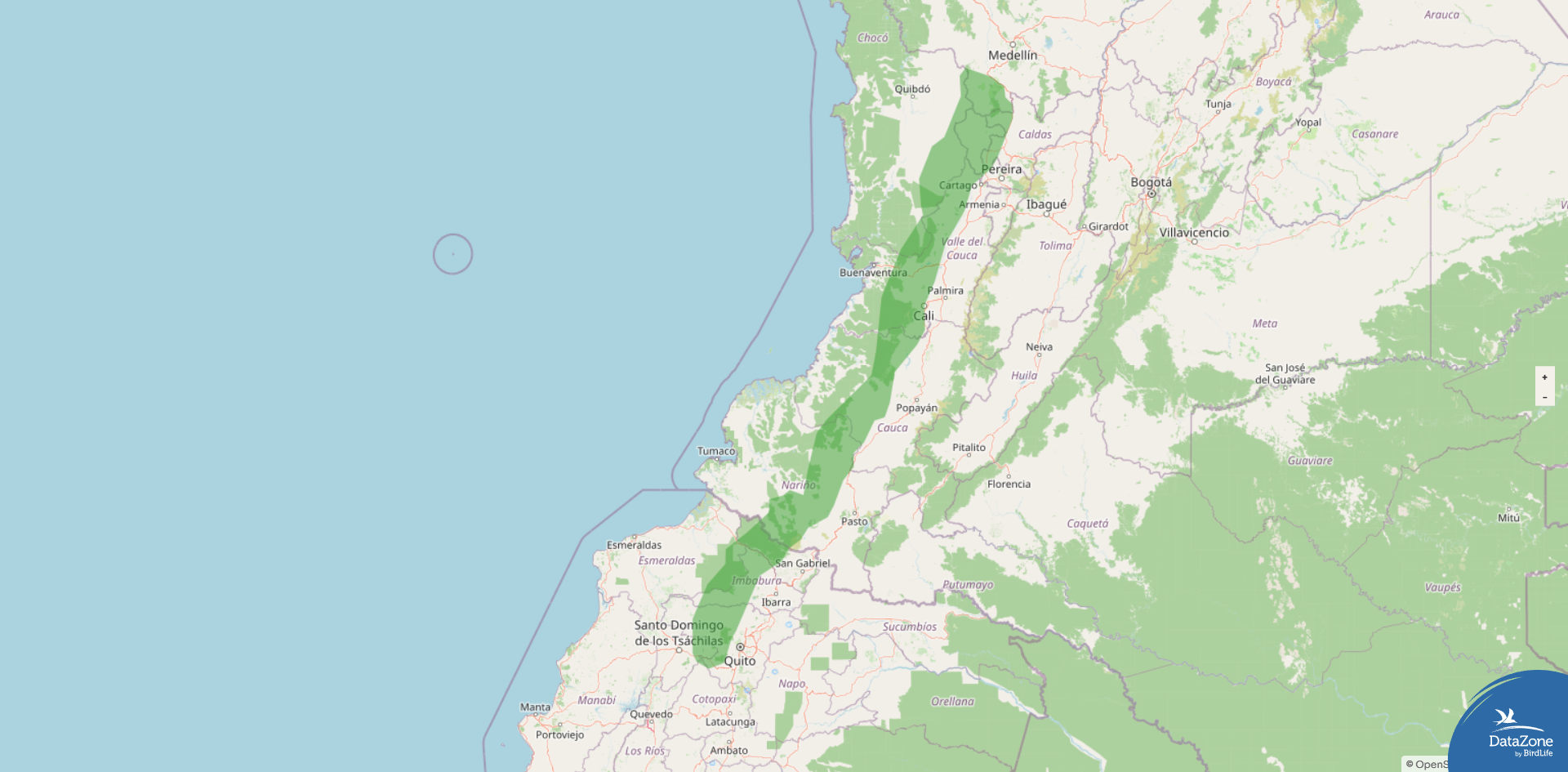
Legend
Green Resident
Species Overview
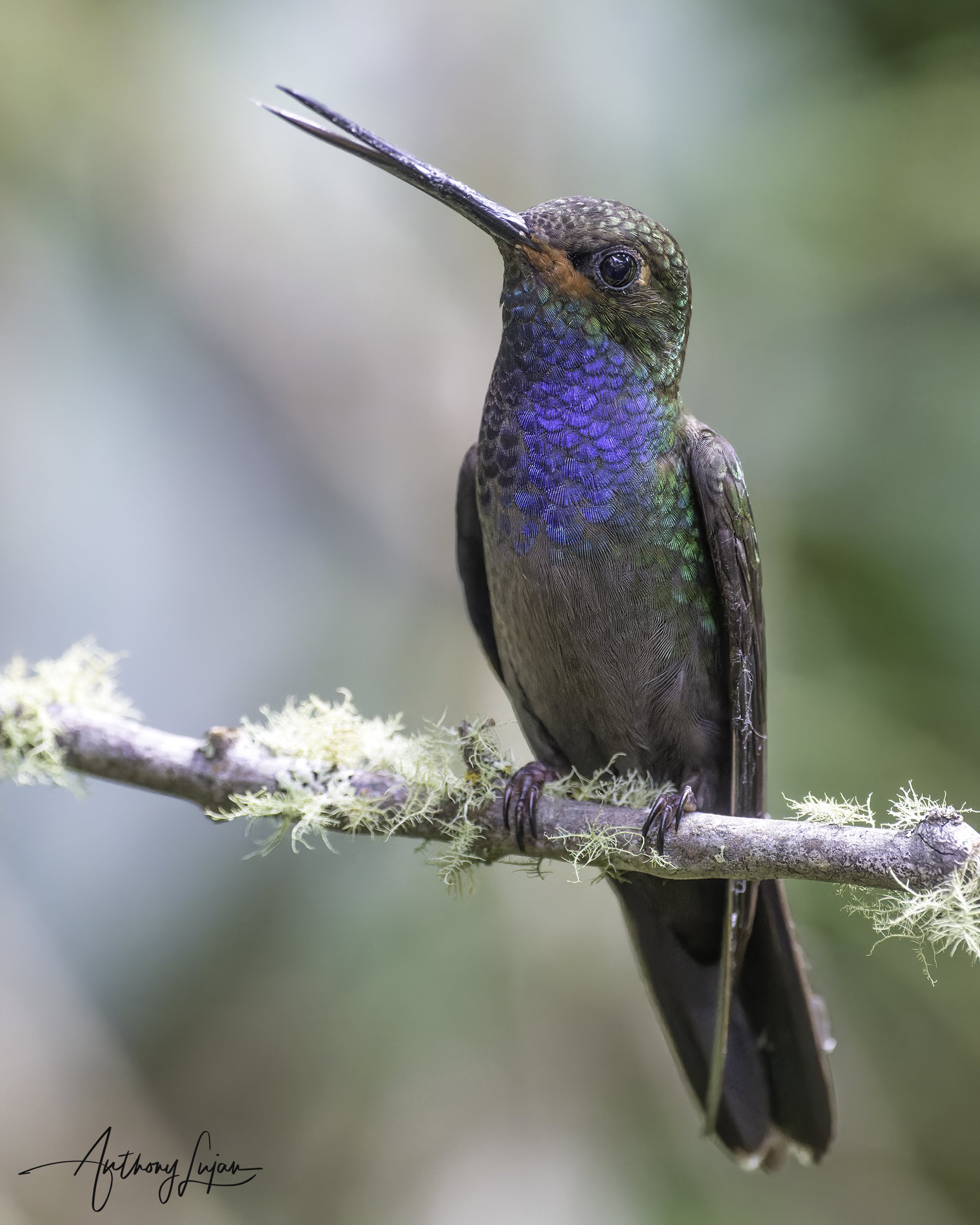
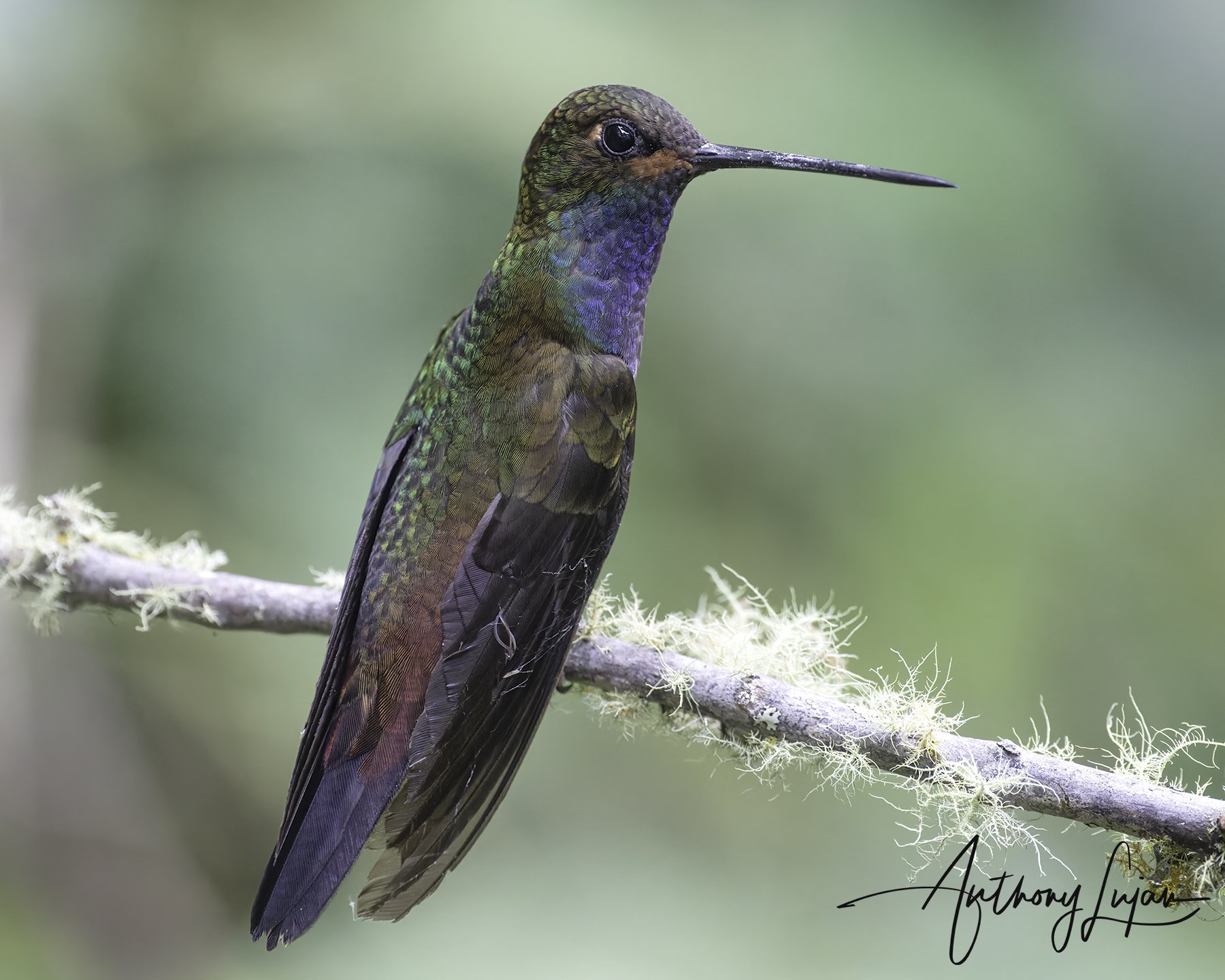
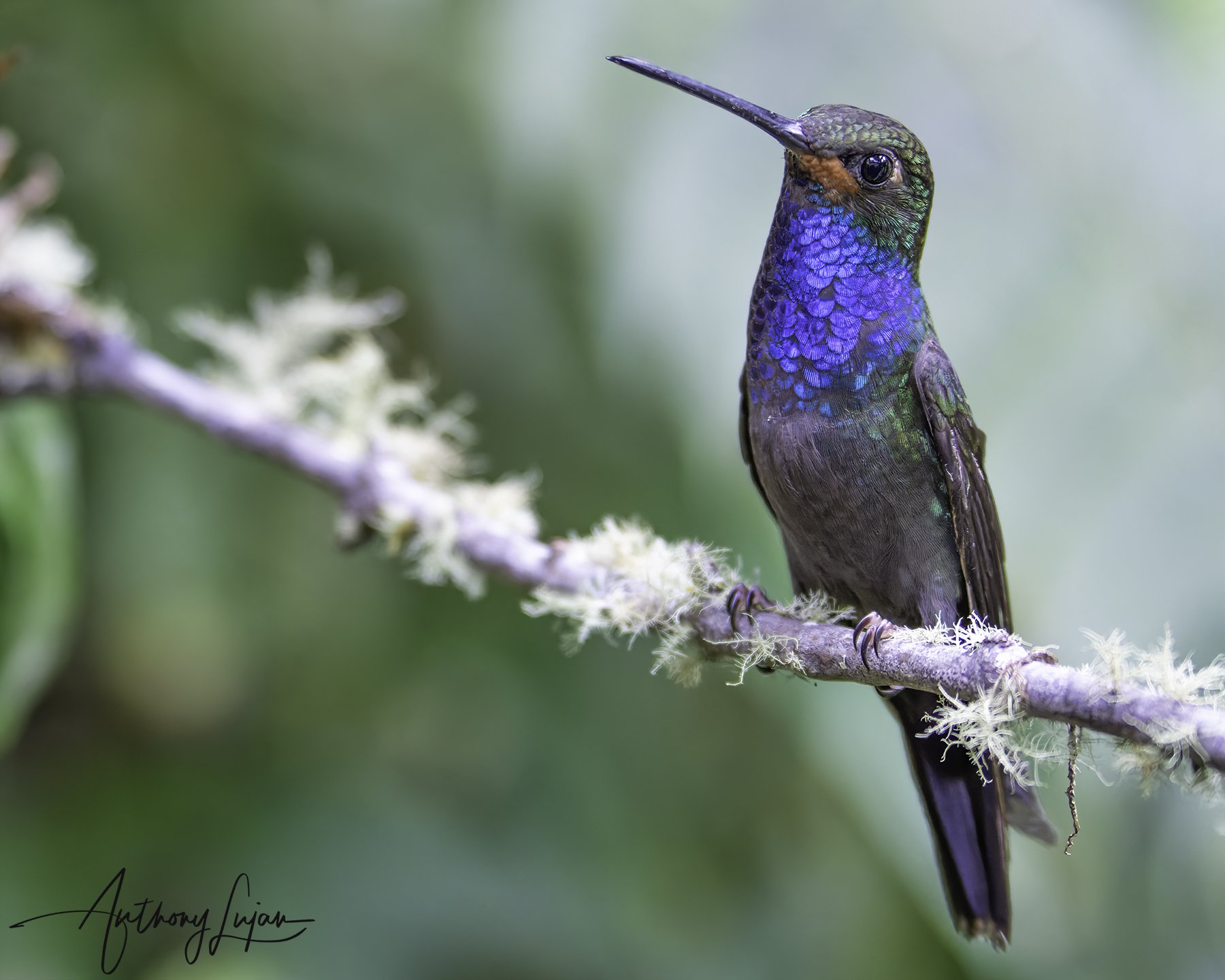
The Rufous-gaped Hillstar is a somewhat chunky, dark‑green hummingbird with a white tail and a distinctive rufous or orange malar stripe that gives the “rufous-gaped” look. It favors interior and edge habitats of humid montane forest, tall secondary forest, and shrubby ravines, typically near running water. Within suitable habitat it is usually uncommon to fairly common but can be local, and habitat loss and degradation in western Andean forests are believed to be driving a gradual decline.
Male Description
Both sexes are similar, with males averaging slightly heavier. Adults are 13–14 cm long and weigh about 8.5–12.5 g. The bill is straight, black, and about 3 cm long. The crown and nape are dark, glossy green, and the upper back is also dark green, blending into a more bronzy or bluish‑green lower back and rump. A broad rufous or orange malar stripe extends back from the gape along the lower edge of the face, framed above by darker auriculars and green crown, giving the species its common name.
The throat and upper breast are bluish or violet‑blue, forming a modest glittering patch, while the belly and flanks are grayish to dusky with a green wash. The tail is mostly dark with extensive white on the outer feathers, usually giving a strong white‑tail impression in flight and when fanned. Overall, the combination of dark green upperparts, blue throat, rufous malar, and white tail is distinctive.
Female Description
Females are very similar to males in plumage, sharing the dark green upperparts, bluish throat, grayish underparts, rufous malar stripe, and white‑tailed pattern. They may average slightly duller or less intensely colored in the throat, and the blue may be more limited, but sex differences in the field are subtle. Juveniles resemble adults but often show somewhat duller colors and may lack the full intensity of the throat and malar markings until they mature.
Habitat & Behavior
Rufous-gaped Hillstars inhabit the interior and edges of mature humid montane forests and tall secondary forests on steep Andean slopes, as well as shrubby slopes and ravines, usually near streams. They are often seen along forest trails, in gaps, and at forest borders where flowering shrubs and small trees are plentiful. Elevationally they occur mostly between about 1,600 and 2,800 m, with a center of abundance around 1,800 m.
They feed on nectar from a variety of flowers on trees, shrubs, and epiphytes, typically at mid to upper levels in the forest, hovering to feed or perching when possible. They also take small insects and other arthropods for protein, catching them in short aerial sallies or gleaning them from foliage and near blossoms. Individuals may follow regular routes through the forest between nectar sources rather than aggressively defending a single feeding territory, though they will chase intruders at especially rich patches.
Breeding
The breeding season is not fully documented but appears to coincide with periods of high flower availability in humid montane forests, often during wetter months. The female builds a cup nest of moss and plant fibers bound with spiderweb, typically placed on a vertical branch or trunk in a tall tree, about 8–12 m above the ground. The outside is camouflaged with moss and lichen, blending into the surrounding bark and epiphytes.
The clutch consists of two white eggs. The female alone incubates the eggs for about 16–18 days. After hatching, the chicks remain in the nest for roughly 23–25 days before fledging, which is somewhat longer than in many smaller hummingbirds and reflects the species’ larger size. During this time, the female makes frequent trips to feed the nestlings with regurgitated nectar and small insects.
Movement
The Rufous-gaped Hillstar is generally considered sedentary and is treated as not a migrant. It remains within the same general regions on the western Andes throughout the year. However, some seasonal elevational movements do occur, at least in Colombia, with birds shifting up or down slope in response to flowering patterns and local climate. These movements are limited and vertical rather than long‑distance latitudinal migrations.
Population
The global number of mature individuals is unknown. Within its limited range the species is typically described as uncommon to fairly common where suitable habitat remains, but its dependence on humid montane forest and tall secondary forest makes it vulnerable to deforestation and degradation. Ongoing clearing of western Andean forests for agriculture, pasture, and infrastructure likely drives the observed decreasing population trend, even though the decline is not yet rapid enough to raise its threat category.

Conservation
The Rufous-gaped Hillstar is assessed as Least Concern due to its occurrence across multiple Andean regions and presence in some protected areas, despite its relatively small range and declining trend. Its reliance on humid montane forests and streamside habitats on the western Andes means that deforestation, forest fragmentation, and changes in water regimes are the primary threats. Conservation of montane forest belts on the Pacific slope, protection of ravines and stream corridors, and maintenance of tall secondary forests and flowering shrub layers are important for sustaining healthy populations of this species.
Related species in the Urochroa genus (2 species in total):
Please note: The content provided in this article reflects Anthony’s personal experience and photographic approach. Results can vary depending on light, weather, location, equipment, subject behavior, and field conditions.