
Santa Marta Sabrewing
Scientific name: Campylopterus phainopeplus
The Santa Marta Sabrewing is an extremely rare hummingbird endemic to the southeastern slope of the Sierra Nevada de Santa Marta in northern Colombia. Only an estimated 1–49 mature individuals remain, the population is decreasing, and it is listed as Critically Endangered, monotypic, and considered an altitudinal migrant within its small elevational band.
At a Glance
Family: Trochilidae (hummingbirds)
Clade: Trochilini – Emeralds
Genus group: Campylopterus — 10 species, 6 subspecies
Range: Extremely restricted area along the mid Guatapurí River basin on the southeastern slope of the Sierra Nevada de Santa Marta, northern Colombia, known from only a few nearby localities.
Habitat: Humid and semi-humid montane forest and forest edge, riparian forest, secondary forest, and mixed mosaics of native vegetation with perennial crops along watercourses.
Elevation: Primarily mid elevations around 1,150–1,850 m on the southeastern slope of the Sierra Nevada de Santa Marta.
Length: Roughly 11–12 cm (about 4.3–4.7 in).
Weight: About 7–8 g, relatively large for a hummingbird.
Number of mature individuals: 1–49
Population trend: Decreasing
Status: Critically Endangered (IUCN)
Name Origin
The genus name Campylopterus comes from Greek words meaning “curved wing,” referring to the thickened, sabre-shaped outer primaries typical of sabrewings. The species name phainopeplus combines roots for “shining” and “cloak” or “mantle,” likely referencing the bird’s iridescent plumage. The English name “Santa Marta Sabrewing” highlights both its restricted range in the Sierra Nevada de Santa Marta and the distinctive sabre-like wing structure of its genus.
Subspecies & Distribution
The Santa Marta Sabrewing is monotypic, with no recognized subspecies.
Campylopterus phainopeplus phainopeplus
Known only from a handful of localities along the mid Guatapurí River basin on the southeastern slope of the Sierra Nevada de Santa Marta in northern Colombia, including sites near Chemesquemena, Guatapurí, Atánquez, San José, and nearby villages.
Overall, the species is a microendemic confined to a very small area of montane and riparian forest within the southeastern Santa Marta massif, with no confirmed populations outside this limited zone.
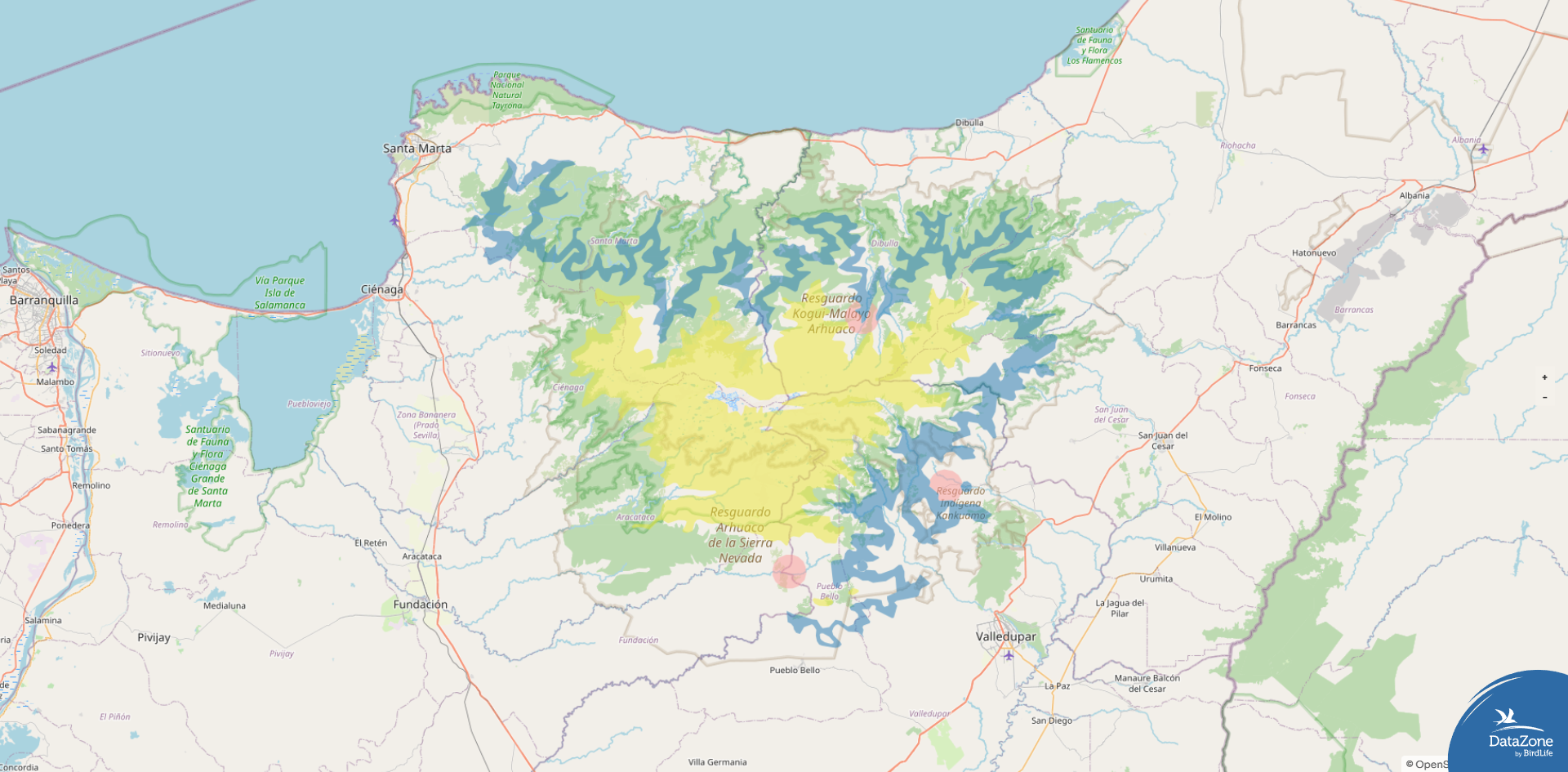
Ledged
Green Resident
Yellow Breeding
Blue Non-breeding
Species Overview
The Santa Marta Sabrewing is one of the world’s rarest and most range-restricted hummingbirds, long considered “lost” to science with very few documented records between its description and its recent rediscoveries. It inhabits a narrow elevational band of humid and semi-humid montane forest along a single river basin in the Sierra Nevada de Santa Marta. Its tiny population, extremely limited distribution, and ongoing habitat threats have led to its classification as Critically Endangered and a focal species for high-priority conservation action.
Male Description
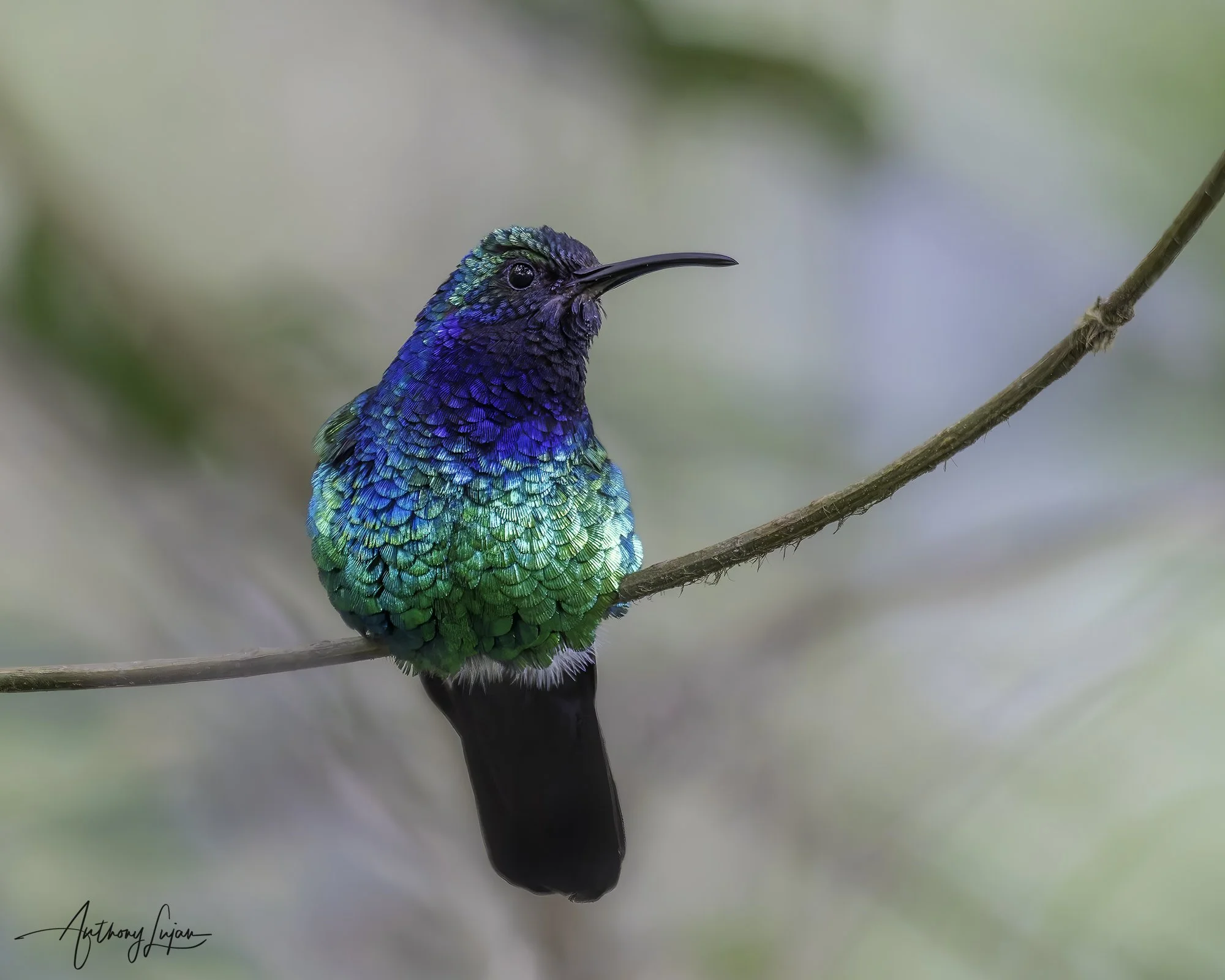
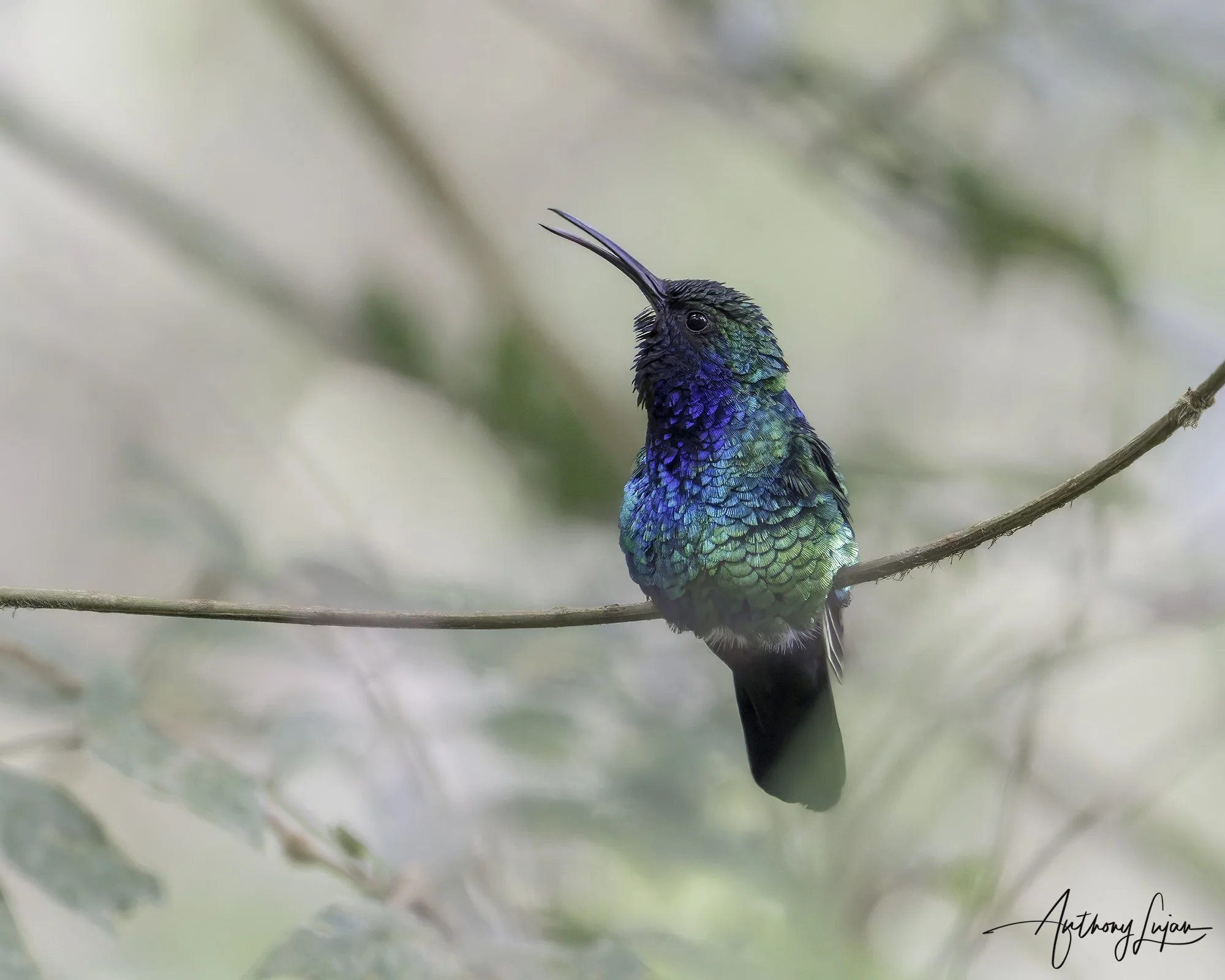
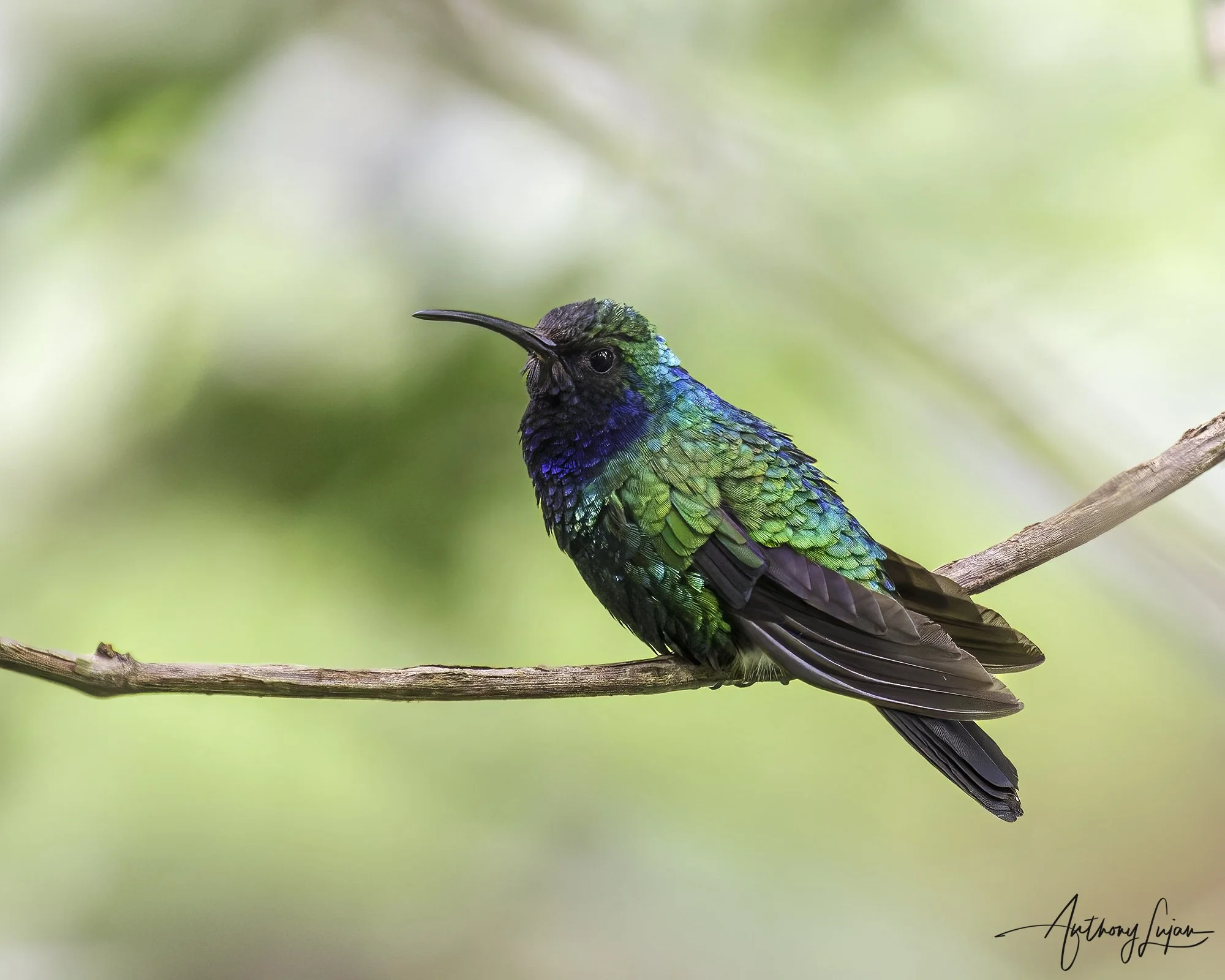
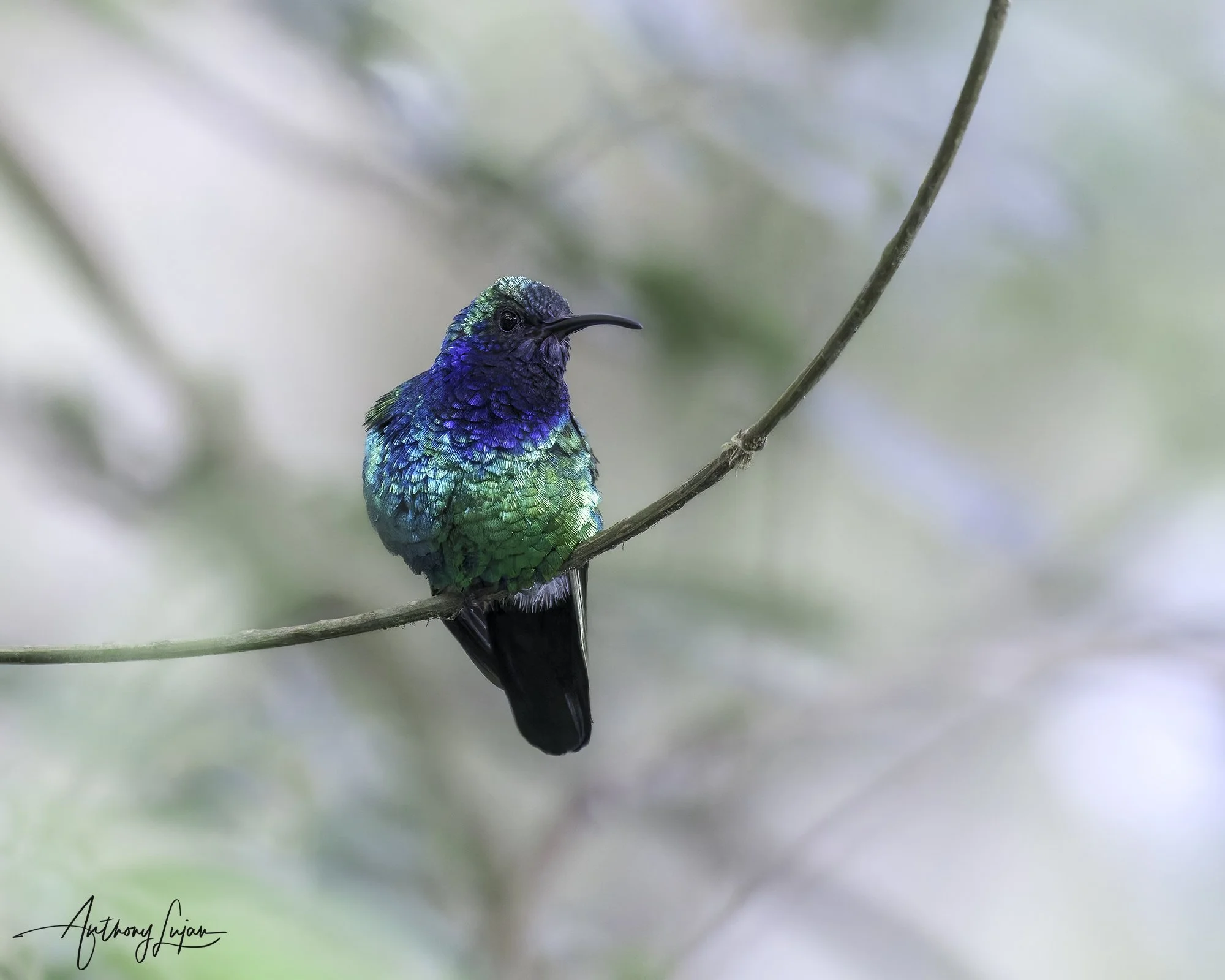
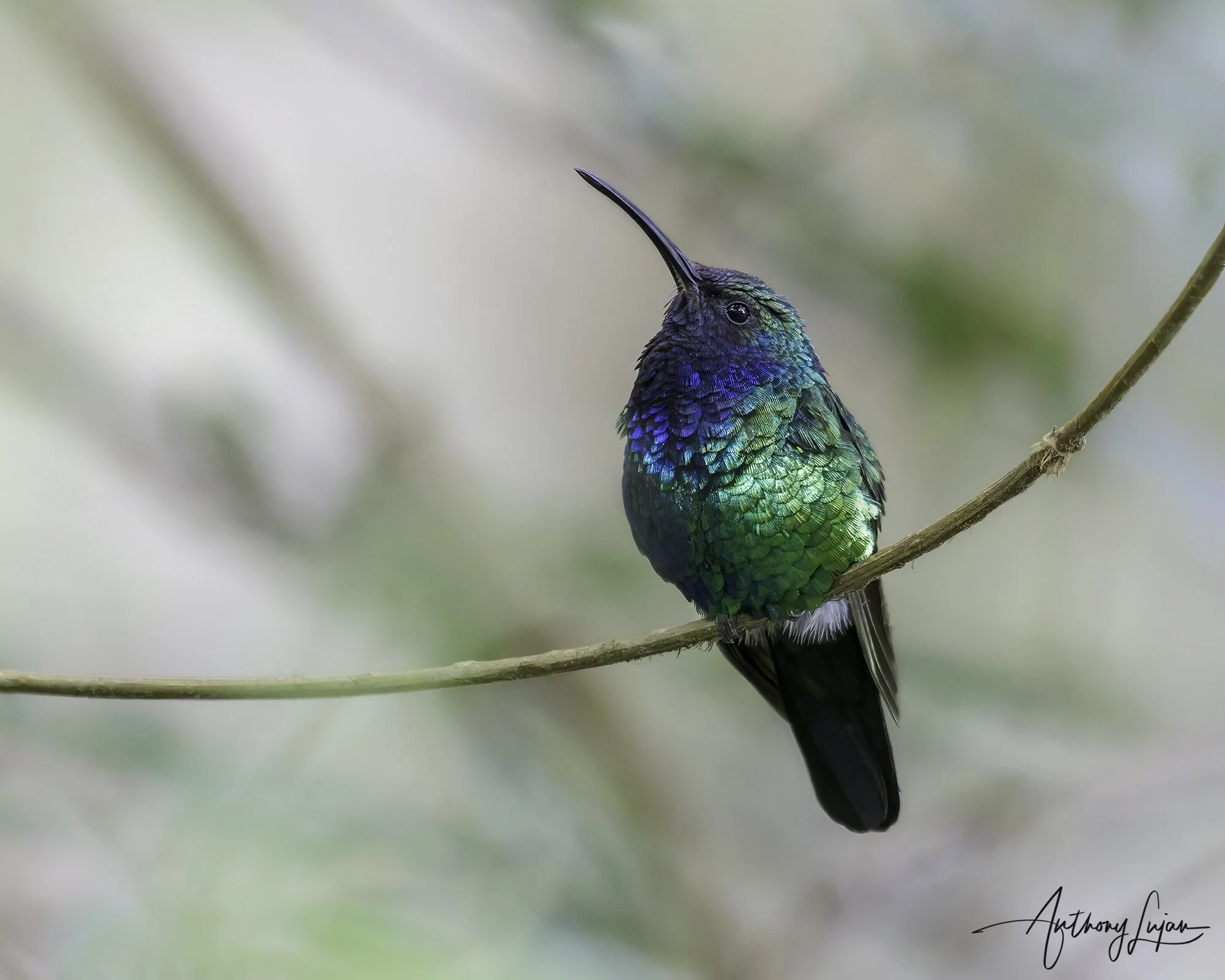
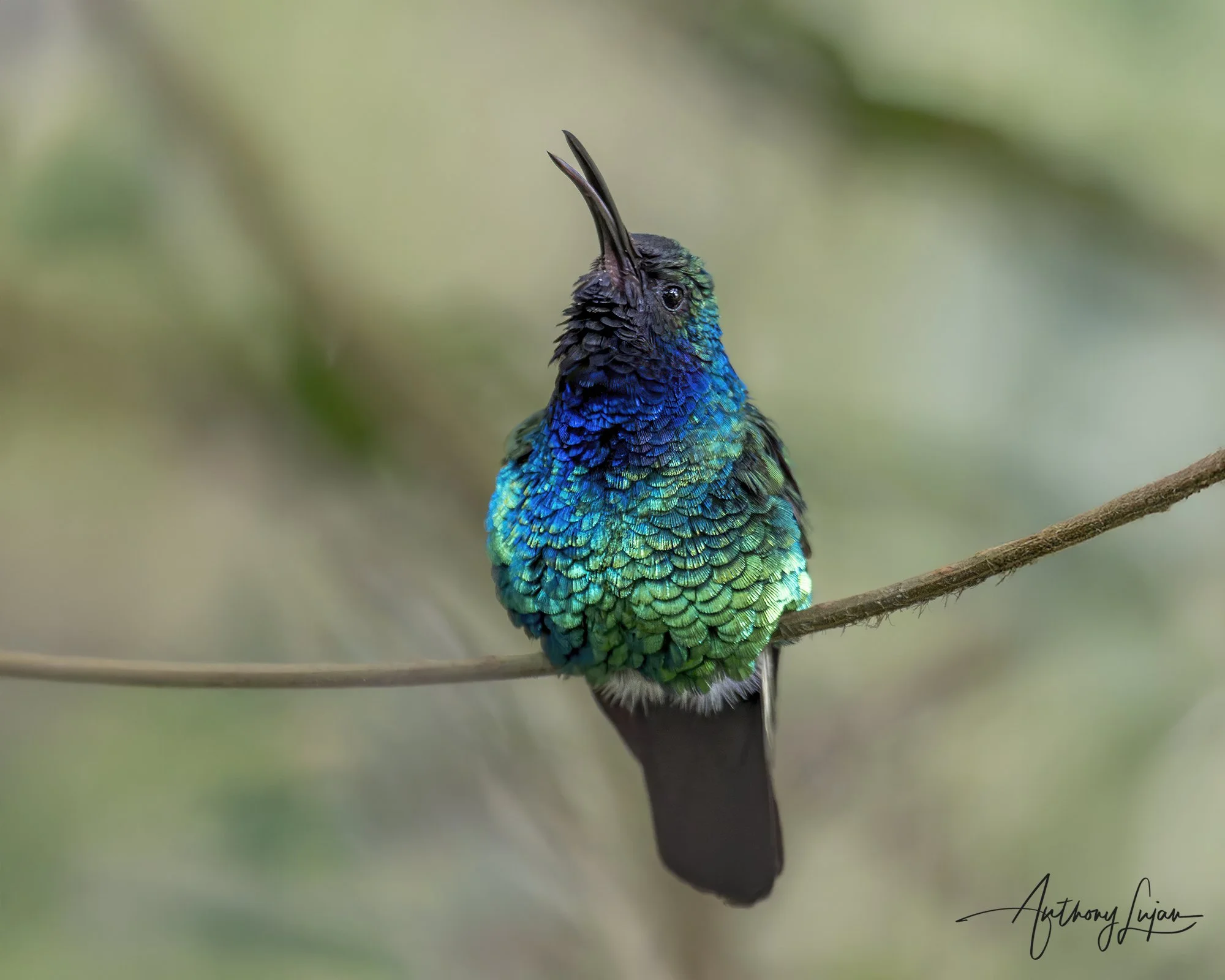
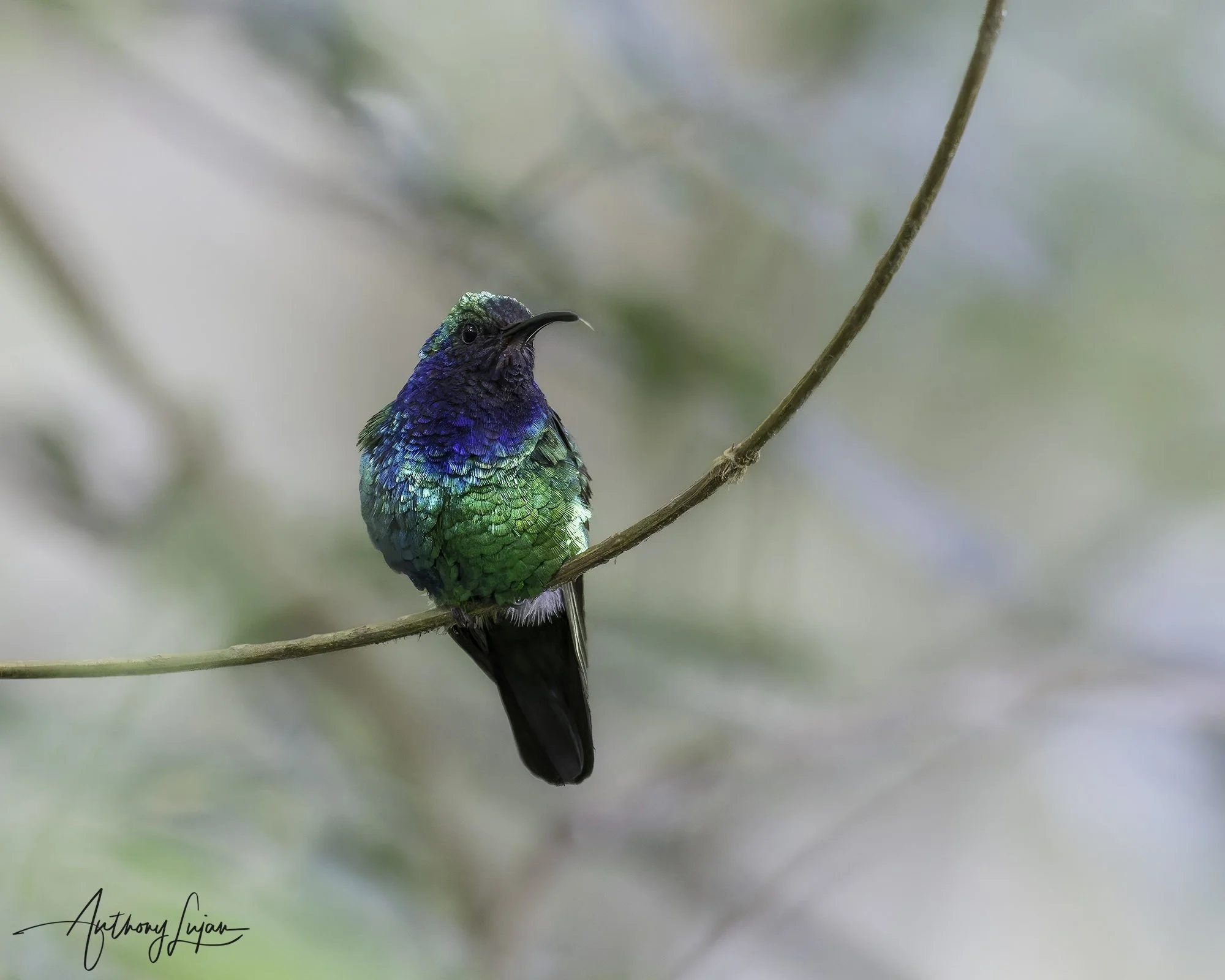
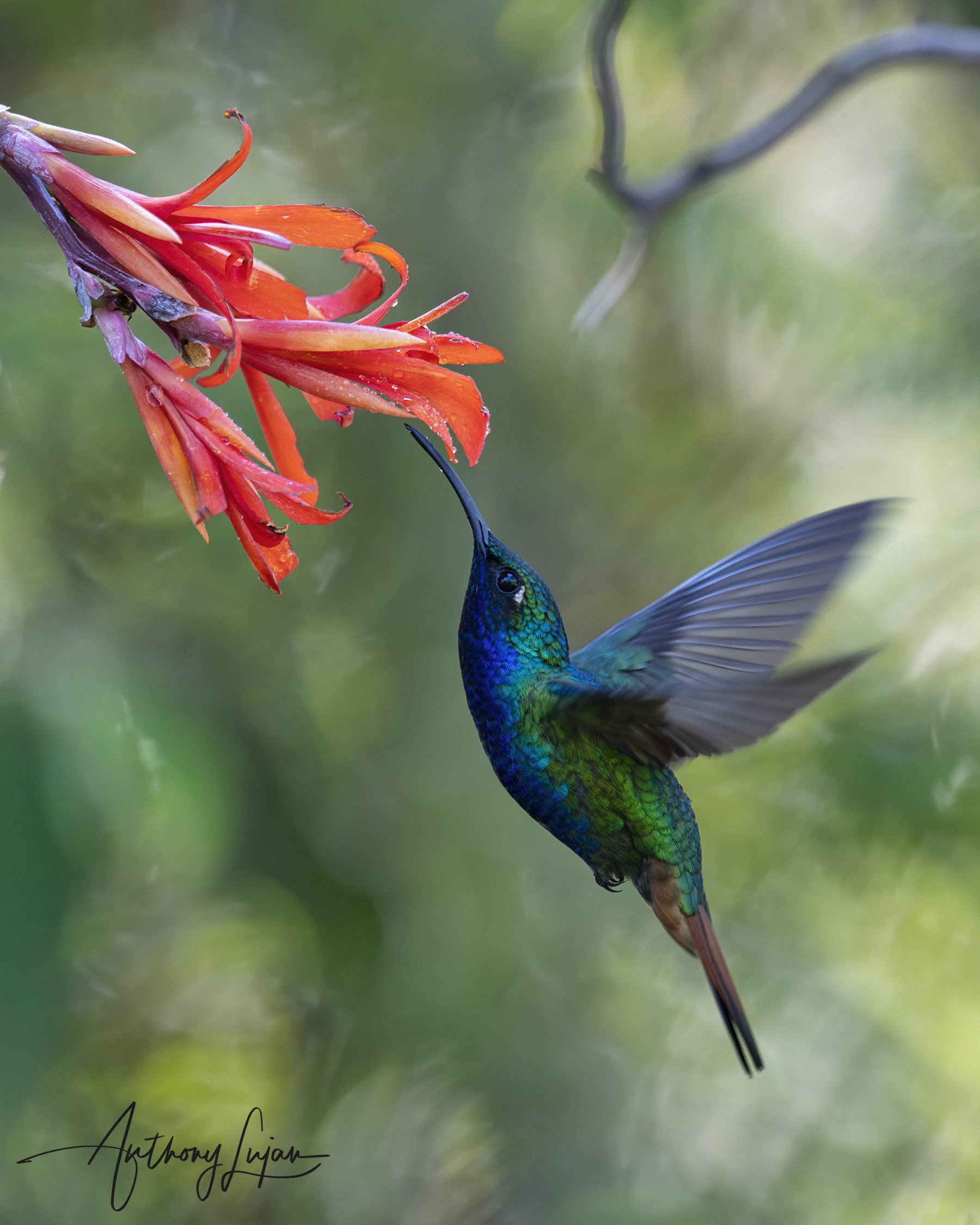
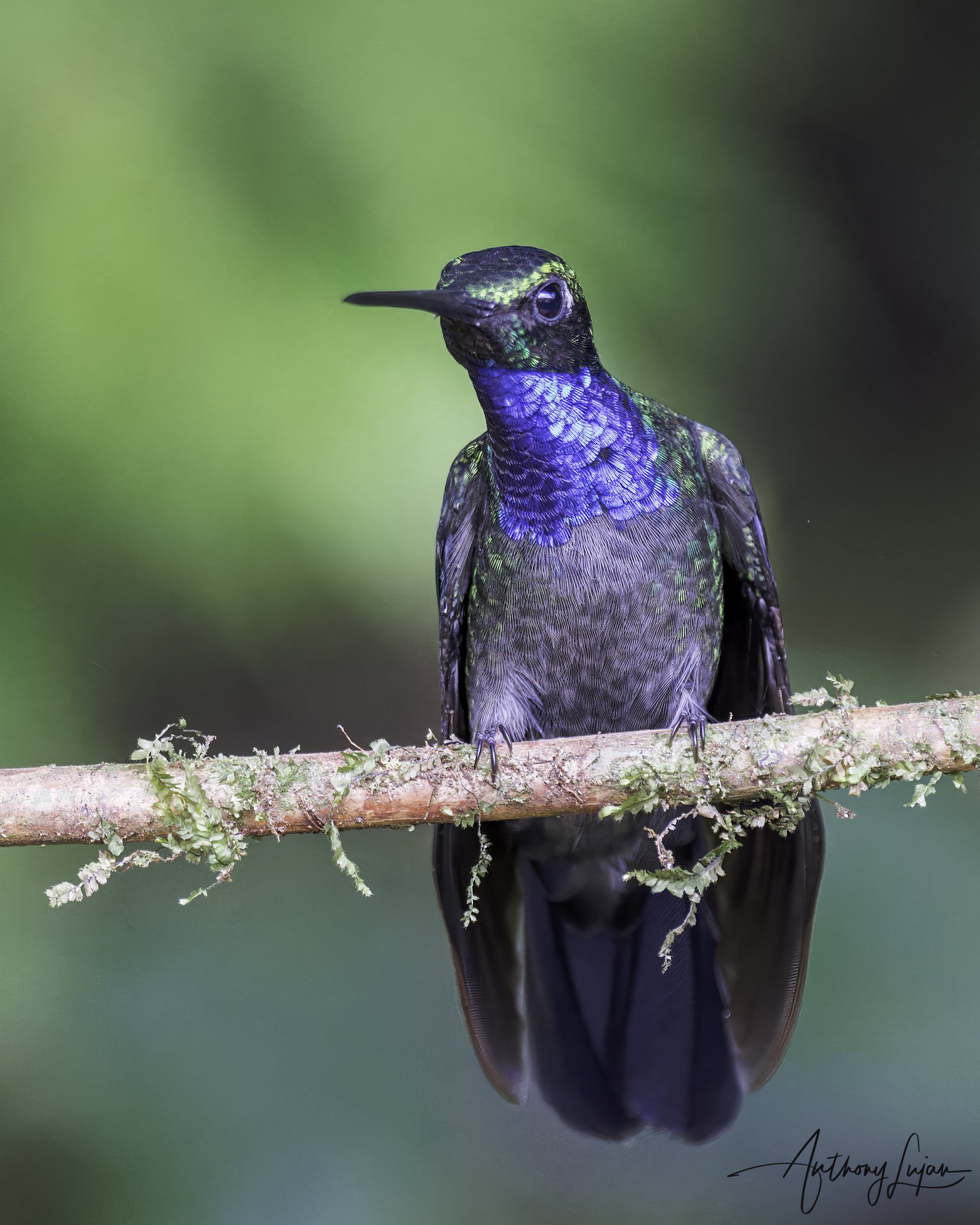
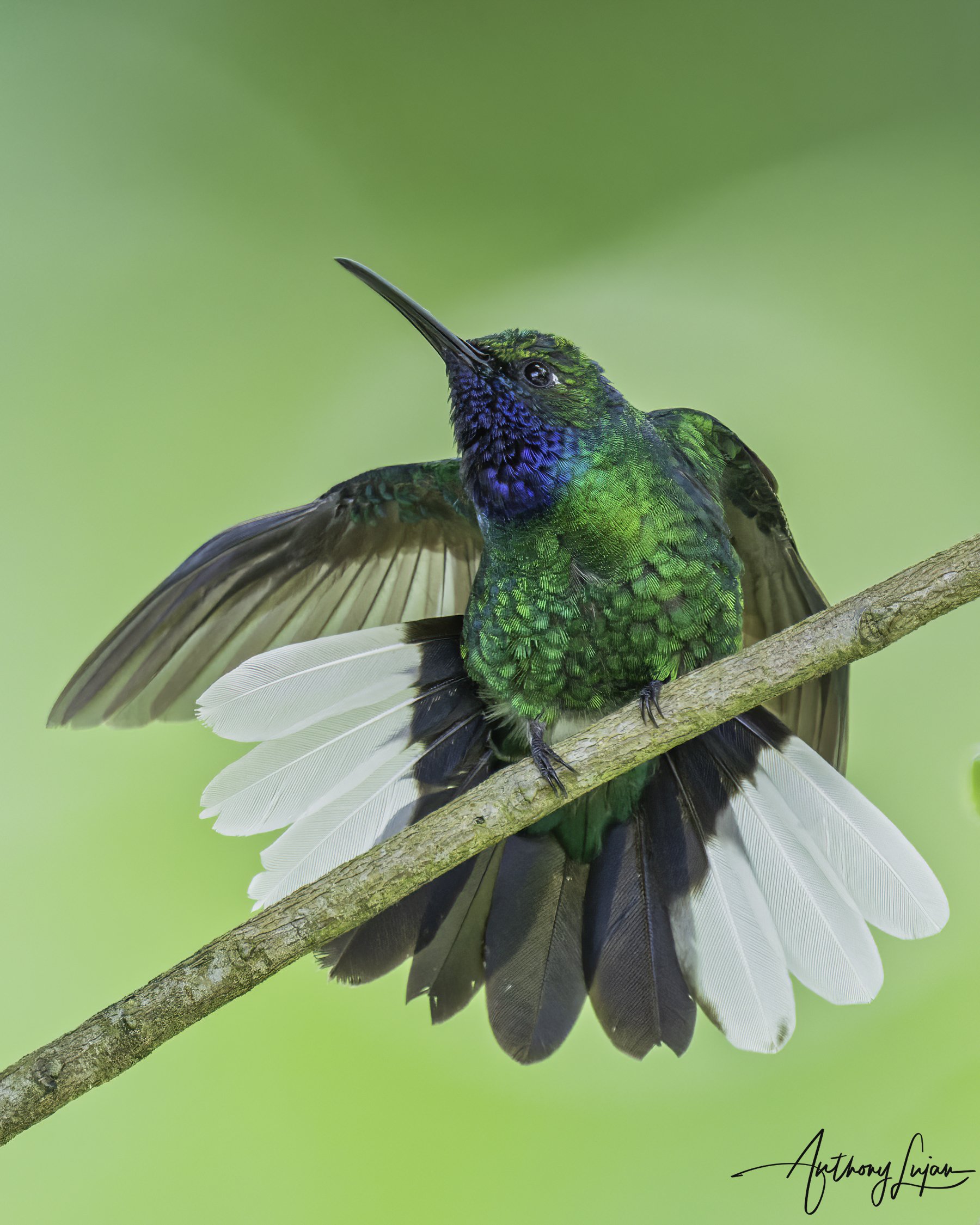
Adult males are relatively large, powerful sabrewings with dark emerald-green upperparts and a striking, iridescent bluish to turquoise throat and upper breast that can shine brightly in good light. The rest of the underparts are darker and more subdued, often appearing dusky greenish or grayish, and the tail is long and slightly rounded, dark with a green or bluish gloss. As in other Campylopterus species, the outer primaries are thickened and sabre-shaped, a feature most noticeable in flight. Overall, males present as dark, heavy-bodied hummingbirds with a vivid blue-green throat patch and robust wing and tail proportions.
Female Description
Females are similar in size and structure to males but duller and less contrasting overall. They have green upperparts and paler, grayish or buffy underparts with reduced or absent bright throat coloration, giving a more muted appearance. The tail is dark with some green gloss and paler tips on the outer feathers, and the sabre-like wing structure is present but not as visually obvious as in flight displays. In the field, females can closely resemble other large sabrewings, and are best identified by their occurrence in the very restricted Santa Marta range, appropriate elevation, and association with humid montane forest along the Guatapurí River basin.
Habitat & Behavior
Santa Marta Sabrewings inhabit humid and semi-humid montane forests, riparian forests, forest edges, and secondary growth along the mid Guatapurí River, often within a mosaic that includes native vegetation and perennial crops. They are frequently encountered near streams and rivers, where flowering shrubs and trees provide nectar, and males may defend favored patches and form small leks with display perches. The species feeds on nectar from a variety of native and possibly cultivated plants, and supplements its diet with small arthropods captured in flight or gleaned from foliage. It has been considered an altitudinal migrant, but recent observations of year-round territorial males between about 1,150 and 1,850 m suggest that movements may be more limited and localized than once thought.
Population
The total number of mature Santa Marta Sabrewings is estimated at only 1–49 individuals, based on the very small number of detections and the tiny area of suitable habitat known to be occupied. For many decades, there were only a few records, and even modern targeted surveys have found the species at only a handful of closely clustered localities. The population is clearly extremely small and is thought to be decreasing, with its microendemic distribution making it especially vulnerable to habitat changes, stochastic events, and any additional human pressure within its limited range.
Conservation
Santa Marta Sabrewing is listed as Critically Endangered because of its extremely small and declining population, very restricted range, and ongoing habitat loss from deforestation and agricultural expansion. Once feared extinct, it had not been seen since 2010 and was known from only a handful of historical records. In July 2022 a male was miraculously rediscovered and photographed in the wild, marking only the second documented sighting in more than a decade. With a known population likely under 50 individuals, urgent protection and restoration of humid and riparian forest in the Sierra Nevada de Santa Marta is critical for its survival, making this species one of the rarest birds in the world and a top conservation priority.
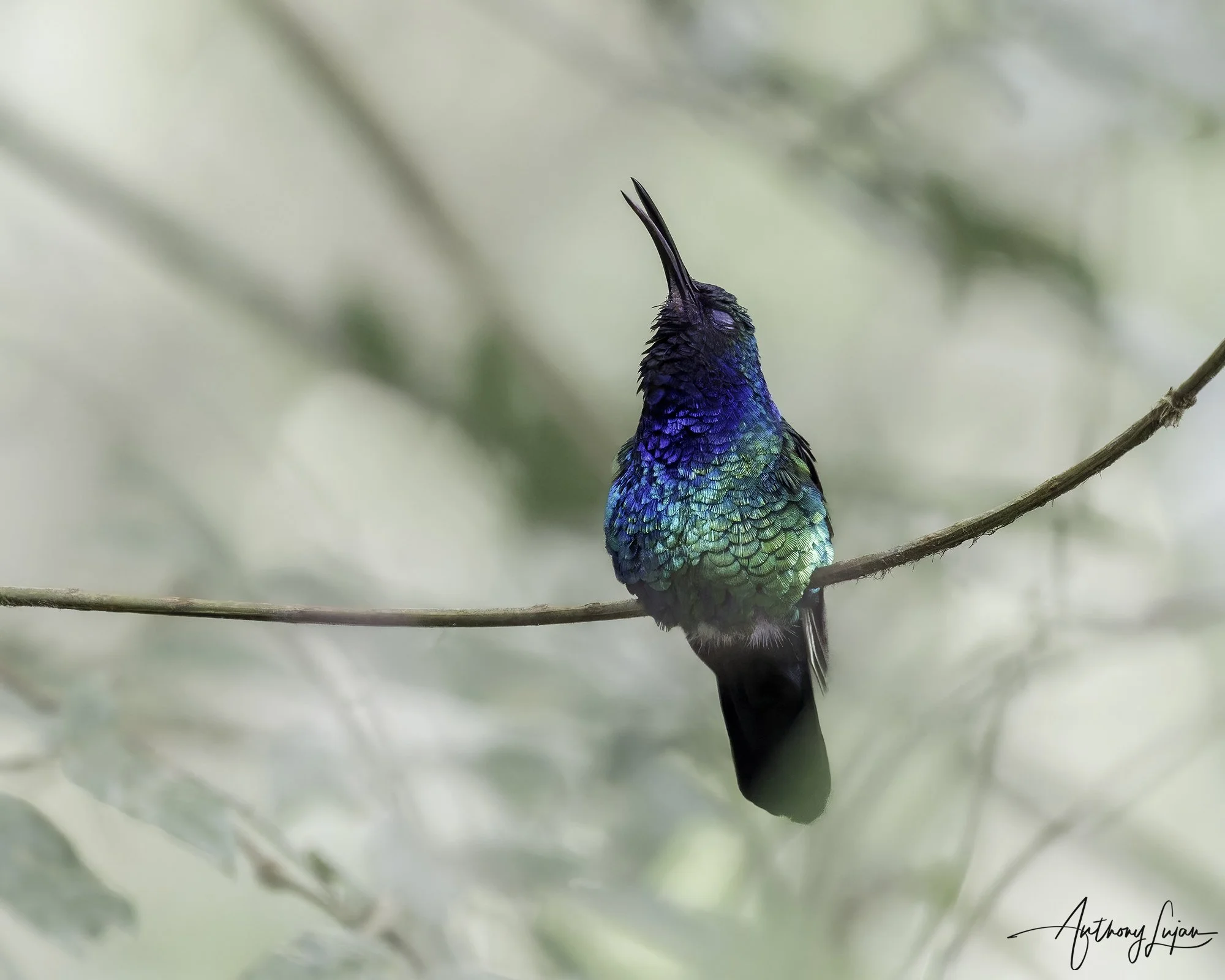
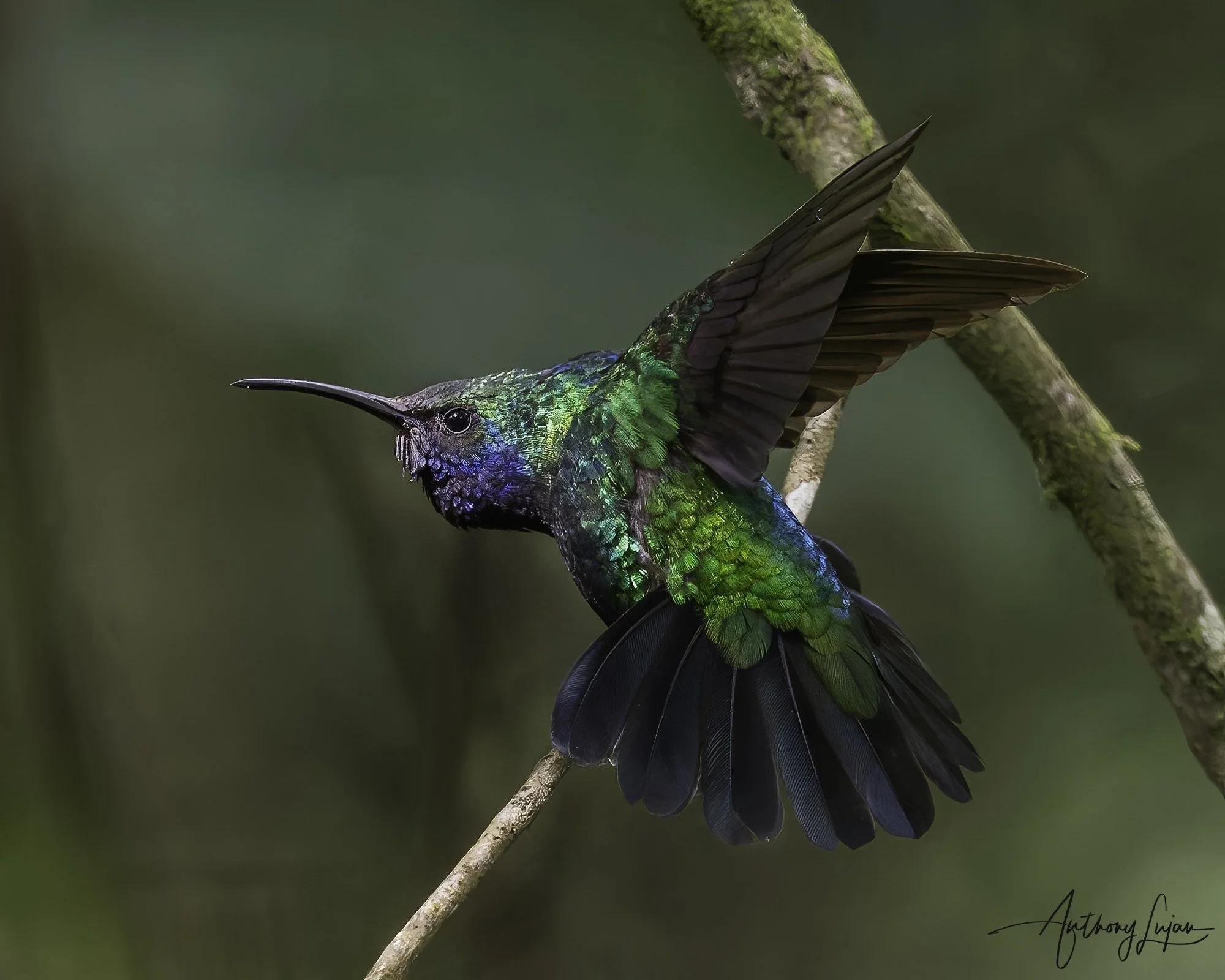
Checkout Anthony’s playlist of this species! Click the top right dropdown to see all the videos.
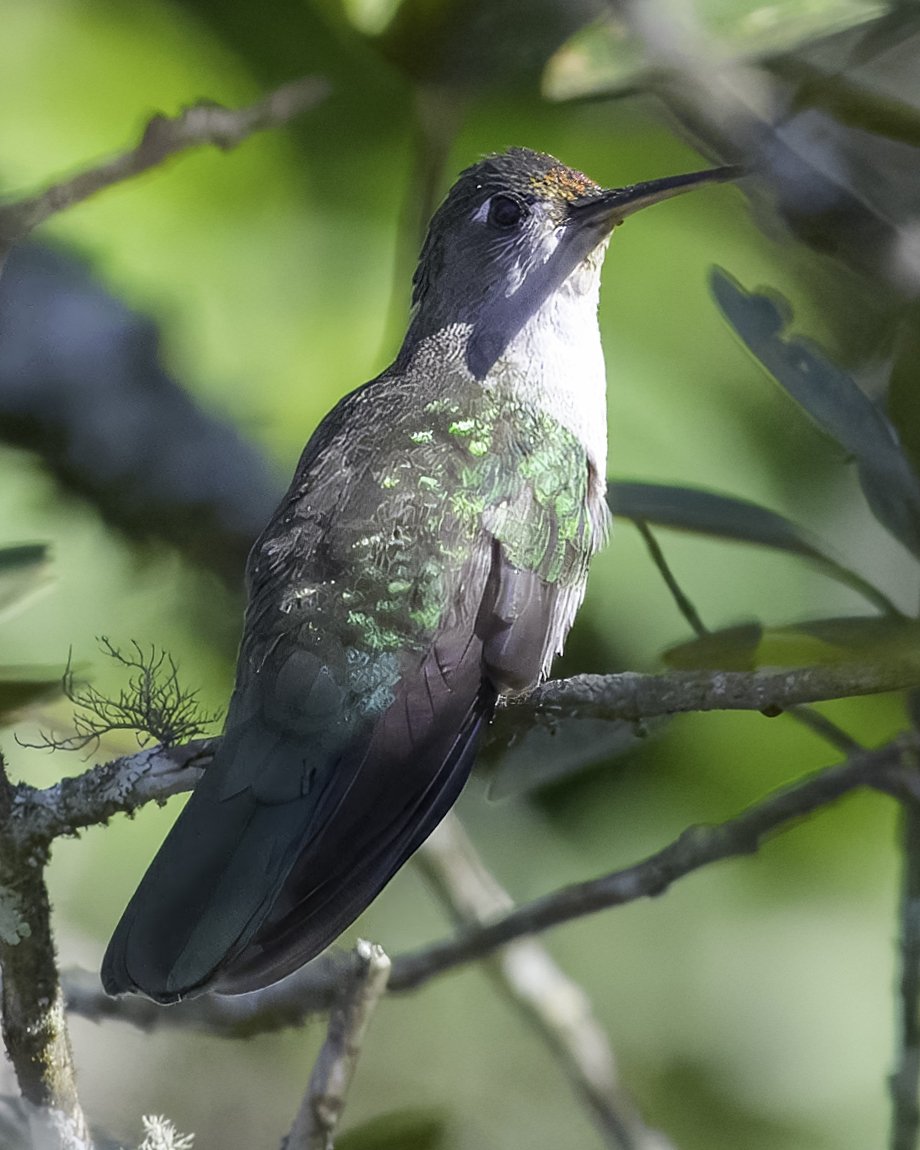
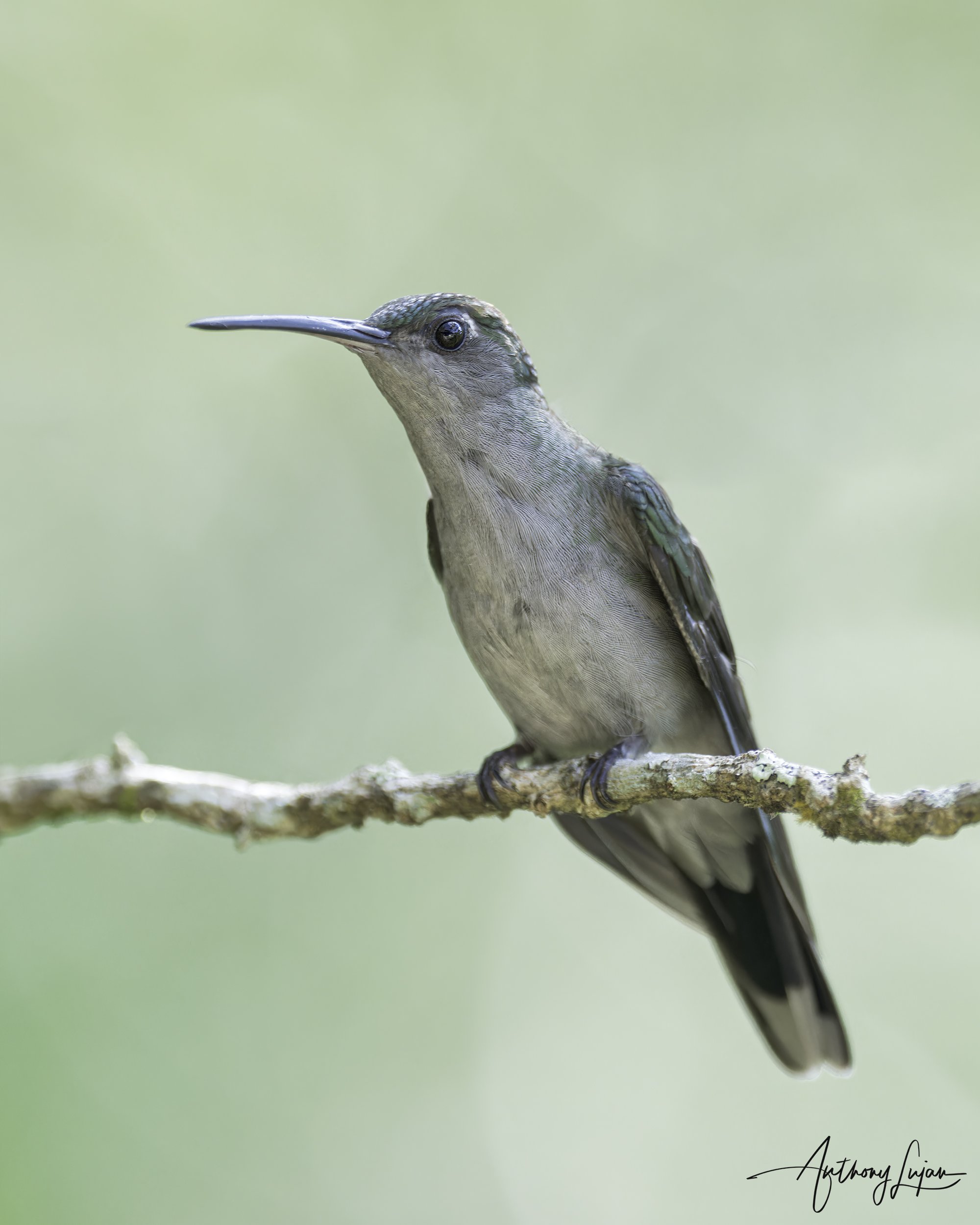
Related species in the Campylopterus genus (10 species total):


Please note: The content provided in this article reflects Anthony’s personal experience and photographic approach. Results can vary depending on light, weather, location, equipment, subject behavior, and field conditions.