
Sapphire-throated Hummingbird
Scientific name: Chrysuronia coeruleogularis
The Sapphire-throated Hummingbird is a medium-sized, metallic-green hummingbird found in lowland coastal habitats from western Panama into northwestern Colombia, with a recent natural expansion into extreme southern Costa Rica. The number of mature individuals is unknown, the population is considered stable, it is treated as non-migratory, and it is currently listed as Least Concern with three recognized subspecies, one of which is endemic to Colombia.
At a Glance
Family: Trochilidae (hummingbirds)
Clade: Trochilini – Emeralds
Genus group: Chrysuronia — 10 species, 24 subspecies
Range: Pacific lowlands of western Panama, Caribbean and Pacific lowlands of eastern Panama into adjacent northwestern Colombia, and recently extreme southern Costa Rica near the Panama border.
Habitat: Mangrove edges and patches, coastal scrub, light woodland, forest edges, second growth, plantations, and gardens where flowering shrubs and trees are present.
Elevation: Primarily from sea level up to roughly 100 m, occasionally higher in nearby low hills.
Length: About 9 cm (3.5 in).
Weight: Around 4–5 g.
Number of mature individuals: 50,000–499,999
Population trend: Stable
Status: Least Concern (IUCN)
Name Origin
The genus name Chrysuronia derives from Greek roots meaning “golden tail,” referring to the bright tails of several species in the genus. The species name coeruleogularis combines Latin elements meaning “blue-throated,” describing the male’s vivid sapphire-blue throat patch. The English name “Sapphire-throated Hummingbird” emphasizes this striking blue gorget, which is the bird’s most distinctive field mark.
Subspecies & Distribution
Chrysuronia coeruleogularis coeruleogularis
Distribution: Pacific slope of western Panama from Chiriquí east to the Canal Zone; also recorded in extreme southern Costa Rica near the Panama border.Chrysuronia coeruleogularis confinis
Distribution: Eastern Panama, mainly on the Caribbean slope of Darién, and adjacent northwestern Colombia.Chrysuronia coeruleogularis coelina
Distribution: Northern Colombia, from northern Chocó through the Ciénaga Grande de Santa Marta to the base of the Sierra Nevada de Santa Marta; this is the only subspecies endemic to Colombia.
Overall, Chrysuronia coeruleogularis occupies a relatively narrow coastal band from western Panama into northwestern Colombia, favoring mangroves, coastal scrub, and light lowland woodland, with a small extension into extreme southern Costa Rica.
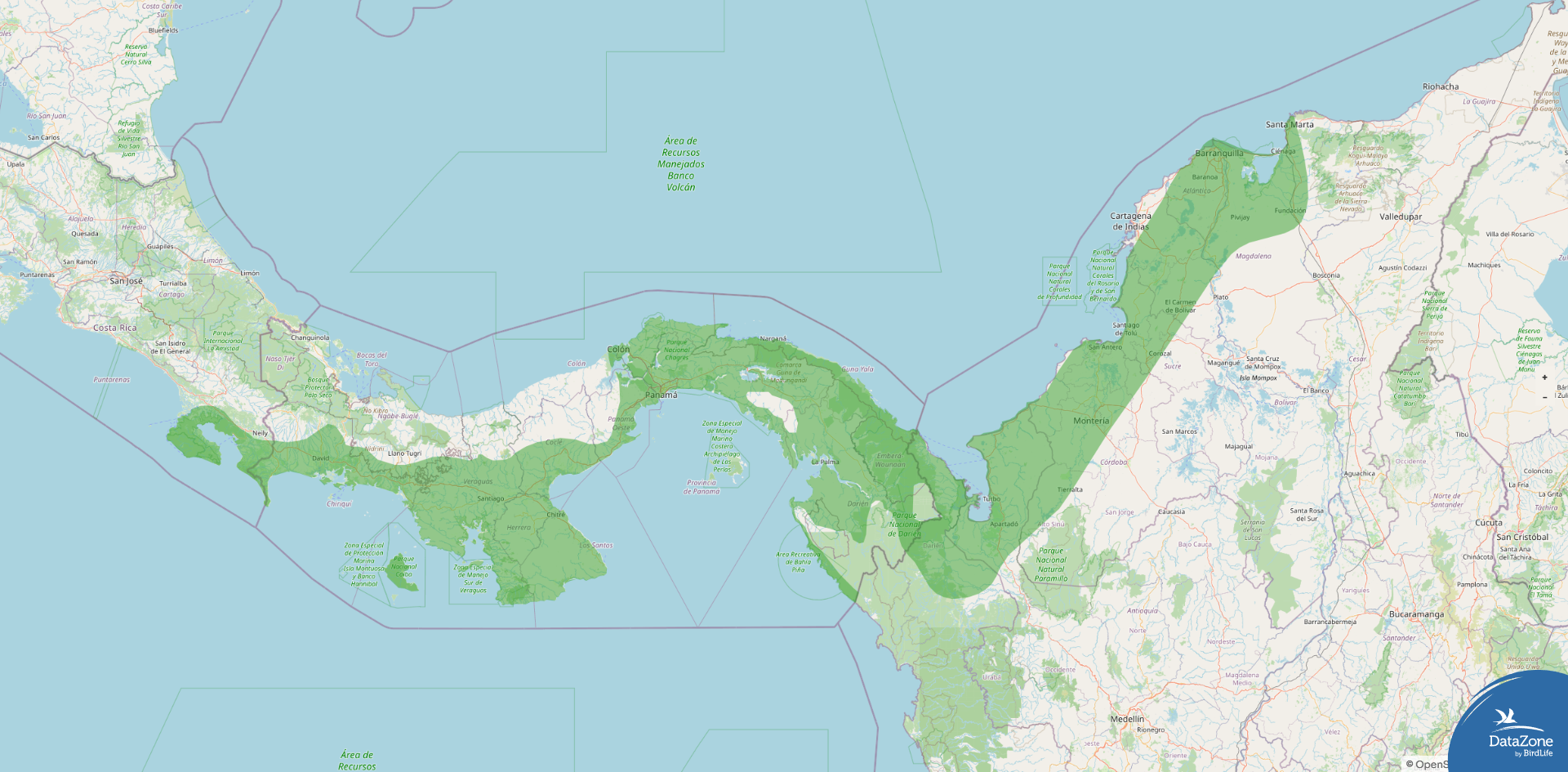
Legend
Green Resident
Species Overview
The Sapphire-throated Hummingbird is a localized but fairly common hummingbird of coastal lowlands, especially in mangroves, coastal scrub, and open woodland near the shore. Its bright metallic-green body and glowing sapphire throat make it a sought-after species for birders visiting Panama and northern Colombia. Despite its restricted geographic range, its ability to use mangroves, scrub, secondary growth, plantations, and gardens has helped maintain a stable overall population.
Male Description
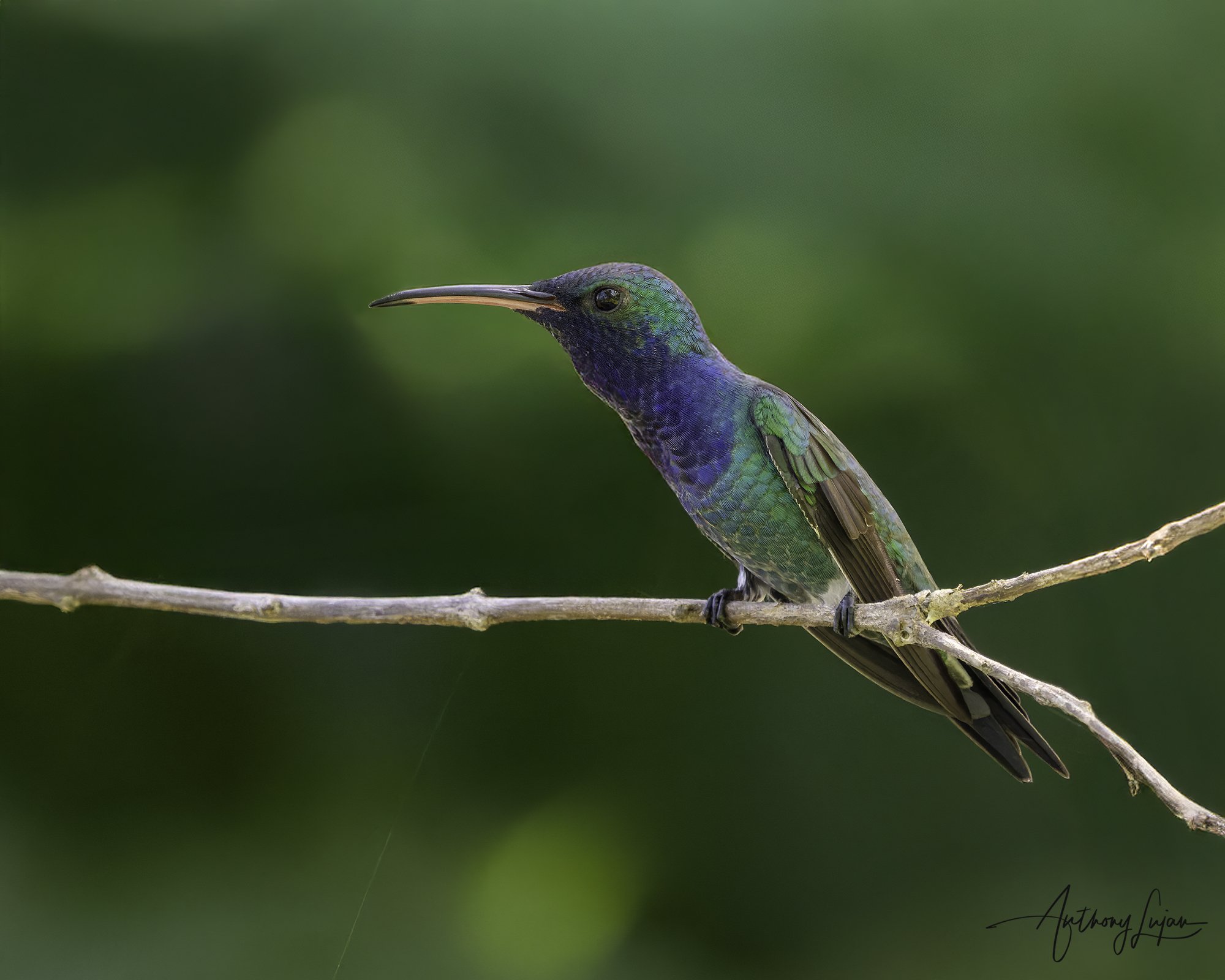
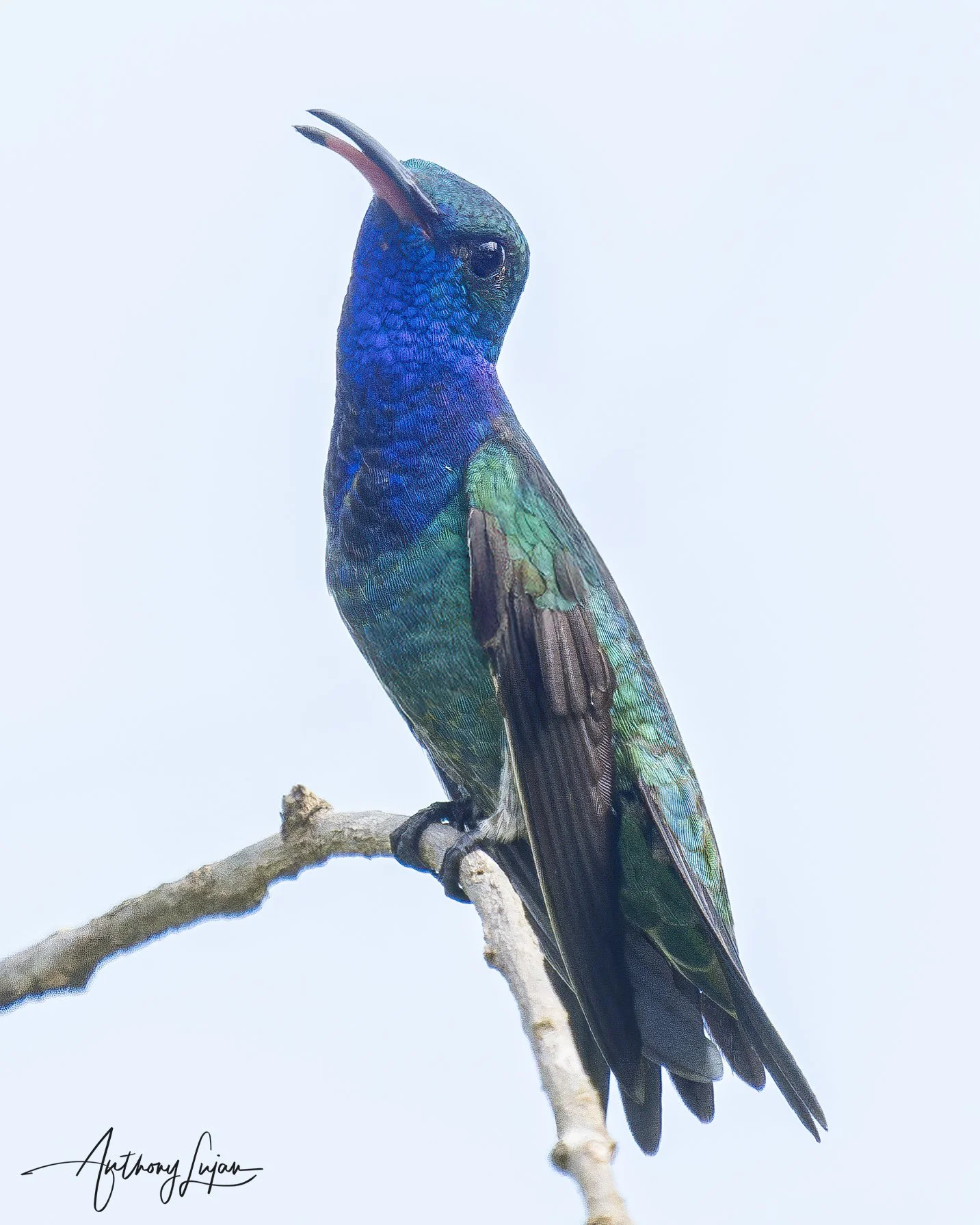
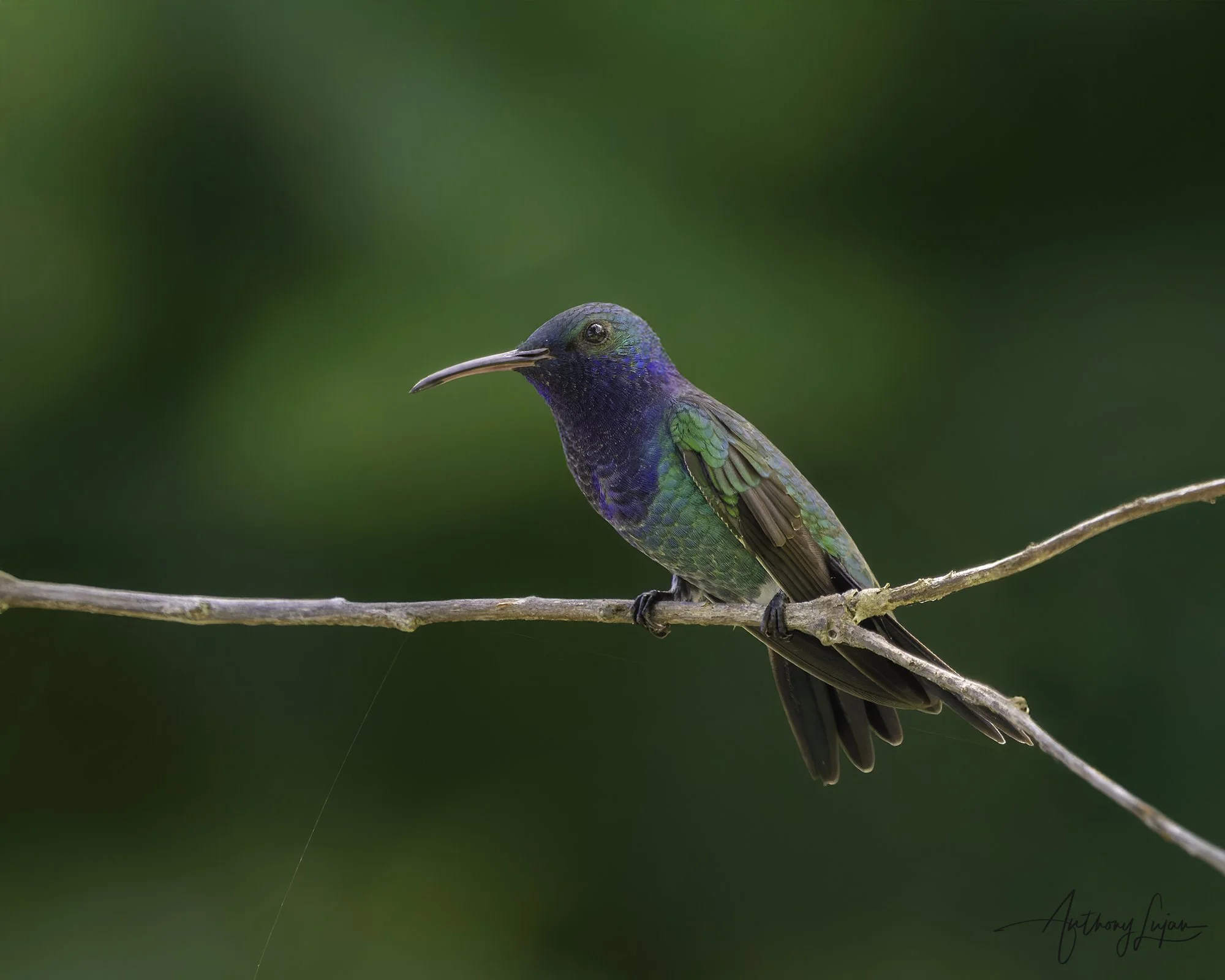
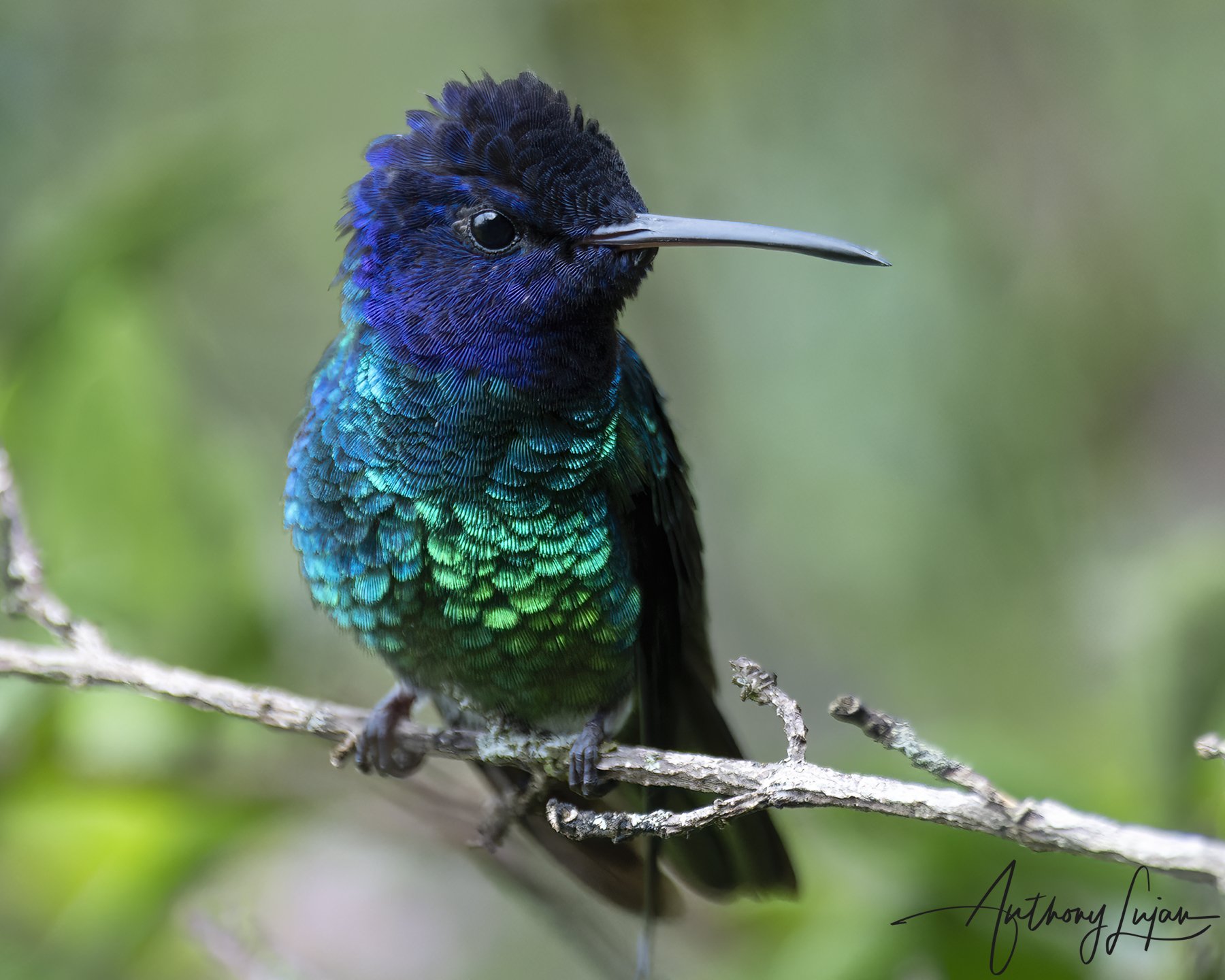
Adult males are metallic green overall, with a distinctively forked, dark tail and darker wings that contrast with the bright body. The signature feature is a broad, glittering violet-blue or sapphire throat gorget that stands out strongly against the green head and upper breast. The bill is straight and mostly dark, sometimes with a slightly paler base to the lower mandible. In the field, males appear as medium-sized, shiny green hummingbirds with a deeply forked dark tail and a brilliant blue throat that flashes when they face the light.
Female Description
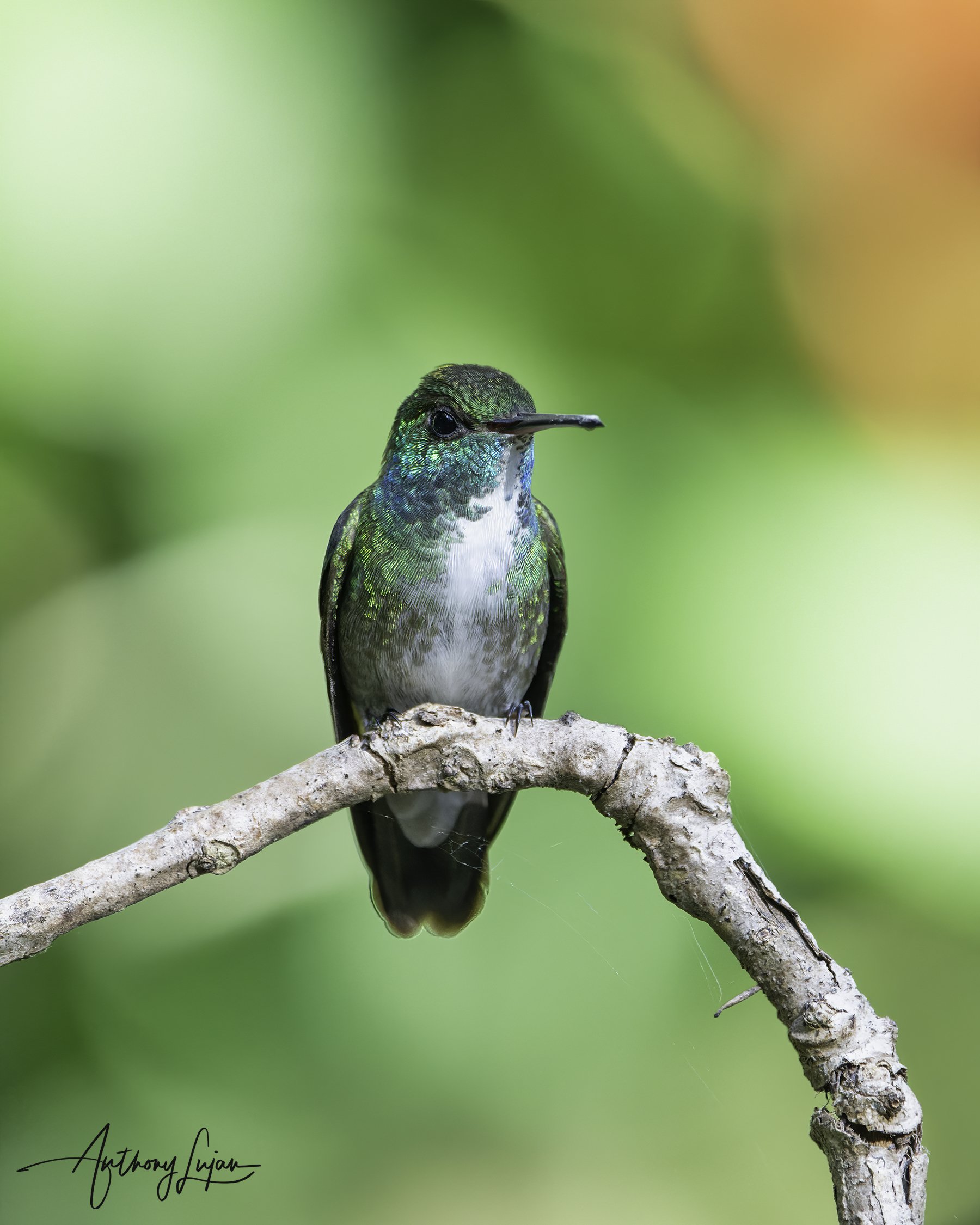
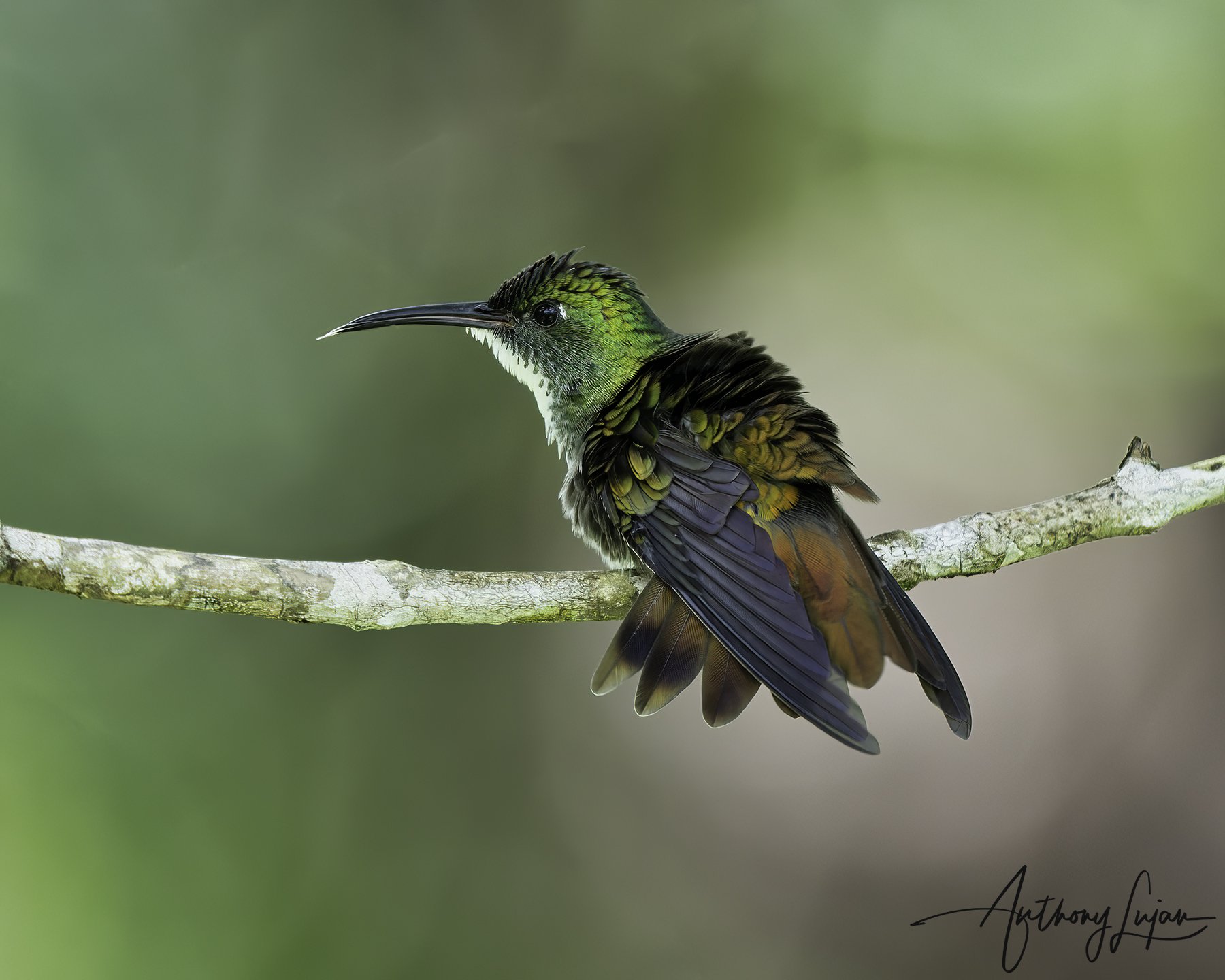
Females are metallic green above, like males, but have entirely white underparts from throat to vent. The sides of the breast show distinctive green spots or scaling that contrast with the otherwise white underside. The tail is forked and dark, similar to the male’s, and the bill is straight and mostly dark. Females thus look like green-backed hummingbirds with clean white underparts marked by green spotting on the breast and a dark forked tail, lacking the solid blue throat of adult males.
Habitat & Behavior
Sapphire-throated Hummingbirds frequent mangroves, coastal scrub, light woodlands, and forest edges, and readily use second growth, plantations, and gardens where flowering shrubs and trees are abundant. They feed on nectar from a variety of tubular flowers in mangroves and coastal scrub, and also take small insects and spiders for protein, catching them in short sallies or gleaning from foliage. Birds often perch conspicuously near favored nectar sources and can be quite territorial, with males defending rich flowering patches against other hummingbirds. They are generally considered resident throughout their range, with no evidence of long-distance migration, though some local movements likely follow flowering patterns.
Population
Although the exact number of mature individuals is unknown, the Sapphire-throated Hummingbird has a relatively broad, if coastal, distribution and is described as locally common in suitable habitat. It can be frequently encountered in mangrove edges, coastal scrub, and gardens in parts of Panama and northern Colombia, and has recently expanded its range slightly into southern Costa Rica. Overall, the population is considered stable, with no strong evidence of large-scale declines at present.

Conservation
The Sapphire-throated Hummingbird is listed as Least Concern thanks to its reasonably wide coastal range and stable population, but it remains dependent on habitats that are vulnerable to development and degradation. Loss and alteration of mangroves and coastal woodlands for agriculture, urbanization, and infrastructure projects could reduce habitat quality and connectivity, especially in localized areas. Protecting coastal mangroves, maintaining scrub and light woodland along the shore, and preserving flowering trees and shrubs in second growth, plantations, and gardens will help sustain this species. Continued monitoring is important to ensure that coastal development does not begin to drive regional declines.
Below is the Sapphire-throated Hummingbird (Chrysuronia coeruleogularis coeruleogularis)
Photographed in southern Costa Rica near the Panama border
These individuals belong to the subspecies coeruleogularis, which ranges along the Pacific slope of western Panama from Chiriquí to the Canal Zone and extends into extreme southern Costa Rica. It inhabits lowland forest edge, mangroves, and shrubby secondary growth, typically below 1,000 meters.


Interested in coming along? Visit Travel with Me!
Also visit Costa Rica Hummingbird Expedition | July 2025 | 32 Species | 10 New | Closing the Gap
Below is the Sapphire-throated Hummingbird (Chrysuronia coeruleogularis coelina)
Photographed in Sitionuevo, Magdalena, Colombia
These individuals belong to the subspecies coelina, found in northern Colombia from Chocó through the lower Magdalena Valley and eastward to the Santa Marta region. It favors mangroves, open woodland, and disturbed areas along coastal lowlands.
Checkout Anthony’s playlist of this species! Click the top right dropdown to see all the videos.
Related species in the Chrysuronia genus (10 species total)



Please note: The content provided in this article reflects Anthony’s personal experience and photographic approach. Results can vary depending on light, weather, location, equipment, subject behavior, and field conditions.