

Scientific name: Ramphodon naevius
The Saw-billed Hermit is a large, striking hermit hummingbird of the humid Atlantic Forest understory in southeastern Brazil. The number of mature individuals is estimated at 175,000–1,710,000, the population trend is decreasing, it is not a migrant, and it is currently assessed as Least Concern.
At a Glance
Family: Trochilidae (hummingbirds)
Clade: Phaethornithinae – Hermits
Genus: Ramphodon — 1 species (Saw-billed Hermit)
Range: Narrow band of Atlantic Forest in southeastern Brazil (Minas Gerais and Espírito Santo south to eastern Santa Catarina and northern Rio Grande do Sul)
Habitat: Humid coastal Atlantic Forest understory and forest edges, usually below about 500 m
Elevation: Sea level to roughly 500 m (1,600 ft)
Length: About 14–16 cm (5.5–6.3 in)
Weight: About 5.3–9 g; one of the heaviest hermits
Number of mature individuals: 175,000–1,710,000
Population trend: Decreasing
Movement: Not a migrant
IUCN Red List category: Least Concern
Subspecies: Monotypic — no subspecies recognized
Endemic to: Brazil
Name Origin
The genus name Ramphodon comes from Greek roots meaning “beak” and “tooth,” referring to the serrated, saw‑like edges of the bill. The species name naevius means “spotted” or “speckled,” relating to the patterned plumage. The English name “Saw-billed Hermit” highlights its unusually serrated bill, a rare adaptation among hummingbirds.
Taxonomy
Ramphodon naevius is placed within the hermit subfamily Phaethornithinae but is considered the most similar of the hermits to the “typical” hummingbirds (Trochilinae) in some aspects of morphology and behavior. It is the only member of its genus, making Ramphodon monotypic. No subspecies are recognized.
Subspecies and Distribution
Monotypic — no subspecies recognized.
Distribution:
The Saw-billed Hermit is endemic to Brazil, occurring in a narrow coastal band of Atlantic Forest in the southeastern part of the country. Its range extends from southeastern Minas Gerais and Espírito Santo south through Rio de Janeiro and São Paulo to eastern Santa Catarina and the northernmost part of Rio Grande do Sul. It is largely restricted to lowland and foothill Atlantic Forest, rarely ranging far inland or upslope.
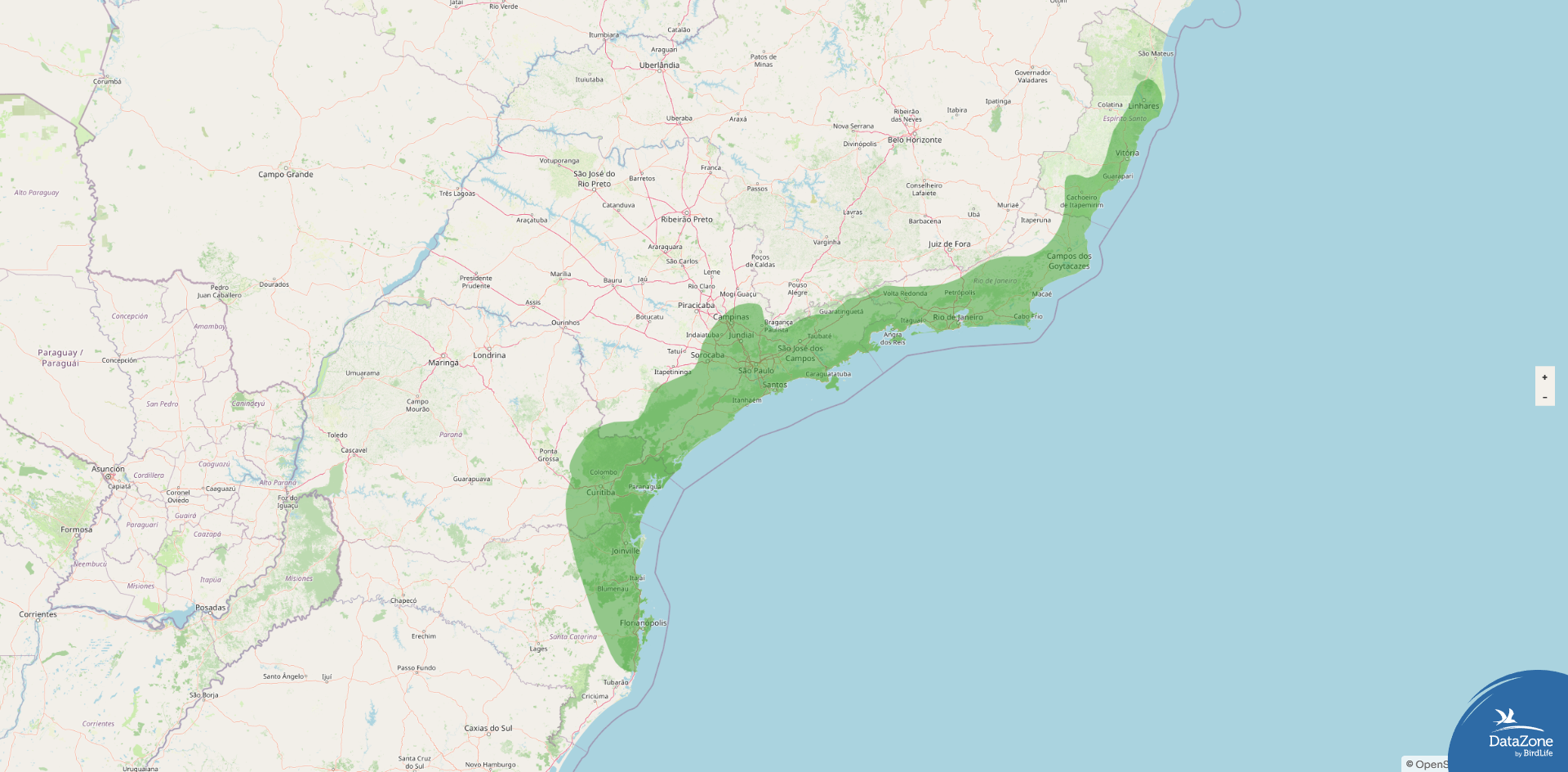
Legend
Green Resident
Species Overview
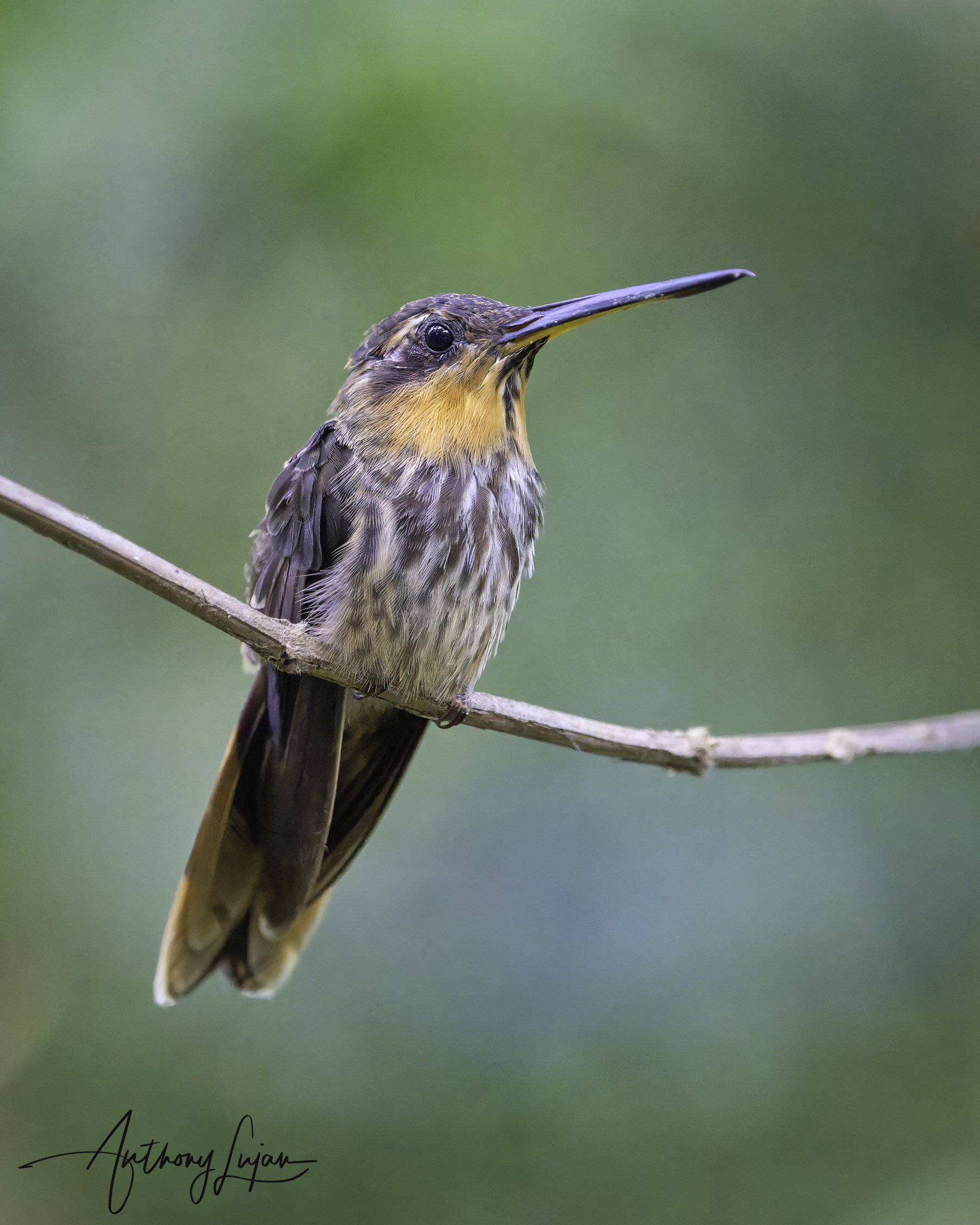
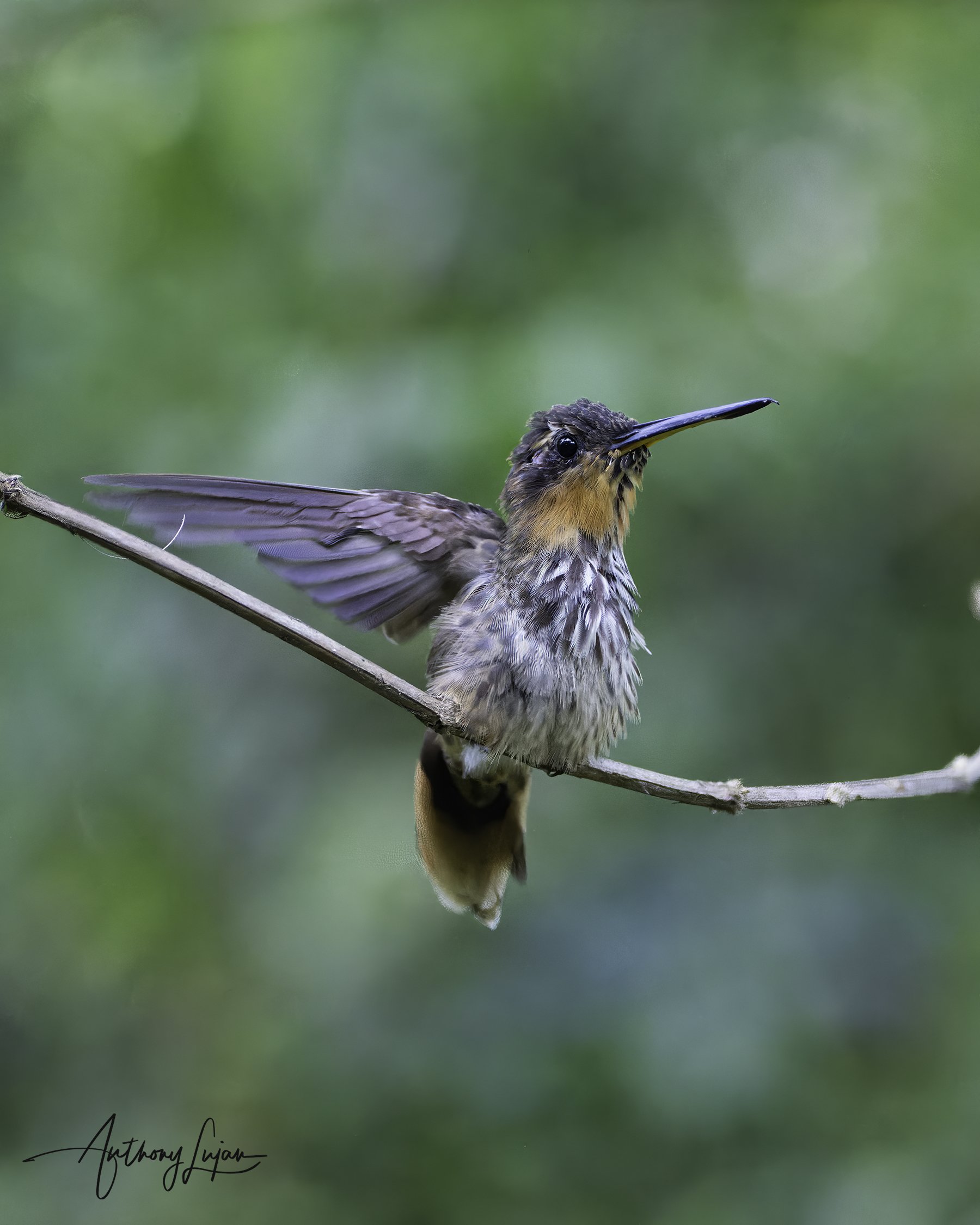
The Saw-billed Hermit is one of the longest and heaviest hermits, with a powerful build and bold plumage patterning. It has mostly dark olive‑green to bronzy upperparts, heavily streaked and spotted underparts, and a prominent facial pattern with a pale stripe extending back from the bill. Its most distinctive feature is the straight, bicolored bill with serrated, “saw‑toothed” cutting edges, which it uses for both feeding and gleaning insects. This species is an important pollinator of many Atlantic Forest plants, especially bromeliads, and is known for being aggressive and quarrelsome around favored feeding areas.
Male Description
Males measure about 14–16 cm and weigh roughly 5.3–9 g. Upperparts are dark olive‑green to bronzy, often appearing quite dusky in forest shade. The head shows a strong facial pattern with a dark mask through the eye and a contrasting pale stripe (“whisker”) along the lower cheek. Underparts are heavily streaked and mottled with buff and dusky markings, producing a speckled appearance. The straight bill is robust and bicolored, typically dark above and paler below, with clearly serrated edges near the tip. The tail is moderately long and rounded, with dark central feathers and paler, sometimes reddish-brown or buffy, outer feathers that may show pale tips.
Female Description
Females are very similar to males in size and general plumage, sharing the large size, bold streaking, and serrated bill. Any differences are subtle and may include slightly less intense coloration or minor variations in streak pattern. Juveniles resemble adults but can show somewhat duller plumage and less distinct markings until they complete their first molt.
Habitat & Behavior
Saw-billed Hermits inhabit the shaded understory of humid coastal Atlantic Forest and adjacent forest edges, typically from sea level up to about 500 m. They favor areas with abundant understory and subcanopy flowers, especially bromeliads and other tubular blossoms, and are often associated with steep slopes, gullies, and ravines within the forest.
They are trapline feeders, visiting a regular sequence of flowering plants to collect nectar rather than defending a single patch, but they can be notably aggressive toward other hummingbirds and even conspecifics that intrude on their routes. The serrated bill edges are used not only to access nectar but also to glean and snip small insects and other arthropods from foliage, providing an important protein supplement. Birds are typically solitary and spend much of their time low in the understory, where their size and bold behavior make them stand out among other hermits.
Breeding
The nesting biology of the Saw-billed Hermit is not fully documented, but available information indicates that it follows the general hermit pattern. The female builds a cone‑shaped nest of plant fibers and spiderweb, suspended from the tip of a long, drooping leaf or similar support in sheltered forest understory. The nest hangs freely, often over a stream or in a shaded gully.
A typical clutch consists of two white eggs. The female alone is responsible for incubation and chick rearing, feeding the nestlings by regurgitation of nectar and small arthropods. Detailed timing of the breeding season varies locally within the Atlantic Forest, but nesting is generally tied to periods when flowers and insect prey are abundant.
Movement
The Saw-billed Hermit is considered not a migrant. It is a year‑round resident within its Atlantic Forest range and does not undertake large-scale seasonal movements. Individuals may make short-distance shifts within local landscapes to track flowering and resource availability, but these movements remain within the same general region.
Population
The estimated global population of Saw-billed Hermits is 175,000–1,710,000 mature individuals. Within suitable habitat it can be fairly common, and its distinctive appearance and behavior make it a conspicuous member of the hummingbird community. Despite this, the overall population is believed to be decreasing due to ongoing habitat loss and fragmentation across the Atlantic Forest.

Conservation
The Saw-billed Hermit is assessed as Least Concern, but its specialized reliance on lowland and foothill Atlantic Forest makes it vulnerable to deforestation and habitat degradation. Much of its range has been heavily altered by agriculture, urbanization, and infrastructure development, and remaining forest is often fragmented. Conservation of continuous Atlantic Forest tracts, restoration of degraded areas, and protection of understory-rich habitats with abundant bromeliads and other nectar plants are important for maintaining healthy populations of this endemic species.
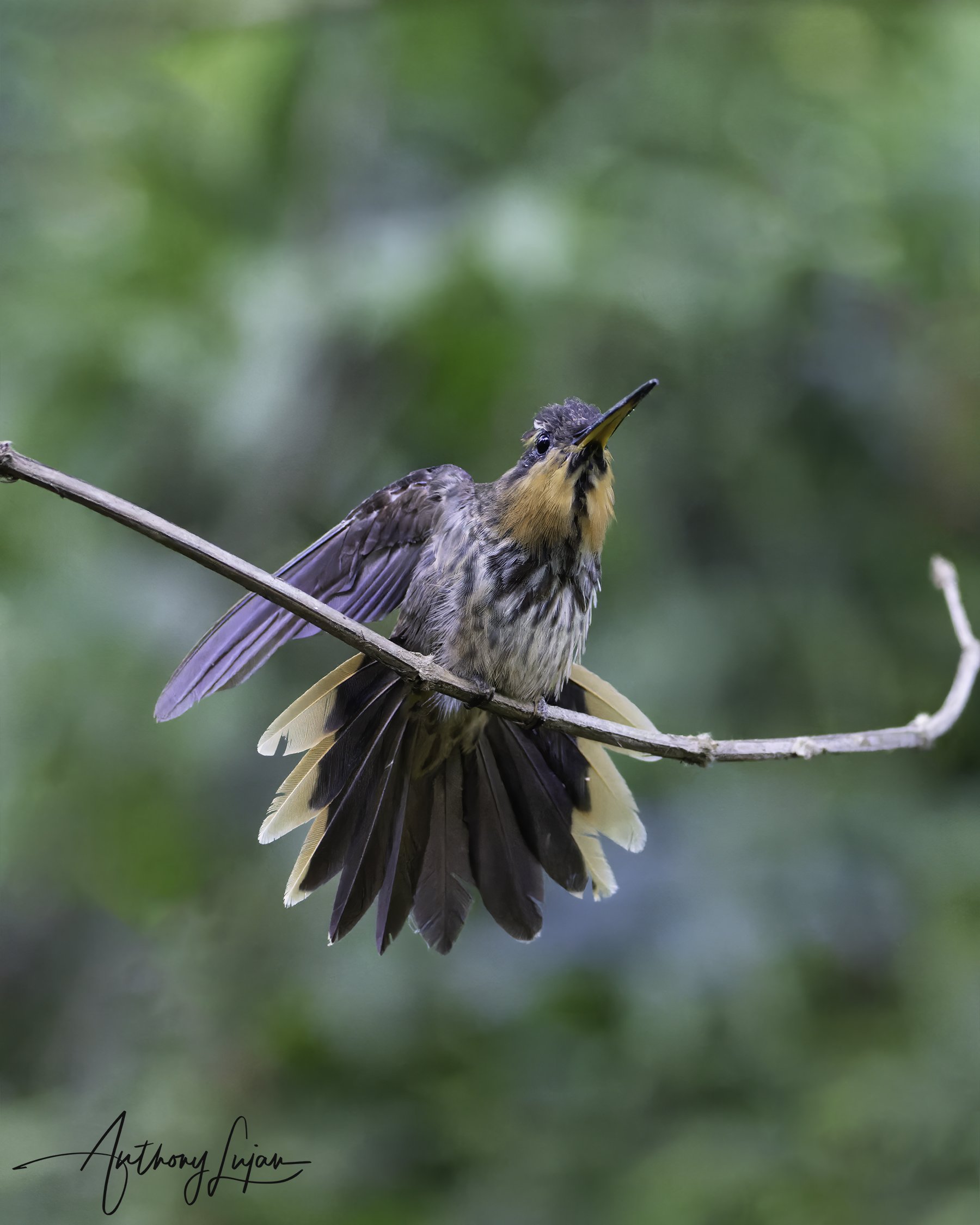
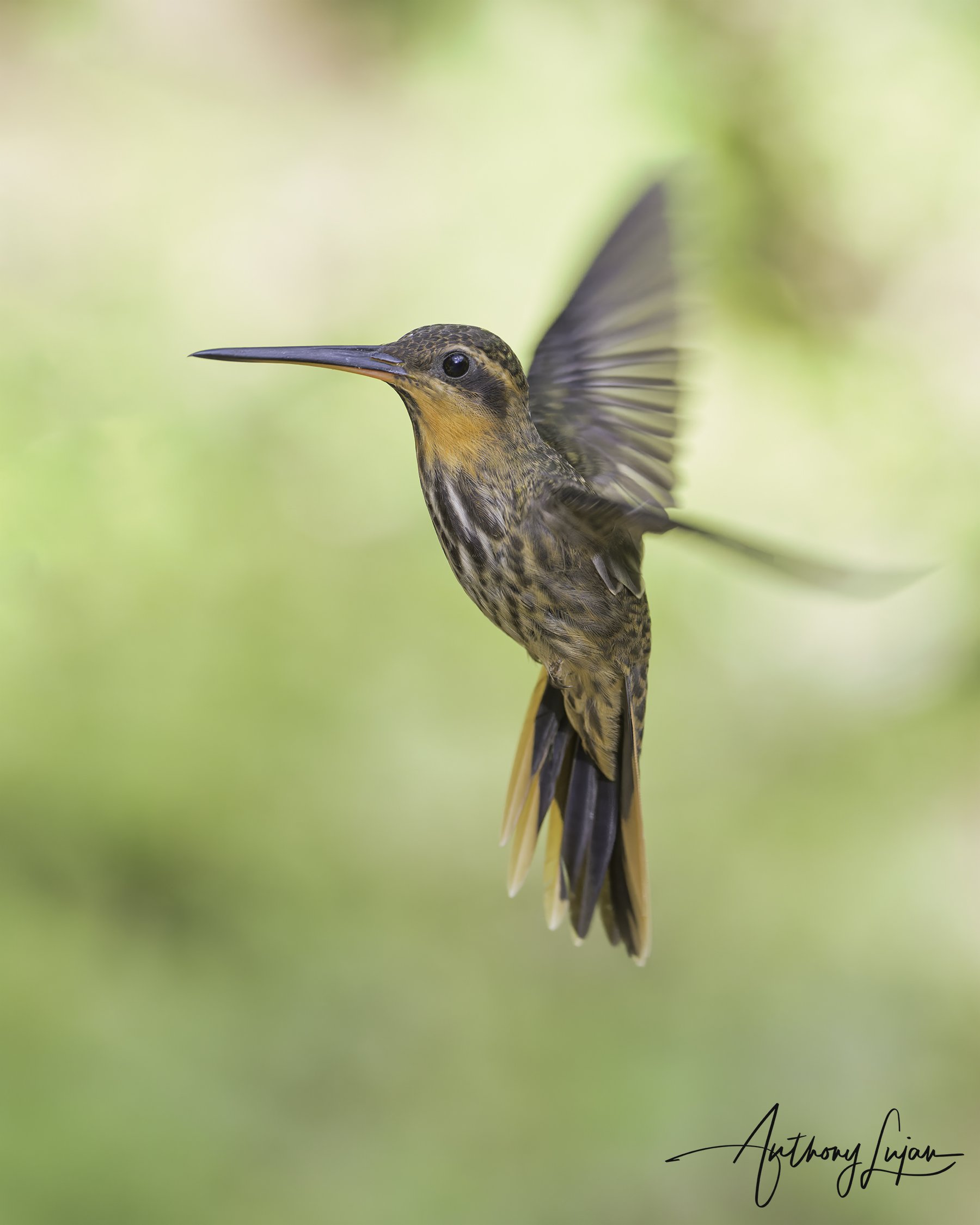
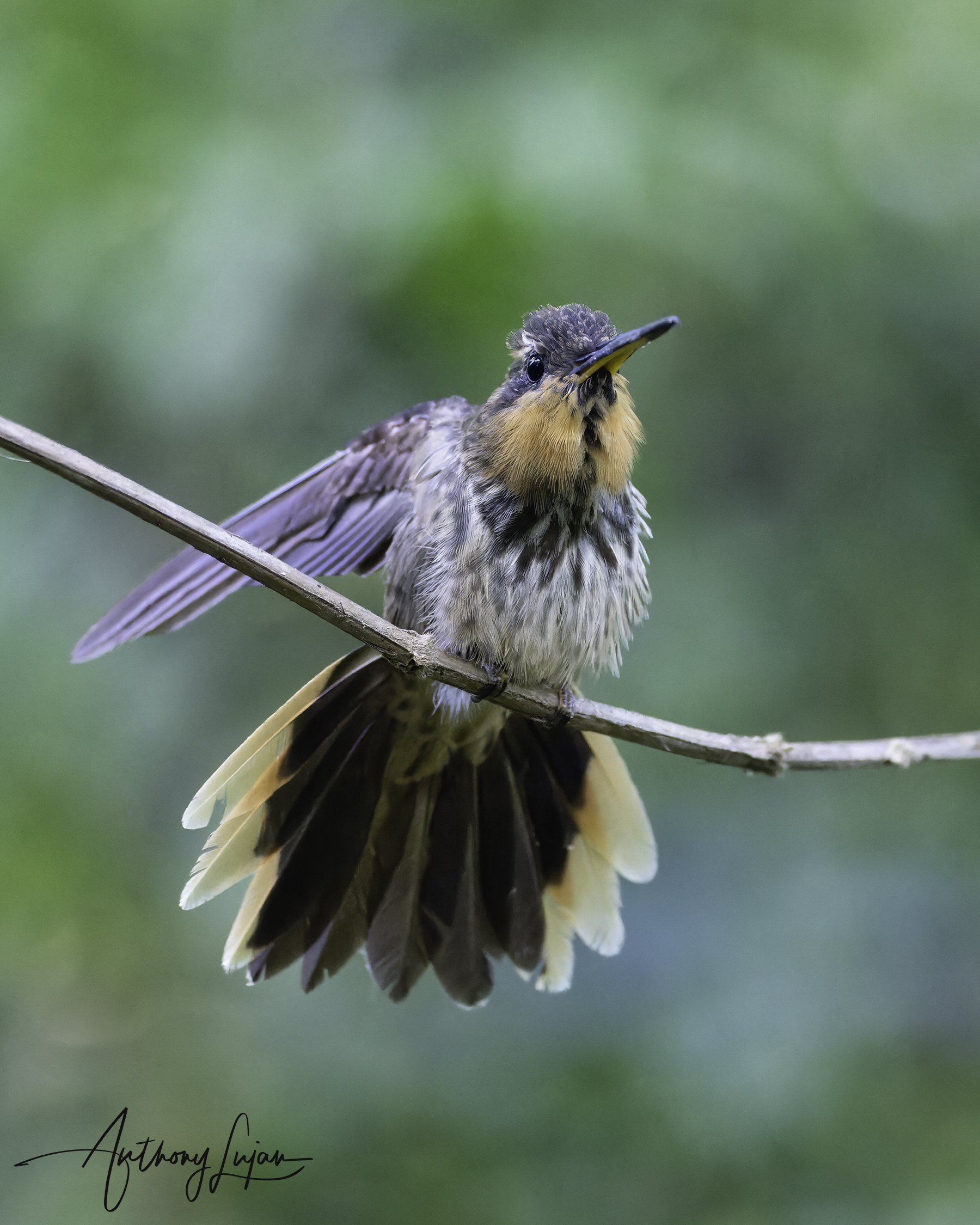
Checkout Anthony’s playlist of this species! Click the top right dropdown to see all the videos.
No related species in the Ramphodon genus (1 species in total):
Please note: The content provided in this article reflects Anthony’s personal experience and photographic approach. Results can vary depending on light, weather, location, equipment, subject behavior, and field conditions.