
Scaly-breasted Hummingbird
Scientific name: Phaeochroa cuvierii
The Scaly-breasted Sabrewing is a medium-large hummingbird of semi-open lowland and foothill habitats from southern Mexico through Central America to northern Colombia. Its global population is estimated at 50,000–499,999 mature individuals, the overall trend is stable, it is considered non‑migratory, and it is currently assessed as Least Concern.
At a Glance
Family: Trochilidae (hummingbirds)
Clade: Trochilini – Emeralds
Genus: Phaeochroa — no other species in this family as used in your template
Range: Extreme southeastern Mexico, Belize, Guatemala, Honduras, Nicaragua, Costa Rica, Panama, and northern Colombia
Habitat: Semi-open to open landscapes, including dry forest, forest edges and clearings, mangroves, secondary forest, scrublands, and gardens
Elevation: Mostly lowlands, locally up to about 1,200 m in Costa Rica
Length: About 10.5–12.5 cm (4.1–4.9 in)
Weight: About 5.5–7.5 g (0.19–0.26 oz)
Number of mature individuals: 50,000–499,999
Population trend: Stable
Movement: Not a migrant
IUCN Red List category: Least Concern
Name Origin
The genus name Phaeochroa combines Greek roots referring to “dusky” or “dark” coloration, fitting the bird’s generally muted but patterned plumage. The species name cuvierii honors Georges Cuvier, the French naturalist. The common name “Scaly-breasted Sabrewing” comes from the scaly appearance of the breast feathers and the sabre-like shape of the wing feathers typical of this group.
Taxonomy
Phaeochroa cuvierii is a hummingbird in the emeralds, tribe Trochilini, within the family Trochilidae. In your template, this species is treated as the only species in its genus family grouping, so no related species are listed. The species has a broad Mesoamerican range, extending from extreme southeastern Mexico through Central America to northern Colombia, with one subspecies reaching the Caribbean slope of northeastern Costa Rica and others on the Pacific slope, Panama, and Colombia.
The species occupies semi-open habitats rather than dense interior forest, which helps explain its broad distribution. It is especially associated with edges, clearings, second growth, gardens, and mangroves, often at low elevations but sometimes climbing into foothill zones.
Subspecies and Distribution
Six subspecies:
Phaeochroa cuvierii roberti
Distribution: Extreme southeastern Mexico (northeastern Chiapas), northern Guatemala, and Belize south along the Caribbean slope to northeastern Costa Rica.Phaeochroa cuvierii maculicauda
Distribution: Pacific slope of Costa Rica.Phaeochroa cuvierii furvescens
Distribution: Pacific slope of western Panama.Phaeochroa cuvierii saturatior
Distribution: Coiba Island, off southwestern Panama.Phaeochroa cuvierii cuvierii
Distribution: Central Panama, east to western San Blas.Phaeochroa cuvierii berlepschi
Distribution: Northern Colombia (northern Atlántico and northwestern Bolívar).
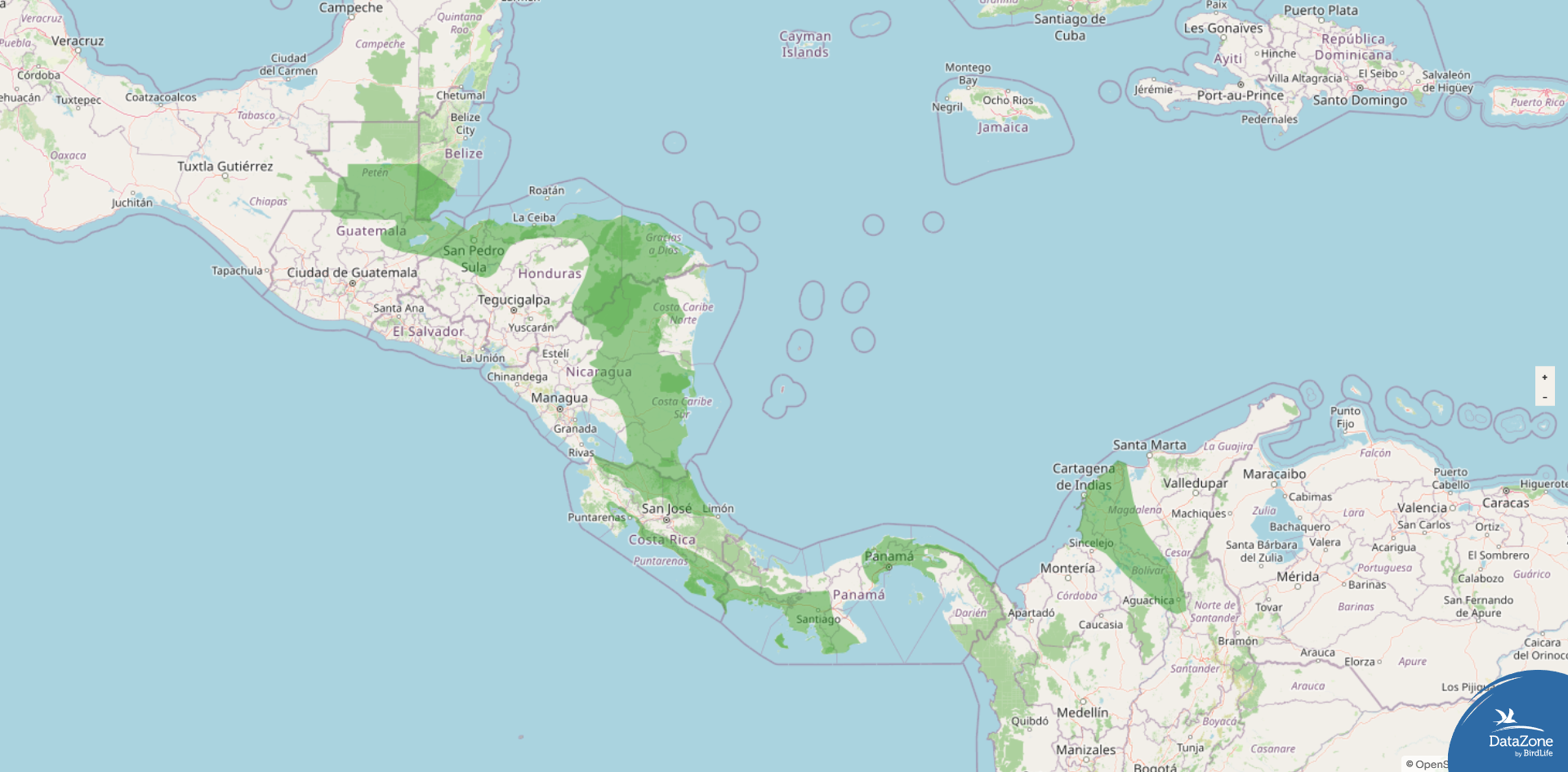
Legend
Green Resident
Species Overview
The Scaly-breasted Sabrewing is a robust hummingbird with a strongly patterned breast, a relatively long bill, and a powerful, direct flight. It is often seen along forest edges, in second growth, around clearings, and in gardens rather than deep shade forest. Its tolerance of disturbed habitats and semi-open landscapes contributes to its wide distribution and stable global status.
Male Description
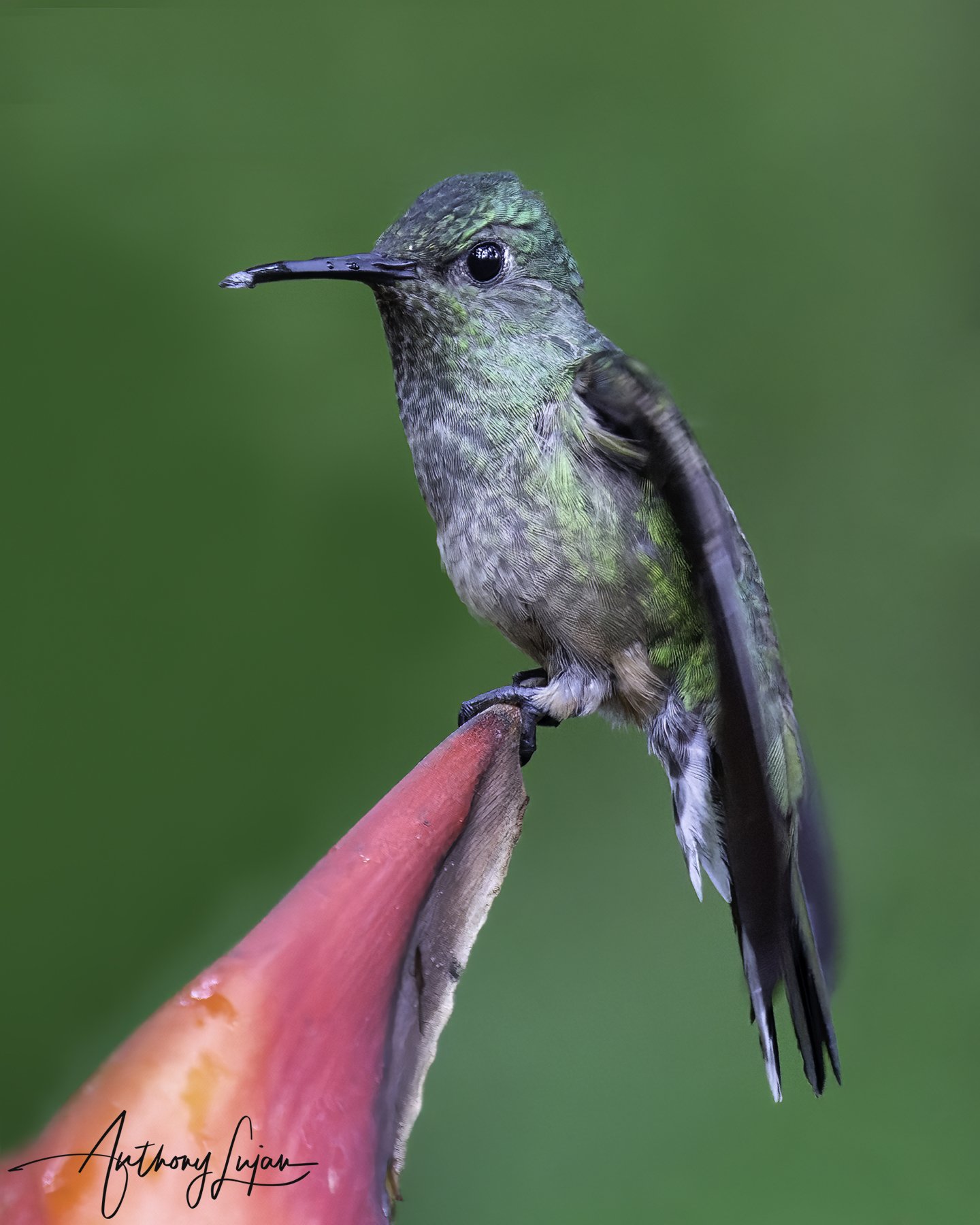
Adults are medium-large hummingbirds, generally about 10.5–12.5 cm long with a body mass around 5.5–7.5 g. The bill is straight and dark, and the upperparts are metallic green to bronzy green. The throat is often darker and more subdued, while the breast shows a scaly pattern created by pale feather edgings on darker ground color.
The underparts are grayish to dusky with a scaled or mottled appearance on the upper breast, becoming lighter on the lower belly. The tail is generally dark with subtle pale edging or contrasting tones depending on the subspecies. Overall, the bird appears compact, dark-backed, and distinctly scaly below.
Female Description
Females resemble males closely, with similar green upperparts and the same general scaly pattern on the breast. They may look slightly duller and a bit smaller, but the overall structure and field marks are very similar. Juveniles are also similar, though they often show less intense metallic green and a softer, less sharply defined scaly pattern until mature.
Habitat & Behavior
Scaly-breasted Sabrewings occupy semi-open and open habitats, including dry forest, forest edges and clearings, mangroves, secondary forest, scrub, and gardens. They are often seen in lowland areas, along roadsides, at flowering trees and shrubs, and in planted landscapes that retain some natural structure. Unlike many hummingbirds that specialize in closed forest interiors, this species thrives in edge habitats and human-modified areas.
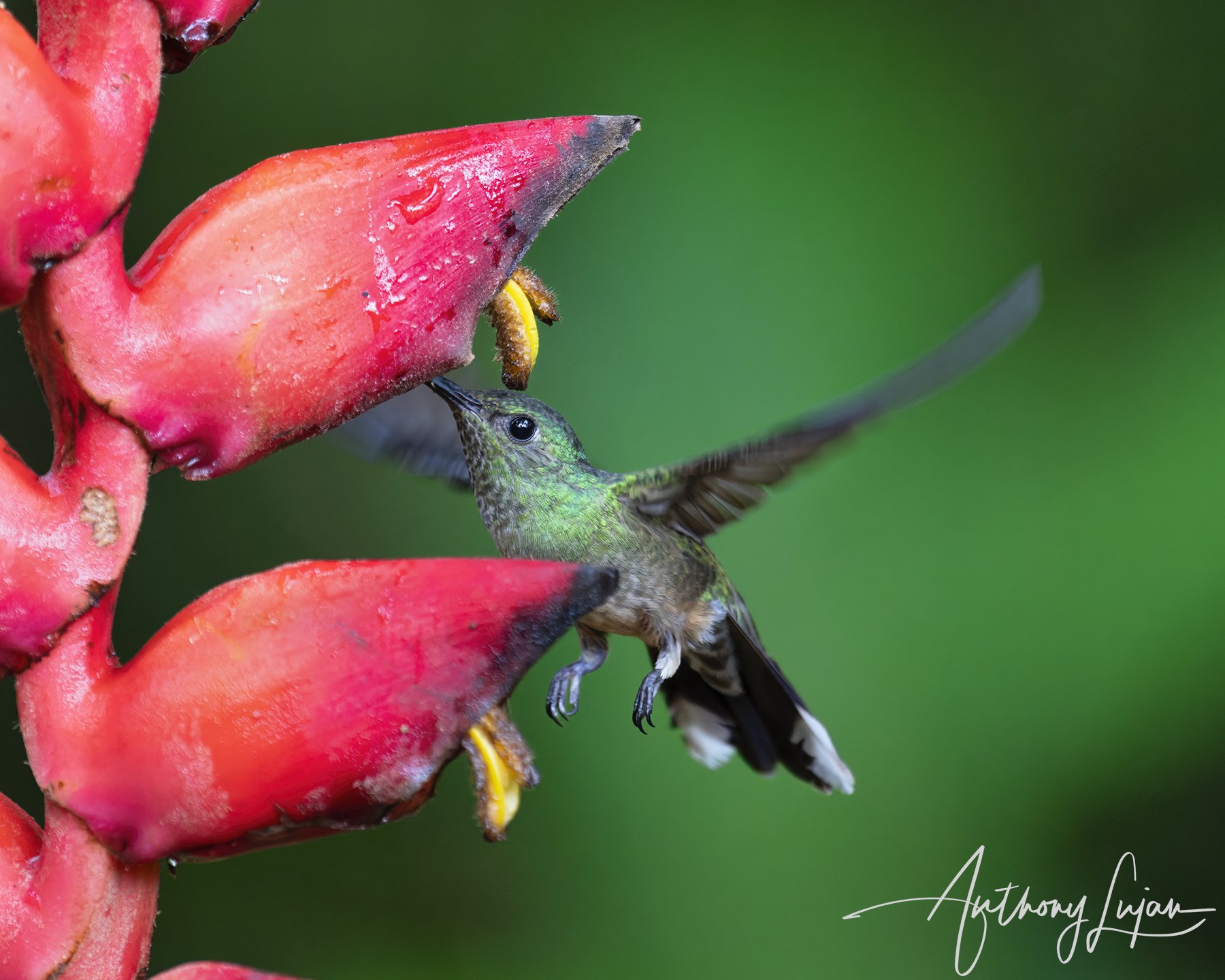
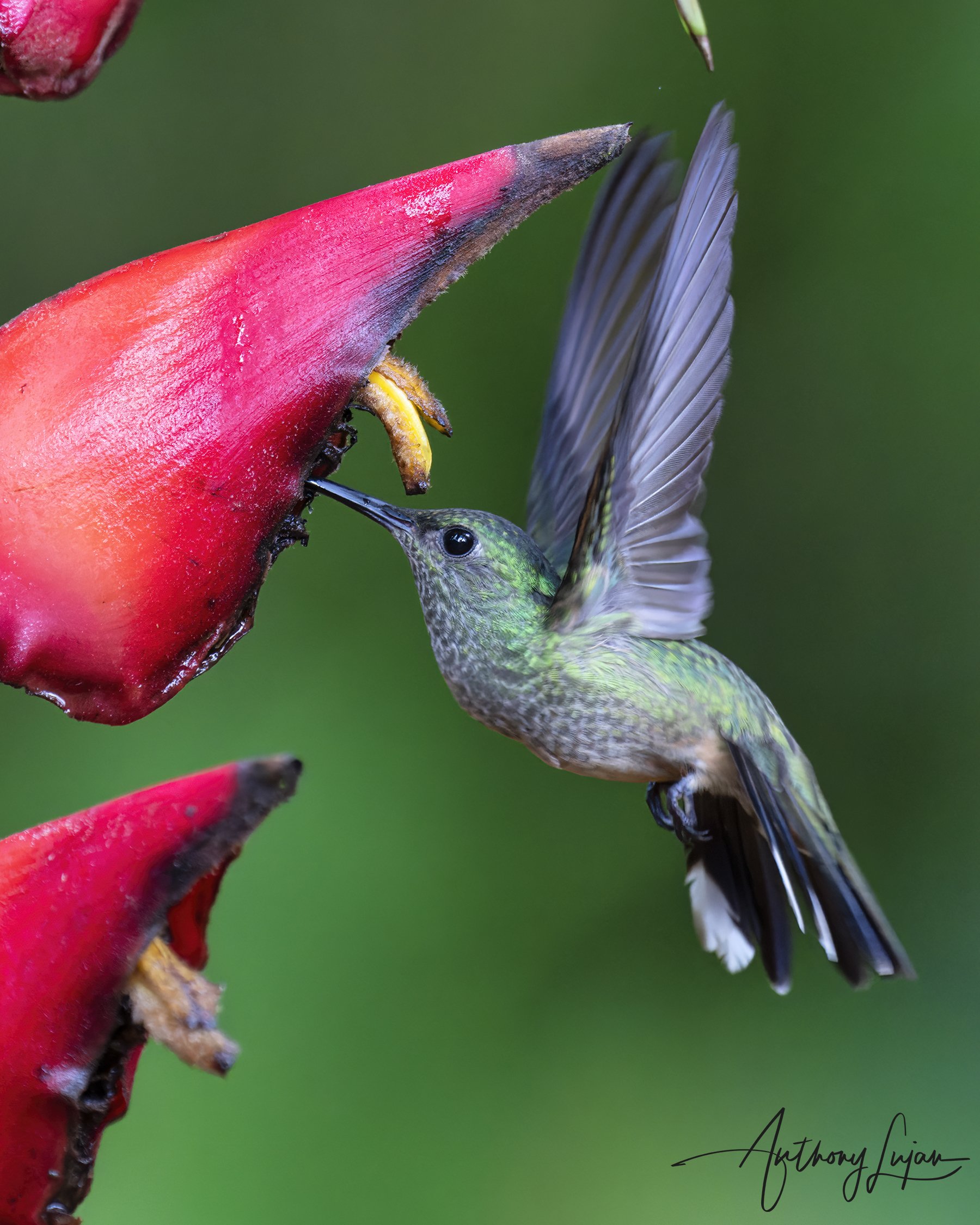
They feed on nectar from a broad range of flowers and also take small insects. Foraging usually occurs from the understory to the mid‑story, though they can visit canopy flowers at edges and in open areas. They may defend productive flower patches and can be conspicuous where flowering plants are abundant.
Breeding
Breeding is generally tied to local rainy seasons and periods of flowering, varying by region from Mexico to Colombia. Females build a small cup nest of plant fibers, moss, and spiderweb, often attached to a branch in a sheltered but not fully enclosed site. The nest is camouflaged with bits of moss and lichen.
The typical clutch is two white eggs. The female alone incubates and feeds the chicks. Incubation and nestling periods are not always well documented across the full range, but like other medium-sized hummingbirds they likely follow a several-week nest cycle from egg laying to fledging.
Movement
The Scaly-breasted Sabrewing is considered non-migratory and is treated as a resident species. It remains in the same broad regions year-round, though individuals may move locally in response to flowering and rainfall. Some altitudinal or short-distance seasonal shifts probably occur, but these are not considered true migration.
Population
The global population is estimated at 50,000–499,999 mature individuals. Although not considered rare across its range, it is less abundant than some very widespread hummingbirds and can be patchy in occurrence. The overall trend is stable, suggesting that its use of disturbed and semi-open habitats may buffer it somewhat against moderate habitat change.

Conservation
The species is currently assessed as Least Concern. Its broad range, tolerance of edges and secondary habitats, and presence in gardens and agroforestry landscapes help maintain a stable outlook. Continued habitat loss could still affect local populations, but there is no indication of a rapid global decline at present.
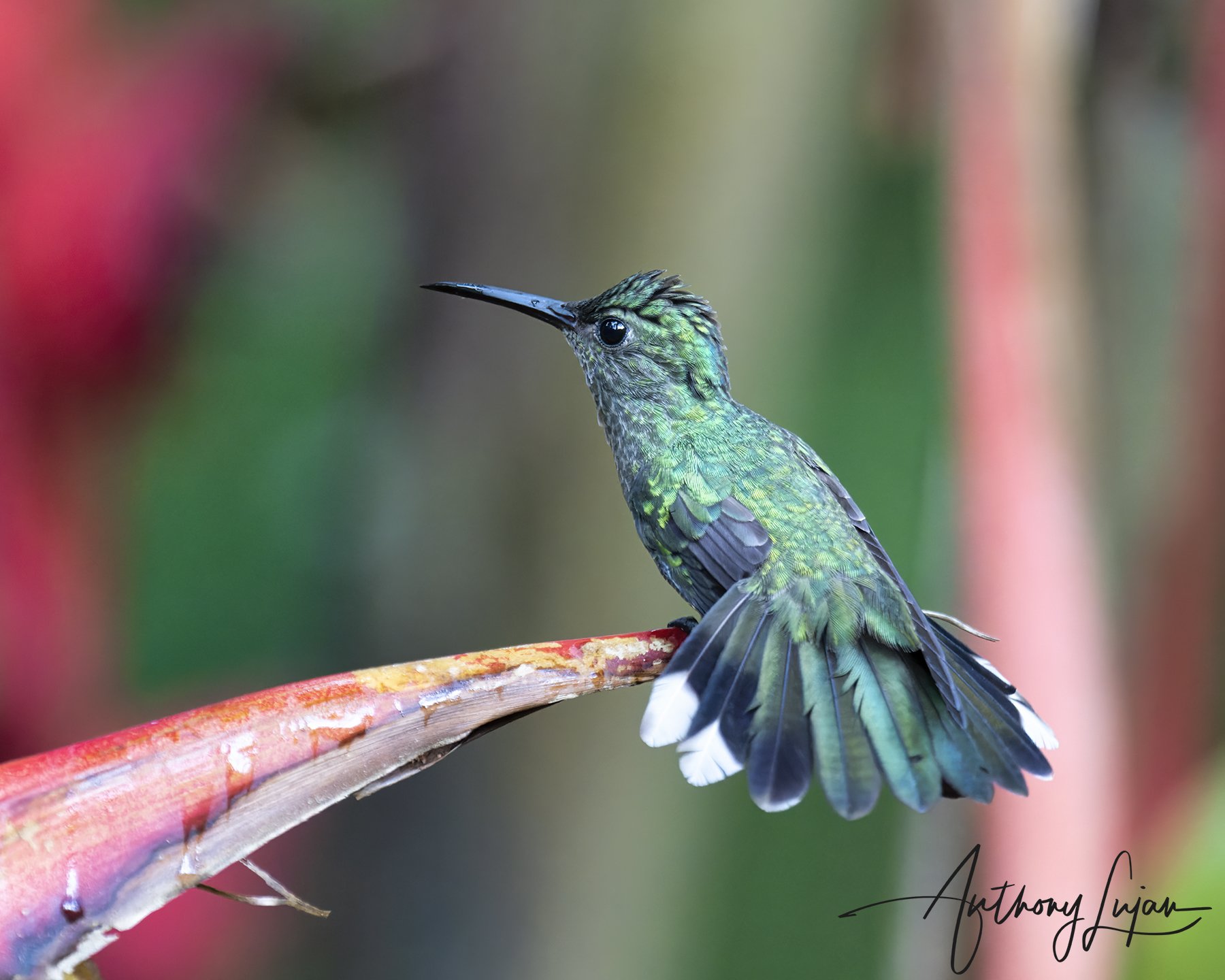
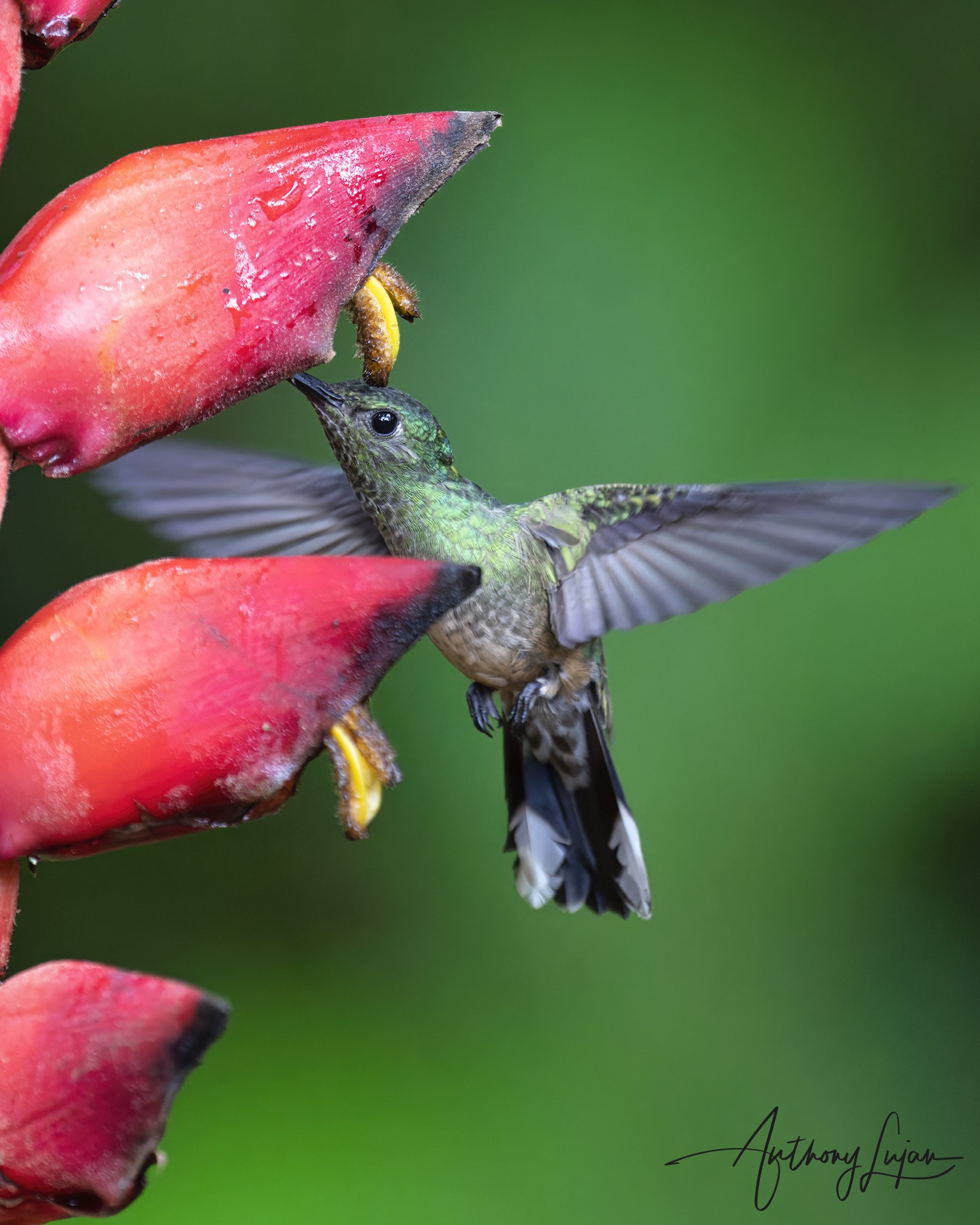
Below is the Scaly-breasted Hummingbird (Phaeochroa cuvierii roberti)
Photographed at Plumas y Picos and Nectar & Pollen Reserve, Limón, Costa Rica
These individuals belong to the subspecies roberti, which ranges from southern Mexico through northern Central America south to the Caribbean slope of northeastern Costa Rica. It favors lowland humid forests and edge habitats and is one of the more vocal hummingbirds in its range.
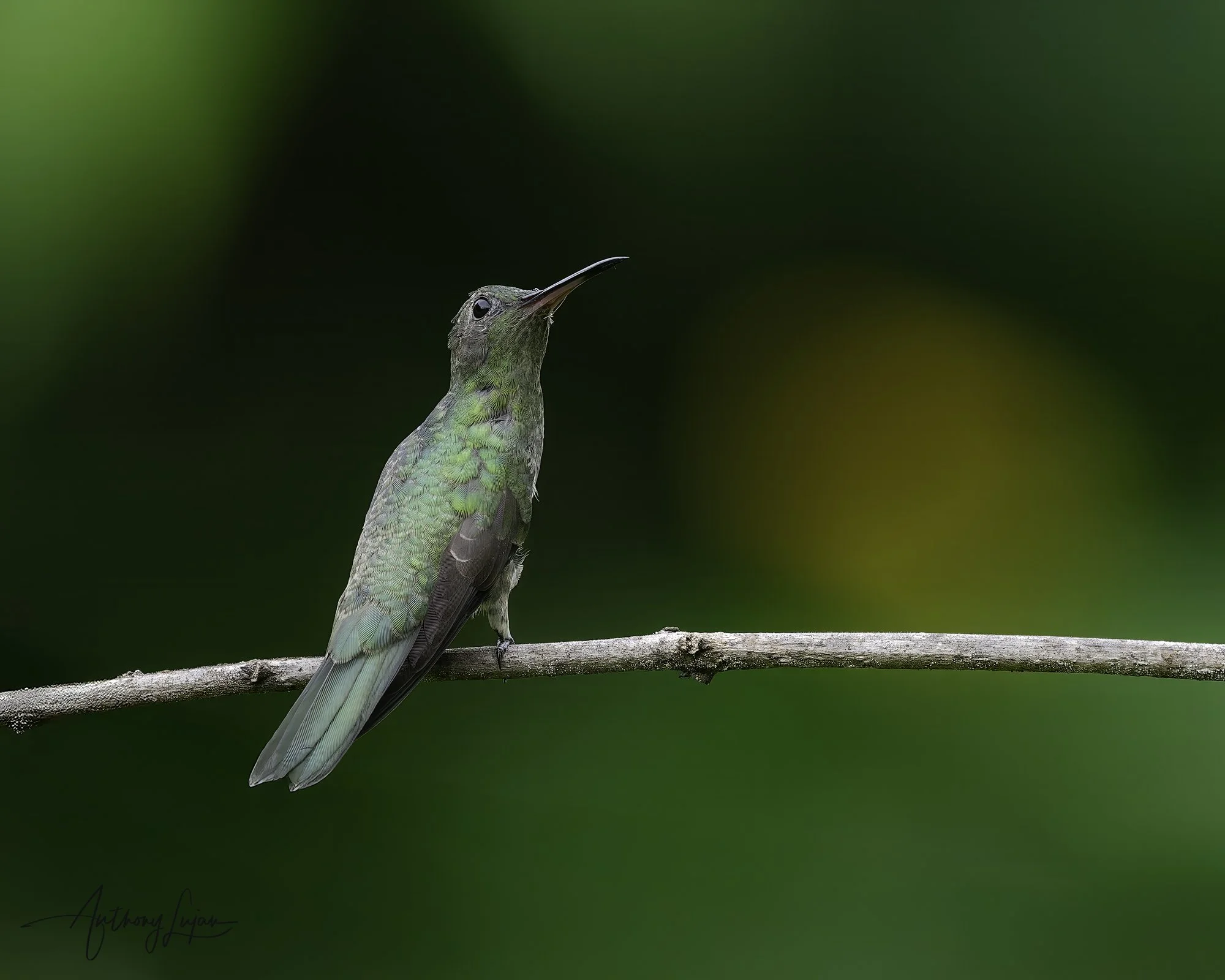
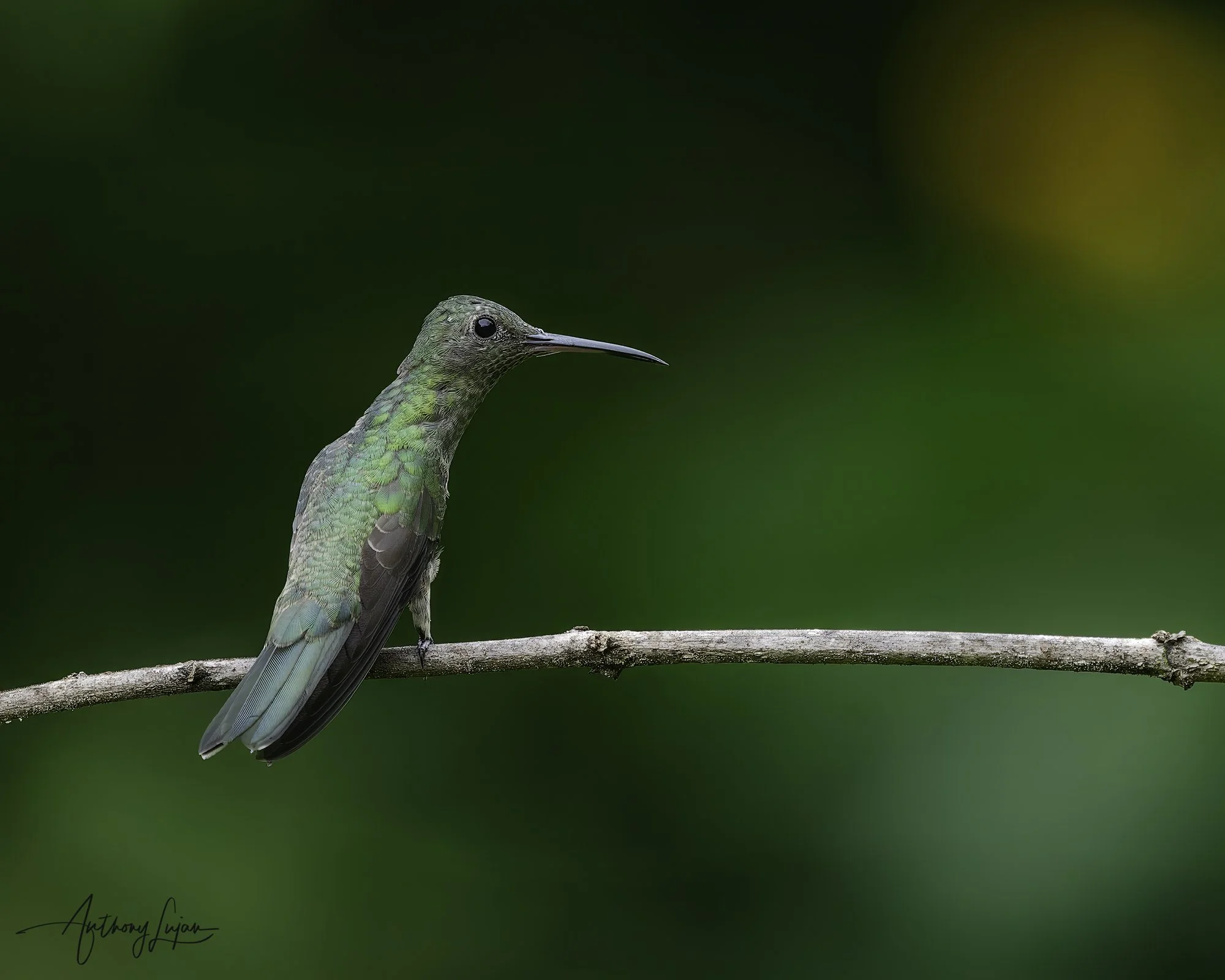
Below is the Scaly-breasted Hummingbird (Phaeochroa cuvierii maculicauda)
Photographed at Esquipulas Rainforest Lodge, Puntarenas, Costa Rica
These individuals belong to the subspecies maculicauda, which is found along the Pacific slope of Costa Rica. It inhabits forest edge, plantations, and second growth in lowland and foothill zones, typically from sea level up to 1,200 meters. This subspecies shows darker green upperparts and more extensive underpart scaling.
Interested in coming along? Visit Travel with Me!
Also visit Costa Rica Hummingbird Expedition | July 2021 | 10 Species | Where It All Started
Also visit Costa Rica Hummingbird Expedition | November 2021 | 22 New Species | Second Chances
Also visit Costa Rica Hummingbird Expedition | July 2025 | 32 Species | 10 New | Closing the GapNo other species is currently recognized in the genus Phaeochroa; the Scaly-breasted Hummingbird is the only member of this genus.
Please note: The content provided in this article reflects Anthony’s personal experience and photographic approach. Results can vary depending on light, weather, location, equipment, subject behavior, and field conditions.