
Scintillant Hummingbird
Scientific name: Selasphorus scintilla
The Scintillant Hummingbird is a tiny, highland hummingbird endemic to Costa Rica and western Panama, where it is one of the smallest birds in the region. It occupies brushy forest edges, coffee plantations, scrubby pastures, and gardens in mid‑elevation mountains, often sharing slopes with its larger relative, the Volcano Hummingbird. Males live up to the name “scintillant” with a brilliant orange‑red gorget that flashes against warm cinnamon underparts when they turn into the light.
At a Glance
Family: Trochilidae (hummingbirds)
Clade: Mellisugini – “Bee” hummingbirds
Genus group:Selasphorus — small hummingbirds with fiery gorgets or rufous tones and distinctive wing displays
Range: Endemic to the mountains of Costa Rica and western Panama
Habitat: Brushy forest edges, scrubby pastures, hedgerows, young second growth, coffee plantations, and sometimes gardens in montane regions
Elevation: About 900–2,000 m (3,000–6,600 ft) in the breeding season, occasionally up to 2,400–2,500 m (7,900–8,200 ft) outside breeding
Length: About 6.5–8 cm (2.6–3.1 in)
Weight: Males ~2 g, females ~2.3 g (around 0.07–0.08 oz)
Number of mature individuals: 20,000–49,999
Population trend: Decreasing
Status: Least Concern (IUCN)
Name Origin
The genus name Selasphorus is derived from Greek roots interpreted as “light-bearing” or “glowing,” referring to the intense iridescent colors of many species in this group. The species name scintilla is Latin for “spark” or “sparkle,” alluding to the male’s flashing orange‑red gorget. Together, Selasphorus scintilla evokes a “glowing spark” of a hummingbird—an apt description for this tiny, bright bird of Central American mountains.
Subspecies and Distribution
Scintillant Hummingbird is monotypic — no recognized subspecies.
It is endemic to the highlands of Costa Rica and western Panama, occurring in mountain ranges where suitable mid‑elevation scrub, forest edges, and agriculture–forest mosaics are present. Within this narrow range it is typically found between about 900 and 2,000 m, moving locally upslope after breeding to reach elevations of roughly 2,400–2,500 m on volcanoes and upper slopes.
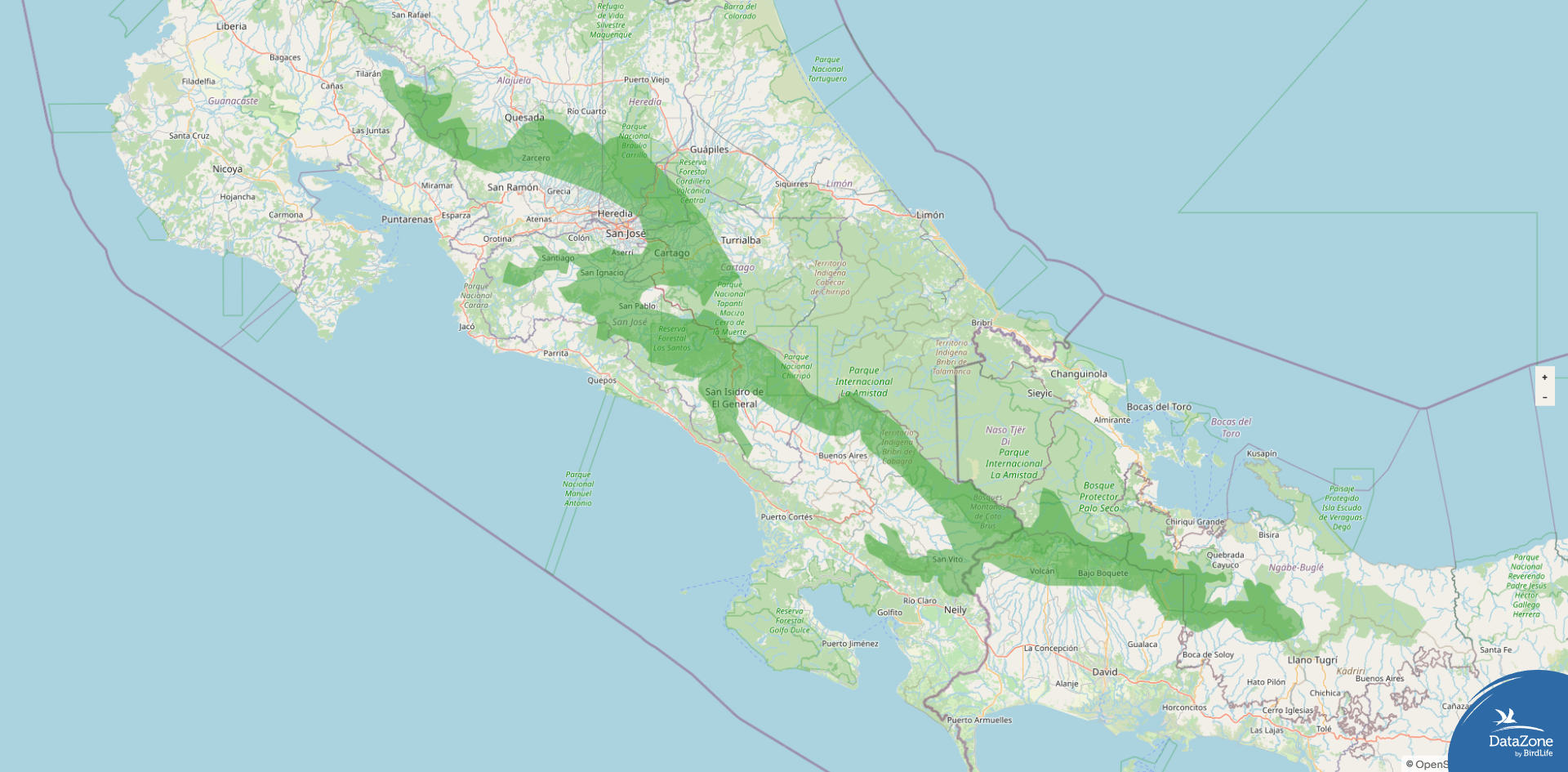
Legend
Green Resident
Yellow Breeding
Blue Non-breeding
Species Overview
The Scintillant Hummingbird is one of the smallest hummingbirds in Costa Rica and tropical America, only slightly larger than the Bee Hummingbird of Cuba. It is a characteristic species of mid‑elevation brushy slopes, coffee plantations, and forest edges in the Talamanca and other Costa Rican mountains, extending into neighboring western Panama. Although its global population is relatively small (20,000–49,999 mature individuals) and trends are Decreasing, it remains locally fairly common in suitable habitat and is currently assessed as Least Concern.
Identification
Male
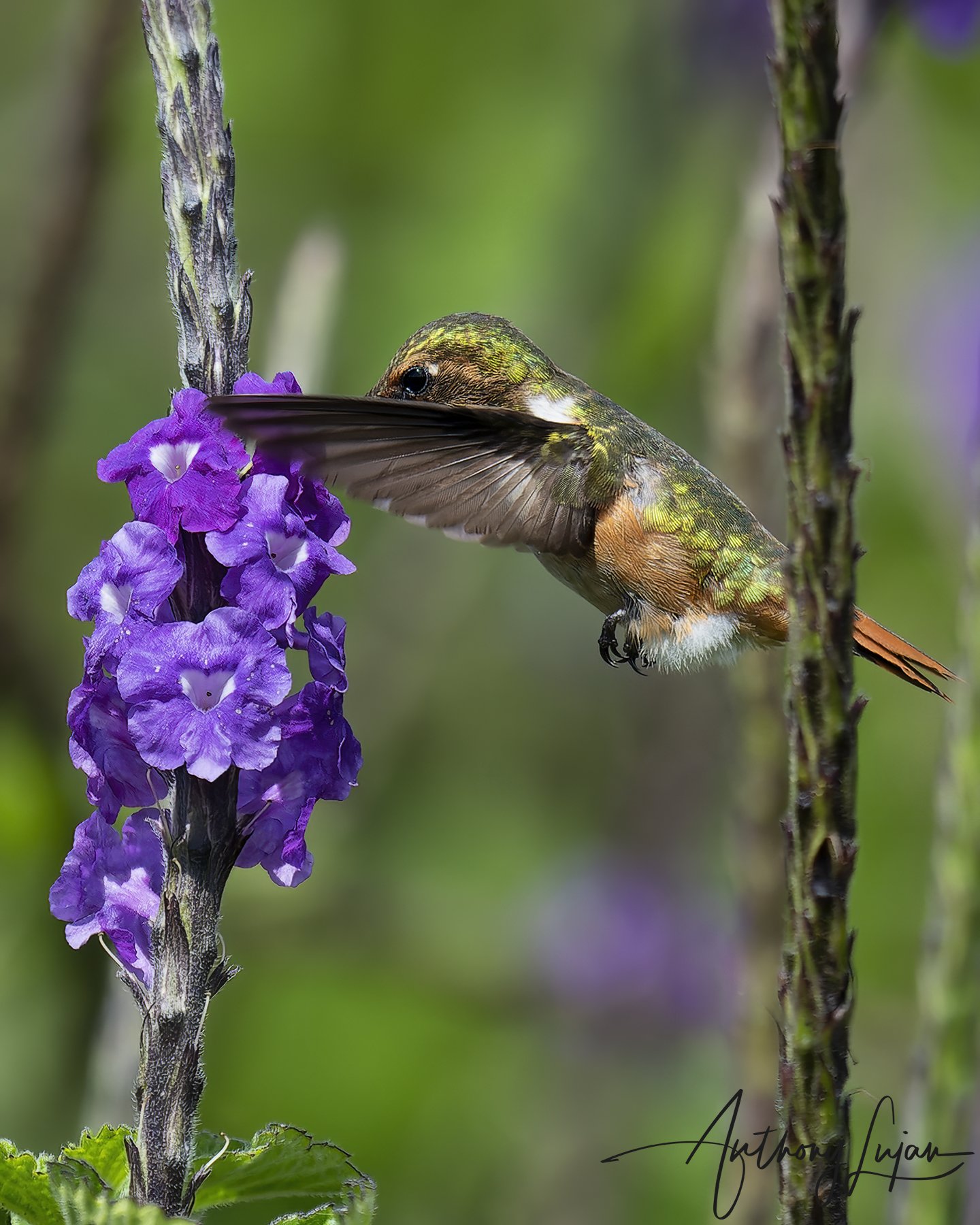
Adult males are extremely small with bronzy‑green upperparts and a rufous‑ and black‑striped tail. The throat bears a brilliant orange‑red gorget that contrasts sharply with a white neck band above warm cinnamon underparts. The flanks are rich rufous, often “spangled” with a few green spots, and the bill is short, straight, and black. In the field, males show a compact body, cocked tail, and flashing orange‑red throat that separate them from the slightly larger, higher‑elevation Volcano Hummingbird.
Female
Females resemble males in size and structure but lack the full brilliant gorget. The throat is buff with small green spots, the breast and belly are mostly cinnamon, and the upperparts are bronzy‑green. The tail is rufous with darker striping, and females also cock the tail while feeding, though their overall coloration is more subdued than that of males. Young birds resemble females but show more rufous fringes on the upperpart feathers until they molt into adult plumage.
Habitat and Behavior
Scintillant Hummingbirds inhabit brushy forest edges, scrubby pastures, hedgerows, young second growth, coffee plantations, and sometimes rural dooryards and suburban gardens at mid elevations. They are typically found from about 900 to 2,000 m during the breeding season, moving higher to around 2,400–2,500 m after breeding, especially on Costa Rican volcanoes. Within these habitats they frequent small flowering shrubs, weedy patches, and edges, often hovering close to the ground or low shrubs.
Their diet consists primarily of nectar taken from a variety of small flowers, including Salvia and other plants often pollinated by insects. Like other hummingbirds they also consume small insects and spiders as an essential protein source, especially during breeding. Males perch conspicuously around favored flower patches and defend small feeding territories with aggressive chases and diving displays, giving liquid tsip calls and flashing their gorgets.
Population and Threats
Scintillant Hummingbird has a relatively small global population estimated at 20,000–49,999 mature individuals and is experiencing a Decreasing trend. While it uses a mix of semi‑natural and human‑modified habitats (such as coffee plantations, pastures, and gardens), it depends on landscapes that retain flowering shrubs, second growth, and forest edges in the Costa Rican and western Panamanian highlands. Ongoing habitat change, including conversion or intensification of agriculture, loss of hedgerows and scrub, and degradation of montane forest, could gradually reduce the quality and extent of its habitat.

Conservation
Because Scintillant Hummingbird is restricted to the mountains of Costa Rica and western Panama, conserving mid‑elevation forest edges, coffee agroforestry systems with shade and native shrubs, and scrubby pastures with flowering plants is key. Maintaining mosaics of second growth, hedgerows, and smallholder coffee farms with diverse flowering vegetation provides nectar resources and nesting sites. Protection and good management of montane forest reserves in Costa Rica and Panama, combined with bird‑friendly coffee and reduced pesticide use, will help counteract the Decreasing population trend of this diminutive highland species.


Interested in coming along? Visit Travel with Me!
Also visit Costa Rica Hummingbird Expedition | July 2021 | 10 Species | Where It All Started
Also visit Costa Rica Hummingbird Expedition | November 2021 | 22 New Species | Second Chances
Also visit Costa Rica Hummingbird Expedition | July 2025 | 32 Species | 10 New | Closing the Gap
Checkout Anthony’s playlist of this species! Click the top right dropdown to see all the videos.
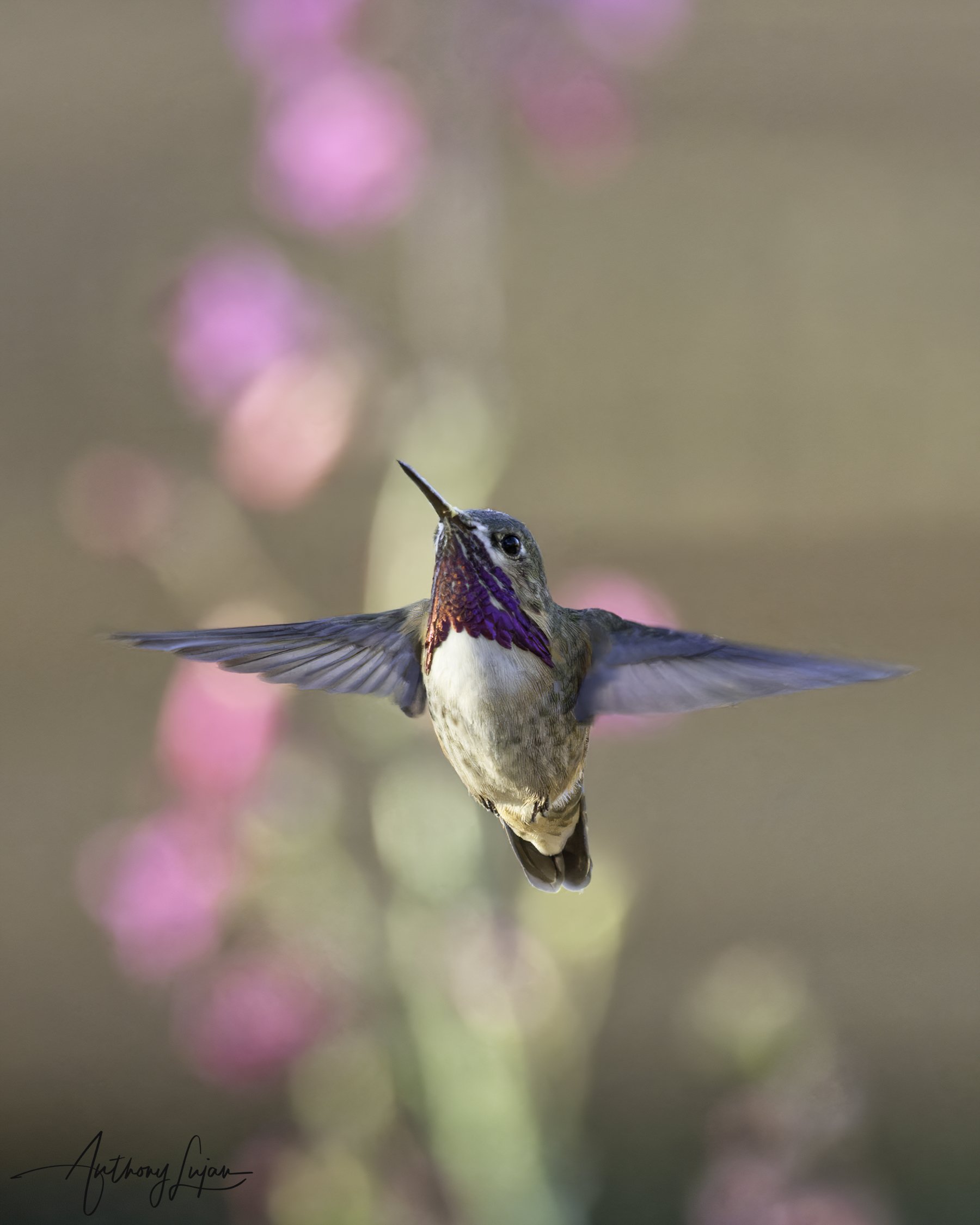
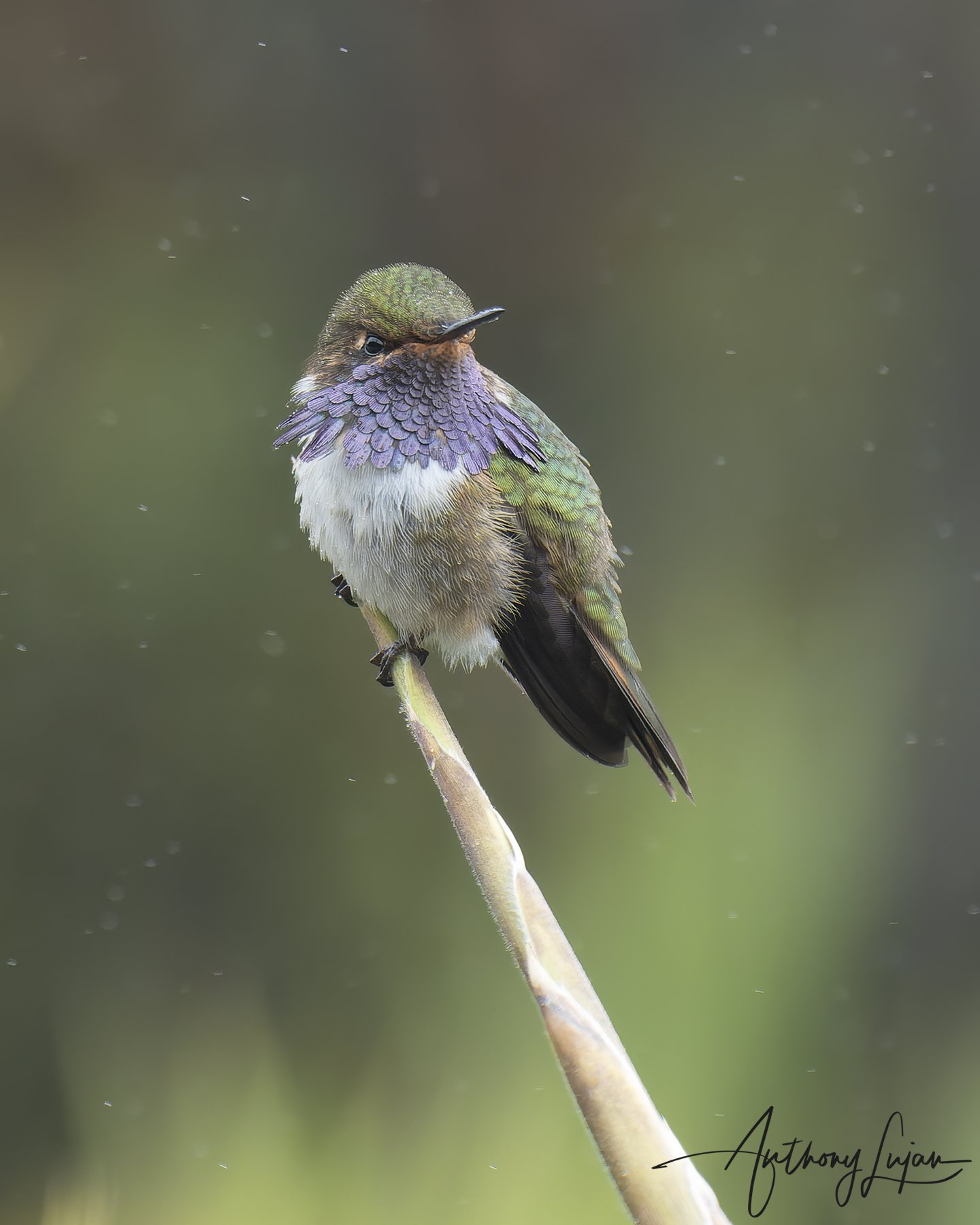
Related species in the Selasphorus genus (9 species total):





Please note: The content provided in this article reflects Anthony’s personal experience and photographic approach. Results can vary depending on light, weather, location, equipment, subject behavior, and field conditions.