
Scientific name: Phaethornis eurynome
The Scale-throated Hermit is a medium-sized hermit hummingbird of Atlantic Forest understory and edges in southeastern Brazil, eastern Paraguay, and northeastern Argentina. The number of mature individuals is unknown, the population trend is decreasing, it is not a migrant, and it is currently assessed as Least Concern.
At a Glance
Family: Trochilidae (hummingbirds)
Clade: Phaethornithinae – Hermits
Genus: Phaethornis — 27 species in total
Range: Southeastern Brazil, eastern Paraguay, northeastern Argentina (Misiones)
Habitat: Understory of Atlantic lowland and montane rainforest, semi-deciduous forest, mature secondary forest, humid forest edges and ravines
Elevation: About 100–2,250 m (330–7,400 ft)
Length: About 14–14.5 cm (5.5–5.7 in)
Weight: Males 4.5–6 g; females 4–5 g
Number of mature individuals: Unknown
Population trend: Decreasing
Movement: Not a migrant
IUCN Red List category: Least Concern
Name Origin
The genus name Phaethornis comes from Greek roots meaning “sun‑shining bird,” referring to the iridescence typical of hummingbirds. The species name eurynome comes from Greek mythology (Eurynome, a sea goddess), a name frequently used in early zoological nomenclature. The English name “Scale-throated Hermit” describes the dark, scalloped throat feathers that give a scaled appearance.
Taxonomy
Phaethornis eurynome is a hermit hummingbird in the subfamily Phaethornithinae. It belongs to the large genus Phaethornis and is an Atlantic Forest specialist compared to many lowland Amazonian relatives.
Subspecies and Distribution
Two subspecies:
Phaethornis eurynome paraguayensis
Distribution: Eastern Paraguay and northeastern Argentina (Misiones).Phaethornis eurynome eurynome
Distribution: Southeastern Brazil from southeastern Bahia south to Rio Grande do Sul.
The two subspecies have essentially identical plumage, with paraguayensis being noticeably smaller on average. The species occupies the Atlantic Forest biome in its various forms, including lowland and montane rainforest, semi-deciduous forest, and mature secondary forest.
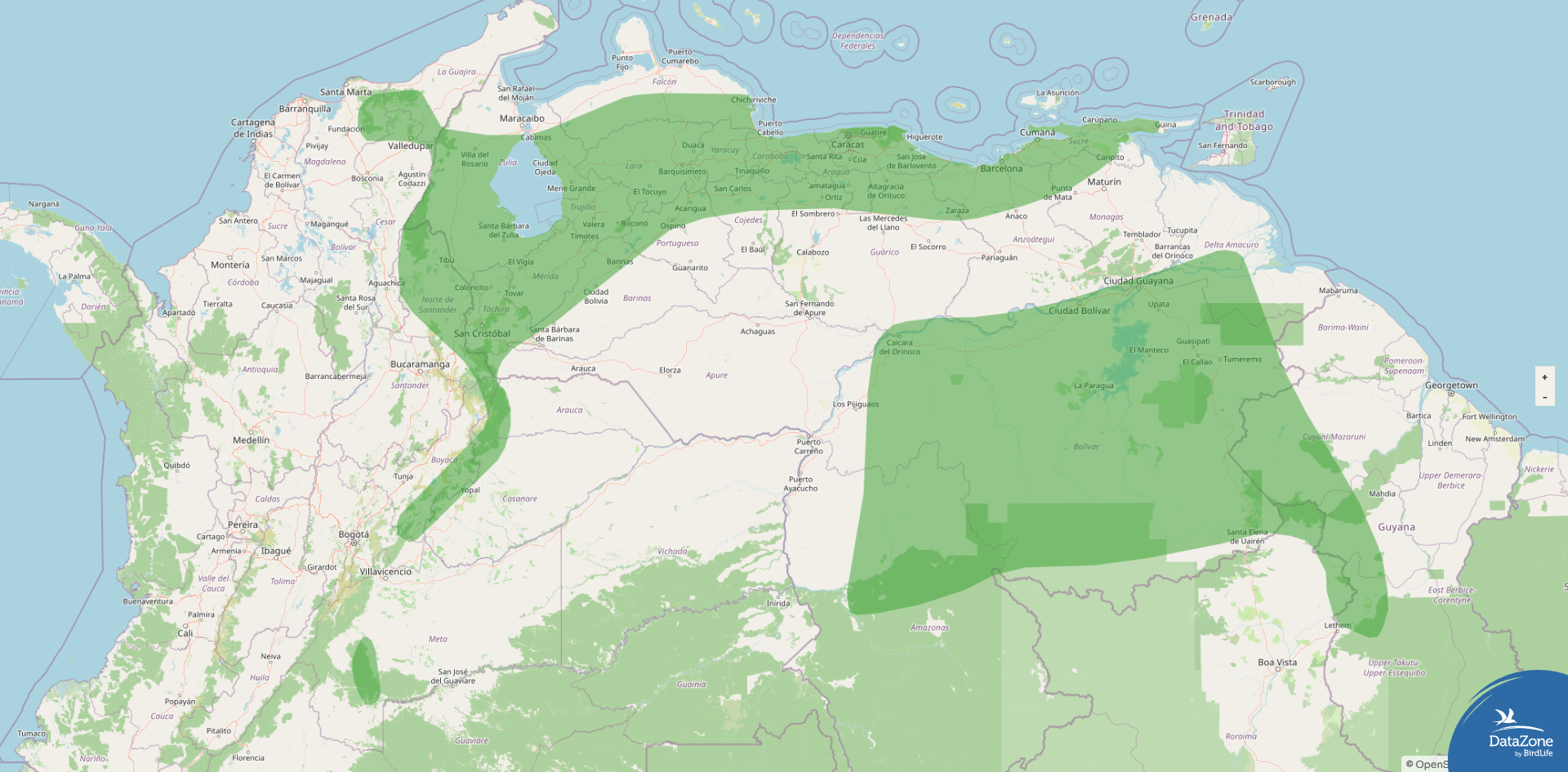
Legend
Green Resident
Species Overview
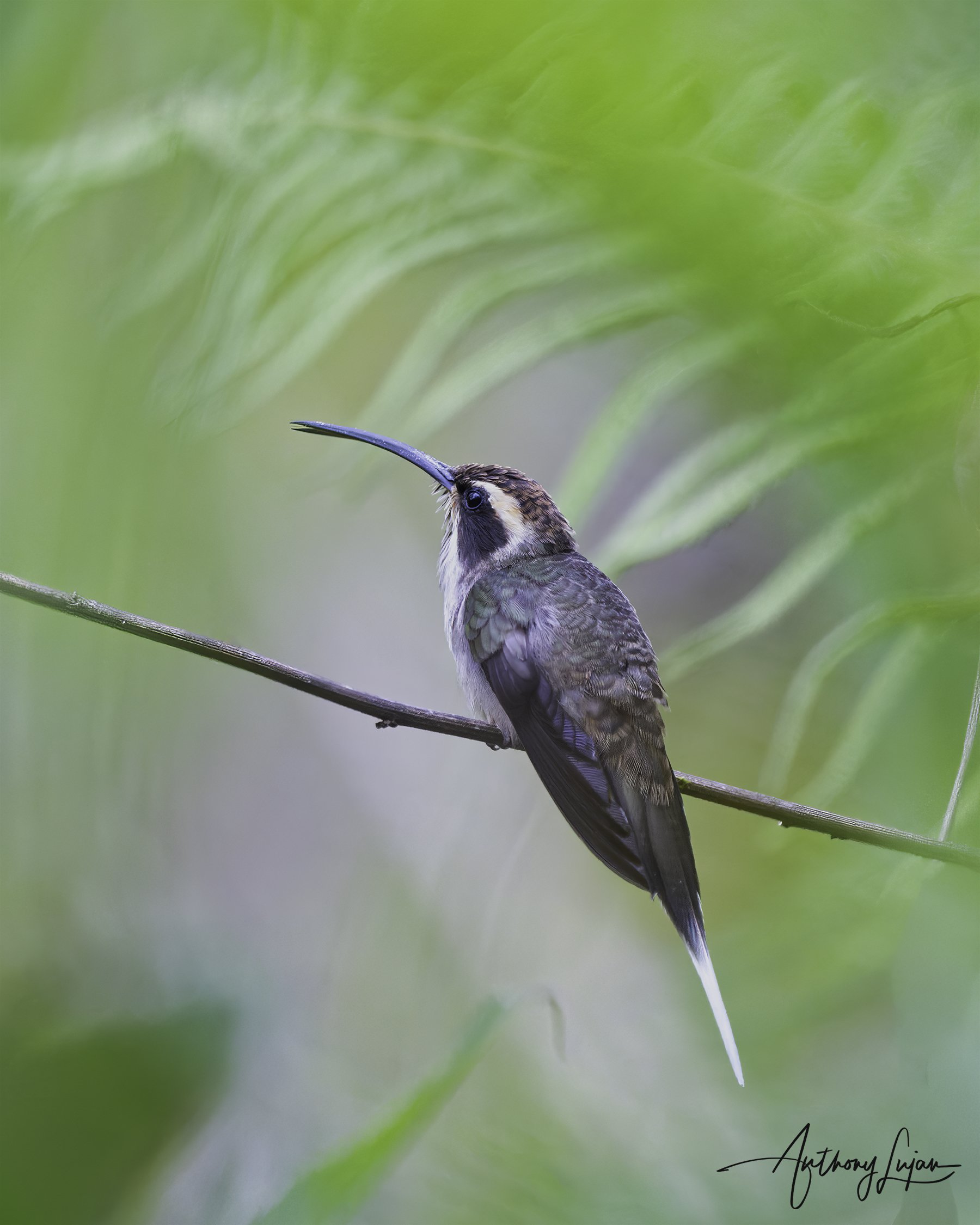
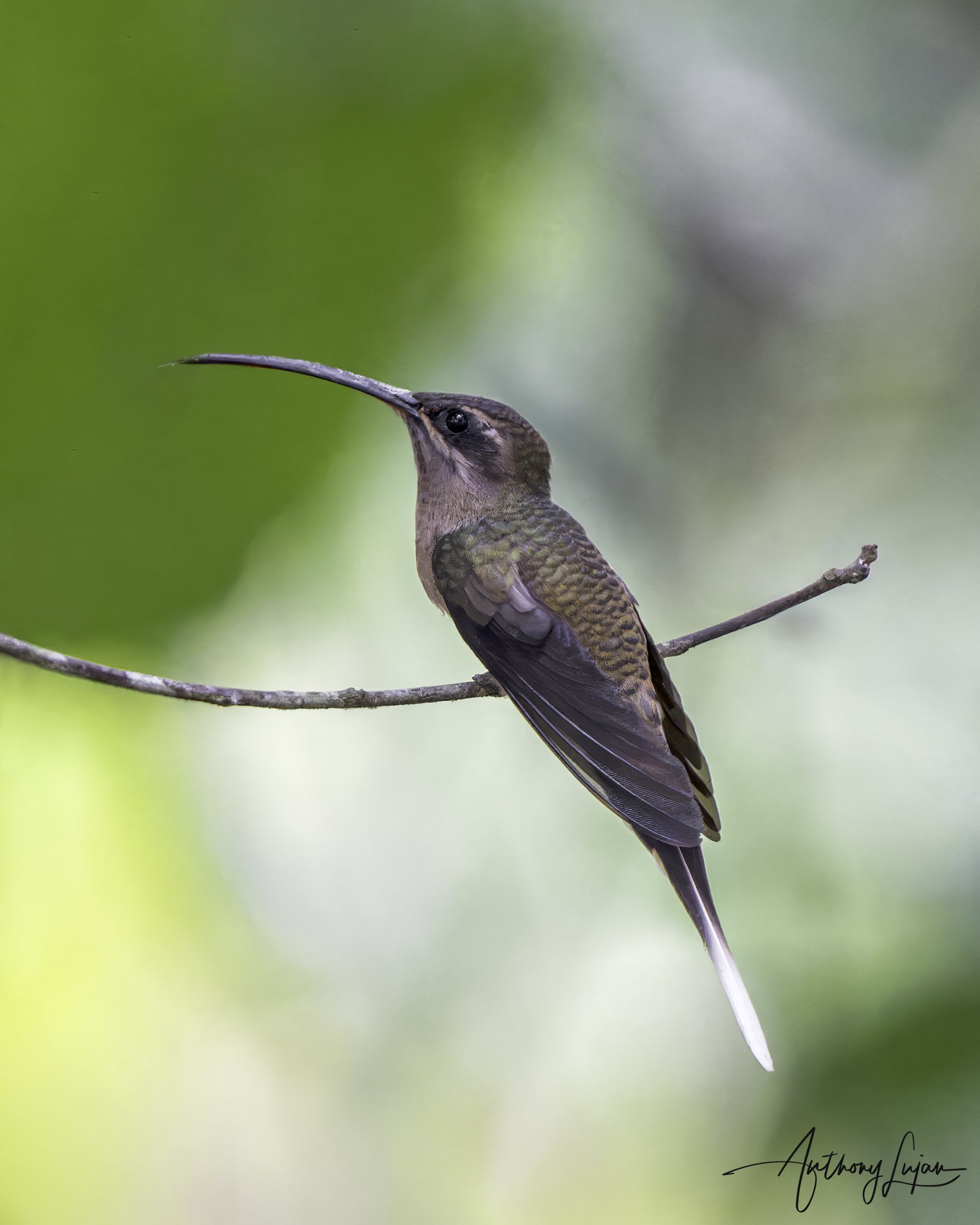
The Scale-throated Hermit is a forest‑interior hermit with olive‑green upperparts, rufous rump, and buffy underparts, distinguished by dark, narrow throat feathers edged pale, creating a scaled effect. It shows the classic hermit facial pattern of dark mask with pale superciliary and moustachial stripes, and has a long decurved bill and white‑tipped tail. It favors humid understory and forest edges in the Atlantic Forest, where it follows traplines among scattered flowering plants.
Male Description
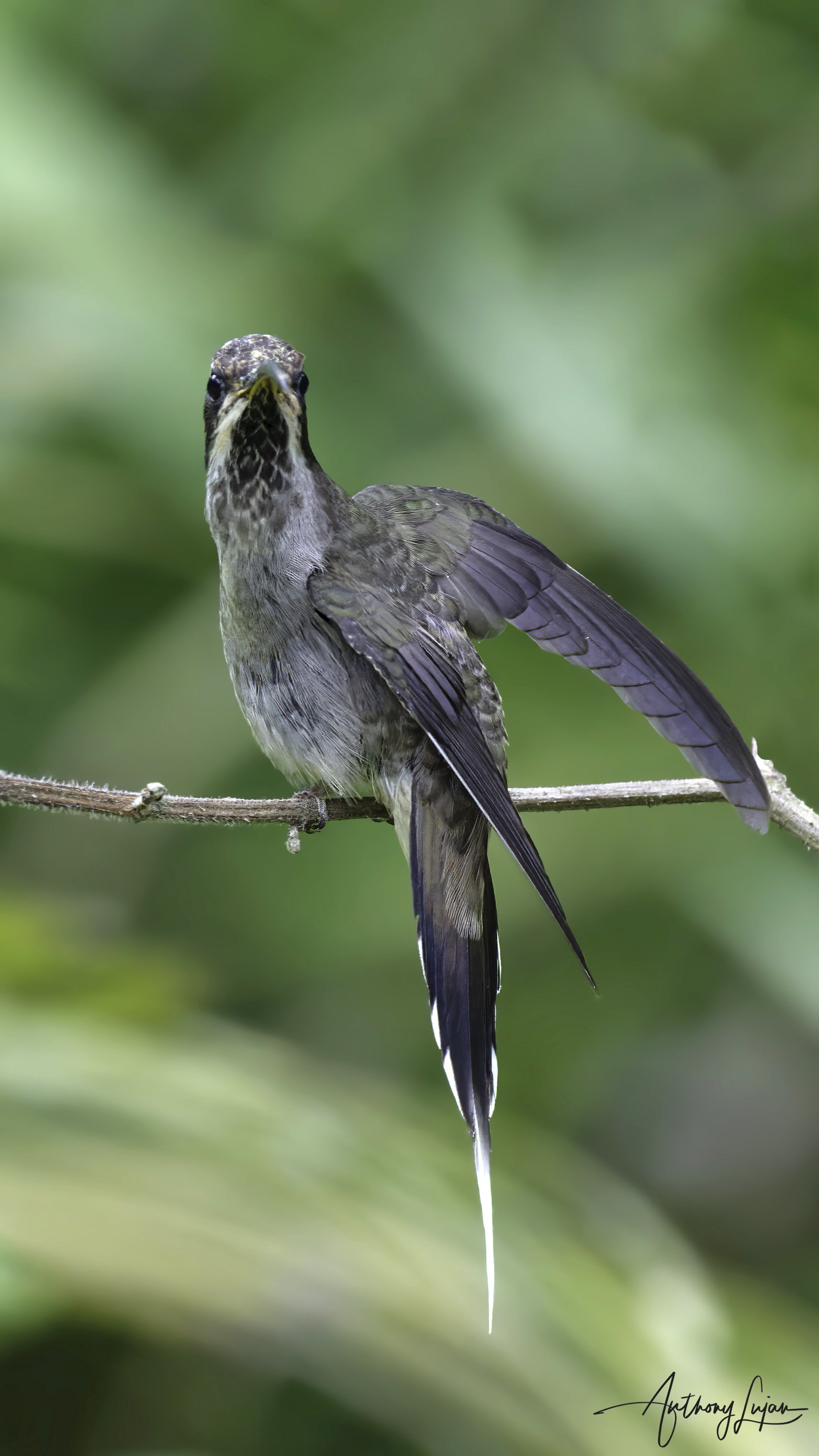
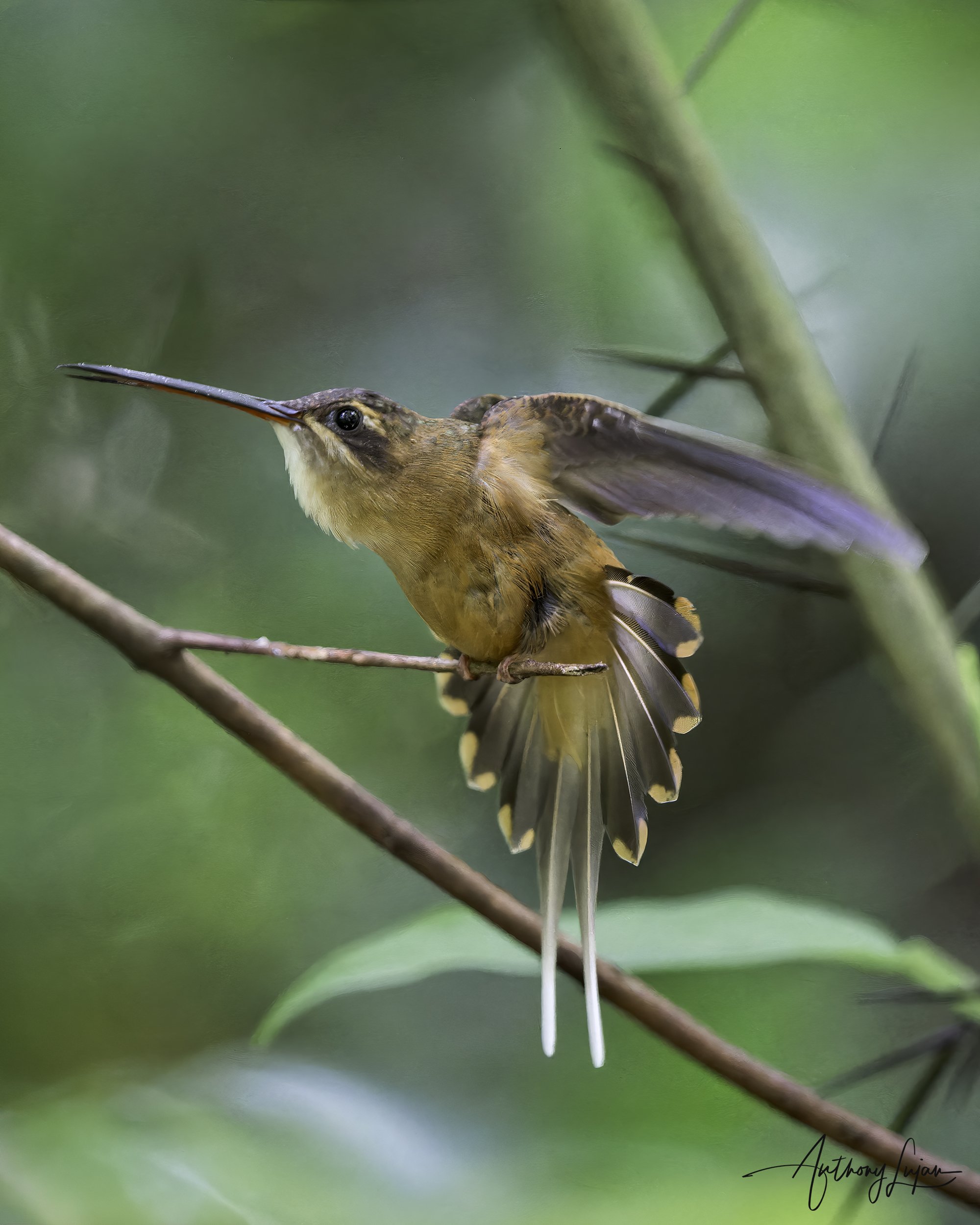
Males are about 14–14.5 cm long and weigh 4.5–6 g. Upperparts are mainly olive‑green, with rufous uppertail coverts. The throat is covered in dark feathers with pale edges, producing the characteristic scaled look; the rest of the underparts are buffy to pale cinnamon. The face has a dark mask crossed by a pale supercilium and a pale moustachial stripe. The bill is long, slender, and decurved, with a yellowish lower mandible. The tail is fairly long with broad white tips on the tail feathers, especially conspicuous when spread.
Female Description
Females are similar to males but slightly smaller and lighter (about 4–5 g). Plumage is essentially the same, with scaled throat, olive‑green upperparts, rufous rump, and buff underparts. The bill is also long and decurved, with similar coloration, though subtle differences in length and curvature may exist. Juveniles resemble adults but may show slightly duller throat scaling and less crisp facial pattern until they fully mature.
Habitat & Behavior
Scale-throated Hermits inhabit the understory of Atlantic lowland and montane rainforest, semi-deciduous forest, and mature secondary forest. They occur in both lowlands and uplands, often in humid, shaded areas such as ravines, forest edges, and along streams.
They are trapline feeders, visiting a circuit of flowering plants to collect nectar rather than defending single territories. They use a wide variety of flowers in the forest understory and along edges, and also take small arthropods gleaned from foliage or caught in short sallies for protein. Birds usually stay low to mid‑levels, moving quickly and quietly between flowers and perches.
Breeding
In Brazil, the breeding season spans roughly September to March. The female builds a long, cone‑shaped cup nest from plant fibers and spiderweb, hanging it from the underside of a long drooping leaf or similar support in sheltered forest sites. Nests are often decorated with lichens and other materials for camouflage.
The typical clutch is two white eggs. The female alone incubates for about 17 days; chicks fledge approximately three weeks after hatching. As with other hermits, the female provides all parental care, feeding the young by regurgitation at the nest.
Movement
The Scale-throated Hermit is considered not a migrant. It is resident throughout its Atlantic Forest range in Brazil, Paraguay, and Argentina, though individuals may move locally along elevational gradients and between forest types as flowering patterns and moisture regimes shift. These are local shifts rather than regular long-distance migrations.
Population
The total number of mature individuals is unknown. The species is generally common throughout much of its Atlantic Forest range and occurs in a number of protected areas. Nonetheless, because the Atlantic Forest is one of the most heavily reduced and fragmented biomes, the overall population is believed to be decreasing.

Conservation
The Scale-throated Hermit is assessed as Least Concern, reflecting its relatively broad range and current abundance. However, ongoing deforestation, forest fragmentation, and habitat degradation in the Atlantic Forest continue to reduce the extent and quality of its habitat. Conservation of remaining Atlantic Forest tracts—both lowland and montane—along with restoration of corridors and riparian strips is important for maintaining viable populations.
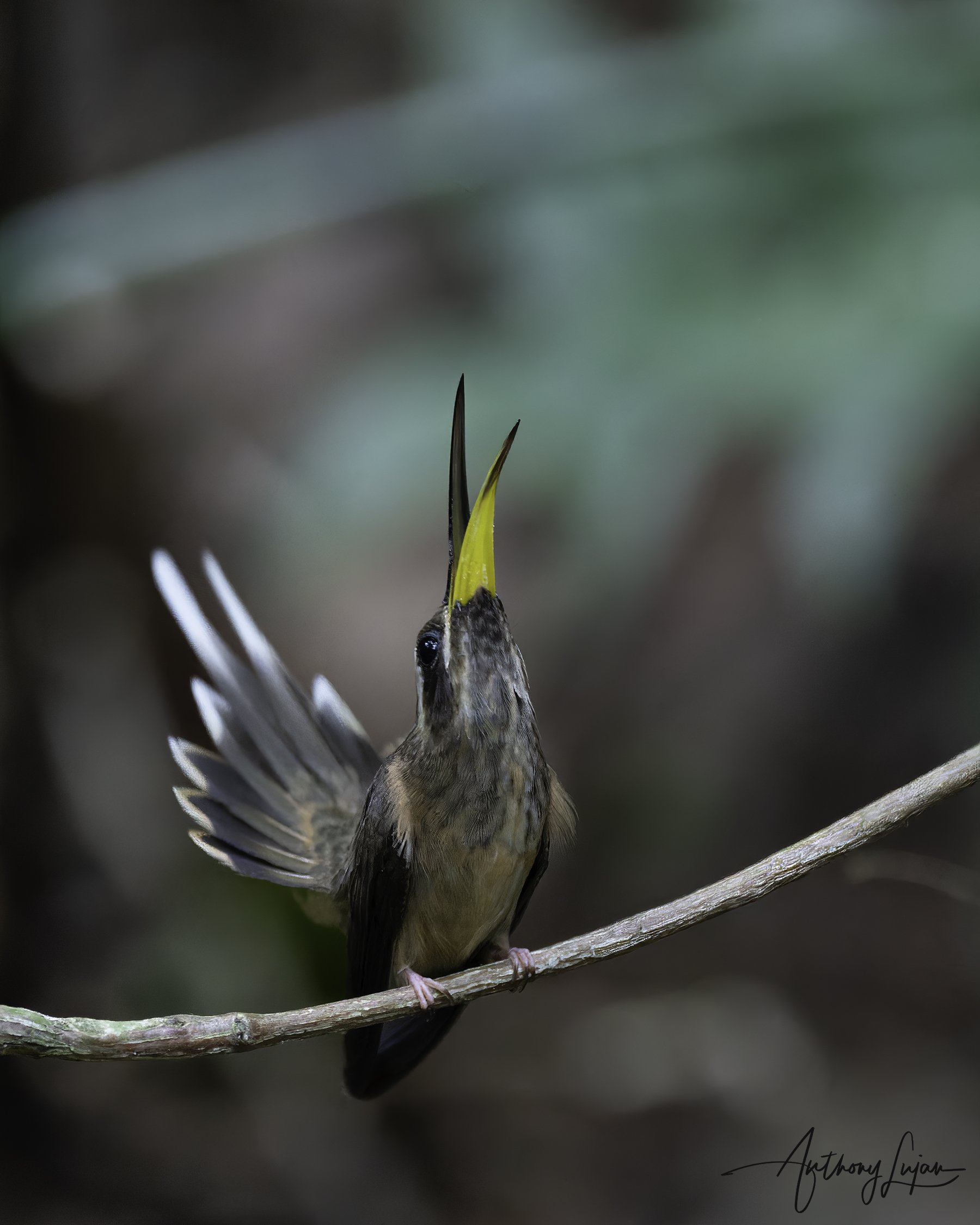
Below is the Scale-throated Hermit (Phaethornis eurynome eurynome)
Photographed at Pousada da Fazenda, Monte Alegre do Sul, and Sítio Macuquinho, Salesópolis, São Paulo, Brazil
These individuals belong to the nominate subspecies eurynome, found throughout southeastern Brazil from Bahia south to Rio Grande do Sul. It inhabits humid Atlantic Forest and forest edge, typically between 300 and 1,500 meters. This subspecies is characterized by darker plumage and subtle throat scaling.
Checkout Anthony’s playlist of this species! Click the top right dropdown to see all the videos.
Related species in the Phaethornis genus (27 species total)







Please note: The content provided in this article reflects Anthony’s personal experience and photographic approach. Results can vary depending on light, weather, location, equipment, subject behavior, and field conditions.