
Shining-green Hummingbird
Scientific name: Chrysuronia goudoti
The Shining-green Hummingbird is a small, bright emerald hummingbird restricted to northern Colombia and northwestern Venezuela. The number of mature individuals is unknown, the population is thought to be increasing, it is considered non-migratory, and it is currently listed as Least Concern with four recognized subspecies.
At a Glance
Family: Trochilidae (hummingbirds)
Clade: Trochilini – Emeralds
Genus group: Chrysuronia — 10 species, 24 subspecies
Range: Northern Colombia and the Lake Maracaibo basin of northwestern Venezuela, from coastal lowlands of northern Colombia through the middle and upper Magdalena Valley into the Maracaibo region.
Habitat: Open and semi-open landscapes including brushy areas with scattered trees, arid to moist scrublands, edges of gallery forest, coffee plantations, and gardens, often in dry to moderately humid zones.
Elevation: Mostly from sea level to about 1,000 m, locally up to around 1,600 m in Colombia and to about 800 m in Venezuela.
Length: About 9–9.5 cm (3.5–3.7 in).
Weight: Males around 4.1 g; females around 3.7 g.
Number of mature individuals: Unknown
Population trend: Increasing
Status: Least Concern (IUCN)
Name Origin
The genus name Chrysuronia comes from Greek roots meaning “golden tail,” originally describing the bright tails of several species in this group. The species name goudoti honors French naturalist Justin Goudot, who collected widely in Colombia and other parts of South America. The English name “Shining-green Hummingbird” highlights its vivid, shimmering green plumage, which is especially striking in good light.
Subspecies & Distribution
Chrysuronia goudoti luminosa
Distribution: Coastal lowlands of northern Colombia from northern Chocó east through Bolívar and Cesar departments.Chrysuronia goudoti goudoti
Distribution: Middle and upper Magdalena River Valley in central Colombia.Chrysuronia goudoti zuliae
Distribution: Northern and western parts of the Lake Maracaibo basin in extreme northeastern Colombia and northwestern Venezuela, mainly in northern and northeastern Zulia.Chrysuronia goudoti phaeochroa
Distribution: Southern and eastern parts of the Lake Maracaibo basin in northwestern Venezuela, from southern Zulia and western Trujillo south to Táchira.
Together, these subspecies form a band from the Caribbean lowlands of northern Colombia south and east through the Magdalena Valley and around the Lake Maracaibo basin, where open and semi-open scrub and forest edge habitats are widespread.
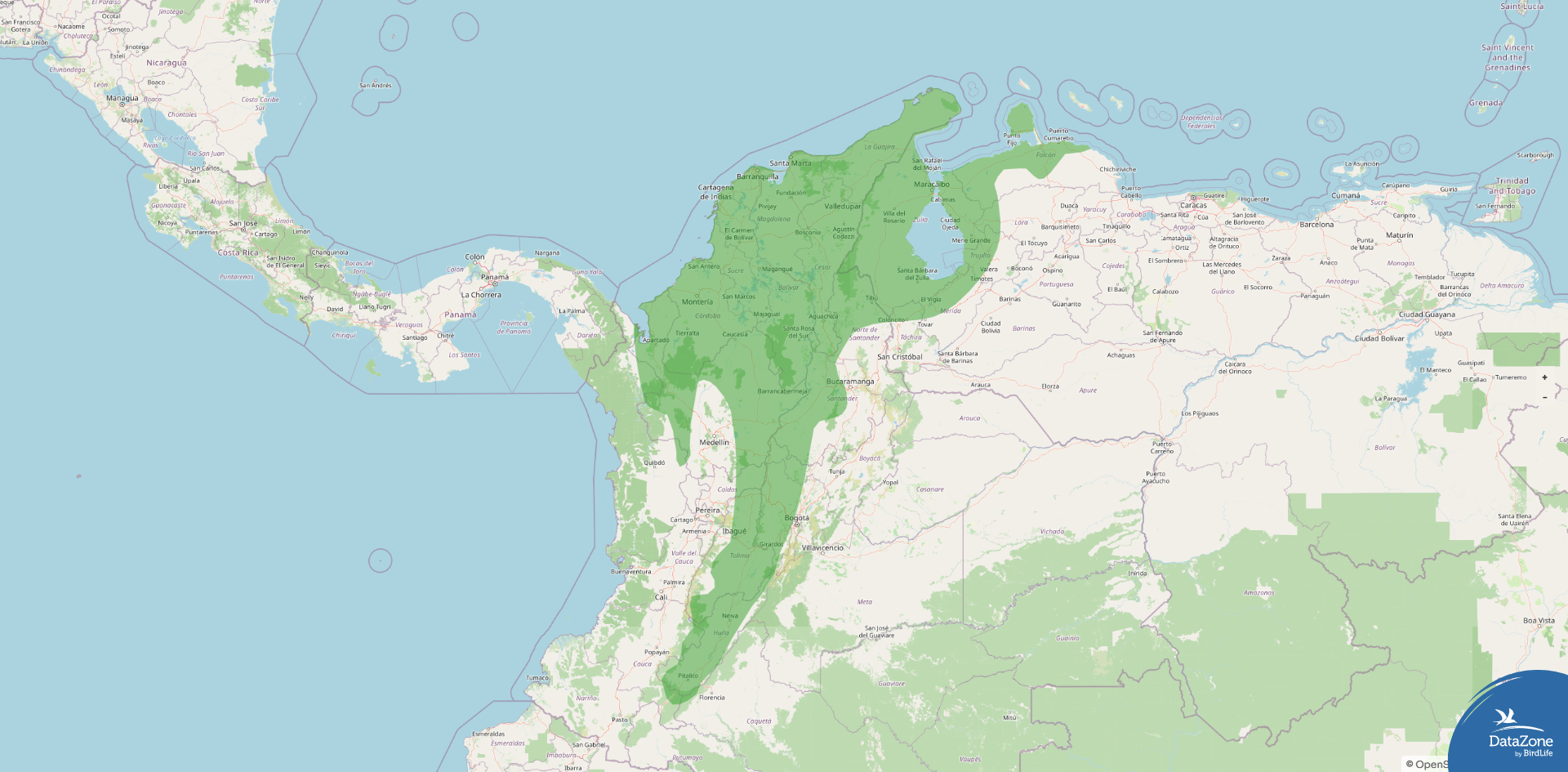
Legend
Green Resident
Species Overview
The Shining-green Hummingbird is a characteristic small hummingbird of dry to moderately humid scrub, forest edges, and open country in northern Colombia and northwestern Venezuela. It is often seen in brushy areas with scattered trees, coffee plantations, and gardens, where it readily visits flowering shrubs. Its bright green plumage and preference for semi-open habitats distinguish it from many strictly forest-dwelling hummingbirds in the region.
Male Description
Adult males are mostly bright, shimmering green above and below, with a slightly deeper, bluish-green tone on the chest and belly. The tail is forked, with central feathers dark bronze-black and outer feathers blue‑black, giving a dark, metallic look from behind. The bill is fairly straight, with a black upper mandible and a mostly pink lower mandible tipped black. In the field, males appear as compact, intensely green hummingbirds with a neat forked dark tail and a two-toned bill that often shows the pinkish base at close range.
Female Description
Females share the green upperparts of males but have underparts that are paler, with the chest and belly feathers edged whitish, giving a lightly spotted or scaled appearance and a belly that is mostly whitish. The tail is less deeply forked than in males and tends to look more bronzy or greenish overall, with slightly less contrast between central and outer feathers. The bill pattern is similar, with a dark upper mandible and mostly pink lower mandible tipped dark. In the field, females look like smaller, paler versions of the male, with green backs, whitish, lightly spotted underparts, and a shallower forked tail.
Habitat & Behavior
Shining-green Hummingbirds inhabit open and semi-open areas such as arid to moist scrublands, brushy fields with scattered trees, edges of gallery forest, coffee plantations, and gardens. They often forage at low to mid-levels in bushes and small trees, visiting nectar-rich flowers and supplementing their diet with small insects and spiders captured in short sallies or gleaned from foliage. The species is typically seen singly or in loose association with other hummingbirds, and males may defend favored flowering shrubs but do not form flocks. It is considered resident throughout its range, with no evidence of long-distance migration.
Population
The total number of mature individuals is unknown, but the Shining-green Hummingbird is described as fairly common in suitable habitat across much of its restricted range. It appears to tolerate, and in some cases benefit from, moderate habitat modification, using agricultural mosaics, coffee plantations, and gardens as long as flowering shrubs and trees are available. Overall, the population trend is believed to be increasing, likely reflecting its adaptability to human-altered landscapes.

Conservation
The Shining-green Hummingbird is listed as Least Concern thanks to its relatively small but growing population and its adaptability to a variety of semi-open habitats. While extensive deforestation and land-use change have altered much of its original environment, this species’ preference for scrub, edges, and planted landscapes has allowed it to persist and even expand in some areas. Continued preservation of hedgerows, flowering shrubs, and scattered trees in agricultural and rural settings, along with protection of remnant scrub and gallery forest, will support this hummingbird and many other nectar-feeding species.
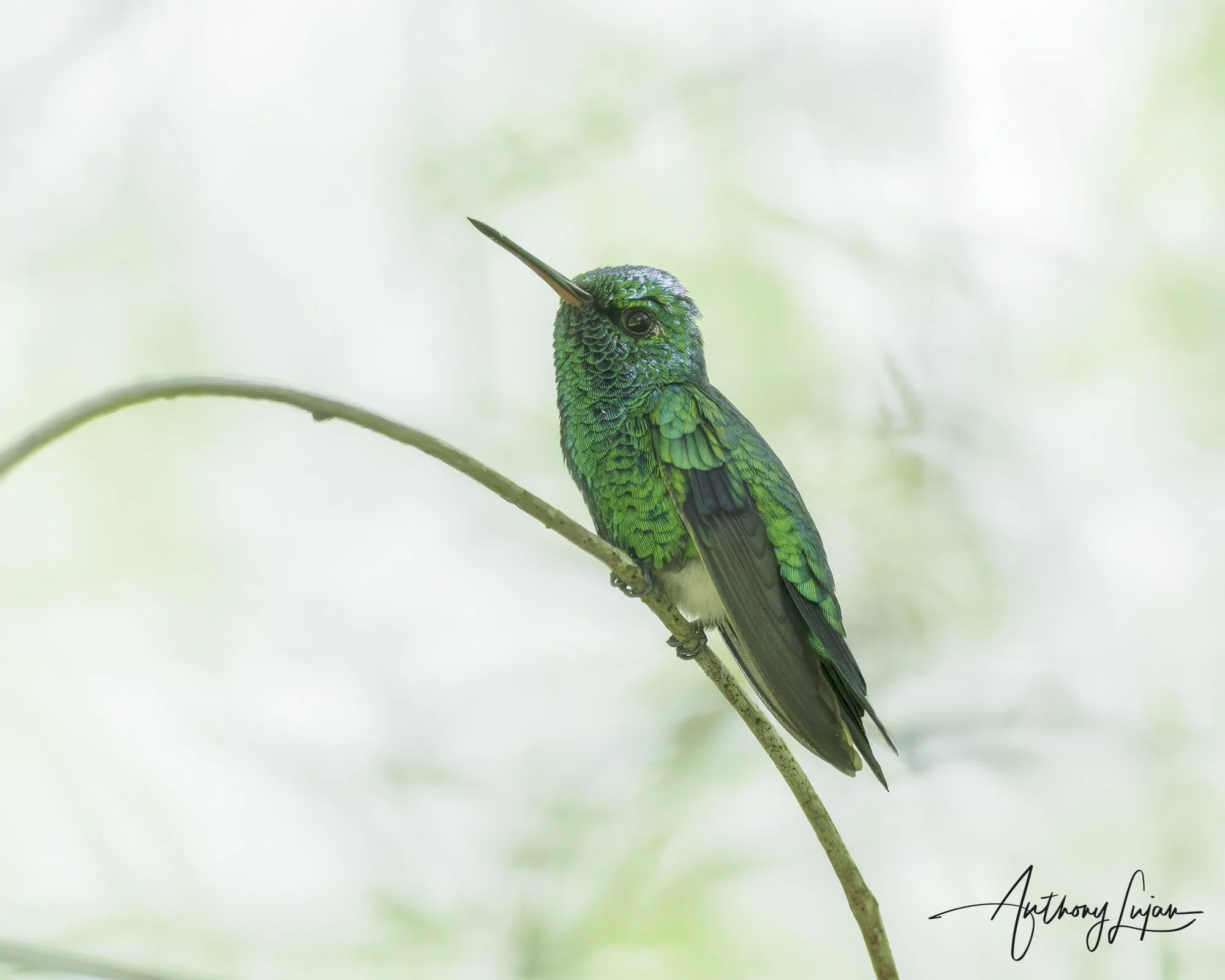
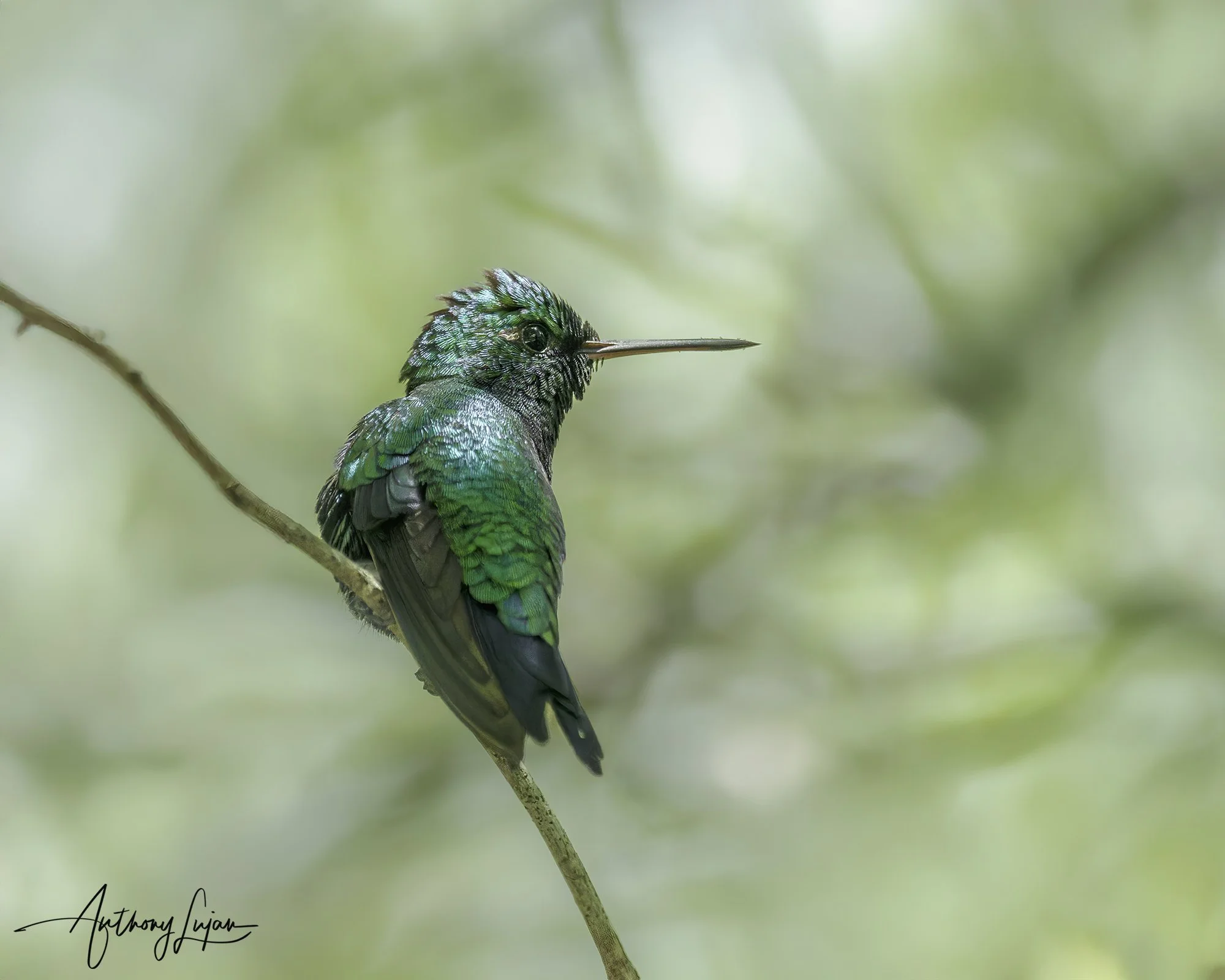
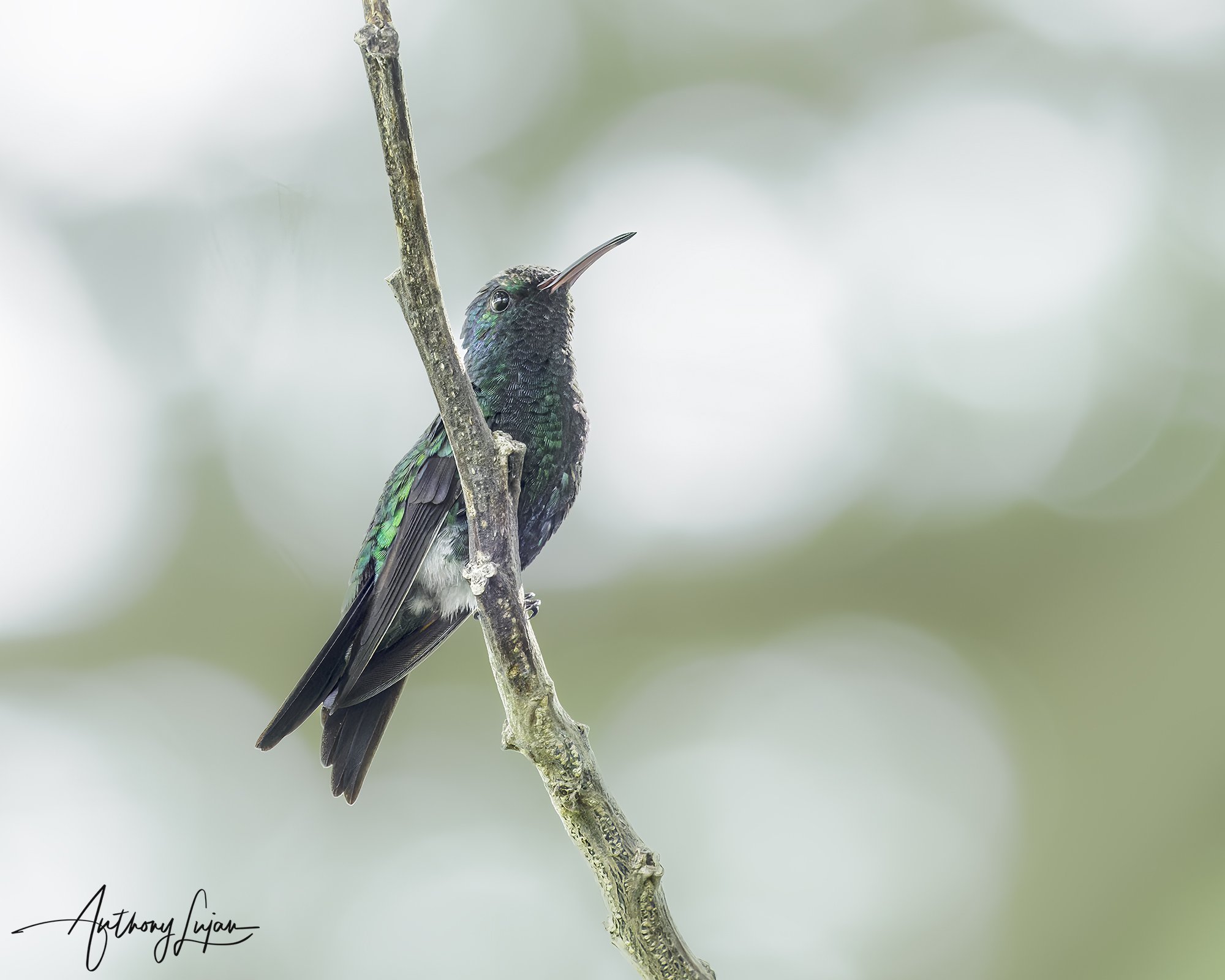
Below is the Shining-green Hummingbird (Chrysuronia goudoti zuliae)
Photographed in Camarones, La Guajira, Colombia
These individuals belong to the subspecies zuliae, which occurs in extreme northeastern Colombia and adjacent northwestern Venezuela, primarily around the northern and western margins of the Lake Maracaibo basin. It inhabits arid scrub, dry forest, and edge habitats, often near cactus and flowering shrubs. This subspecies is subtly paler than others, with a slightly grayer tone to the green underparts.
Checkout Anthony’s playlist of this species! Click the top right dropdown to see all the videos.
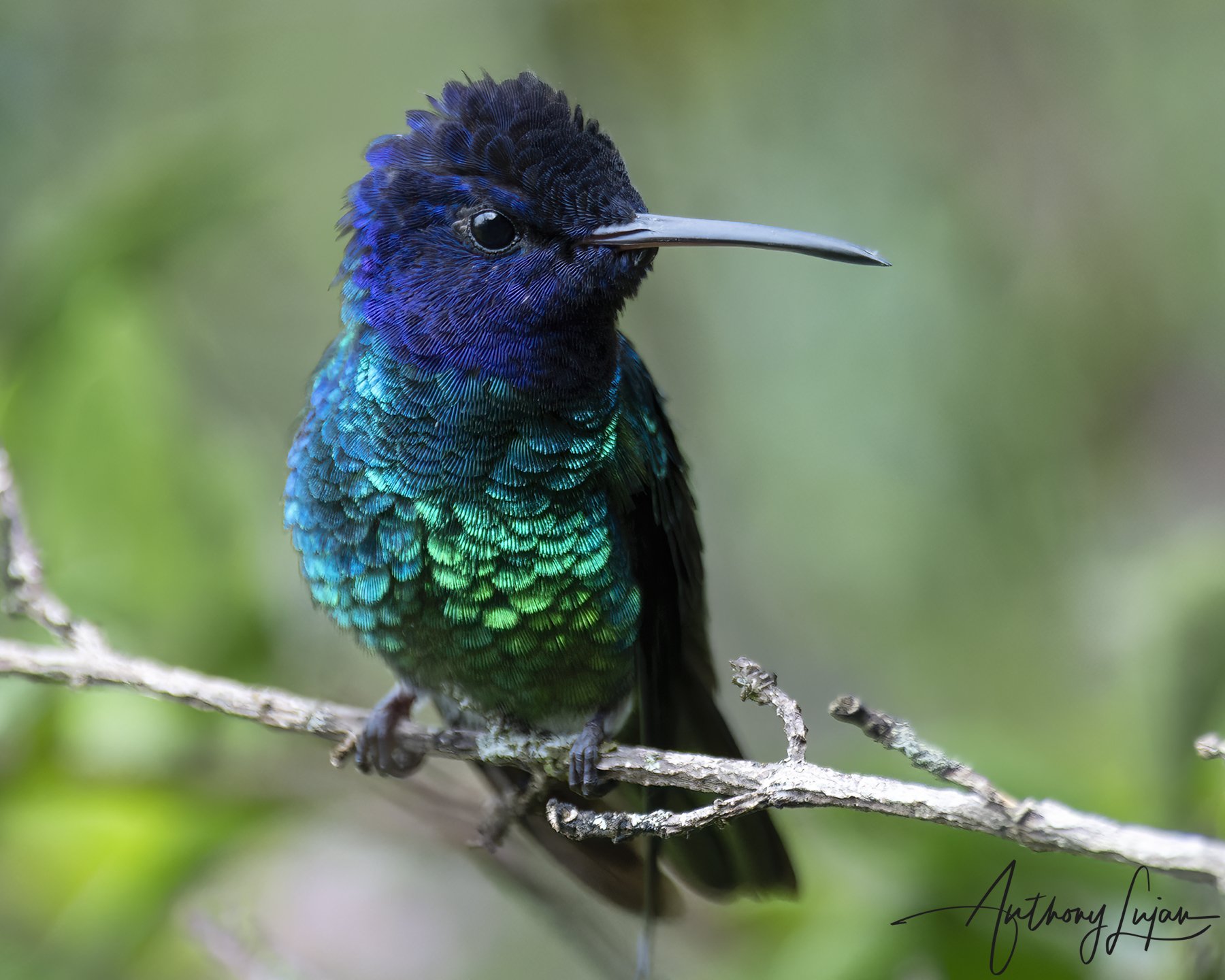
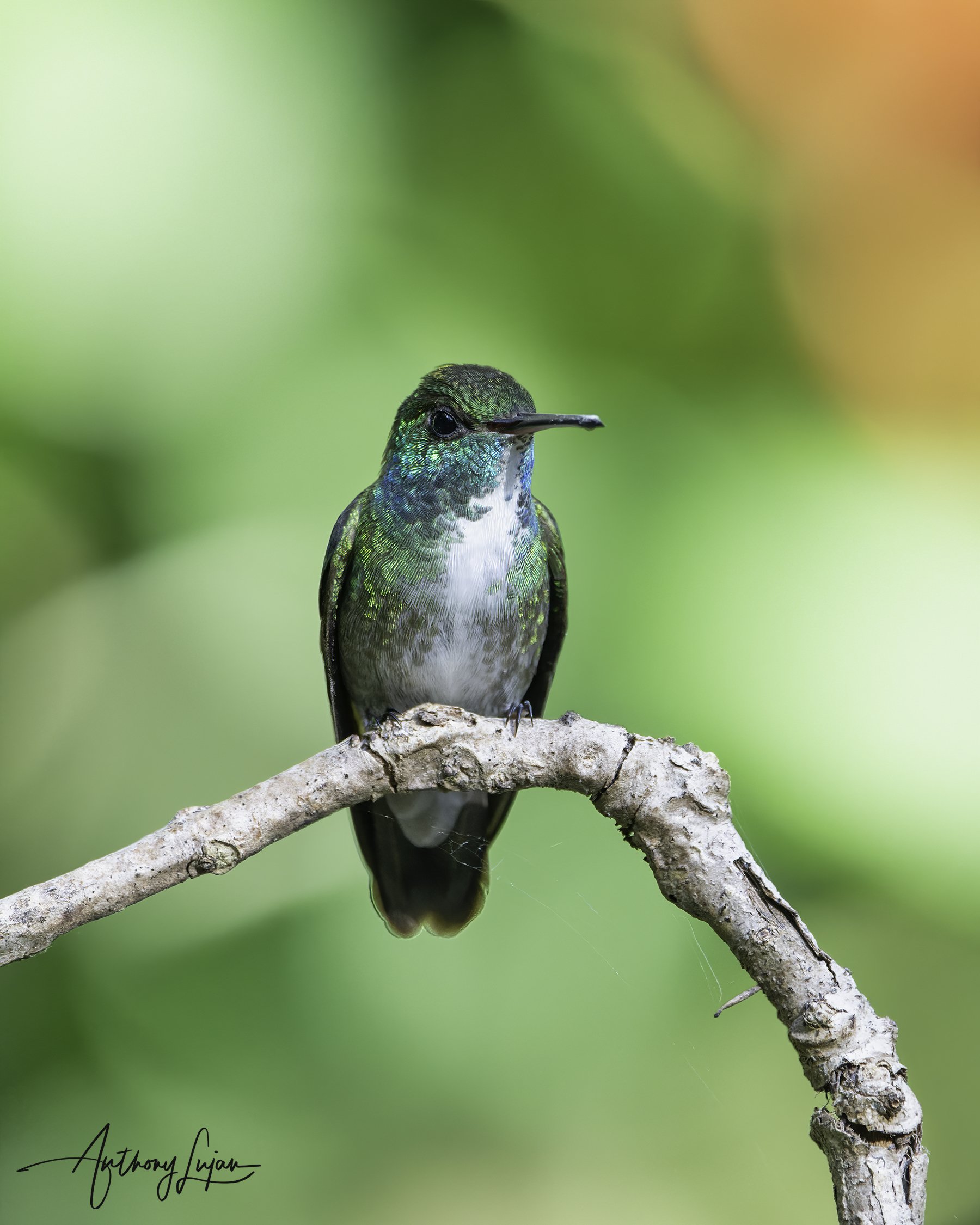
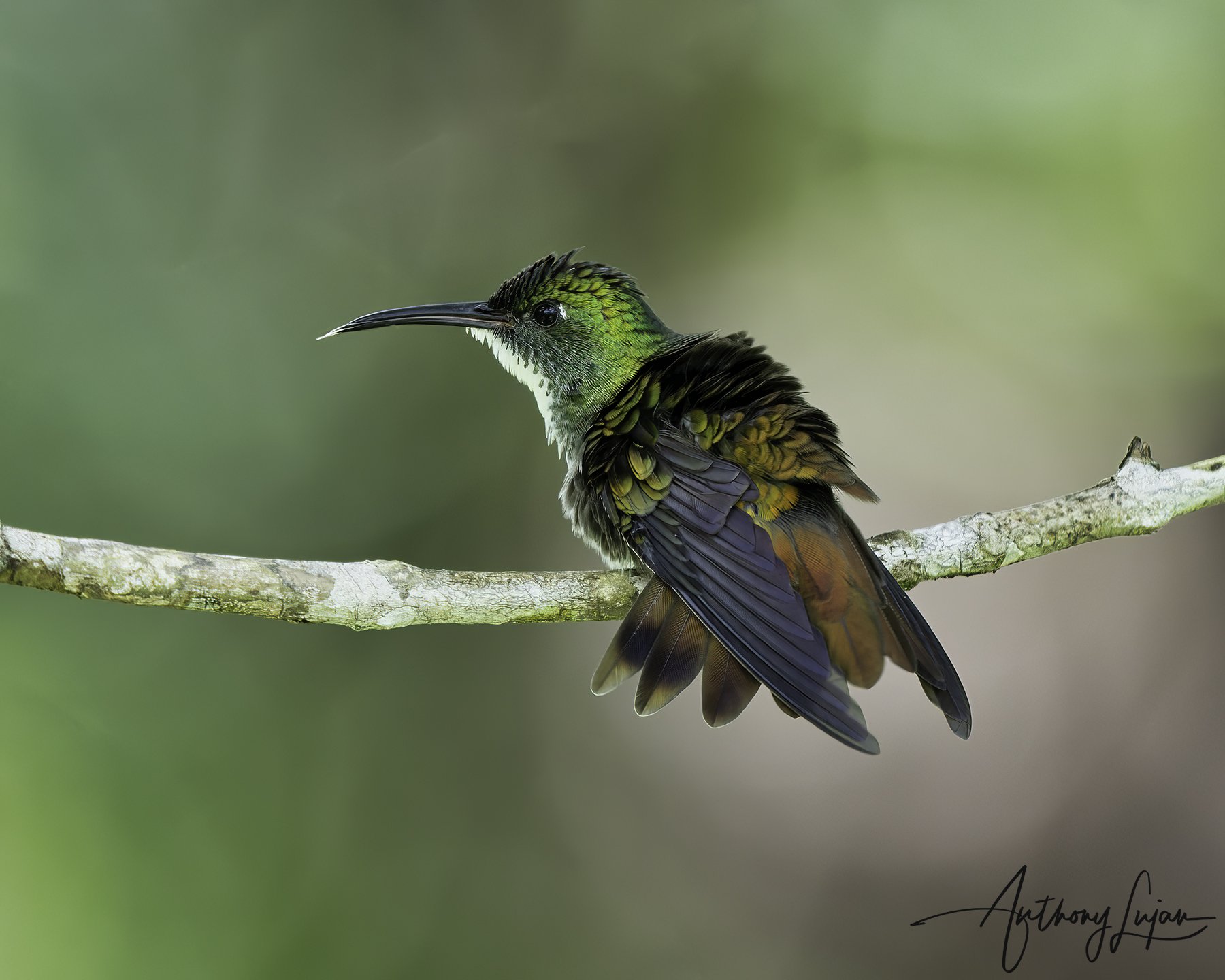
Related species in the Chrysuronia genus (10 species total):



Please note: The content provided in this article reflects Anthony’s personal experience and photographic approach. Results can vary depending on light, weather, location, equipment, subject behavior, and field conditions.