
Shining Sunbeam
Scientific name: Aglaeactis cupripennis
The Shining Sunbeam is a large, high-elevation hummingbird of montane forest, cloud forest, shrublands, and páramo across the Andes of Colombia, Ecuador, and Peru. Its number of mature individuals is unknown, the population trend is stable, it is an altitudinal migrant, and it is currently assessed as Least Concern.
At a Glance
Family: Trochilidae (hummingbirds)
Clade: Heliantheini – Brilliants
Genus: Aglaeactis — 4 species in total
Range: All three Andean ranges of Colombia, south through Ecuador and into northern Peru
Habitat: Montane cloud forest, forest edge, shrublands, subpáramo, and páramo
Elevation: About 2,500–4,300 m (8,200–14,100 ft)
Length: About 12–13 cm (4.7–5.1 in)
Weight: Males about 7.6–8.1 g; females about 6.9–7.5 g
Number of mature individuals: Unknown
Population trend: Stable
Movement: Altitudinal migrant
IUCN Red List category: Least Concern
Name Origin
The genus name Aglaeactis refers to brightness or splendor, fitting the shimmering plumage of these sunbeams. The species name cupripennis means “copper-winged,” describing the bird’s coppery flight feathers and warm tones. The English name “Shining Sunbeam” reflects the brilliant iridescence these birds flash in sunlight, especially on the back and wing coverts.
Taxonomy
Aglaeactis cupripennis belongs to the brilliants (tribe Heliantheini) within subfamily Lesbiinae. The genus Aglaeactis currently includes four species, all Andean hummingbirds adapted to high-elevation environments. The Shining Sunbeam is the most widespread member of the genus, ranging from Colombia through Ecuador into Peru.
Its nominate form occurs in all three Andean ranges of Colombia and south through Ecuador into northern Peru, while the southern subspecies is restricted to central and south-central Peru. The species occupies subpáramo, páramo, cloud forest edges, and shrub-dominated highland habitats, often moving seasonally in response to flowering cycles.
Subspecies and Distribution
Two subspecies:
Aglaeactis cupripennis cupripennis
Distribution: All three Andean ranges of Colombia, south through Ecuador and into northern Peru, extending south to La Libertad and, on the eastern slope, to northern Huánuco.Aglaeactis cupripennis caumatonota
Distribution: Central and south-central Peru, from southern La Libertad to Lima and, on the eastern slope, from southern Huánuco to Cuzco.
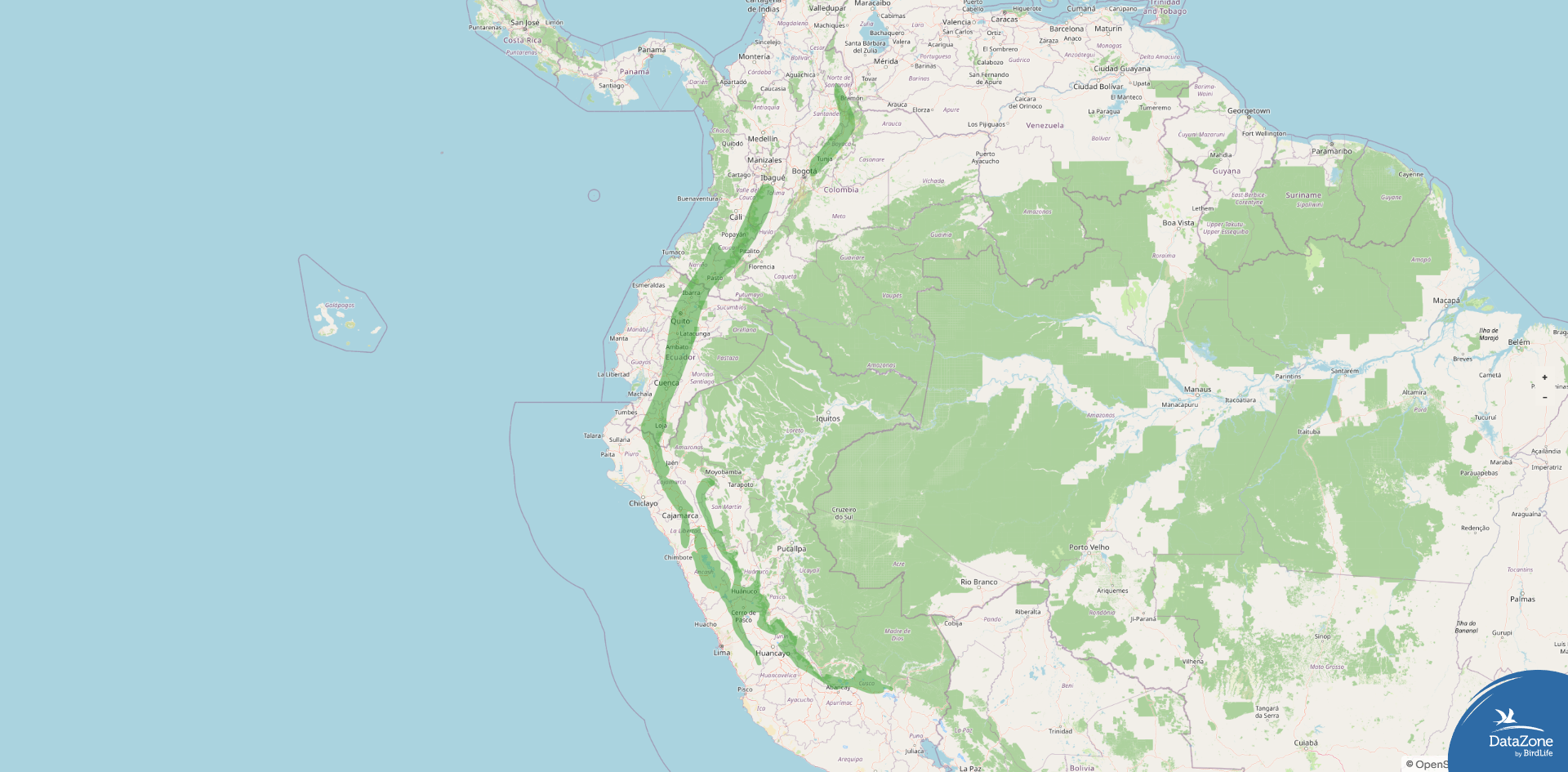
Legend
Green Resident
Species Overview
The Shining Sunbeam is a striking, high-altitude hummingbird with bronzy upperparts and an iridescent back that can flash green, copper, and gold in the right light. It is a bird of open and semi-open Andean habitats, especially where flowering shrubs and small trees are available. Unlike many hummingbirds that dominate lower forests, this species is closely tied to cool, windy, high-elevation environments.
Male Description
Adult males are about 12–13 cm long and are robust for a hummingbird of the high Andes. The upperparts are dark bronzy to coppery, with iridescent green and copper tones that are most vivid on the back and rump. The underparts are generally grayish to dusky, while the throat is comparatively subdued rather than brightly colored. The tail is dark and fairly short relative to body size, and the bill is straight, black, and medium length.
Female Description
Females are similar to males but slightly duller, with less intense iridescence and somewhat softer contrast across the plumage. The same coppery and bronzy tones are present, but the overall appearance is less glittering. Juveniles resemble females and usually appear even duller, with fresher feather edges and less developed iridescent sheen.
Habitat & Behavior
Shining Sunbeams live in high-elevation landscapes such as páramo, subpáramo, cloud forest edges, and shrubby slopes. They are often seen where flowering plants are scattered through open Andean terrain, especially along roadsides, forest margins, and disturbed highland scrub. Their elevational range is centered around the upper montane zone, and many populations shift upslope and downslope seasonally as flowers change with rainfall and temperature.
They feed on nectar from a wide range of Andean flowers and also take small insects. Foraging is often deliberate and territorial, with birds defending productive flower patches and returning repeatedly to favored plants. Their flight is strong and direct, well suited to windy mountain habitats.
Breeding
Breeding takes place in the high Andes and is timed to local flowering and rainfall conditions. The female builds a small cup nest of moss, plant fibers, and spiderweb, usually attached to a branch or epiphyte several meters above the ground. The nest is well camouflaged and often placed in sheltered positions on shrubs or small trees near open habitat.
The clutch usually consists of two white eggs. The female alone incubates them for about 16–18 days, and the chicks fledge roughly 24–27 days after hatching. As with many Andean hummingbirds, breeding timing likely varies among regions depending on local conditions.
Movement
The Shining Sunbeam is an altitudinal migrant rather than a long-distance migrant. It shifts elevation seasonally in response to flowering cycles, weather, and resource availability. These movements allow it to remain within the same broad Andean region while tracking favorable feeding conditions.
Population
The total number of mature individuals is unknown. Despite that uncertainty, the species is regarded as widespread and relatively common across much of its range, especially in suitable high-elevation habitat. The overall trend is considered stable, suggesting that the species remains secure across much of the Andes where highland habitats persist.

Conservation
The Shining Sunbeam is currently assessed as Least Concern. Its wide Andean distribution and ability to use open high-elevation habitats help support stable populations. Habitat loss, burning, grazing pressure, and climate change could still affect local populations by altering páramo and montane flowering patterns, but the species remains broadly secure for now.
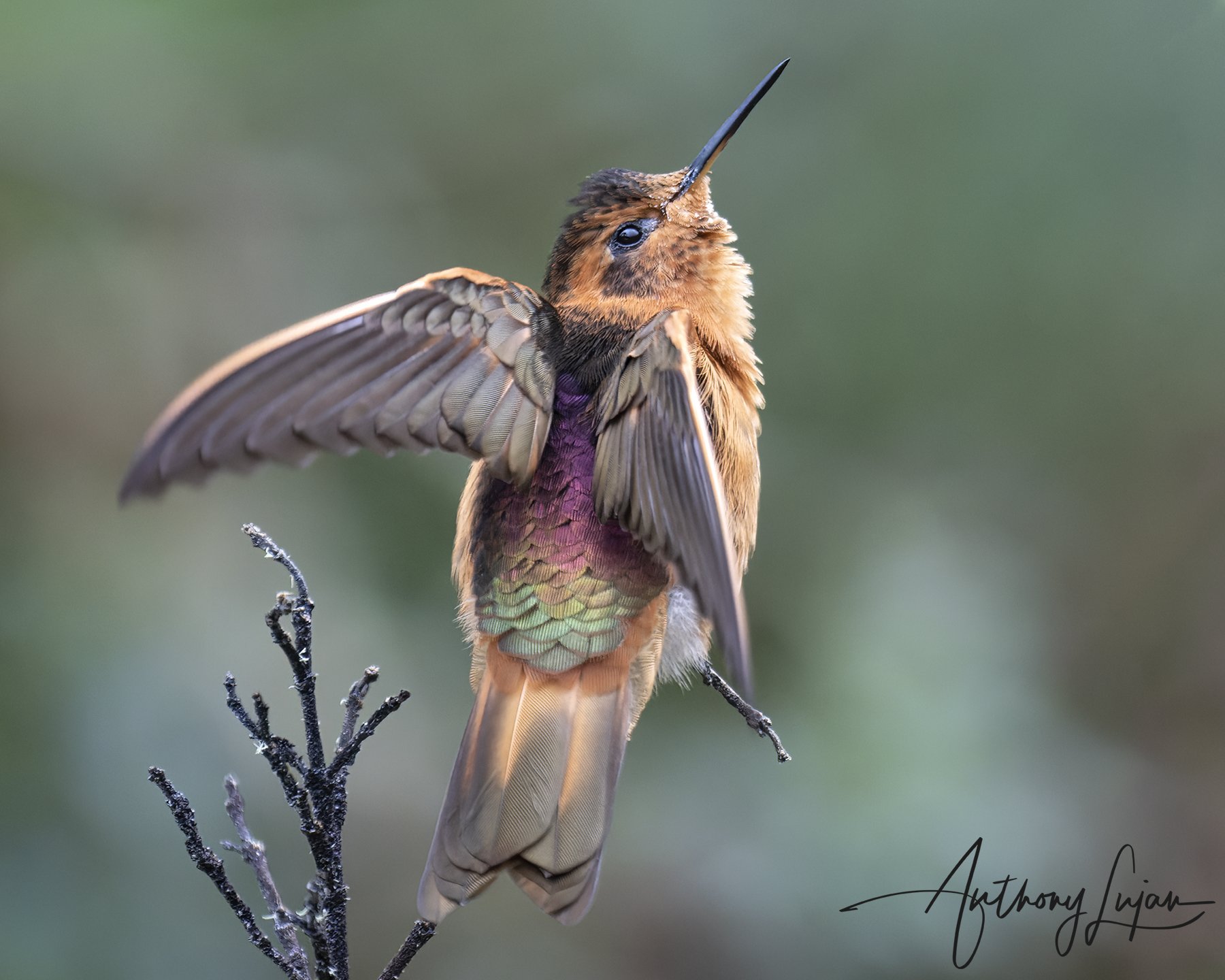
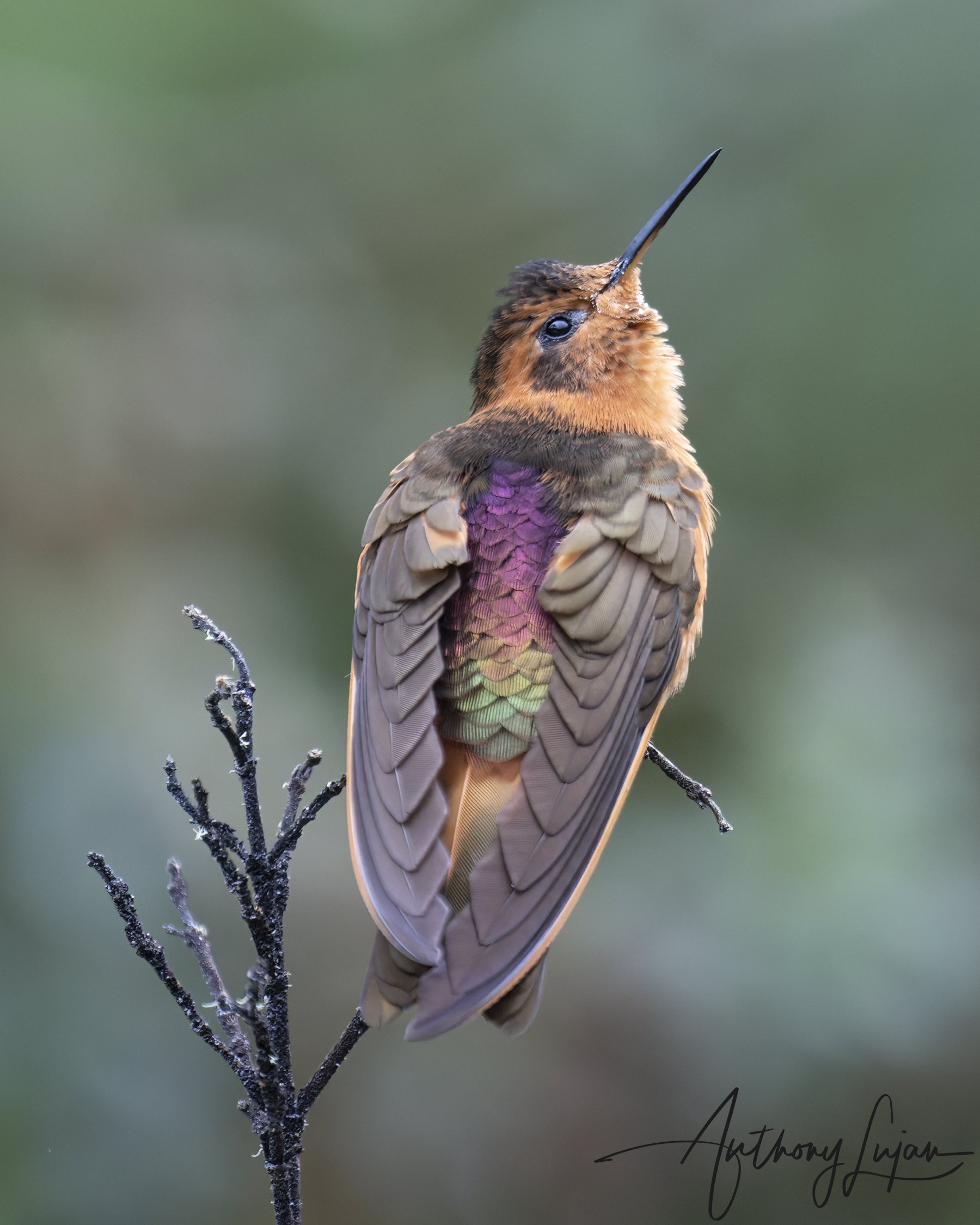
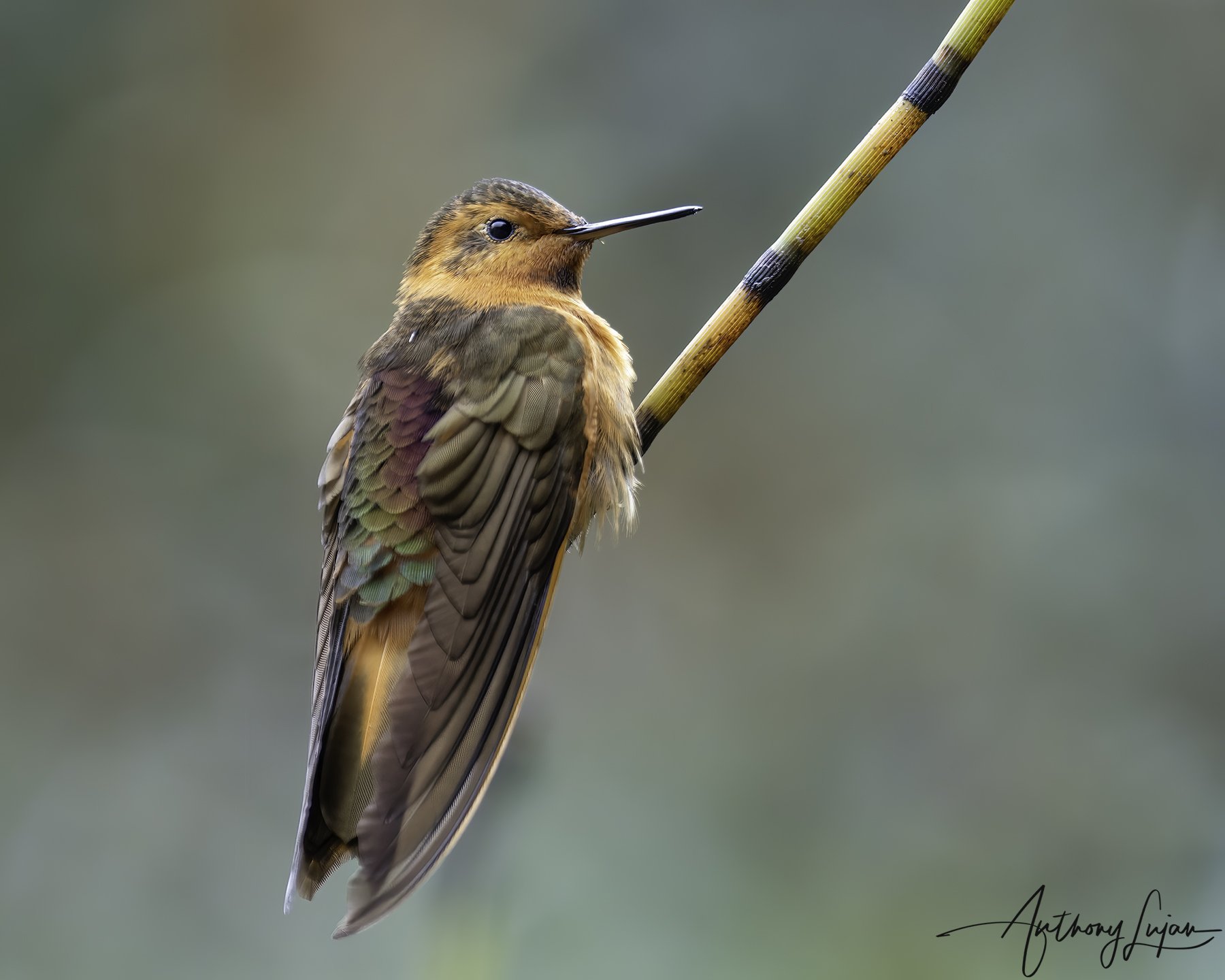
Below is the Shining Sunbeam (Aglaeactis cupripennis cupripennis)
Photographed at Hacienda El Bosque and Hotel Termales del Ruíz, Caldas, and Cerro Gualí, Tolima, Colombia
These individuals belong to the nominate subspecies cupripennis, which ranges throughout the Andes of Colombia, Ecuador, and northern Peru. It inhabits shrubby treeline forests, elfin woodland, and páramo edge between 2,800 and 4,500 meters. This subspecies is richly copper-toned with a contrasting pale buff underside and shows violet iridescence on the rump in good light.
Checkout Anthony’s playlist of this species! Click the top right dropdown to see all the videos.
Related species in the Aglaeactis genus (4 species total)
Please note: The content provided in this article reflects Anthony’s personal experience and photographic approach. Results can vary depending on light, weather, location, equipment, subject behavior, and field conditions.