
Snowcap
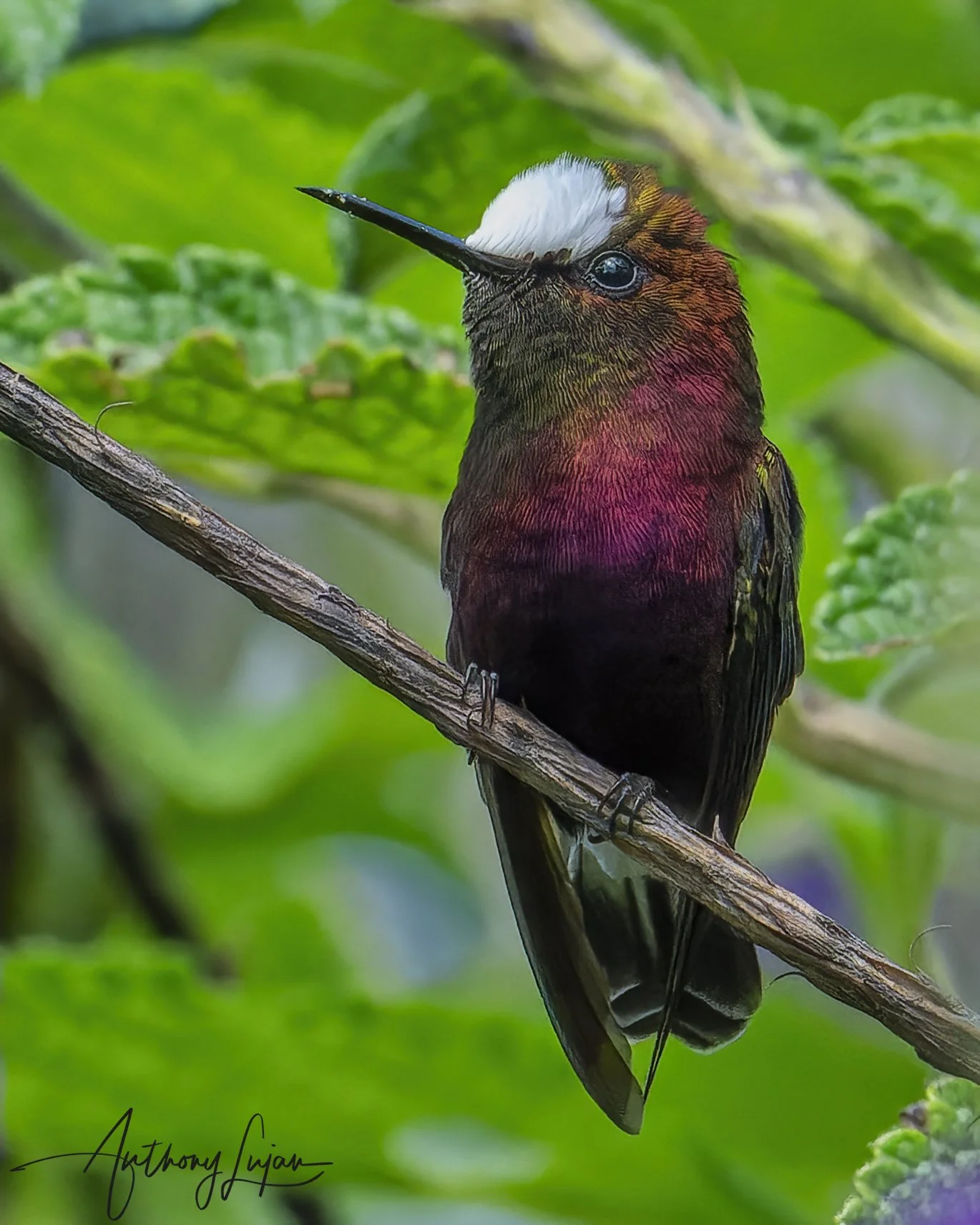
Scientific name: Microchera albocoronata
The Snowcap is a tiny, brilliantly iridescent hummingbird of humid foothill forests and edges from southern Honduras through Nicaragua and Costa Rica into western Panama. It is listed as Least Concern, with an estimated 50,000–499,999 mature individuals, a decreasing population trend, and it is considered an altitudinal migrant.
At a Glance
Family: Trochilidae (hummingbirds)
Clades: Trochilini – Emeralds
Genus group: Microchera — tiny highland emeralds (3 species in total: Snowcap, Coppery-headed Emerald, White-tailed Emerald)
Range: Caribbean slope from southern Honduras through Nicaragua and Costa Rica, locally on Costa Rica’s Pacific slope, and west‑central Panama (mainly on the Caribbean slope).
Habitat: Humid lowland and montane forest, semi‑open woodlands, forest edges, clearings, and secondary forest, especially where small purple and other tubular flowers are abundant.
Elevation: Generally 300–800 m (about 1,000–2,600 ft) in Costa Rica, locally up to 1,000 m; in Panama mostly 600–1,650 m (about 2,000–5,400 ft).
Length: About 6.5–7 cm (2.6–2.8 in).
Weight: About 2–3 g (around 0.07–0.11 oz).
Number of mature individuals: 50,000–499,999.
Population trend: Decreasing.
Status: Least Concern (IUCN Red List category).
Migration: Altitudinal migrant.
Name Origin
The genus name Microchera combines Greek roots meaning “small” and “hand,” emphasizing the tiny size of these hummingbirds. The species name albocoronata means “white‑crowned,” referring to the brilliant white cap of adult males. The English name “Snowcap” likewise highlights the male’s pure white crown, which stands out dramatically against the rich, dark body plumage.
Taxonomy & Distribution
Microchera albocoronata
Snowcap is a member of the emerald clade (tribe Trochilini) and one of three species in the genus Microchera, along with Coppery-headed Emerald and White-tailed Emerald. It occurs discontinuously along the Caribbean slope from southern Honduras through Nicaragua and Costa Rica into western Panama, with a small presence on Costa Rica’s Pacific slope. Two subspecies are recognized, differing mainly in geography and small structural and plumage details.
Subspecies and Distribution
Snowcap has two recognized subspecies.
Microchera albocoronata parvirostris
This subspecies is found on the Caribbean slope of southern Honduras, Nicaragua, Costa Rica, and possibly extreme western Panama, and also occurs locally on the Pacific slope in Costa Rica. It inhabits humid lowland and foothill forest, forest edges, clearings, and secondary growth, where it frequents small flowering shrubs, vines, and herbs at lower and middle levels.Microchera albocoronata albocoronata
The nominate subspecies occurs in west‑central Panama, mainly on the Caribbean slope in provinces such as Veraguas and Coclé, with some presence on the Pacific slope as well. It uses similar humid lowland and montane forest habitats and edges, favoring openings, clearings, and semi‑open woodland where nectar sources are plentiful.
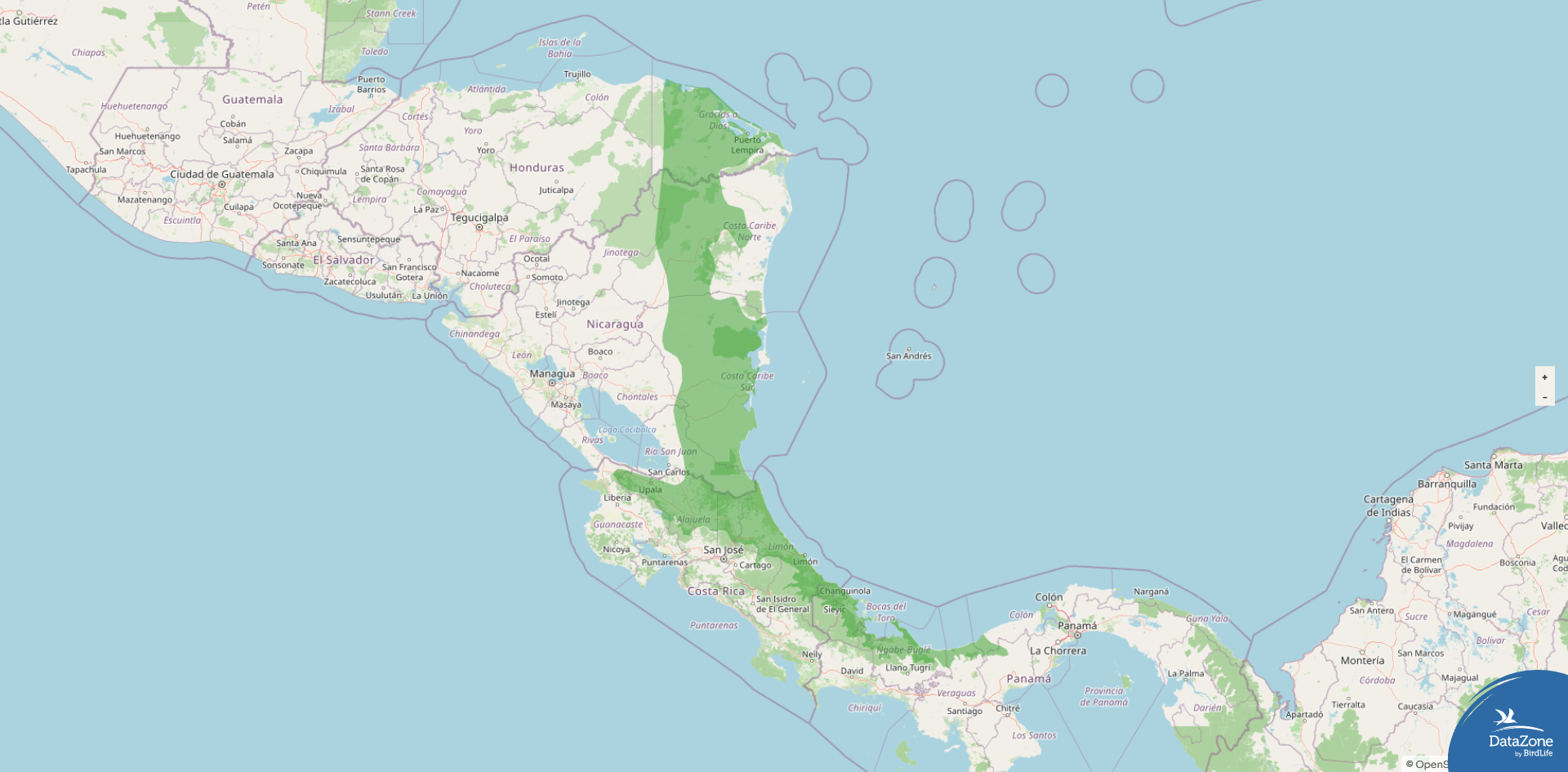
Legend
Green Resident
Species Overview
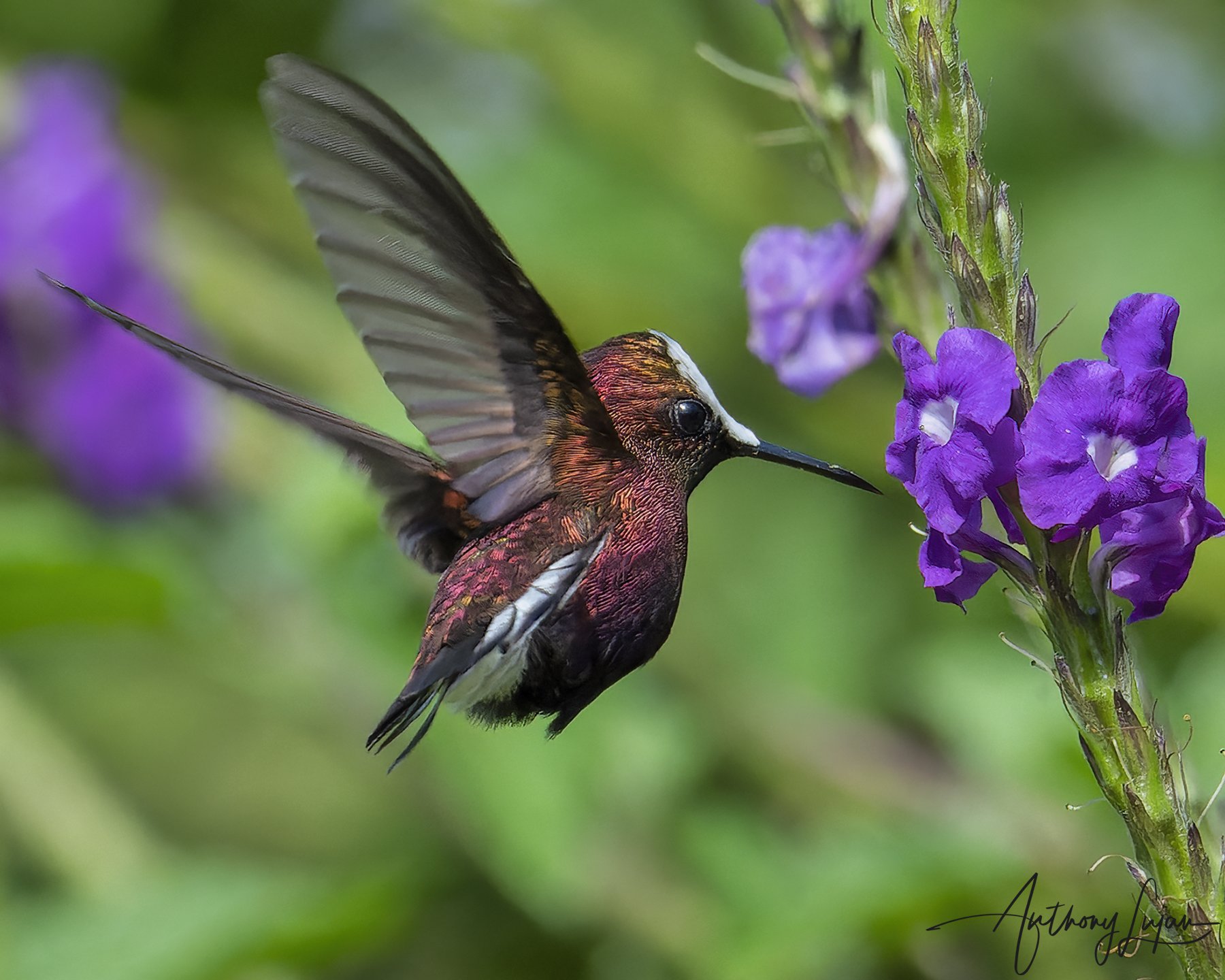
The Snowcap is one of the smallest hummingbirds in Central America and is especially prized by birders for its unique appearance. Males have a gleaming white crown and rich wine‑colored to purplish body, which can look almost black in shade but flashes with bronzy and reddish tones in sunlight. Snowcaps favor humid foothill forests and edges, where they often feed at small purple flowers in gardens, clearings, and forest margins, and they can be surprisingly energetic and aggressive despite their diminutive size.
Male Description
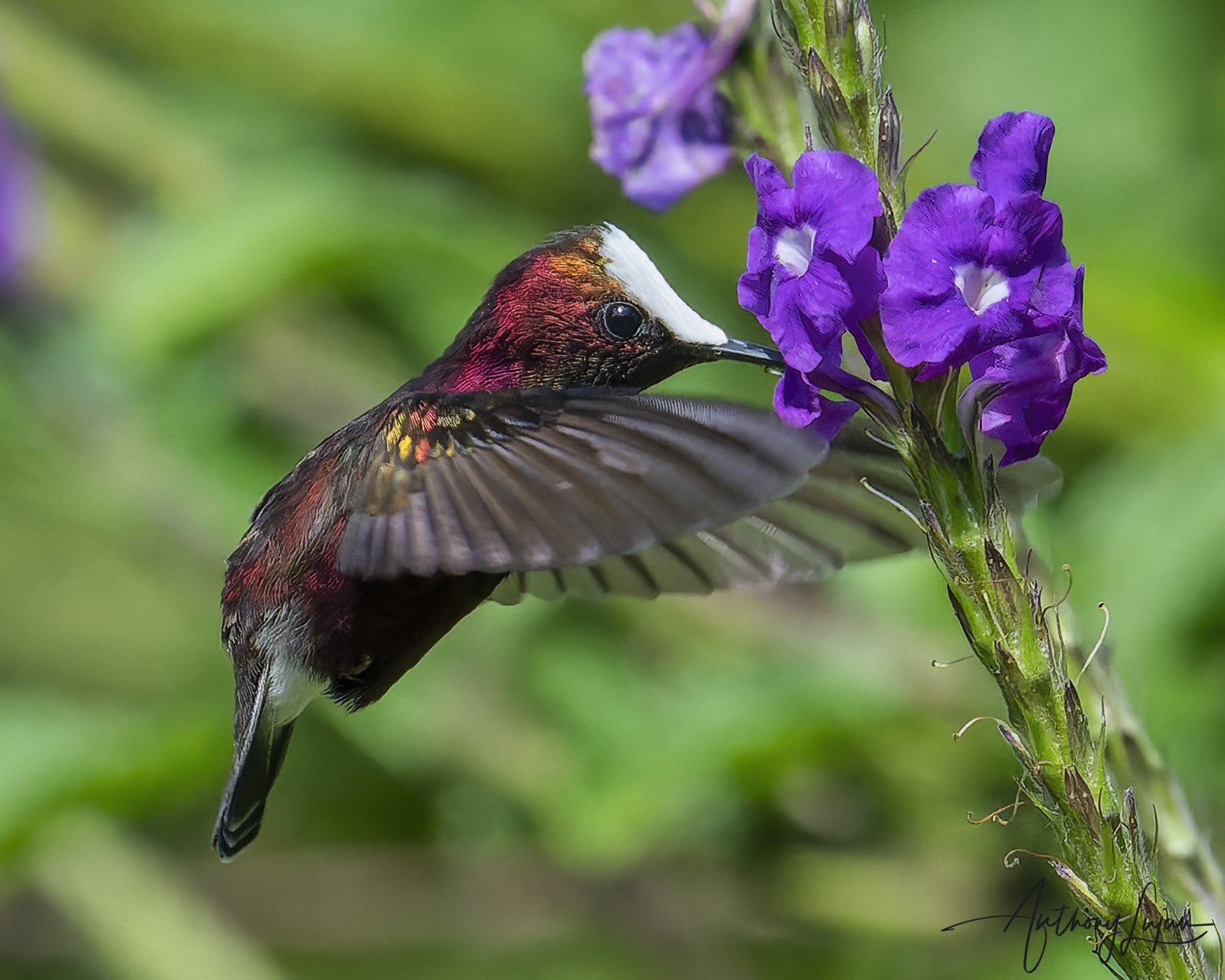
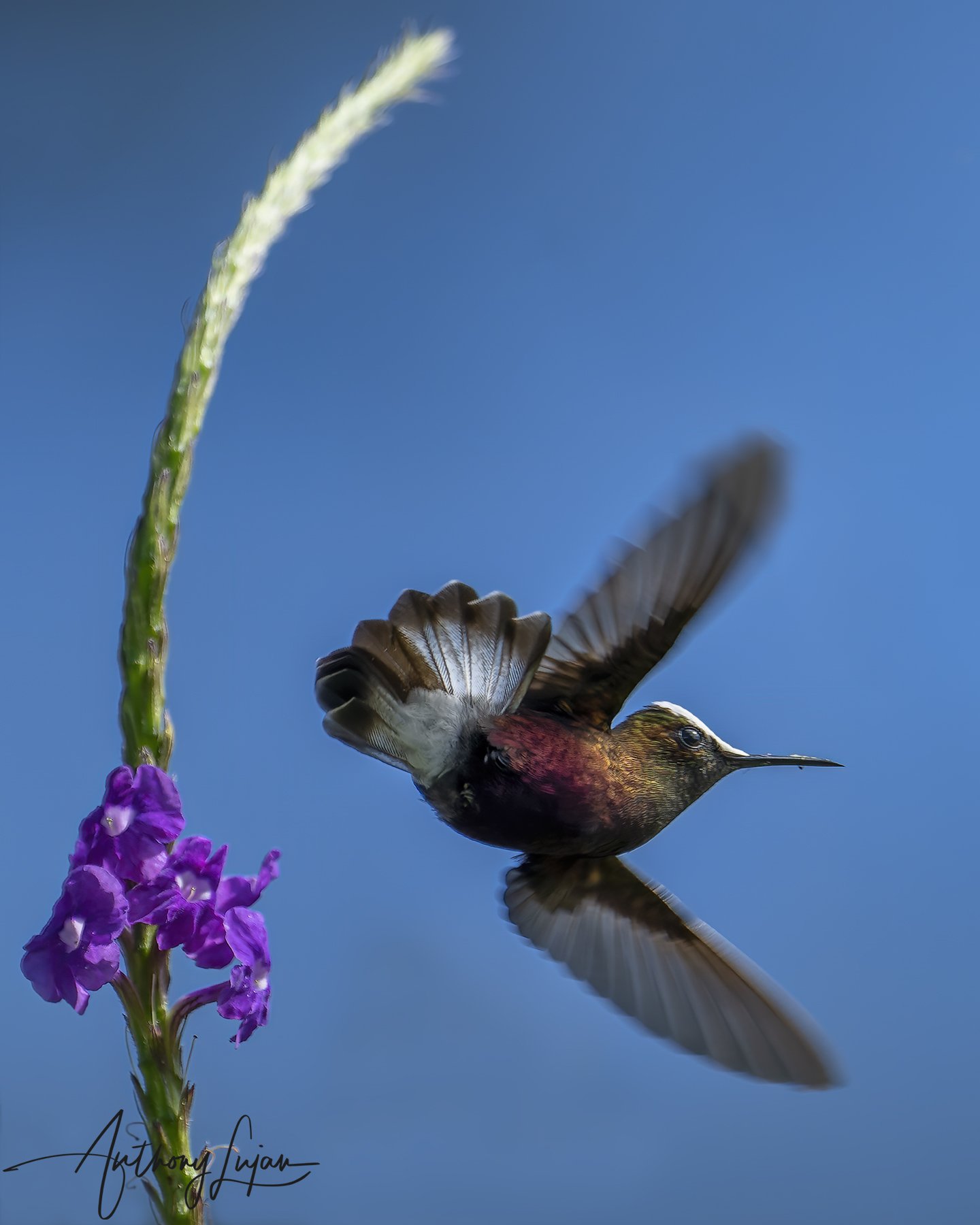
Adult males are tiny and compact, with a brilliant snow‑white crown that contrasts sharply with the rest of the plumage. The body is a deep wine‑purple to maroon with bronzy iridescence, especially on the back and rump. The tail is short, dark, and slightly forked, often with purplish or bronze gloss. The bill is short, straight, and black. In good light, males show a bright white cap atop a dark, glowing body, making them unmistakable within their range.
Female Description
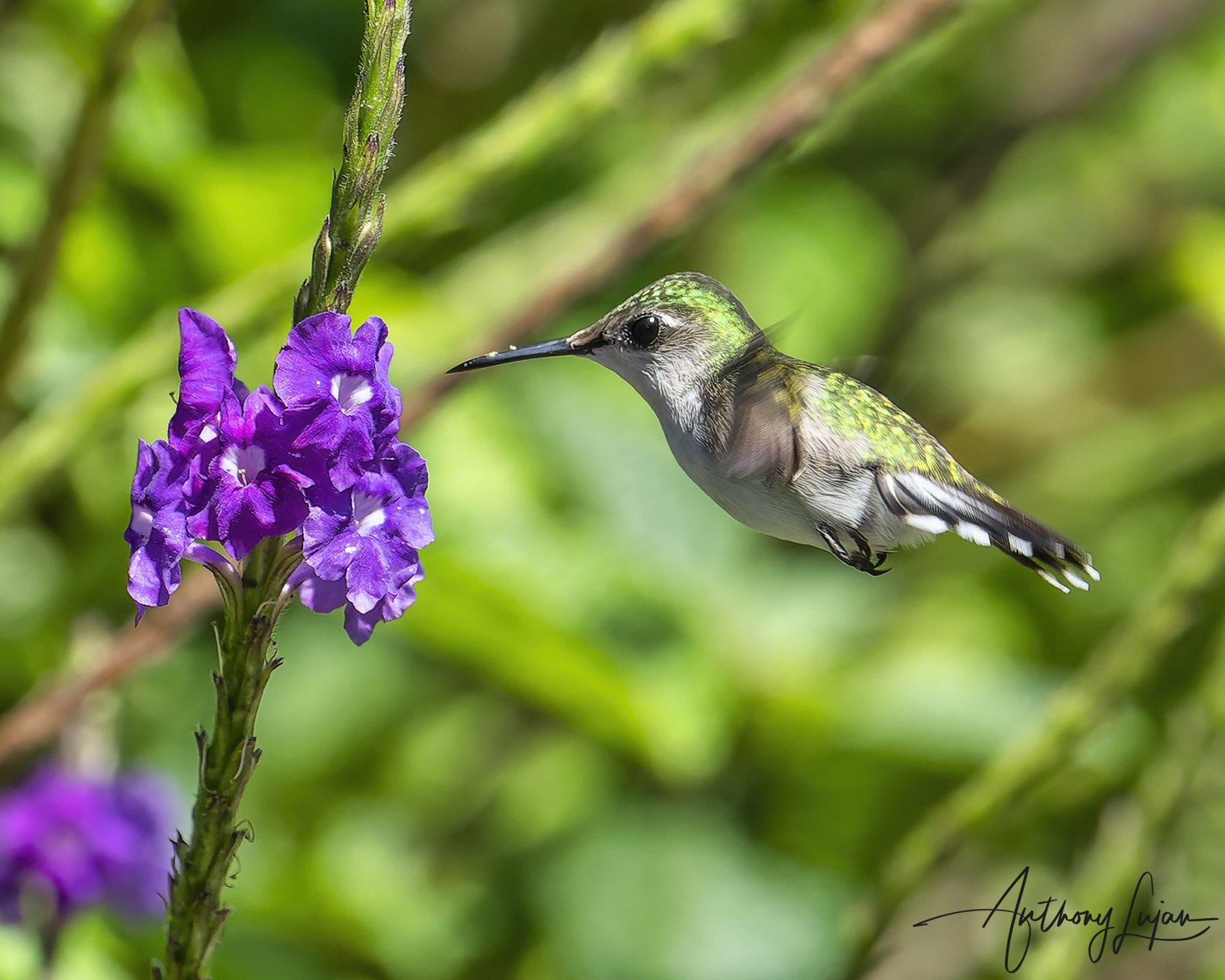
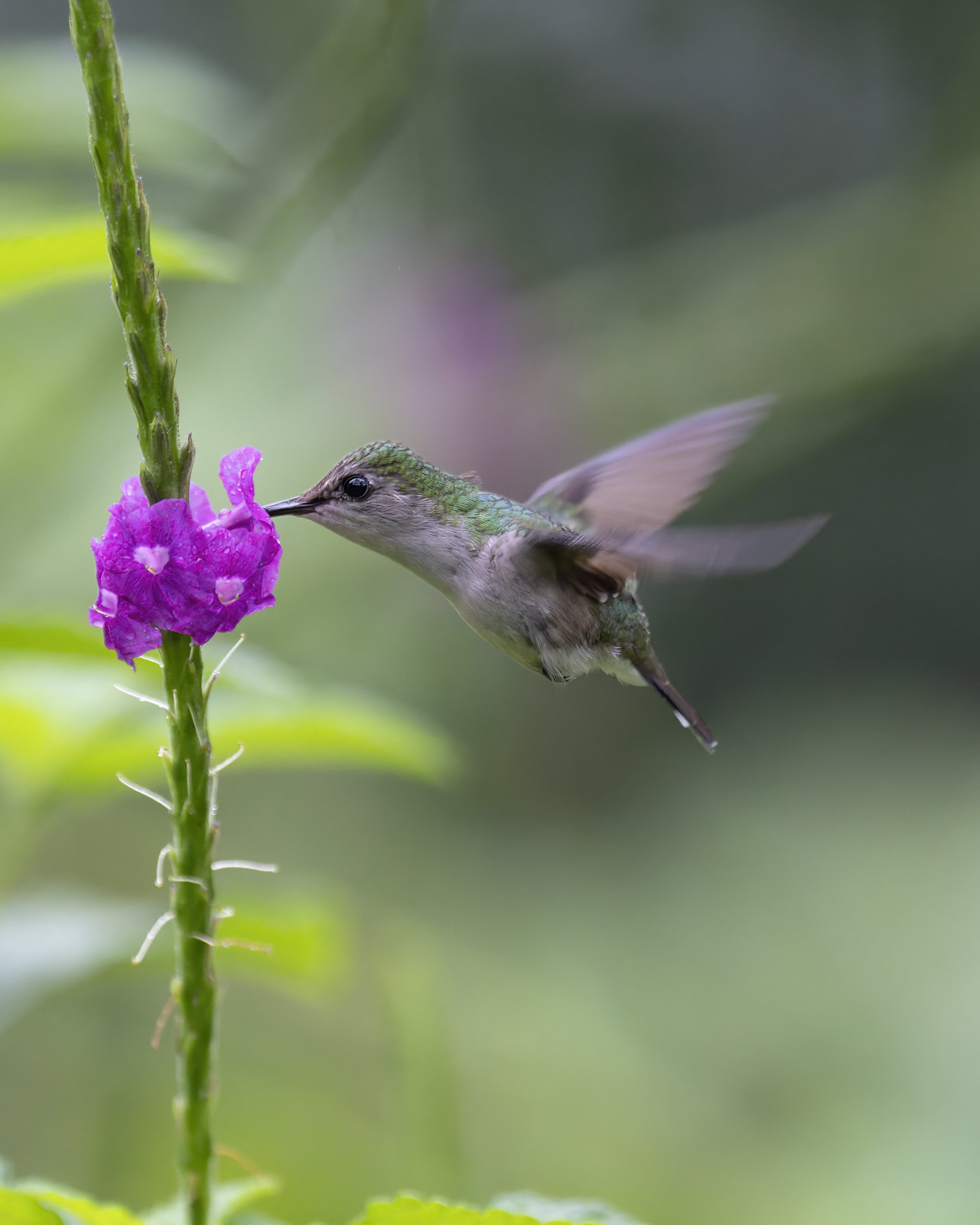
Females lack the white crown and rich dark body of the male. They have green upperparts, a white to pale grayish underbody, and greenish to buffy flanks. The tail is darker with some pale edging, and the bill is short, straight, and black. Juveniles resemble females, with no white crown and more subdued plumage, sometimes showing faint pale tips on upperpart feathers that wear off with age.
Habitat & Behavior
Snowcaps inhabit humid lowland and montane forests, semi‑open woodlands, forest edges, clearings, and secondary forests, often at foothill elevations where moist conditions and flowering plants are abundant. They are frequently seen feeding at small, tubular flowers—often purple or red—in gardens and forest margins, moving quickly between blossoms. Despite their tiny size, they can be assertive around favored nectar sources, sometimes chasing away other small hummingbirds, and they also take small insects for protein, hawking them from perches or gleaning near flowers.
Breeding
Breeding takes place in humid foothill forests within the species’ elevational range, with timing varying locally but generally aligned with good flowering conditions and favorable weather. The female builds a minute cup nest of plant fibers and cobwebs, often decorated externally with moss or lichen and attached to a small twig or vine a short distance above the ground or above low vegetation. She lays two white eggs and alone incubates and raises the chicks, following the typical hummingbird breeding pattern.
Movement
Snowcap is an altitudinal migrant, breeding mostly at foothill elevations and then moving downslope to adjacent lowlands after the breeding season. In some areas, individuals may also move upslope to higher elevations, tracking peaks and shifts in flowering. These upslope and downslope movements cause local changes in abundance through the year, even though the species remains within a relatively limited geographic range.
Population
With an estimated 50,000–499,999 mature individuals, Snowcap has a moderate total population for a narrowly distributed species. It is considered uncommon to locally common in suitable humid foothill and lowland habitats across its range. However, ongoing deforestation and habitat degradation in Central American humid forests contribute to a decreasing population trend, as suitable breeding and foraging habitats are reduced or fragmented.

Conservation
Snowcap is currently assessed as Least Concern, but its decreasing trend and dependence on humid forests and foothill habitats make it vulnerable to continued habitat loss. Conversion of forest to agriculture or pasture, expansion of roads and settlements, and degradation of forest edges can all negatively affect local populations. Protecting humid lowland and foothill forests, maintaining forest edges and flowering shrubs in agricultural landscapes, and preserving elevational corridors between breeding elevations and lowlands are important for the long‑term conservation of this species and many associated hummingbirds.
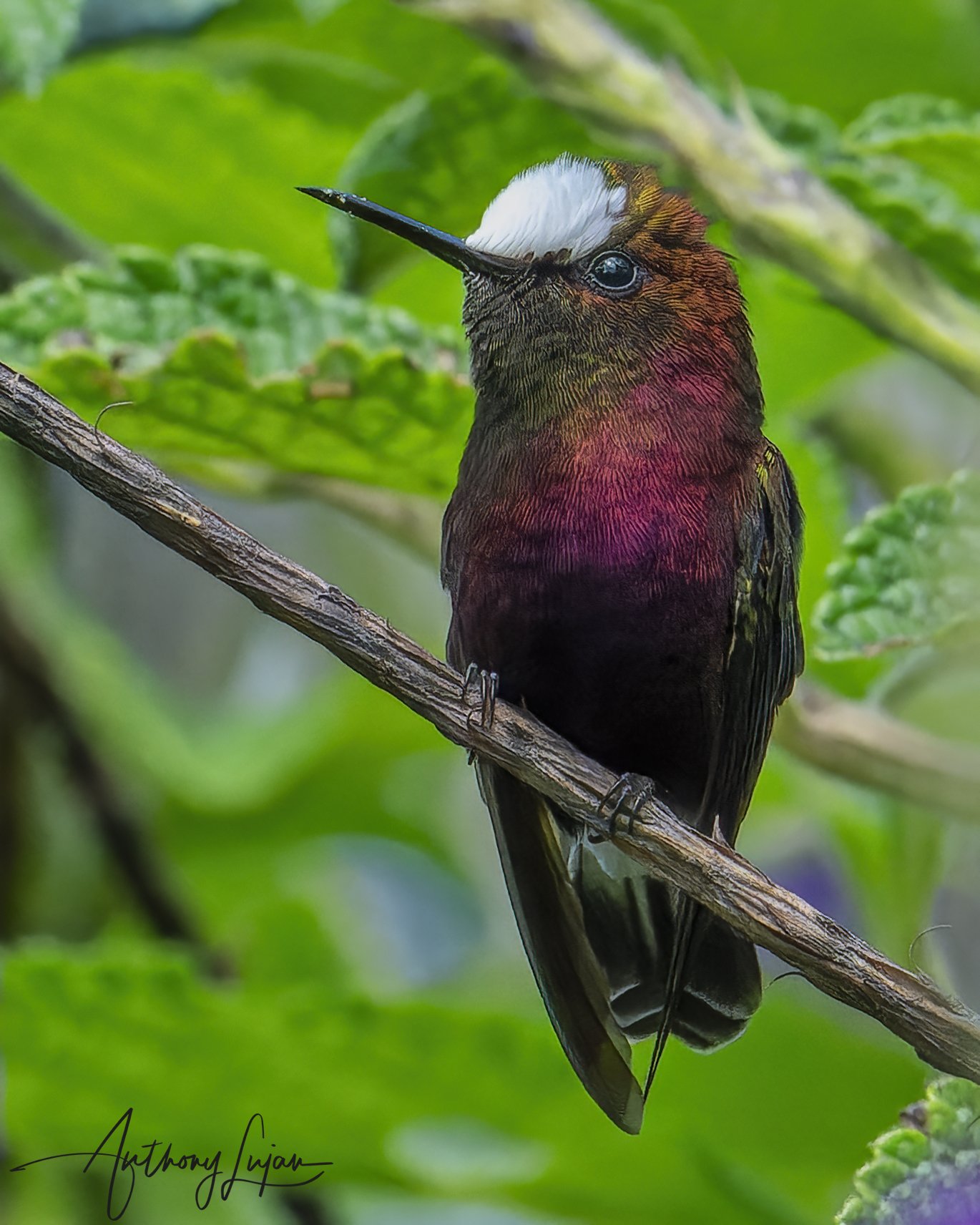
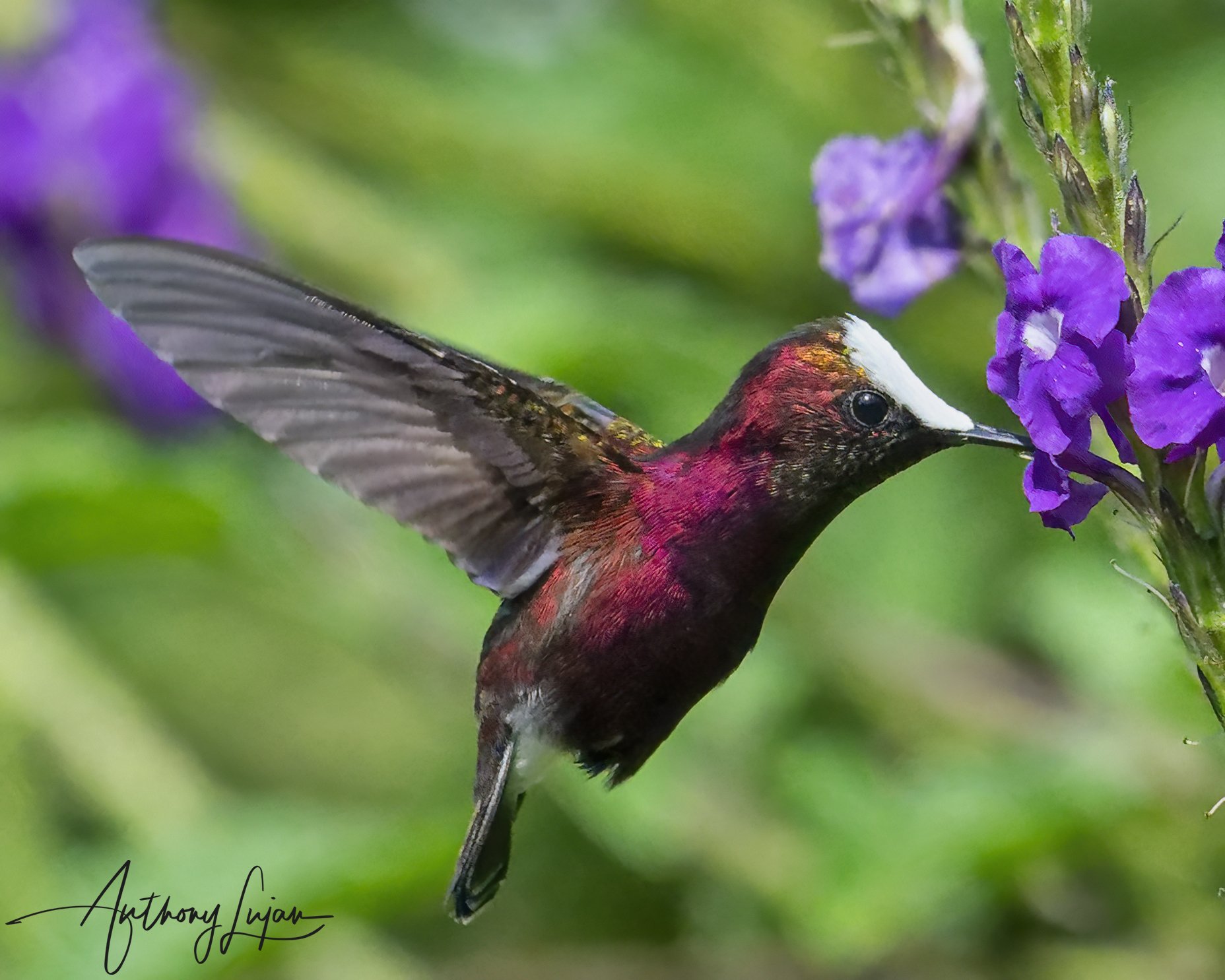
Below is the Snowcap (Microchera albocoronata parvirostris)
Photographed at Rancho Naturalista, Cartago, and Nectar & Pollen Reserve, Limón, Costa Rica
These individuals belong to the subspecies parvirostris, which occurs along the Caribbean slope from southern Honduras through Nicaragua and Costa Rica, with possible range extension into extreme western Panama. It inhabits humid foothill forest edges and clearings with abundant flowering plants, usually between 300 and 1,100 meters. This subspecies is similar in appearance to the nominate form, but slightly smaller and with a proportionally shorter bill.

Interested in coming along? Visit Travel with Me!
Also visit Costa Rica Hummingbird Expedition | July 2021 | 10 Species | Where It All Started
Also visit Costa Rica Hummingbird Expedition | November 2021 | 22 New Species | Second Chances
Also visit Costa Rica Hummingbird Expedition | July 2025 | 32 Species | 10 New | Closing the Gap
Checkout Anthony’s playlist of this species! Click the top right dropdown to see all the videos.
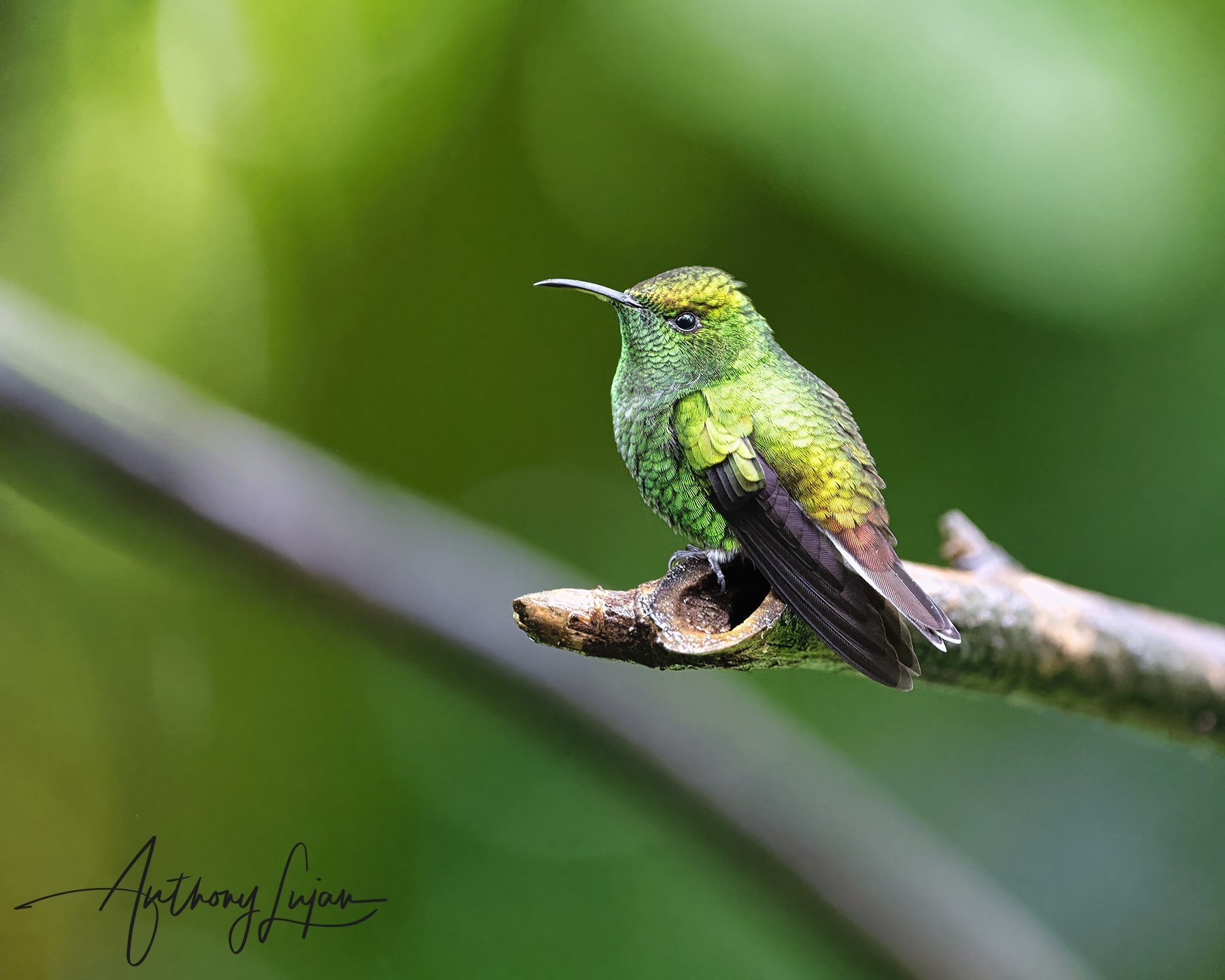
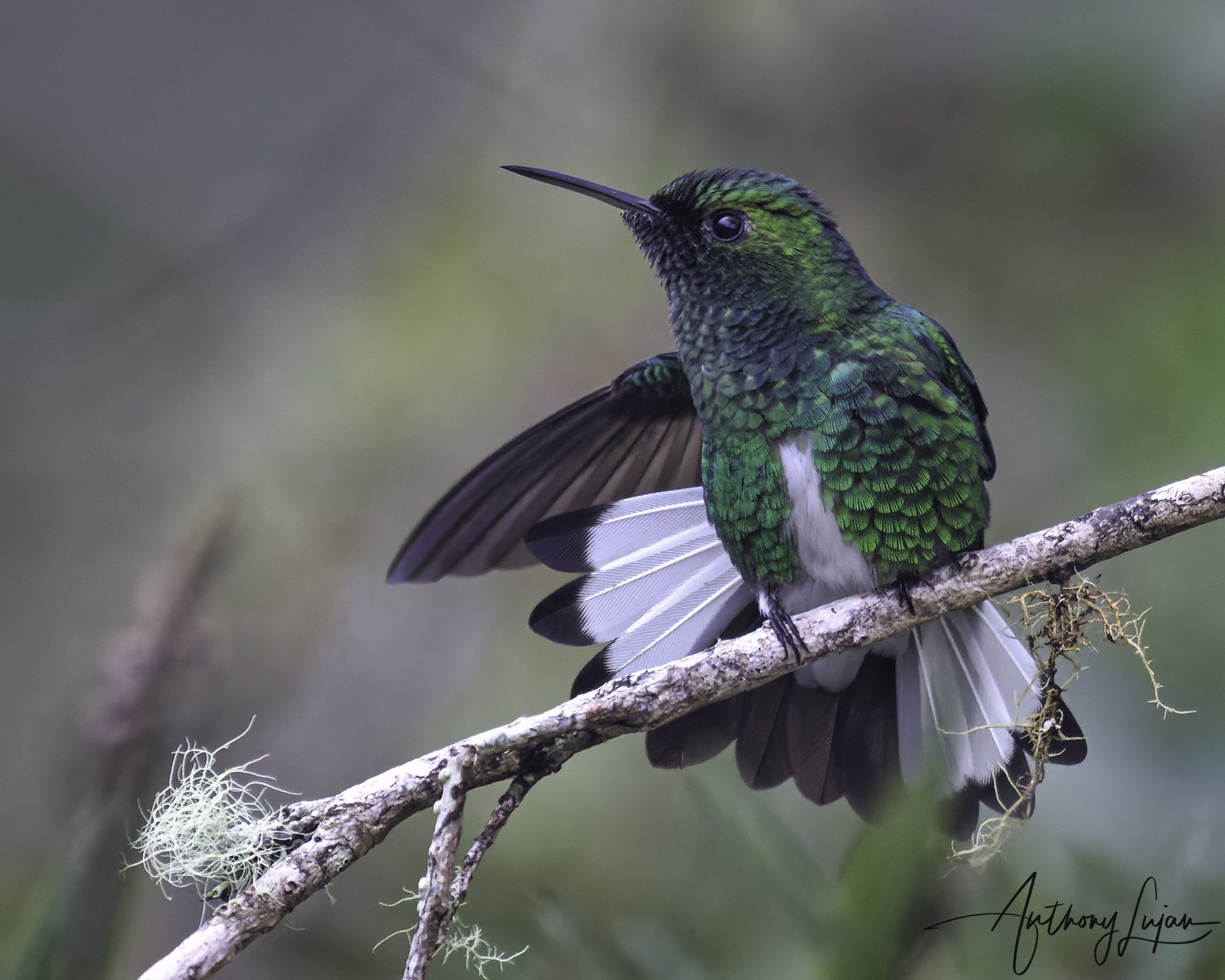
Related species in the Microchera genus (3 species in total):
Please note: The content provided in this article reflects Anthony’s personal experience and photographic approach. Results can vary depending on light, weather, location, equipment, subject behavior, and field conditions.